A perfect stormof Supreme Court decisions, pandemic recriminations and fiery culture wars has vaulted education to the top of the 2024 presidential agenda, animating Republicans who believe they have the upper hand.
Why it matters: This election will be the first to test whether four years of heated debate over COVID-19 school policies, critical race theory and gender identity will translate at the presidential level. The conservative Supreme Court could add fuel to the fire and juice turnout among young voters.
Driving the news: Metropolitan Police Department officers arrested Taylor Taranto, 37, of no fixed address, on Thursday afternoon and charged with him with being a "Fugitive from Justice, pursuant to an arrest warrant," per an email from an MPD spokesperson.
The suspected Chinese spy balloon that traversed the U.S. before a fighter jet shot it down over the Atlantic in February didn't collect any intelligence information, a Pentagon official said Thursday.
Driving the news: "We were aware that it had intelligence collection capabilities, but ... it has been our assessment now that it did not collect while it was transiting the United States or over flying the United States," Pentagon spokesperson Brigadier General Pat Ryder said at a briefing.
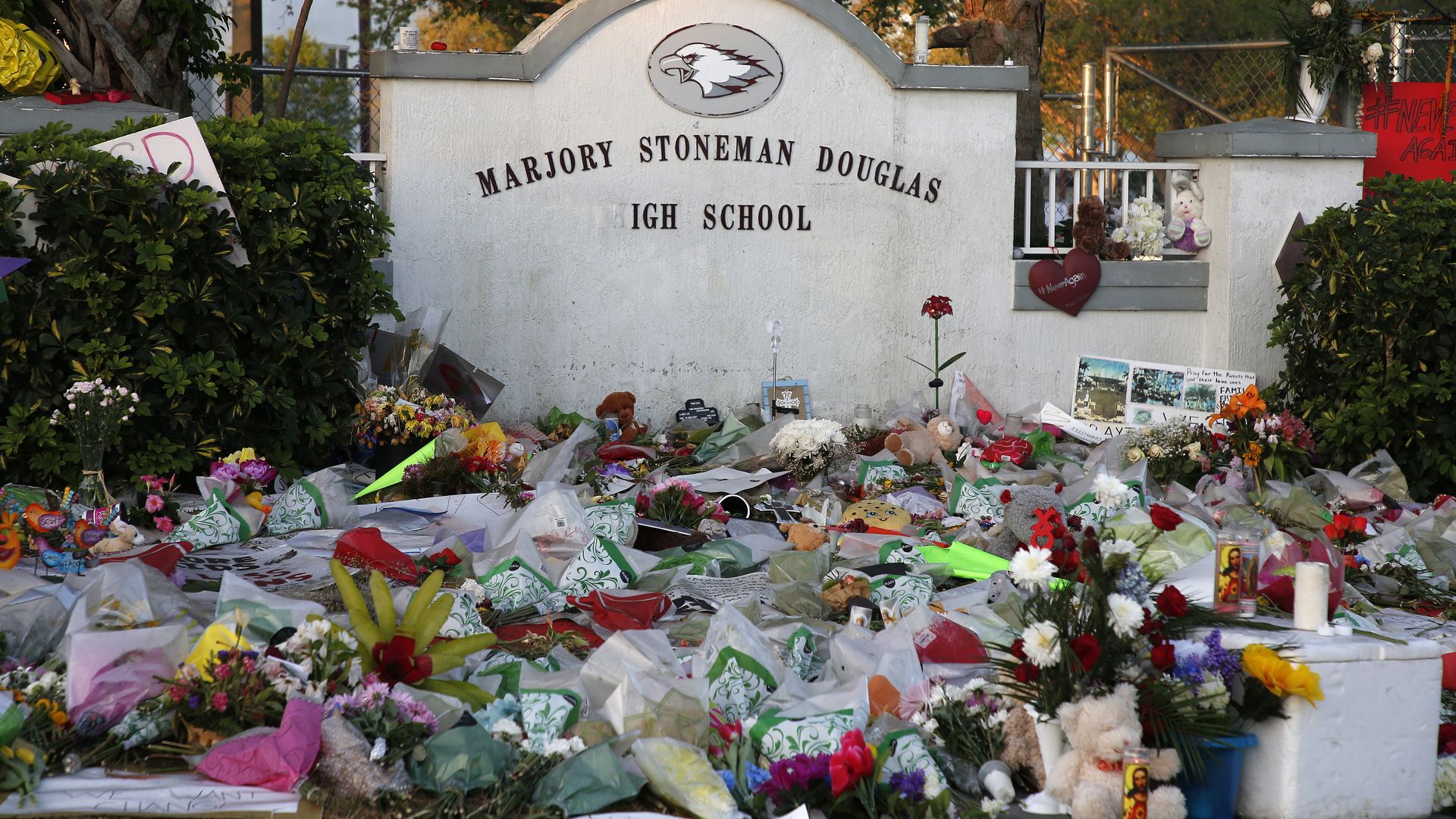
A former Parkland, Florida, sheriff's deputy was found not guilty on Thursday of failing to protect students when a gunman opened fire during a 2018 mass shooting at Marjory Stoneman Douglas High School.
Driving the news: Former Broward County Deputy Scot Peterson wept as a South Florida jury found him not guilty of 11 charges including felony child neglect, culpable negligence and perjury in the shooting, which killed 17 people.
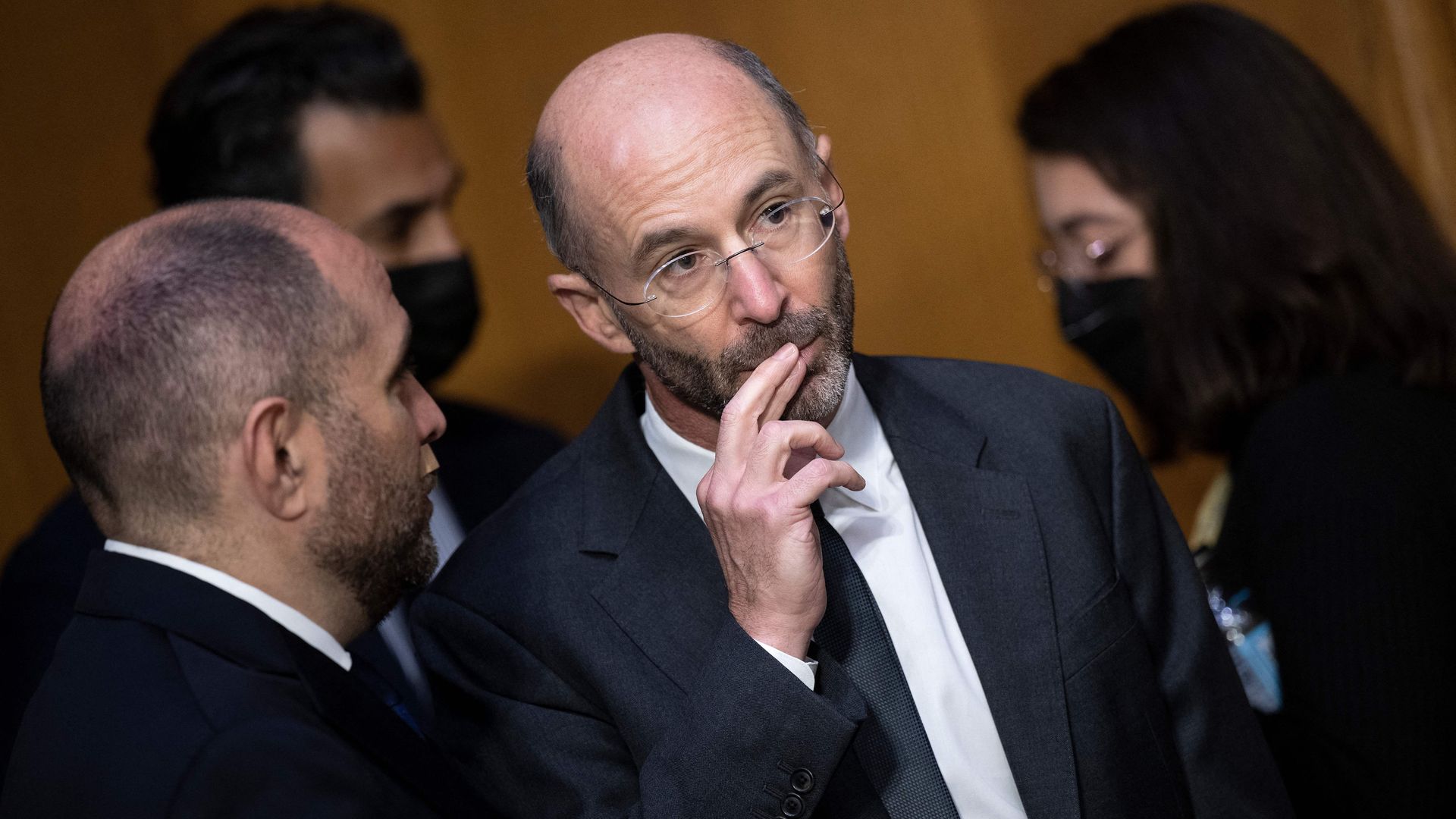
U.S. envoy for Iran Rob Malley told Axios on Thursday he went on leave several weeks ago because of an investigation that has affected his security clearance.
Why it matters: Malley was a key player in the Biden administration's efforts to try and return to the 2015 nuclear deal and in crafting the administration’s Iran policy.
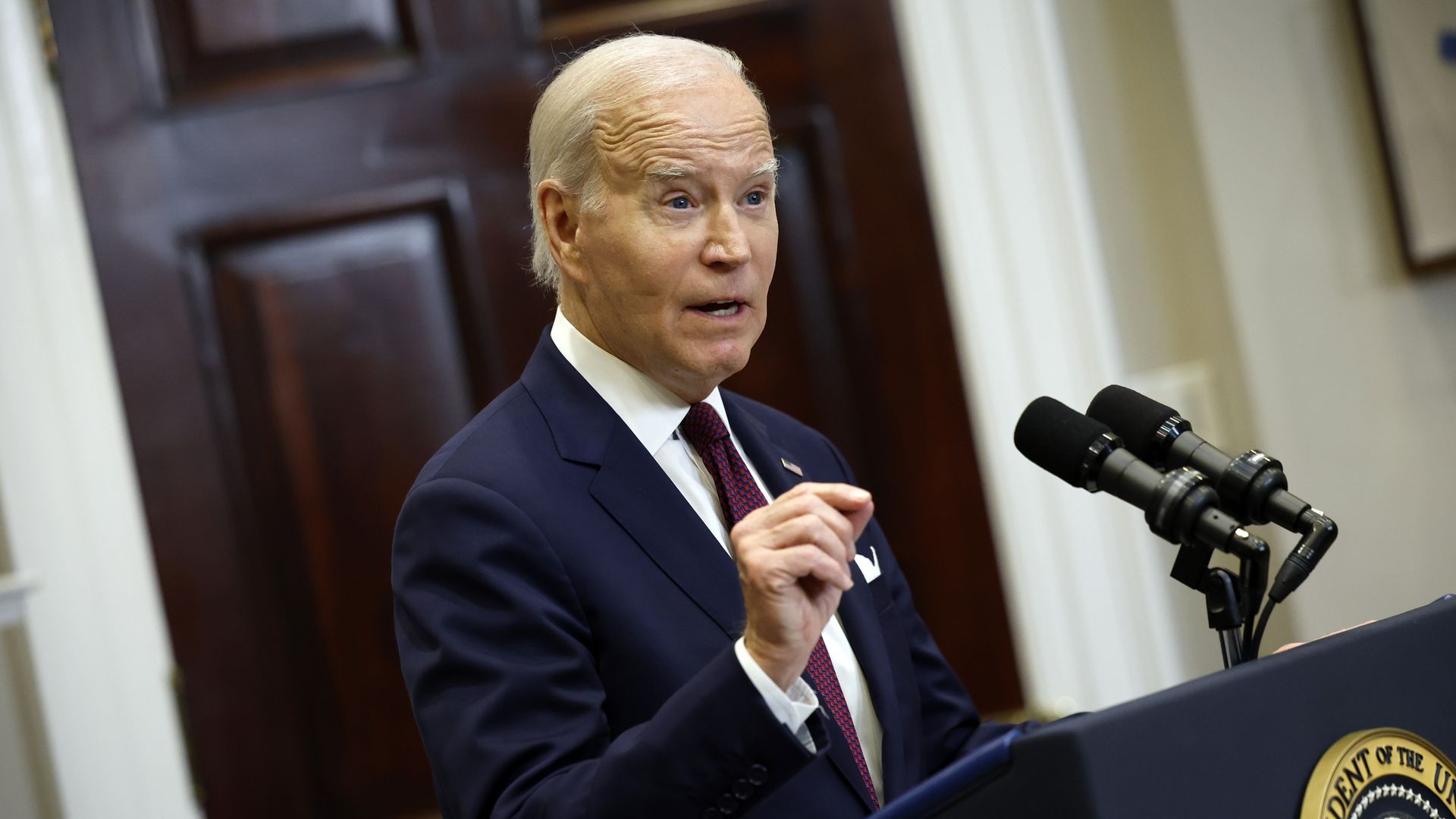
President Biden on Thursday strongly rebuked the Supreme Court's decisiondismantling affirmative action at the nation's colleges and universities, but said that he does not support expanding the court to make it more liberal.
Driving the news: “If we start the process of trying to expand the court, we’re going to politicize it — maybe forever — in a way that is not healthy," Biden told MSNBC's Nicole Wallace in an interview after the decision.
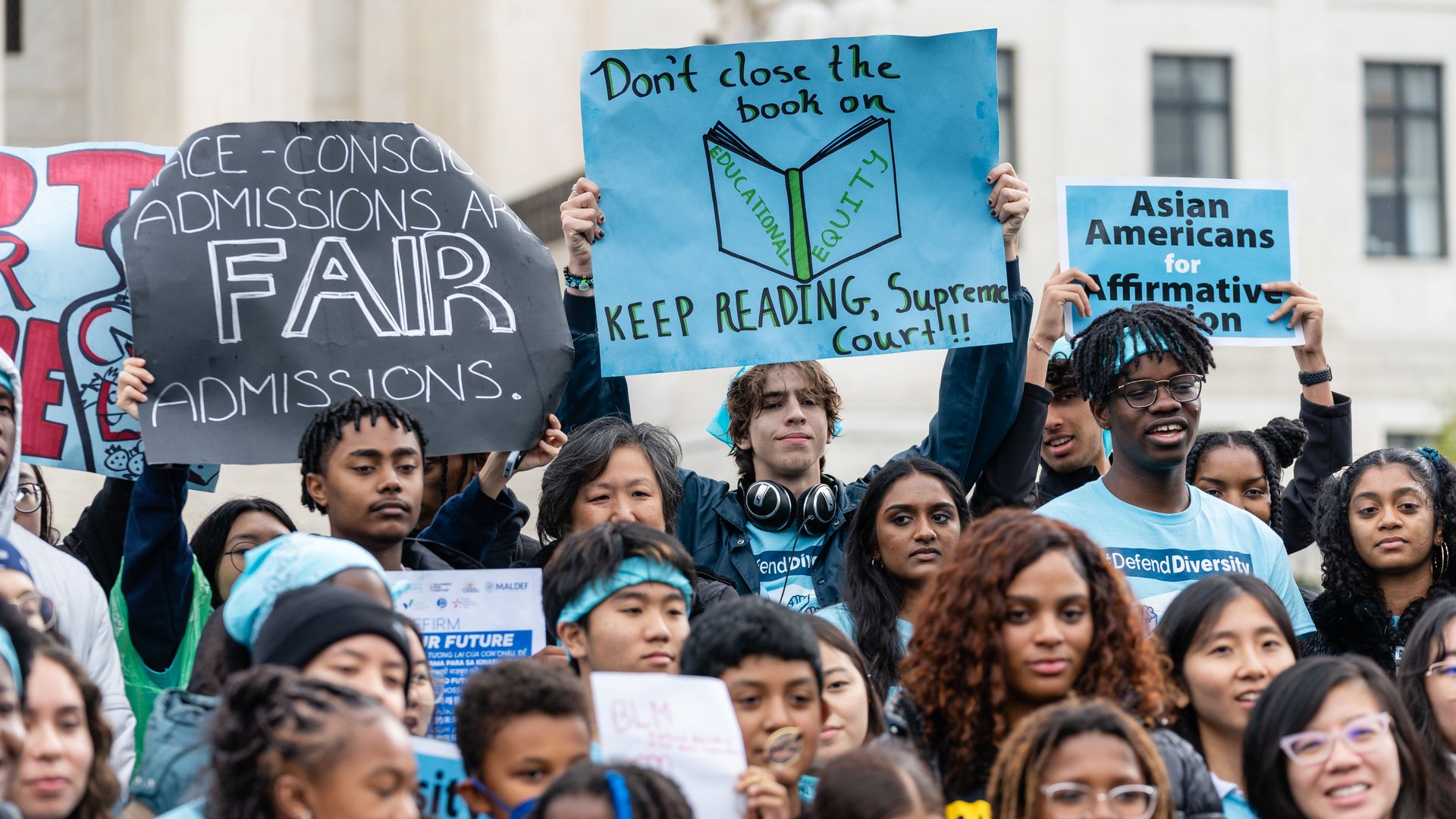
The Supreme Court's rejection of affirmative action in college decisions will eliminate admissions processes that allow students of color crucial opportunities to receive higher education, civil rights groups said.
Why it matters: Just hours after the decision on Thursday, angry civil rights leaders warned that the ruling will enforce systemic racism and prevent colleges and universities from having diverse students.
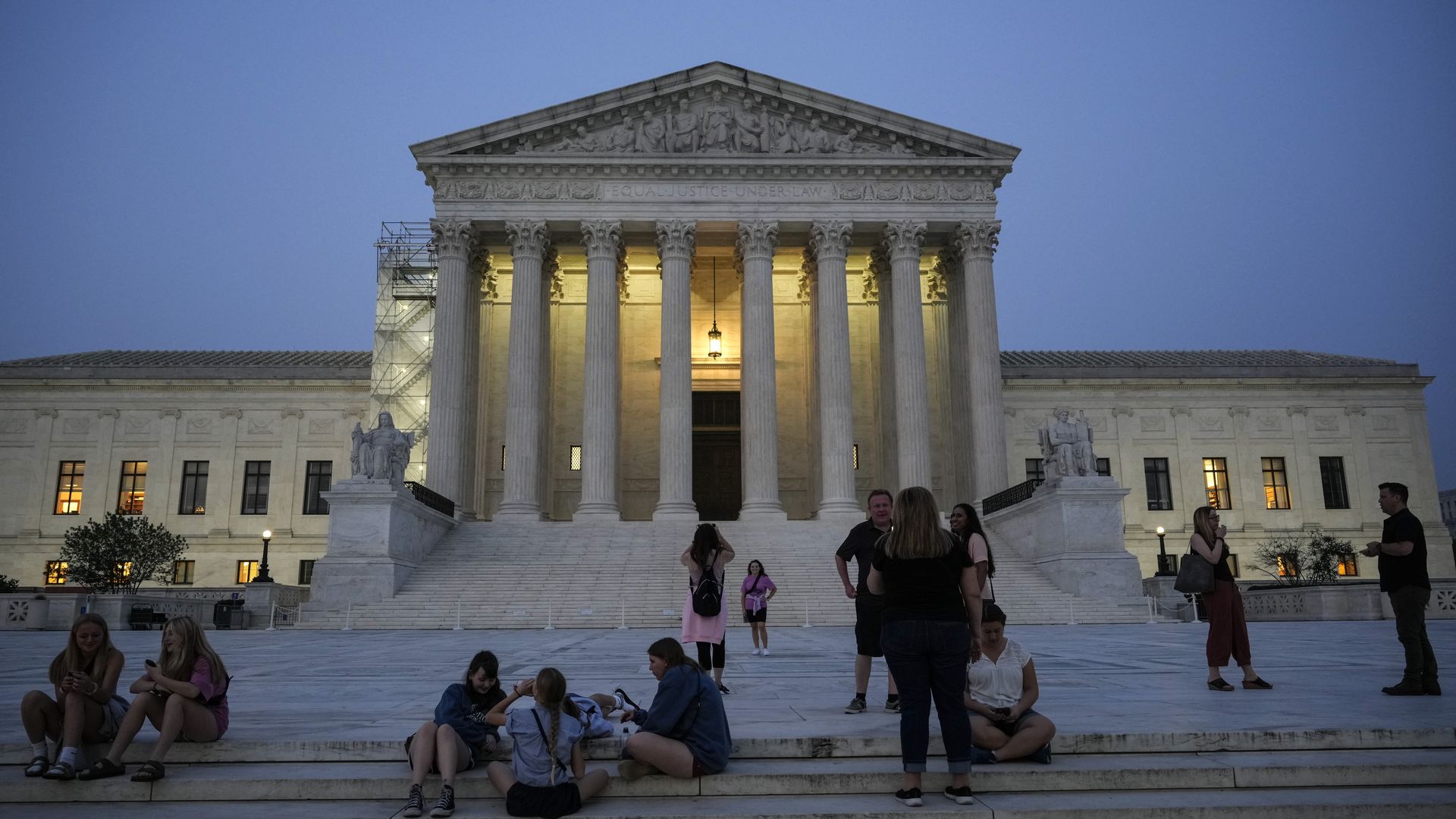
The Supreme Court ruled Thursdaythat colleges can't explicitly consider applicants' race in admissions, a landmark ruling that will radically transform how colleges are able to attract a diverse student body.
Why it matters: The ruling will force colleges to reimagine long-standing hallmarks of the admissions process and likely jeopardize the representation of Black and Latino students on campuses nationwide.
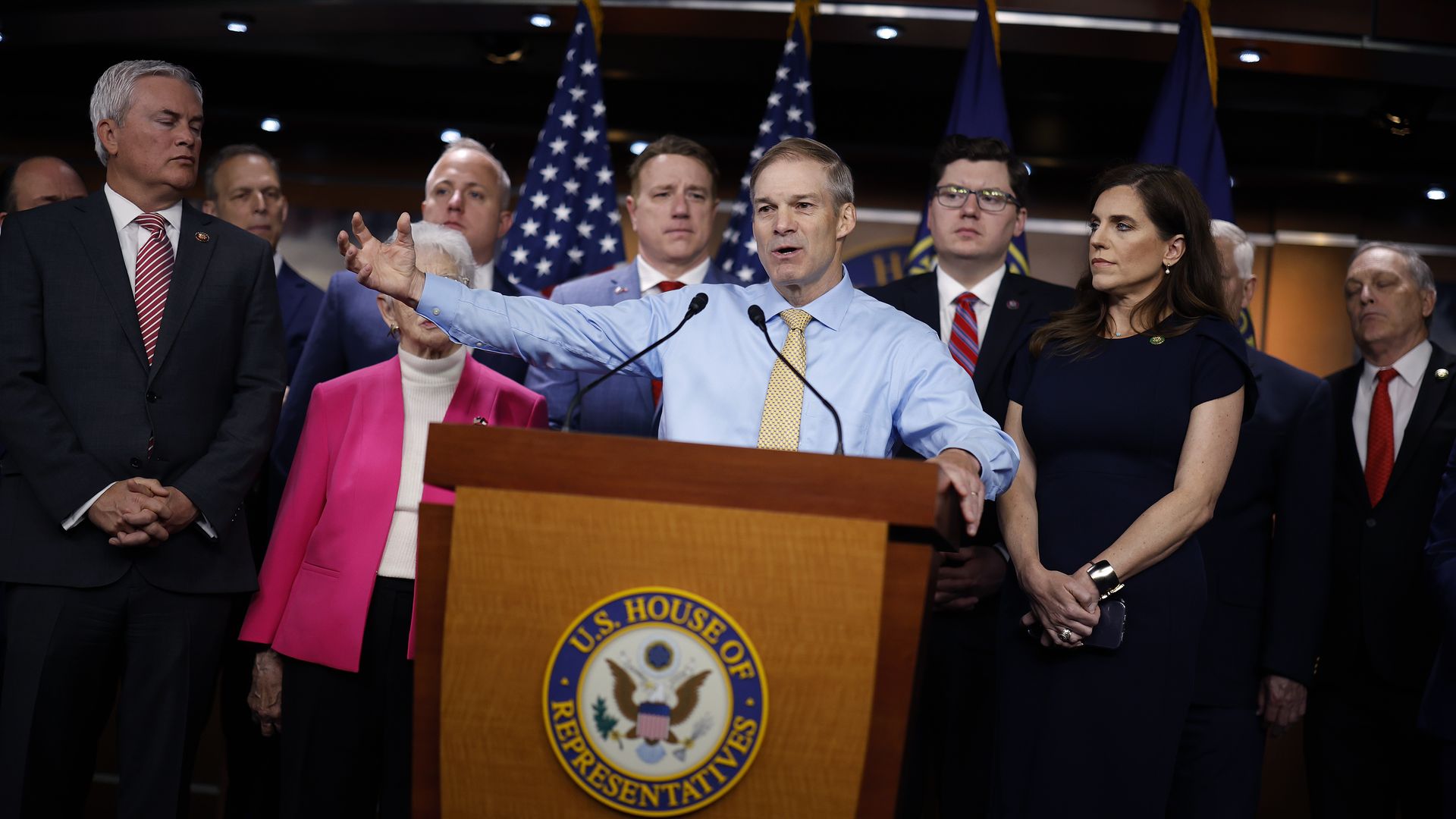
Republican-led House committees on Thursday requested more than a dozen transcribed interviews with government personnel involved in the high-profile federal investigation of Hunter Biden.
Why it matters: It's a significant expansion of House Republicans' probe into the president's son, and could lead to messy and protracted legal battles ahead of the 2024 election.
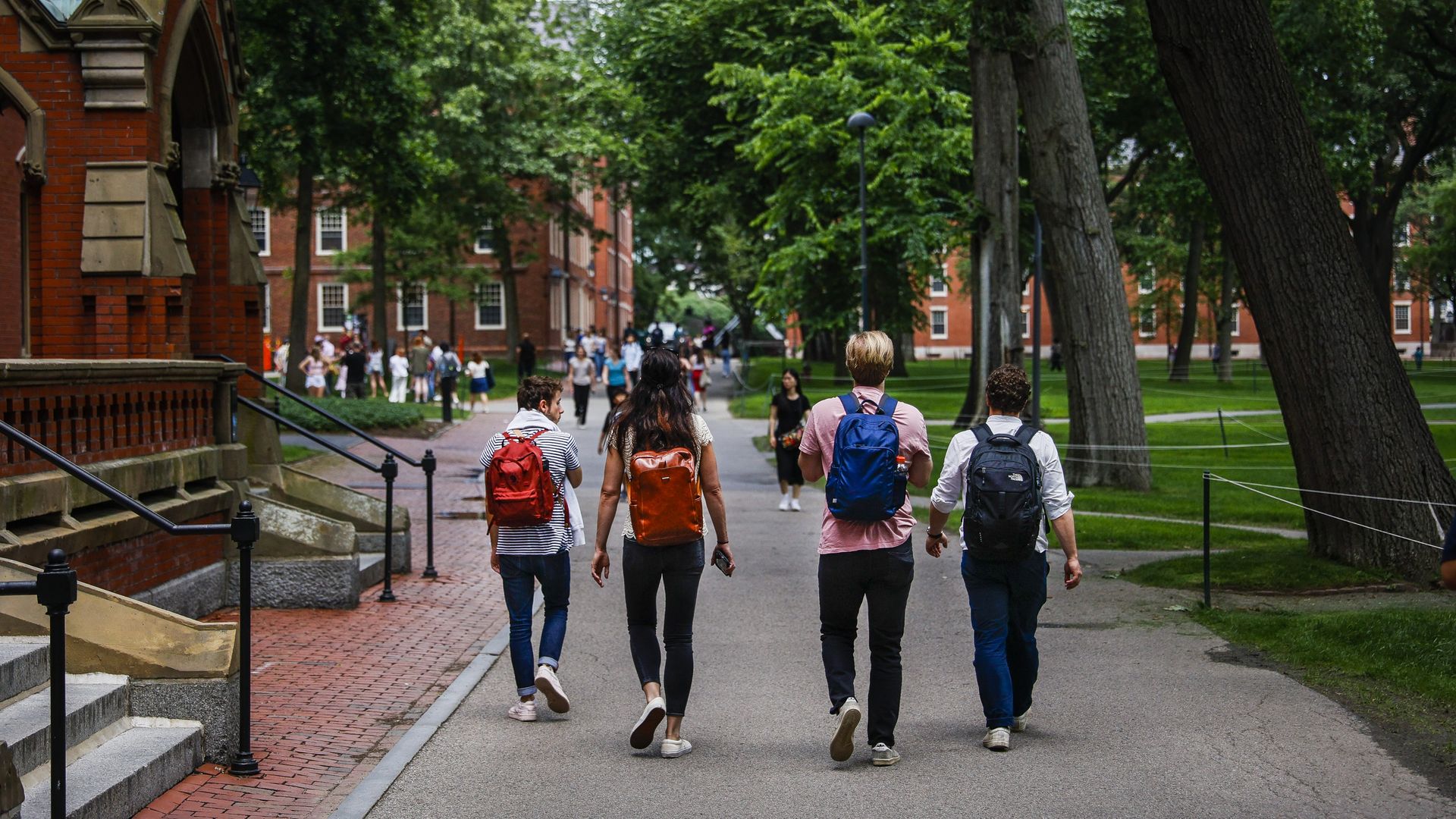
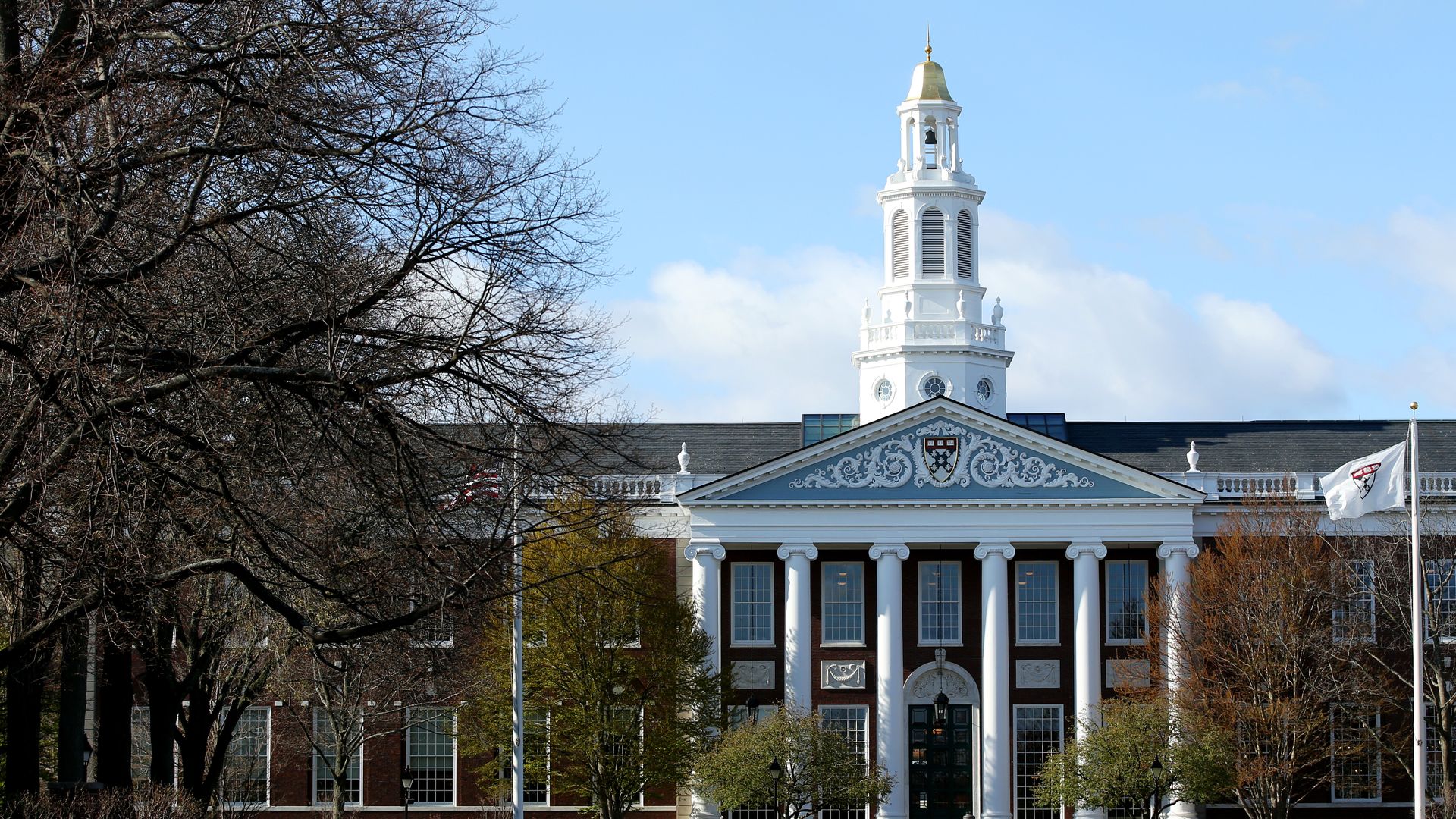
After the U.S. Supreme Court ruled Thursday that colleges can't explicitly consider applicants' race in admissions, Harvard leaders vowed to remain committed to diversity in admissions while complying with the ruling.
Why it matters: The new precedent will force Harvard and other colleges to reimagine long-standing hallmarks of the admissions process and likely jeopardize the representation of Black and Latino students on campuses nationwide, Axios' Erin Doherty and April Rubin write.
College applications and admissions processes will change as a result of the Supreme Court's Thursday decision to strike down affirmative action.
Why it matters: The ruling bars admissions offices from race-conscious admissions, a policy that was intended to remedy discrimination in the consideration of applicants from underrepresented groups. Universities will now have to create a new roadmap for maintaining diversity in their student bodies.
The Supreme Court's decision to strike down the use of affirmative action will likelyhave ripple effects on the abilities of students of color to build robust communities that enable a feeling of belonging on college campuses.
Driving the news: In their ruling Thursday, the conservative-majority Supreme Court said schools may not explicitly consider applicants' race when deciding admissions, a policy that is expected to widely impact the representation of students of color on college campuses.
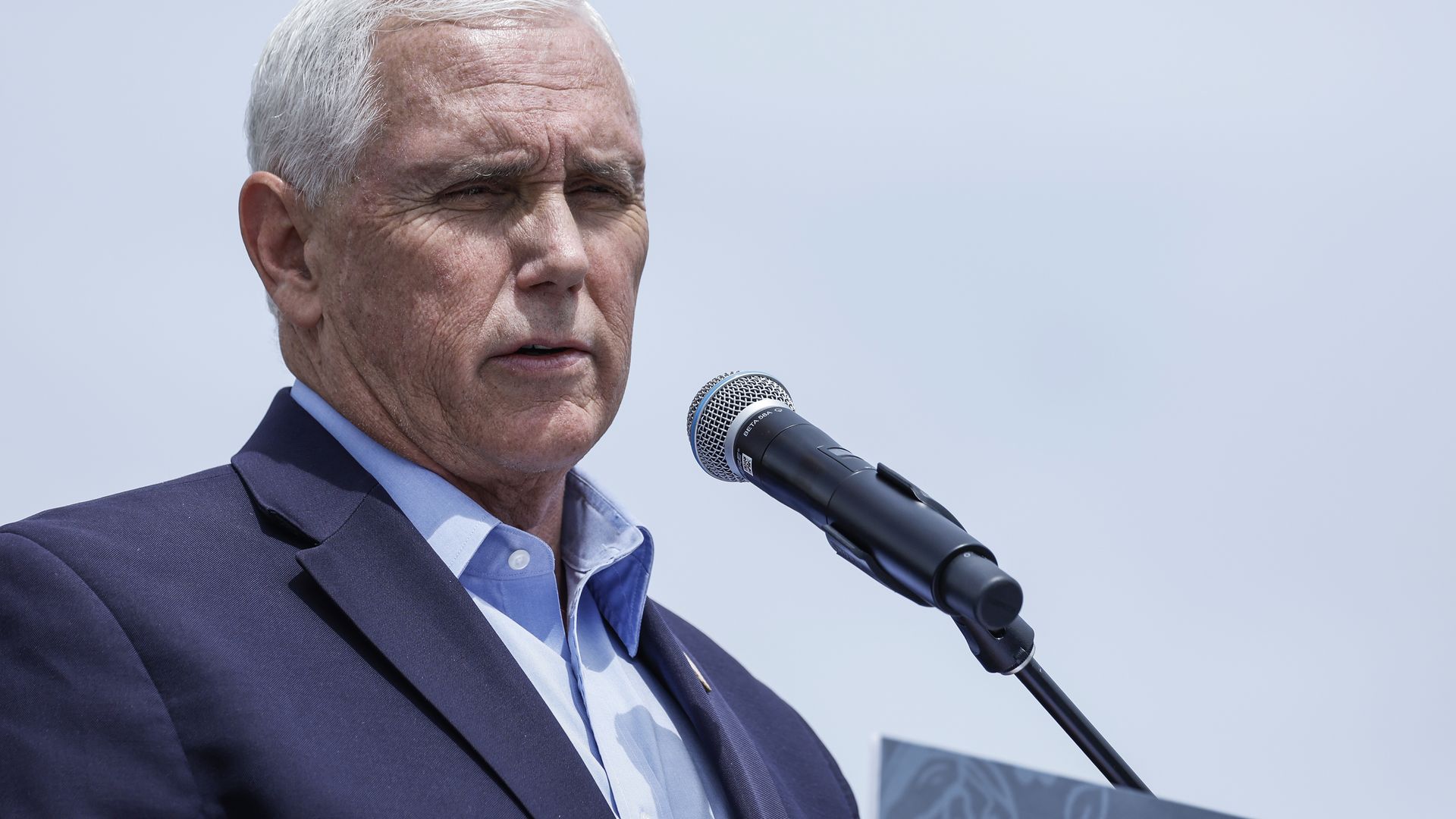
Former Vice President Mike Pence met with Ukrainian President Volodymyr Zelensky on Thursday during a surprise visit to the country, a Pence adviser confirmed to Axios.
Why it matters: Pence is the first Republican presidential candidate to meet with Zelensky in Ukraine — setting the former vice president apart in the crowded GOP primary, where top candidates have jockeyed to distinguish themselves from the pack.
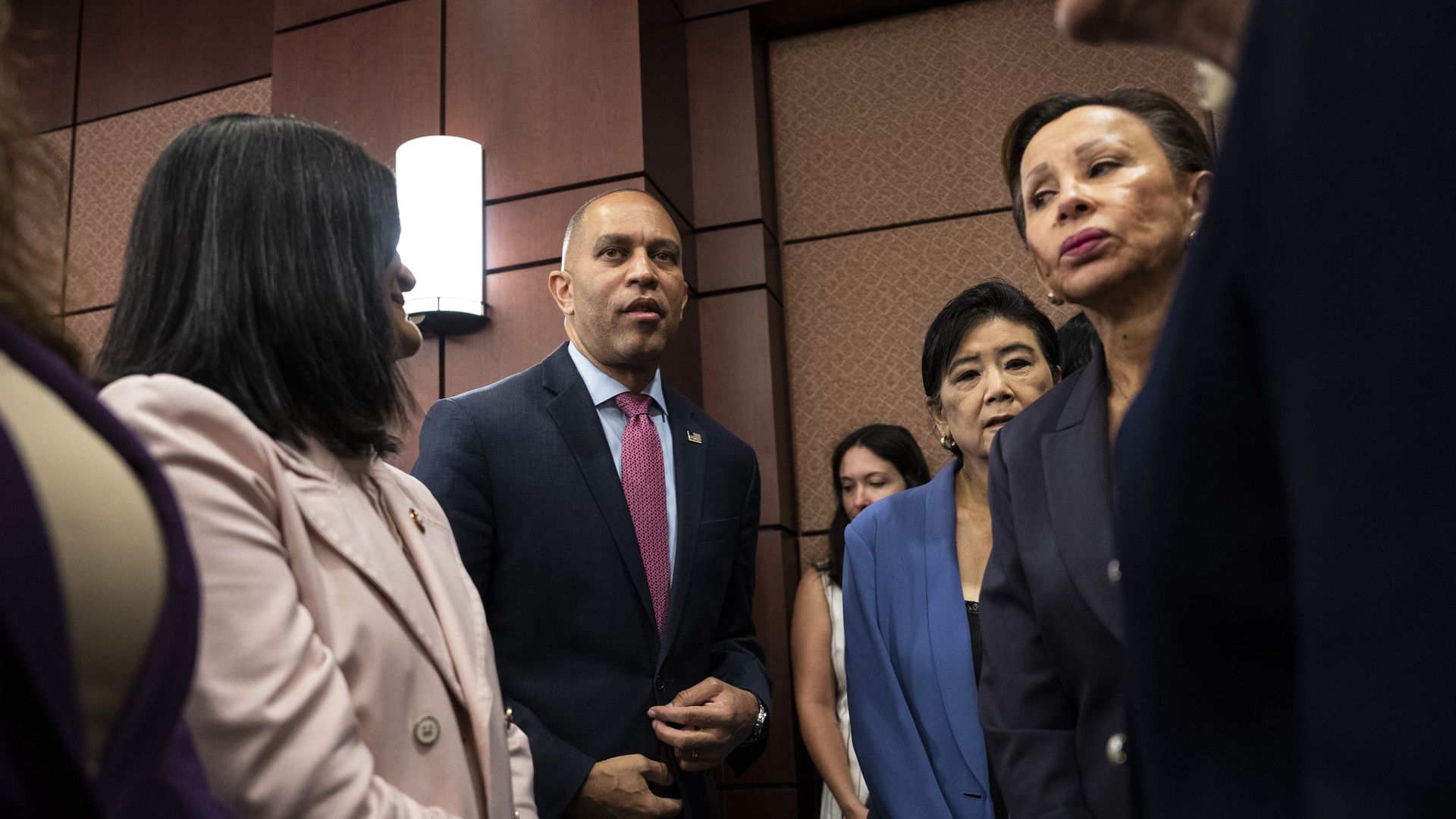
Why it matters: Relations between Democrats and the court have grown increasingly strained in the years since a majority of six Republican-appointed justices took hold.
The Supreme Court's rejection of affirmative action could be a watershed moment for higher education, decreasing diversity in colleges and universities and eventually professional industries.
Why it matters: The decision will substantially affect the racial makeup of student bodies at institutions, especially selective ones, across the U.S., experts told Axios.
The top contenders for the 2024 Republican presidential nomination lauded the Supreme Court's landmark decision on Thursday overturning affirmative action in college admissions.
The big picture: Debates around education and race have become cornerstones of many Republicans' campaign platforms as figures on the right have embraced culture wars ahead of the next election.
Federal authorities on Thursday arrested and charged three men with insider trading, related to a blank-check company's planned merger with a social media company founded by former President Trump.
The big picture: The charges do not implicate Trump or anyone else directly involved with Truth Social, but do stem from investigations that have prevented the company from going public.
Why it matters: The vanishing tweets come as users delete posts, make accounts private, face suspension or leave Twitter altogether following the Elon Musk-led takeover of the platform in October.
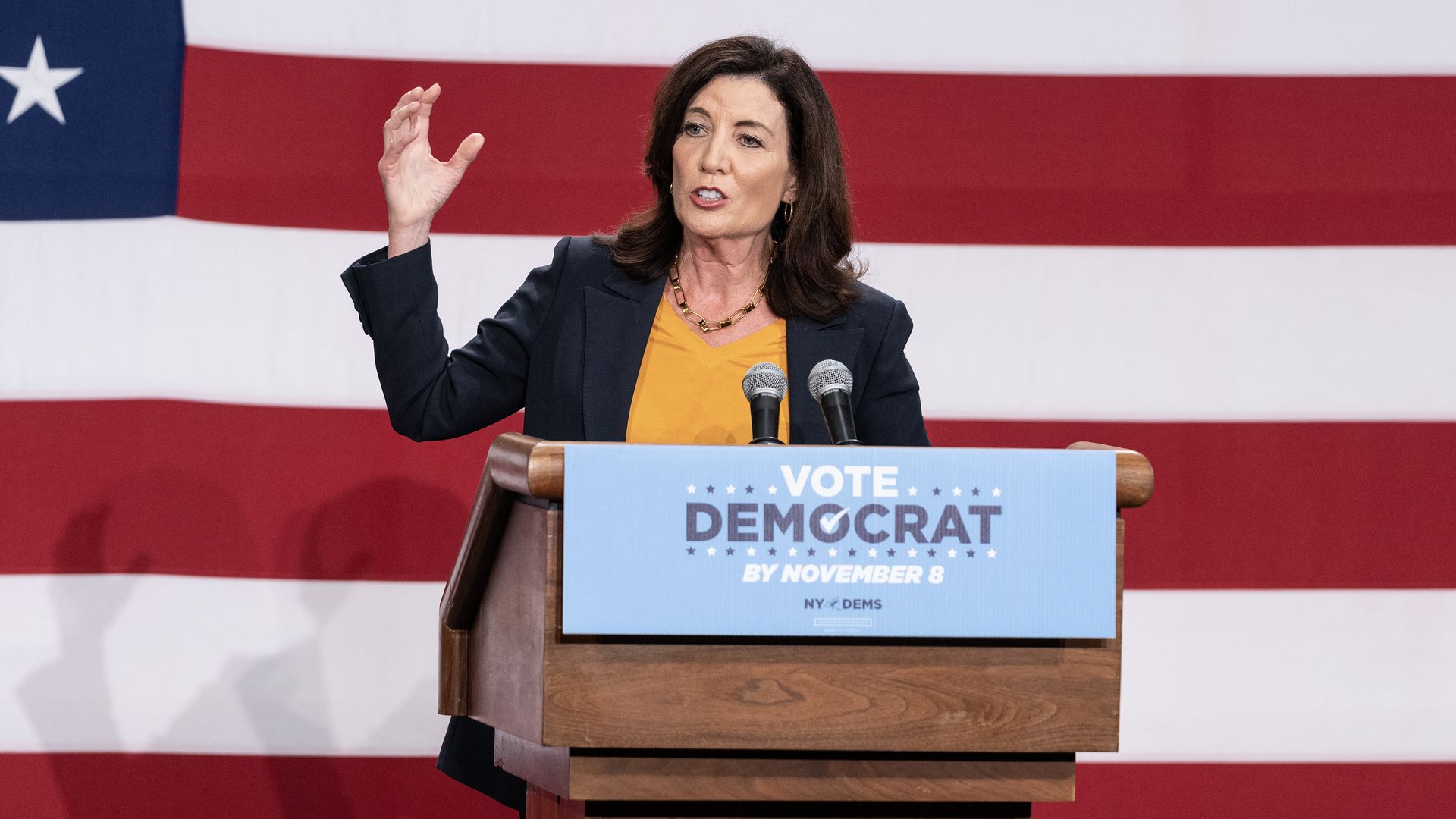
New York Democrats plan to spend at least $20 million to push a sweeping ballot measure in the 2024 elections to codify abortion protections, racial and LGTBQ+ equality, disability rights and more.
Why it matters: The party is investing heavily in a culture-focused strategy to energize their base in elections up and down the ballot.
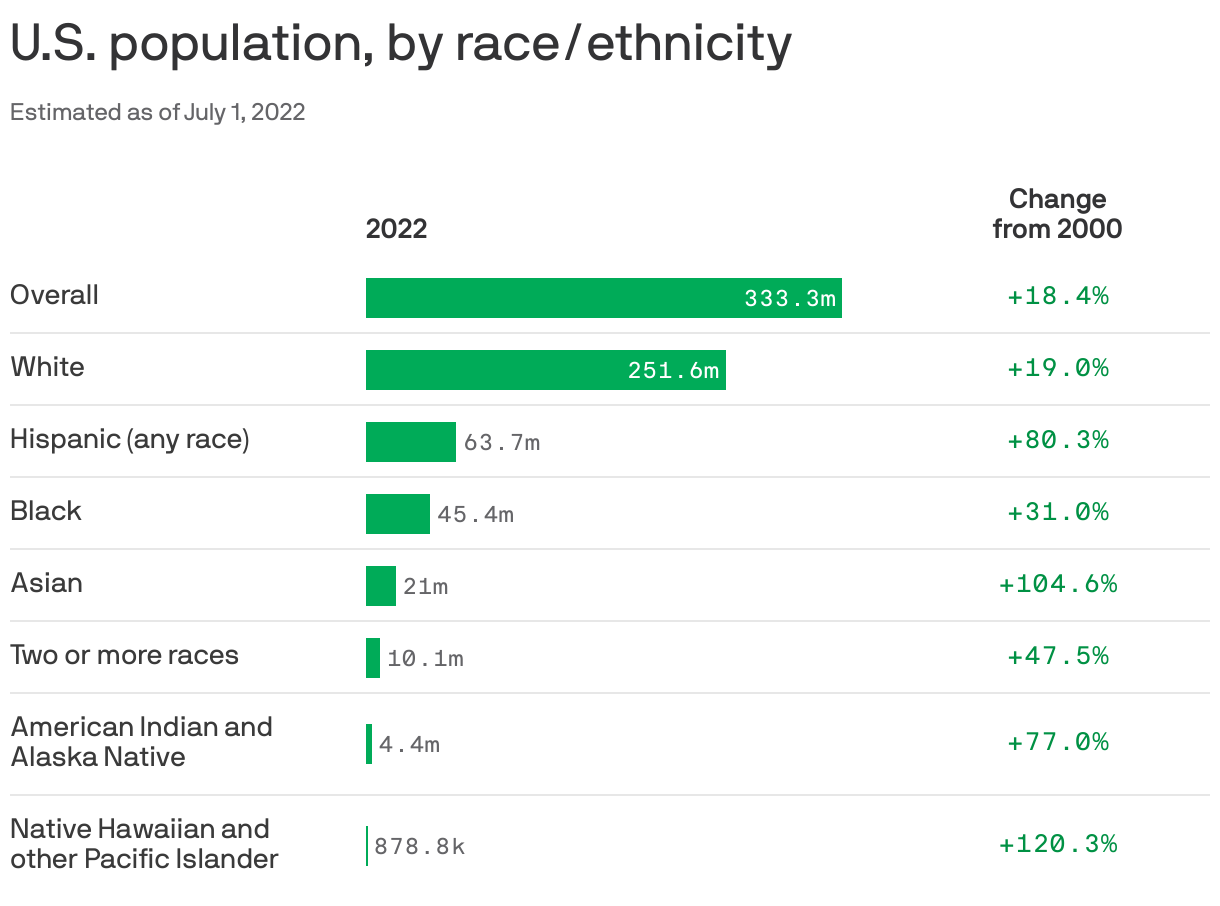
Data: U.S. Census; Note: Estimates include people reporting one race alone; Hispanic individuals are also included in other categories, as they may be of any race; Chart: Kavya Beheraj/Axios
The country's Pacific Islander, Asian and Hispanic populations saw the biggest percentage increases between 2000 and 2022, per a new Axios analysis of U.S. Census Bureau data.
Why it matters: Such demographic data is a vital snapshot of how the racial and ethnic makeup of the U.S. is changing over time, and can inform policies and programs nationwide.
A federal judgetemporarily blocked part of a Tennessee law that sought to ban gender-affirming care for transgender minors.
The judge wrote that the law likely violated the U.S. Constitution.
Why it matters: The judge's order, issued Wednesday, preserves Tennessee minors' access to gender-affirming care such as hormones or puberty blockers for now.
The Republican National Committee's loyalty pledge is now the final requirement to qualify for the first Republican primary debate, a person familiar with the change confirmed to Axios on Wednesday.
Driving the news: Republican candidates seeking to qualify for the August debate will be presented with the pledge only after meeting the other requirements for the debate stage, which include donor and polling thresholds.
Former President Trump is throwing all sorts of defenses at the wall to see what sticks after he was indicted over his retention of classified documents.
Why it matters: Legal experts saythat what Trump says now could be used against him in an eventual criminal trial. For now, he's seizing on the historic indictment as a centerpiece to his 2024 campaign.
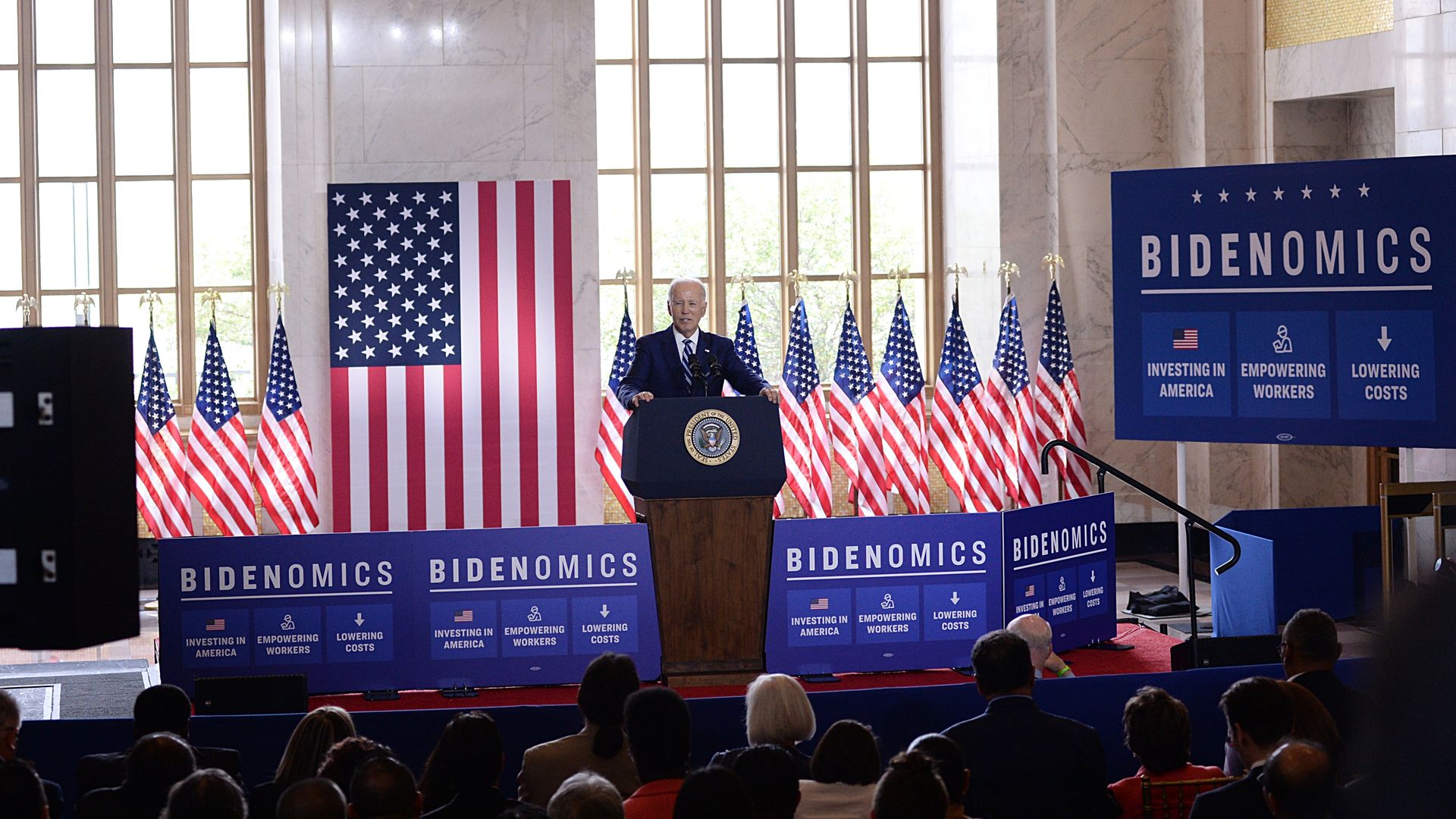
Why it matters: Biden's embrace of a term he's expressed some ambivalence about will fully align him with a White House communications shop that wants to run on the president's economic record and legislative accomplishments in 2024.




















/2023/06/29/1688003521447.gif?w=3840)