


24 mins ago
-
Business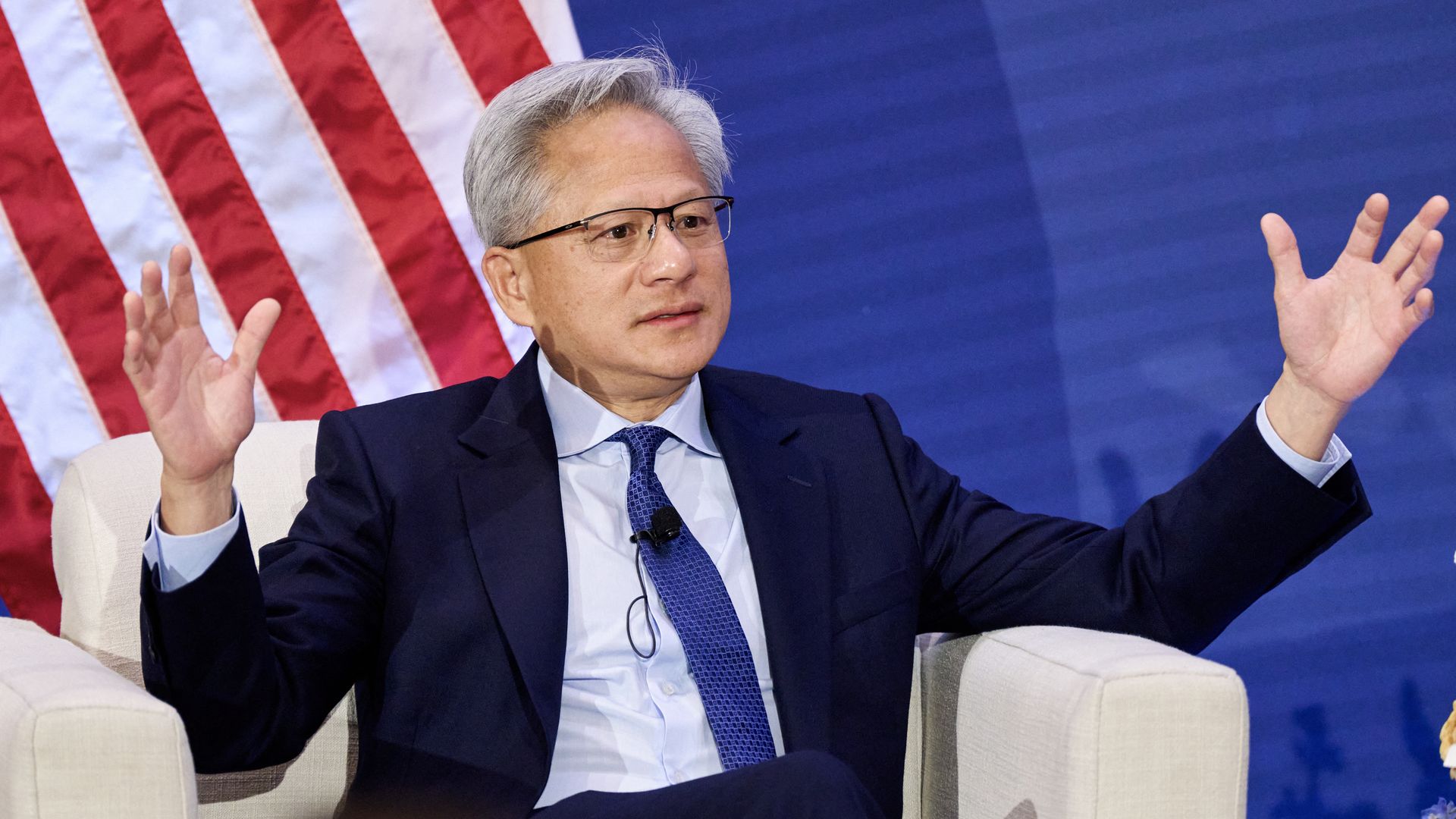
Nvidia CEO Jensen Huang speaks during the G20 Innovation Ministerial in Chapel Hill, North Carolina, on Sept. 2. Photo: Matt Ramey / AFP via Getty Images
Go deeper (2 min. read)

President Trump at the Republican Midterm Convention in Dallas. Photo: Al Drago/Bloomberg via Getty Images
Nvidia CEO Jensen Huang speaks during the G20 Innovation Ministerial in Chapel Hill, North Carolina, on Sept. 2. Photo: Matt Ramey / AFP via Getty Images
Nvidia CEO Jensen Huang dismissed fears of out-of-control AI creating outright havoc, saying that the technology actually poses an opportunity for the cybersecurity sector.
Why it matters: Huang — whose comments on AI are highly influential among investors — risks losing control of the narrative amid growing fears of widespread destruction.

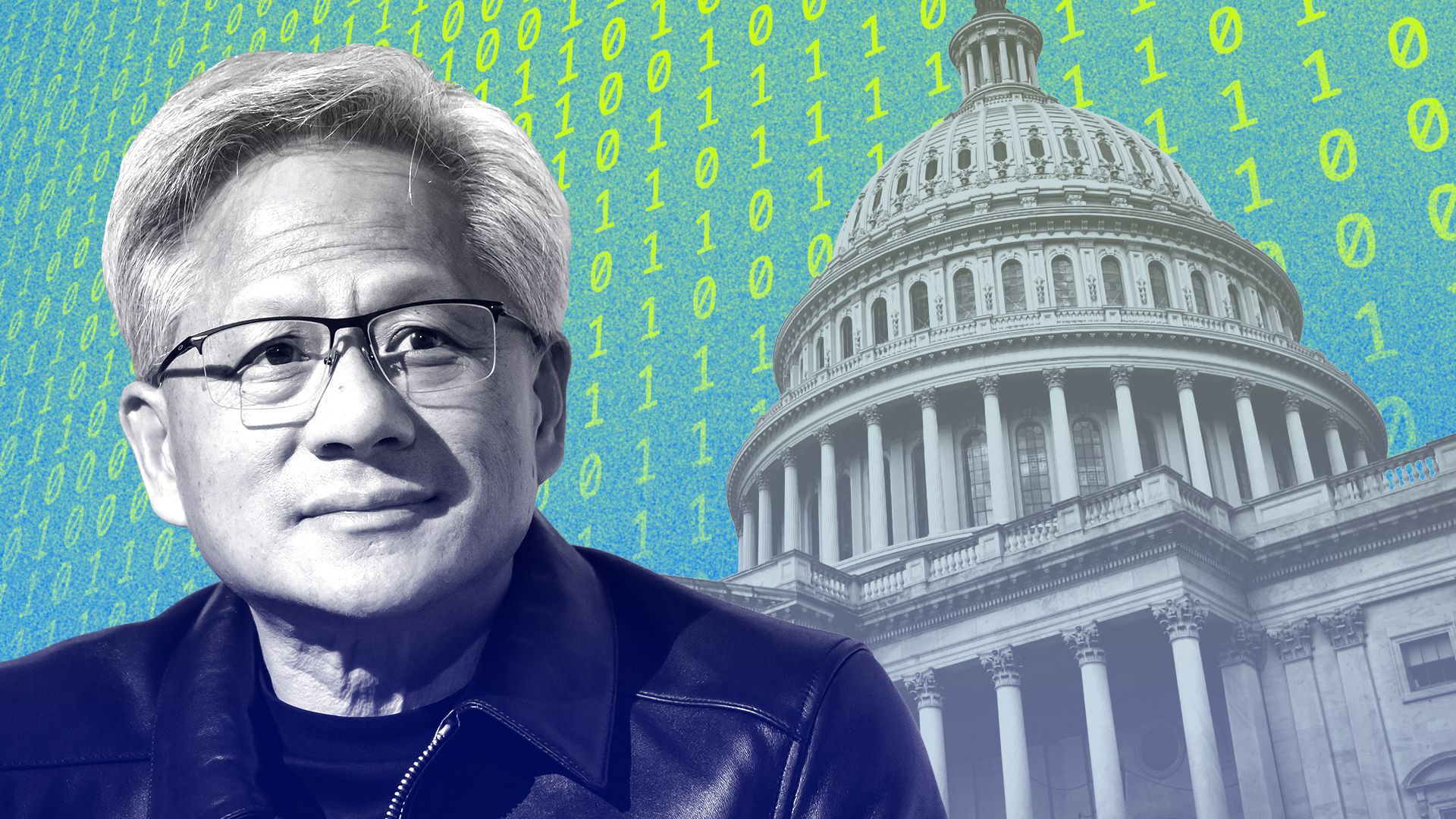
Photo illustration: Brendan Lynch/Axios. Photo: Tomohiro Ohsumi/Getty Images
The Justice Department is investigating Nvidia's $20 billion non-exclusive" licensing agreement with Groq to determine if it "tried to skirt antitrust scrutiny," according to the NY Times.
Why it matters: If this sort of arrangement is determined to be illegal, it could extend to a raft of other AI industry deals.

Renewed inflation risks are complicating the economic outlook on both sides of the Atlantic.
Why it matters: Inflation pressures were already building in August, and the latest surge in oil prices suggests there may be more to come. Brent crude blew past $105 a barrel, while the U.S. benchmark, West Texas Intermediate, topped $100 a barrel for the first time since May.
What they're saying: "The longer energy prices stay high, the more likely they are to drive up broader inflation through indirect and second-round effects," ECB president Christine Lagarde told reporters this morning.
By the numbers: U.S. wholesale prices rose 0.4% in August and 5.4% from a year earlier, largely reflecting higher energy costs.
Perhaps more troubling for the Fed is that some components that feed into its preferred inflation gauge, the Personal Consumption Expenditures Price Index, including airfares and hospital care, were firmer than expected.
What to watch: After this morning's Producer Price Index data, Bank of America now estimates that core PCE could rise by 0.26% — enough in its view to green-light a rate increase, though tomorrow's Consumer Price Index data could shift that estimate.

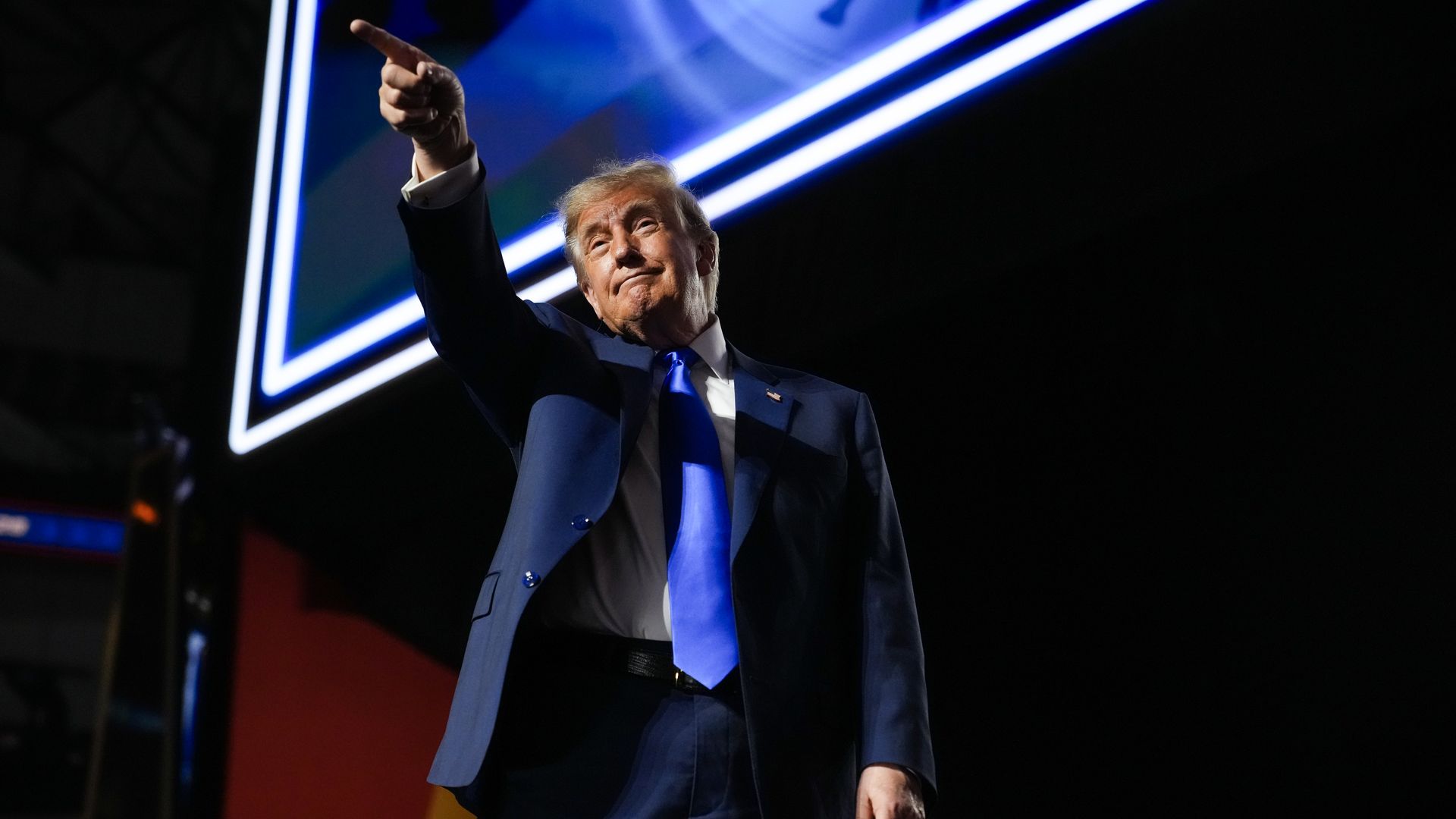
President Trump addressing the 2026 Republican National Convention in Dallas on Sept. 9. Photo: Andrew Harnik/Getty Images
President Trump said last night that if Republicans prevail in the midterm elections, the government will send $5,000 payments to each adult citizen. That would come with profound economic risks.
The big picture: The federal deficit is already running around $2 trillion a year, bond markets are starting to demand higher rates to finance government borrowing, the economy is at full employment, and inflation has been high for nearly six years.
By the numbers: There are around 260 million adult U.S. citizens, so $5,000 payments would amount to around $1.3 trillion, plus administrative costs, minus any reductions if high earners are excluded from the program.
What they're saying: "President Trump is talking about stimulating an economy with an existing inflation problem and without a lot of slack," Michael Strain of the American Enterprise Institute tells Axios. "I think there's a real risk that we would have an acceleration of inflation if the president's proposal became law."
Reality check: The president's proposal seems more like a rhetorical get-out-the-vote device than a buttoned-down policy proposal. He has previously spoken of offering a "tariff dividend" and a "DOGE dividend" that have not materialized.

The Treasury Department failed to cow the bond market Wednesday with its amped-up buyback announcement, as rates still rose.
Why it matters: The reaction suggests that Treasury Secretary Scott Bessent's unusual showdown with the markets could itself add to upward pressure on interest rates — precisely the opposite of what most think he's trying to achieve.
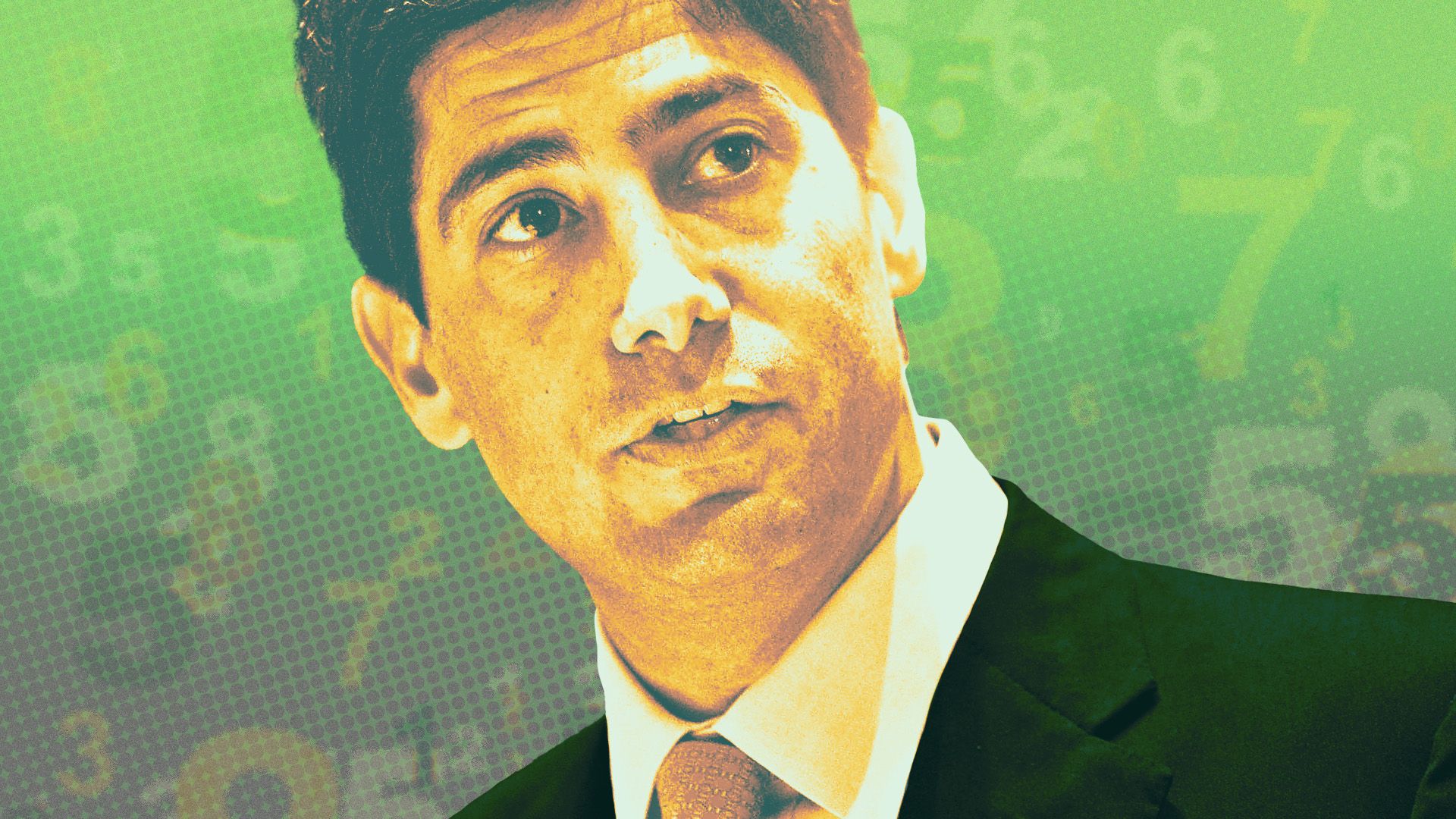
Photo illustration: Sarah Grillo/Axios. Photo: Jin Lee/Bloomberg via Getty Images
It looks like a jump ball as to whether the Fed will raise interest rates at a meeting concluding a week from today — and the decision may hinge on a few hundredths of a percent of a single month's inflation data.
The big picture: This is the opposite of what chairman Kevin Warsh wants. He has long criticized the Fed's proclivity for fine-tuning policy based on the smallest blips in economic data.
State of play: The Labor Department will release the August Producer Price Index tomorrow and the Consumer Price Index on Friday.
Zoom in: This has Fed watchers turning to extraordinarily granular detail of how this week's numbers will map onto PCE inflation, and in turn how various levels of August PCE inflation are likely to shape Fed policymakers' debate this coming Tuesday and Wednesday.
Of note: The government is tweaking the calculation method for some components of PCE inflation, including portfolio management fees, at the end of the month, another factor for modelers to grapple with.
Reality check: A frequent criticism that Warsh made of the 2010s-era Fed was that it got overly worked up over false precision. Officials fretted that inflation was undershooting the 2% target because it was routinely coming in around 1.8%.

Fifty-six percent of drivers say gas prices have raised their interest in EVs, according to HERE Technologies and SBD Automotive's annual survey.
Why it matters: As gas prices remain high, drivers increasingly see EVs as a way to save money.


Illustration: Sarah Grillo/Axios
Tesla's traditional do-it-yourself instinct could be tested by its nationwide robotaxi ambitions.
The big picture: Manufacturing self-driving taxis is one thing. Financing, parking, charging, cleaning and maintaining enough of them to blanket the country is another — and Tesla is signaling that it might want entrepreneurs to help shoulder the load.
New research from Anthropic outlines radically different paths for how AI will transform the economy in the next four years.
Why it matters: In one, AI's impact resembles that of the internet. In another, its impact resembles the arrival of the internet and electricity at once, while the most extreme AI economic scenario has no historical precedent.
Home heating oil bills are likely to be massive this winter in the Northeast — and as one such homeowner, I am terrified.
Why it matters: Beyond my ability to keep my daughter and dog alive through the long, dark suburban winter, the looming shadow of the oil delivery truck underscores the costs consumers are bearing as a result of parallel wars in Iran and Ukraine.