The macroeconomics of $5K checks

Add Axios as your preferred source to
see more of our stories on Google.
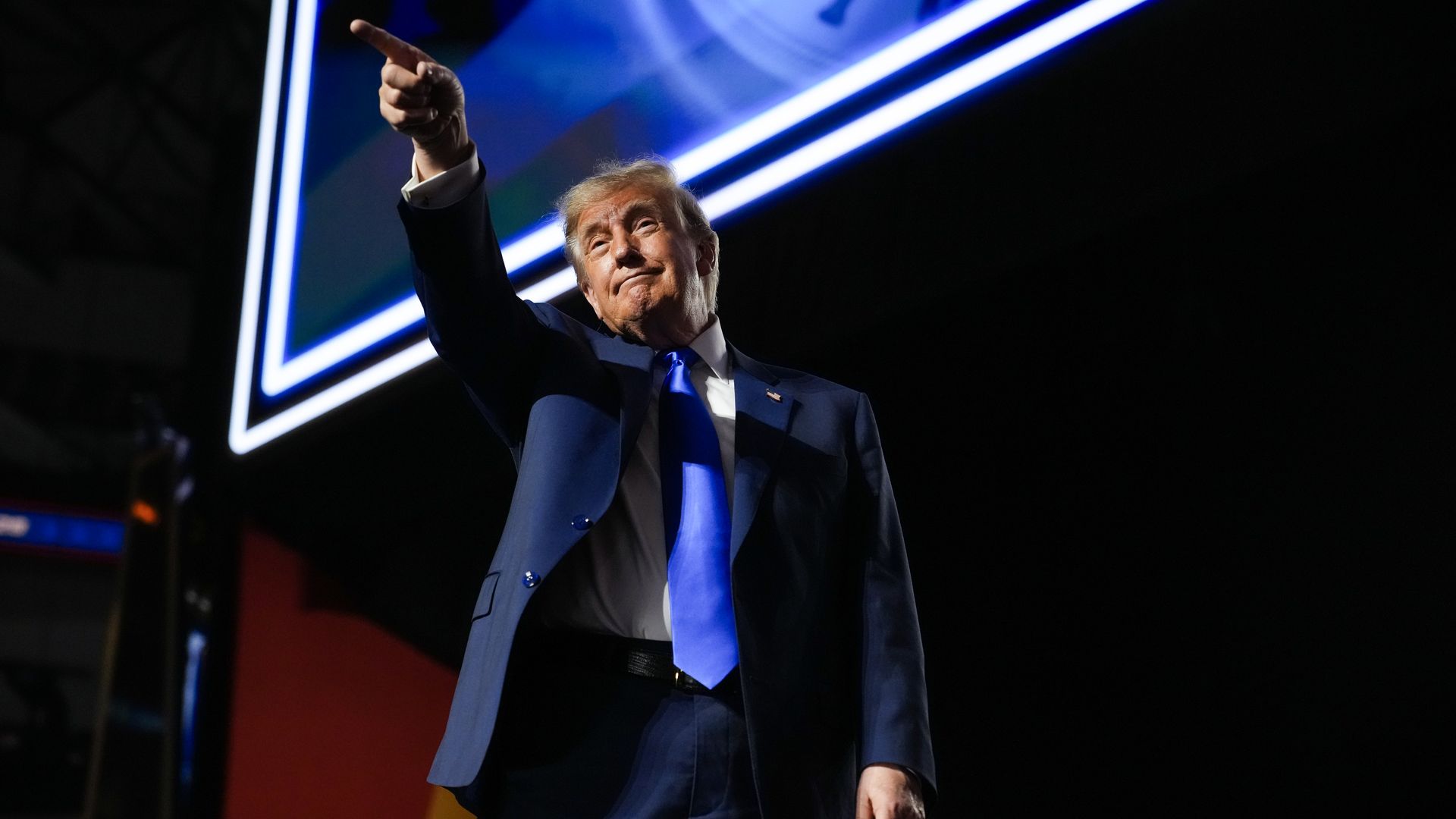
President Trump addressing the 2026 Republican National Convention in Dallas on Sept. 9. Photo: Andrew Harnik/Getty Images
President Trump said last night that if Republicans prevail in the midterm elections, the government will send $5,000 payments to each adult citizen. That would come with serious economic risks.
The big picture: The federal deficit is already running around $2 trillion a year, bond markets are starting to demand higher rates to finance government borrowing, the economy is at full employment, and inflation has been high for nearly six years.
- Borrowing an extra trillion dollars or so and sending it to households would risk overheating the economy and making debt, interest rates and inflation worse.
- It would have echoes of the $1.9 trillion stimulus that President Biden pushed through in early 2021, which included $1,400 payments to individuals — except that then unemployment was higher, inflation had not yet taken off, and the national debt was lower.
- Even against that macroeconomic backdrop that made fiscal stimulus more justifiable, the American Rescue Plan contributed to the inflation surge in 2021 and 2022 that undermined the Biden presidency.
By the numbers: There are around 260 million adult U.S. citizens, so $5,000 payments would amount to around $1.3 trillion, plus administrative costs, minus any reductions if high earners are excluded from the program.
- Vice President Vance said last night that tariffs would pay for the "Trump dividends," but tariff revenue has been tracking something on the order of $300 billion per year, with high uncertainty given volatile policy and legal challenges.
- It all comes as the Treasury Department has been intervening to try to suppress longer-term interest rates.
- This morning, the yield on the 10-year U.S. Treasury note — the benchmark for mortgages and other loans — has been a hair's width away from a 19-year high. At 11:15am ET, it was at 4.92%.
What they're saying: "President Trump is talking about stimulating an economy with an existing inflation problem and without a lot of slack," Michael Strain of the American Enterprise Institute tells Axios. "I think there's a real risk that we would have an acceleration of inflation if the president's proposal became law."
- "Financial markets are registering concern about the structural deficit, the Treasury secretary is engaged in increasingly aggressive efforts to put downward pressure on long-term yields, and the Fed chairman has made very clear the economy has an inflation problem."
- "Now is a strange time to be stimulating the economy," said Strain, AEI's director of economic policy studies.
Reality check: The president's proposal seems more like a rhetorical get-out-the-vote device than a buttoned-down policy proposal. He has previously spoken of offering a "tariff dividend" and a "DOGE dividend" that have not materialized.
- If Republicans maintain control of Congress, it will likely be with narrow margins, and lawmakers will face continued bond market pressure to restrain deficits.
- Still, at least some Republicans are taking the idea literally. Sen. Bernie Moreno (R-Ohio) said he will craft legislation to authorize the payments.
