Walmart is devoting more of its floor and retail space to online grocery pickup and delivery, the company announced Monday.
Why it matters: Grocery sales have helped the chain win over customers during high inflation — particularly high income consumers — while also giving the company a new edge in online sales over Amazon.
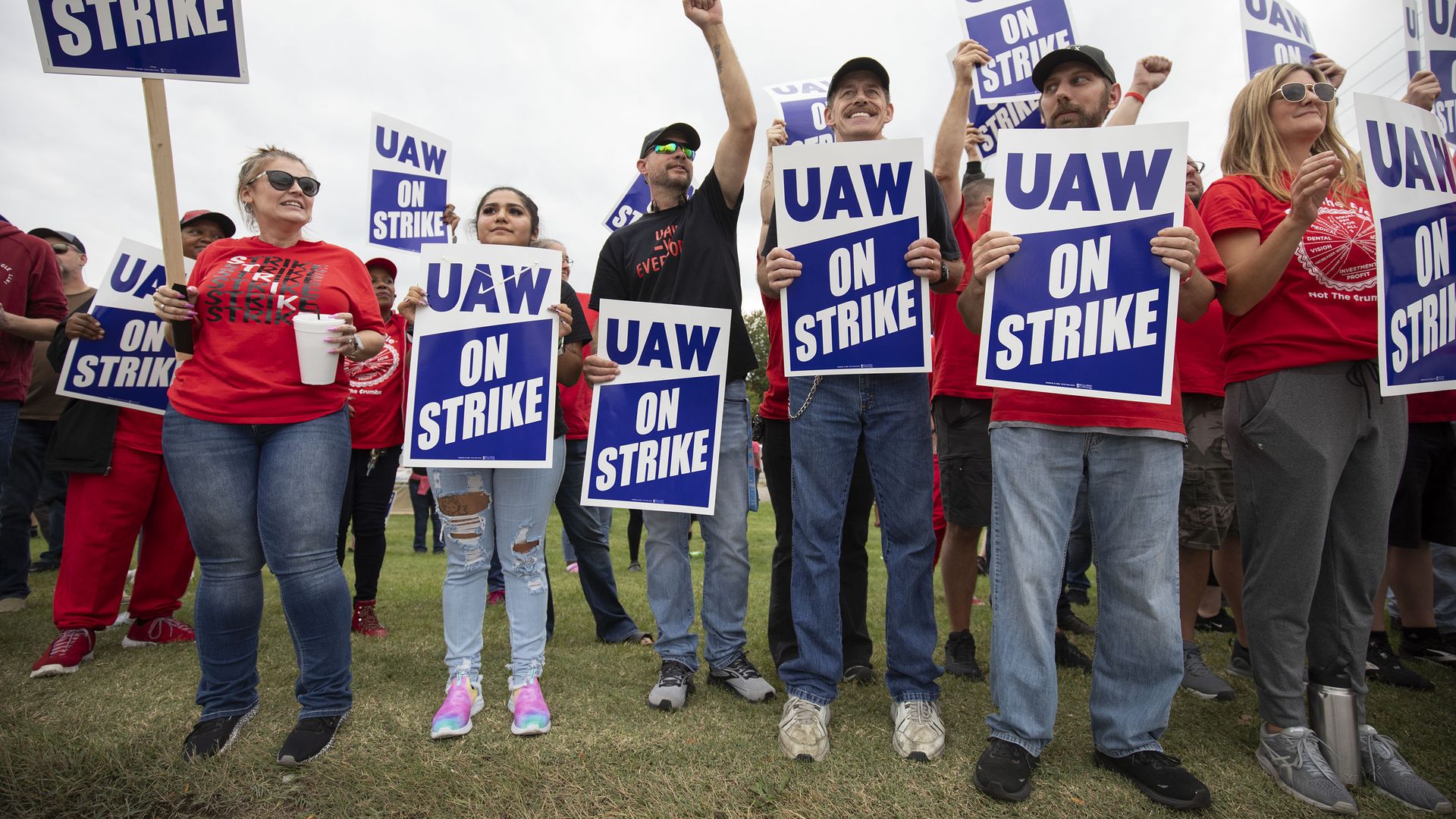
The United Auto Workers union on Monday announced a tentative contract agreement with General Motors, the last of the three U.S. automakers to settle a costly strike that lasted nearly seven weeks.
Why it matters: The proposed agreement, similar to deals struck in recent days with Ford and Stellantis, would provide big gains in wages and benefits plus increased job security.
The FDA is warning consumers to immediately stop using and avoid purchasing 27 over-the-counter eye drop products due to the "potential risk of eye infections that could result in partial vision loss or blindness."
Why it matters: The agency said in an alert posted Friday that investigators found "insanitary conditions in the manufacturing facility and positive bacterial test results from environmental sampling."
Sam Bankman-Fried suggested any adequately collateralized user of the crypto exchange he founded, FTX, could have borrowed money and used it any way they wanted, including withdrawing it and using it off the exchange.
Driving the news: A key question in the fraud trial of SBF is whether or not the hedge fund he founded had special privileges that other users (and the exchange's investors) didn't know about, putting their funds in danger.
Trick-or-treaters might end up with more Halloween candy knockoffs and store-brand chocolate this year thanks to inflation.
The big picture: High inflation drove a nearly 13% increase in the candy and gum category since last October, per research firm Datasembly. That's on top of a 19.9% national increase last year.
McDonald's posted better-than-expected sales and profits, as it was able to offset a sales slowdown from lower-income customers in the U.S. with a larger share of more affluent diners.
Why it matters: Results from the largest U.S. fast food chain are consistent with the view that while many Americans are still willing to absorb price hikes, thanks to the strong U.S. job market, some are making adjustments to deal with the increased costs.
Sam Bankman-Fried appeared to have many faces, one he presented to employees of his crypto exchange and trading firm, another for members of Congress, and one for social media, according to prosecutors.
Driving the news: The cross examination of SBF began Monday morning, with U.S. assistant attorney Danielle Sassoon tearing into the former FTX chief, focusing on his tendency to say one thing, and then say — and do — another.
The U.S. Department of Education is withholding a $7.2 million payment to student loan servicer MOHELA after billing issues resulted in hundreds of thousands of borrowers missing payments.
Driving the news: More than 800,000 borrowers were delinquent on student loan payments after MOHELA failed to send timely billing statements to 2.5 million borrowers, per the Education Department.
Tech workers at the New York Times plan to walk out Monday afternoon to protest the company's return-to-office policy.
Why it matters: The Times' Tech Guild, which represents more than 600 staffers, is trying to negotiate its first contract with management after voting to unionize in March 2022.
The rapid rise in long-term interest rates has mostly been a story about the United States, what it means for the domestic economy, deficits and more. But the narrative has gone global.
Why it matters: The higher-rates-for-longer phenomenon looks to be rooted in changes to the U.S. outlook but is sending ripples across major economies, resulting in higher borrowing costs for companies, individuals and governments around the globe.
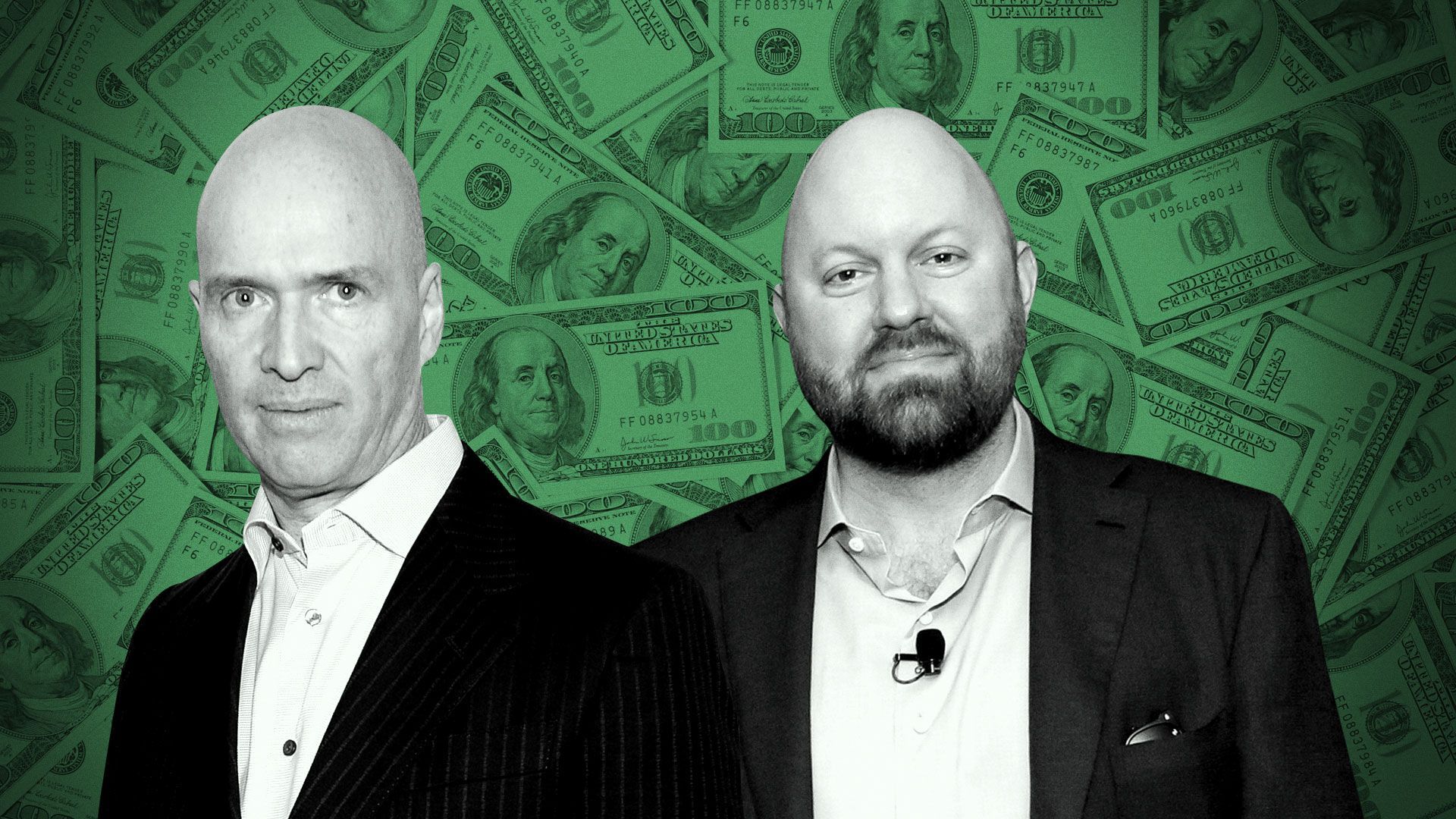
Andreessen Horowitz expects to target around $3.4 billion for its next core early-stage and seed-stage funds, representing a slight increase to its prior efforts, Axios has learned.
The big picture: Overall VC fundraising is down, although investments are up in the AI sector where Andreessen Horowitz is placing many of its bets.
Google has agreed to invest up to $2 billion into Anthropic, a San Francisco-based generative AI startup that recently secured $4 billion from Amazon.
Why it matters: Not only does this escalate Big Tech's proxy fight over the industry's next big platform shift, but also comes on the same day that the Biden administration unveiled an "aggressive" executive order on artificial intelligence.
Stellantis andunionizedautoworkers in Canada reached a tentative contract agreement Monday morning, ending a brief strike that began at midnight.
Why it matters: The tentative deal struck by the automaker and the union, Unifor, covers some 8,200 Stellantis workers. It comes days after the company reached a tentative deal with the United Auto Workers union to end weeks of historic strike action in the U.S.
Do you make more money now than you did before the pandemic?
Why it matters: You might think you know the answer about your own pay, but there is little consensus on how American workers' overall real wageshave fared in recent years, write the authors of an intriguing new analysis from the Hamilton Project at the Brookings Institution.
General Motors' biggest bets on the future — electric vehicles, autonomy and subscription software — are all running into trouble, and now the likelihood of sharply elevated labor costs is raising the stakes even higher.
Why it matters:CEO Mary Barra is trying to guide GM through the biggest transformation in its history. But her vision of an electric, autonomous, technology-driven future is proving to be tougher than expected, with little margin for error.
The Biden administration's long-awaited executive order on artificial intelligence will require developers of the most powerful AI systems to share critical testing information with the government.
What's happening: President Biden is expected to sign the AI executive order Monday afternoon at a White House event.
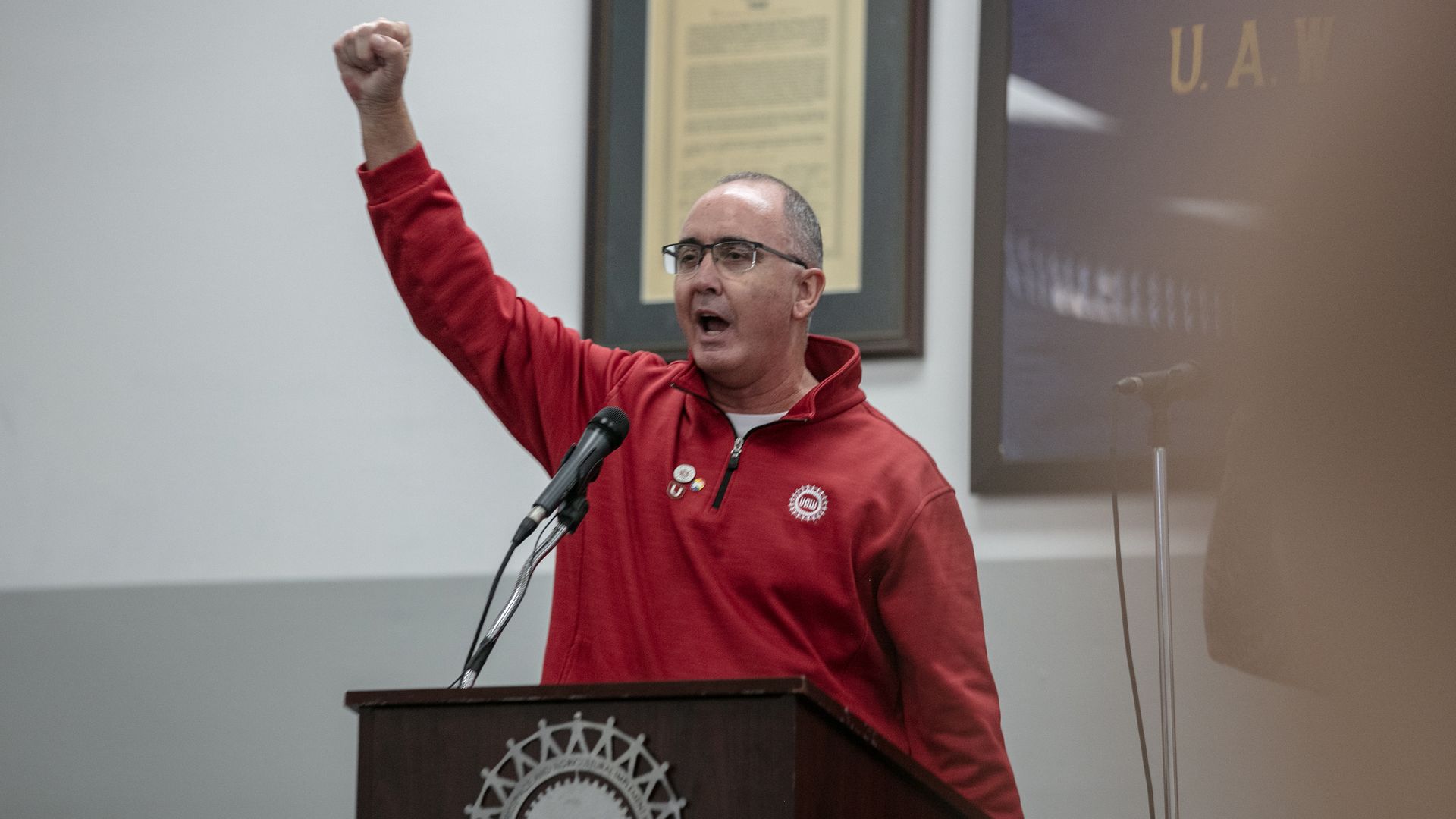
The UAW's huge contract wins at Detroit automakers represent "a call to action" for working people everywhere to flex their collective muscle against "the billionaire class," president Shawn Fain told union members Sunday evening.
Why it matters: It's clear that Fain has grander ambitions than just helping autoworkers recoup past concessions. He's fanning the sparks of a much larger labor movement as workers demand higher pay across the economy and form unions at companies like Starbucks and Amazon.














/2023/10/30/1698678340801.gif?w=3840)


/2023/10/30/1698676848495.gif?w=3840)