Investors are starting to accept a new reality of higher rates, lower stocks

Add Axios as your preferred source to
see more of our stories on Google.
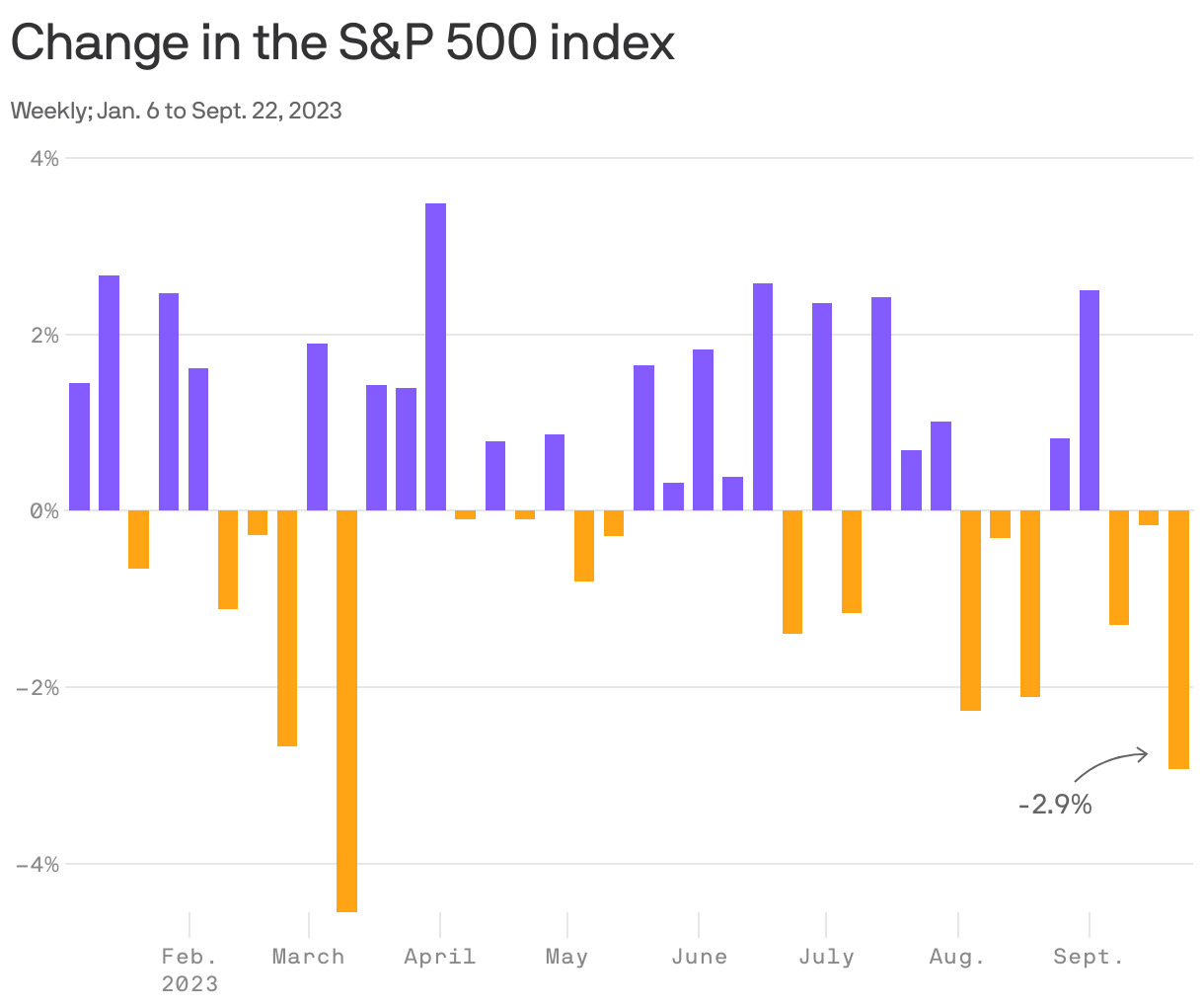
Investors are coming around to the idea that high-interest rates will stick around for longer than they previously thought — which helps explain the stock market's recent reversal.
Why it matters: As we've written about a ton over the past two years, rates play a huge, but often unseen role in determining stock market prices.
- Long story short, when rates rise, they pull down the value of stocks in lots of investor models.
- High rates make risk-free assets like Treasuries look a lot more attractive, relative to stocks — and that lures money out of the stock market.
What they're saying: "US equities [are] unlikely to reach new highs" any time soon, wrote JP Morgan analysts in a note last week, summarizing the common views expressed at a recent investment conference. They cited the increasing investor interest in "cash and high-yielding, high-quality short duration fixed income."
- And BofA Global analysts, noting the large flow of money into short-term, cash-like investments, described investors as "cautious" and willing to be "paid to wait" in cash until the market decides its next move.
State of play: The Federal Reserve last week threw cold water on investor hopes that it'll cut rates any time soon.
- In response, 10-year Treasury note yields jumped to a new 16-year high of nearly 4.50%.
- And as you might expect, the S&P suffered. The blue-chip index tumbled 2.9% in its worst week since the failure of Silicon Valley Bank.
- With one week left in September, the index is on track for its worst month of the year.
Zoom out: This year's once robust rally — which lots of people were saying had all the earmarks of a new bull market — has really lost momentum.
- The S&P's yearly gains, which were flirting with 20% back in early August, are now down to 12.5%.
💭 Our thought bubble: If stocks keep stalling (or falling) investors may avail themselves of other attractive places to stash cash, while they wait for a good reason to take stock market risk.
The bottom line: As markets adjust to high rates, no one seems very confident in where the stock market goes from here.
