What started nearly two decades ago as a protest of society's dependence on oil has grown into one of Portland's largest cultural events, with nude cyclists taking over city streets en masse.
Why it matters: While the World Naked Bike Ride is quintessentially Portland, we're not the only city that hosts it. Since 2004, cities across the globe have participated as a way to promote cycling as a mode of transportation, as well as body positivity.
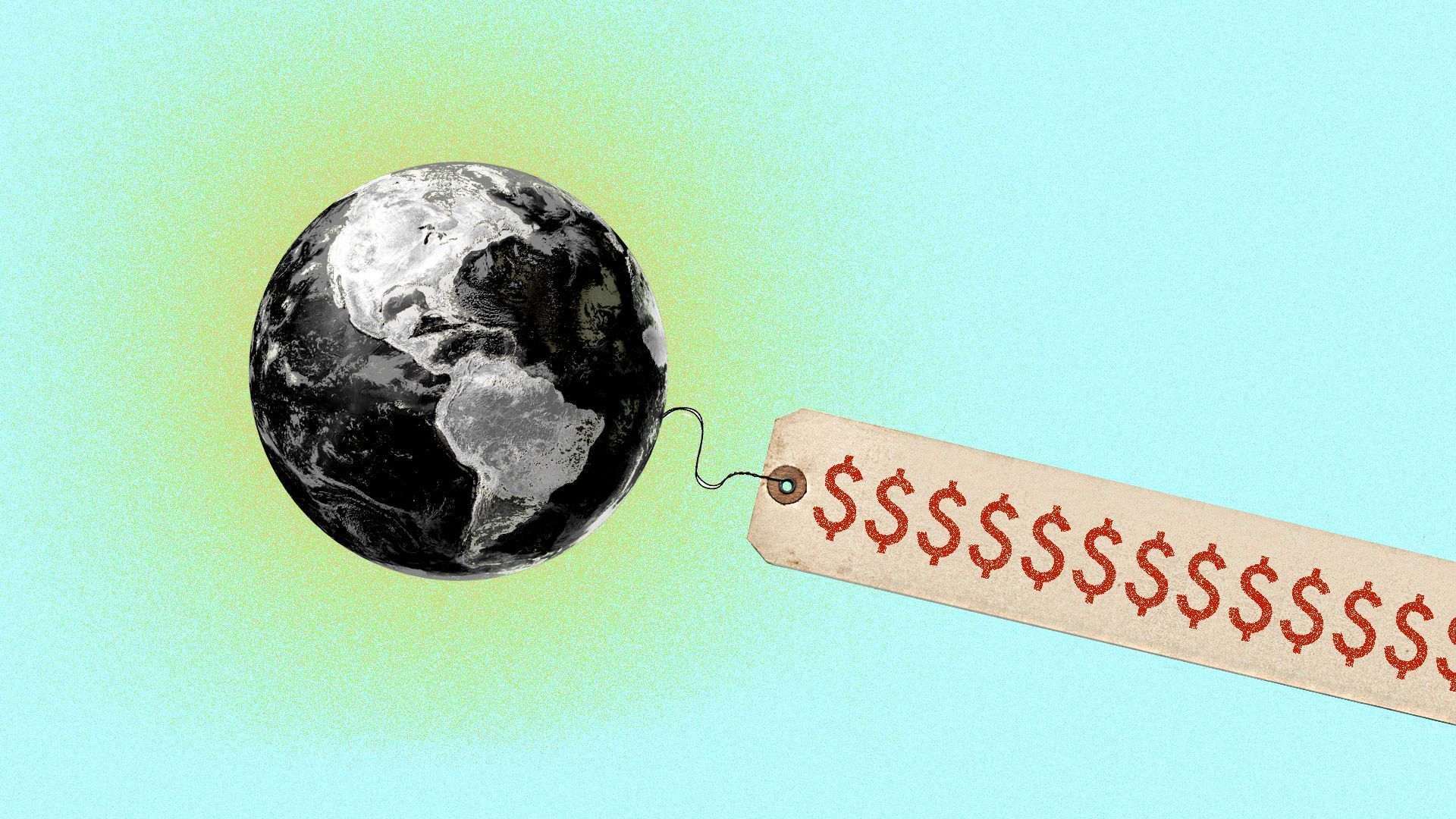
The hidden costs of living in U.S. areas particularly susceptible to extreme weather are becoming increasingly more obvious — and expensive.
Why it matters: Intense heat, devastating floods and ravaging wildfires — natural disasters caused or worsened by climate change — are disrupting life globally. But for millions of Americans, they're also driving up living expenses, creating unexpected bills and triggering existential headaches.
As climate change worsens — July was the hottest month on record globally — the stinging costs of living in particularly vulnerable regions could drive out residents. That has the potential to reshape local politics, economies and cultures.
Extreme weather is already creating multiple challenges for the world's food supplies, as Axios' Ayurella Horn-Muller reported this week, which may lead to goods scarcity and new inflationary pressures.
The big picture: The effects are wide ranging, amounting to an unofficial climate tax in various areas:
In flood and hurricane-prone Florida, property insurance rates are skyrocketing, making locals and transplants alike reconsider life in the Sunshine State.
In fire-tormented California, health care costs are piling up as research has shown that wildfire smoke leads to increased emergency room visits.
Be smart: Eventually, the extra costs could become a deterrent to living in certain areas, which would undermine housing values.
"Housing markets in the U.S. have yet to fully price in these risks, leaving many properties significantly overvalued," Capital Economics economist Leah Fahy said in a recent analysis.
"But as these risks begin to manifest, housing markets will eventually adjust. This will weigh on house prices, particularly in Florida as well as Appalachia, northern New England and the Northwest."
Threat level: In a paper published in the journal Nature, researchers found that U.S. "residential properties exposed to flood risk" from 2020 to 2050 are currently overvalued by somewhere between $121 billion and $237 billion.
In particular, flooding poses a threat to housing values because some vulnerable areas are becoming uninsurable. That includes swaths of Florida and California, where insurers like State Farm and All State have stopped offering new home coverage, just as nature-related risks are amplified by a warming climate.
"Residential property in Florida is by far the most over-valued in dollar terms, accounting for over a third of the national total," Capital Economics' Fahy wrote. "And overvaluation is also significant in California, New Jersey and Texas."
Between the lines: Even people that don't experience a decline in their home values are poised to experience sticker shock in their monthly bills due to climate change's second-order effects.
For Arizonans, electricity bills could rise by up to $2,200 in 20 years, according to the Environmental Defense Fund.
For Floridians, home property insurance rates are poised to approach an average $10,000 annually within a few years, according to the Insurance Information Institute.
For Californians, water prices are soaring and residents need costly medical attention when they inhale wildfire smoke.
What they're saying: "These costs are enormous," Tulane University climate adaptation scholar Jesse M. Keenan tells Axios. He adds that other costs are poised to spike as well — including water, car repairs and food — due to climate change.
As water becomes increasingly scarce, costs rise to fund infrastructure needed to obtain it.
As heat intensifies, soil dries out, leading to more potholes — and thus more car repairs.
The U.S.is alreadyexperiencing about $31 billion to $34 billion in average annual losses from flooding, according to a separate paper published in Nature.
And yet the U.S. as a whole faces a 26% increase in flood risk connected to climate change alone by 2050.
The researchers are projecting a rise in hurricane flooding affecting Virginia, the Carolinas and the west coast of Florida, while sea level rise pummels other areas of the Atlantic and Gulf coasts.
The bottom line: After years of theoretical, high-level debates, costs of climate change are coming home to roost for Main Street.
The popular virtual world platform Roblox is planning to let some job applicants attend interviews virtually, as their avatars.
Driving the news: The interview option was announced as part of the unveiling today of the virtual Roblox Career Center that the company is pitching as a way to extend its reach to a wider pool of applicants.
The recent deal reached between UPS and its union workers has made the shipping giant an attractive prospective employer for job hunters.
Driving the news: In the week following the deal's announcement, the job posting site Indeed saw a 50% increase in job searches with the key terms "UPS" or "United Parcel Service," Bloomberg reported.
Relive the Johnny Football phenomenon, see 10 contestants try to survive a fake zombie apocalypse or watch Charles, Oliver and Mabel investigate another murder.
Situational awareness:Wes Anderson's "Asteroid City" will stream exclusively on Peacock starting tomorrow.
In her first television interview since taking over as CEO of "X," formerly known as Twitter, Linda Yaccarino said advertisers are returning to the platform and that in terms of profitability, "we're pretty close to break even."
Why it matters: Yaccarino didn't specify how much revenue the company is earning, and it's unclear how close the company actually is to profitability, given Musk said Twitter was close to breaking even in April.
This year's hot, hot summer has been met with consistently cooling inflation. And the moderate price gains seen in recent months may stick around this time.
Why it matters: The July Consumer Price Index is the latest data release that confirms easing price pressures that should bring relief to American consumers burdened by sticky inflation.
Digital Currency Group (DCG) on Thursday filed a motion to dismiss a lawsuit that Gemini Trust Co. filed in July against it and its chief Barry Silbert.
Catch up quick: Gemini, the crypto exchange founded by Cameron and Tyler Winklevoss, alleged in its suit that DCG and Silbert misrepresented the accounting treatment of liabilities that DCG took over from its lending unit, Genesis Global,after the collapse of crypto firm Three Arrows Capital.
Smart CEOsbring strategic communicators into the fold before any major decision or announcement is made — and that goes for quarterly earnings, too.
Why it matters: Earnings reports are often owned by financial and legal teams, but communication professionals are stepping in to create a narrative behind the numbers.
ESG has a PR problem. The term — which refers to a company's environmental, social and governance strategy and investments — has been all but officially stricken from corporate vernacular.
Why it matters: Just because the term 'ESG' has fallen out of favor, doesn't mean these initiatives are dying off. Corporate communicators and other business leaders have simply become more judicious about how and when to message about them.
A longstanding problem in cryptocurrency projects is how to best manage change in protocols over time. But what if they just...don't change at all?
Why it matters: When decentralized projects allow users to upgrade their software, they can introduce exploits into the system that later cost innocent users millions. That's partly why a vocal minority of entrepreneurs advocate for open software that doesn't change, Brady writes.
President Biden on Wednesday proposed an effective ban on U.S. venture capital and private equity investments into Chinese tech companies, via an executive order aimed at bolstering national security.
Why it matters: This is the end of unfettered globalization in venture capital and private equity.
Danish drugmaker Novo Nordisk has agreed to buy Inversago Pharma, a Montreal-based developer of anti-obesity drugs, for upwards of $1.1 billion in cash.
Why it matters: Novo isn't content to rest on its weight loss laurels, despite the popularity of its Ozempic and Wegovy products.
The Consumer Price Index rose 3.2% in the 12 months through July and the measure that excludes energy and food prices rose 4.7%, the Labor Department said Thursday.
Why it matters: Despite an uptick in overall inflation, underlying details point to further signs of cooling last month as the steep price gains that plagued American consumers look to be moderating.
Ukraine's corruption prevention agency on Thursday added Bacardi to its list of international war sponsors, arguing that the liquor company is expanding its business in Russia as the invasion wears on.
Why it matters: Ukrainian authorities say Bacardi, the world's largest privately held liquor company, has scored billions more in profits as other booze brands have stopped doing business in Russia.
Driving the news: With four federal criminal cases filed in the Western District of Washington since the beginning of the year, and numerous ongoing sexual assault investigations, federal law enforcement officials are sounding the alarm.
Searches for office space in San Francisco are picking up again — offering hope that a recovery may be starting for the depressed downtown of tech's global capital.
Driving the news: Office searches — a quarter of them by AI companies — are reaching levels not seen since COVID vaccines became available in 2021, per JLL, a commercial real estate company.
Disney CEO Bob Iger made it clear on a call with investors Wednesday that if Disney is going to be successful long-term, it needs to seriously rethink its commitment to the traditional TV business.
Why it matters: Disney and its Hollywood peers are under enormous pressure to make their streaming bets profitable. Broadcast and cable networks have largely fueled those investments to date, but as cord-cutting intensifies, those cash pools could soon dry up.
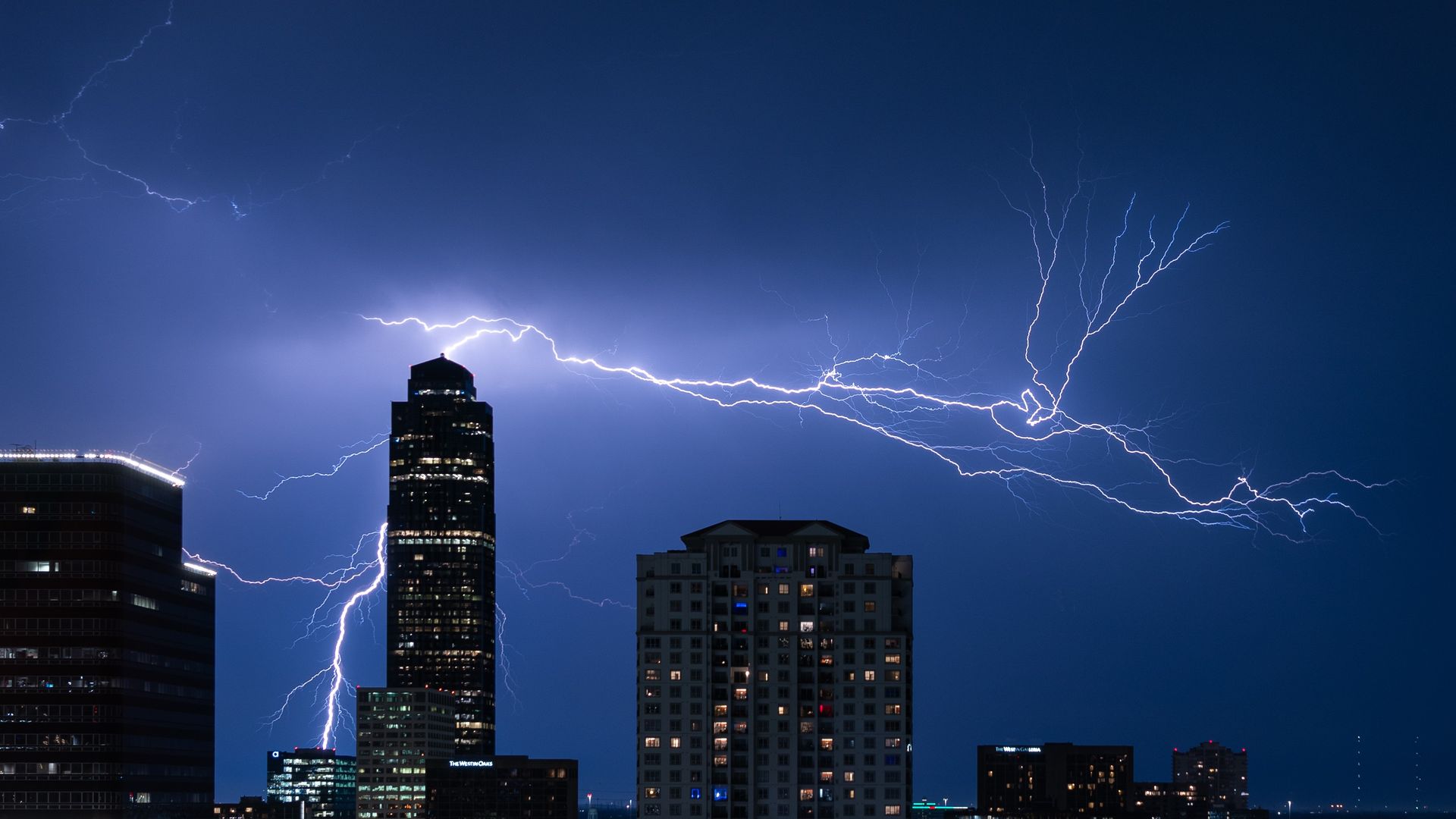
Severe storms that swept much of the U.S. in the first half of this year resulted in $34 billion in insured losses — the "highest ever" recorded in a six-month period.
The big picture: That's according to a report out Wednesday from Swiss Re Group, which estimated global insured losses from natural catastrophes at $50 billion — the second highest since 2011. "The effects of climate change are evident in increasingly extreme weather events," the report notes.