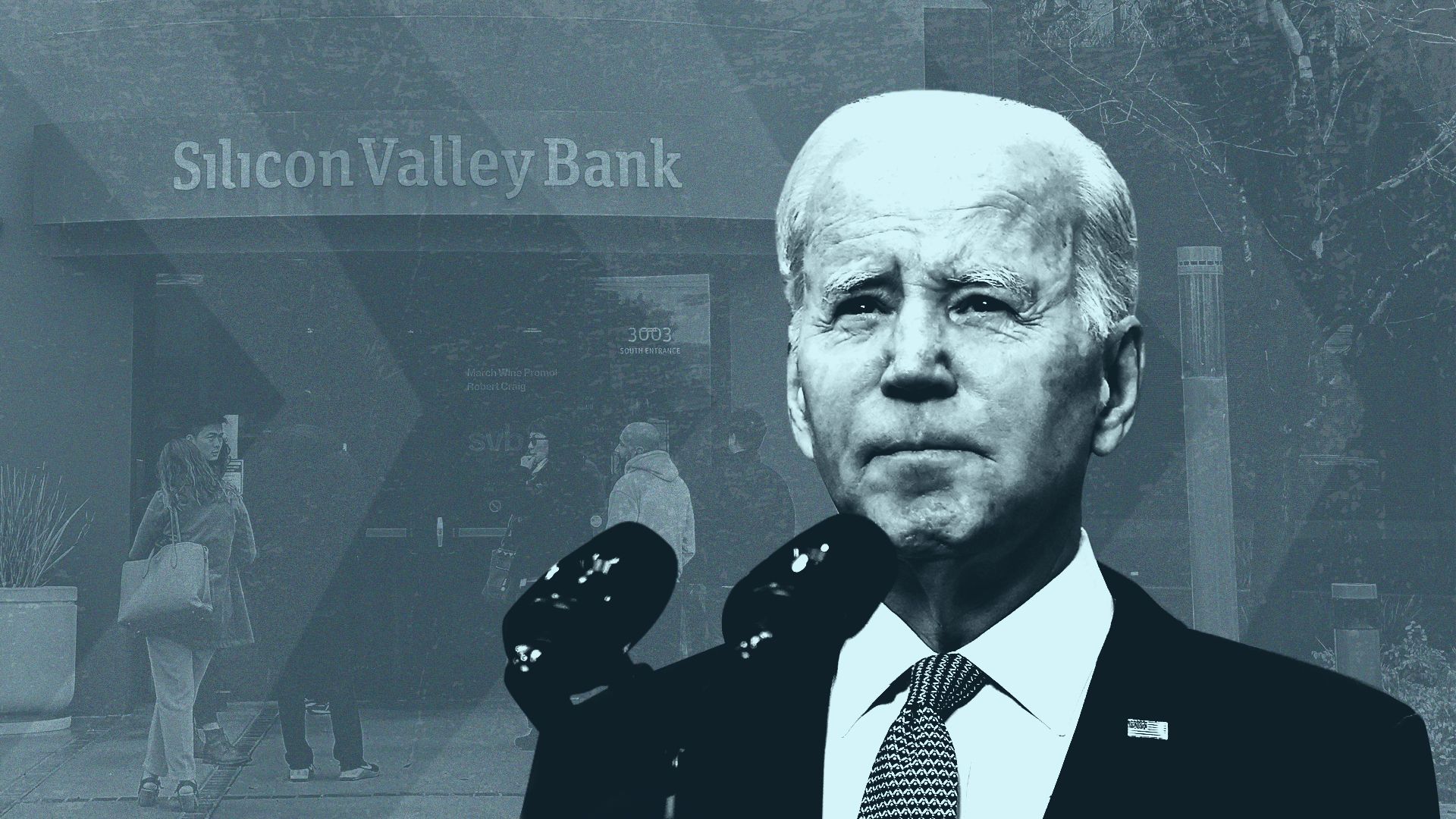
The Biden administration's guiding principle in protecting depositors after the failures of Silicon Valley Bank and Signature Bank came down to this, Axios has learned: Prevent bank runs beyond the initial crisis.
Why it matters: The administration's move to shield the banks' depositors — and let banks with profiles similar to SVB and Signature get pummeled by the stock market — carried significant risks.
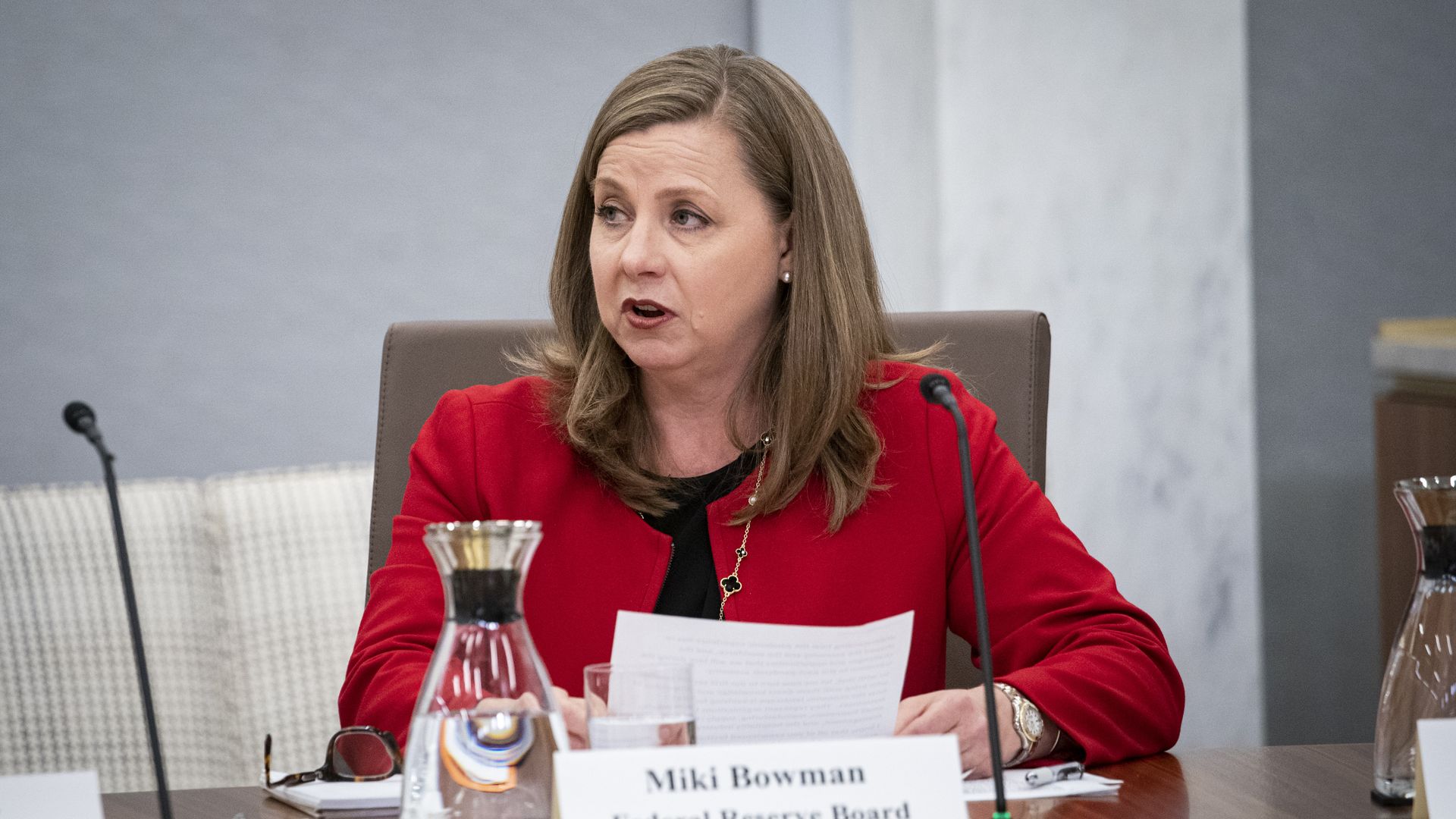
Federal Reserve governor Michelle Bowman on Tuesday said the U.S. banking system remained on solid footing in the first public speech from a policymaker after the high-profile failures of Silicon Valley Bank and Signature Bank.
Why it matters: Bowman made short remarks acknowledging the fallout from those bank closures, which forced the Fed and other regulators to step in with emergency measures, during a speech that focused on innovation in the banking system.
These days the economy resembles a unicycling juggler — and it just got yet another ball to keep in the air.
Why it matters: The sudden collapse of Silicon Valley Bank and New York's Signature Bank comes at a precarious time for the economy as it grapples with myriad challenges.
The drama in the days before last Friday's FDIC seizure of Silicon Valley Bank — and the ensuing fog that followed the bank's failure — threw the dealmaking community into disarray.
Why it matters: Axios Pro Deals reporters leapt into action to cover the fallout this shocking bank run and failure had on the fintech, climate, health tech, retail and media sectors.
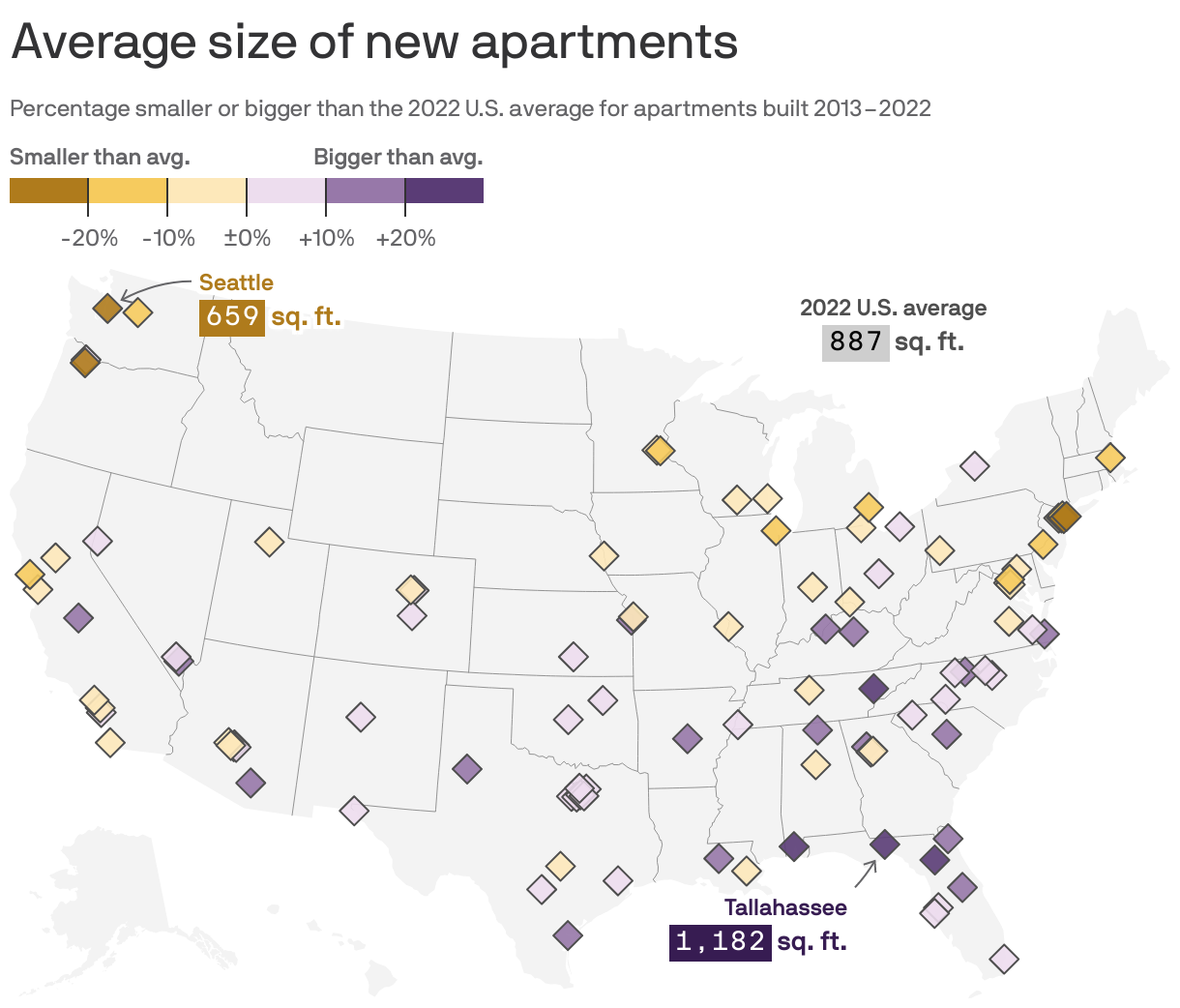
Data: RentCafe analysis of Yardi Matrix data; Note: Analysis includes U.S. metro areas (defined by Yardi Matrix market boundaries) with the most apartments located in multi-family buildings of 50 units or more; Map: Kavya Beheraj/Axios
Apartment sizes are shrinking nationally, a reversal in the rental market that saw units get bigger early in the work-from-home era.
Driving the news: New apartments in 2022 measured 887 square feet on average, a 30-square-foot drop from a year earlier, per a new report from listing service RentCafe.
Driving the news: As one bank failed and another closed, bitcoin and other crypto got a boost, market experts tell Axios — all linking the weekend banking crisis to changing expectations.
Inflation is proving stickier than it appeared not long ago. That was further confirmed in Tuesday morning's consumer price index report.
Driving the news: Inflation is no longer trending down, as in the second half of 2022. Rather, it's holding at an uncomfortably high level, with underlying details showing persistent pressures.
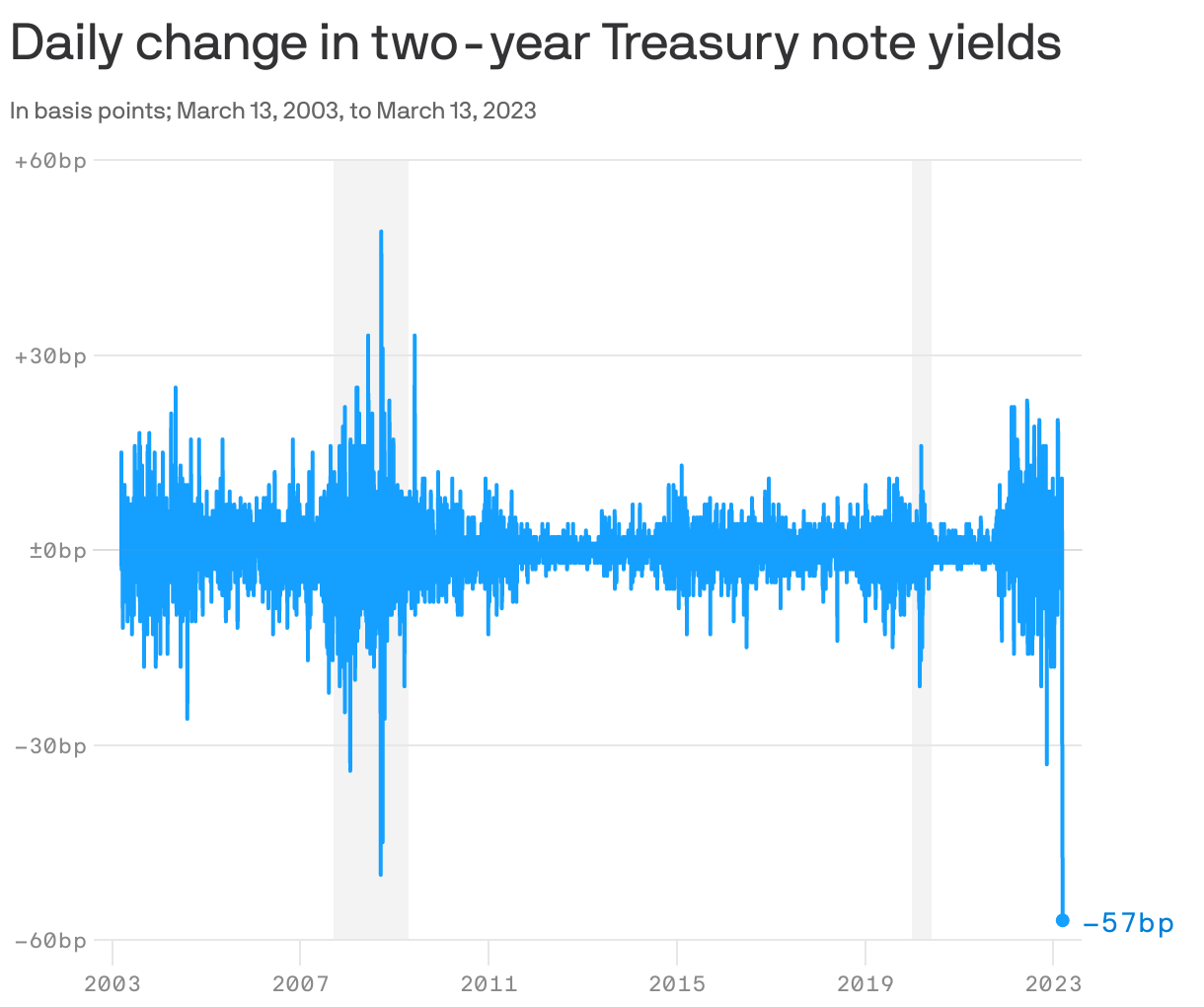
Monday was one for the ages in financial markets, especially for bonds. The two-year Treasury yield fell precipitously, part of the biggest three-day drop in that rate since the 1987 stock market crash.
It reflected some mix of panicked, flight-to-quality Treasury purchases, and an assessment that the Fed won't be able to push rates as high as had seemed likely a few days ago amid banking turmoil.
Driving the news: Tuesday, however, the swings have partly reversed. The two-year yield was up 0.29 percentage points at 11:45am EDT, to 4.32%.
Relatedly, futures markets swung violently Monday, pricing in significant odds the Fed will not hike at its meeting next week, as has been long-telegraphed.
But Tuesday morning, they've swung back the other way, with 86% odds of a quarter-point rate hike.
Between the lines: All sorts of markets — including bank stocks and volatility indicators — are flashing the same signs Tuesday: Conditions look less scary than they did Monday.
The absence of any new signs of bank runs or further bank seizures is viewed, in and of itself, as good news.
If the government rescues announced over the weekend successfully prevented the kind of wholesale panic some had feared, then it makes sense for some of the more dire risks markets priced on Monday to fade away.
Yes, but: When financial instability is unleashed, it rarely is contained with a single bold announcement. And the speed at which things have happened since Thursday is a reminder that the economic narrative can be upended practically overnight.
Major cybersecurity companies and startups appear to have contained their risk from the sudden collapse of Silicon Valley Bank over the weekend.
Driving the news: Several cybersecurity companies, including big names like CrowdStrike, relied on SVB for some of their financial needs before the bank's unexpected failure late last week — leaving leadership teams and investors in limbo until regulators stepped in Sunday night.
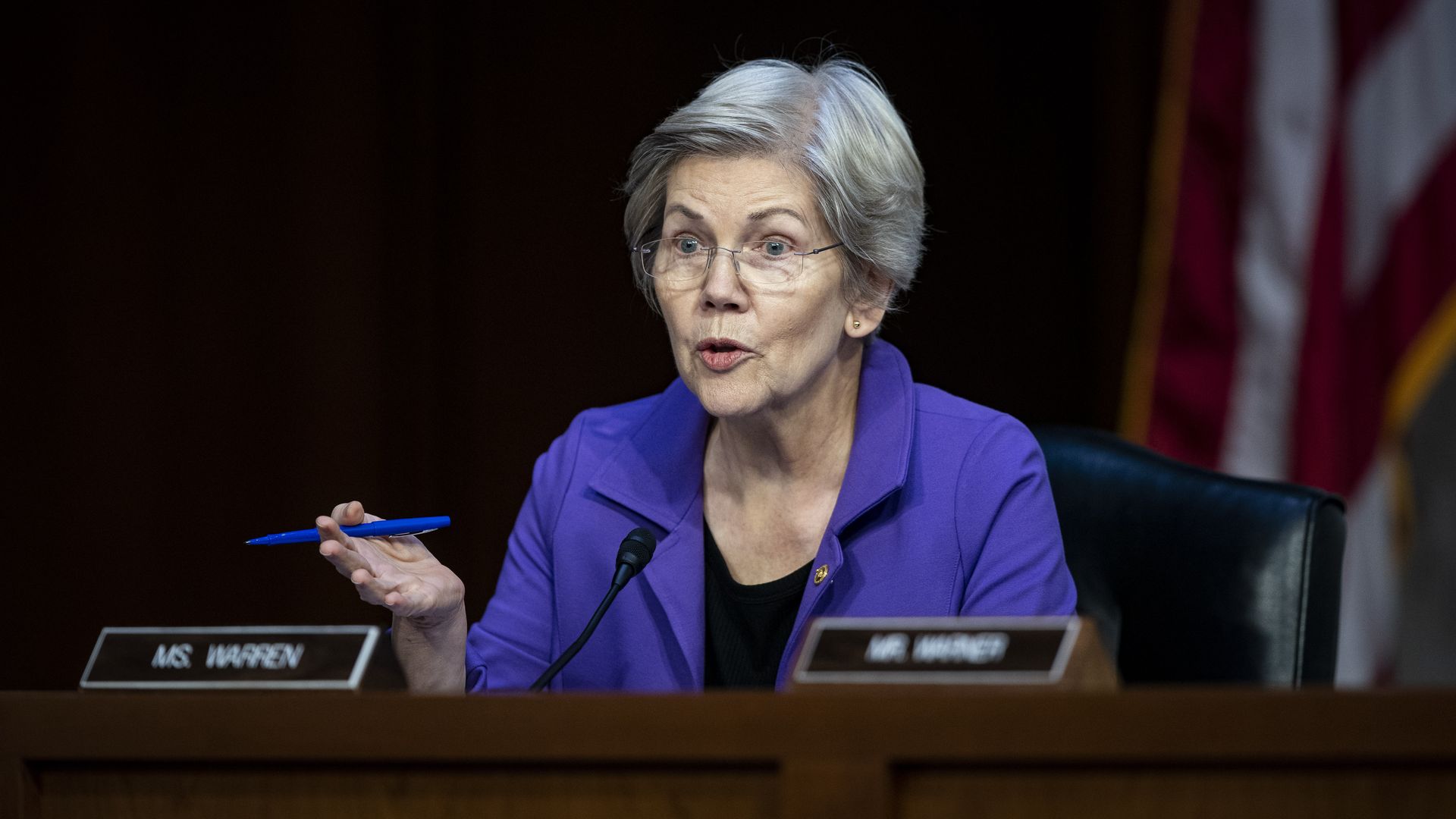
The big picture: Warren has been outspoken in the aftermath of SVB's collapse, criticizing Trump-era rollbacks to parts of the Dodd-Frank Act, which provided regulatory relief for midsized banks like SVB.
Silicon Valley Bank's share sale announcement last Wednesday night caused concern at Founders Fund, a large venture capital firm that did most of its own banking with SVB, Axios has learned.
Behind the scenes: By Thursday morning, Founders Fund's top operations executives were on the phone, quickly deciding to move firm capital to a number of bigger banks. Firm founder Peter Thiel was not part of the conversation.
Behind the scenes: There have been many questions about why SVB and its Goldman Sachs bankers structured and timed the sale in the manner that they did, with the U.S. government seizing SVB less than 48 hours later. Axios has spoken with multiple sources, in an effort to piece together the timeline:
Activist investor Carl Icahn launched a proxy fight for three board seats at biotech giant Illumina, which he believes erred in competing its controversial $7.1 billion takeover of liquid biopsy firm Grail.
Why it matters: This is the latest high-stakes chapter in Illumina's complicated history with Grail, which it developed, spun out and then repurchased several years later.
In what has become a race to incorporate generative AI across their products, Microsoft and Google are both announcing efforts this week that will allow businesses to harness the technology in conjunction with their proprietary data.
Why it matters: While competition is often good for customers, some worry that peer pressure is prompting companies to rush deployment of an unproven technology replete with risks and unknowns.
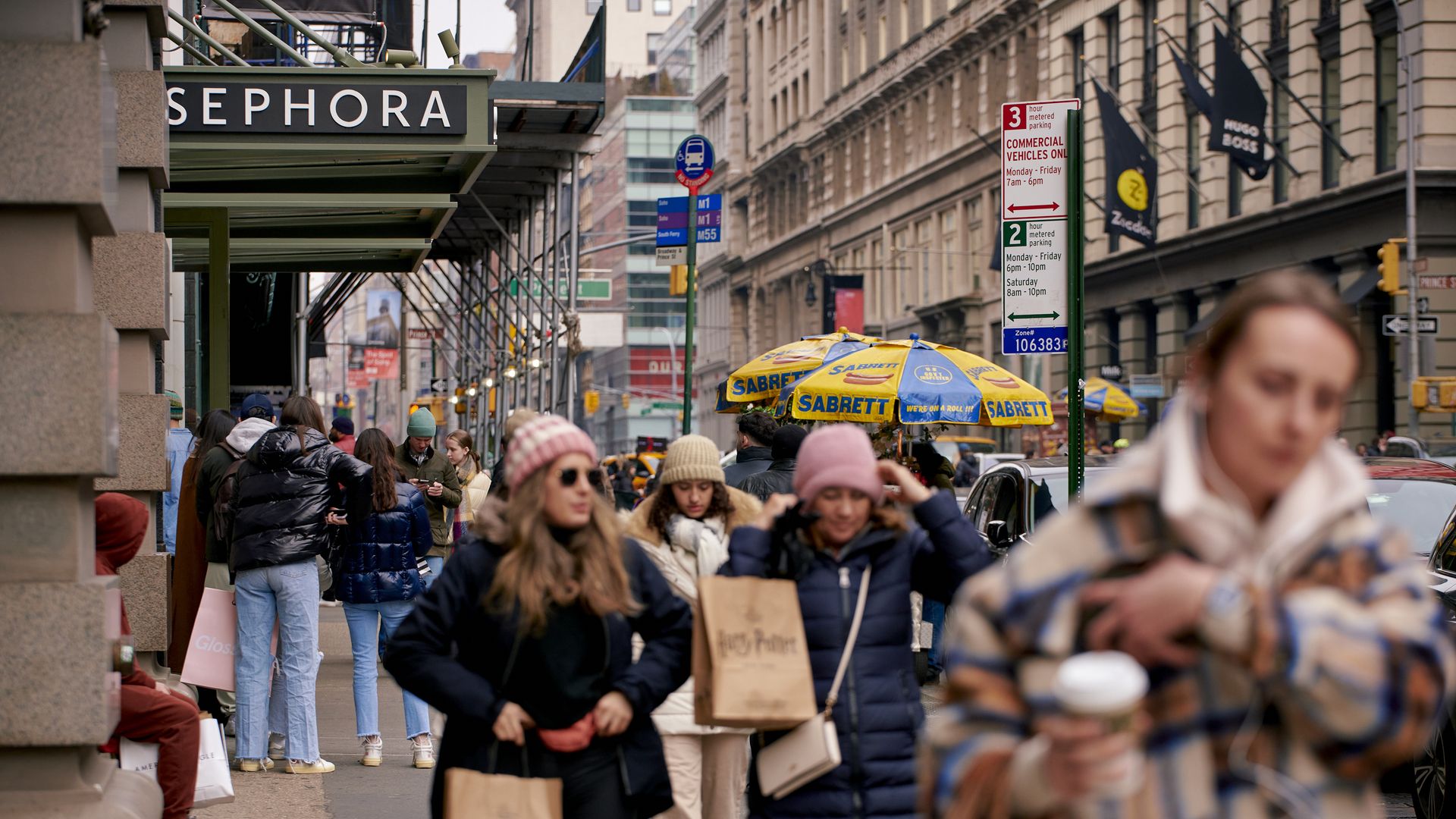
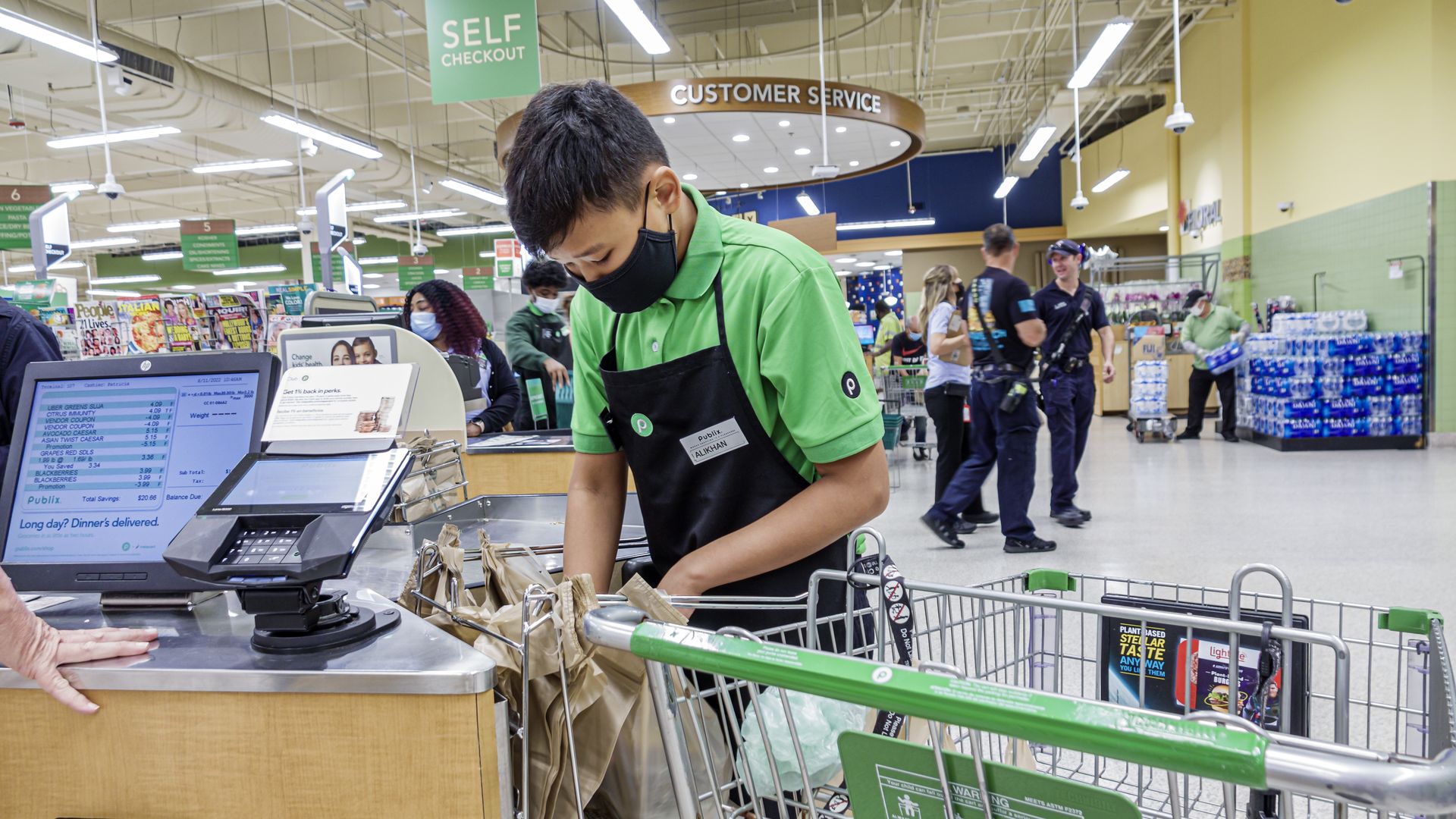
Prices continued to rise at a quick pace last month: the Consumer Price Index rose 0.4% in February, slowing only slightly from the prior month, the government said on Tuesday.
Why it matters: Inflation has dropped from last year's peak, though there are still signs that underlying price pressures continue to run strong — a development that reflects the challenging task ahead for the Federal Reserve.
To see two bank failures in one year, as we have thus far in 2023, isn't that unusual. It's the dollar amounts that are eye-popping.
Why it matters: The size of Silicon Valley Bank is likely making it more difficult for regulators to find a buyer, which would usually be the ideal scenario for regulators cleaning up after a collapse.
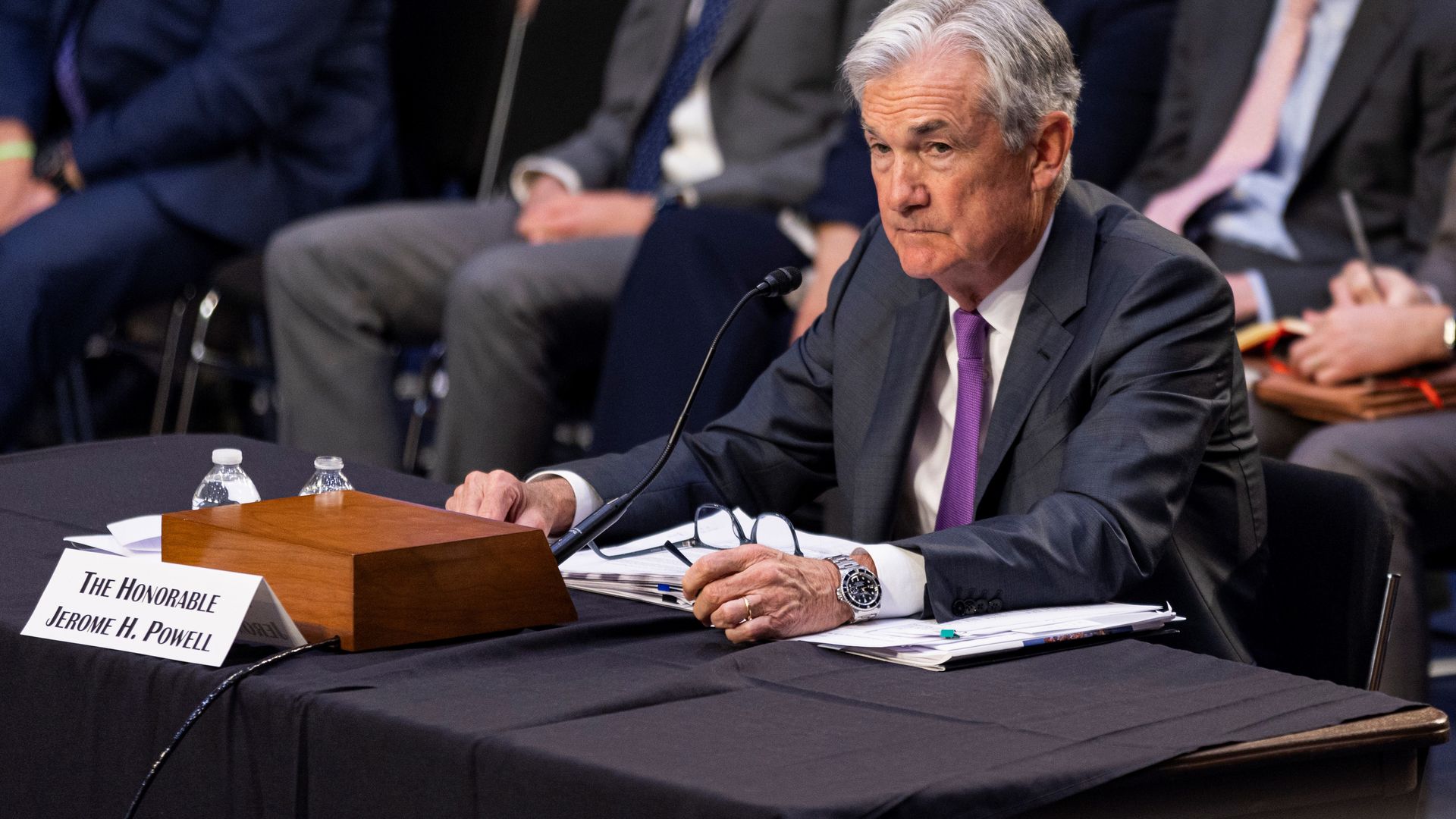
Worries about wobbly banks may have put an end to the recent era of beefy Fed rate increases.
State of play: In the market for Fed funds futures, where investors can hedge and speculate on the Fed's key monetary policy rate, prices now suggest there is zero chance the central bank raises its key rate by a half-percentage point when it next announces on March 22.
A rush to safety in the bond market. A modest rally in tech stocks. And still-simmering worries about banks. Things were getting a bit weird on Monday.
Driving the news: The major stock indexes were somewhat resilient, despite massive jitters about the health of many large regional banks after the collapse of Silicon Valley Bank and Signature Bank over the last few days.
The collapse of Silicon Valley Bank — one of the tech industry's leading financial institutions — left venture firms, the startup community and the banking industry in a tizzy.
Why it matters: In moments of uncertainty, overt communication drives confidence.
Elon Musk once again seemingly said the quiet part out loud. In a tweet last week, which he later apologized for, the Twitter CEO claimed a former employee used a disability as an excuse not to work.
Why it matters: Most employers know better than to open themselves up to legal liability by tweeting something about a worker's disability — especially something derogatory — but that doesn't mean Musk's kind of thinking is unusual.
Legislators in multiple states are invoking a widespread labor shortage to push bills that would weaken long-standing child labor laws.
Why it matters: Some bills go beyond expanding eligibility or working hours for run-of-the-mill teen jobs. They'd make it easier for kids to fill physically demanding roles at potentially hazardous work sites.
A fully furnished apartment in a great city for $1,295 per month — 33% below the national median — with no lease, no security deposit and all utilities included. Sound too good to be true?
Of course, there's a catch: You might have to move with three days' notice.
Viewership for the 95th Academy Awards jumped 12% from last year's event, a small sign of momentum for the award show industry, which lost significant viewership during the pandemic.
Why it matters: With 18.7 million viewers, the Oscars on Sunday on ABC garnered more viewers in the past three years than any other award show.











/2023/03/14/1678805753765.gif?w=3840)




/2023/03/14/1678803998702.gif?w=3840)