Mar 14, 2023 - Economy
Short-term Treasury yields crash

Add Axios as your preferred source to
see more of our stories on Google.
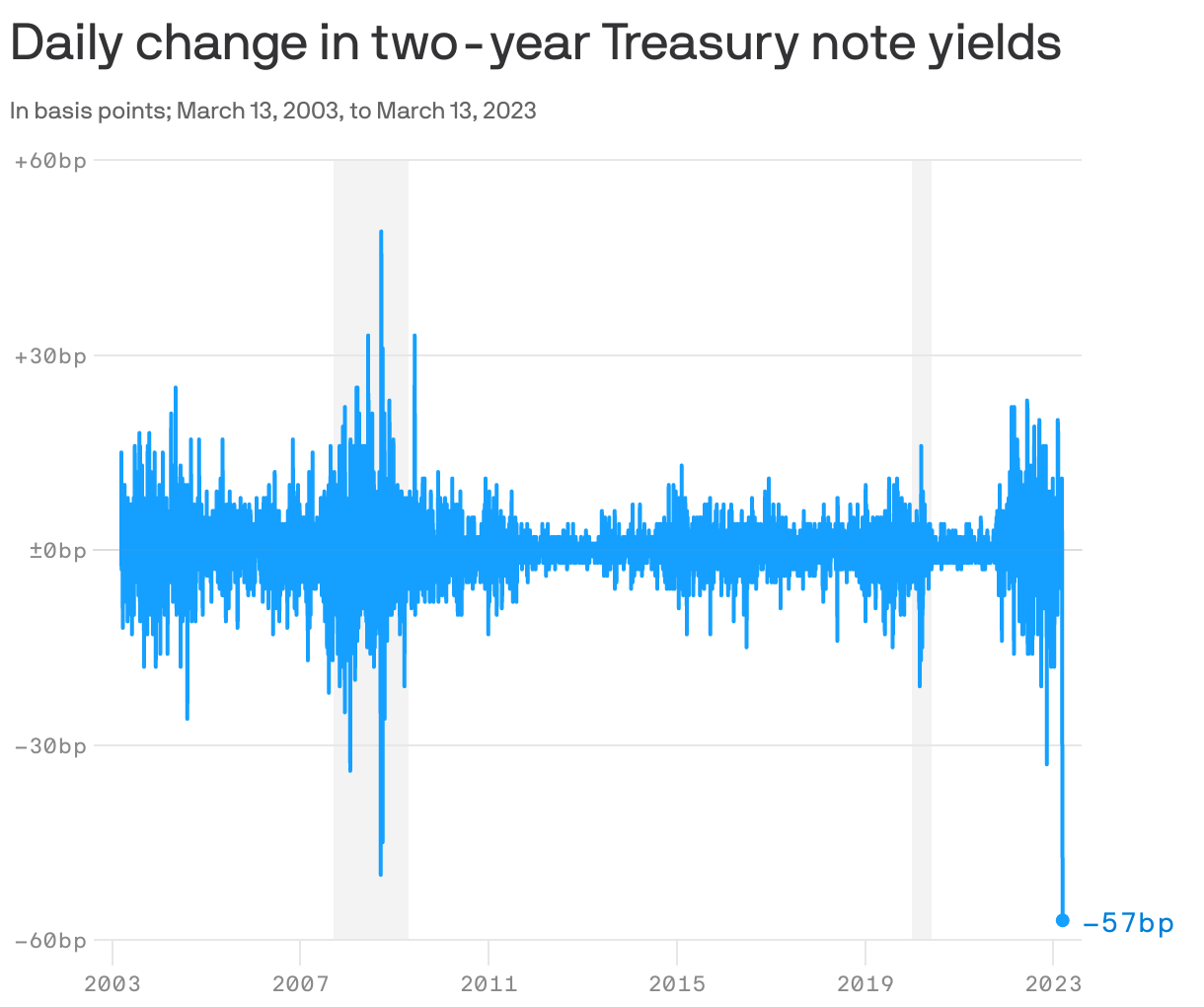
Money flooded into U.S. government bonds on Monday after the collapse of SVB and Signature Bank.
What happened: The yield on the two-year U.S. Treasury note plunged by more than half a percentage point (bond yields go down as prices go up).
- That may not sound like much — but in the world of government bonds, moves of this magnitude are incredibly rare.
- The last time we saw a one-day move this large was on Sept. 17, 2001, when markets first reopened — and then tumbled — after the Sept. 11 terrorist attacks.
- Besides that, the only day that comes close is Oct. 21, 1987, in the aftermath of the stock market crash.
What it means: It's hard to say exactly — there are a lot of competing motivators at play.
- Clearly, ongoing worries about the banking system give people plenty of reason to park some cash in Treasuries, a traditional port of call for investors during panicky periods.
- The plunge also likely reflects expectations that the banking crisis that broke out over the last few days might mean the Fed's rate-hiking days are numbered.
- Finally, some of the move may be driven by investors unwinding complex trades that have been upended by the market turmoil.
