Thursday's economy stories


Alphabet stock slips on earnings miss, YouTube ad slowdown
Shares in Google parent Alphabet fell nearly 5% in after-hours trading Thursday, after the tech giant said it missed revenue and earnings estimates for the fourth quarter.
Why it matters: Alphabet and its stock thrived during the pandemic. Now, an ad slowdown and its big investment in headcount are challenging its earnings growth just as it's entering a new phase of competition with Microsoft and others in AI.

Where inflation is hitting hardest


How much you’re getting squeezed by inflation may depend entirely on your zip code.
The big picture: The Miami, Phoenix, Seattle and Atlanta metro areas had the highest annual inflation rate increases as of December 2022, according to the latest Consumer Price Index.

HanesBrands stock plunges as company directs all free cash flow to debt paydown
HanesBrands shares plunged more than 27% Thursday as the apparel maker pulled its dividend and said it would direct all of its free cash flow to paying off debt.
The big picture: The company's fourth quarter sales plummeted — a reflection of how fickle life can be for apparel companies that suddenly find themselves on the wrong side of shifting consumer preferences.

Dave Portnoy drops appeal over his lawsuit against Insider
Barstool Sports founder Dave Portnoy has dropped his appeal of the dismissal of his 2022 lawsuit against news publisher Insider, according to a filing before the U.S. Court of Appeals for the First Circuit.
Why it matters: The dismissal officially ends a drawn-out defamation battle between the two parties over stories Insider wrote alleging sexual misconduct against Portnoy.

Exclusive: Southwest Airlines CEO Bob Jordan on rebuilding reputation
This week marks Bob Jordan's 0ne year anniversary as CEO of Southwest Airlines. In year two, he's focused on making sure the operational meltdown that happened in December never happens again.
Why it matters: Bold communications is Jordan's current weapon of choice as he speaks candidly about the company's missteps and beats back misinterpretations of what went wrong.

Stripe's new investment talk is an effort to rectify past mistakes
When news recently leaked that Stripe is in talks to raise new funding, most of the chatter was about a $60 billion valuation that's well below what the payments giant previously fetched.
- And that made sense, given how much weight we typically attach to nosebleed prices.
Between the lines: What also deserves attention, however, is that Stripe appears to be handling the tech deflation with humility, empathy and prudence, unlike some of its tech industry peers.

Artistic expression and brand trademarks collide in world of NFTs
The crypto industry doesn't need any more legal battles, but the one playing out in a Manhattan court this week between a major brand and an artist over NFTs could prompt others like it.
Why it matters: The NFT boom was many things — but it was a boon for artists, who found financial freedom in marketing and selling their works directly to collectors. Hermès International's case against creator Mason Rothschild, however, could be precedent-setting in the busy intersection between luxury goods and NFTs.

Central banks vs. the markets
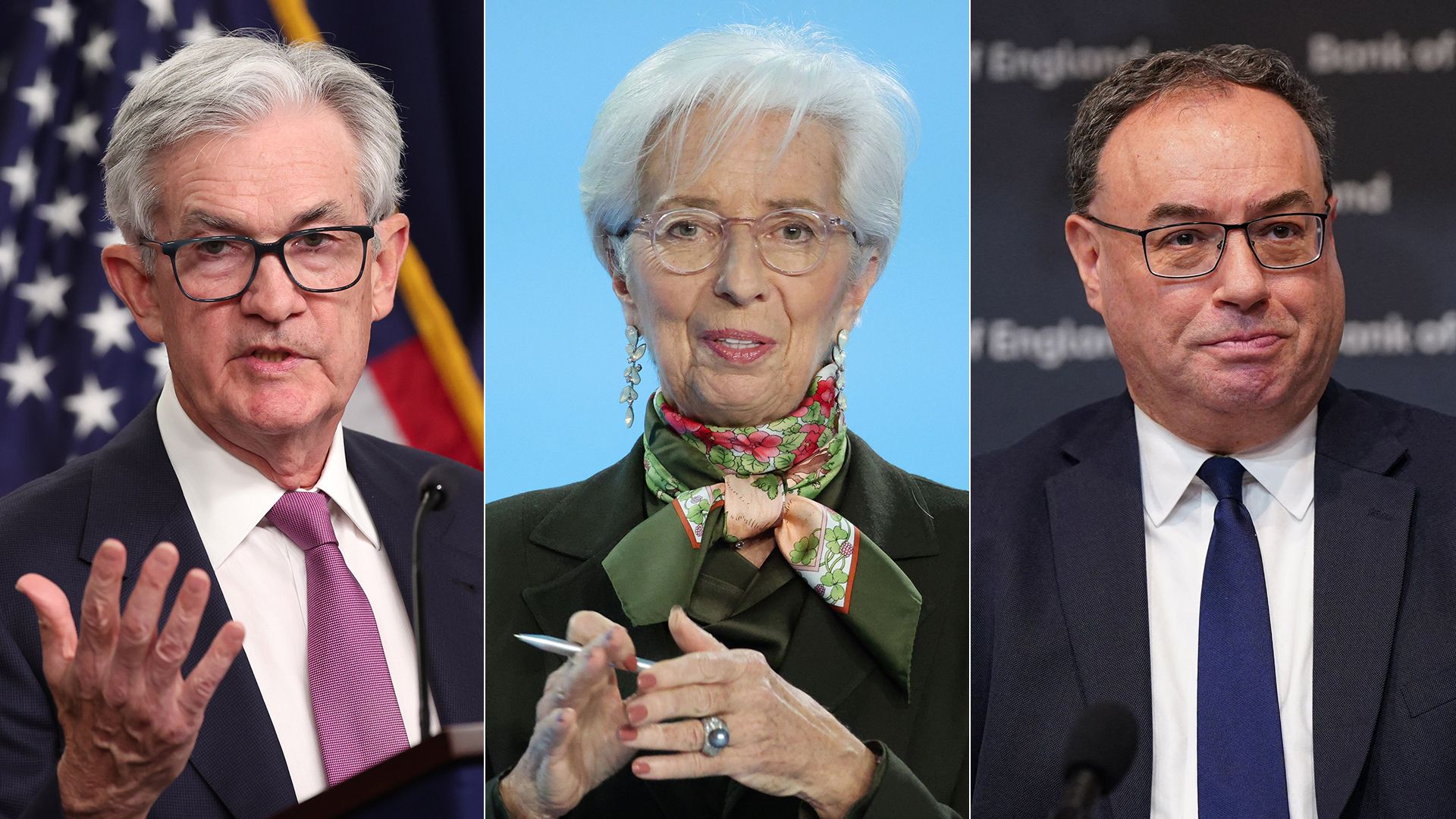
They're all trying. From Washington to London to Frankfurt, major central banks are saying — in every way they can — that they have more work to do to push interest rates high enough to vanquish inflation.
- But global financial markets just aren't buying it.
Why it matters: Markets are betting that inflation will dissipate rapidly, and that rate cuts will arrive sooner than the central bankers themselves think. That conviction has driven a buoyant start to the year for stocks and bonds.
- The big question for 2023 and beyond is, who is right? Either central banks will end up reversing themselves and cutting rates soon, or markets will back down if policymakers follow through on their stated plans.
Driving the news: In his news conference yesterday, Fed Chair Jerome Powell seemed almost resigned to the reality that financial markets are betting on inflation coming down faster and more painlessly than he and his colleagues expect.
- "There is a difference in perspective by some market measures on how fast inflation will come down," Powell said. "I'm not going to try to persuade people to have a different forecast, but our forecast is that it will take some time and some patience, and that we’ll need to keep rates higher for longer. But we’ll see."
- "It would be very premature to declare victory, or to think that we’ve really got this," he said.
Meanwhile, across the Atlantic today, the Bank of England and the European Central Bank both hiked rates another half percentage point — sounding awfully similar to Powell.
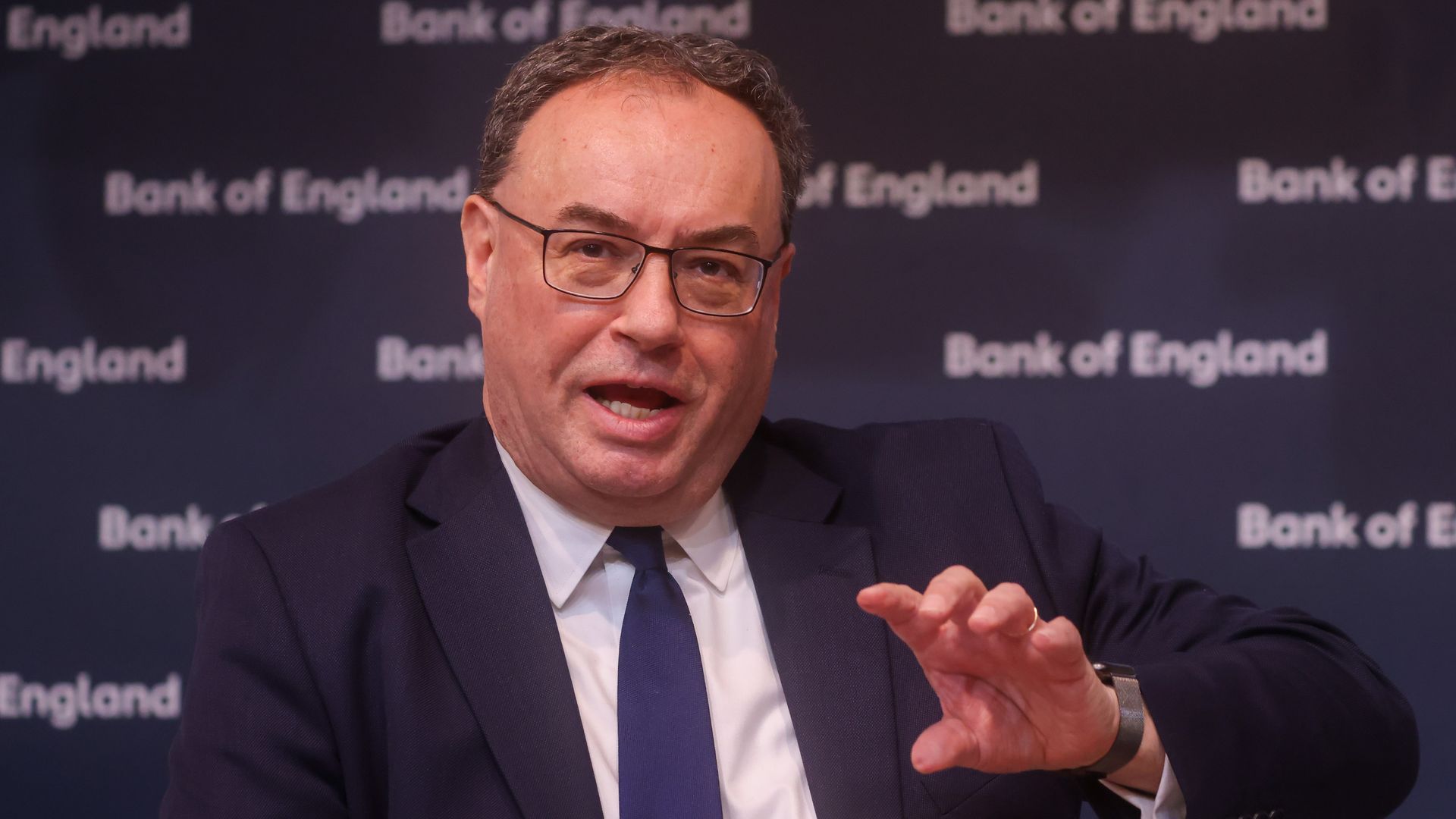
- "It is too soon to declare victory just yet," said BoE governor Andrew Bailey. "Inflationary pressures are still there… we need to be absolutely sure that we really are turning the corner on inflation."
Yes, but: Global markets are increasingly confident that this corner has already been turned, interpreting central bankers' acknowledgement that inflation is coming down as confirmation of the thesis that the period of monetary tightening will soon end.
- The yield on 10-year U.K. government bonds was down a whopping 0.24 percentage points today in early trading. Its U.S. Treasury counterpart yielded 3.37%, down from 3.88% at the start of the year.
- The S&P 500 is up about 9% so far in 2023.
The bottom line: They can't both be right. And this will be a much less painful year if the implicit market forecast is vindicated by events.

Communicator Spotlight: Krista Pilot, AT&T CCO
Krista Pilot is the new chief communications officer at AT&T and will oversee external, internal and financial communications as well as social media for the telecom giant.
Why it matters: Pilot brings vast experience to the role as a global communication strategist — having previously led external communications, public affairs and internal communications during her time at PepsiCo.

Avoid corporate platitudes during cultural heritage months
As February's Black History Month kicks off a series of heritage months, it has become common practice for companies and brands to honor such cultural recognitions with statements, content campaigns and logo rebrands.
- Yes, but: What a company shares externally has to match what it's doing to uplift and support the community it's claiming to celebrate.


Biden's top economic adviser to leave White House
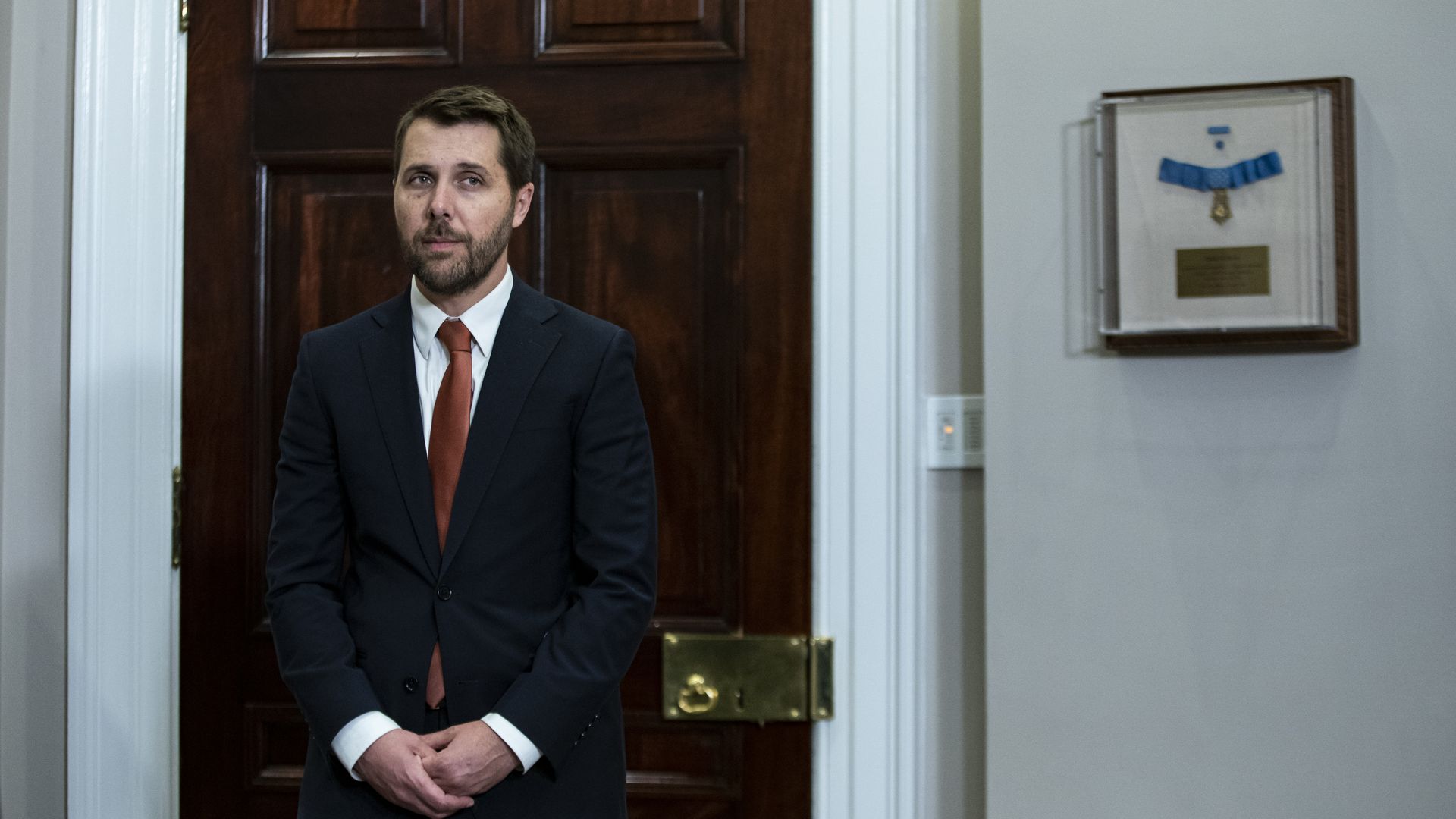
Brian Deese, the top economic adviser to President Biden, will leave his role at the White House, the president said in a statement Thursday.
Why it matters: Deese's departure from his role as director of the National Economic Council will create a high-profile opening in the Biden administration ahead of a high-stakes debt ceiling fight.

Bed Bath & Beyond misses bond payment
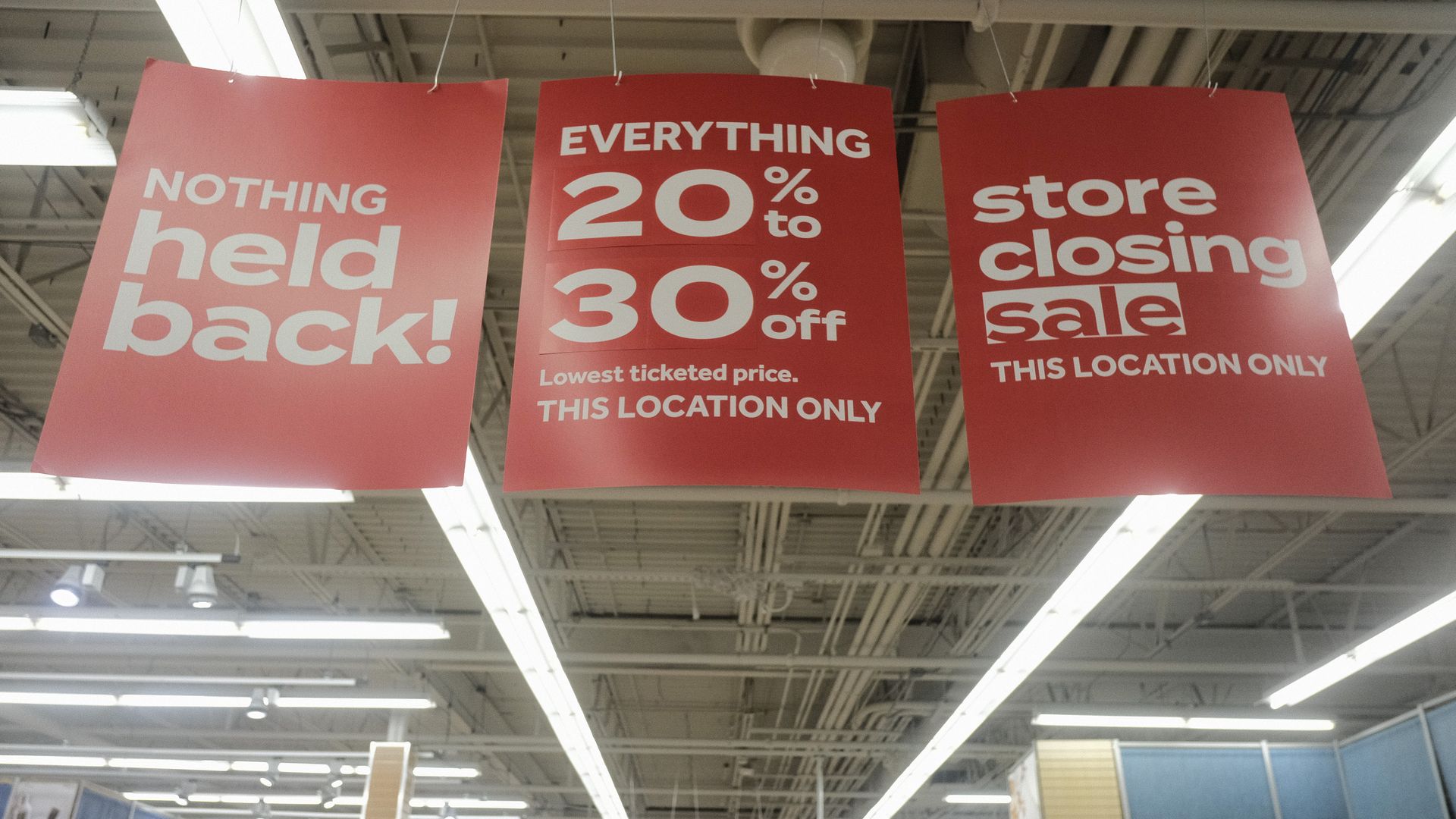
Bed Bath & Beyond missed interest payments on approximately $1 billion in bonds yesterday and has entered a 30-day grace period during which it can still make the payments, the company confirmed via email.
Why it matters: The company is in cash preservation mode as it props up operations while it decides its next steps.
What they're saying: "We continue to work with our advisors and implement actions to manage our business as efficiently as possible. Multiple paths are being explored and we are determining our next steps carefully, and in a timely manner," the company said in the email.
Catch up fast: Last week the company revealed in an SEC filing that it received a default notice from JPMorgan, the administrative agent for its credit facility.
- It was then reported the retailer was having difficulty finding a buyer, per Bloomberg.
- Earlier this week, Reuters reported that Bed Bath & Beyond could file for bankruptcy as soon as this week.
- In the meantime, the retailer is shutting down stores, including its Harmon beauty shops, our colleague Kelly Tyko reported.
Flashback: Bed Bath & Beyond began attempting a turnaround in 2019 when activist investors installed a new management team under Target's former chief merchandising officer Mark Tritton.
- As CEO, Tritton pushed a strategy centered around new private label offerings and ridding the banner of higher end goods that tied well into special occasions, such as its wedding registry.
Yes, but: Building new private label brands takes years, a source familiar with the situation says, shifting the retailer's product assortment away from national brands.
- That strategy, in addition to nixing its 20% off coupons and decluttering its stores, entailed a large cash investment and alienated shoppers, the source adds.
- By replacing the entire the management, there was no one with institutional knowledge left to guide the new CEO on the risks of such moves, the source explains.
- Tritton essentially "bet the farm" without first testing it, reminiscent of retail executive Ron Johnson's efforts to revitalize department store chain JCPenney, the source says.
The big picture: In both the case of JCPenney and Bed Bath & Beyond, activist investors' urgency combined with a newly installed CEO's overconfidence led to costly mistakes that could have been avoided, the source says.
Between the lines: Electronics retailer Best Buy faced a situation similar to Bed Bath & Beyond, but instead of eschewing its big brands, such as Samsung and Microsoft, partnered with them instead.
- In BBBY's case, it will be difficult for the home goods retailer to bring back the alienated national brands that might have saved it, the source says.
What we're watching: Private equity firm Sycamore Partners has expressed interest in purchasing the Buybuy Baby brand, the source said. (The New York Times first reported Sycamore's interest last month.)
The intrigue: Stefan Kaluzny, Sycamore's founder, was at Golden Gate Capital where he successfully bid more than a decade ago for the operations of apparel retailer Eddie Bauer, then considered a liquidation candidate.
The bottom line: There's still a place in the retail landscape for a retailer such as Bed Bath & Beyond, but in its case, the time and money it would take to make it viable again is a big deterrent to a would-be white knight, the source adds.

ECB and Bank of England raise rates again but signal different paths
The European Central Bank and Bank of England both continued to raise interest rates at a historically rapid pace on Thursday — but they sent different signals about how much more policymakers will need to restrain the economy to contain inflation.
Driving the news: Both central banks raised rates by a half-percentage point, matching the same pace as the last round of hikes in December.

China reopening spurs returns in emerging market funds
Emerging market debt and equities have rallied over the last few months. The main driver? China.
Why it matters: It’s another example of how the world's second-largest economy sets the pace for the rest of the globe — or at least that’s what investors are banking on.

U.S. Permian Basin oil production — and profits — have surged
Production in the oil-and-gas-rich Permian Basin of West Texas and New Mexico hit records recently, juicing oil company profits and easing energy supply worries.
Why it matters: It shows U.S. oil companies are responding to higher prices, with increased drilling and pumping after what seemed like months of foot-dragging.

America’s CEOs have gone silent on national tragedies
Companies that were once very vocal on human rights and societal issues have held statements close to the vest or stayed completely silent following the recent streak of tragedies in America.
Why it matters: This is a major shift in the way leaders communicate during heightened moments of tragedy and crisis. Most have now opted for internal correspondence in place of public pledges — and some are saying nothing at all.

Predicting the Rock Hall inductees for 2023
The Rock & Roll Hall of Fame has announced the nominees for its class of 2023.
- The question now is which of the 14 artists will be inducted during a ceremony this fall.

Florida's citrus crisis drives up orange juice prices
Florida orange growers are facing what's forecast to be their smallest crop in nearly 90 years.
What's happening: Florida is expected to produce 18 million 90-pound boxes of juicing oranges this year, according to a U.S. Department of Agriculture forecast last month.

Australia phasing out British monarchy for new $5 notes
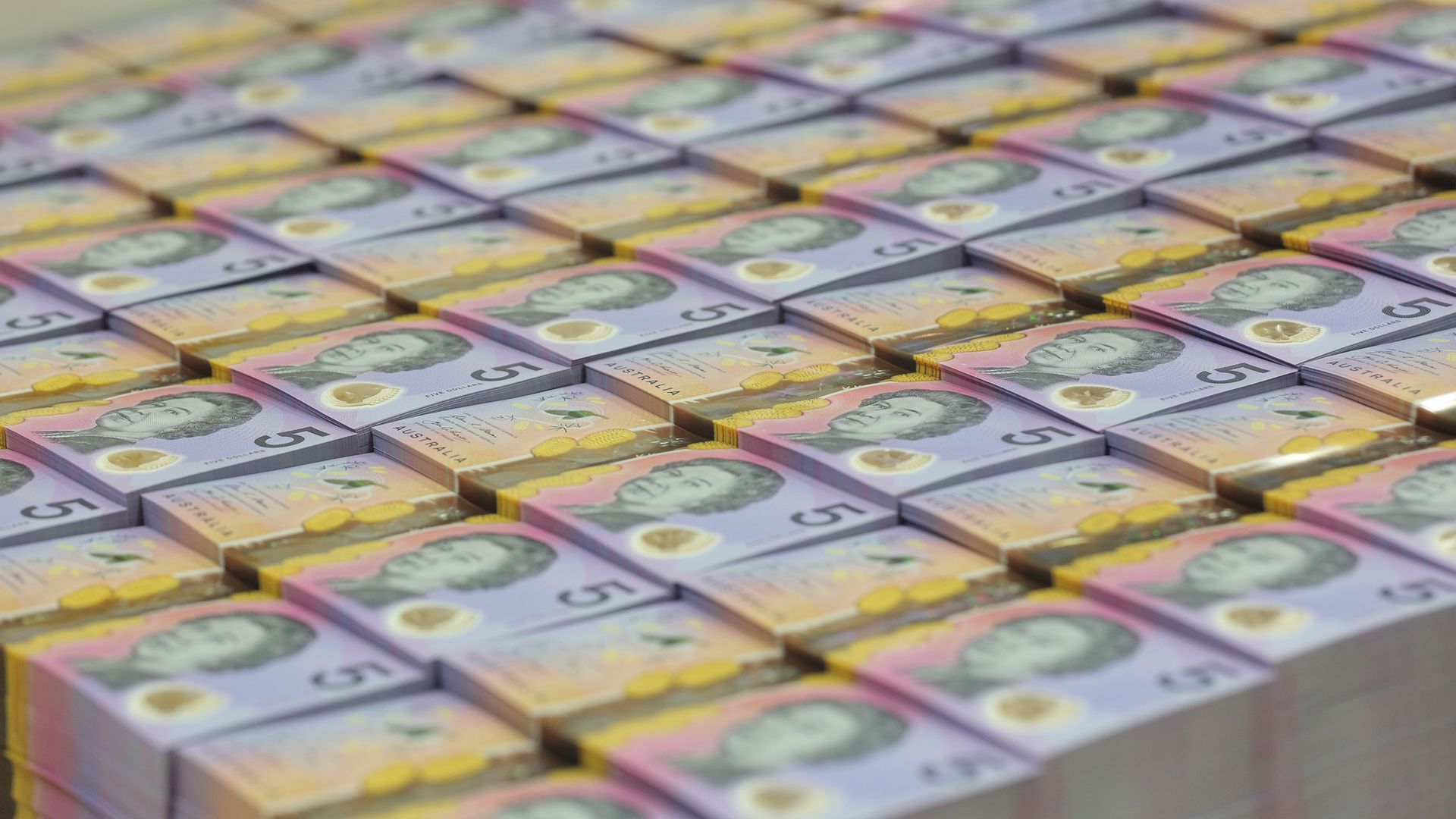
King Charles III won't feature on Australia's $5 note after the country's central bank announced it will replace the late Queen Elizabeth II's image with a design honoring the first Australians.
Why it matters: The Australian Reserve Bank Board's decision ends a longstanding tradition of Australia's British-based head of state on the bank notes.

Axios Finish Line: How Palantir CEO Alex Karp trains
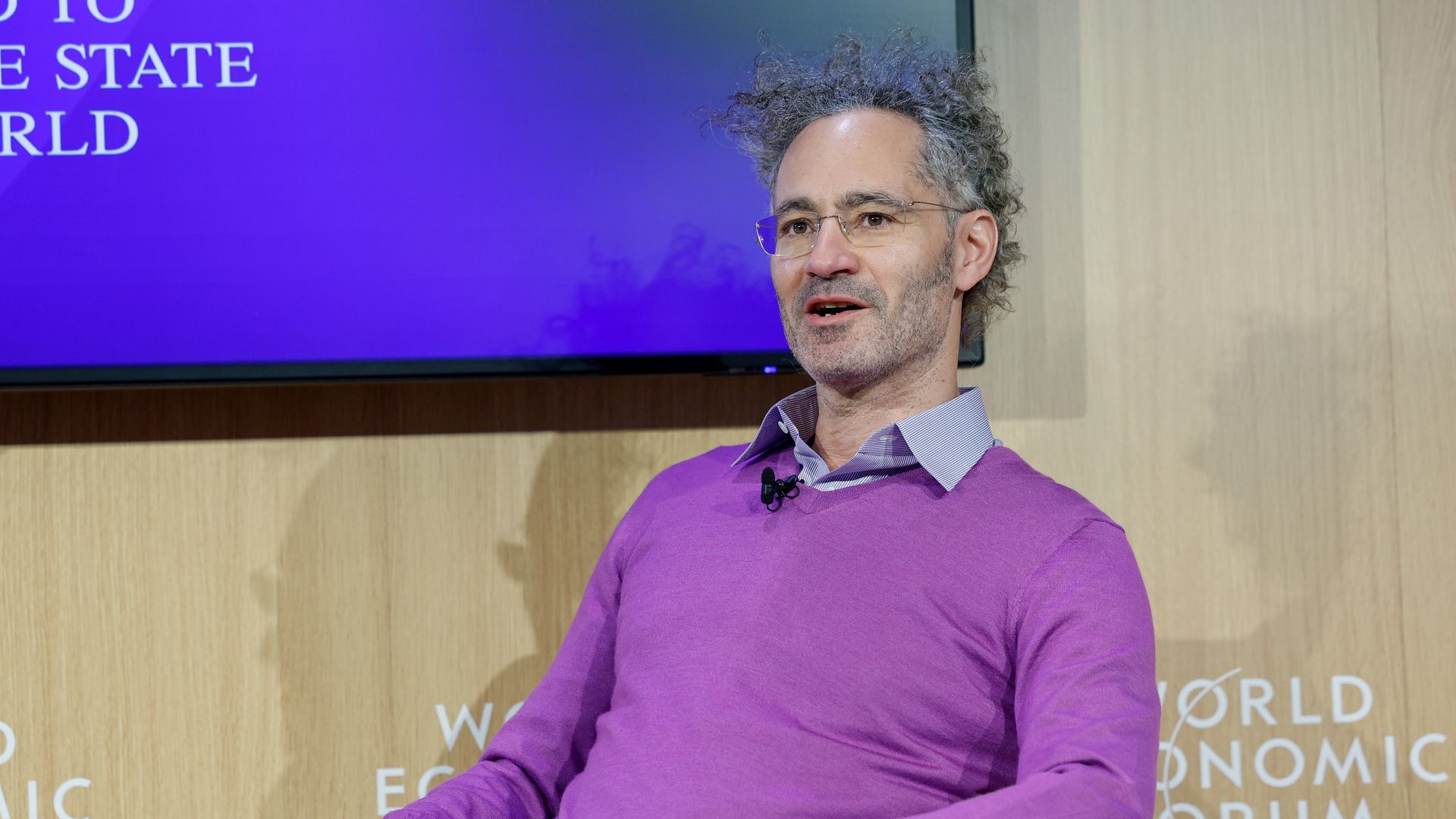
Alex Karp — co-founder and CEO of Palantir, the data-intelligence giant — is 55 years old and has 7% body fat. That's like Michael Phelps when he was training to swim in the Beijing Olympics.
- But Karp is a billionaire entrepreneur and tech visionary, not an Olympian. And he doesn't starve himself.
- His fitness comes from cross-country ski training — 5+ hours a week.
Why it matters: Karp's training secret can help all of us as we vary or elevate our workout routines. He's all about sheer distance — not speed or intensity. Just put ... in ... the miles.
🦌 How it works: "To run like a deer," Karp told me in an interview for Finish Line, "you have to spend 90% of your time running like a snail."
- Whether you're running or skiing, he advises going at the "slowest pace a human can run for as many hours as you can afford. And then once, preferably twice, a week, you're doing [speed] intervals."
Karp says he learned the training regime from athletes in Norway, the country with the most all-time Winter Olympics medals — many for cross-country skiing.
- "You're almost always moving like a snail — except for when you're doing intervals and you're going fast," he told me.
- "It builds a cardio base so that when you race, you're by far the fastest in the world. And that's how they win."

When the pandemic hit, Karp radically changed how he trained.
- "I was already in reasonably good shape because I do tai chi, cross-country skiing, stretching," he recalled, using resistance bands as we talked.
- "But then I became very disciplined about training this way. I saw results after 18 months — and especially huge results after 36 months."
🥊 Reality check: Karp is realistic about diet, and says the biggest adjustment he's made is simply dropping added sugar. He used to like chocolate snacks, sugar in his coffee and tea.
- "I don't give things up forever," he said. "I have a special event, I eat sugar. If I'm traveling and someone has a really nice Danish, I enjoy every minute of eating it."