Coronavirus contact tracing apps used in the EU should protect privacy and be compatible enough with one another to track the spread of the virus across borders, the European Commission wrote to its members on Thursday.
Why it matters: Contact tracing — or tracking down those who have interacted with a virus patient and advising them to self-isolate — is seen as a key step, along with widespread testing, in order to mitigate the spread of COVID-19.
Coronavirus patients in a Chicago hospital recovered quickly after receiving remdesivir, a drug made by Gilead Sciences, according to STAT. It’s the latest positive sign for a drug that’s already seen as one of the most promising potential treatments for the novel coronavirus.
Yes, but: This is an anecdotal report, not the kind of rigorous clinical-trial data that can support firm conclusions about remdesivir’s effectiveness. Gilead is set to release more fulsome clinical data later this month. Nevertheless, stock futures soared on the possibility of an effective treatment.
Europe led much of the world into lockdown, but countries across the continent are now tiptoeing out.
Why it matters: Austria, Denmark, Italy and Spain relaxed some measures this week, while Germany and France unveiled staged reopening plans. The U.S., India and other locked-down countries will be watching closely as they consider their own exit strategies.
Uber said on Thursday that it's withdrawing its forecasts for certain revenue and earnings metrics for the year, and it will write down between $1.9 billion and $2.2 billion from the value of equity investments. Its investments include ride-hailing companies Grab and Didi and food delivery company Zomato.
Why it matters: While Uber is seeing a surge in its food delivery business, demand for rides has dramatically dropped — by as much as 60–70% in Seattle at the peak of its outbreak — as people stay home to curb the virus spread.
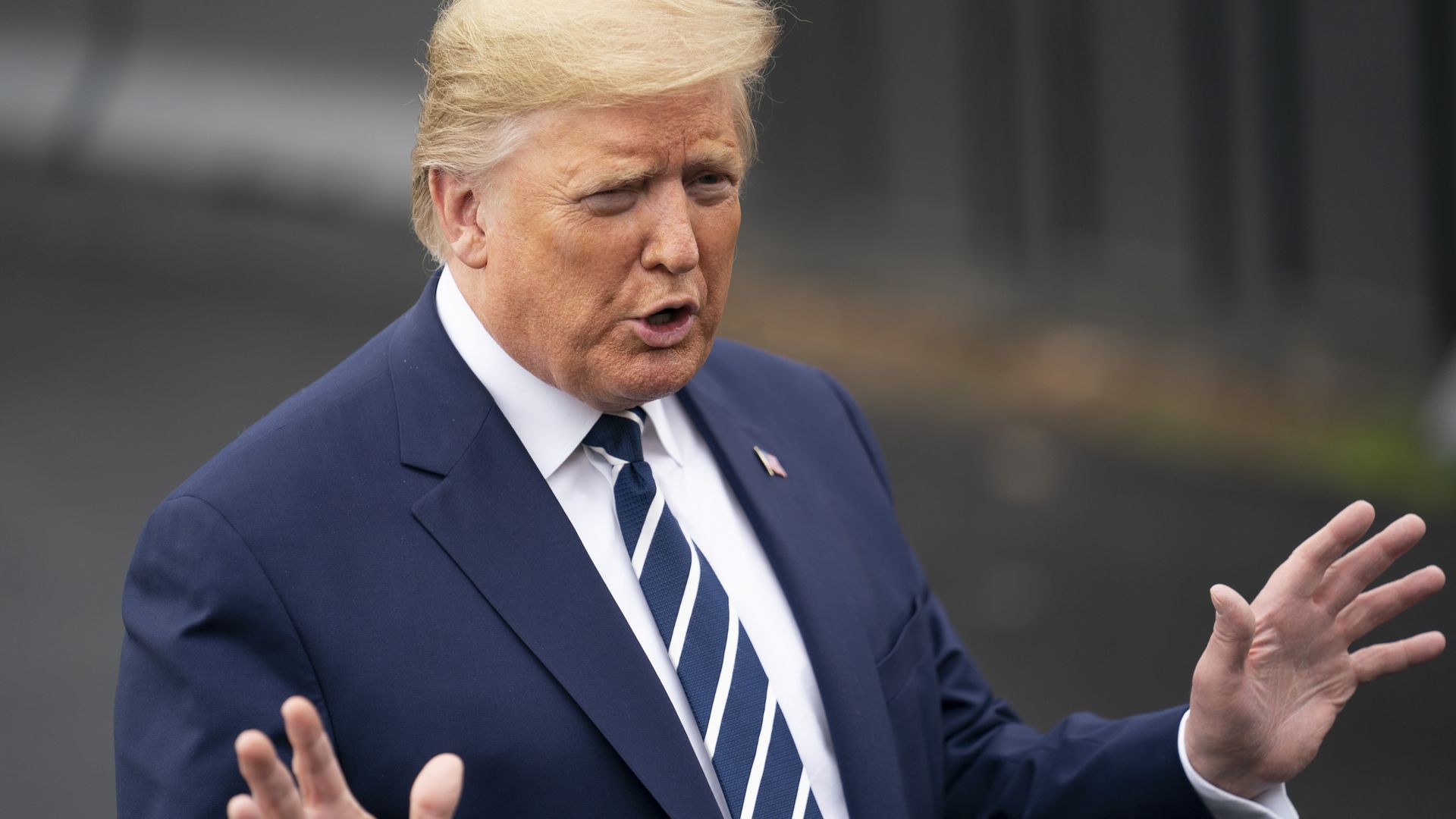
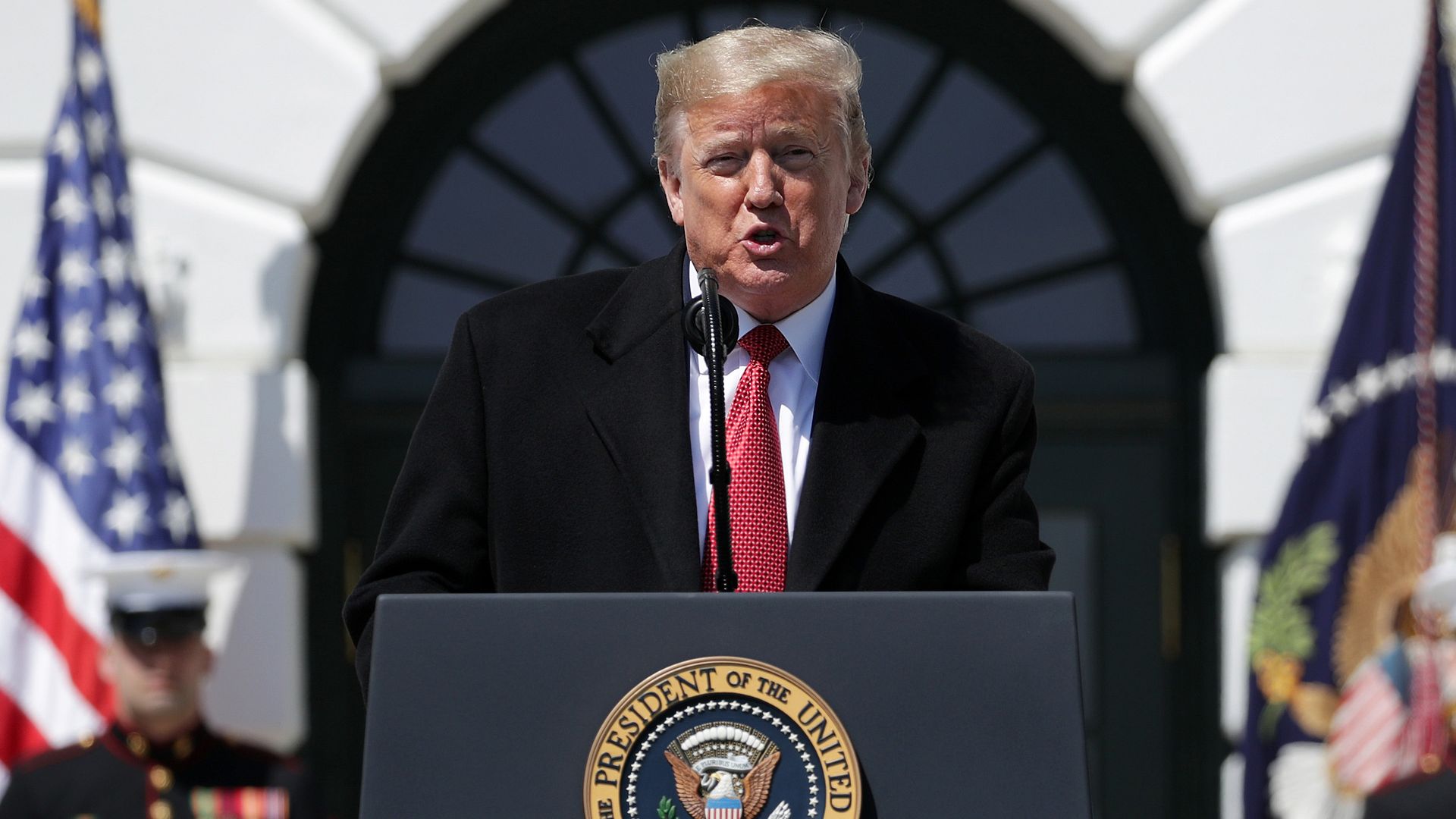
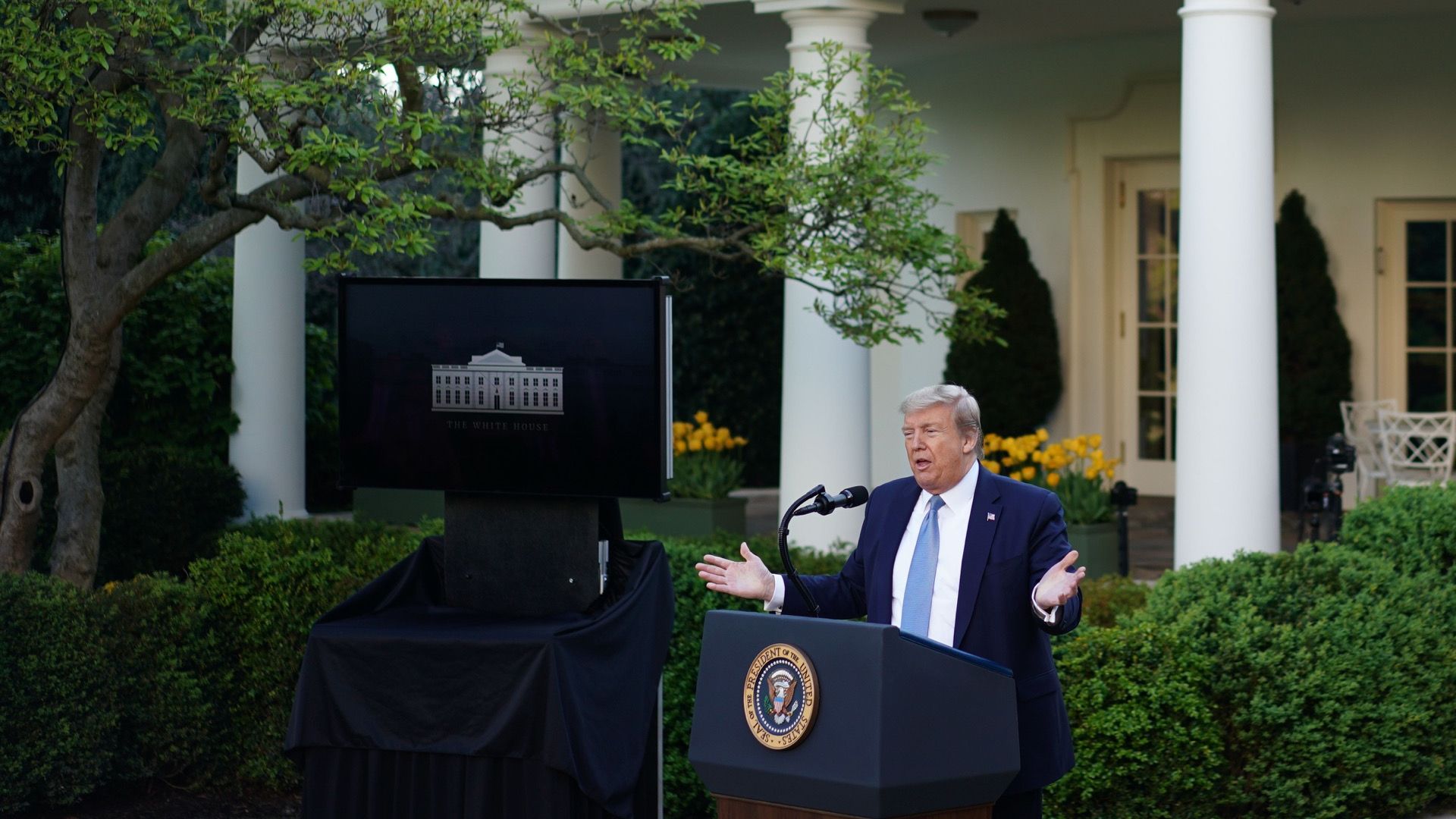
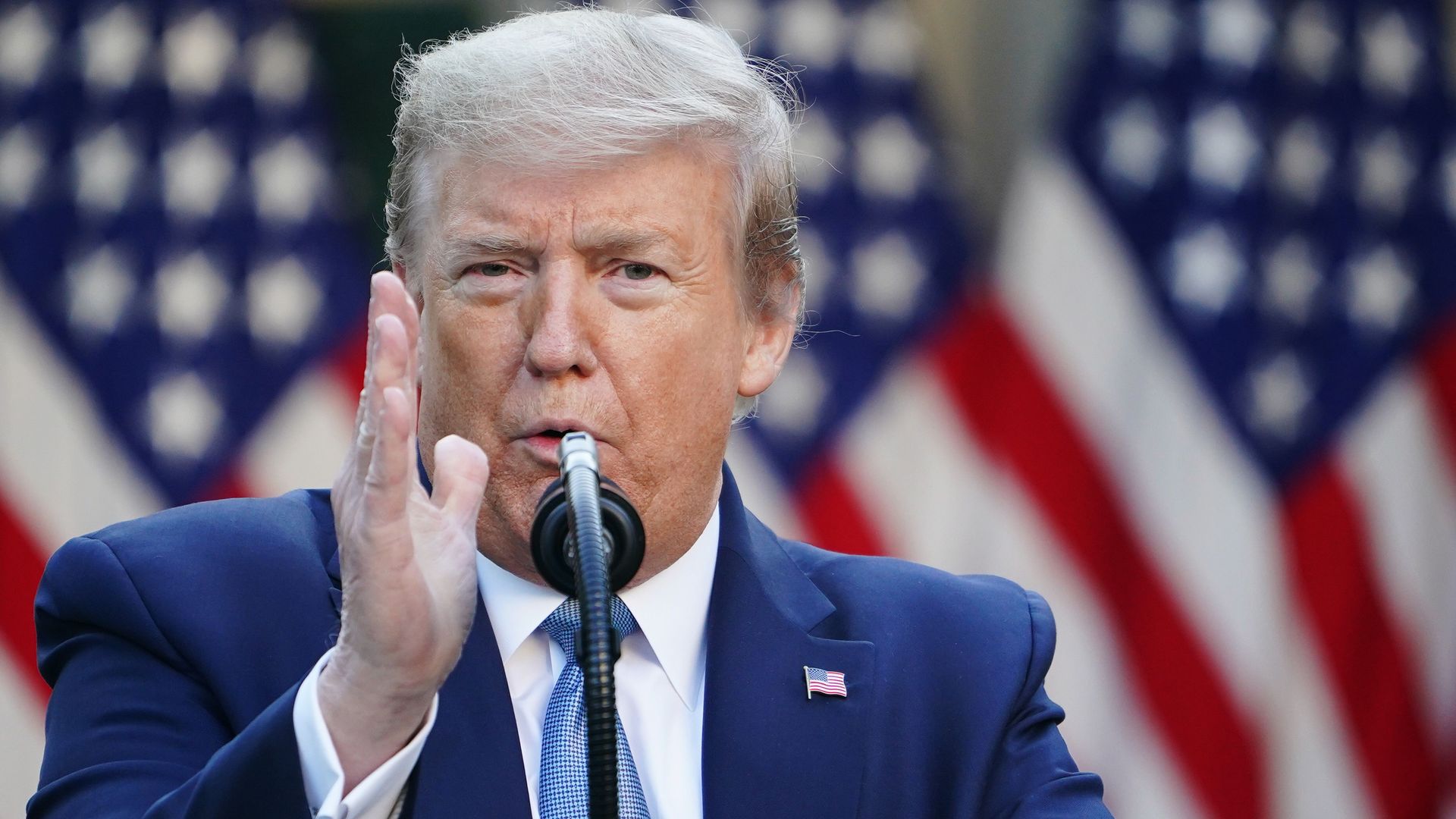
President Trump told governors on a conference call today that he wants to begin to reopen the U.S. economy on May 1.
He called on governors with low coronavirus numbers to begin to reopen their economies on May 1, with the caveat that states should go at their own pace.
"You states with beautifully low numbers, let's get your states open and get back to work," Trump said, according to one person on the call and one person familiar with the call.
65% of Americans say that President Trump was too slow to take major steps to handle the threat of the novel coronavirus in the U.S., per a Pew Research Center survey released on Thursday.
Why it matters: Trump and his administration were repeatedly warned about how the virus would affect American lives and the economy, reporting from Axios, The New York Times, The Washington Post, AP and other media outlets has shown. Earlier action could have curbed the spread.
The United States will give $5 million in humanitarian assistance to help hospitals in the West Bank cope with the coronavirus outbreak, U.S. ambassador to Israel David Friedman announced in a tweet on Thursday.
Why it matters: Over the last three years, the Trump administration cut almost all civilian and humanitarian aid to the Palestinians — worth around $500 million per year. The only assistance that continued was to the Palestinian security forces. This is the first time the Trump administration has renewed aid to the Palestinians.
The coronavirus crisis has moved so fast, in so many different directions, that everybody who's intellectually honest has had to recalibrate their beliefs multiple times to take account of new information.
Why it matters: Known unknowns are almost inconceivably enormous. How many people will die of COVID-19 in the U.S., for instance? The answer could be tens of thousands, roughly where it is now — or it could be millions, if no vaccine is found and the virus ends up infecting most of the population.
A slew of small businesses are struggling — or even closing down entirely — not because business has died down, but because it's booming.
What's happening: Millions of U.S. small businesses have been forced to shut down due to restrictions on non-essential businesses or abysmal foot traffic amid the coronavirus pandemic. But even the small firms that have continued operations are shuttering because they're utterly overwhelmed by the spike in business as the pandemic plays out.
A group of states across the Midwest is the latest to announce a joint regional plan to reopen businesses in the wake of stay-at-home efforts designed to mitigate the spread of the coronavirus.
The big picture: President Trump is expected to tell governors on Thursday that he won't hold them back if they want to restart their state economies, Axios' Jonathan Swan and Mike Allen report.
A new IRS webpage lets users check the status of their coronavirus stimulus payments from the government and allows them to provide their bank account information to get the money via direct deposit.
Why it matters: The government money has started trickling into bank accounts for the 80 million people who received their 2018 or 2019 tax refund by direct deposit, but the new site could speed up the process for some who would otherwise get a check mailed to them over the weeks ahead.
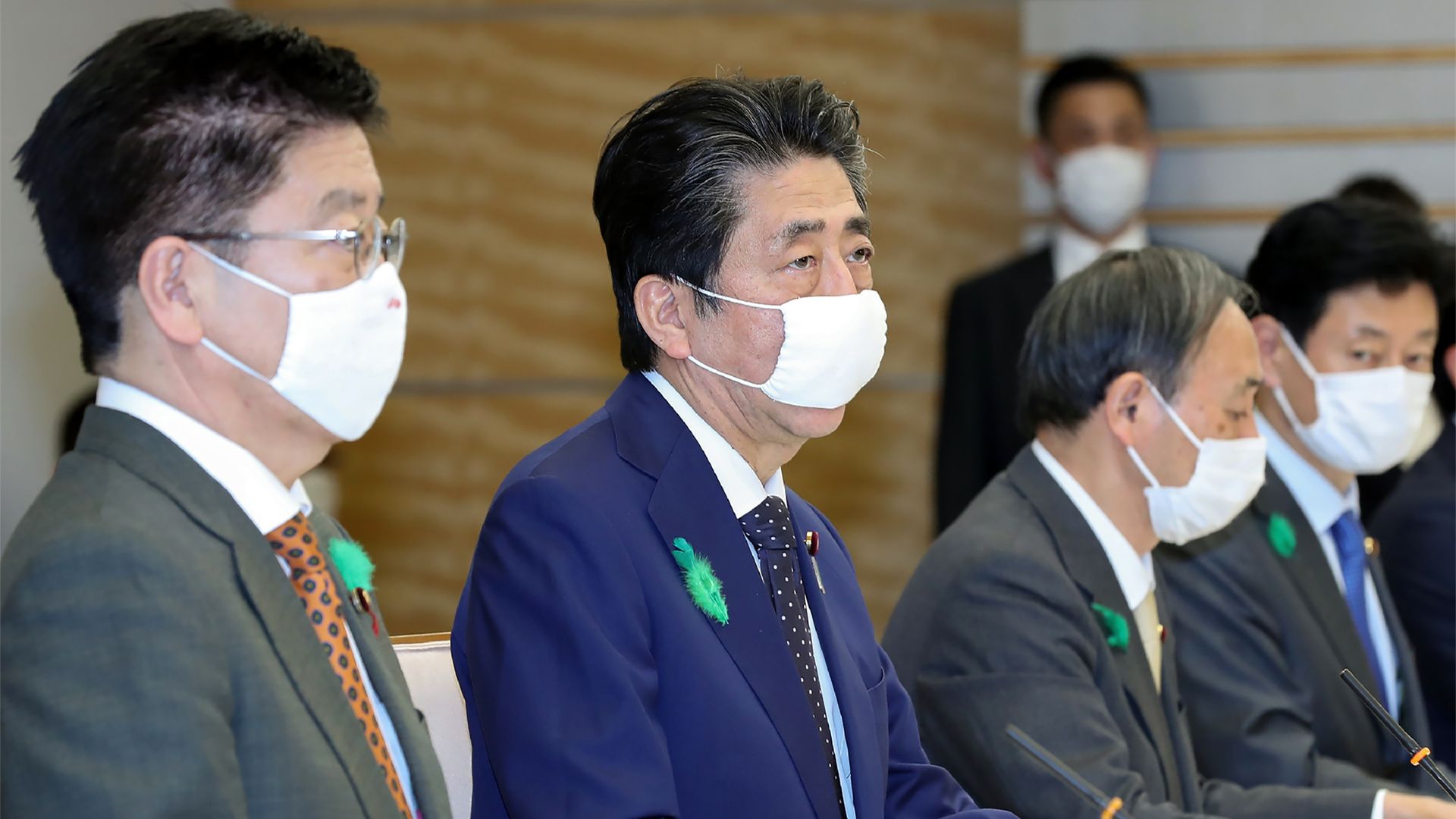
The big picture: Abe faced criticism for holding off on stricter measures because of possible damage to the economy. Roughly 80% of the public feels the response came too late, the Wall Street Journal writes, citing a Kyodo News poll.
New York Gov. Andrew Cuomo announced on Thursday that he's stretching the state's stay-at-home order for another two weeks until May 15.
The big picture: Some governors across the U.S. have already lengthened their stay-at-home mandates past the White House's May 1 goal of reopening the economy. Public health experts have warned that lifting social distancing restrictions after 30 days would lead to a spike in infections this summer.
A Smithfield pork processing plant in Sioux Falls, S.D., is the largest single hotspot of coronavirus cases in the U.S., according to the New York Times.
Why it matters: At least 644 cases of the virus have been traced back to the plant, and its sick employees make up around 44% of the state's diagnoses.
The $349 billion cap for small business loans for the coronavirus stimulus was reached Thursday, taking less than two weeks to run out.
Why it matters: While it's a sign that more than 1.6 million small businesses (and some larger ones) will eventually get desperately needed cash, it's now officially a sign that more is needed.
The White House is setting up yet another group for members of Congress as part of its larger committee of business and thought leaders to reopen the economy from the coronavirus shutdown.
The state of play: Per two sources with direct knowledge, senators and House members have received emails telling them they’ve been selected for this new yet-to-be-named group.
Facebook will begin informing people who have engaged with coronavirus misinformation on its main Facebook app, the company announced Thursday. It will guide those people to resources from the World Health Organization.
Why it matters: The tech giant typically doesn't inform users if they've engage in debunked content, aside from informing readers about Russian disinformation.
Gold prices fell for the first time in five sessions on Wednesday and by the most since March 31, after rising to their highest since late 2012 on Tuesday. A stronger dollar helped clip the value of the precious metal, which has risen by nearly 10% so far this month.
What's happening: In an unusual trend, gold has moved largely in concert with stock prices recently, upending their typically inverse relationship.
After rattling off impressive gains over the past few weeks, the economic reality of the coronavirus outbreak may be starting to set in on the stock market after a spate of economic releases showed the damage the virus has already done.
Why it matters: Wall Street has been able to shake off most negative economic data as much of the damage was expected. However, the horrific decline in retail sales that followed the largest one-month drop in U.S. consumer sentiment ever recorded shows that the backbone of the economy has been badly hurt.
At least 5,670 people living in long-term care facilities have died from the coronavirus across the U.S., according to state health data reviewed by NBC News.
Why it matters:The CDC warns that older people and those with other health complications face a higher risk of dying from the virus, amplifying its effect within such facilities — where around 2.5 million Americans live.
It's well-known that the coronavirus targets the lungs, but evidence suggests that the virus may also cause heart inflammation, acute kidney disease, neurological problems, blood clots, intestinal damage and liver issues, the Washington Post reports.
Why it matters: The treatment for each patient will vary depending on which organs are being attacked, and the myriad symptoms of the virus have already made treatment complicated.
Based on what President Trump has said publicly, he is expected to make clear to governors when they talk during an afternoon video teleconference Thursday that he won’t hold them back if they want to reopen their states for business.
Why it matters: Trump has signaled that he will provide guidelines, but that he is anxious to get the country reopened and is unwilling to wait until May 1.
The coronavirus and lockdowns have brought us tons of "who'd have thought?" developments, from the easing of air pollution to the shift to telemedicine, the resurgence of phone calls, and crazes for jigsaw puzzles and bread baking.
Why it matters: Society has become a lab experiment for what happens — economically, culturally, politically — when commerce and socializing are all but banned. The surprise effects we are witnessing may stick around for some time.
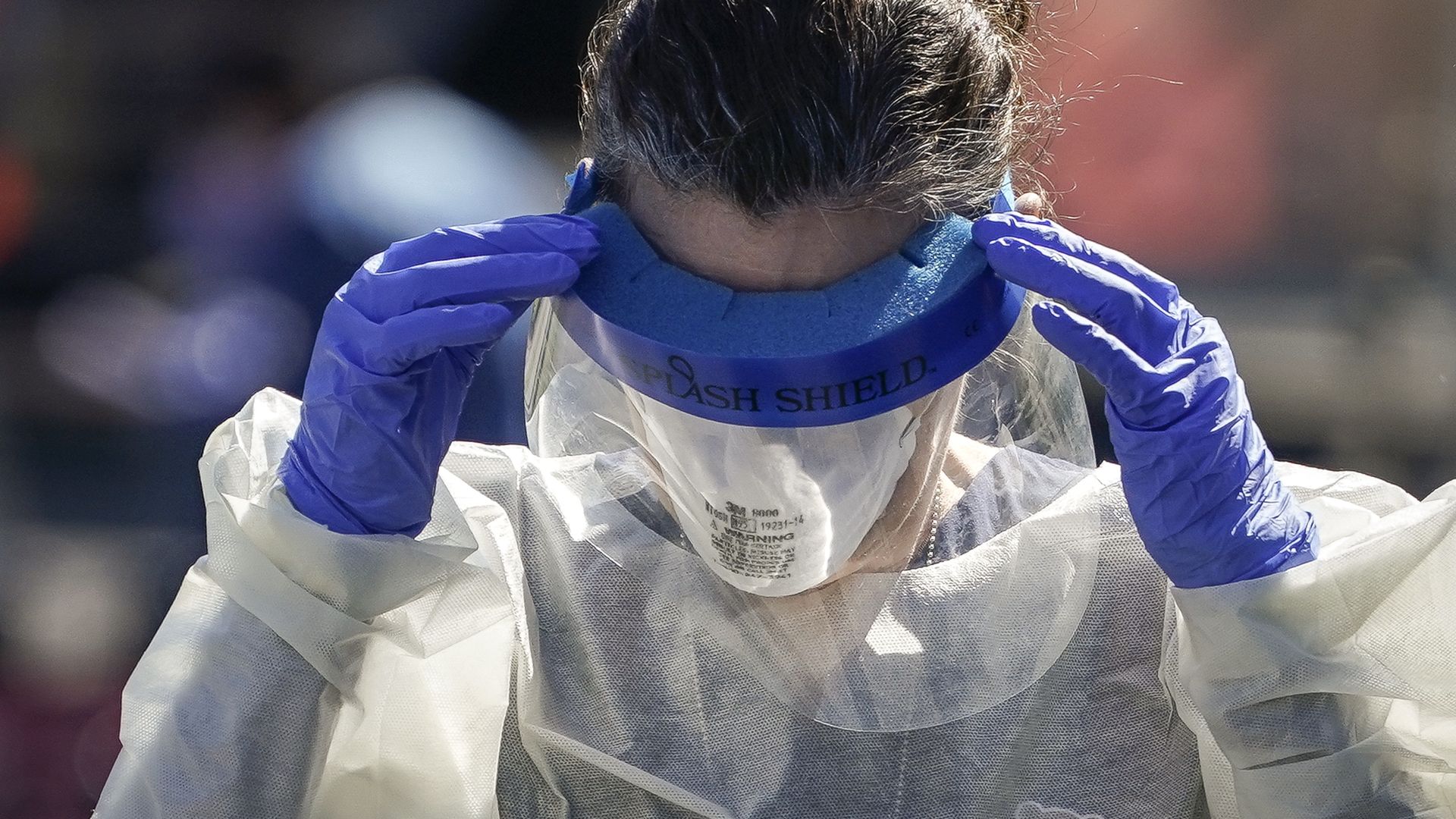
Health care workers and those inother front-line, highly vulnerable sectors will likely benefit the most as new tests come on the market to determine whether a person has had the coronavirus.
The big picture: Serological testing, along with diagnostic testing and contact tracing, is one of the basic tools public health experts say are key to managing the pandemic.
While many people stay home under lockdown restrictions in the U.S., millions of essential workers continue to risk their health to serve America.
The big picture: Sen. Elizabeth Warren called essential workers "the backbone of our nation's response to coronavirus," as she and Rep. Ro Khanna proposed a bill protecting them with more health and safety provisions, pay and paid sick, family and medical leave, among other measures. President Trump has said "America is grateful" to those who continue working "every day to care for their fellow citizens!" Here are some of their stories, in photos.
JCPenney is weighing bankruptcy as one of its options to deal with the financial fallout of the coronavirus pandemic, Reuters first reported.
Catch up quick: The 118-year-old company — which holds nearly $4 billion in long-term debt — has temporarily furloughed 80,000 of its hourly store associates in response to the virus and closed its stores and offices.
Anthony Fauci told CBS News Wednesday it's "possible to shave a couple of months off" his earlier projection that it would take 12–18 months until a novel coronavirus vaccine would be widely available. But he cautioned he didn't want to over-promise and it's "premature" to discuss vaccine trials' data "except to say there have been no glitches."
The big picture: The top U.S. infectious disease expert said the timetable for reopening economies would vary. "The success or failure of that rolling re-entry program ... would be the capability of being able to test, identify, isolate, get someone who is infected out of circulation and do a degree of contact tracing," he said.
Scientists are calling for a better biosecurity system to govern lab experiments involving potentially dangerous viruses.
Why it matters: COVID-19 has clearly demonstrated the tremendous human and economic damage even a relatively mild but new virus can wreak. With researchers increasingly able to create far more lethal pathogens in a lab using new gene engineering tools, science needs to rethink oversight for such experiments.