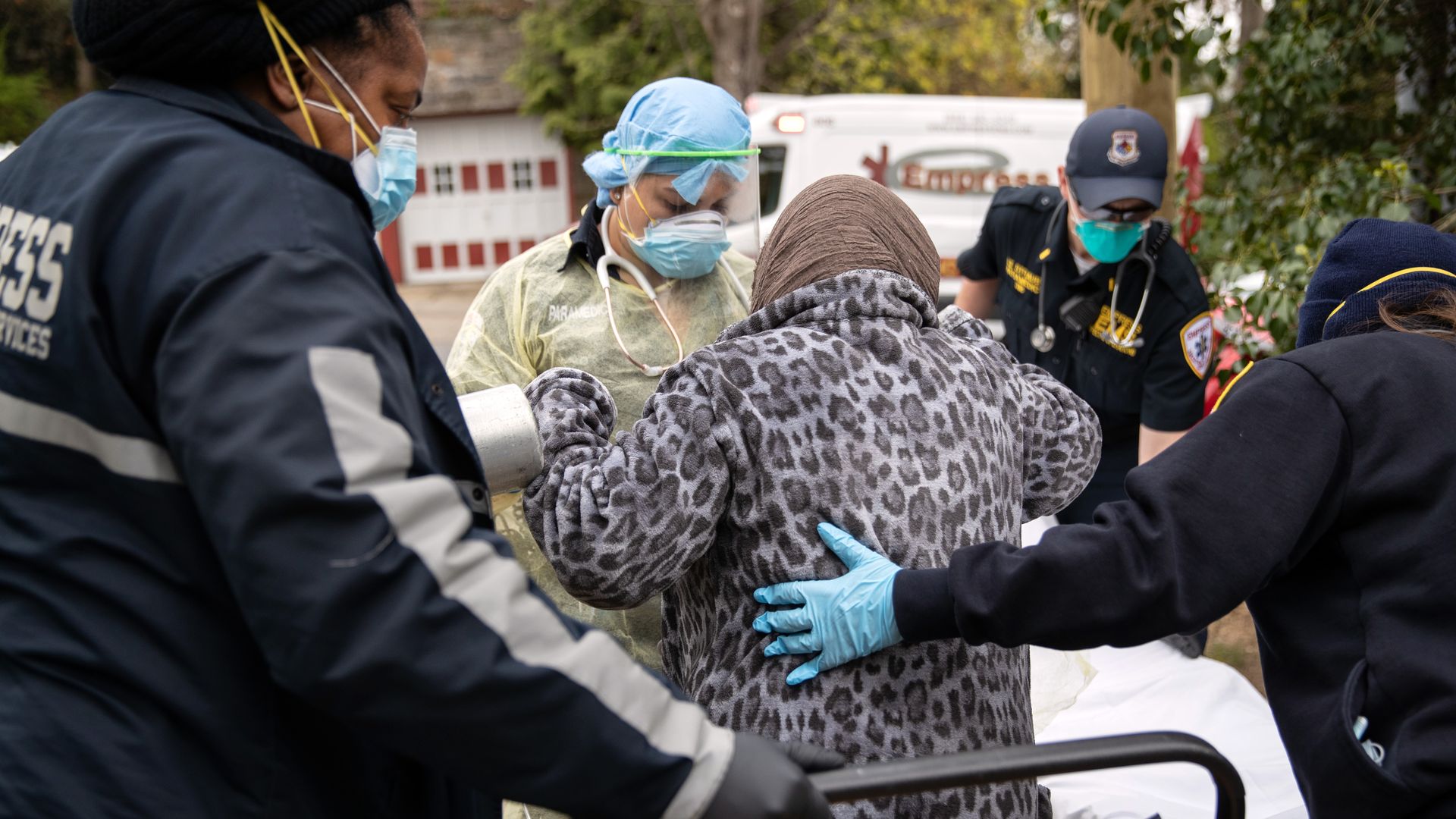
Detroit Mayor Mike Duggan announced on Friday that the city will start making diagnostic tests available to all employees of “essential” businesses, and to city employees performing essential services.
Why it matters: It’s the first program of its kind, and a model for other cities to follow. And it’s a reminder that testing remains the limiting factor in every facet of our response to the coronavirus.
Widespread social distancing has forced Americans to get creative with how they connect to one another, including romantically.
The big picture: The dating industry was poised to take a hit amid the coronavirus outbreak as potential suitors are generally unable to meet in-person. Platform Match, which also owns Tinder and OkCupid, has seen stocks tumble 25%. But daters are turning to digital courtship through video chats and virtual activities as an alternative.
At least 25 children in the Bon Air Juvenile Correctional Center in Virginia have tested positive for the novel coronavirus, the Richmond Times-Dispatch reports, citing officials from the Department of Juvenile Justice.
The big picture: Children in juvenile centers can face heightened risk from COVID-19 just as adults in federal and state prisons, which have acted as petri dishes for the virus in the U.S.
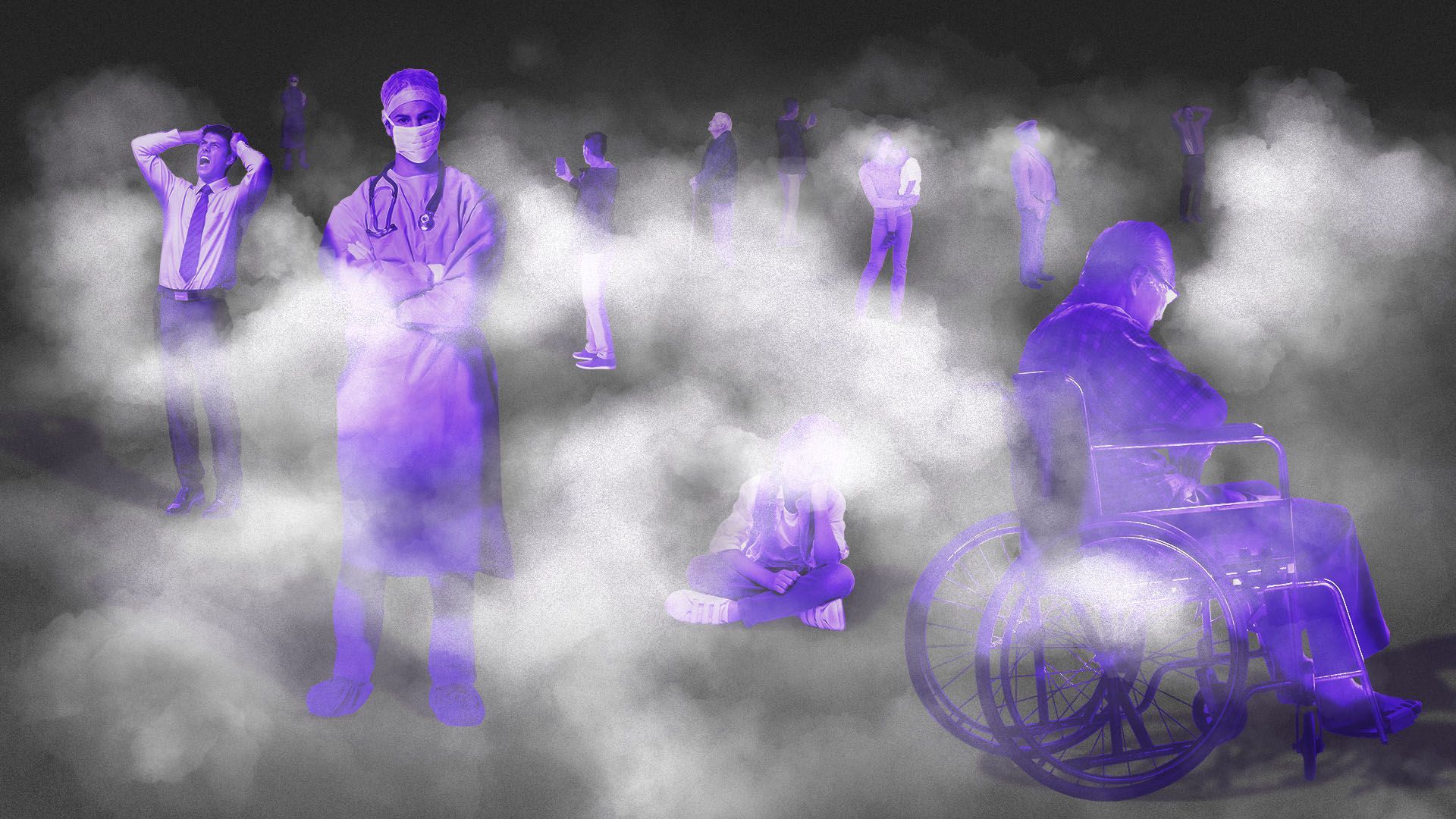
Every treatment has some side effects — including social distancing.
The big picture: Prolonged isolation, coupled with sustained job losses, could increase the risk of depression, as people are removed from the community support system that keeps them going.
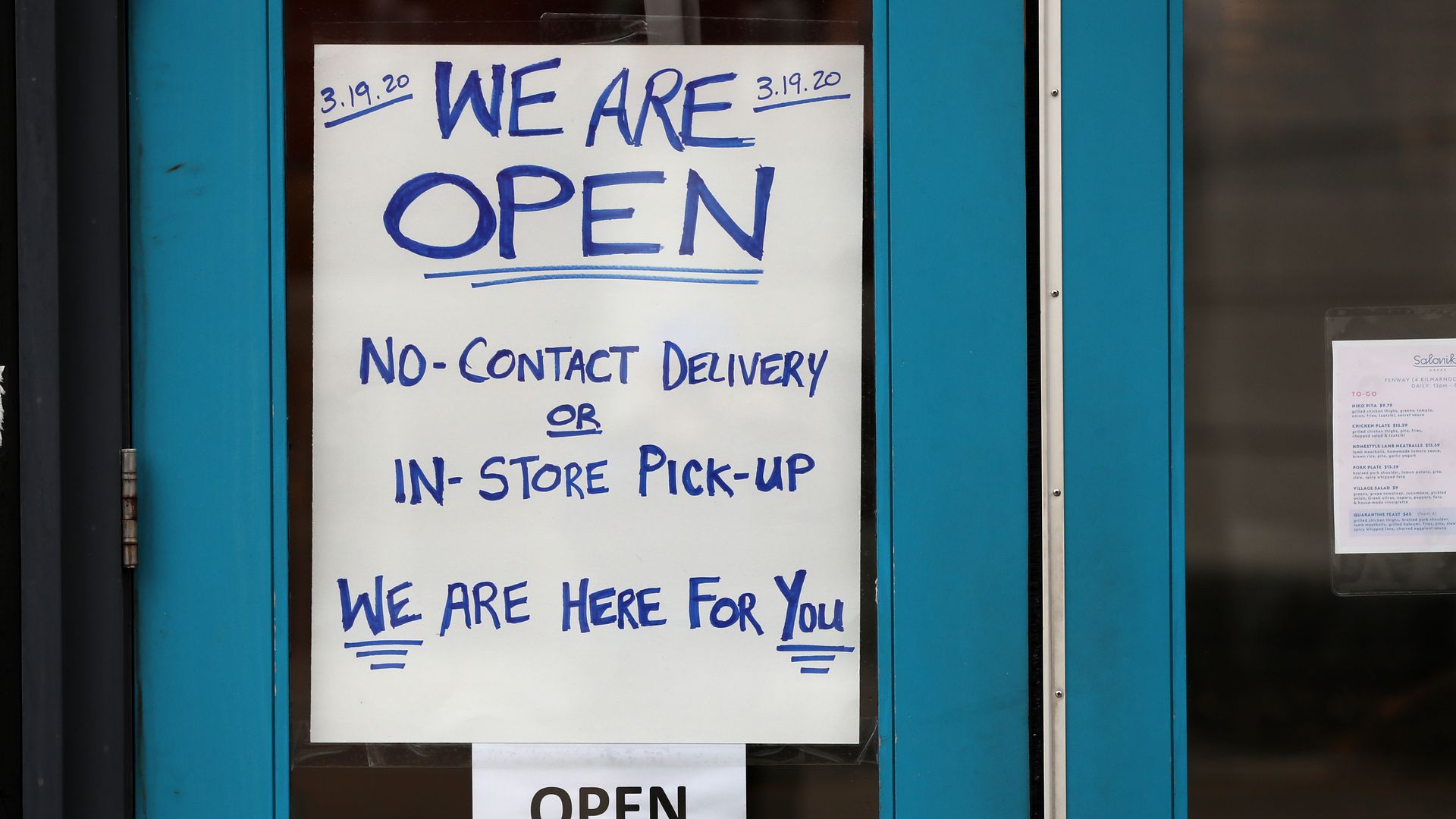
Some restaurants and other businesses, primarily in the service sector, are seeing spikes in tips as the coronavirus pandemic stalls the U.S. economy.
Why it matters: The restaurant industry has been hit hard as mandated dining area closures have forced businesses to restructure operations. Many workers rely heavily on tips, so the uptick in discretionary gratuity can help make up the difference.
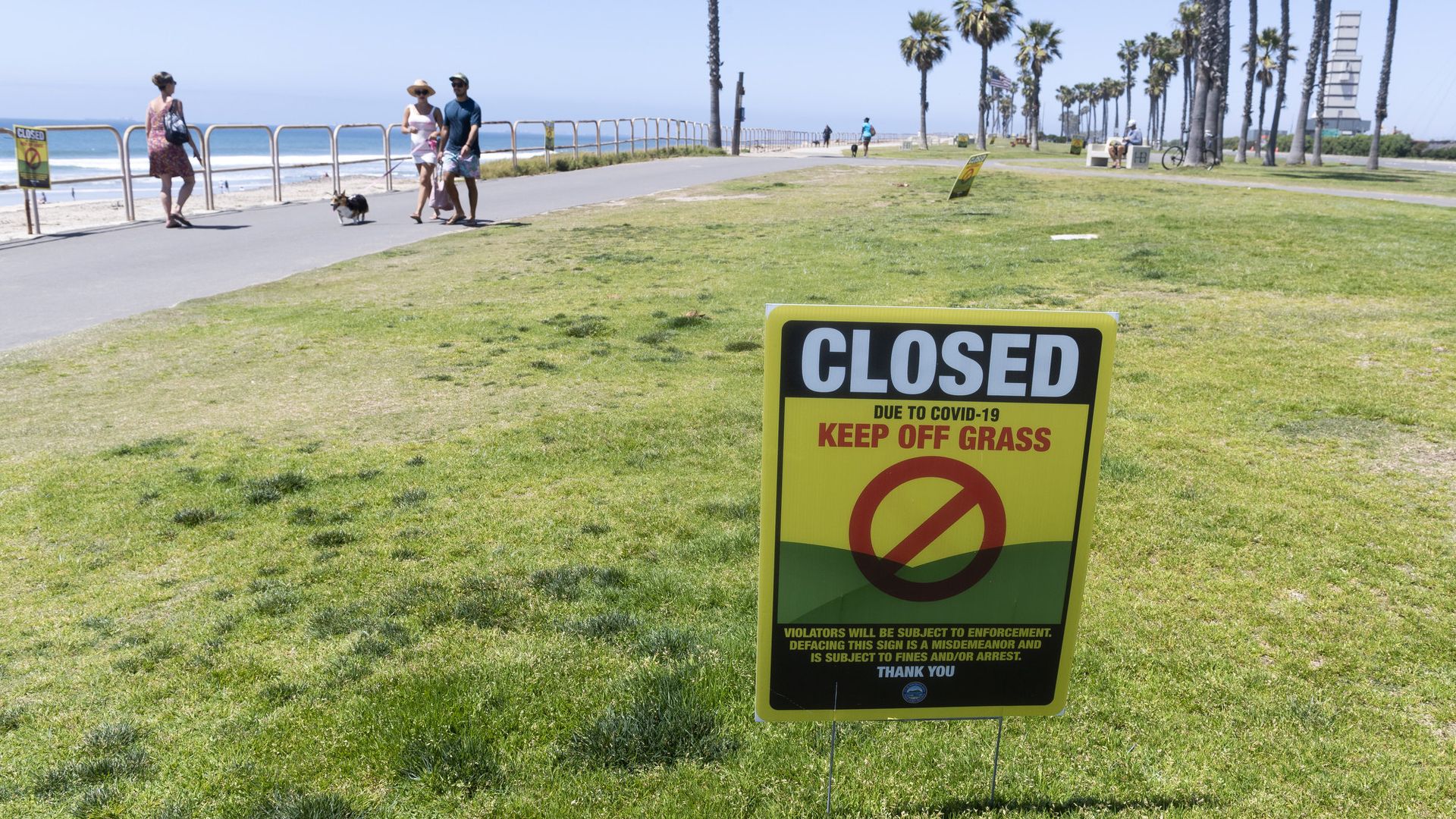
Lawmakers in communities along the U.S. coasts are considering reopening their beaches as the coronavirus pandemic persists and summer nears. Meanwhile, seaside business owners worry about potential losses during their busiest months.
Why it matters: The virus has already smacked the U.S. economy, leaving nearly 22 million Americans unemployed. That number could increase if businesses remain closed or refuse to hire over the summer, the Wall Street Journal notes.
As the coronavirus continues to spread throughout the U.S., Axios is answering readers' questions about the pandemic — how it spreads, who's at risk, and what you can do to stay safe.
What's new: This week, we answer five questions on reusing masks, keeping up with specialist doctor's appointments, being neighborly, self-quarantining and handling outside food.
The coronavirus pandemic and social distancing have catalyzed a wave of free online cultural and educational programming.
Between the lines: As states extend their shutdowns and lockdowns, free online opportunities for cultural and educational enrichment are finding an audience that's eager for new intellectual pursuits.
We're fighting the greatest public-health crisis in a century, and we barely understand our enemy. We cannot afford to stay in lockdown until a cure or vaccine arrives — but anybody trying to reopen our cities needs information that is frustratingly difficult to find.
The big picture. The single biggest obstacle to reopening the economy is a lack of visibility: We don't know the scope of the pandemic itself, or its economic fallout, or how its trajectory will change as we embark upon an ad-hoc effort to reopen the economy.
College students are revolting against their universities for charging full tuition as the coronavirus has forced schools to move online.
Why it matters: "The coronavirus crisis is forcing a reckoning over the price and value of higher education" but universities aren't giving into the demands, the WashPost's Nick Anderson writes. As schools start planning for the possibility of remaining online in the fall, they will face more pressure to cut prices so they can continue to attract students.
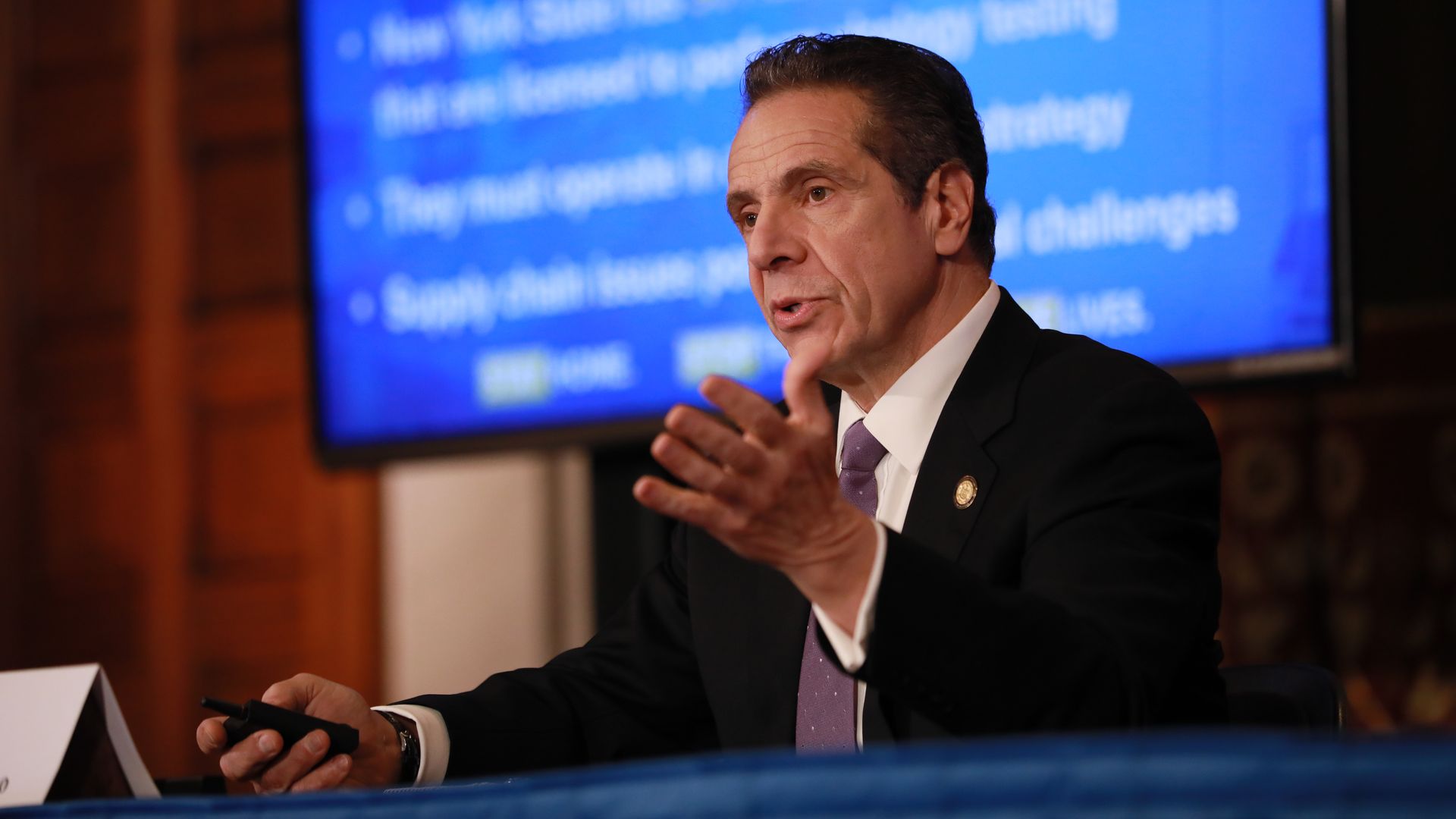
"Nursing homes are the single biggest fear in all of this. Vulnerable people in one place. It is the feeding frenzy for this virus," New York Gov. Andrew Cuomo said at a press briefing on Saturday.
What's happening: Outside of inpatient health care settings, the CDC has recorded the largest chunk of COVID-19 deaths in the U.S. emerging from nursing homes and long-term care facilities, per data released on Friday.
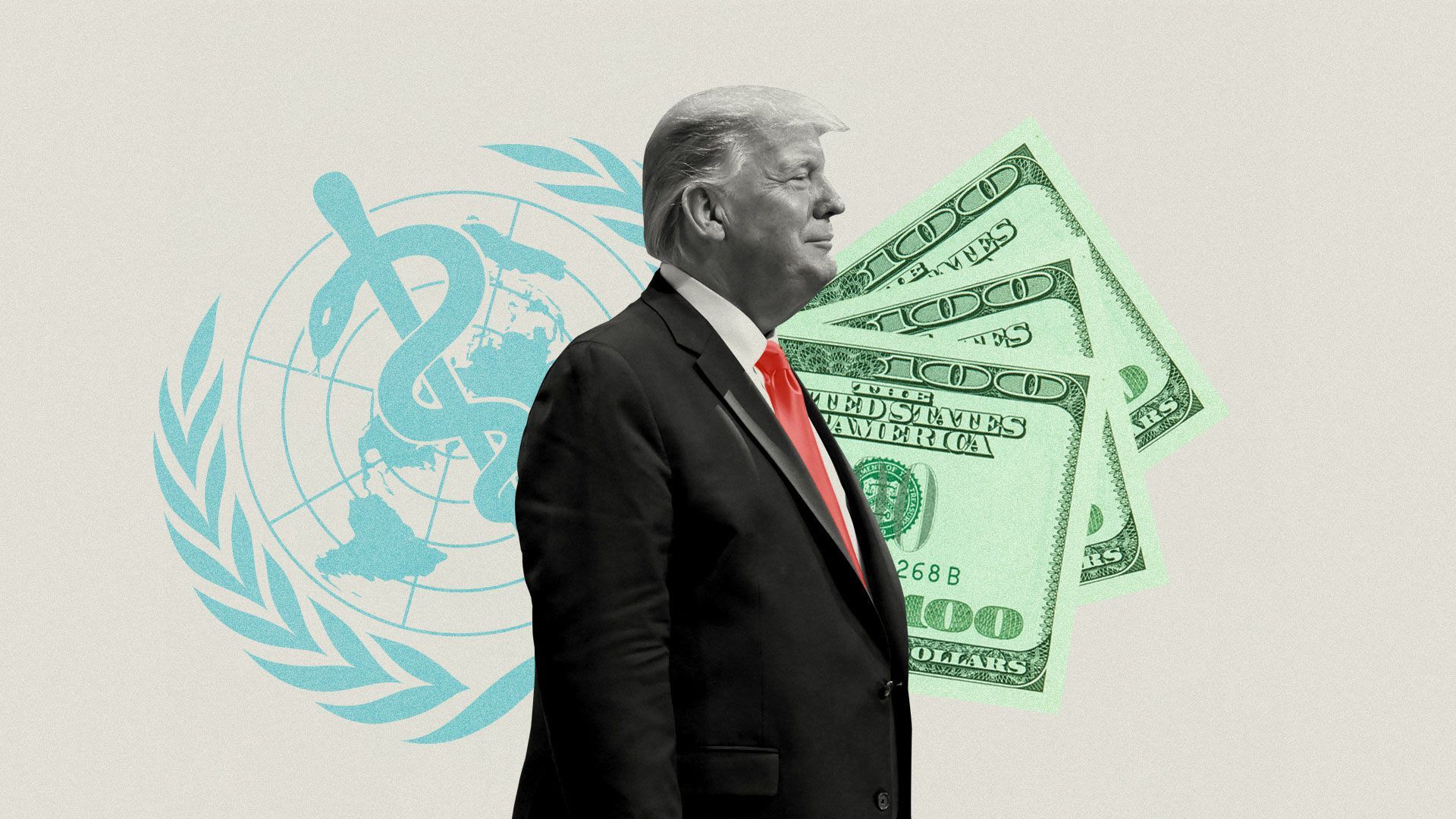
The World Health Organization made mistakes in its initial response to COVID-19, but as it comes under criticism, it's important to remember the world still needs the agency.
Why it matters: President Trump's decision this week to withhold money from the agency could damage its efforts to fight the next pandemic and other health threats. For all its problems, the WHO remains the only global institution charged with combating the global threat of infectious disease.
The freeze on U.S. troops' international and domestic movement will extend until June 30, Undersecretary of Defense for Personnel and Readiness Matt Donovan told reporters in a Saturday conference call, the Military Times reports.
What's happening: The original travel restrictions, which went into effect on March 16, apply to all Defense Department service members and civilians, as well as their family members. Travel for medical treatment is permitted and service members may take leave in their local areas, the original restrictions state.
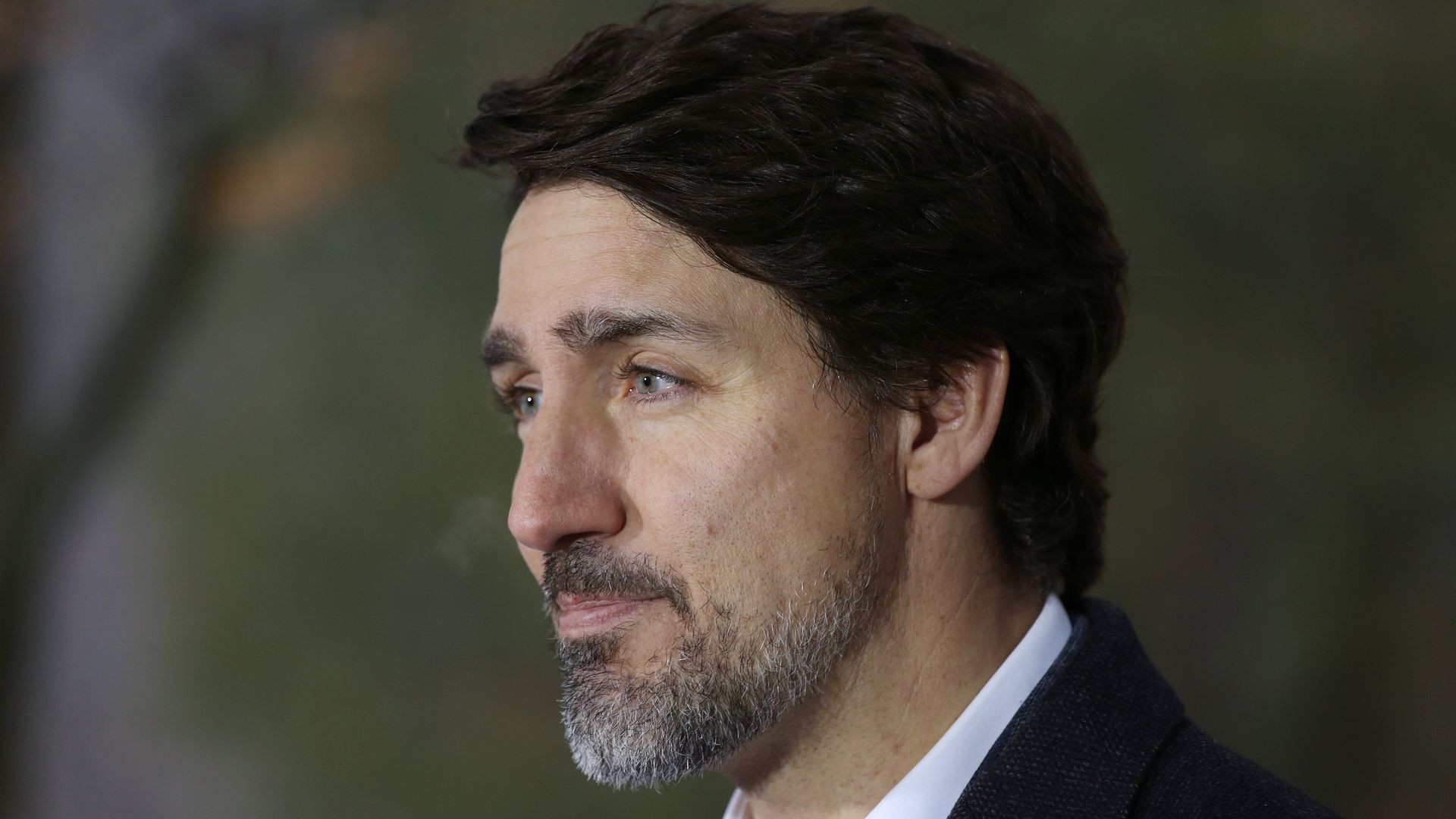
The U.S. and Canada have agreed to maintain border restrictions for 30 more days to combat the novel coronavirus, Prime Minister Justin Trudeau said at a press conference on Saturday.
What's happening: President Trump tweeted on March 18 that the neighboring countries reached a "mutual" decision to close their shared border to "non-essential traffic" in an effort to mitigate the spread of COVID-19.
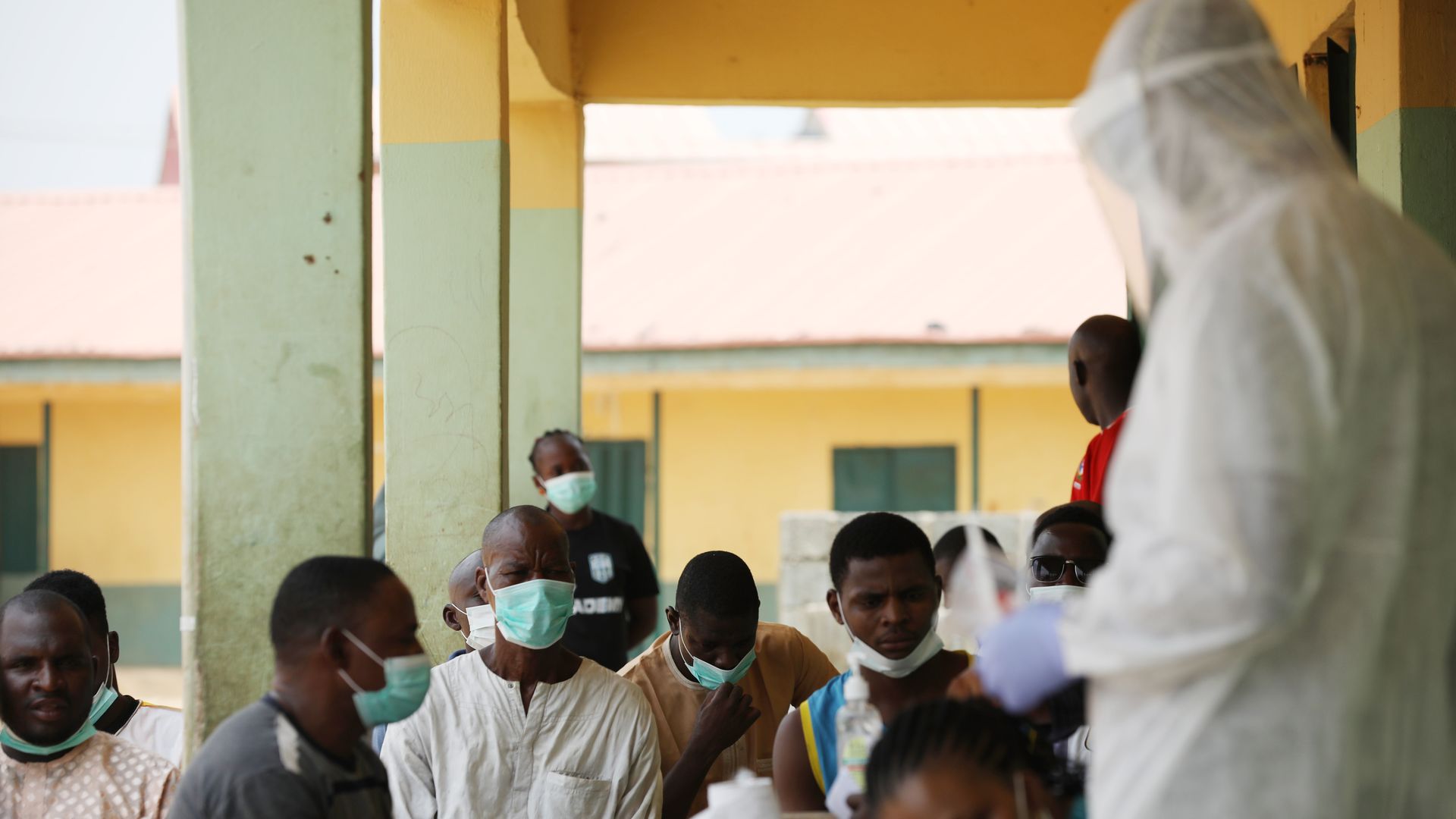
Several countries across Africa are struggling to get basic health supplies and ventilators as the number of coronavirus cases swells — highlighting how unprepared the continent is for the coronavirus pandemic.
Why it matters: The United Nations Economic Commission of Africa estimates that at least 300,000 Africans will die from the virus and 29 million could be pushed into extreme poverty, Reuters notes.
One in three jobs held by women has been deemed as essential, putting women in the U.S. on the frontlines of the coronavirus outbreak.
The state of play: Nearly 52% of all essential workers are women, the N.Y. Times reports. That includes 77% of health care workers, 78% of social workers and more than 2/3 of grocery store and fast-food employees.
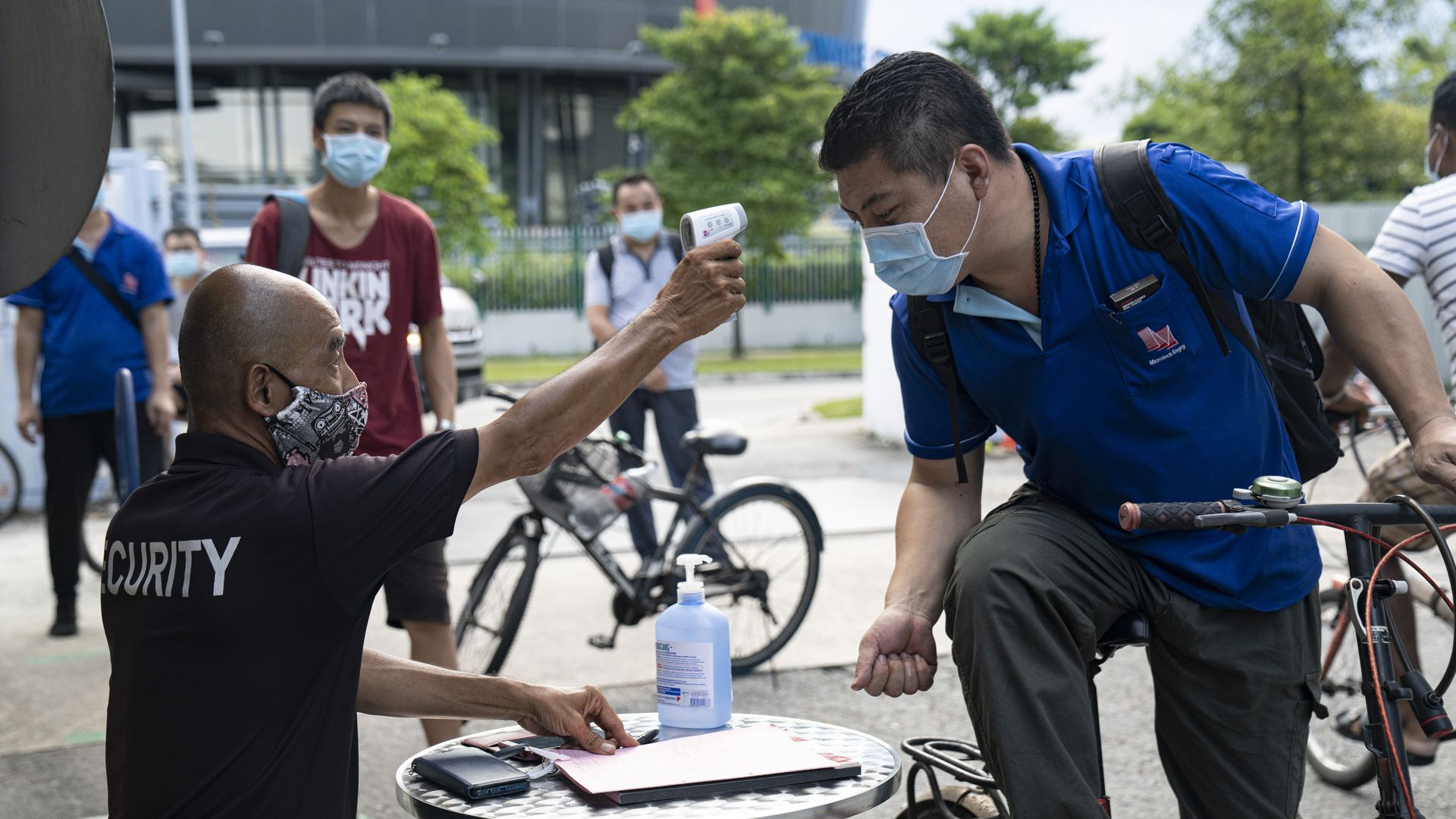
Japan and Singapore were glimmers of hope throughout the coronavirus pandemic, but now both countries are struggling to control the breakout as new waves of infections hit the two countries.
Why it matters: The new wave of outbreaks highlights holes in their health systems and response strategies.









/2020/04/17/1587162382494.gif?w=3840)