10 times Trump and his administration were warned about coronavirus

Add Axios as your preferred source to
see more of our stories on Google.
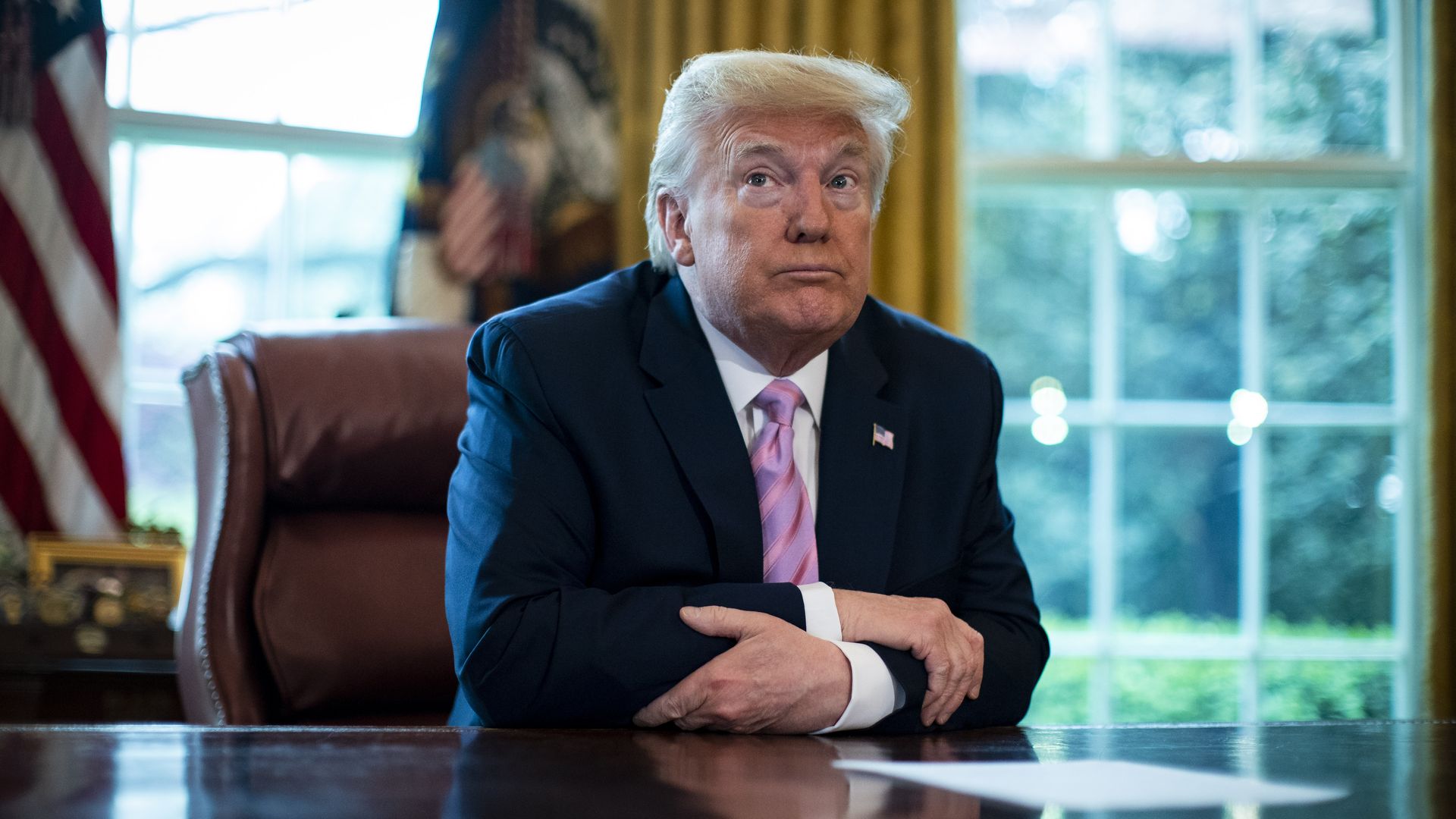
Photo: Al Drago - Pool/Getty Images
President Trump's tone on the coronavirus pandemic has dramatically shifted in the last month as the illness has swept across the U.S., which has now reported more confirmed cases than any country in the world.
Why it matters: Reporting from Axios, the New York Times, Washington Post, AP and other media outlets has revealed that Trump and his administration were repeatedly warned about the threat that the virus could pose to American lives and the economy. Earlier action could have curbed the spread.
The state of play: The first case of COVID-19 reached the U.S. on Jan. 15. The World Health Organization declared it a pandemic on March 11. Trump declared the U.S. outbreak a national emergency on March 13.
- On Jan. 18, Health and Human Services Secretary Alex Azar first briefed Trump on the threat of the virus in a phone call, the New York Times reports. Trump made his first public comments about the virus on Jan. 22, saying he was not concerned about a pandemic and that "we have it totally under control."
- On Jan. 27, White House aides met with then-acting Chief of Staff Mick Mulvaney to try to get senior officials to take the virus threat more seriously, the Washington Post reports. Joe Grogan, the head of the White House Domestic Policy Council, warned it could cost Trump his re-election.
- On Jan. 29, economic adviser Peter Navarro warned the White House in a memo addressed to the National Security Council that COVID-19 could take more than half a million American lives and cause nearly $6 trillion in economic damage.
- On Jan. 30, Azar warned Trump in a subsequent call that the virus could become a pandemic and that China should be criticized for its lack of transparency, per the Times. Trump dismissed Azar as alarmist and rejected the idea of criticizing China.
- Also on Jan. 30, the World Health Organization declared the coronavirus a global health emergency. WHO has only done so five times since gaining that power in 2005.
- On Feb. 5, senators urged the administration in a briefing to take the virus more seriously and asked if additional funds were necessary. The administration made no requests at the time for emergency funding.
- On Feb. 14, a memo was drafted by health officials in coordination with the National Security Council that recommended the targeted use of "quarantine and isolation measures," per the Times. Officials planned to present Trump with the memo when he returned from India on Feb. 25, but the meeting was canceled.
- On Feb. 21, the White House coronavirus task force conducted a mock exercise of the pandemic. The group concluded that the U.S. would need to implement aggressive social distancing, even if it caused mass disruption to the economy and American lives, per the Times.
- On Feb. 23, Navarro doubled down on his warnings in another memo, this time addressed to the president, stating that up to 2 million Americans could die of the virus.
- On Feb. 25, director of the National Center for Immunization and Respiratory Diseases Nancy Messonnier publicly warned of the virus threat and said "we need to be preparing for significant disruption in our lives.” Trump reportedly called Azar fuming that Messonnier had scared people unnecessarily and caused the stock market to plummet, per the Times.
The other side: Trump has pointed to his decisions to restrict travel from China in early February and establish the White House coronavirus task force on Jan. 29 as signs that he was serious about the threat early on. White House spokesperson Judd Deere said in a statement:
"While the media and Democrats refused to seriously acknowledge this virus in January and February, President Trump took bold action to protect Americans and unleash the full power of the federal government to curb the spread of the virus, expand testing capacities and expedite vaccine development even when we had no true idea the level of transmission or asymptomatic spread."
The bottom line: Anthony Fauci said on CNN's "State of the Union" Sunday that "no one is going to deny" that more lives could have been saved if the Trump administration had implemented social distancing guidelines earlier on.
Go deeper ... Timeline: How the U.S. fell behind on the coronavirus
Subscribe to Mike Allen's Axios AM to follow our coronavirus coverage each morning from your inbox.
