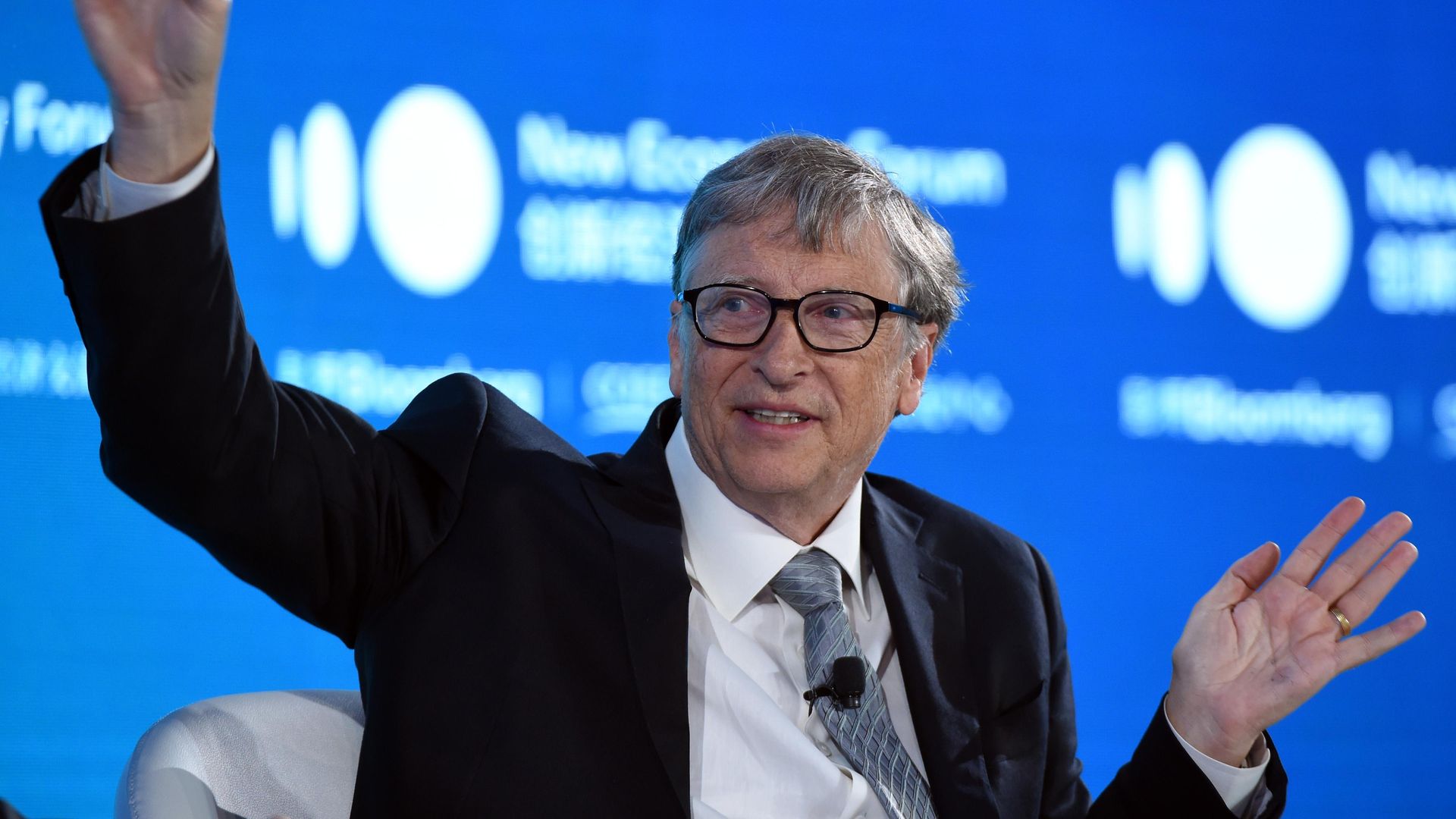
The Bill and Melinda Gates Foundation pledged $150 million for its coronavirus relief efforts on Wednesday, on top of the $100 million committed in February.
The big picture: Tech giants like Google and Facebook have donated hundreds of millions to COVID-19 relief efforts.
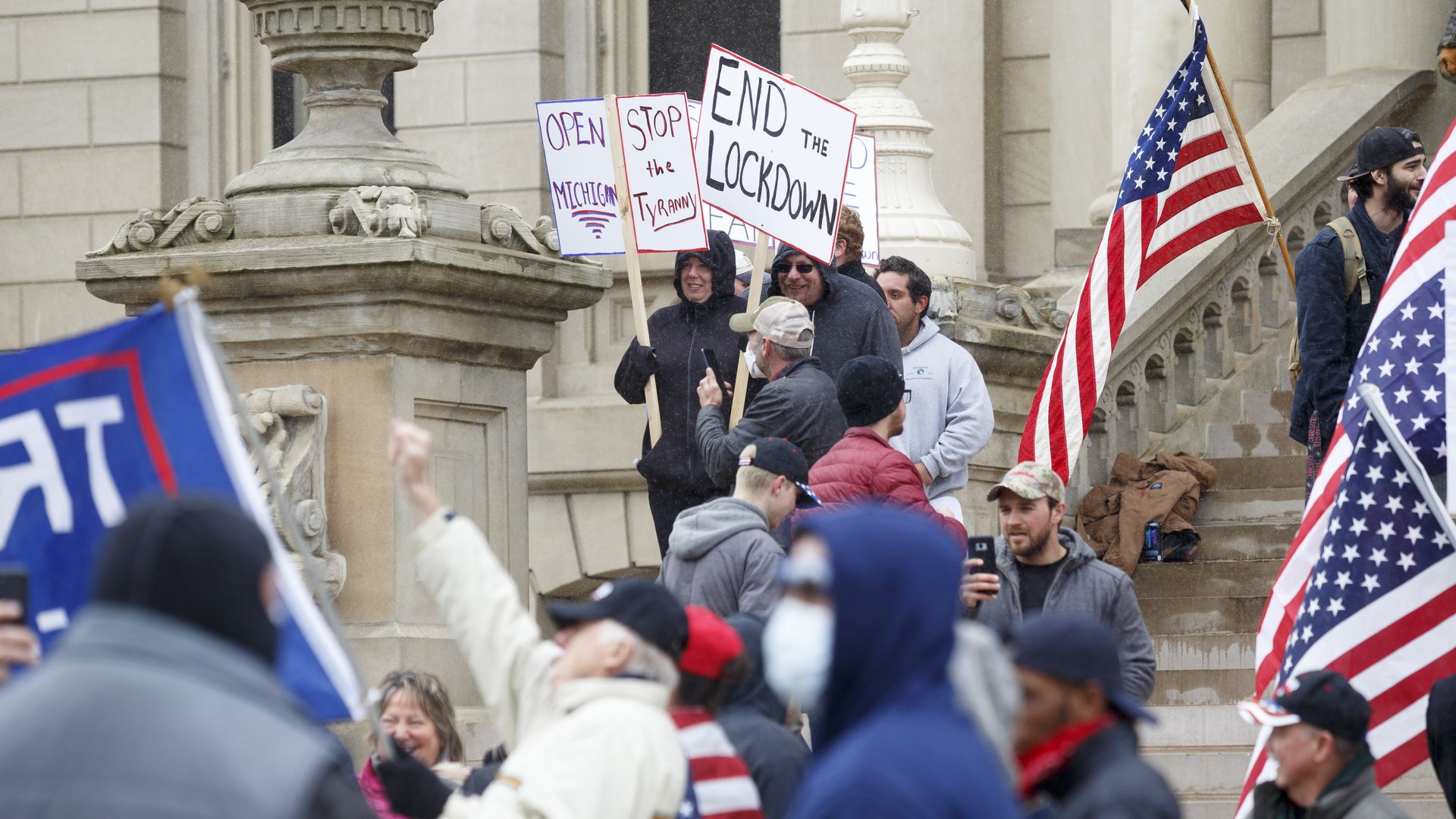
Protestors stormed the state Capitol on Wednesday in response to Michigan Gov. Gretchen Whitmer's stringent stay-at-home order, NBC News reports.
The latest: TheMichigan Conservative Coalition and the Michigan Freedom Fund organized the event, designated "Operation Gridlock." Coordinators invited participants to instigate traffic jams — writing on Facebook: "Do not park and walk — stay in your vehicles!"
A sailor on the aircraft carrier USS Theodore Roosevelt died this week from COVID-19, and nearly 600 sailors on the ship have tested positive for the novel coronavirus.
Why it matters: The effective loss of one of the U.S. Navy's prime assets because of the spreading pandemic underscores the threat infectious disease poses to American military readiness — and the failure of the national defense establishment to prepare for it.
The world is learning the hard way that ramping up manufacturing of the equipment needed to fight the COVID-19 pandemic isn't as easy as scaling up the software that has come to dominate our lives.
Why it matters: Our economy has thrived on manipulating bytes, but to face the threats of the future, we'll need to relearn how to manipulate atoms in the real world. New technology like 3D printing can help by putting the flexibility of software at work in the creation of stuff.
Germany will begin a "gradual" and "very careful" loosening of its coronavirus lockdown next week, though social distancing rules will remain in place through at least May 3, Chancellor Angela Merkel said Wednesday.
Where things stand: After previously rebuffing calls for a plan to reopen the economy, Merkel laid out a general roadmap as much of Europe remains locked down.
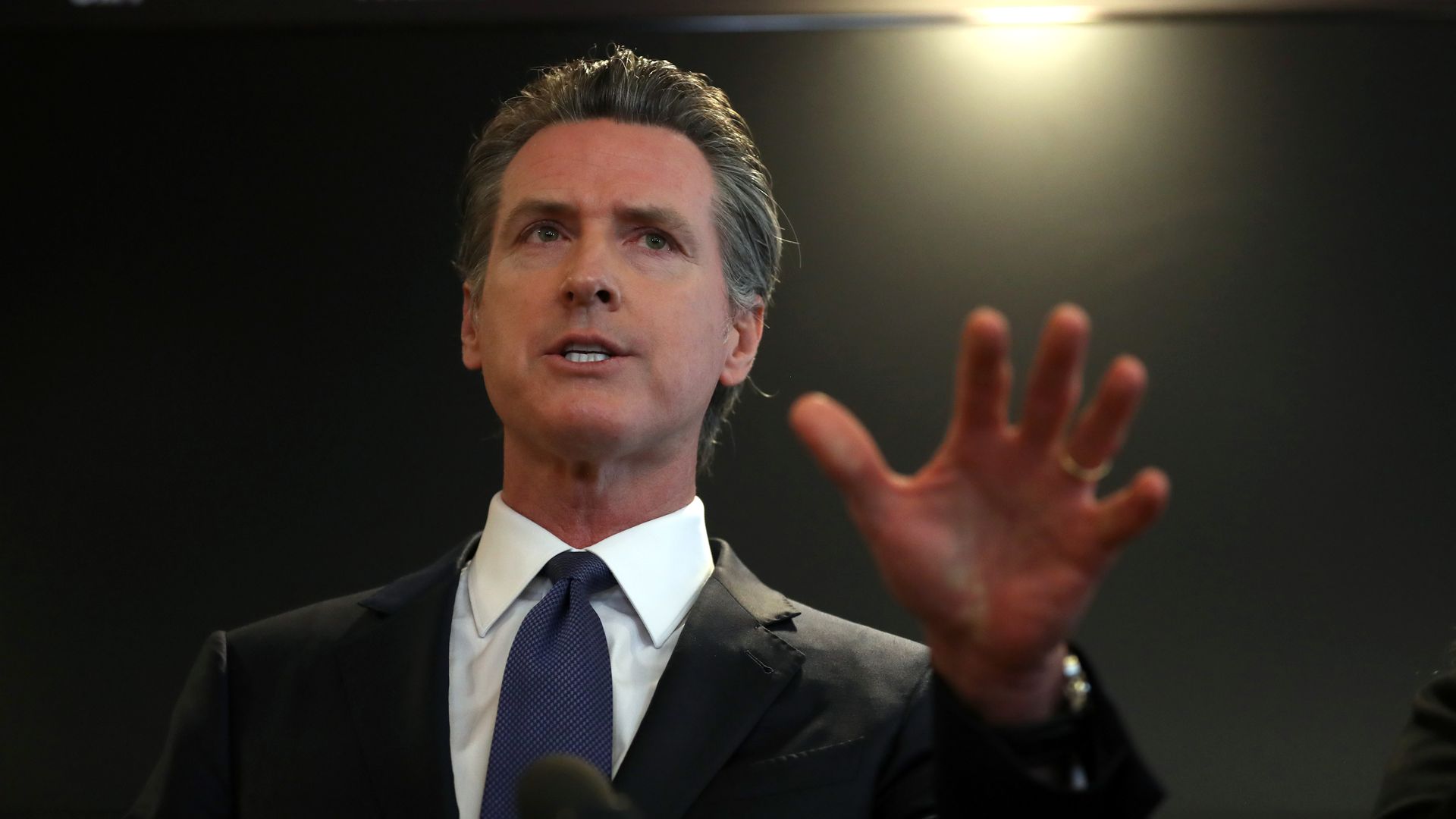
Unauthorized immigrants in California can apply to receive $500 of coronavirus relief provided by the state starting in May, Gov. Gavin Newsom announced Wednesday.
Why it matters: The undocumented population was left out of the federal cash assistance provided in the CARES Act passed by Congress. They also do not qualify for unemployment insurance benefits.
The Justice Department's inspector general is remotely assessing federal prisons to determine whether the coronavirus is being properly mitigated, according to the watchdog's website.
The big picture: Federal and state prisons have acted as petri dishes for the virus in the U.S., as overcrowded and often unsanitary conditions can make social distancing and recommended hygiene nearly impossible for inmates.
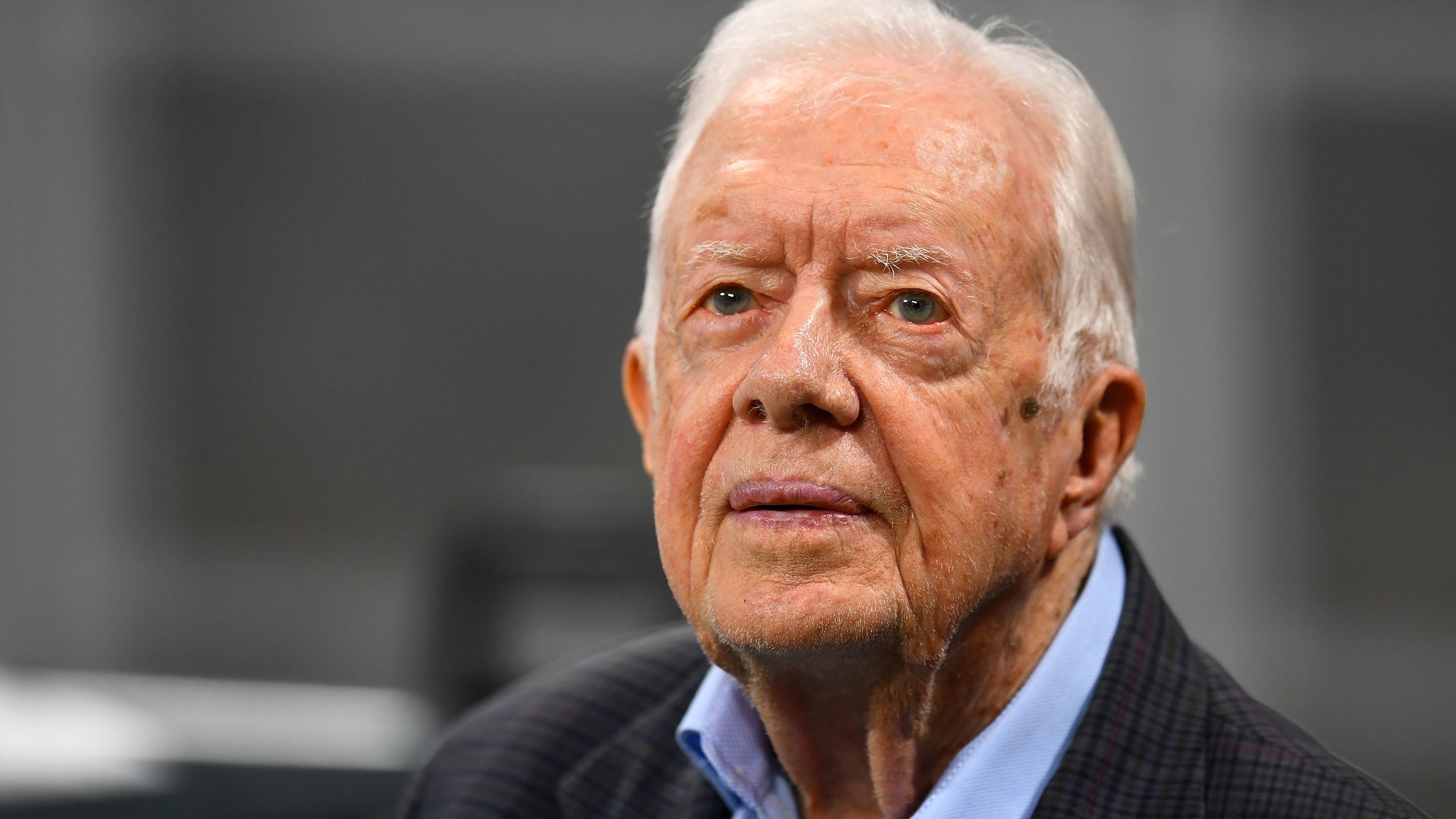
Former President Jimmy Carter criticized President Trump's decision to withhold U.S. funding from the World Health Organization Wednesday, calling it "the only international organization capable of leading the effort to control the virus."
Why it matters: Carter dedicated his career to humanitarian work after leaving the presidency, establishing the Carter Center in 1982 with the goal of helping improve the quality of life for people in more than 80 countries. The 95-year-old is also active in Habitat for Humanity and won the Nobel Peace Prize in 2002.
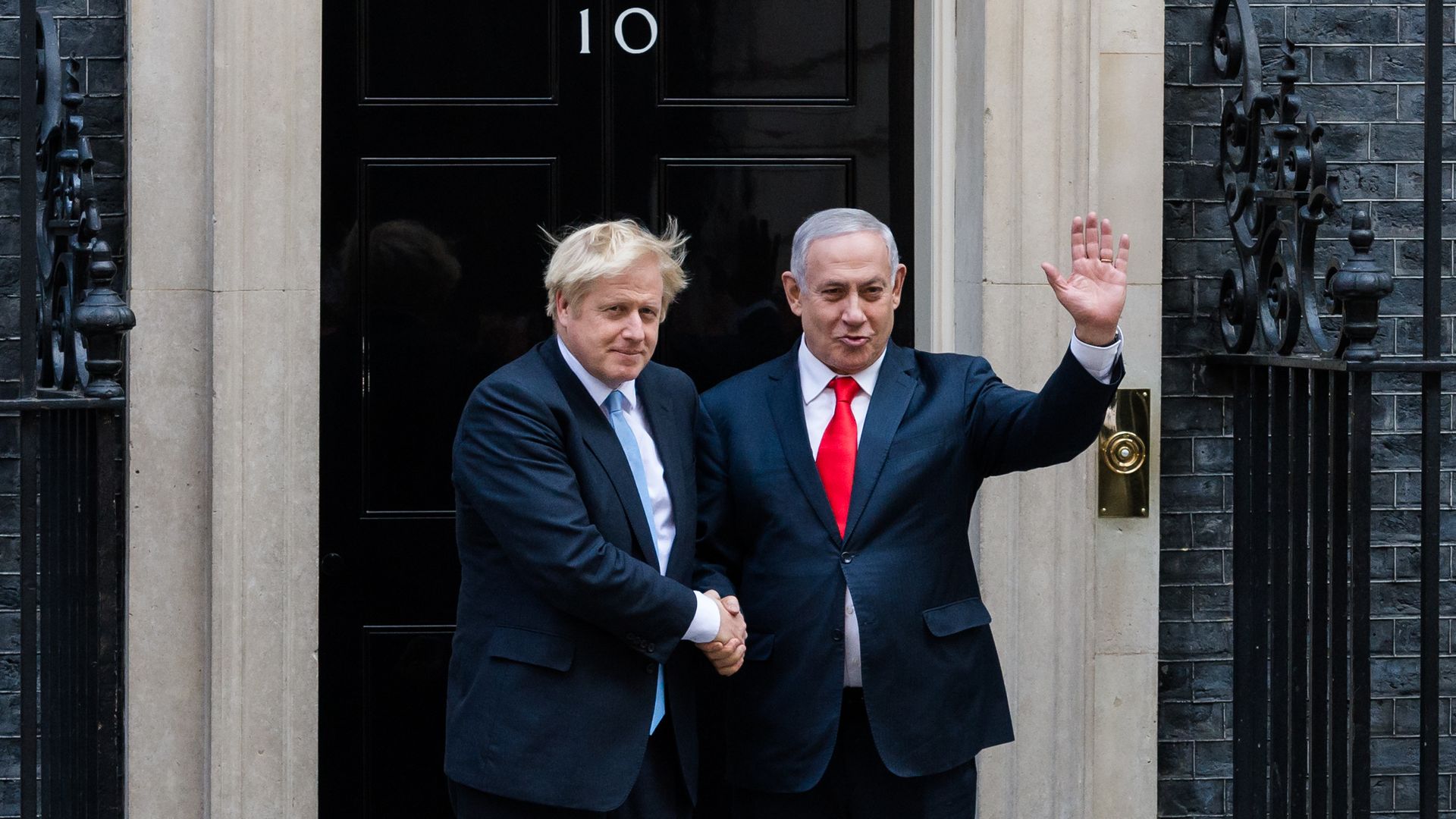
Israeli Prime Minister Benjamin Netanyahu rejected a request from U.K. Foreign Secretary Dominic Raab to allow ventilators to be exported from Israel to the U.K., Israeli officials tell me.
Why it matters: The U.K. is one of Israel's closest allies, and it's facing one of the world's worst coronavirus outbreaks. Raab made the request last week while deputizing for Prime Minister Boris Johnson, who was hospitalized with severe coronavirus symptoms but has since been released.
Theranos founder Elizabeth Holmes' trial for allegedly defrauding investors, patients and doctors via the blood-testing company has been rescheduled from August until at least Oct. 27 due to the coronavirus pandemic, Stat reports.
Why it matters: The trial is one of the first high-profile legal cases to be delayed after more than 40 states have issued stay-at-home orders.
New York Gov. Andrew Cuomo compared scaling up testing and contact tracing to the degree necessary to reopen the economy during the coronavirus pandemic to "trying to get Apollo 13 back to Earth 220,000 miles, 50 years ago."
Why it matters: The governor said at a briefing Wednesday that along with COVID-19 testing, contact tracing — tracking down the people who have interacted with a coronavirus patient, so they can quarantine — is a key component to the "phased reopening of the economy" when the outbreak is under control in New York.
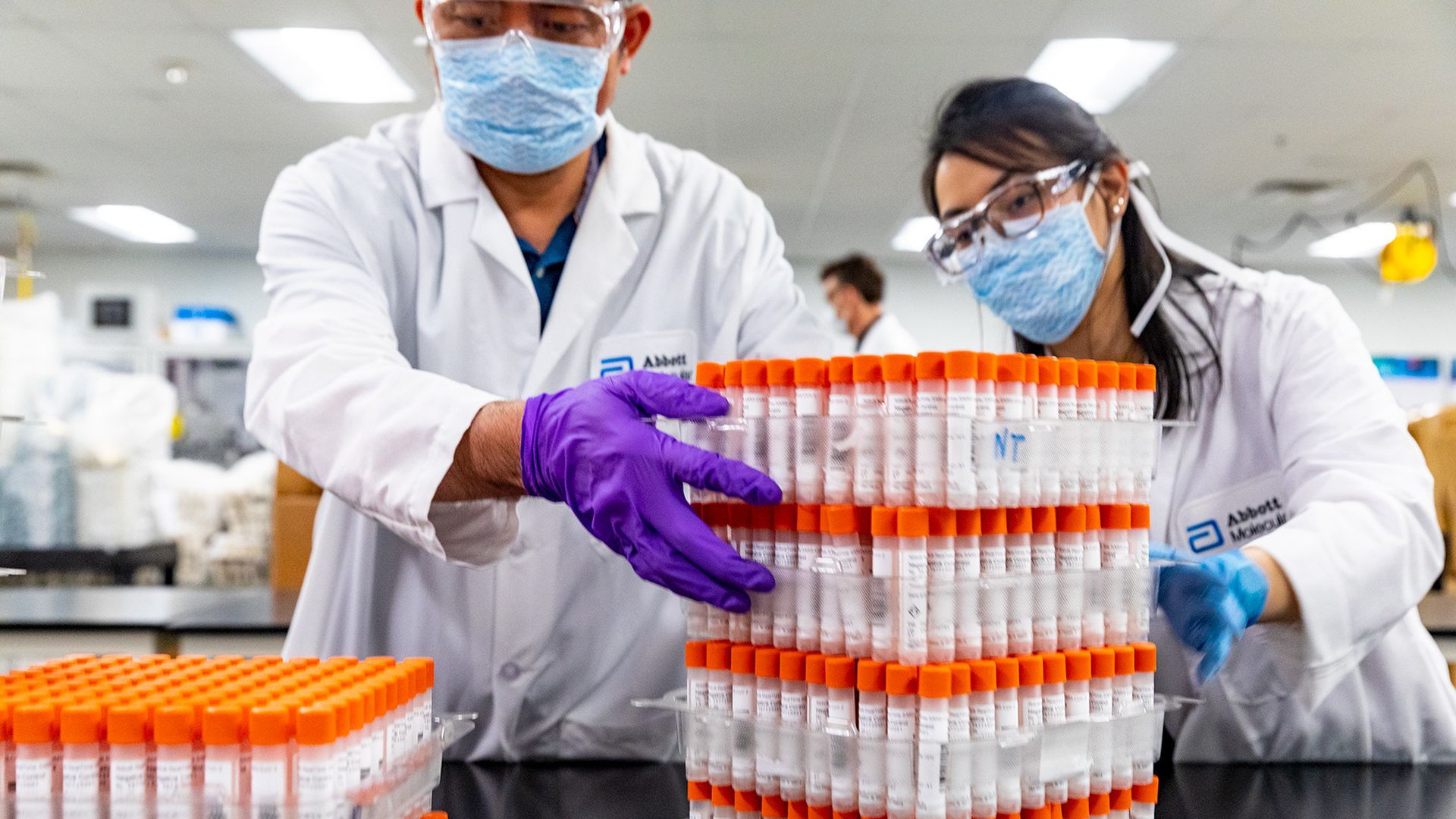
The federal government will pay $100, instead of the standard $51, for any commercial coronavirus test that is run through a highly automated lab machine. These include machines made by Abbott, Roche, Hologic, Cepheid and NeuMoDx, among others.
Why it matters: Testing in the U.S. is still woefully behind where public health experts say it should be, and the hope is higher payments for certain testing systems that process results quickly will increase capacity.
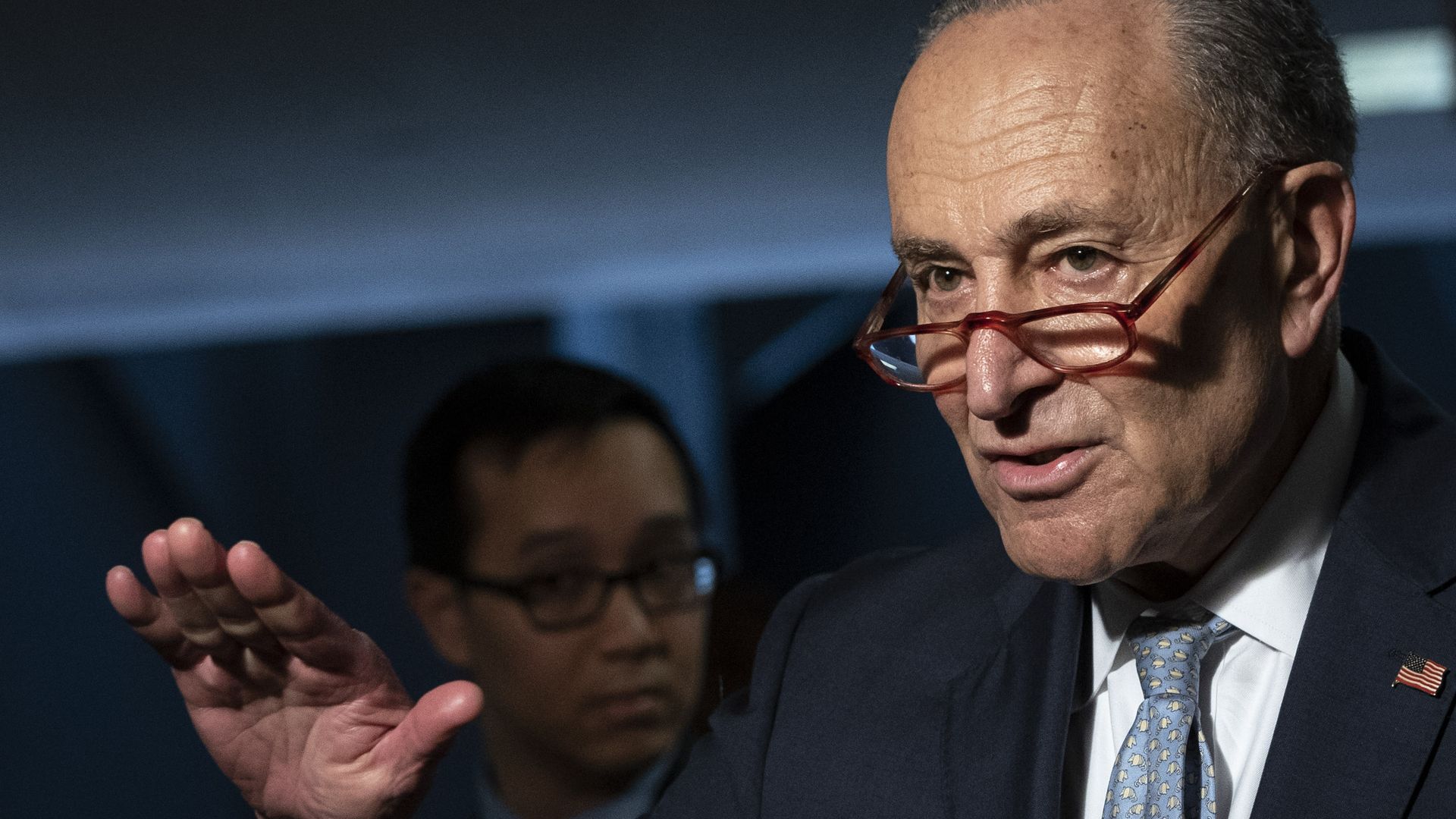
Senate Democratic leadership announced Wednesday a plan, authored by Sen. Patty Murray (D-Wash.), that calls for $30 billion in emergency funds to bolster national coronavirus testing and contact tracing.
A group of 91 Democratic lawmakers is calling on the Trump administration to halt border wall construction during the coronavirus pandemic.
Driving the news: The lawmakers, led by Rep. Henry Cuellar (D-Tex.) and Sen. Martin Heinrich (D-N.M.), are making their case in letters being sent today to agency heads at the Departments of Homeland Security (DHS), Justice and Defense.
New York Gov. Andrew Cuomo said at a press briefing Wednesday that he will be issuing an executive order requiring all New Yorkers to wear a mask or face covering in public situations in which social distancing is not possible.
Why it matters: The CDC has recommended that all Americans wear masks in public, but no state has thus far made it mandatory. Cuomo said that New York, the epicenter of the outbreak in the U.S., will give people a three-day notice to allow compliance in case they don't currently own a face covering.
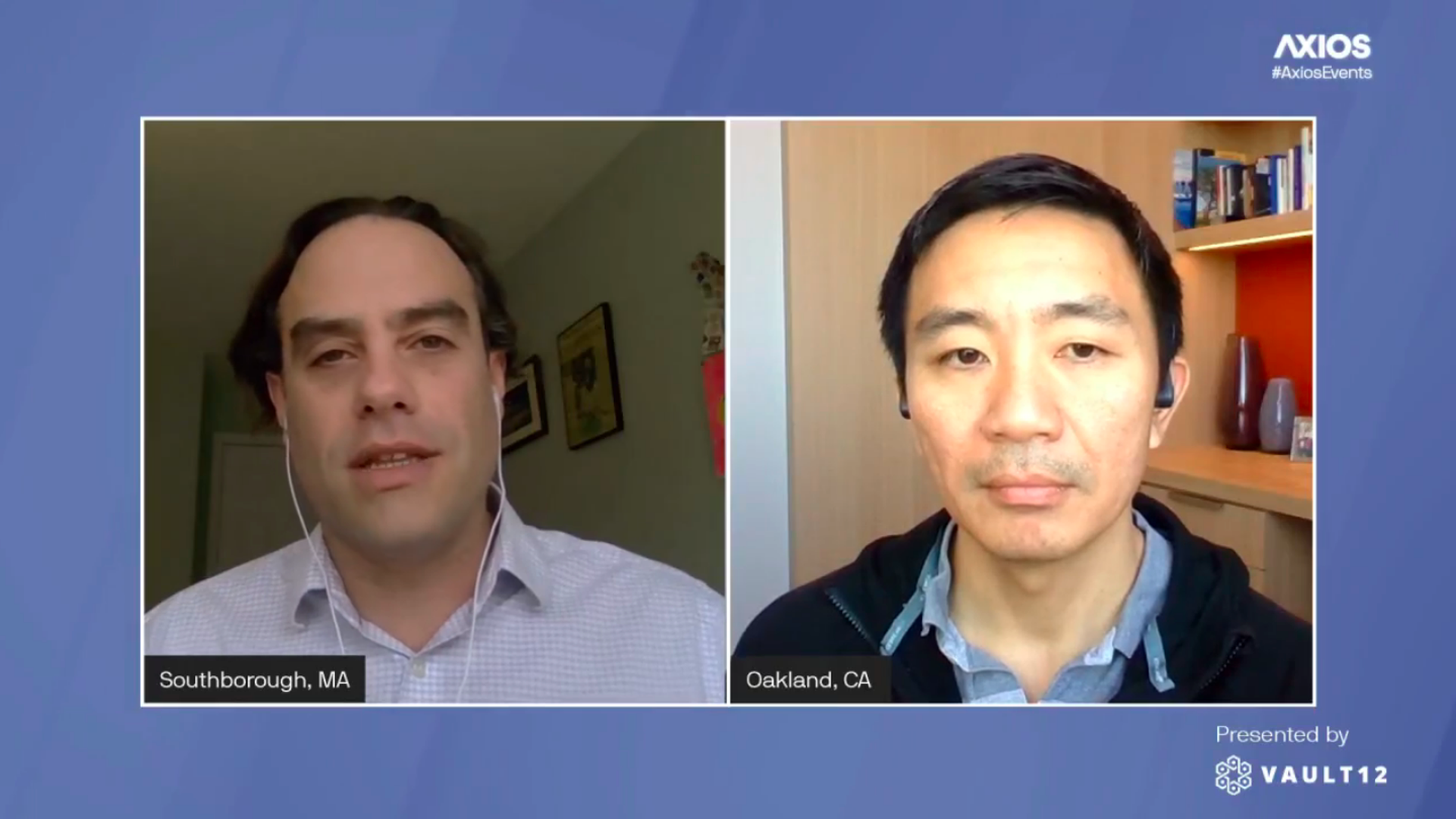
Credit Karma founder and CEO Kenneth Lin warned during an Axios virtual event on Wednesday that consumers need to be proactive in order to protect their credit scores, especially if they miss expected payments as a result of the coronavirus shutdown.
The state of play: Lin suggested two important steps for all American consumers if they're forced to miss any payments — even if they've been promised leniency by their landlords or banks — reaching out to lenders and documenting all communications that result. "People who are prepared now will be in a better situation for the recovery," he told Axios' Dan Primack.
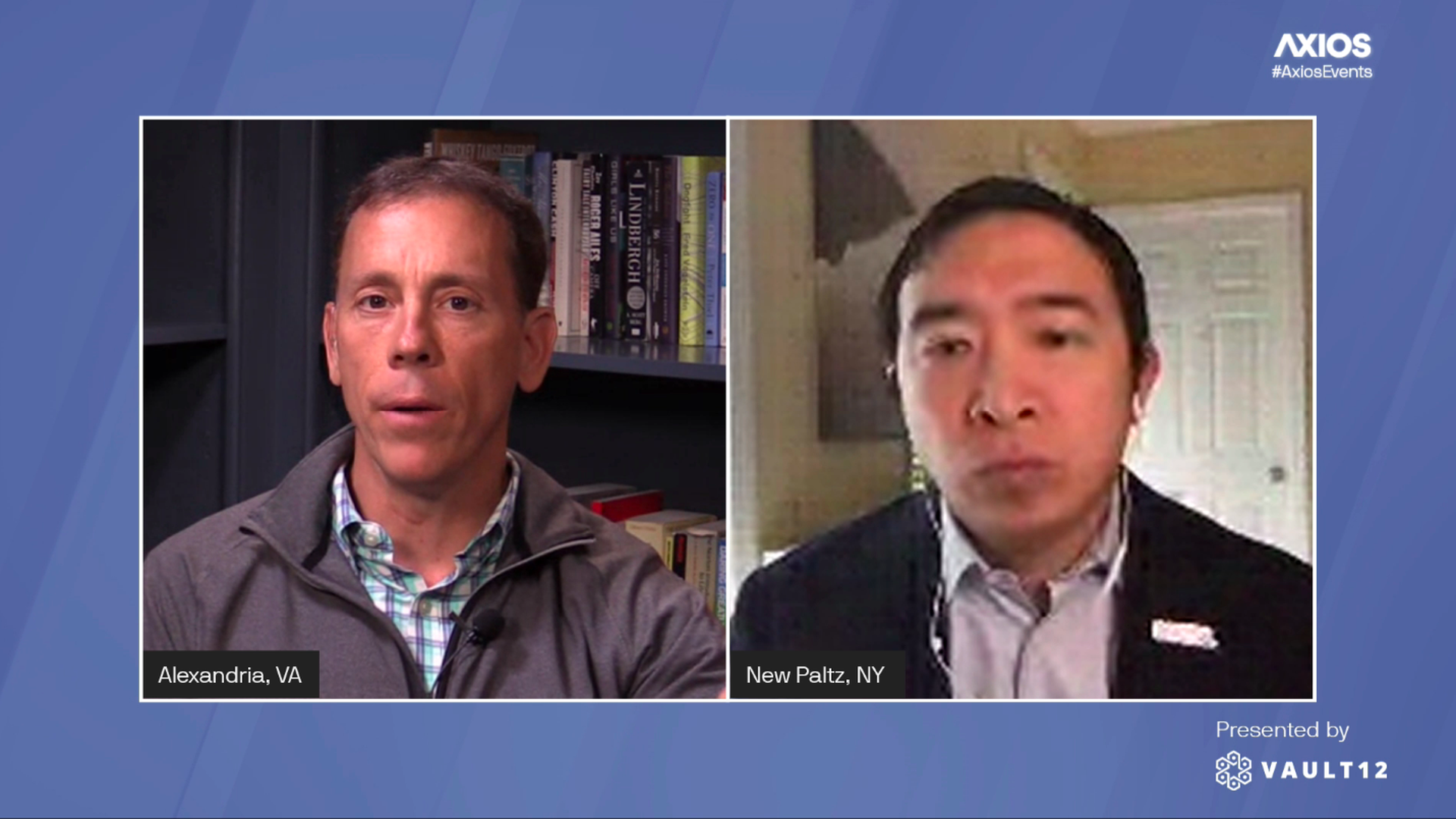
Entrepreneur and former 2020 presidential candidate Andrew Yang said during an Axios virtual event Wednesday that "a lot of" layoffs from the coronavirus pandemic "are gone for good."
The big picture: 1 in 10 working-age Americans filed for unemployment in the opening weeks of the crisis, with more on the way.
Andrew Yang, the founder of Humanity Forward and a former 2020 Democratic presidential candidate, brushed off the cost concerns of an expanded coronavirus stimulus package for all Americans, calling the situation a "$21 trillion fire" during an Axios virtual event Wednesday.
The state of play: Yang reiterated his call for a $2,000-per-month stimulus — far more than the one-time $1,200 payment included in the last stimulus package — for every American for the duration of the coronavirus crisis, saying that the country needs to "make very dramatic moves to allow millions of Americans to have, frankly, the knowledge that they can feed their families in the days to come."
World Health Organization Director-General Tedros Adhanom Ghebreyesus said at a press briefing Wednesday that he "regrets" President Trump's decision to halt U.S. funding, pointing out that the coronavirus is not the only health crisis that the group works to combat.
The big picture: Tedros said the WHO is reviewing the impact that the withdrawal of U.S. funding will have on its operations, adding that the agency will work with its partners "to fill any financial gaps we face and to ensure our work continues uninterrupted." He also said that the agency's controversial response to the pandemic will be reviewed "in due course."
UnitedHealth Group CEO Dave Wichmann told Wall Street analysts Wednesday that deferred non-urgent visits at hospitals and clinics are "offsetting COVID-19 costs," which helped the health insurance and services giant register a $3.4 billion first-quarter profit and temporarily keep its 2020 profit projections intact.
Between the lines: Health insurers aren't that worried about coronavirus costs yet. The groups that are in more difficult positions are people who are losing their jobs and health coverage and the medical providers who are losing business.
With athletic departments reeling from the coronavirus fallout and bracing for a shortened — or even canceled — college football season, schools are taking drastic measures to protect themselves financially.
Driving the news: The University of Cincinnati cut men's soccer yesterday, which will save the school roughly $800,000 per year. The Bearcats have been competing in men's soccer since 1973.
Apple released data Tuesday from nations and cities worldwide that help to show the stunning reductions in travel due to the coronavirus pandemic.
Why it matters: Stay-at-home policies and closures of schools, offices and more are among the forces driving the collapse in oil demand — so is the decline of flying, which is not directly captured here.
There's simply nothing policymakers can do that will quickly fix the oil sector's woes, and events on Wednesday show why the path ahead is so difficult and will overwhelm some companies.
The state of play: The International Energy Agency issued an immense downward revision of its 2020 estimates for global oil demand, immediately putting even more downward pressure on oil prices, which have already been falling again this week.
U.S. cruise line stocks popped on Tuesday after Carnival CEO Arnold Donald said in an interview that customers are already booking trips for 2021.
Flashback: The comments mirrored what Donald told me in an interview last month for "Axios on HBO" that the company had interest from potential customers until it shut down operations.
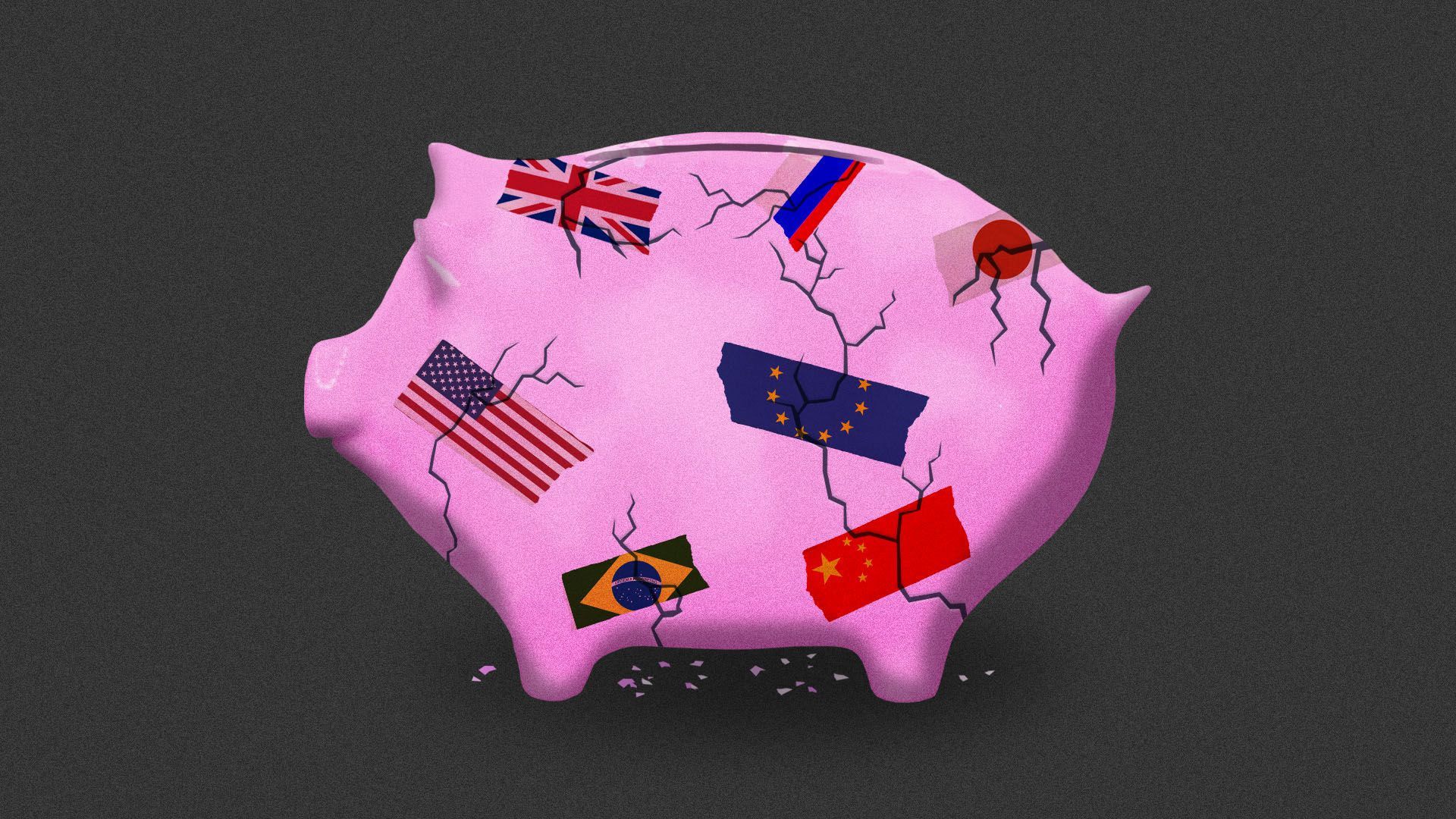
The coronavirus pandemic will bring about the worst economic downturn since the Great Depression, the IMF predicted Tuesday in its latest World Economic Outlook — and that is its optimistic outlook.
The state of play: The Fund admitted in a rare show of doomsaying that damage could be far worse than its projections and that while there's some chance they could be positively surprised, "downside risks prevail."
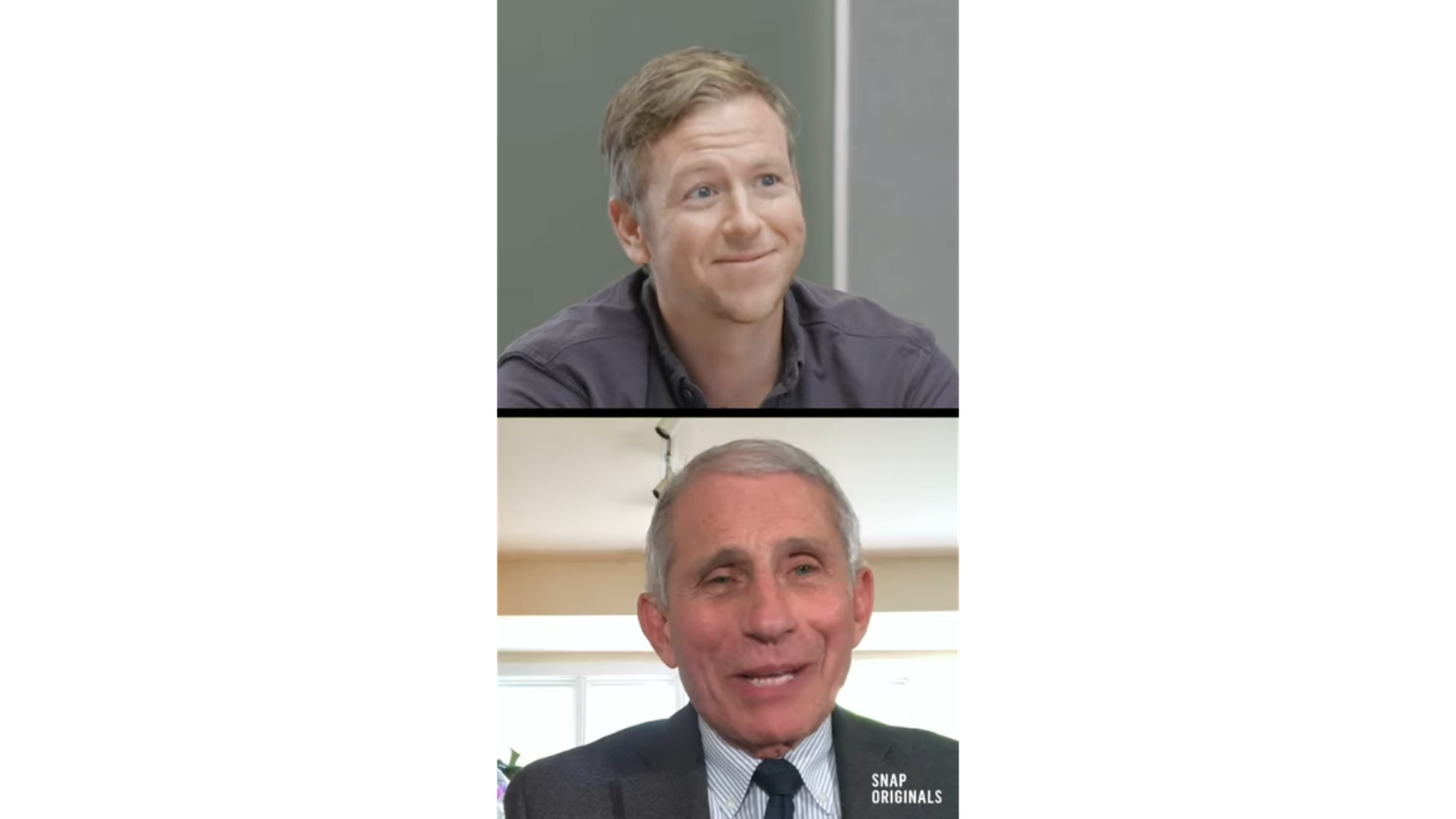
Dr. Anthony Fauci joined Snapchat's Peter Hamby on his show "Good Luck America," and was asked about the possibility of abbreviated baseball, college football and NFL seasons this year.
What he said: "[P]eople say, 'Well you can't play without spectators.' Well, I think you'd probably get enough buy-in from people who are dying to see a baseball game. Particularly me. I'm living in Washington. We have the world champion Washington Nationals. You know, I want to see them play again."
The Chinese government failed to warn the public for days about the seriousness of the coronavirus outbreak in Wuhan after officials secretly concluded on Jan. 14 that they likely were facing a pandemic, according to documents reviewed by the AP.
Why it matters: Chinese President Xi Jinping finally warned the public on Jan. 20, but millions of people had already begun traveling across the country to attend Lunar New Year celebrations.
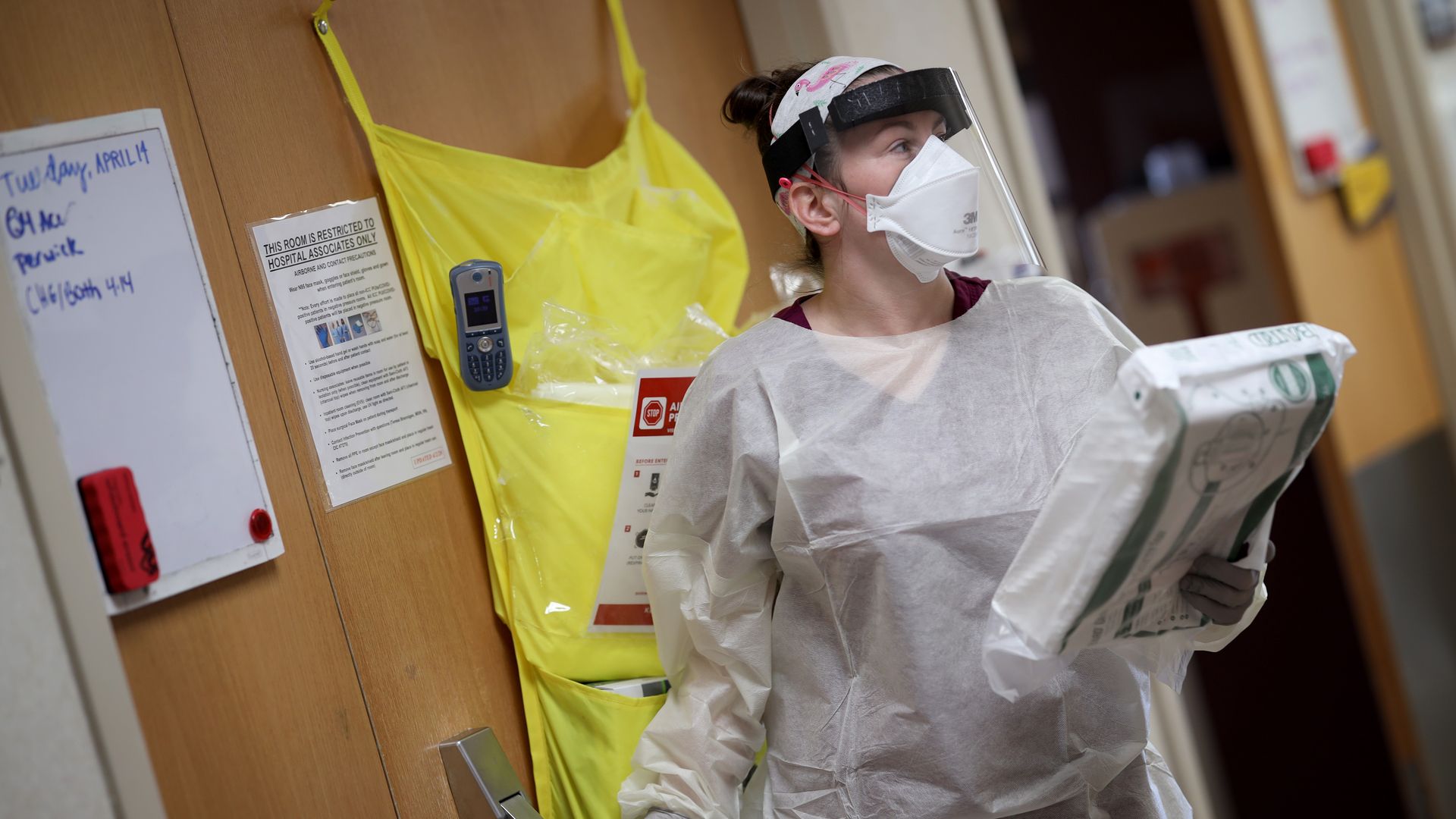
The U.S. is still scrambling to get health care workers the personal protective equipment, ventilators and lab testing materials that they need to battle the coronavirus pandemic.
Between the lines: President Trump has repeatedly said that governors are responsible for obtaining supplies for their states, but industry groups are asking the federal government to play a larger role.
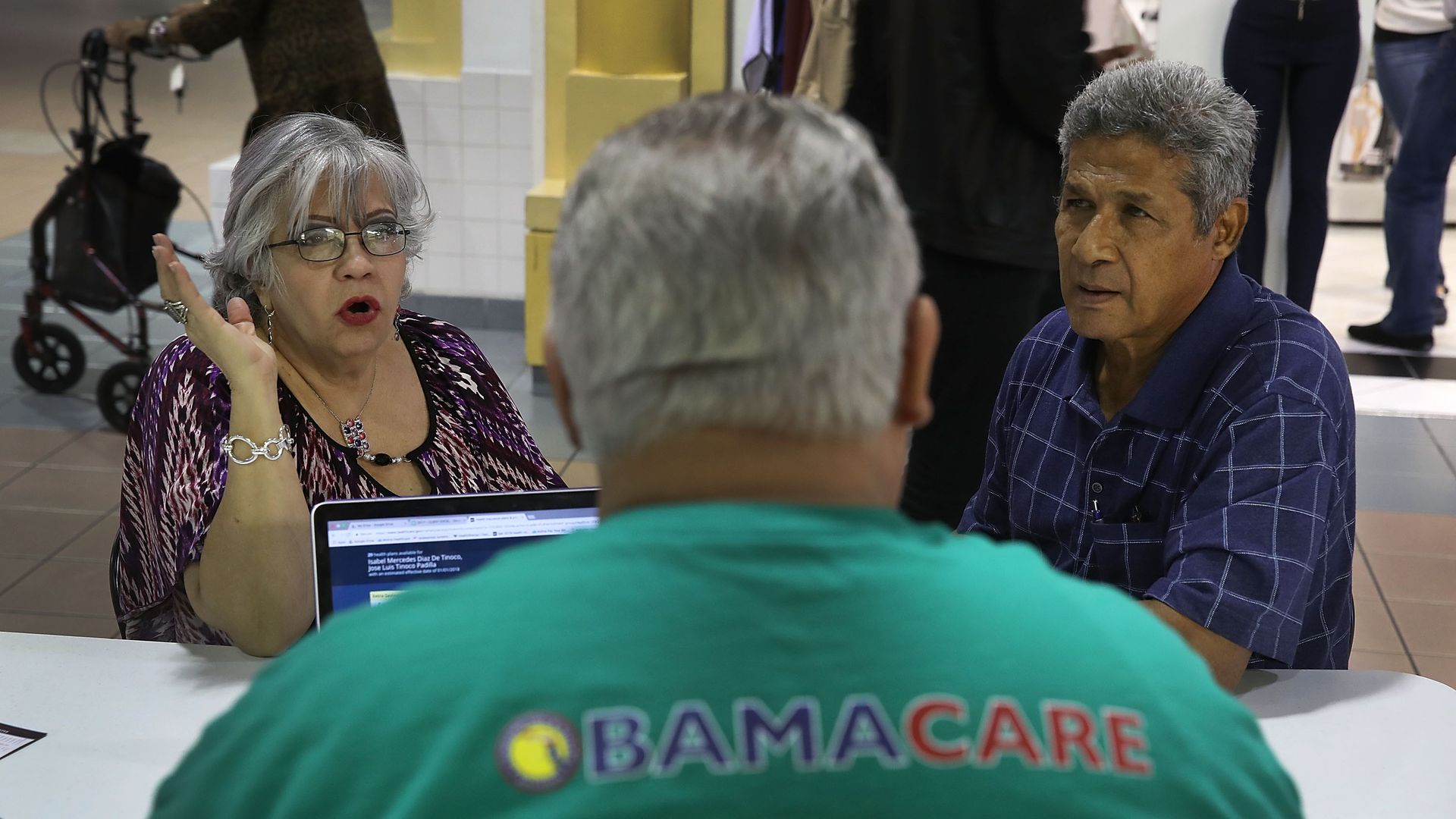
People losing their employer-based health insurance in the coronavirus economy would find a pretty stable Affordable Care Act market if they need it — not that the Trump administration is advertising that fact.
Why it matters: ACA plans will be an important backstop for some newly uninsured people, many of whom could likely find affordable coverage on the law's insurance marketplaces.
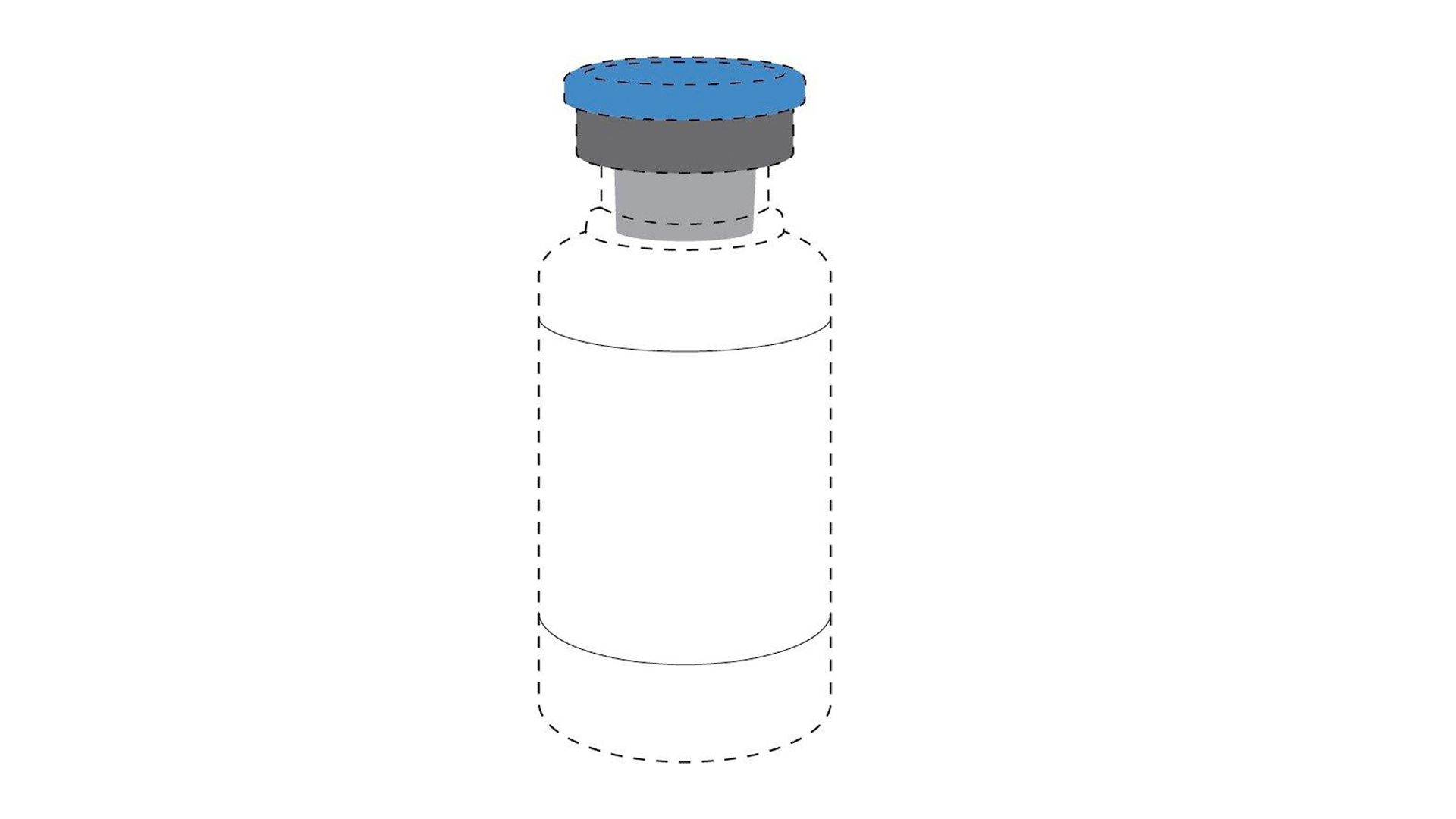
Gilead Sciences is still testing its potential coronavirus treatment, but here's a sign the company may be expecting good news: It has applied for a trademark for the drug's packaging.
Why it matters: "The reason you make this trademark is because you think you're going to get a product out there soon," said Josh Gerben, a trademark lawyer who first noticed Gilead's application. "This is part of your brand protection."
The U.S. still can't perform many of the public health measures we'd need in order to keep coronavirus infections tightly contained in a reopened economy.
The big picture: Extreme social distancing has bought us some time, but much of the country still lacks some of the critical systems needed to handle waves of new infections once those restrictions begin to lift.
President Trump announced Tuesday that the U.S. is placing a hold on funding to the World Health Organization for 60–90 days over its handling of the coronavirus pandemic, pending a review.
Driving the news: Trump accused the WHO of "severely mismanaging and covering up" the coronavirus crisis, adding that the U.S. "has a duty to insist on full accountability."
The Trump administration and 20 major health care systems launched a new ventilator loan program that will allow hospitals to ship unused machines to areas where they are needed most to fight the coronavirus pandemic.
Why it matters: The "dynamic ventilator reserve" program will help hospitals deal with a shortage of the life-saving machines while private industry scrambles to crank up production.