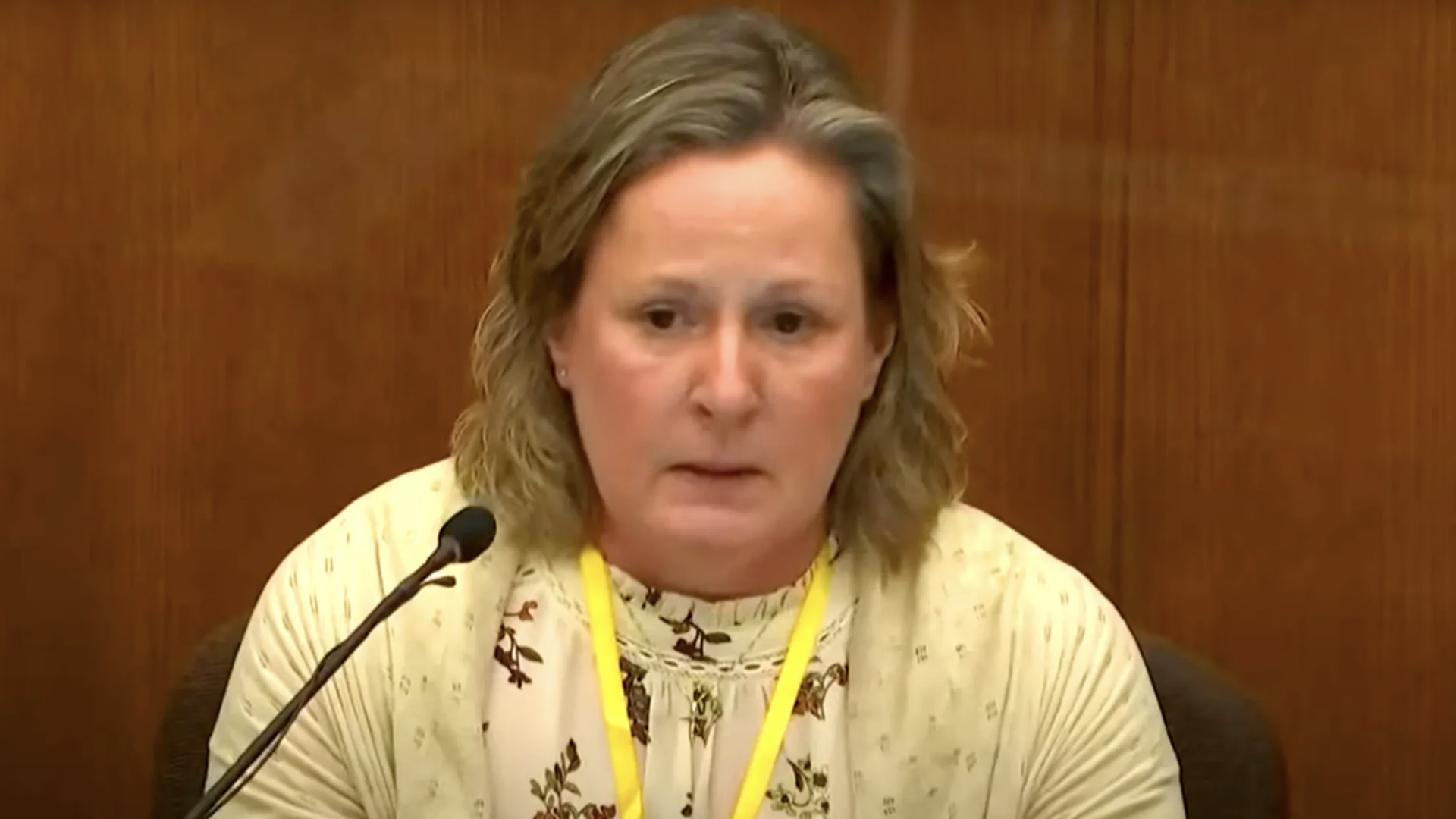
A former Minnesota police officer convicted of fatally shooting a 20-year-old Black man during a 2021 traffic stop is set to be released from prison on Monday.
The big picture: Kimberly Potter was sentenced to two years for killing Daunte Wright while attempting to take him into custody in the Twin Cities suburb of Brooklyn Center.
The April 11, 2021, shooting occurred during the Derek Chauvin trial, sparking protests and calls for changes to traffic stop policies.
Catch up fast: Potter and another officer pulled over Wright, who was Black, for a hanging air freshener and expired tags, according to an amended criminal complaint. They then tried to take him into custody over a separate arrest warrant.
Potter, who is white, has said she inadvertently pulled her gun instead of her Taser as Wright tried to flee. A Hennepin County jury convicted her of first- and second-degree manslaughter.
What they're saying: A spokesperson for the Minnesota Department of Corrections confirmed Potter's April 24 release date but declined to specify a time, citing security concerns.
Attorneys for Potter and the Wright family have not responded to Axios' request for comment on her planned release.
Flashback: Potter petitioned the state Board of Pardons for an early release last year, saying she has taken responsibility for Wright's killing and intends to work with survivors of domestic violence and people experiencing homelessness upon release.
The board declined to formally consider the request at its December meeting, citing her relatively short sentence and remaining time behind bars.
Of note: Under Minnesota's sentencing guidelines, people serve two-thirds of their prison sentence incarcerated and the remaining third on supervised release.
Editor's note: This article has been corrected to reflect that Potter inadvertently pulled her gun instead of her Taser, not her Taser instead of her gun.
A federal grand jury has indicted an Indiana woman on a hate crime charge after she allegedly stabbed a college student of Chinese descent in January, the Department of Justice announced.
Driving the news: Billie R. Davis, 56 of Bloomington, is accused of carrying out the "racially motivated" attack “because of the victim’s race and national origin,” per the DOJ.
Driving the news: Florida Gov. Ron DeSantis (R), a potential 2024 candidate, has made conservative cultural issues in education a central part of his agenda, a move the poll indicates could help him with the GOP's most ardent supporters.
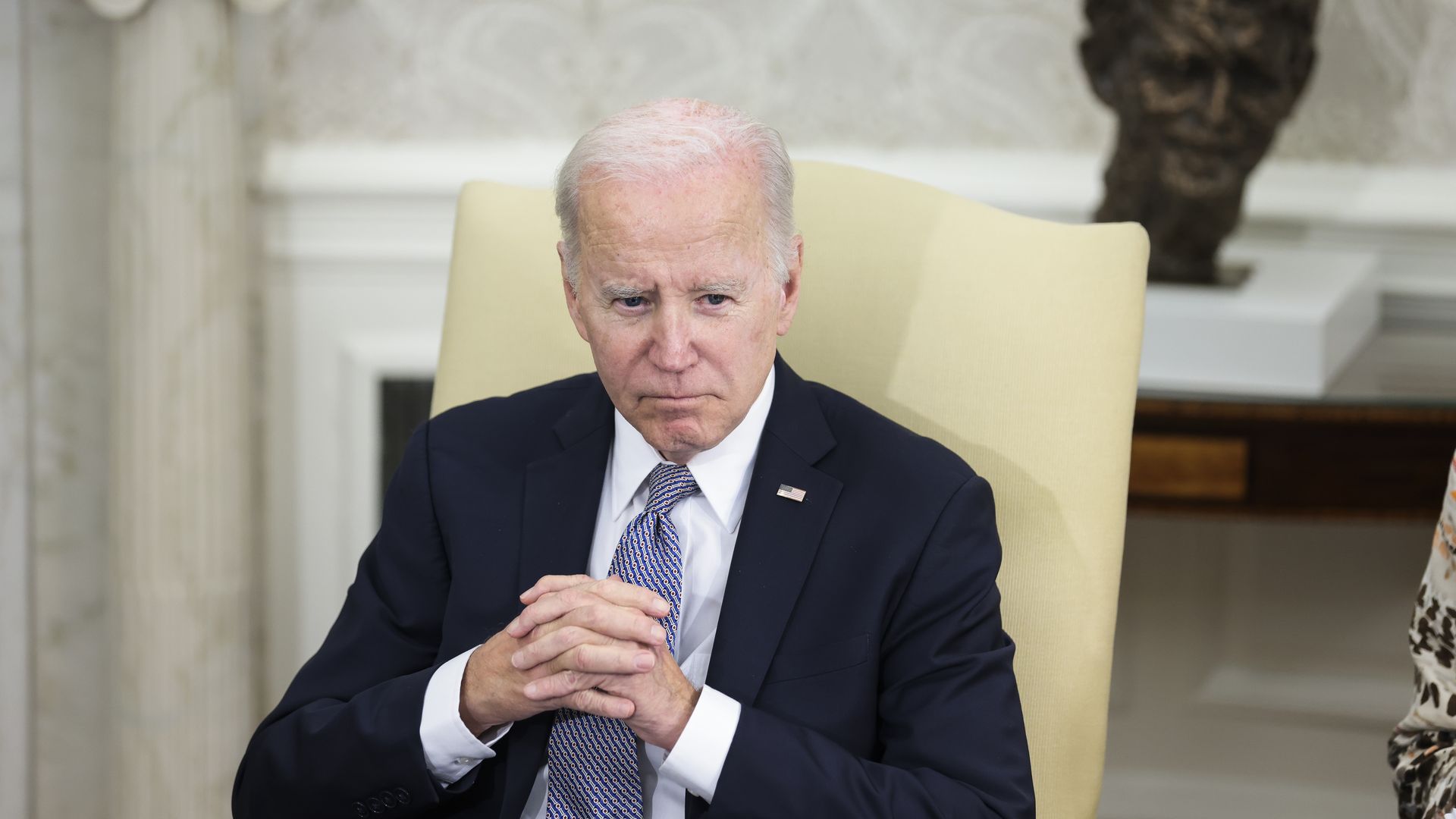
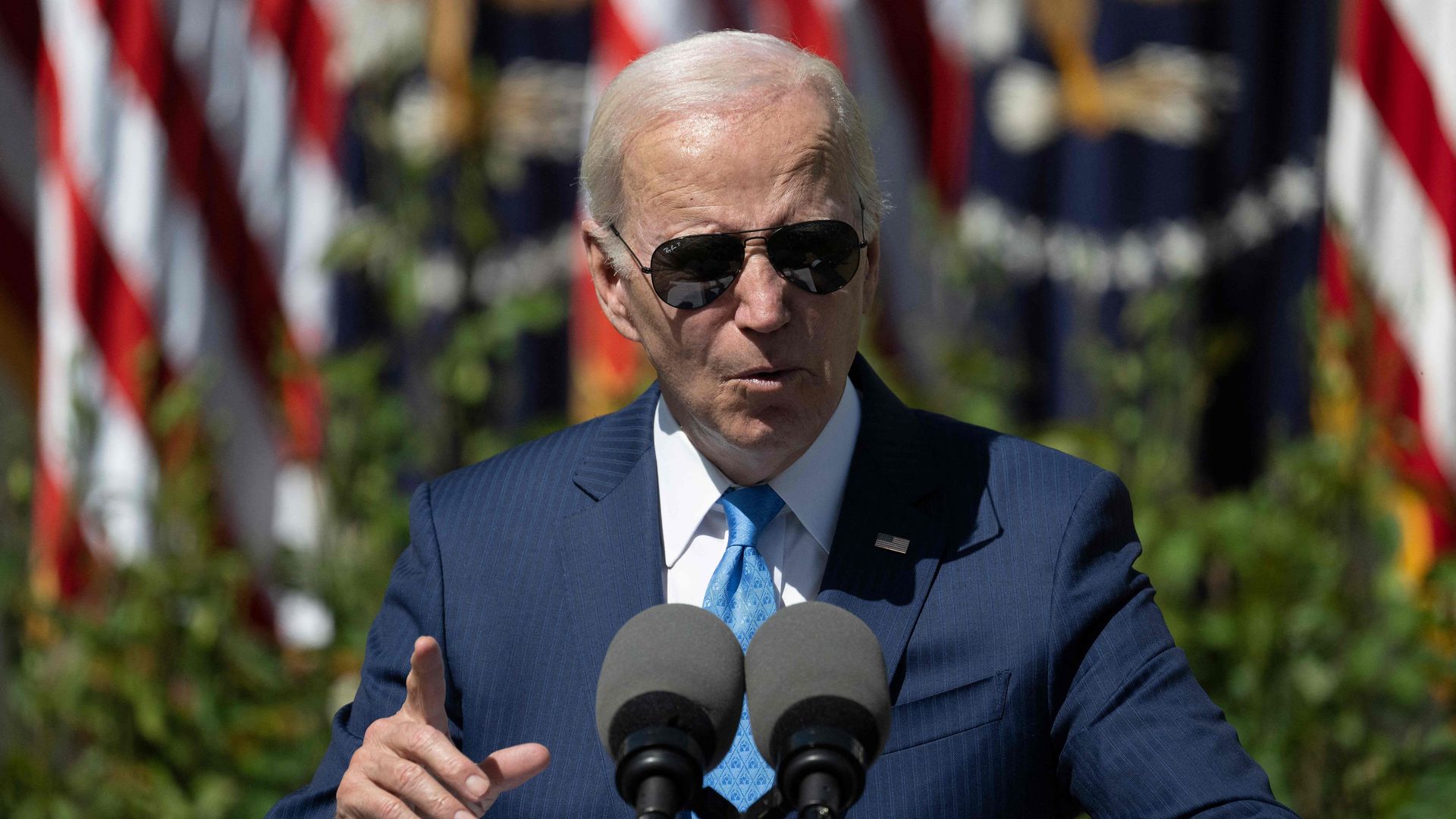
The White House and the Democratic National Committee are preparing to launch President Biden's re-election bid with a video message as early as Tuesday, according to people familiar with the matter.
Why it matters: By announcing next week, Biden, 80, would quell rising doubts among fellow Democrats about his intention to run again — and have more than two months to raise money before the next Federal Election Commission filing deadline.
Fox Corporation CEO Lachlan Murdoch has dropped his defamation lawsuit against Australian news website Crikey, his lawyer confirmed in a statement Thursday.
Why it matters: Murdoch, who's also co-chair of News Corp and the elder son of media mogul Rupert Murdoch, dropped the lawsuit days after Fox News settled a historic defamation lawsuit with Dominion Voting Systems for a record $787 million.
The widow of a man who died following a 2022 arrest filed a wrongful-death lawsuit Thursday against the sheriff of McCurtain County in Oklahoma and others. The lawman was at a meeting where a newspaper recorded officials talking about killing journalists who covered the death.
The big picture: Bobby Dale Barrick, 45, died days after allegedly being stunned with Taser-like weapons by sheriff's deputies, Mitchell Garrett, a lawyer for the widow, told Axios.
After two speeches I gave this week, several audience members told me they struggled to understand why they felt like strangers in their own land.
They described feeling like a normal person: They work hard, volunteer, and hang out at neighborhood parties, not on Twitter. But they also felt trapped in the abnormal, toxic political and media world surrounding them.
Why it matters: New Gallup polling suggests they're hardly alone in feeling estranged. Turns out, 49% now call themselves independents — the same amount as self-described Republicans and Democrats combined.
House Republicans are feeling a debt ceiling hangover, with senior GOP sources worrying they’re significantly short on votes now that members have read the 320-page bill.
Why it matters: "The whip count on this is not good," a senior GOP source told Axios Thursday afternoon.
A federal judge presiding over writer E. Jean Carroll's sexual assault lawsuit against former President Trump rejected his legal team's argument that his appearance at an upcoming trial would be too much of a burden on New York City.
Driving the news: Trump's lawyer in the case, Joe Tacopina, requested Wednesday in a letter that the judge instruct jurors that Trump "wishes to appear" at the trial but his absence "avoids the logistical burdens that his presence, as the former president, would cause the courthouse and New York City."
A Texas man charged with four misdemeanors from his alleged participation in the Jan. 6, 2021, Capitol riot opened fire at local police a day before he was set to surrender to the FBI, the U.S. Attorney’s Office for the Northern District of Texas said on Thursday.
Why it matters: The man, Nathan Pelham, 40, of Greenville, Texas, now faces a federal firearm charge in addition to the Jan. 6 misdemeanors, which were filed against him by federal prosecutors in D.C. last week.
Some House Democrats are beginning to question President Biden's refusal to sit down with House Speaker Kevin McCarthy (R-Calif.) on the debt limit.
Why it matters: It signals that House Republicans' debt ceiling bill is, at least in part, having the intended effect of serving as the GOP's starting position in debt ceiling negotiations.
The recent arrests of several alleged Salvadoran gang leaders in Mexico and Guatemala have raised fears that a crackdown in El Salvador is pushing more gang members to neighboring countries.
The big picture: Salvadoran President Nayib Bukele on March 27, 2022, declared a state of emergency that allows authorities to make arrests without charges and revokes other civil rights protections in the name of combating gang violence, resulting in the arrest of over 60,000 people. Most haven't been charged.
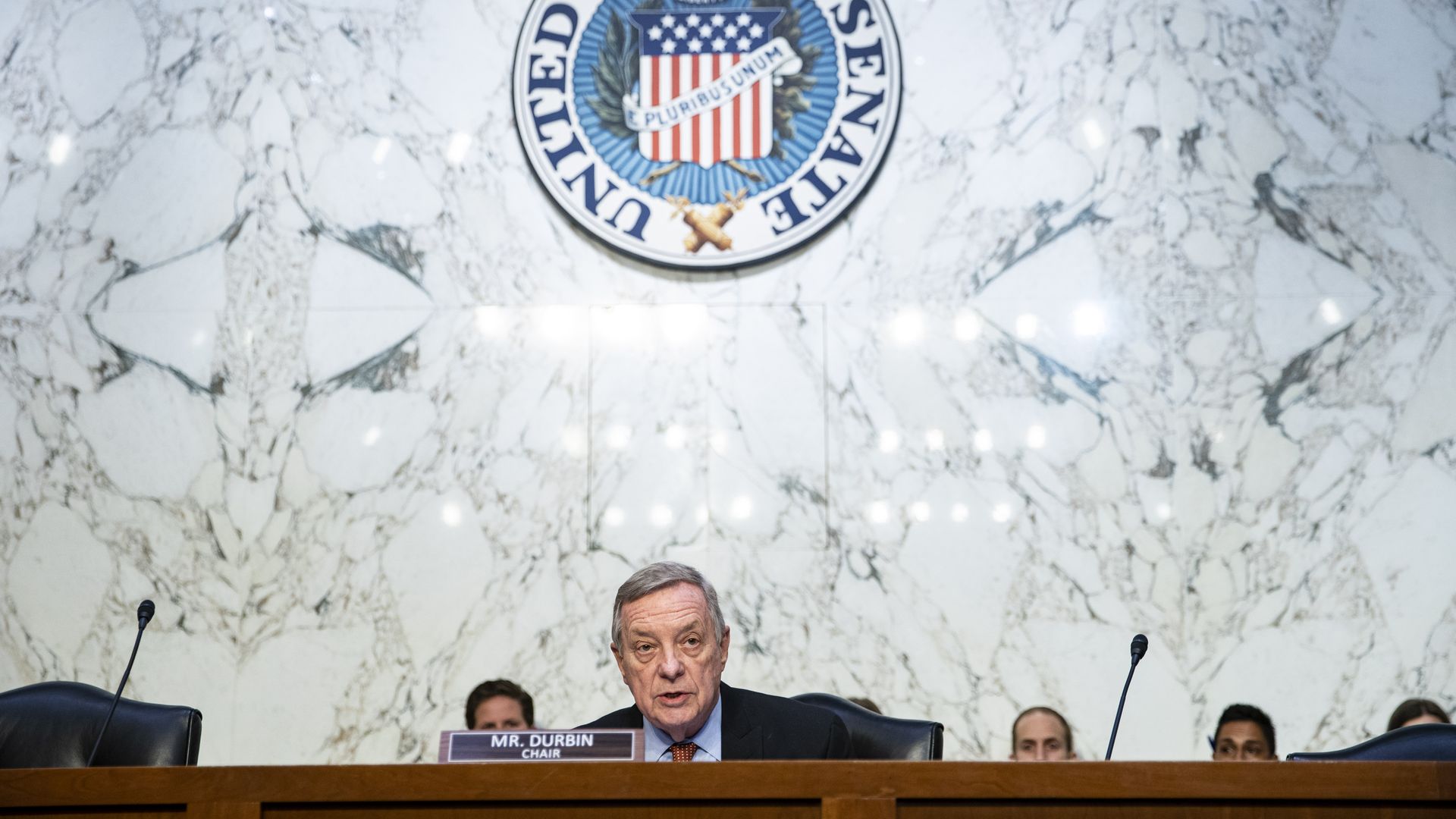
The Senate Judiciary Committee on Thursday requested testimony from Supreme Court Chief Justice John Roberts about ethical standards on the nation's highest court.
Why it matters: It's an escalation of the Senate's response to reports that conservative Justice Clarence Thomas has for decades received gifts from billionaire Republican mega-donor Harlan Crow.
House Republicans on Thursday passed a bill that would ban transgender women and girls from competing in sports consistent with their gender identity at school.
Why it matters: Although the bill will likely fail in the Democratic-led Senate and President Biden has vowed to veto the measure, it underscores GOP lawmakers' continued efforts to elevate the debate over transgender athletes' participation in school sports to the national stage.
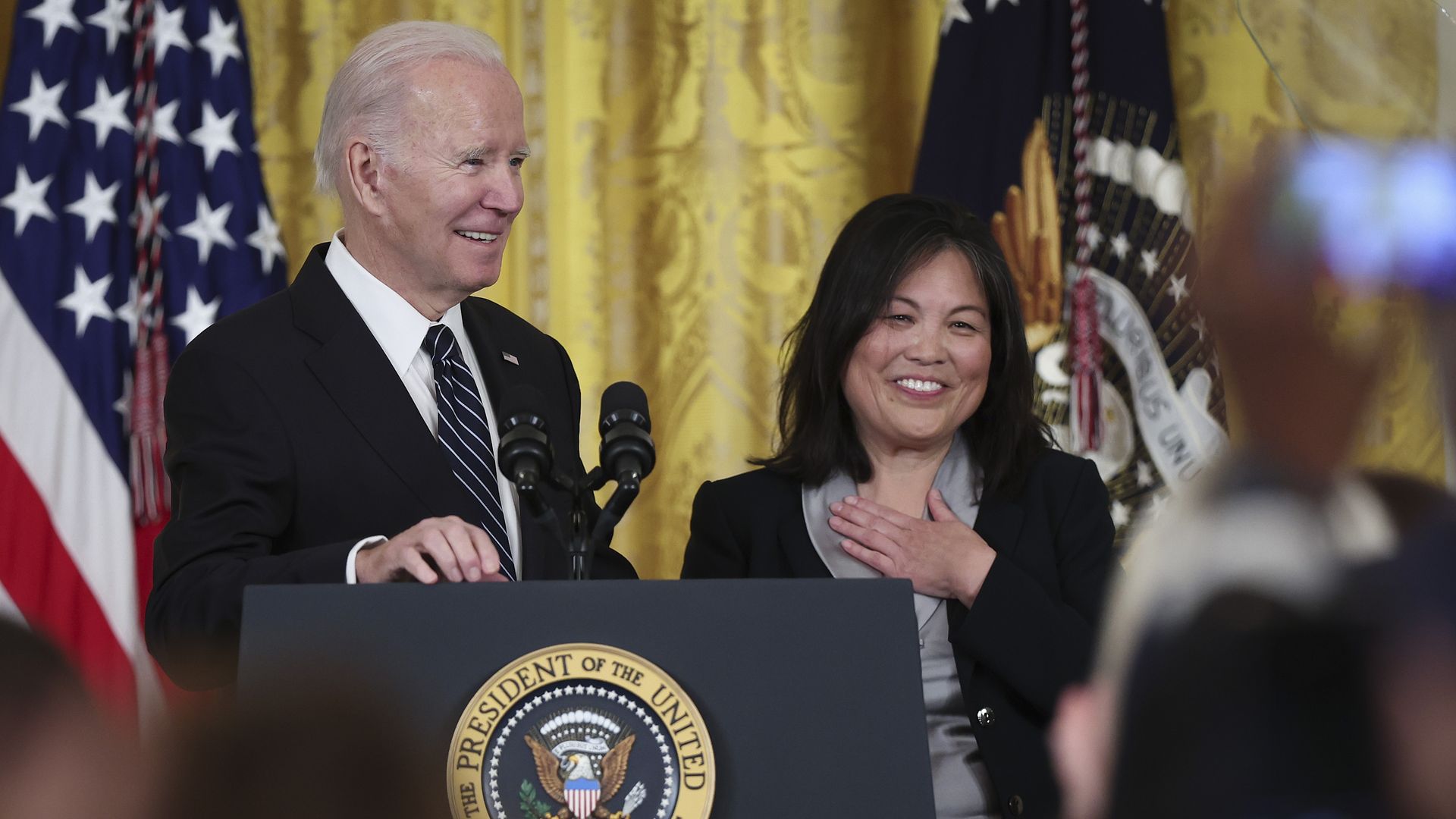
President Biden’s embattled nominee for Labor secretary, Julie Su, will open her confirmation hearing on Thursday by recalling her upbringing as the daughter of immigrants who owned small businesses, Axios has learned.
Why it matters: Democrats know that Su’s nomination is in trouble, with potential opposition from Sen. Joe Manchin (D-W.Va.).
Former President Trump's anger at his legal problems now dominates his grievance-driven campaign, fueling a tear-it-all-down agenda that seeks to make him the most powerful chief executive in generations.
Why it matters: Trump continues to blast prosecutors, witnesses against him, political foes and others — but recently he's tapped into a heated mix of old and new rhetoric to describe how he'd attack what he calls the "deep state."
The Democratic-aligned Congressional Integrity Project filed an ethics complaint Wednesday against two Republican House chairmen, claiming they are wrongfully linking fundraising efforts with official actions.
Why it matters: The letter comes after reporting by the New York Times that Judiciary Chairman Jim Jordan (R-Ohio) touted at a fundraising event his efforts to probe Manhattan District Attorney Alvin Bragg, whose investigation into former President Trump resulted in a 34-count indictment.
More red states are moving to decriminalize test strips used to detect fentanyl in illicit orcounterfeit drugs as the substance becomes a leading killer of adults under 50.
Why it matters: The paper strips can reducefatal overdoses, especially in instances when people unknowingly consume fentanyl-laced pills that look like prescription drugs.
The Biden administration is ramping up its work with the G7 to prevent leaks of sensitive technology to China — and discussing how to keep investments from the U.S. and its allies from funding China's defense industry, officials say.
Why it matters: U.S. officials want to safeguard a narrow set of industries crucial to national security and a high-tech military, including quantum mechanics, artificial intelligence and semiconductors.
But top officials acknowledge they need to work with the G7 and other European allies to protect the technologies of today — and tomorrow.
Driving the news: G7 countries' representatives — who hash out much of a summit’s agenda before the leaders arrive — are gathering in Japan this weekend, and discussions on how to curb technology to China will be on the agenda, according to officials.
President Biden will travel to Hiroshima, Japan, for the G7 leaders’ summit, which opens May 19.
A highly anticipated executive order from Biden on outbound investment restrictions could come as soon as the G7.
“Small yard, high fence,” is how National Security Advisor Jake Sullivan described the general approach in a speech last October.
The big picture: After Congress made noises about placing its own restrictions on investments last year, the Biden administration has been working on an executive order to make a first attempt to stem the flow of private money to certain technologies in China.
As officials work to refine the order, they have been consulting with think tanks, industry groups, and major Wall Street and Silicon Valley investors.
Flashback: Last October, Biden imposed expansive restrictions on the kind of semiconductor technology and equipment that can be shared with China. One analyst described the new policy as “strangling with an intent to kill.”
What we’re watching: After Biden met with European Union President Ursula von der Leyen in March, they issued a joint statement that reflected progress on the outbound investment issue.
“We have a common interest in preventing our companies’ capital, expertise, and knowledge from fueling technological advances that will enhance the military and intelligence capabilities of our strategic rivals, including through outbound investment,” the leaders said.
Officials saw that statement as validating the administration's multi-lateral approach toward preventing sensitive technology from finding its way into China.
Be smart: An executive order by the U.S. is a first stop, but the administration also wants to ensure that the yard they're protecting with a high fence doesn't have any backdoors.
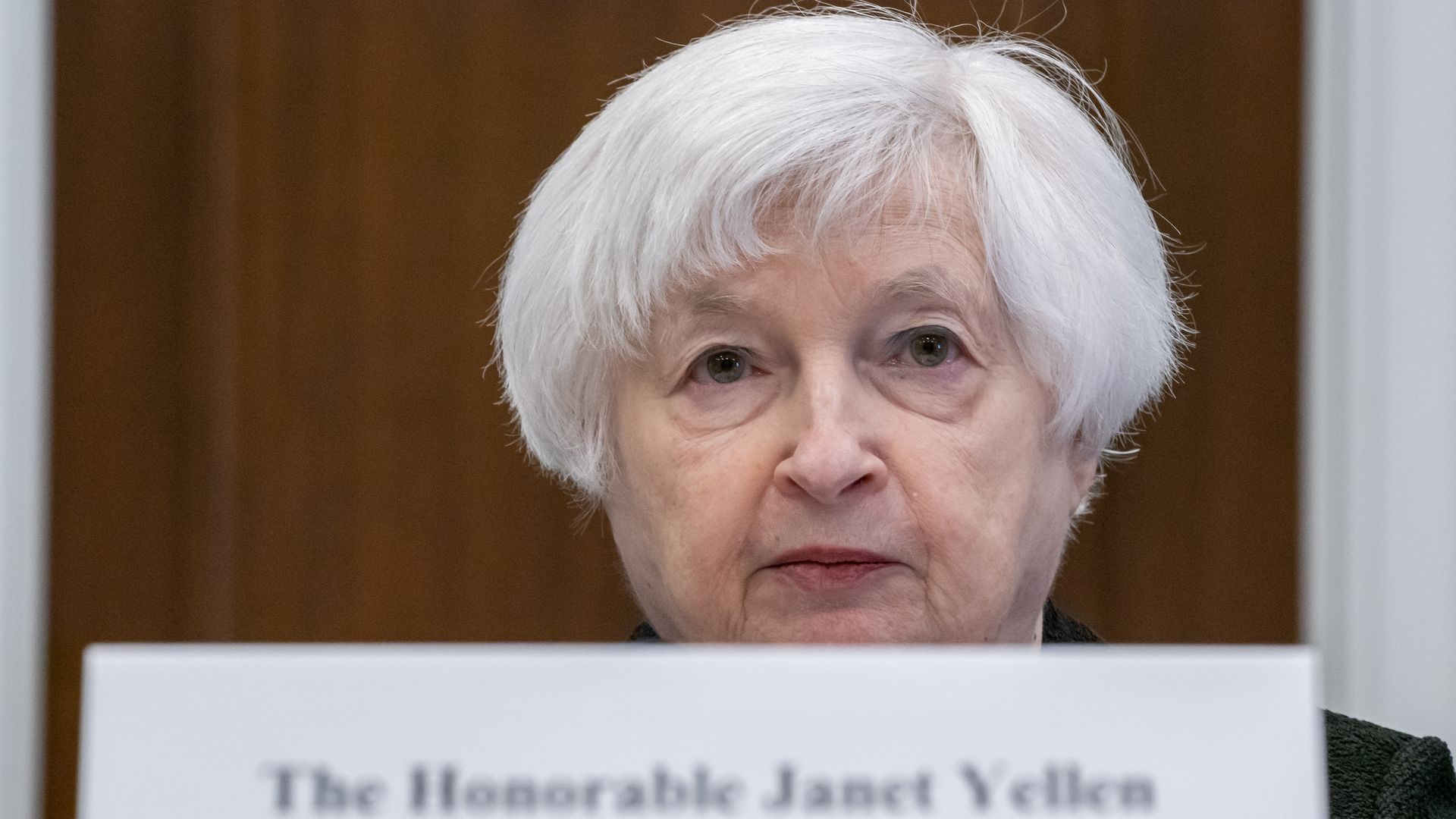
Treasury Secretary Janet Yellen will clarify the Biden administration's economic approach to China, offering Beijing fresh guidelines on where the United States is prepared to cooperate — and where it won’t compromise.
Why it matters: Direct diplomacy with China is on ice. Yellen’s speech today is an attempt to achieve President Biden’s goal of improved communications with China, which he announced next to President Xi Jinping at the G20 last year, by other means.
House Republicans are trying to unite a fractious caucus over a sweeping border security package aimed at cracking down on illegal border crossings.
Why it matters: Speaker Kevin McCarthy (R-Calif.) pledged to bring the politically hot issue to the floor early this Congress, but finalizing passable legislation in a closely divided House has proven challenging.
A Black teenager was shot last week in Kansas City, Missouri, after he mistakenly rang the doorbell at the wrong house to pick up his siblings, attorneys for the teenager and his family said.
The big picture: Andrew Lester, a white man in his 80s, allegedly shot16-year-old Ralph Yarl in the head and the arm through a glass door, per Clay County prosecutor Zachary Thompson, who noted that the teen did not appear to have crossed the threshold into the house.