Why it matters: The event delivered a much-needed ratings boost for CNN, though at a cost. The network faced blowback from critics and employees who argued it gave the former president a platform to lie in real-time.
The average federal tax refund is down 8% this year, leaving consumers with less spending money than they've become accustomed to at this time of year.
Why it matters: Many Americans count on their tax returns to generate cash flow, giving them a financial boost heading into the summer.
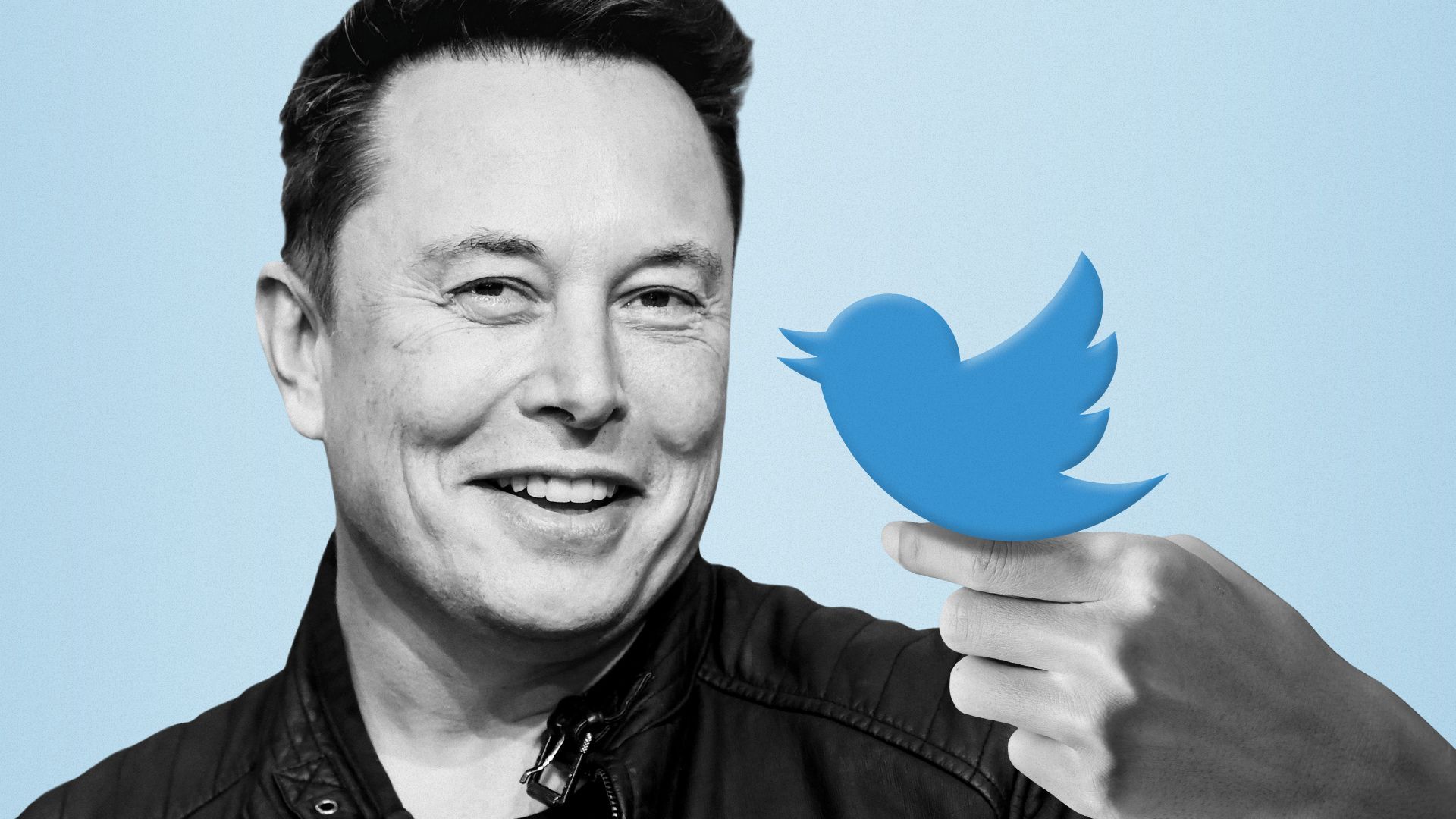
Elon Musktweeted Thursday that he's hired someone to be CEO of Twitter, adding without naming the incoming executive that "shewill be starting in ~6 weeks!"
Why it matters: Since acquiring the social network last fall, Musk has been its de facto leader, even amid some criticism from Tesla shareholders unhappy with his devoting more time away from the automaker.
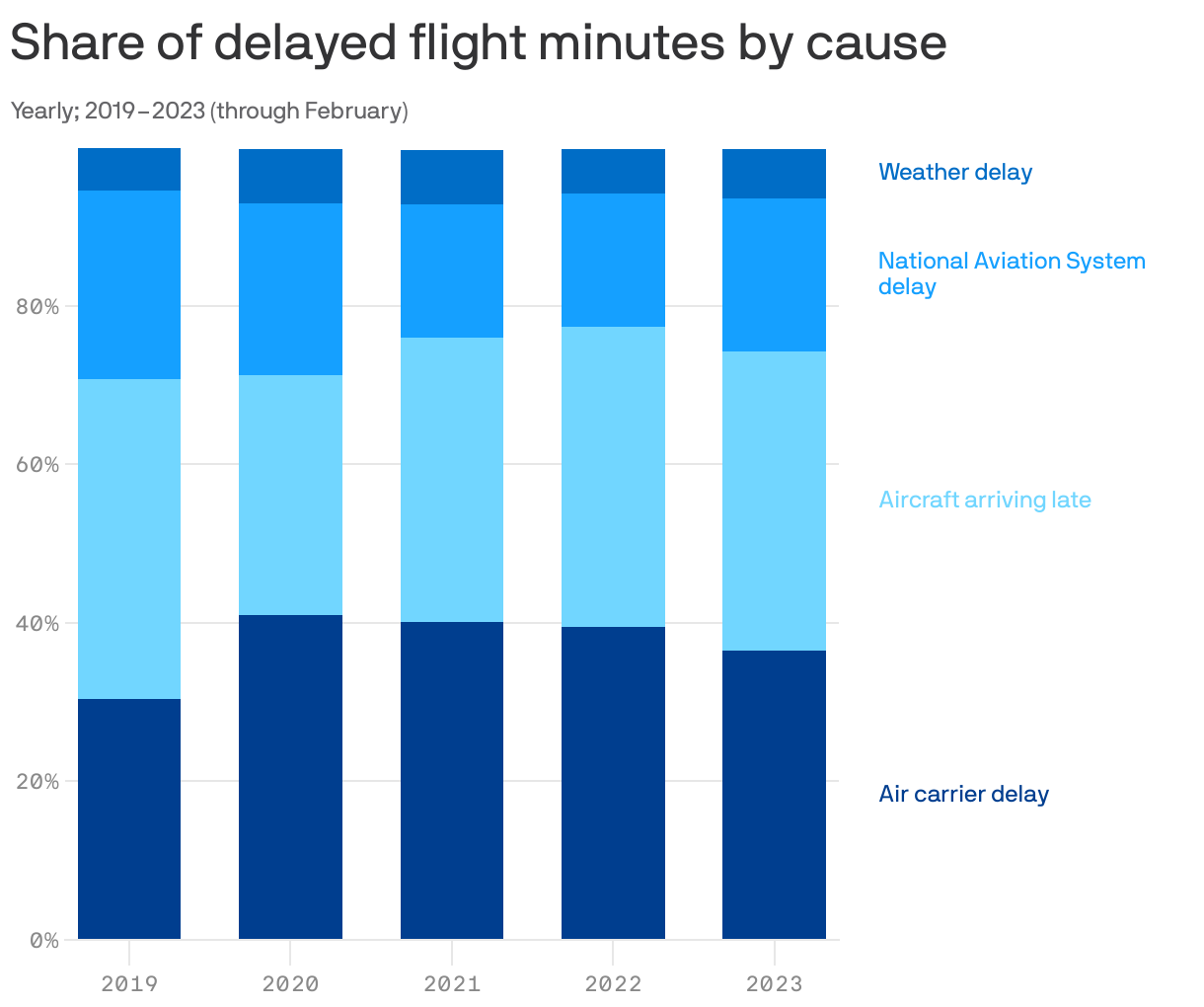
Data: Bureau of Transportation Statistics; Chart: Jared Whalen/Axios
Most flight delays in recent years have been caused by issues within the control of airlines, updated federal data shows.
Why it matters: The data released from the U.S. Department of Transportation contextualizes months of tensions between the department and the airline industry over recent travel headaches and a looming summer travel season that's expected to be hectic.
The FDIC on Thursday proposed that the nation's largest banks pay a "special assessment" to cover the costs of bailing out uninsured depositors in the failures of Silicon Valley Bank and Signature Bank.
Why it matters: There were concerns that small banks would wind up bearing some of these costs and this proposal heads those off.
The labor market continues to boom, but recent communication graduates are having a more difficult time landing a job, according to data from career services platform, Handshake.
Why it matters: While the value of communications continues to grow, the function isn't immune to cuts and reorganizations brought on by bigger economic trends.
Peloton is recalling about 2.2 million of its exercise bikes because their “seat post assembly can break during use, posing fall and injury hazards to the user.”
Driving the news: The company said in a recall notice Thursday that it has received 35 reports of the seat post breaking and detaching from the bike during use and 13 reports of injuries.
CalPERS CEO Marcie Frost runs America's largest public pension system, with more than $440 billion in assets under management. She's also in a political pickle, being pressured by both the left and right about ESG investing.
Driving the news: ESG was the subject of contentious debate on Capitol Hill yesterday, during a House hearing that played along predictable partisan lines.
PacWest on Thursday disclosed that deposits dropped 9.5% last week, sending shares of the Los Angeles-based lender down 23% at the market open.
Why it matters: This reflects the unvirtuous cycle between regional banks and reports that they're seeking to offload assets or find buyers. Deposit declines drive M&A talks, which in turn cause more depositors to pull their money.
National Grid Partners, the venture arm of the U.K.-based utility company, disclosed two new investments it made in Q1: Modern Hydrogen and EV.energy.
Why it matters: These deals — especially the backing of natural gas decarbonization company Modern Hydrogen — represent National Grid's updated focus on becoming fossil-free by 2050.
Rejoice,lovers of affordable protein: Cheaper eggs are on the way.
Driving the news: The latest weekly egg report from the U.S. Department of Agriculture shows a sharp drop in the wholesale prices retailers are paying for eggs.
Wall Street seems to think Wednesday's inflation data clears the way for the Fed to finally hit the brakes on the longest, sharpest series of rate hikes since the early 1980s.
Why it matters: What the Fed does with interest rates is arguably the alpha and omega for financial markets and the economy.
Y Combinator's popular Demo Day switched to Zoom during the pandemic, and while other functions of the startup accelerator have shifted back to in-person, Demo Day remains online only.
Driving the news: Y Combinator CEO Garry Tan explained why from the stage at Axios BFD San Francisco Wednesday: It pays off for the participating startups, who get to pitch a bigger investor crowd.
Sporting a pair of jeans and a denim jacket, Levi Strauss & Co. CEO Chip Bergh pronounced Wednesday at the Axios BFD that skinny jeans are never going away.
Driving the news: While the big denim trend at the moment is looser, baggier fits, Bergh told Axios' Hope King that skinny jeans are "a staple in women’s closets and will always be a staple."
The amount of companies engaging in unsolicited M&A outreach to potential sellers continues to climb, JPMorgan's Anu Aiyengar said on Wednesday.
Driving the news: "You've got 10 plus such deals already announced, and there are 10X of those in terms of conversations already happening," the bank's global head of M&A said at Axios' BFD event held in San Francisco on Wednesday.
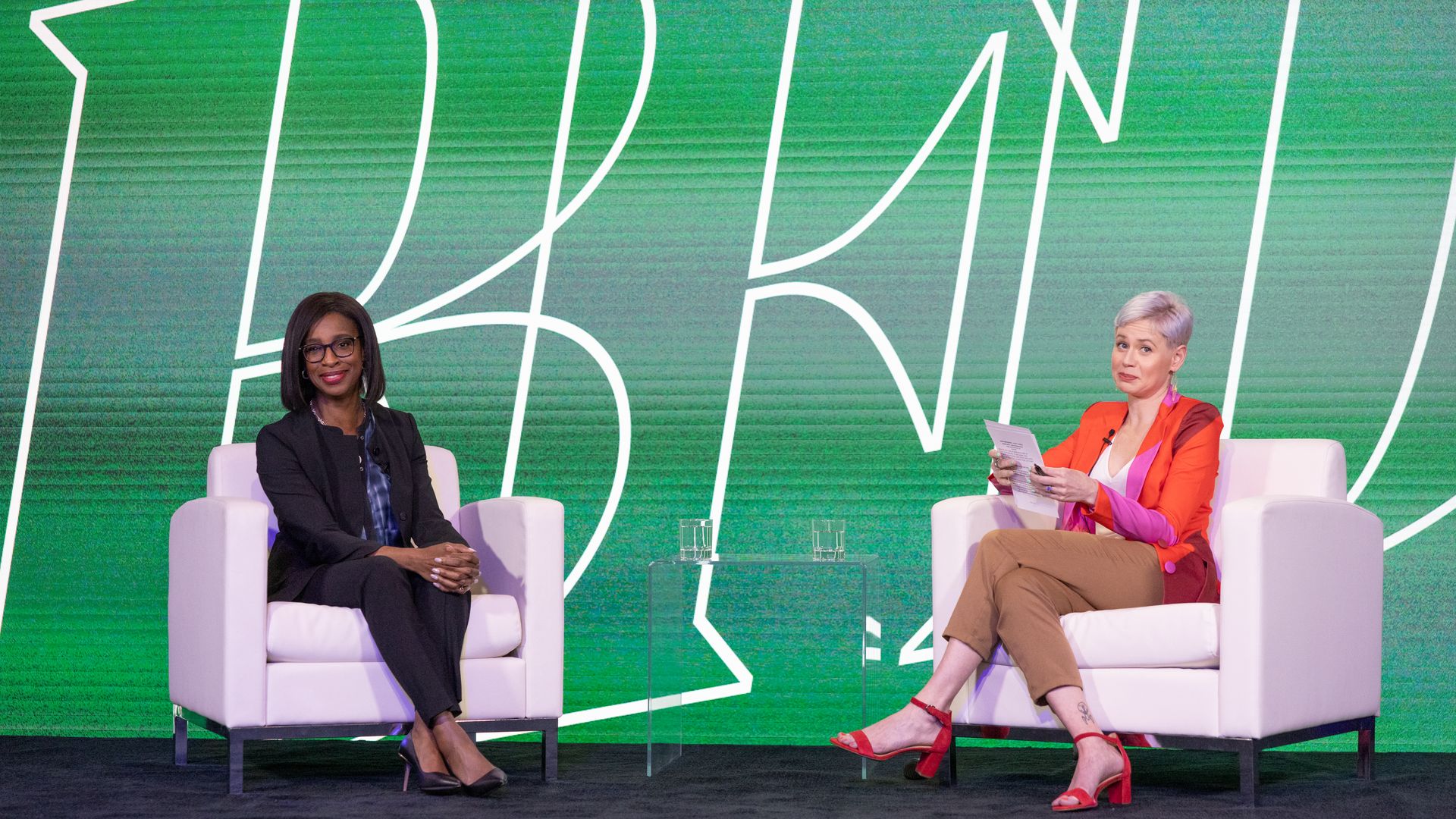
Startup Alto Pharmacy plans to raise another funding round as it eyes potential acquisition targets — building on its billion dollar-plus revenue, CEO Alicia Boler-Davis said Wednesday at Axios BFD in San Francisco.
Why it matters: The company's growth plans come at a time of tightened capital markets for digital health care companies, particularly for a low-margin corner of the sector.
Fox News is facing a defamation lawsuit from former Biden administration disinformation chief Nina Jankowicz, who accuses the network of telling "destructive" lies that harmed her career and threatened her safety.
Driving the news: Jankowicz alleges in the suit that she resigned from the since-dissolved DHS unit, the Disinformation Governance Board, last year "due to harassment arising from Fox's defamation."
It's still TBD whether crypto will be an integral part of Stripe's business, but the company sees promise in certain applications of the technology, Stripe president John Collison said at the Axios BFD event in San Francisco.
Why it matters: Stripe isn't betting the farm on crypto, but the company does find it useful for certain use cases.
Driving the news: In a wide-ranging conversation with Axios' Dan Primack, Collison clarified why Stripe ended its early crypto efforts and where the company is building on the blockchain today.
What they're saying: "I think people judge crypto based on ... what fraction of things in crypto work," Collison said. "But for our purposes, we just care about what absolute number of crypto technologies are useful."
It's that focus on finding useful applications that led the company to reconsider blockchain technology after abandoning it several years ago.
Flashback: Stripe was relatively early in offering a bitcoin payments product, but the company ended support for it due to lack of demand, Collison explained.
"It didn't work well, and as a result, our businesses didn't want it," he said. "We weren't saying crypto is bad or anything like that. We're just saying no one wants this product that we built."
State of play: Since then, the company has built out crypto payouts and fiat-to-crypto on-ramps, in part to support cross-border payment needs in geographies where payment rails are lacking.
"Accepting money is one thing, but paying out money to the rest of the world — especially long-tail countries with poor banking rails is another thing," he said.
"It works better than fiat payments in a lot of cases," he added.
Between the lines: Stripe's crypto team is relatively small relative to the rest of the company's workforce, with just about 20 employees, according to Collison.