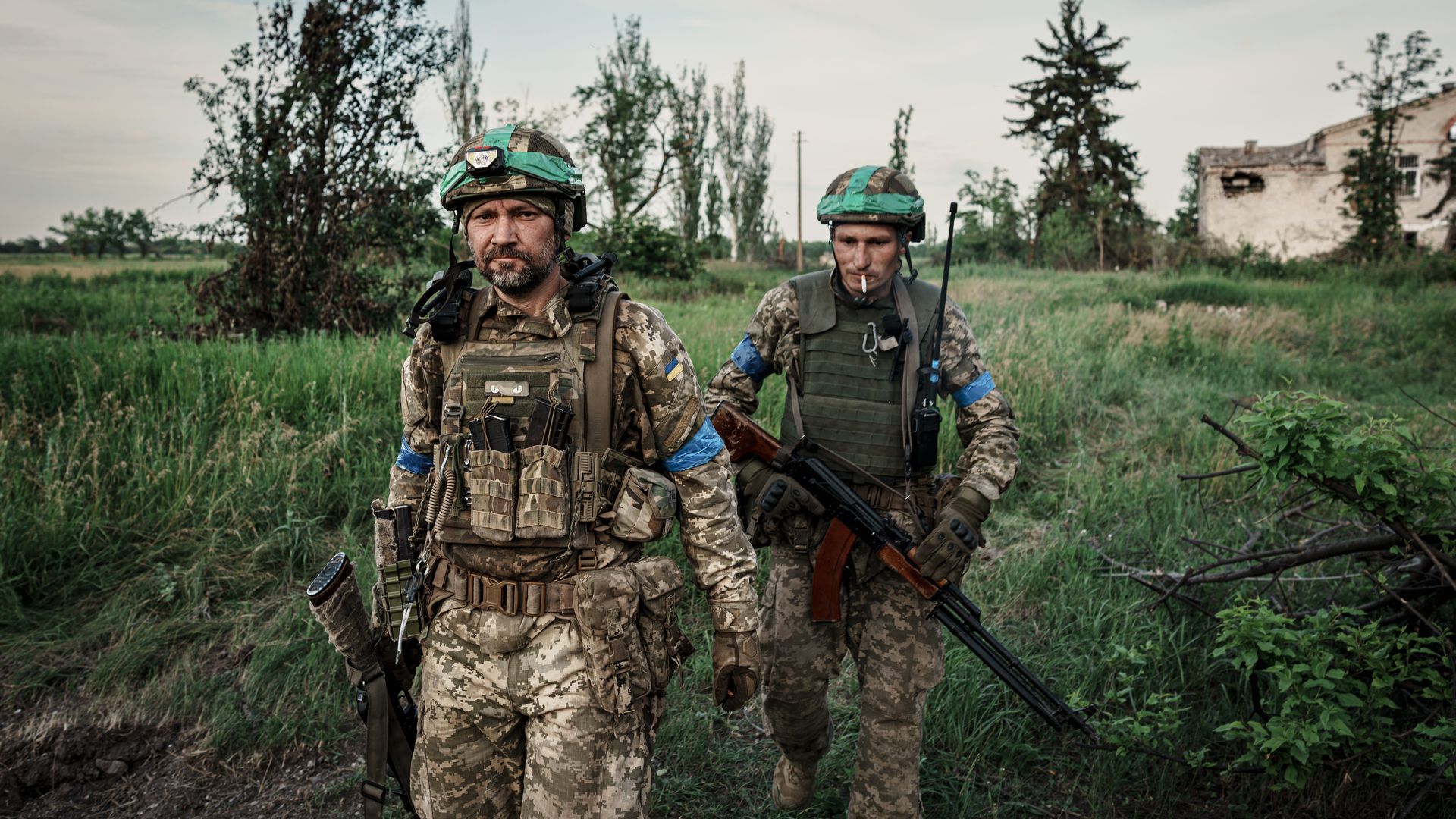
Ukrainian President Volodymyr Zelensky believes Russia will lose the war if Kyiv's long-awaited counteroffensive is successful, he told NBC News in his first interview since his military campaign kicked off last week.
Why it matters: Ukraine is fighting the clock not just in Europe, where Russia's brutal invasion has caused mass destruction and killed tens of thousands of people — but also in Washington, where partisan politics is the top threat to the flow of aid sustaining Ukraine's military.
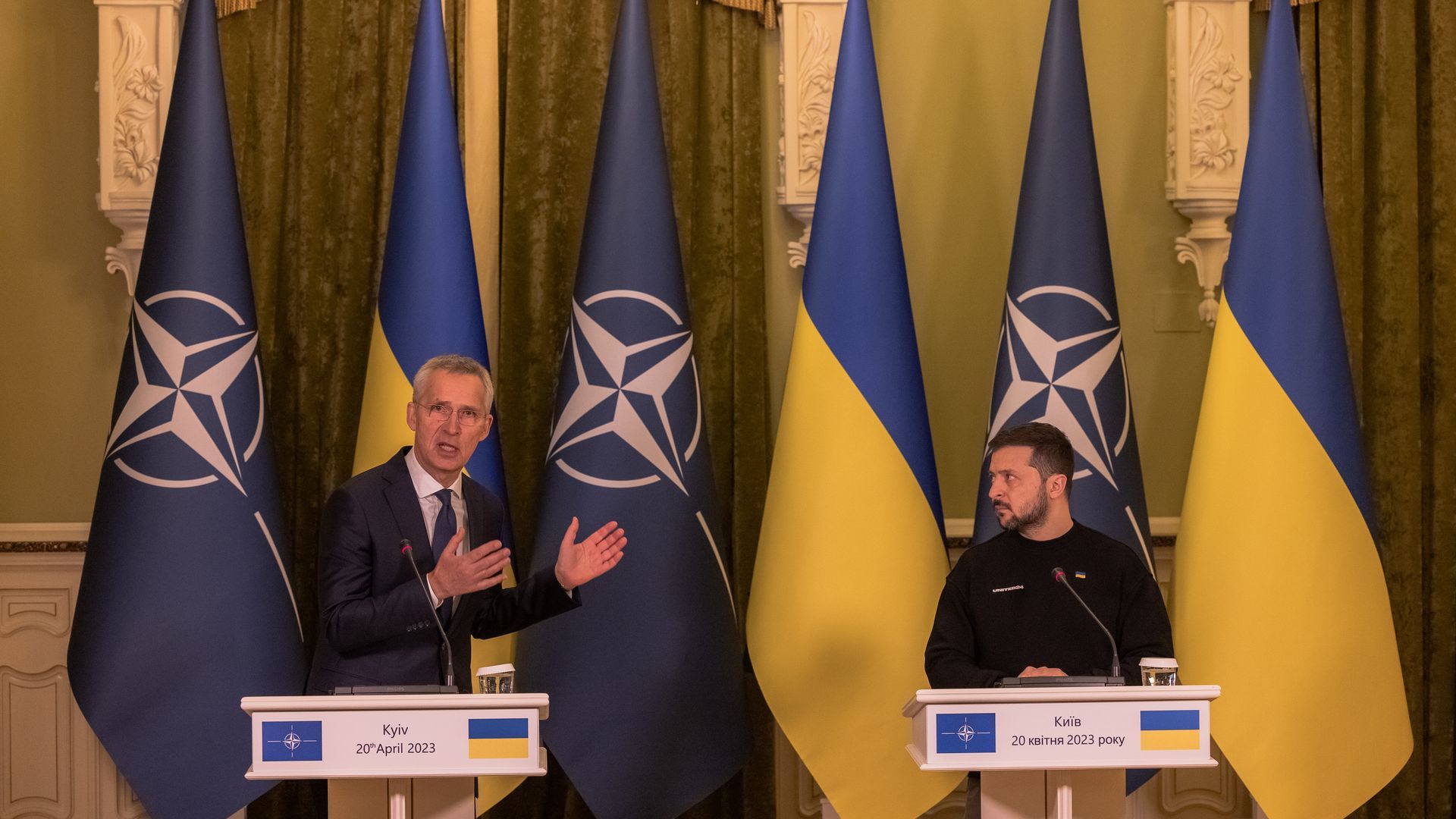
President Biden supports a plan from NATO Secretary-General Jens Stoltenberg to announce that Ukraine will not have to complete a "membership action plan" (MAP) to join the alliance, two sources familiar with the discussions tell Axios.
Why it matters: Ahead of a critical summit next month in Vilnius, allies have been sharply divided over how to handle the question of Ukraine's future membership.
Bringing Ukraine under NATO's security umbrella today would effectively mean signing up for war with Russia. However, Ukrainian President Volodymyr Zelensky argues that Ukraine has proved its value to the alliance and must be given a concrete pathway to membership.
Biden and German Chancellor Olaf Scholz have reportedly been among those reluctant to move beyond the commitment made in 2008 that Ukraine will one day become a member.
Several NATO allies in Eastern Europe have taken up Zelensky’s call, though, and pressed Biden to agree to demonstrate that Ukraine will join sooner rather than later.
Behind the scenes: At the White House on Tuesday, Stoltenberg raised a proposal whereby the alliance would state that Ukraine has made progress toward membership, and won’t need to complete the step-by-step MAP process other Eastern European members went through before joining, the two sources say.
That process lays out specific criteria and reforms and can take years or even decades to complete.
Biden had been looking for a "middle ground" solution that could unify NATO, and supported the idea, one of the sources said. It's not yet clear whether that formulation will satisfy Zelensky and the other 30 NATO members.
The Washington Post first reported that Biden had tentatively backed the MAP plan.
A National Security Council spokesperson said: “We are committed to NATO’s Open Door Policy. Any Alliance decision is between the 31 Allies and the aspirant country.”
At the same time, the U.S., France, Germany and the U.K. have also been discussing what some are calling "the Israel option" — promising to arm and support Ukraine for the long haul without committing to defend it.
The National Security Council spokesperson confirmed that the U.S. and other allies were holding talks "on how we can reassure Ukraine about their long-term security to deter any future aggression for after this war ends."
While the agreements would be between individual countries and Ukraine, rather than alliance-wide, they're likely to be rolled out around the Vilnius summit, which will take place July 11-12.
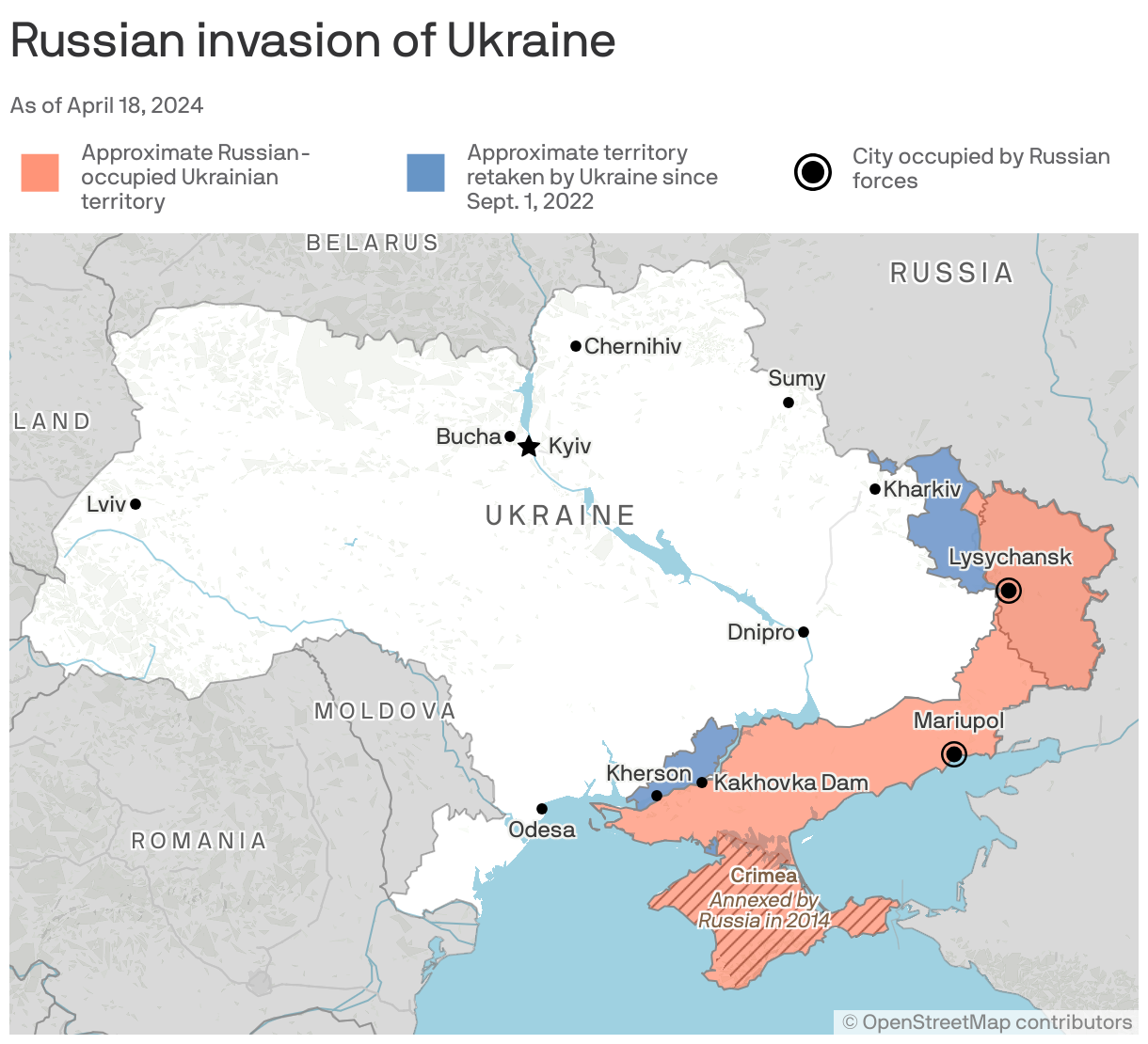
Data: Institute for the Study of War and AEI's Critical Threats Project; Map: Axios Visuals
The big picture: Biden and other NATO leaders will also be navigating two other key challenges over the four weeks leading up to Vilnius: deciding on a candidate to replace Stoltenberg, and convincing Turkey to allow Sweden to join.
Turkish President Recep Tayyip Erdoğan has held up Swedish accession, claiming that Stockholm has harbored members of the Kurdistan Workers’ Party, which has waged an insurgency in Turkey.
After Erdoğan won re-election and Sweden took several steps to assuage his concerns, U.S. and Swedish officials expected Erdoğan to change his tune. The Turkish President warned Wednesday that Stockholm shouldn't hold its breath.
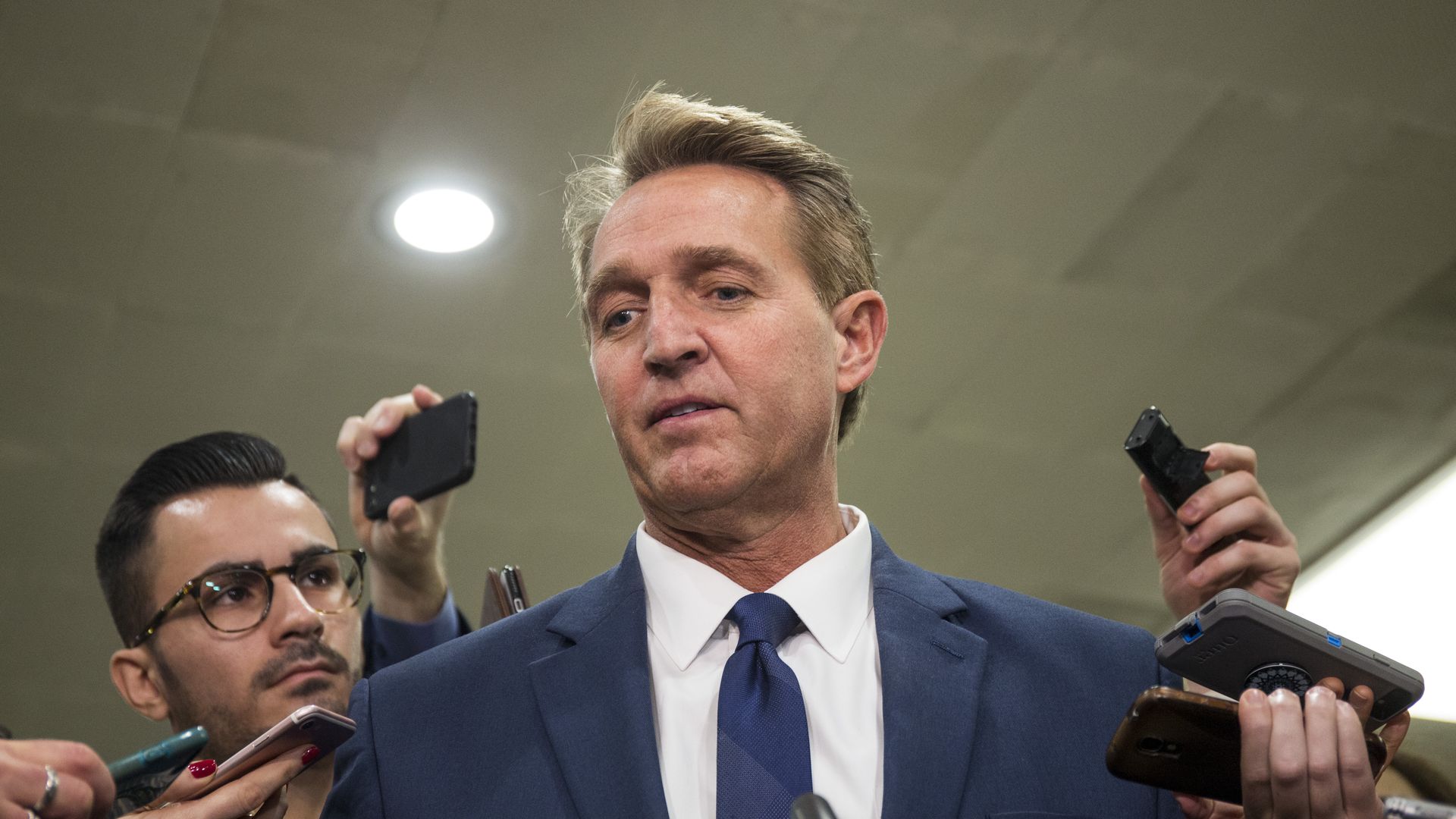
"It seems unlikely that we'll see movement before Vilnius,” U.S. Ambassador to Turkey Jeff Flake told Axios’ Hans Nichols in an interview on Thursday. Flake said it’s possible a deal could be reached at the summit.
On the leadership question, Stoltenberg's tenure has already been extended three times, and he insists he plans to step down this fall as scheduled — but there doesn't appear to be any consensus candidate to replace him.
Poland has come out against Danish Prime Minister Mette Frederiksen, who had emerged as the front-runner, per the WSJ.
Some in central and eastern Europe are floating Estonian Prime Minister Kaja Kallas, but her hawkishness toward Russia might make some allies uncomfortable.
The U.K. has put forward Defense Minister Ben Wallace, but the French and others are unlikely to back him, according to Ivo Daalder, who served as former President Obama's ambassador to NATO.
What to watch: “Don’t be surprised if Stoltenberg is asked to stay on for one more year,” Daalder says.
The U.S. ambassador to Turkey, former Sen. Jeff Flake (R-Ariz.), acknowledged in an interview with Axios that it’s "unlikely" Sweden will be able to join NATO before next month’s summit in Vilnius.
Why it matters: The United States and other NATO members have been pressing Sweden and Turkey to resolve their differences to clear the way for the alliance's expansion after Russia's invasion of Ukraine.
Three-time Olympic medalist Tori Bowie's death last month from complications of childbirth has spotlighted the maternal mortality crisis that disproportionately affects the Black community.
At least 78 people are confirmed dead and hundreds of others, including children, are feared to have drowned after a fishing vessel crowded with migrants and asylum seekers capsized and sank off the coast of Greece on Wednesday, according to Greek and UN officials.
The big picture: Human rights groups say the tragedy — one of the worst in the Mediterranean in recent years — further demonstrates the need for safer pathways to migration, especially for those forcibly displaced from their homes.
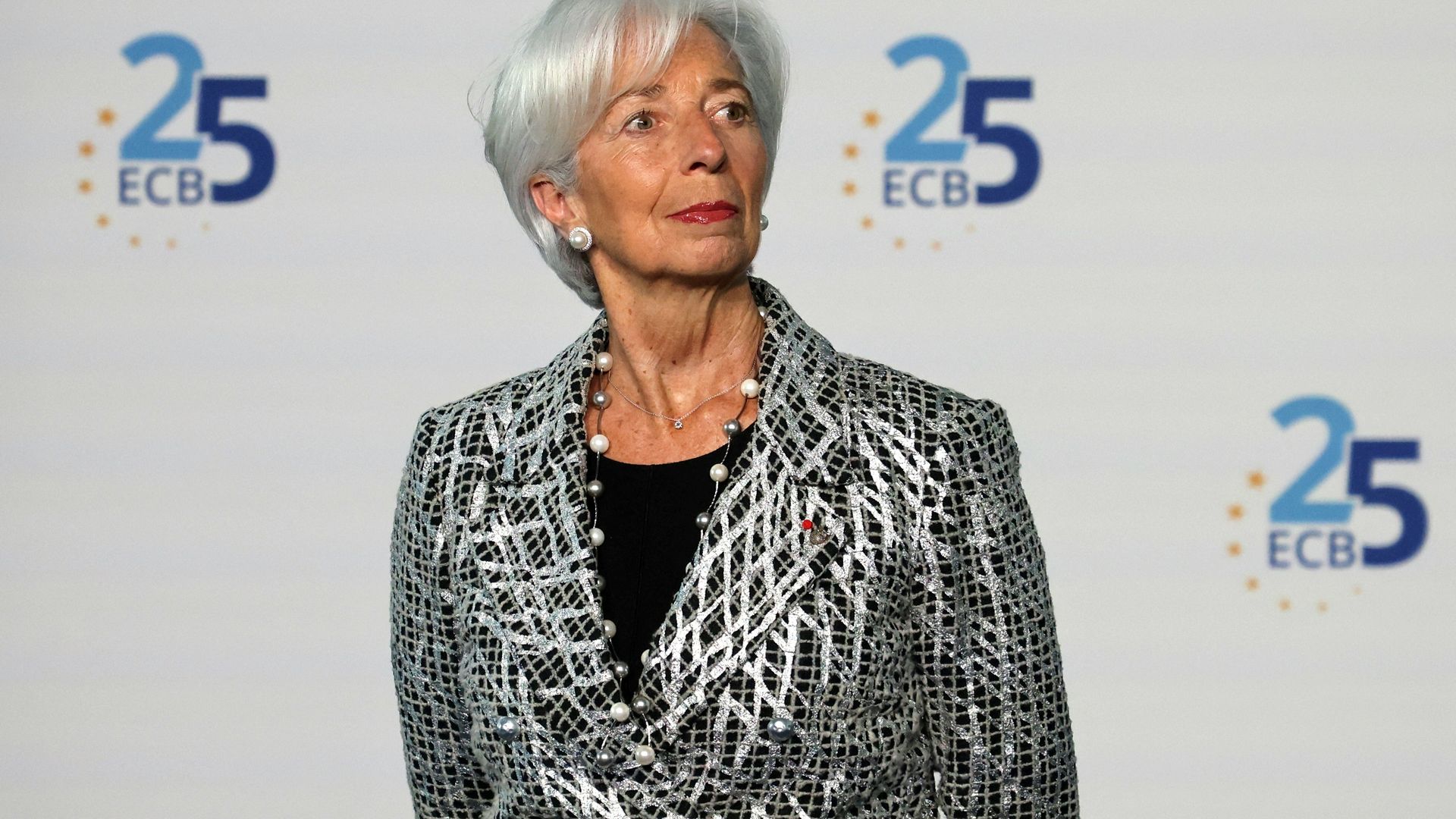
The European Central Bank raised interest rates by a quarter percentage point Thursday, the latest central bank to continue its historically aggressive rate hiking campaign as global inflation proves difficult to tackle.
Why it matters: Borrowing costs across the eurozone are now at the highest level in more than two decades, with hints that rates could go even higher still.
The Southern Baptist Convention on Wednesday approved a motion to clarify its stance that only men can be pastors in its churches.
Driving the news: The move came after the convention overwhelmingly voted a day earlier to expel two churches, including the massive Saddleback Church congregation in California and Fern Creek Baptist in Kentucky, over their inclusion of women pastors, per The Baptist Press.
A long-awaited ministerial meeting of the Negev Forum is now expected to take place next month after the Moroccan government postponed it for the fourth time, three U.S. and Israeli officials told Axios.
State of play: The meeting was originally scheduled for March, but Arab members have expressed concerns about publicly engaging with the right-wing Israeli government.
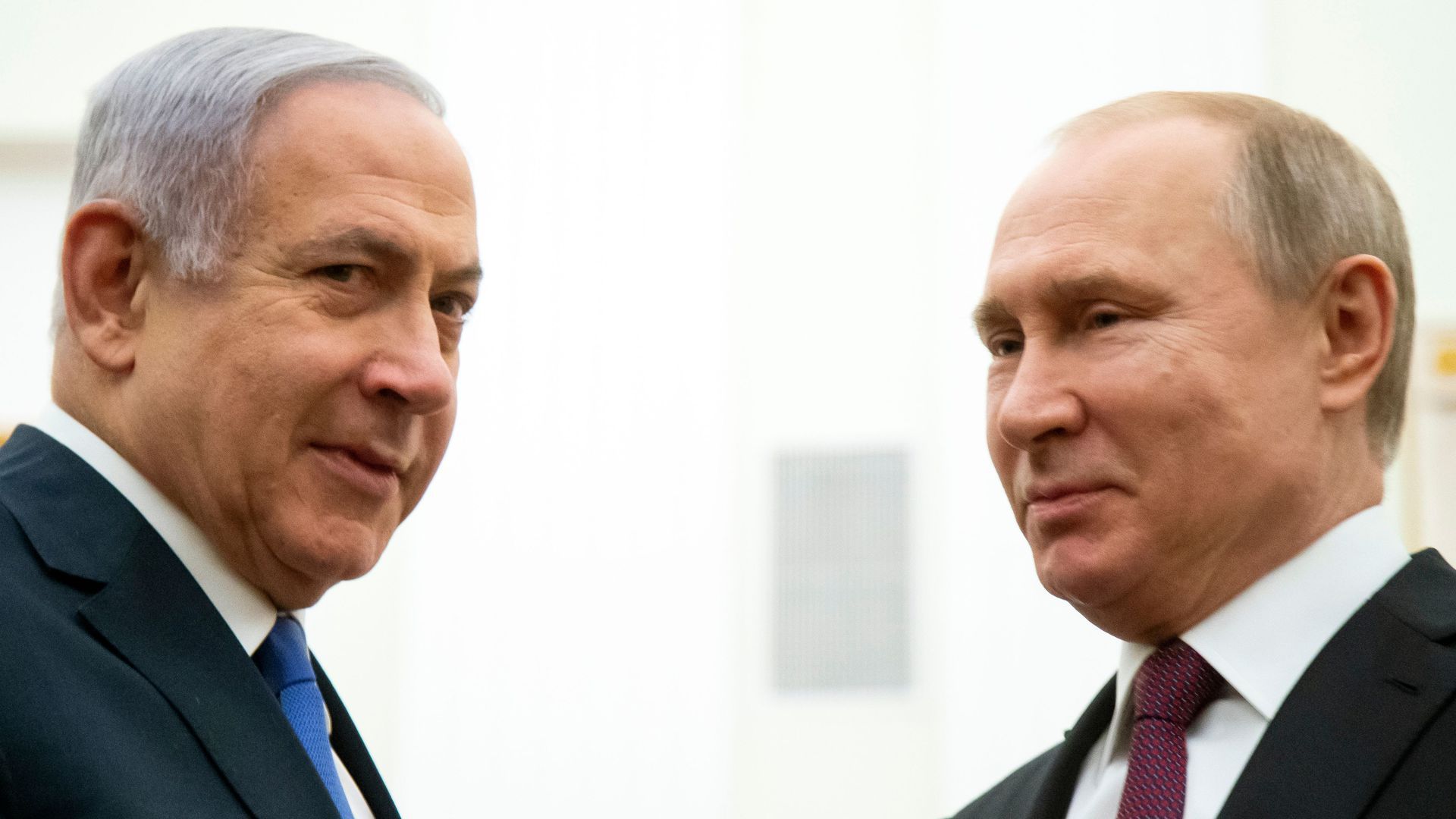
Israel told the Russian government it is highly concerned about its growing military cooperation with Iran in the war in Ukraine and the possibility it will provide Tehran with advanced weapon systems, Netanyahu told Israeli lawmakers in a closed-door hearing on Tuesday, according to three lawmakers who attended the meeting.
Why it matters: Israel’s relations with Moscow have become a very sensitive issue since Russia's invasion began. Netanyahu’s comments to the lawmakers were a rare window into the Israeli-Russian dialogue.
Driving the news: Modelo Especial sales surpassed Bud Light this May, knocking the beer brand from the top spot it has held for over two decades, according to Nielsen data analyzed by Bump Williams Consulting.
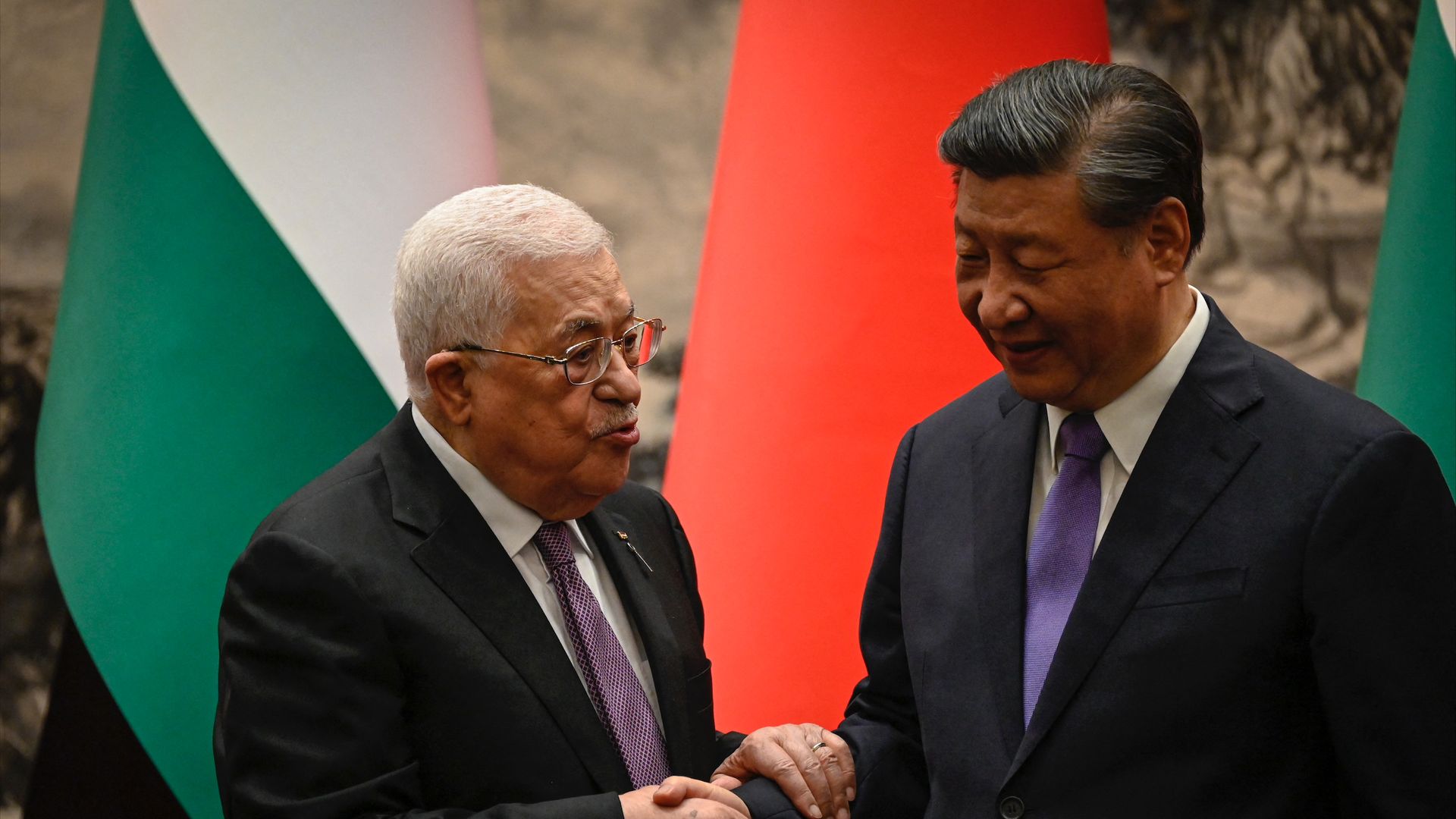
Palestinian President Mahmoud Abbasarrived in Beijing this week tomeet with Chinese President Xi Jinping, becoming the first Arab leader to visit China this year.
Why it matters: The three-day visit appears to be an attempt by the Chinese government to build on its successful mediation between Saudi Arabia and Iran and increase its public posture on Middle East issues that have traditionally been dominated by the United States. Beijing earlier this year offered to mediate between the Palestinians and Israelis.
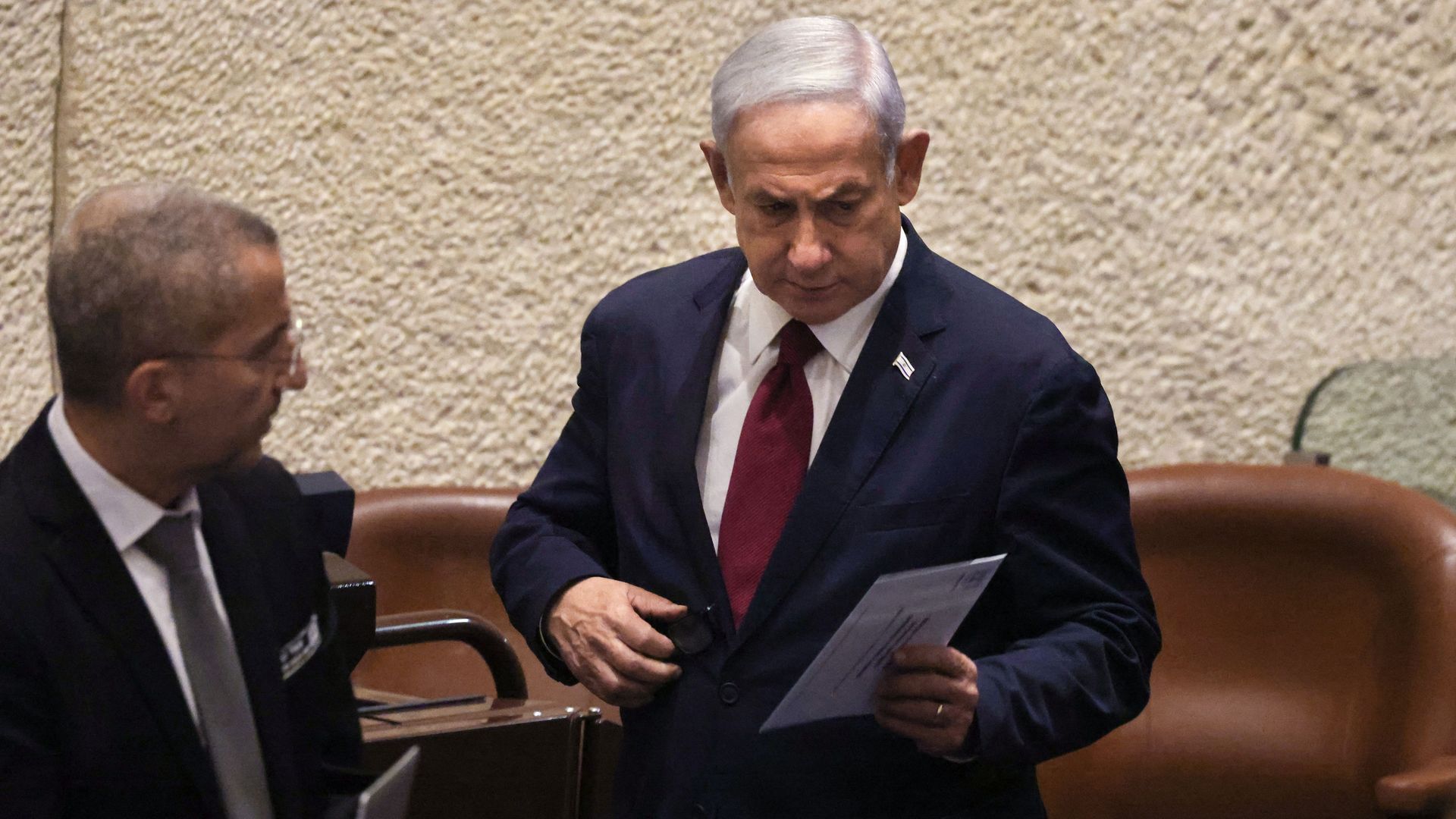
In one of the most dramatic days for Israel's parliament this year, the Israeli opposition won a crucial vote when its lawmaker was elected as one of the two Knesset representatives on the committee that appoints judges.
Why it matters: The results of the vote dealt an embarrassing defeat to Prime Minister Benjamin Netanyahu's coalition and the supporters of the government's plan to weaken the Supreme Court and other democratic institutions.
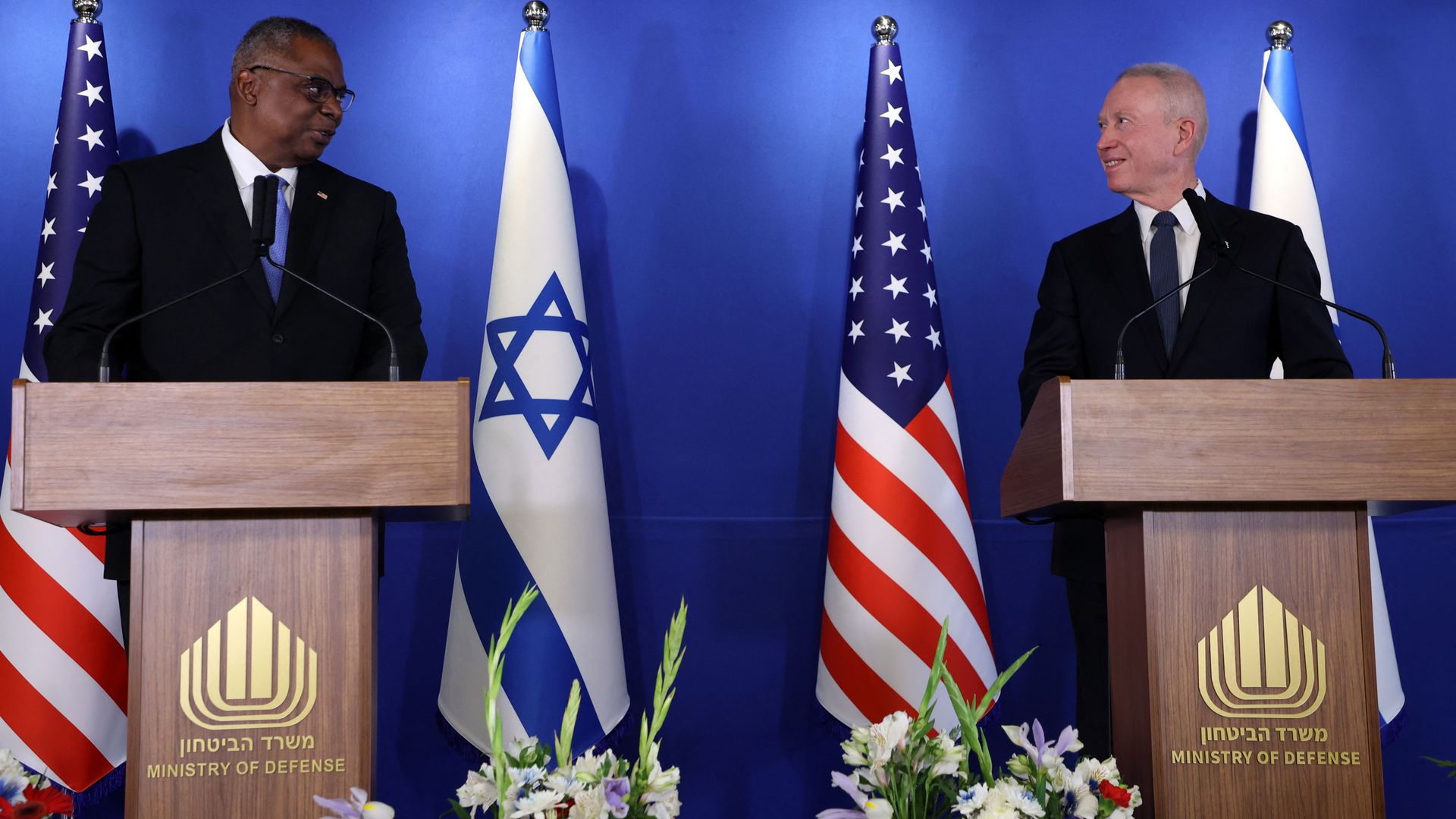
Secretary of Defense Lloyd Austin will meet with his Israeli counterpart Yoav Gallant Thursday on the sidelines of the NATO defense ministers meeting in Brussels to discuss Iran, two Israeli officials told Axios.
Why it matters: The Biden administration is holding indirect talks with Iran about what Netanyahu called a possible “mini-agreement” or an “understanding” regarding Tehran's nuclear program. Israel is opposed to any new deal with Iran.
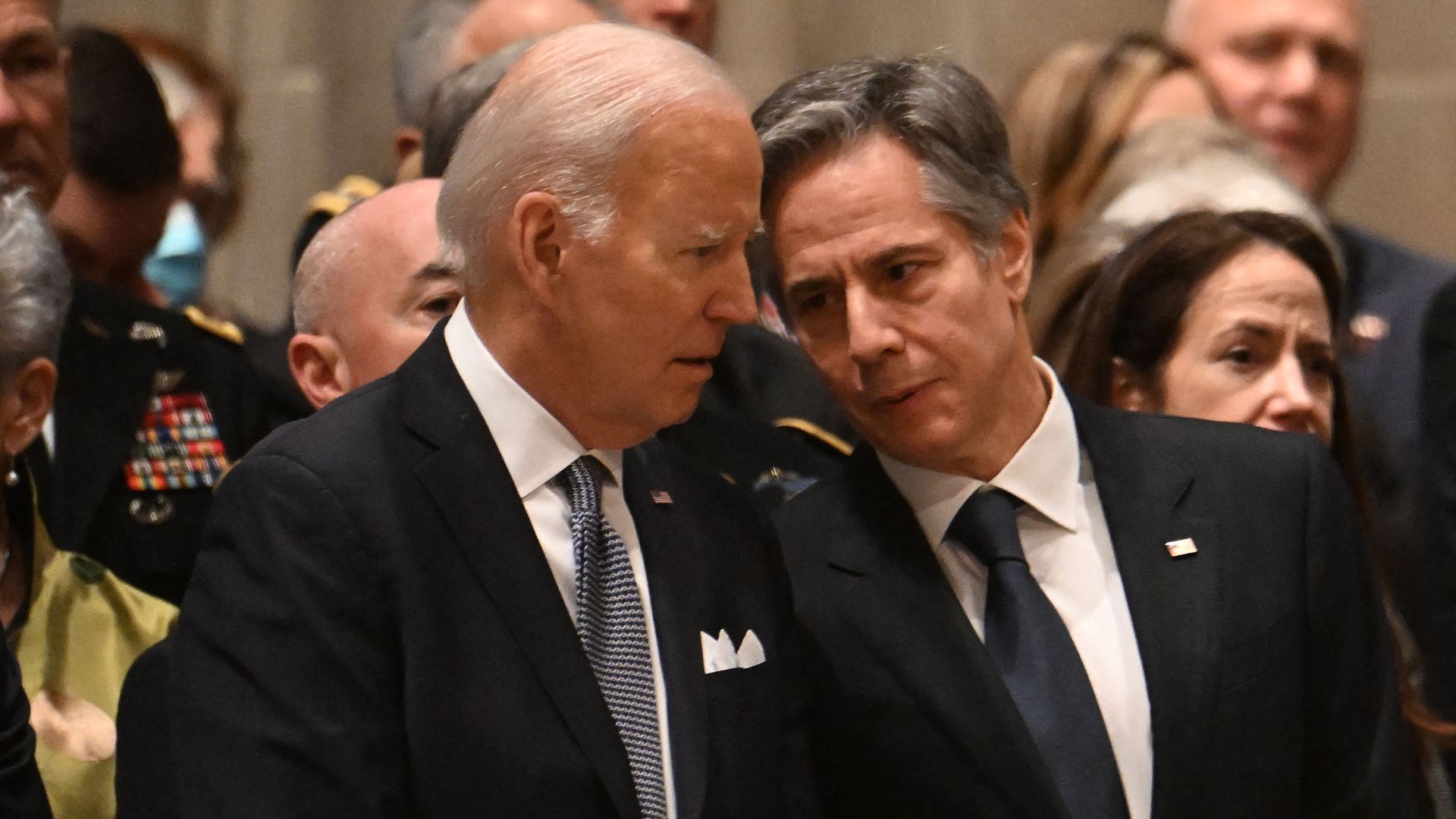
Why it matters: Blinken will be the first secretary of state to visit China in five years, and the most senior Biden administration official to make the trip. While U.S. officials say Blinken's trip is part of an effort to stabilize ties and restore normal channels of communication, all signs point to a difficult visit.
The European Union hit Google with a formal antitrust complaint Wednesday, two years after regulators first opened an investigation into whether Google abused its market dominance to favor its own ad tech.
Why it matters: The complaint puts even more pressure on Google parent Alphabet to possibly divest parts of its lucrative ad business.
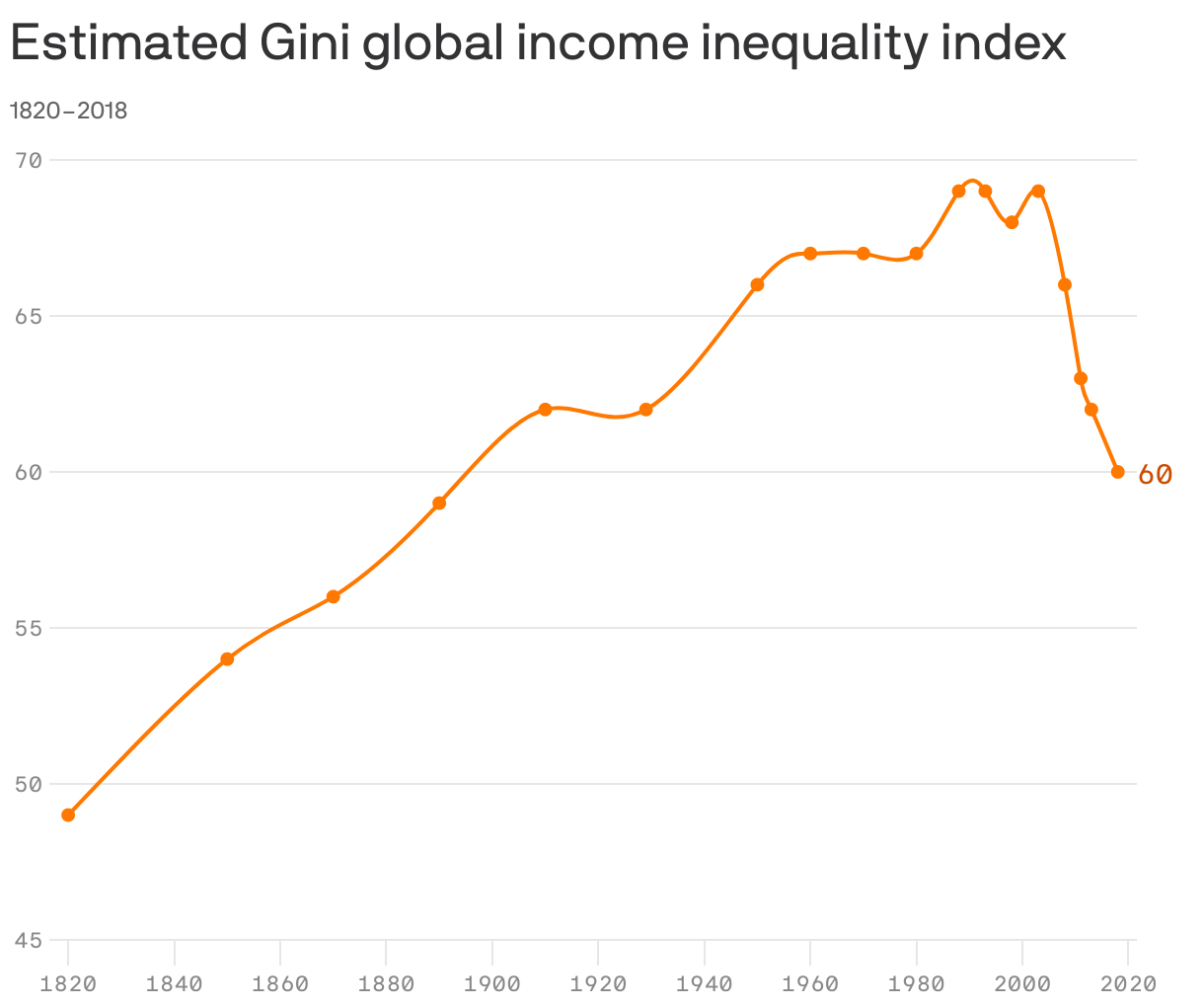
This century has known a stunning decrease in global income inequality, bringing it down to levels not seen in well over a century. That's the conclusion that Branko Milanovic, one of the world's foremost inequality researchers, comes to in an important essay for Foreign Affairs.
Why it matters: The U.S. has only about 4% of the world's population. Increasing equality is good for the planet as a whole, but it foreshadows an end to U.S. hegemony.
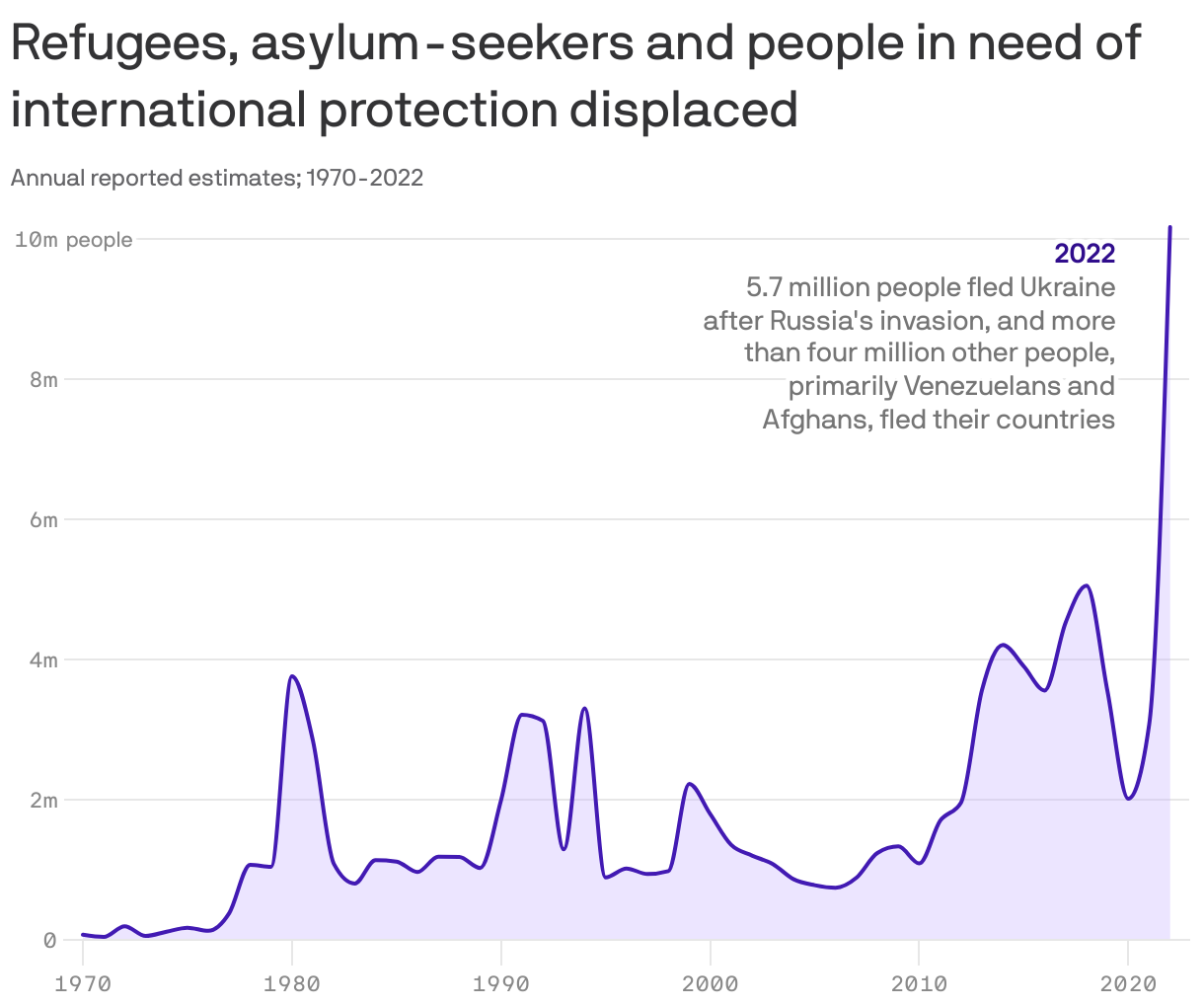
Russia's invasion of Ukraine, other conflicts like those in Syria and Sudan, and climate-fueled crises have pushed the number of people displaced by war, persecution, violence, human rights abuses and other events to a record 110 million, the UN refugee agency said in a new report Tuesday.
The big picture: The upward trend of forced displacement comes as humanitarian response plans and budgets remain severely underfunded. The right to asylum is also "under threat" in some places, and a rising number of compounding factors have made it even harder to provide protection to those most in need, according to UNHCR.