At least 78 dead, hundreds missing after migrant boat sinks off Greek coast

Add Axios as your preferred source to
see more of our stories on Google.
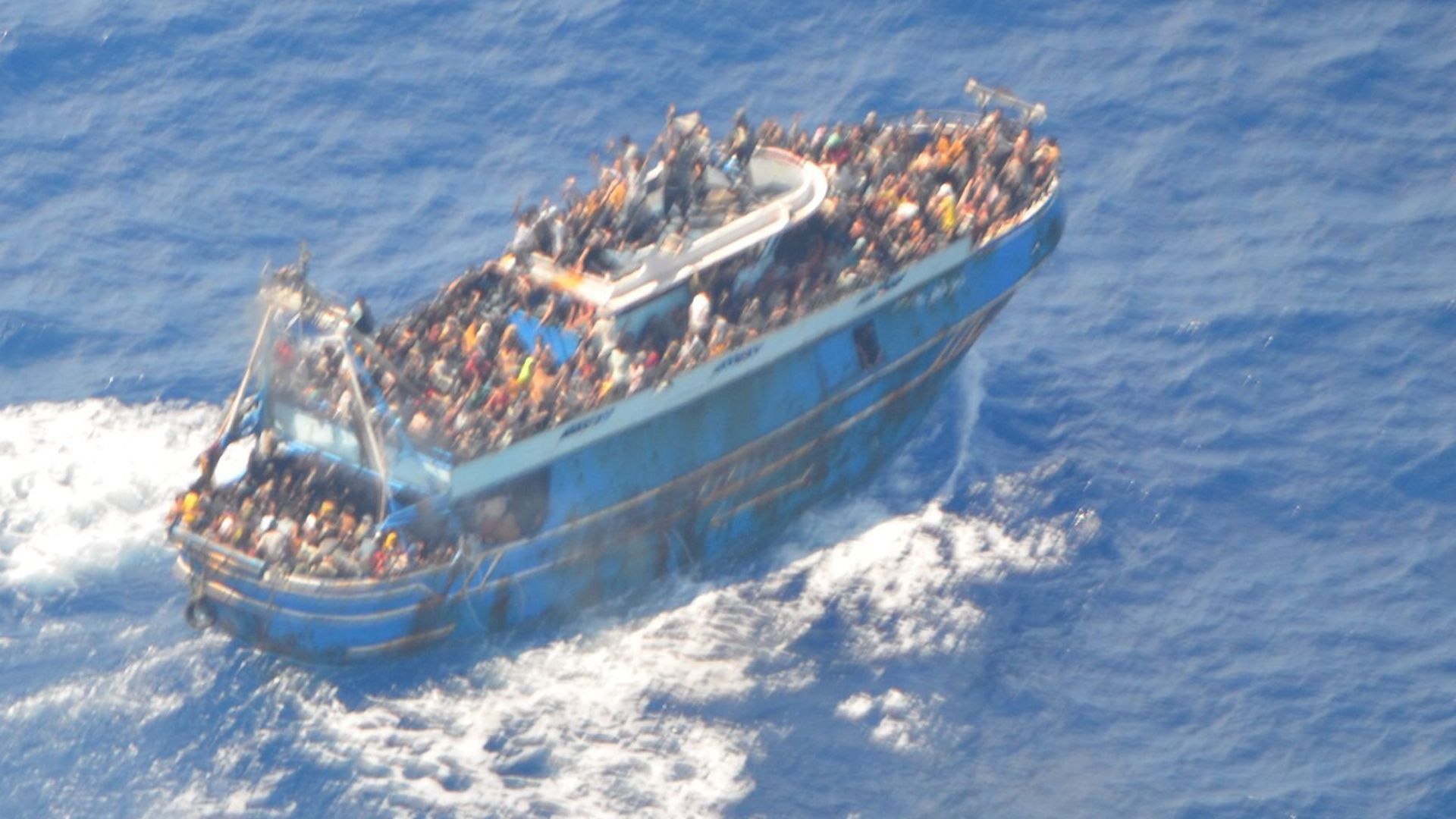
An undated handout image provided by Greece's Hellenic Coast Guard on Wednesday, June 14 shows people on board a fishing ship that later capsized in the Mediterranean. Photo: Handout/Hellenic Coast Guard
At least 78 people are confirmed dead and hundreds of others, including children, are feared to have drowned after a fishing vessel crowded with migrants and asylum seekers capsized and sank off the coast of Greece on Wednesday, according to Greek and UN officials.
The big picture: Human rights groups say the tragedy — one of the worst in the Mediterranean in recent years — further demonstrates the need for safer pathways to migration, especially for those forcibly displaced from their homes.
- Years of tightened border controls and tactics, like pushbacks, designed to stem the flow of irregular migration to Europe have forced migrants and asylum seekers to turn to increasingly dangerous routes.
What happened: The vessel sank early Wednesday about 50 miles off the southern Greek coastal town of Pylos.
- It had left Libya for Italy and had been in distress since at least Tuesday, according to the International Organization for Migration and the UN refugee agency.
- It's still unclear how many people were aboard the vessel, but some estimates put the number between 400 and 750, per Reuters.
- At least 104 people had been rescued by Greek authorities as of Thursday. Hundreds are feared to have been trapped in the vessel's hold when it sank. Rescue operations continued on Thursday, but officials said the window for finding survivors was closing.
State of play: Alarm Phone, a non-governmental group that relays distress calls from boats in the Mediterranean to rescue workers and authorities, said in a statement that it had notified Greek authorities on Tuesday that it had received a call from a boat in distress, but a rescue operation was not launched.
- Greece's Hellenic Coast Guard claims authorities made contact with the vessel, but individuals on board denied any assistance and said they wished to continue to Italy.
- Experts speaking to the Associated Press said that under maritime law, authorities are required to attempt a rescue operation if a vessel is deemed unsafe. "You don't need consent," retired Italian coast guard admiral Vittorio Alessandro told AP.
What they're saying: “We are witnessing one of the biggest tragedies in the Mediterranean," Gianluca Rocco, IOM Greece chief of mission, said in a statement.
- "This situation reinforces the urgency for concrete, comprehensive action from States to save lives at sea and reduce perilous journeys by expanding safe and regular pathways to migration," Rocco added.
UN Secretary-General António Guterres told reporters on Thursday that it is "time for people to recognize that migration is inevitable."
- "The world needs migration, but migration needs to be done in a regular and orderly way," he added.
- "And if countries do not engage in creating the conditions for an orderly and regular migration, migrants will be in the hands of smugglers and traffickers and the consequences will be as tragic as we have seen yesterday."
Context: An unstable Libya has become a major transit point for migrants and asylum seekers from Africa and the Middle East fleeing economic instability, political persecution, violence or other human rights abuses.
- For years, European countries have encouraged — and supported — Libyan authorities to intercept migrants who attempt to reach Europe via the Mediterranean Sea.
- Those intercepted by Libyan authorities are often detained in Libyan detention centers where they face severe human rights abuses, the UN and rights groups have documented.
- Others have faced pushbacks, a practice of forcibly returning people across an international border or waters without allowing them to seek protections, which are illegal under international law.
More than 21,000 people have died or gone missing attempting to cross the Central Mediterranean since 2014, according to the IOM. The agency notes that the true number is likely much higher.
- UNHCR in a report this week said that the number of forcibly displaced people has hit a record 110 million, with many forced to take increasingly perilous journeys via land or sea to flee violence, persecution, human rights abuses and other crises.
