European Central Bank ramps up inflation battle with another interest rate hike

Add Axios as your preferred source to
see more of our stories on Google.
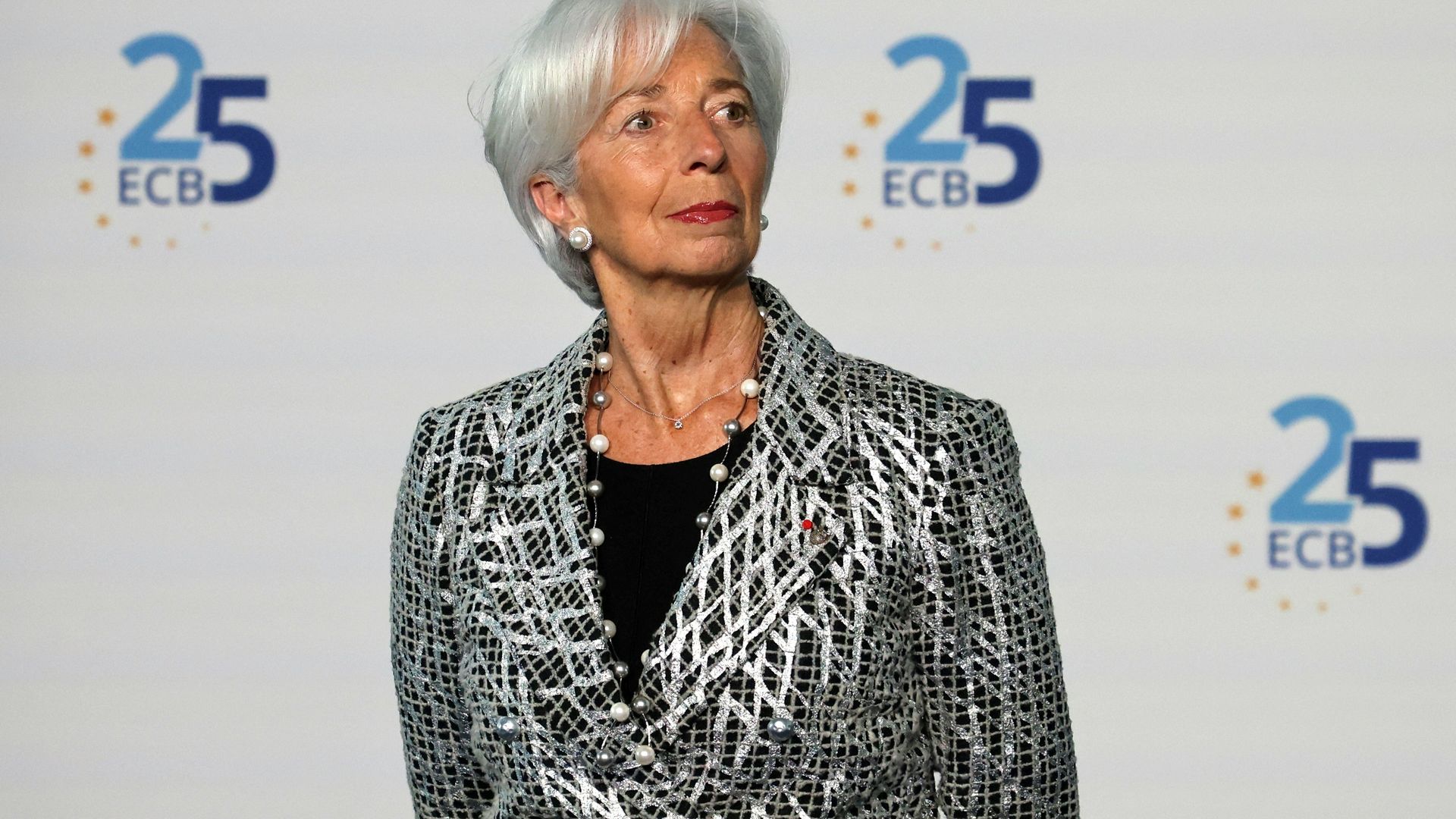
European Central Bank president Christine Lagarde. (Photo by Daniel Roland/AFP via Getty Images)
The European Central Bank raised interest rates by a quarter percentage point Thursday, the latest central bank to continue its historically aggressive rate hiking campaign as global inflation proves difficult to tackle.
Why it matters: Borrowing costs across the eurozone are now at the highest level in more than two decades, with hints that rates could go even higher still.
- The euro area entered a mild recession earlier this year, but economic activity could take a bigger hit as the central bank works to put a lid on inflation that has spread across the economy.
What they're saying: "Inflation has been coming down but is projected to remain too high for too long," the ECB said in a policy statement.
- Officials also said that its key interest rate "will be brought to levels sufficiently restrictive" to bring inflation back down to its 2% target, and "will be kept at those levels for as long as necessary."
Between the lines: Europe's inflation burst accelerated in the aftermath of Russia's invasion of Ukraine. That drove up energy and other commodity prices across the bloc.
- Prices started to rise rapidly in other areas of the eurozone economy.
- That's why ECB officials say they expect core inflation — which excludes food and energy costs — to be much higher this year and next "owing to past upward surprises and the implications of the robust labour market for the speed of disinflation," per the policy statement.
By the numbers: In new projections released Thursday, the ECB says this gauge of inflation will average 5.1% in 2023, before declining to 3% the following year. The last estimates, made in March, were 4.6% and 2.5%, respectively.
- In May, core inflation rose 5.3% from a year earlier.
Details: The ECB now expects the economy to grow by 0.9% in 2023 and 1.5% in 2024 — slightly slower growth than previous estimates.
- The euro area is officially in a recession, dragged down in part by slowing activity in Germany, the bloc's largest economy.
The bottom line: The ECB acknowledged some progress in its roughly yearlong fight to tamp down inflation. It was not, however, enough to hold off on a rate hike like its counterparts at the Federal Reserve did Wednesday.
- The central bank said that past rate increases are "gradually having an impact across the economy."
- Meanwhile, officials said some indicators of underlying inflation pressures "show tentative signs of softening," though they remain strong.
