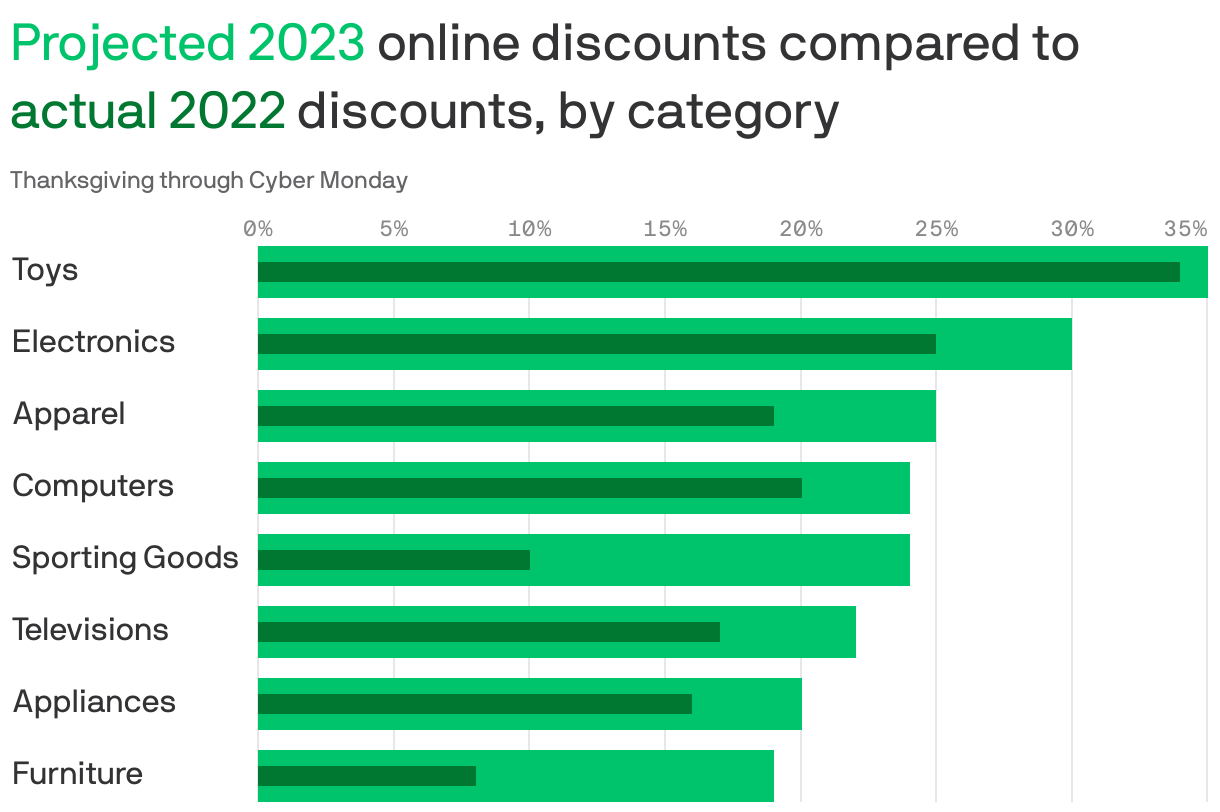
Prices of popular holiday items will see deeper cuts online compared to last year's discounts.
Why it matters: While the U.S. economy has kicked into disinflation mode, deflation has been the prevailing trend for goods sold online — with more than half of the 18 main categories tracked by Adobe showing prices falling year-over-year.
Americans are expected to cook up plenty of order confirmation emails this Thanksgiving.
Over the five days from Thanksgiving through Cyber Monday, shoppers will shell out $37.2 billion online — up 5.4% from last year, Adobe Analytics projects.
Why it matters: The days of camping out for doorbuster deals are over but inflation-weary consumers plan to shop for holiday gifts and treat themselves.
For all the gloomy forecasts about the U.S. economy — recession! unemployment jump! sticky inflation! — plenty of developments are underway that allow for some optimism and gratitude this holiday season.
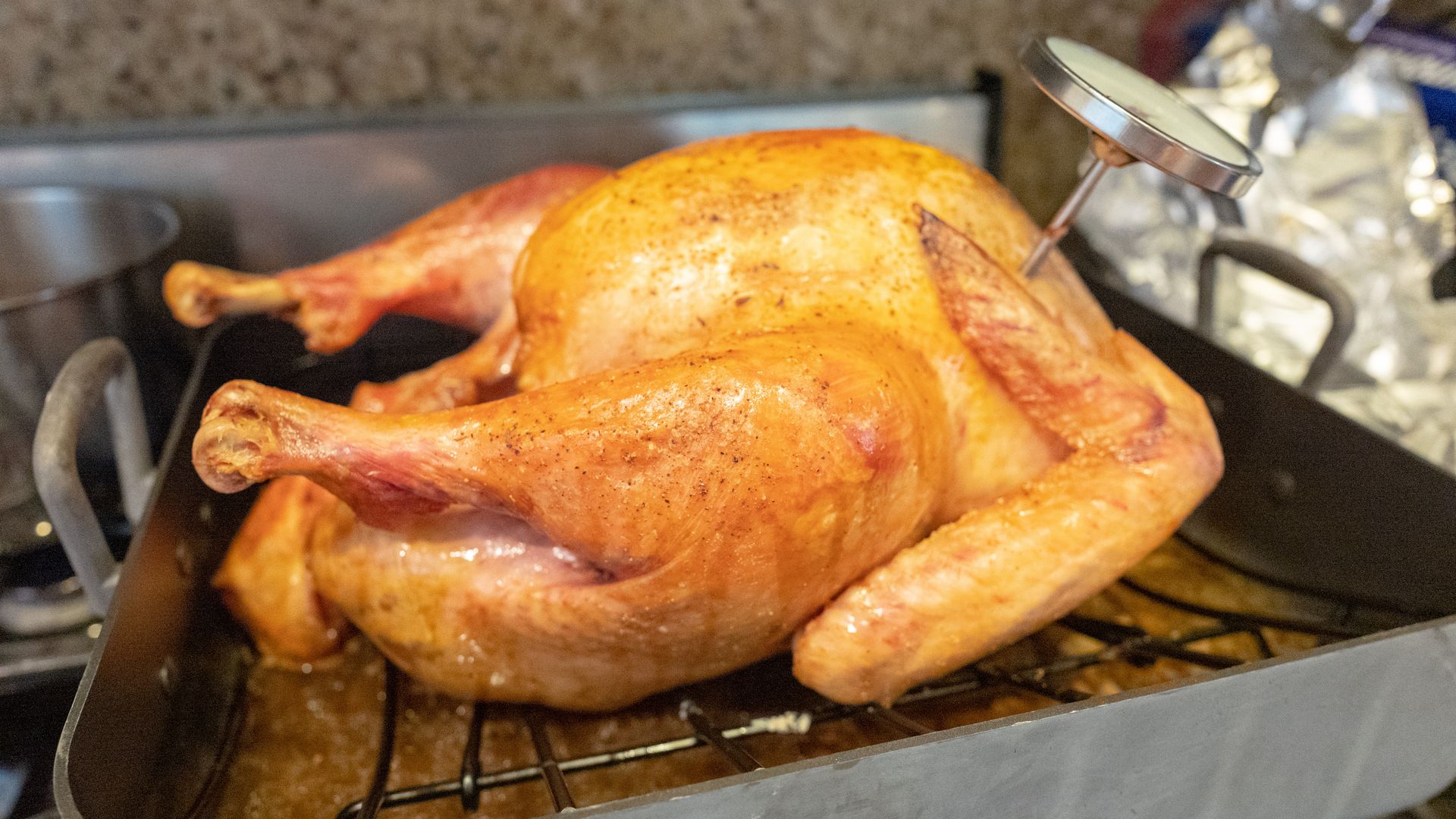
Thanksgiving is all about the turkey for millions who celebrate the holiday, but Americans don't agree on which part of the bird is best to eat, according to a new AP/NORC poll.
Driving the news: Among respondents planning to celebrate this year, 43% said they go for the turkey's white meat compared to 28% who prefer dark meat.
Home sales are at their lowest since the Great Recession housing bust.
Why it matters:Housing is a huge part of the economy — it's about 17% of GDP if you include a broad bucket of activities like home purchases, remodeling, renting and construction.
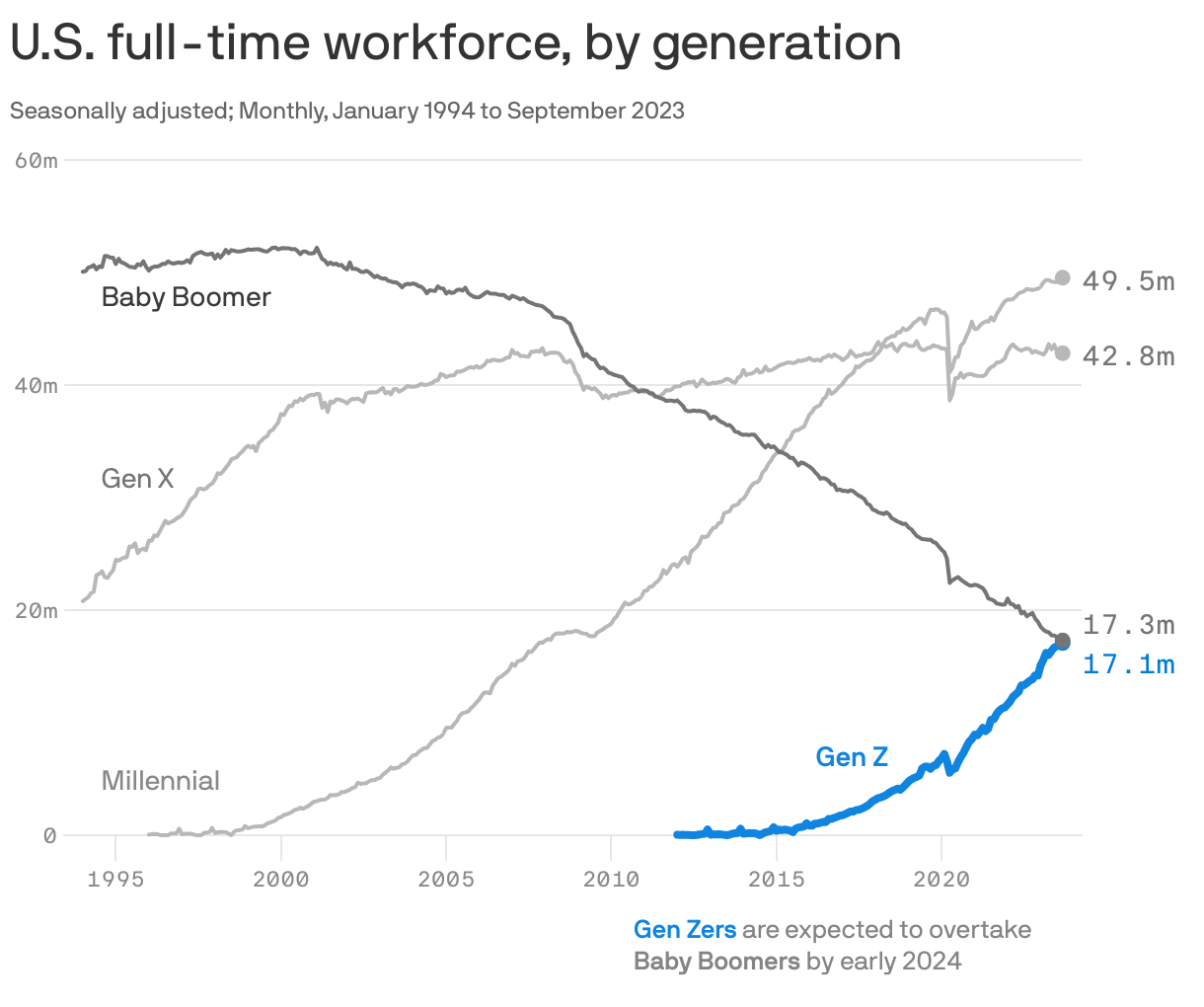
Data: Glassdoor analysis of Census Bureau data; Chart: Simran Parwani/Axios
Gen Z is expected to overtake baby boomers in the workforce by next year, per a new analysis of census data from Glassdoor.
Why it matters: The workplace is giving more Gen Z energy — and if you don't understand what that means, it's time to bone up on the younger generation's lingo and work style.
Thanks to the responses of 6,000+ Axios readers, the winners of Axios' favorite Thanksgiving sides poll have been selected. If you were to have Thanksgiving dinner with other Axios readers, you'd be having mashed potatoes, dressing, green bean casserole, dinner rolls, cranberry relish and pumpkin pie.
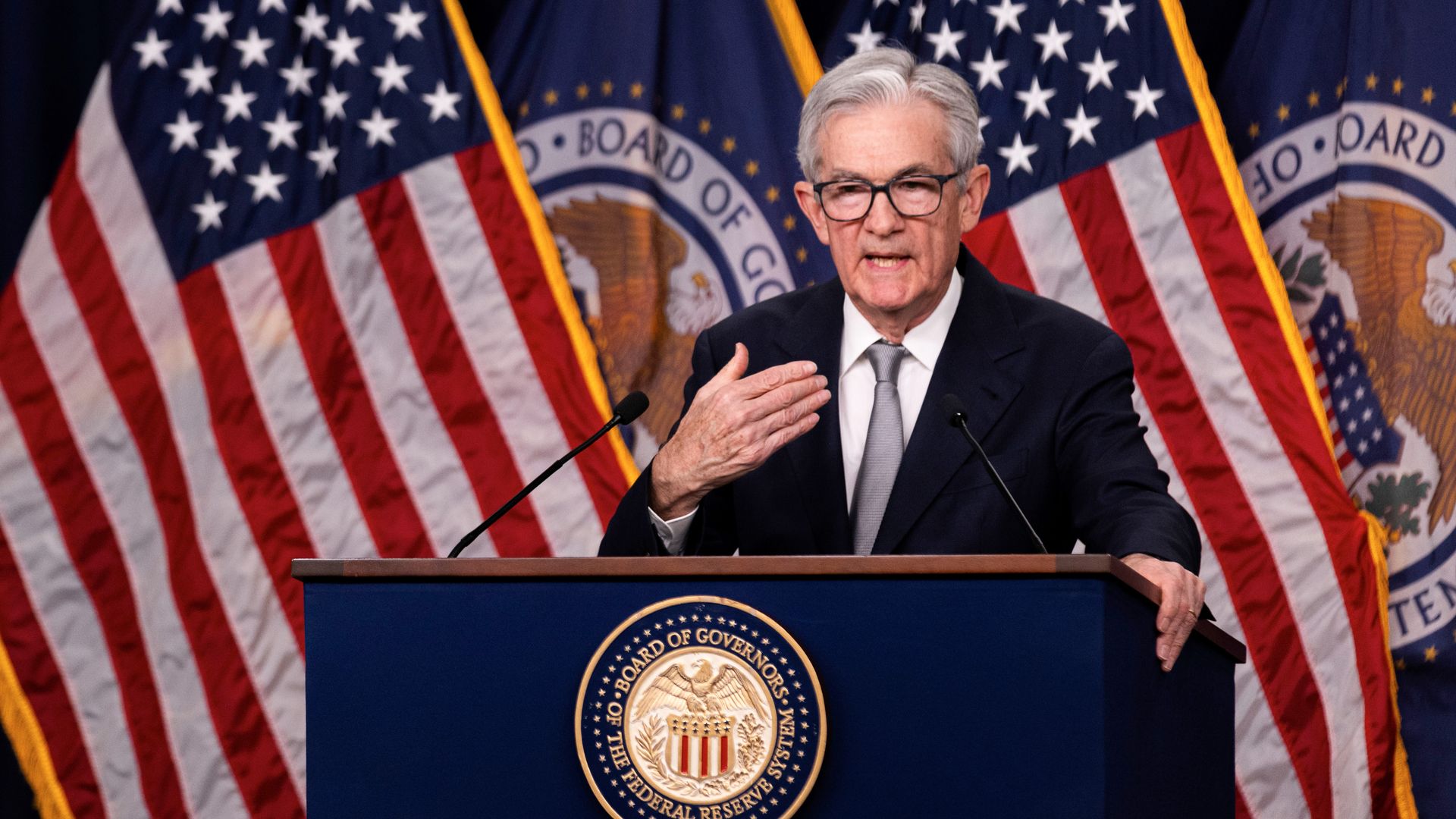
Most Federal Reserve officials continue to see upside risks to the U.S.'s battle against inflation but suggested a more cautious stance on raising borrowing costs further, according to newly released minutes from the central bank's most recent policy meeting.
Why it matters: The minutes from the Oct. 31-Nov. 1 meeting, where officials decided to hold interest rates steady, said Fed officials agreed to "proceed carefully" with future interest rate decisions as they look to wind down their rate-hiking campaign.
For a glimpse of how the Fed's rate hikes are roiling the finances of some American companies, look to the private credit markets.
The big picture: A growing share of U.S. companies borrow money in the trillion-dollar private credit market, where the debt is floating-rate, meaning interest payments go up as benchmark rates rise.
Corporate America roared back into growth mode last quarter.
Why it matters: Better-than-expected numbers from third-quarter earnings season — which unofficially ended with Walmart's results last Thursday — helped lift stocks sharply this month.
Why it matters: High housing costs are a key driver of the sour sentiment Americans feel about a U.S. economy that by most traditional measures is quite good.
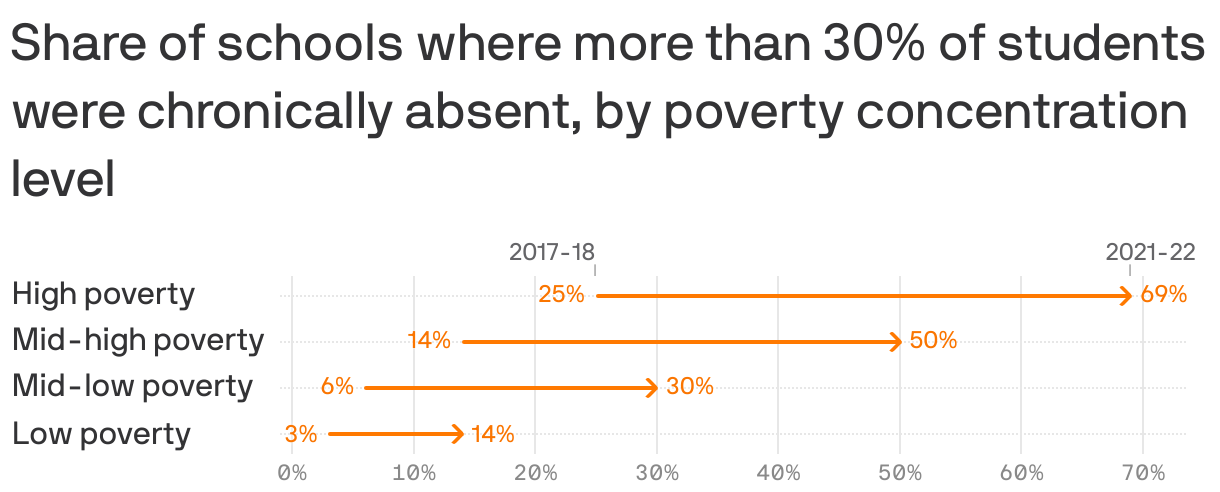
Notes: "Chronically absent" is defined as a student who has missed more than 10% of school days within an academic year. Poverty concentration level is determined by the share of students who are eligible for reduced-price or free meals. Data: Attendance Works; Chart: Danielle Alberti/Axios
Extreme levels of student absence have spiked in schools across the country since the pandemic began, according to data released Friday by Attendance Works, a nonprofit research initiative.
Why it matters: Students haven't recovered from pandemic learning losses, and widespread absences affect entire schools, not just the missing students.
Driving the news: The national average for a gallon of regular gas stood at about $3.31 Monday, which is about 25 cents less than a month ago and 36 cents less than a year ago, according to AAA data.














/2023/11/21/1700584215147.gif?w=3840)