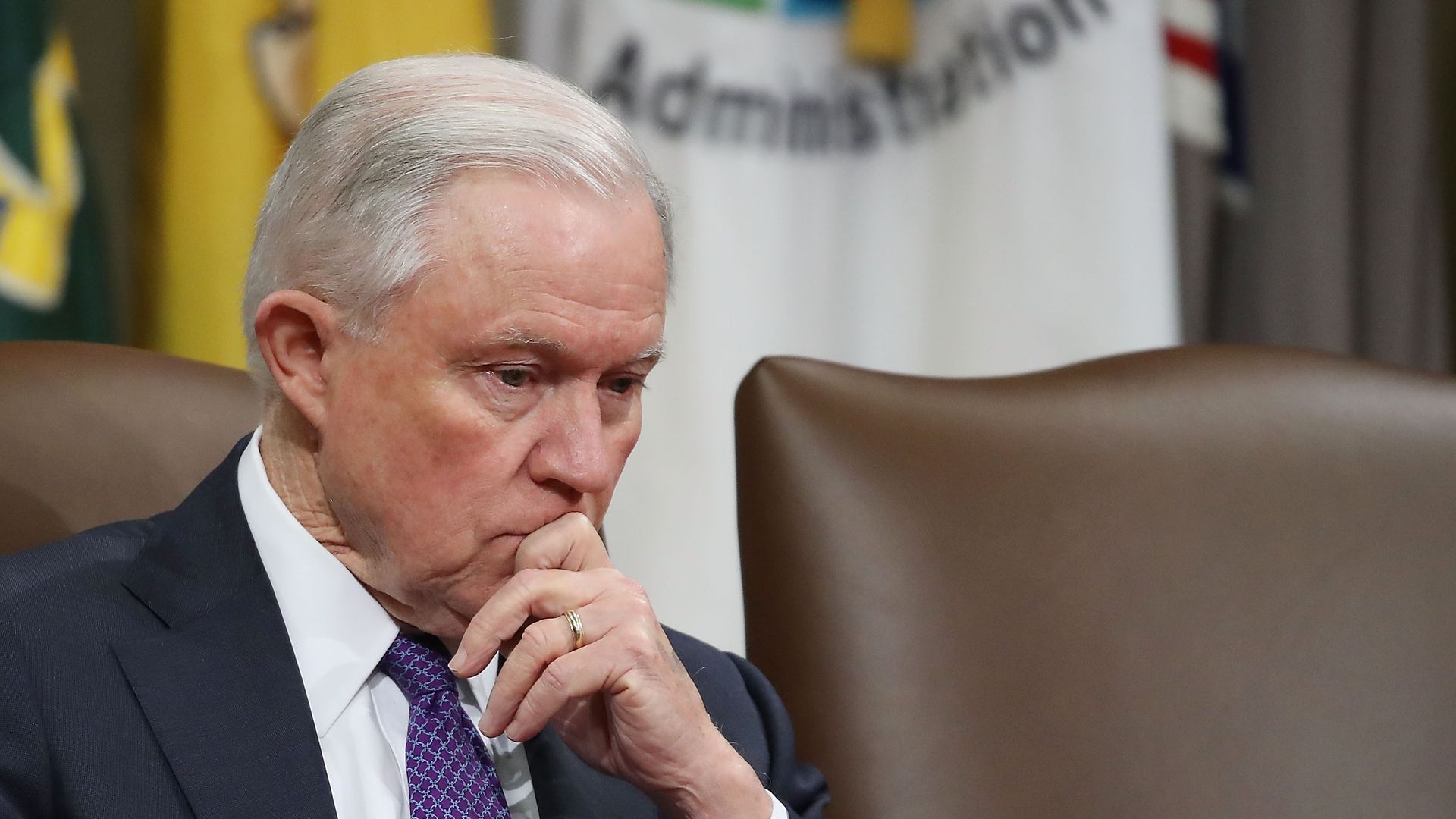
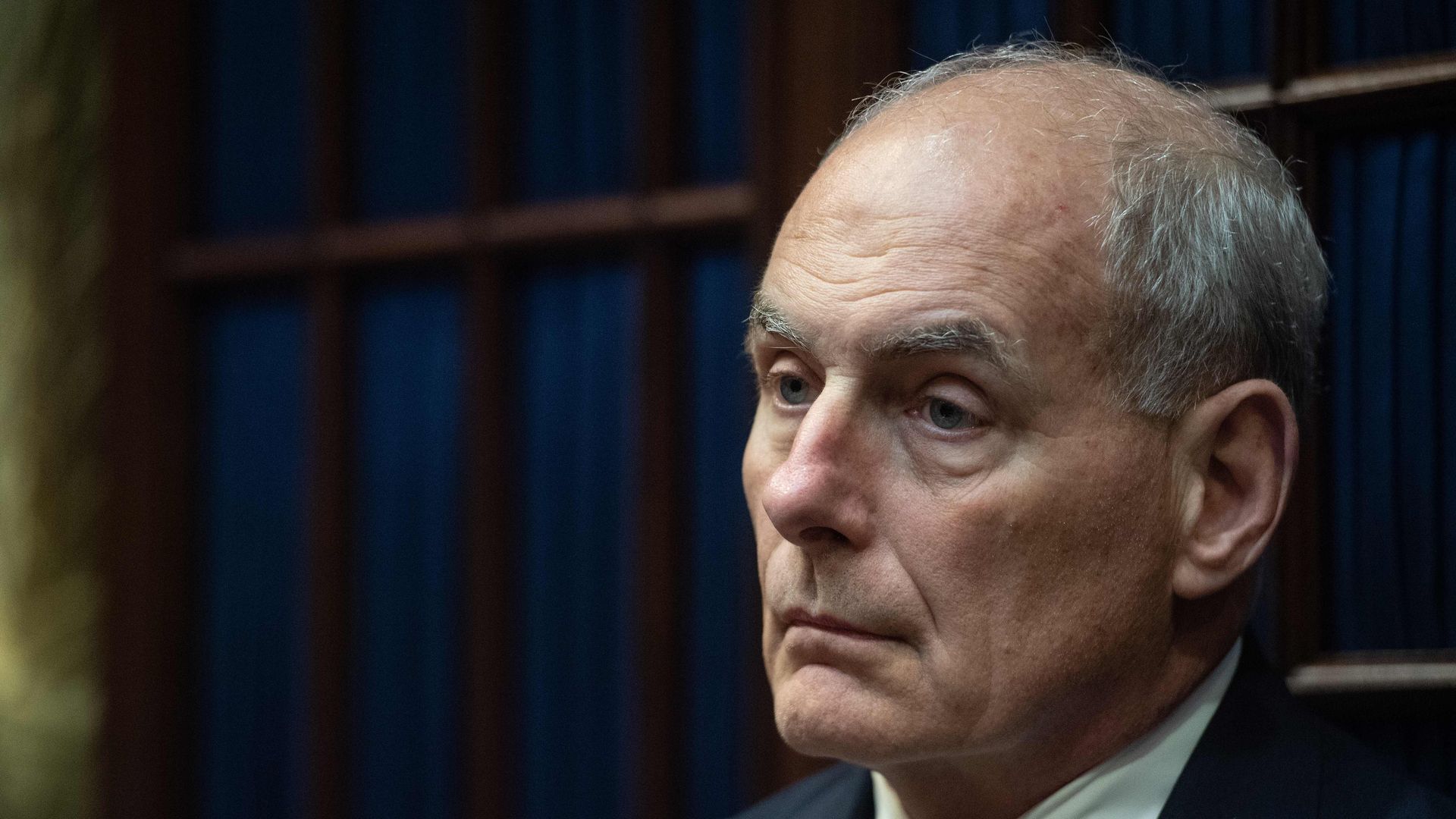
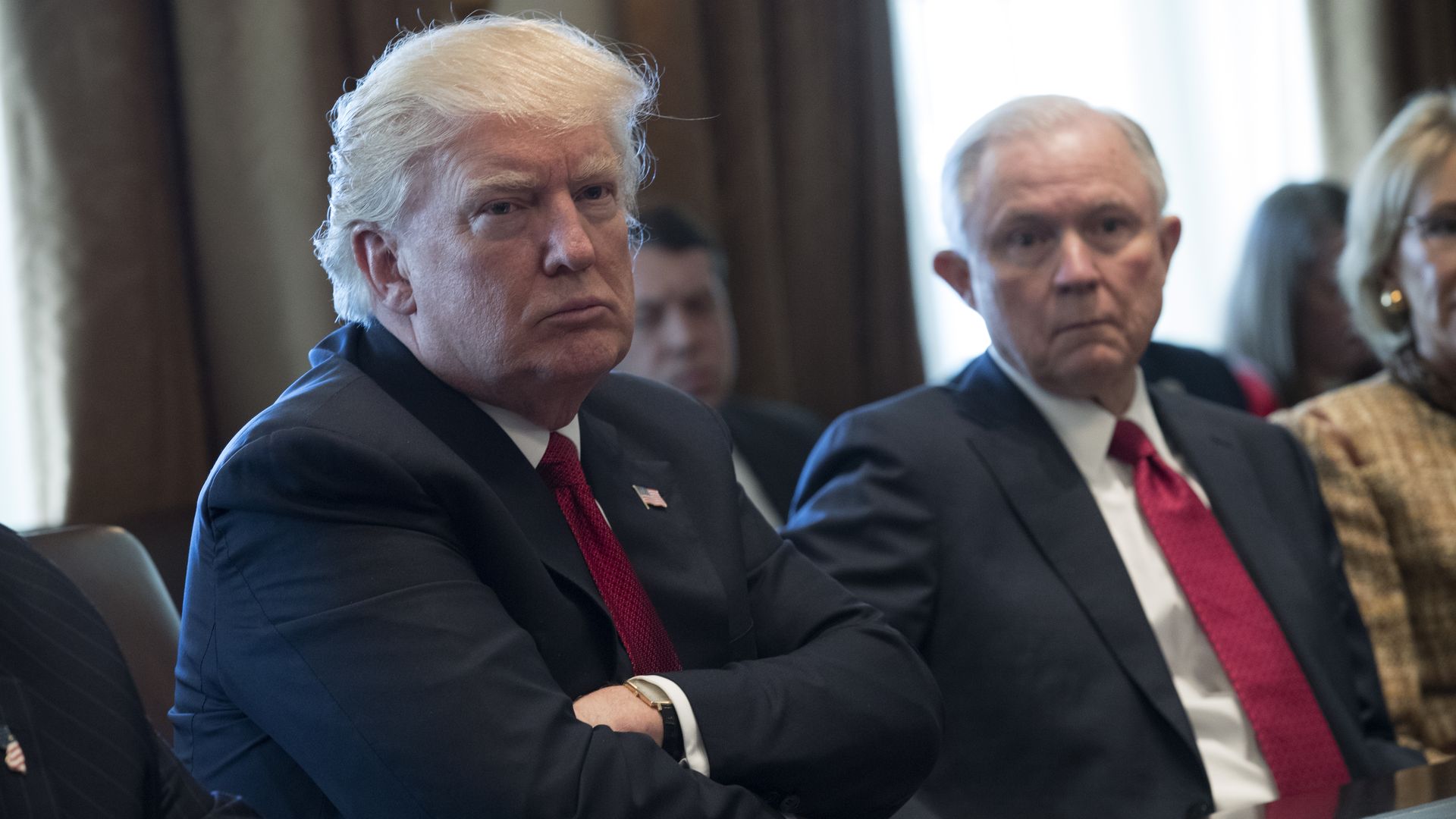
In the wake of Attorney General Jeff Sessions' resignation, which was requested by President Trump, Democrats are calling for acting Attorney General Matthew Whitaker to recuse himself from the Russia investigation, while Republicans are praising Sessions for serving his country "admirably."
Why it matters: The pushback from Washington officials is building because of Whitaker's unfavorable position on the Mueller investigation. He has previously said the investigation is "going too far" and has referred to it as a "witch hunt."
The trend: Trump has faced backlash for the ways he's gotten rid of some of his top officials in the past. For example, former Secretary of State Rex Tillerson said he found out he was fired when the president tweeted about it, and former FBI Director James Comey said he learned about his departure by seeing the headlines flash on the news.
Acting Attorney General Matthew Whitaker — the Department of Justice chief of staff President Trump appointed to lead the department after Jeff Sessions' resignation — is a critic of Robert Mueller's Russia investigation who wrote in a CNN op-ed last year that the investigation was "going too far."
Why it matters: The Justice Department oversees the Mueller investigation. A DOJ official told the Washington Post that Whitaker will assume authority over the probe, which had been run by Deputy Attorney General Rod J. Rosenstein.
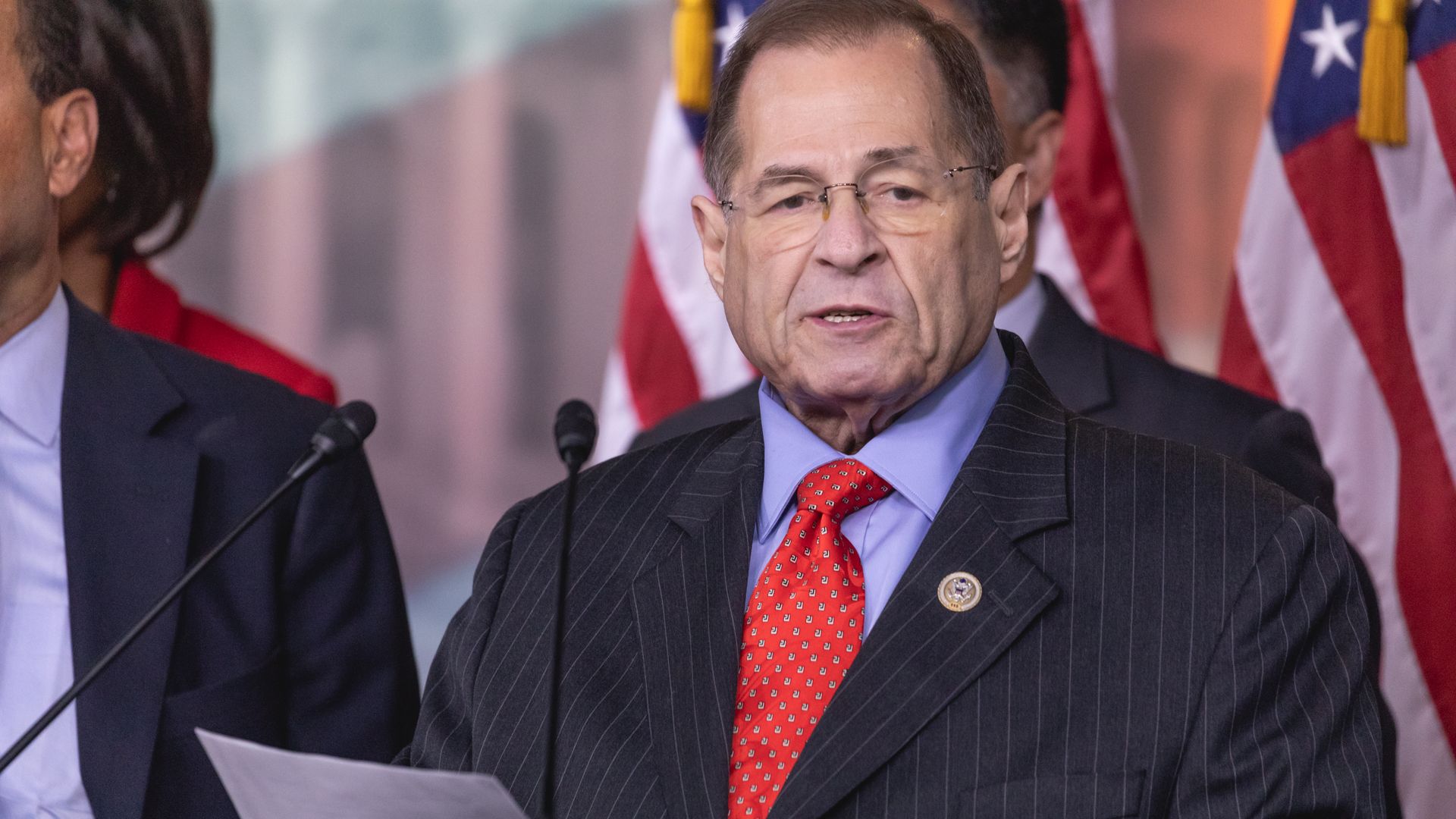
In response to Attorney General Jeff Sessions' resignation Wednesday at the request of President Trump, Rep. Jerry Nadler (D-N.Y.) tweeted: "Americans must have answers immediately ... Why is the President making this change and who has authority over Special Counsel [Robert] Mueller’s investigation? We will be holding people accountable."
Why it matters: Nadler is the top Democrat on the House Judiciary Committee and the likely future chairman of that committee now that Democrats have taken taken back the House. This means he could oversee a potential probe of Sessions' exit.
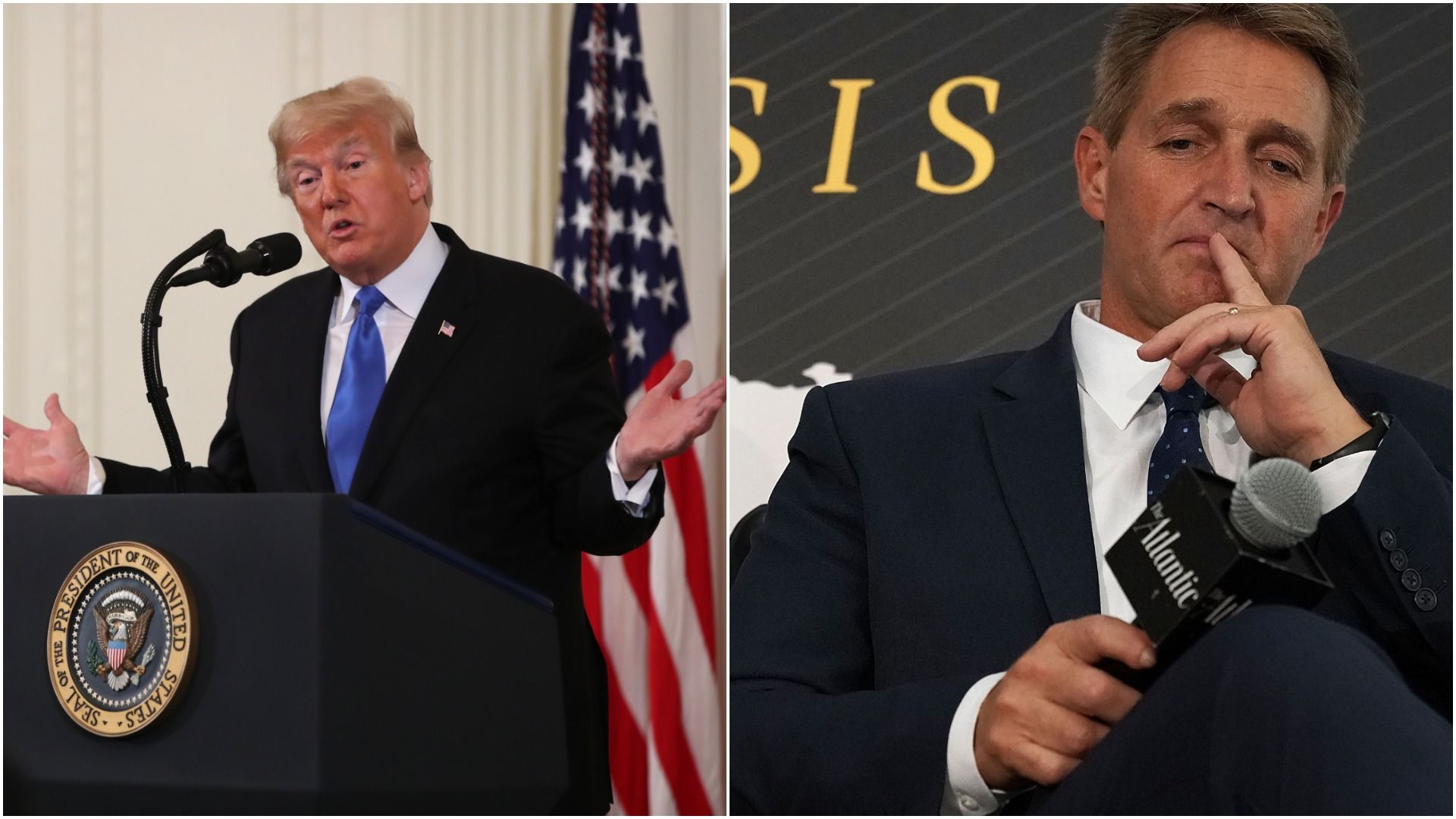
President Trump boasted today about driving Sen. Jeff Flake into retirement, saying that he did the country a "great service" by doing so. "I'm very proud of it."
Why it matters: Flake, a longtime Trump critic, announced his retirement in an emotional speech last year during which he targeted Trump as being responsible for the "flagrant disregard of truth and decency" in modern politics. Trump has also repeatedly attacked Flake as being "weak" and "toxic." Earlier today, Flake outlined his disappointment with Trump in a Washington Post op-ed where he urged the Republican Party to move beyond "the current cult of the president's personality."
Attorney General Jeff Sessions resigned on Wednesday, the latest in a growing list of prominent administration departures.
Why it matters: Sessions' exit came after months of public criticism from his boss. Such attacks on his own Cabinet members, especially when it was explicitly in reaction to Robert Mueller's Russia probe, was not normal.
President Trump said during a press conference on Wednesday that he would be open to raising some taxes, including on corporations, as part of a hypothetical compromise with Democrats to lower individual tax rates on the middle class.
Why it matters: Republicans repeatedly talked about how the corporate tax cuts of 2017 were "permanent," but that simply meant they didn't expire on their own. Like any tax law, they are always subject to legislative change.
Republicans have secured the Senate majority after a series of GOP upsets in key states across the U.S., including in red states such as Indiana and North Dakota.
Between the lines: There are 10 Senate Democrats running for re-election in states that President Trump won. Their challenges explain why Republicans are already projected to keep control of the Senate.
Rep. Ryan Costello (R-Pa.), who is retiring at the end of his term, blasted President Trump on Twitter during the president's press conference where he attacked Republicans who lost in Tuesday's midterm elections, saying the jab "angers me to my core."
The president named Republican losses by name including Reps. Carlos Curbelo, Barbara Comstock, and Mia Love.
In his first public appearance since Tuesday's midterm elections, President Trump praised Republicans for expanding their Senate majority and "significantly beating expectations in the House," but also spent time attacking Republican incumbents who distanced themselves from him and lost.
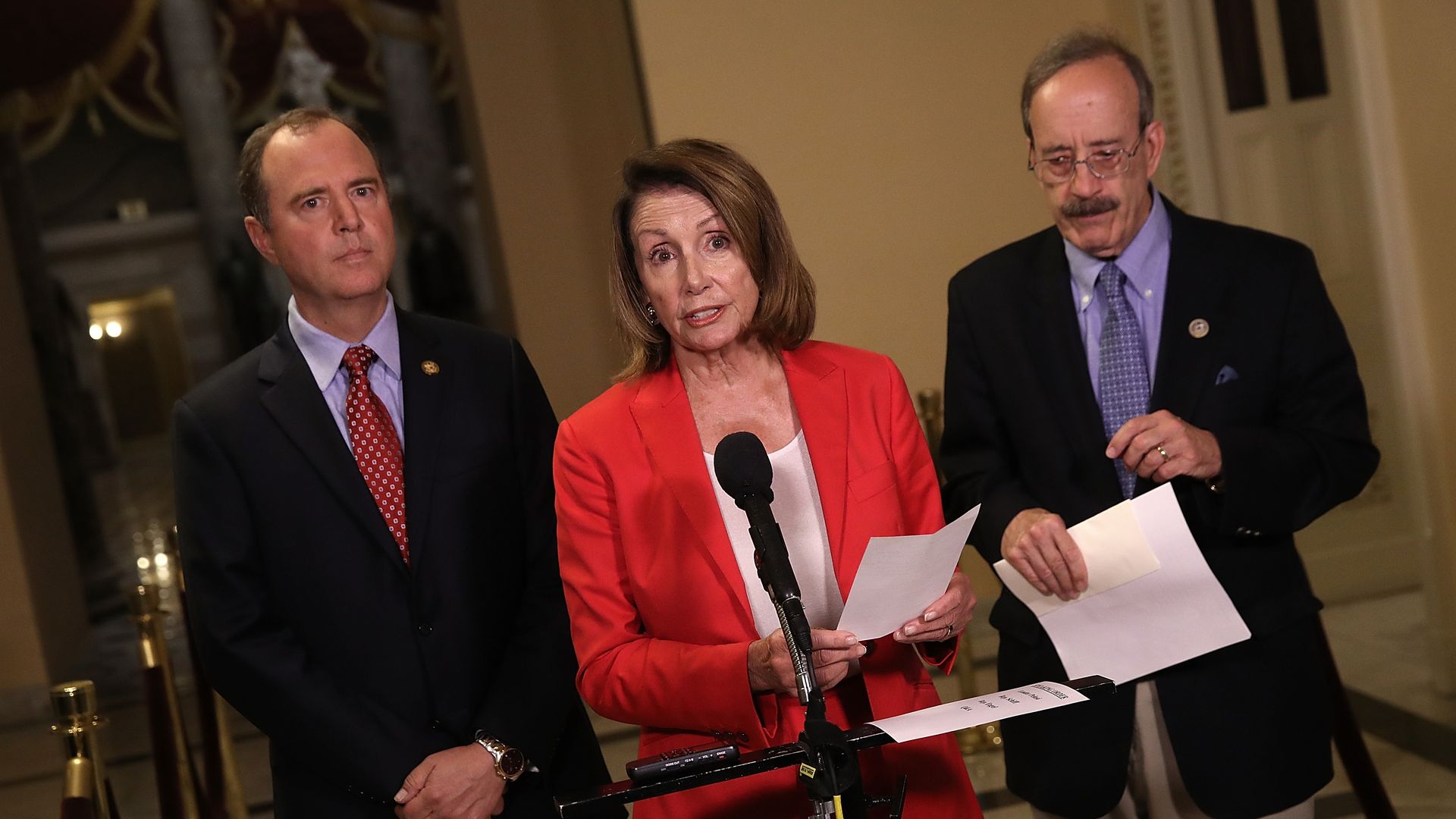
Congressional Democrats are going to have a prime seat at the national security table for the first time in eight years. Poised to take control of critical House committees are Eliot Engel (Foreign Affairs), Adam Smith (Armed Services), Nita Lowey (Appropriations) and Adam Schiff (Intelligence).
What to watch: House Democrats will likely focus on defining policy differences with President Trump — on climate change, nuclear nonproliferation, international alliances and human rights. How they advance this agenda will have a decisive impact on whether Democrats can turn national security into a winning issue ahead of the 2020 elections.
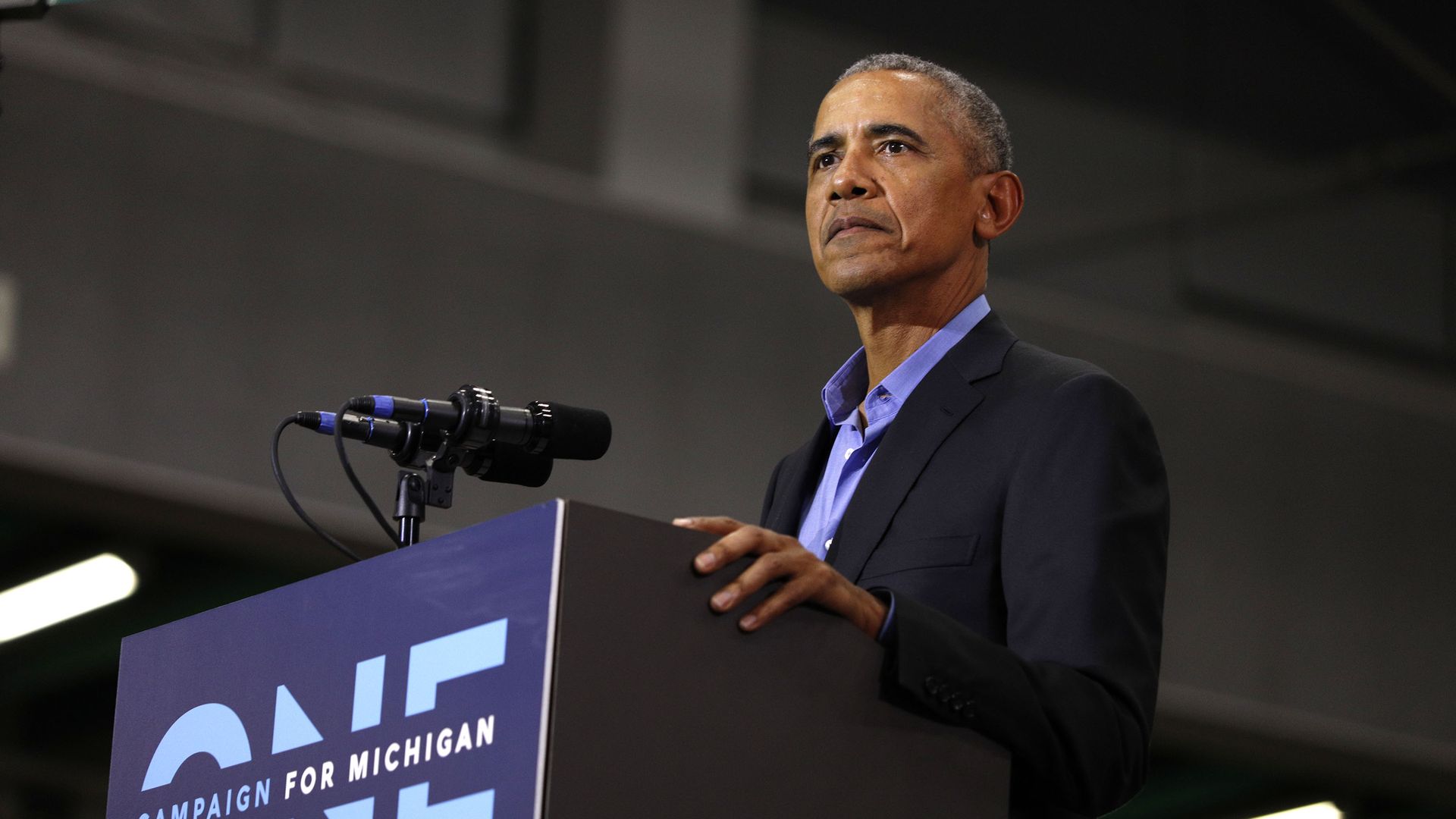
Former President Barack Obama released a statement Wednesday congratulating Americans who participated in yesterday's midterm elections, adding that Democrats' success in taking the House could signal "a return to the values we expect in our public life."
The backdrop: Obama engaged in a sort of proxy war against President Trump in the midterms' final sprint, holding multiple rallies across multiple states in the campaign's final days. His closing message often focused on the foundation that his administration laid for Trump's: "Right now, Republicans are all: 'Look, the economy is so good.' Where do you think that started? When did that start?"
As of 10:45am ET, Democrats are projected by FiveThirtyEight to pick up 34 House seats in the 2018 midterms. As of now they've flipped 28 — enough to seize control of the House.
By the numbers: Of those 28 House seats, 13 went for Clinton and 15 went for Trump. Of the Trump 14, he won 6 of them by more than 5 points. We profile them below.
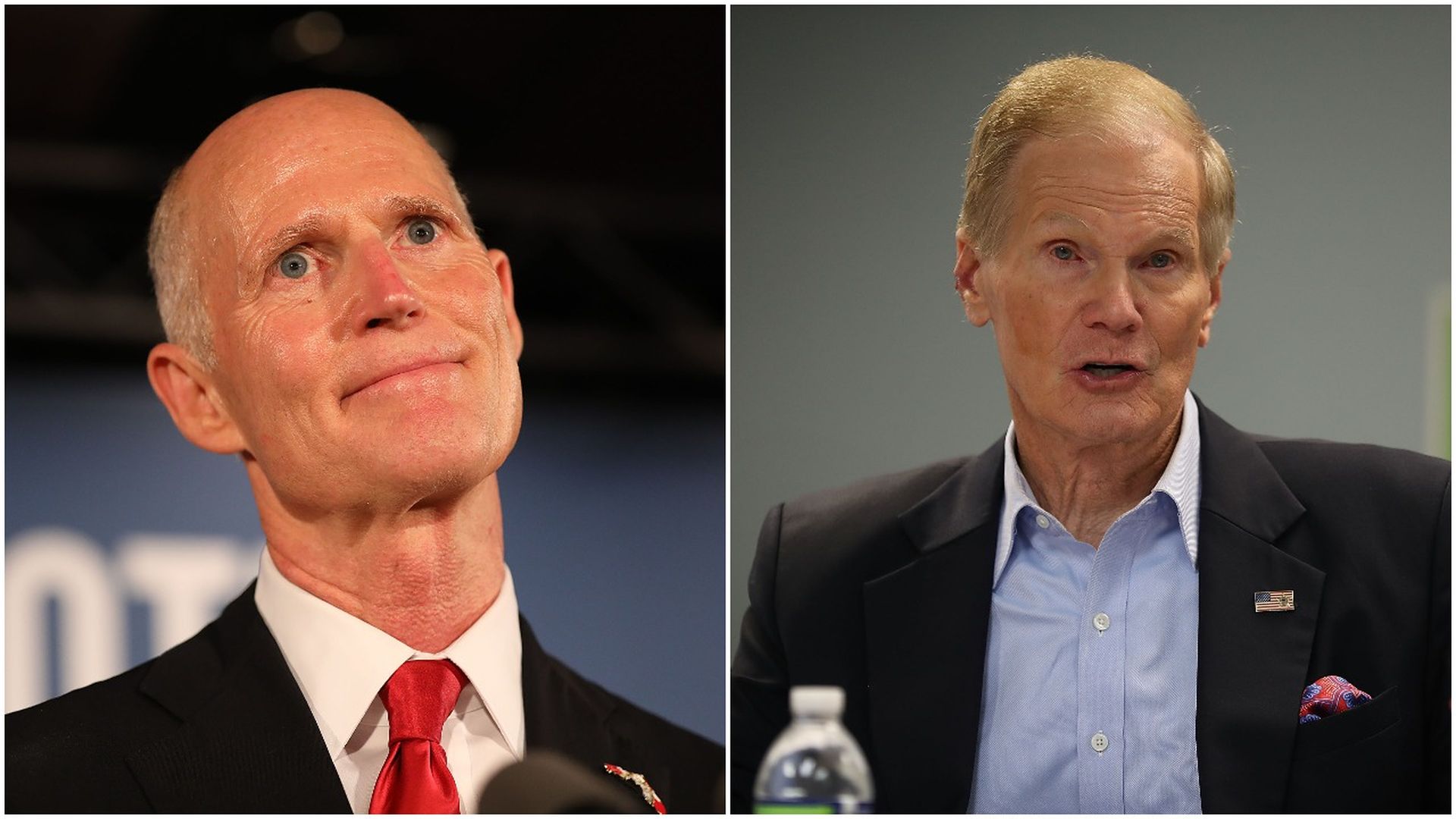
The Florida Senate race between incumbent Democratic Sen. Bill Nelson and former Republican governor Rick Scott will proceed to a recount, according to Nelson's campaign — though Scott declared victory last night.
The state of play: With 100% of precincts reported, Scott is leading Nelson 50.2% to 49.8% — a margin of about 34,500 votes. Florida state law requires an automatic recount when the margin of victory in a race is equal to or less than 0.5%.
Rep. Jim Jordan (R-Ohio) officially announced Wednesday that he will challenge Rep. Kevin McCarthy (R-Calif.) for House minority leader.
Why it matters: Jordan, the founder of the conservative House Freedom Caucus, told his colleagues in July that he was running to replace Paul Ryan as Speaker of the House. McCarthy has Ryan's endorsement and is a close confidant of President Trump, though conservative leaders have argued in a letter obtained by Axios that Jordan is the solution to "failed" Republican leadership, which has "proven that it’s part of the Swamp."
President Trump threatened that if a Democrat-led House "[wastes] Taxpayer Money investigating us...we will likewise be forced to consider investigating them...at the Senate level" in a Wednesday morning tweet.
"If the Democrats think they are going to waste Taxpayer Money investigating us at the House level, then we will likewise be forced to consider investigating them for all of the leaks of Classified Information, and much else, at the Senate level. Two can play that game!"
The big picture: Axios' Jonathan Swan reported in August that House Democrats were preparing a wishlist of investigations they hoped to initiate if they won the majority, which House Democratic Leader Nancy Pelosi confirmed was coming in her post-midterms victory speech, promising to restore "the Constitution’s checks and balances to the Trump administration."
The first Muslim congresswoman, first openly gay man elected governor, youngest woman ever elected to Congress, and more history was made Tuesday night in the midterm races.
The big picture: This was already teed up to be a major election, with Democrats poised to take the House and the country having the first chance since 2016 to send a message to Congress. But individual races opened the door for more diversity in national politics.
At least 128 women will be in the next Congress after Tuesday's midterm elections, breaking the 115th Congress' record of 112.
Why it matters: Women have flocked to run for office in the wake of President Trump's election, and the political gender gap is growing, with women increasingly siding with Democrats. A recent SurveyMonkey poll for Axios showed that a number of Democratic women have better favorability than Trump ahead of the 2020 elections.
The midterms produced a divided Congress that's emblematic of a split America, drifting further apart and pointing to poisonous years ahead.
The net result: Two parties with two wildly different bases and philosophies are pulling farther and farther apart — and are certain to double down on divisiveness heading into 2020.
Democrats have officially won control of the House, picking up at least 26 seats. They needed a net gain of 23 seats to win.
Why it matters: House Democrats will have the power to push back against President Trump and investigate his actions. Republicans have been bracing for a slew of investigations they think House Democrats will launch into Trump and those around him. And they'll have the power to introduce articles of impeachment against Trump — if they choose to do it.
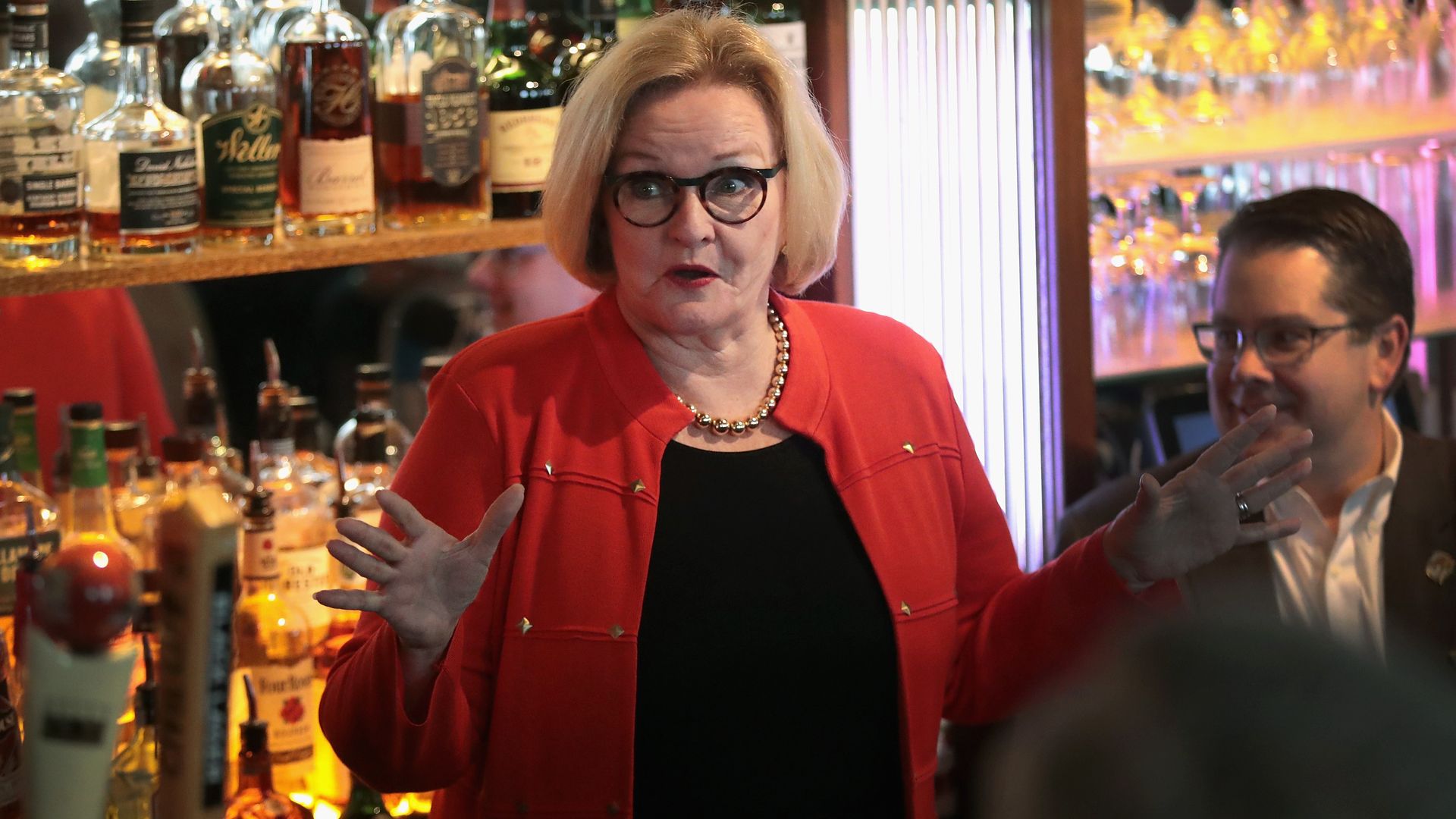
Sen. Claire McCaskill (D-Mo.) has conceded her Senate seat to the state's Attorney General Josh Hawley.
Keep the fire burning, because there is justice around the corner.
— Sen. Claire McCaskill on Tuesday night
The big picture: President Trump, who won the state handily in 2016, had two rallies in support of Hawley and other Republican candidates. The Republicans have flipped three Senate seats so far, including McCaskill's.
Republican Rep. Pete Sessions lost re-election Tuesday to Democrat Colin Allred in the race for Texas' 32nd district.
Why it matters: The district was considered a toss-up by Cook Political Report. President Trump, Vice President Pence and Donald Trump Jr. were among the high-profile Republicans who had campaigned for Sessions.
Sen. Ted Cruz has narrowly defeated Democrat Beto O'Rourke, defying all of the hype about whether Texas might turn blue. He had last-minute visits from both President Trump and Don Jr., which some Republicans think helped push him over the finish line.
Why it matters: There was an undeniable energy behind O'Rourke throughout the cycle, and that should give Republicans in the state some pause. But the polls, which consistently showed Cruz ahead, were ultimately right. Falling short of a win, Texas remains a Republican stronghold — even after O'Rourke raised a record $70 million in the 2018 midterm elections.
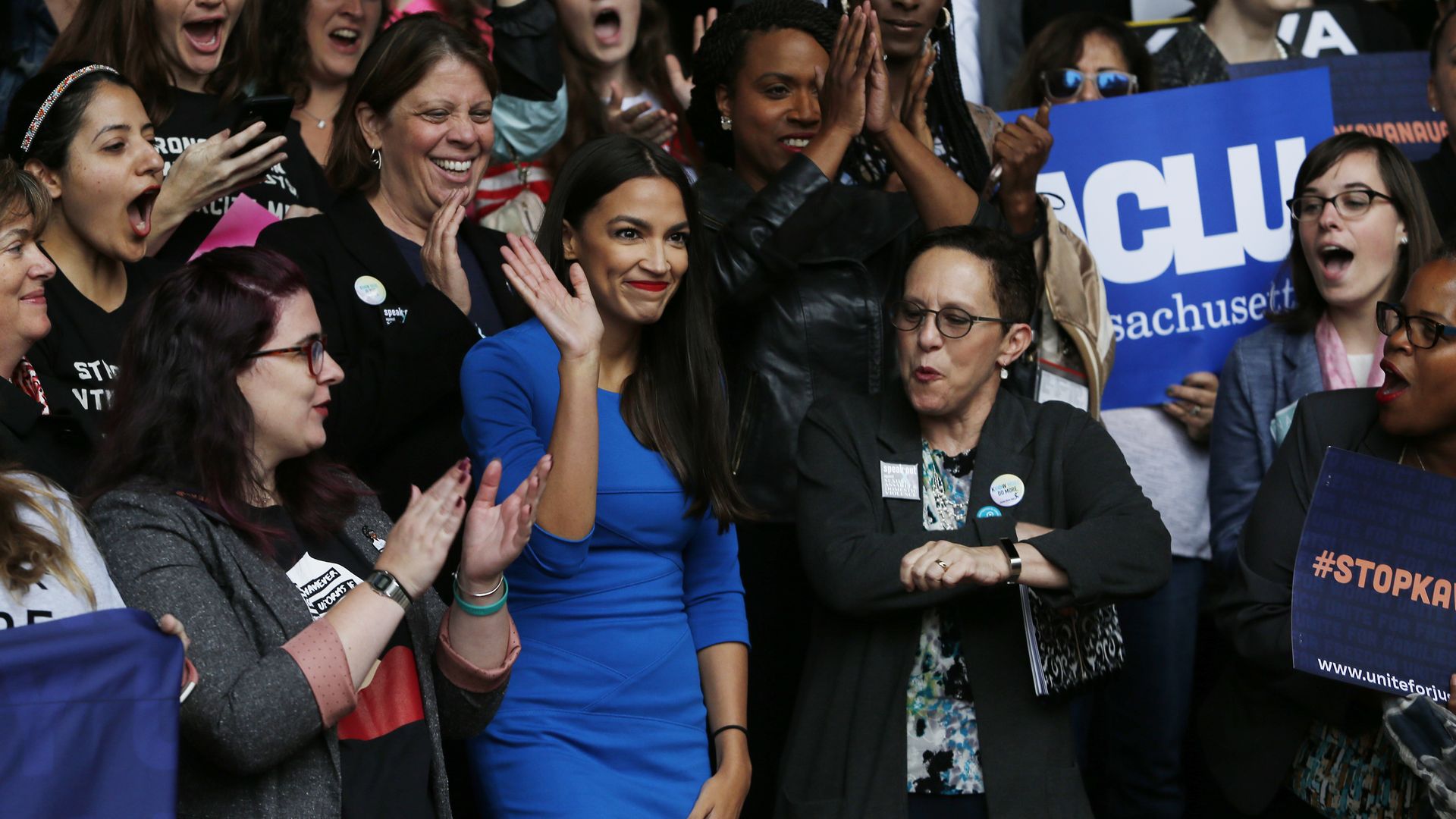
Democrat Alexandria Ocasio-Cortez has won New York's 14th district with 77% of the vote, making her the youngest woman ever elected to Congress at 29-years-old.
Why it matters: Ocasio-Cortez upset Rep. Joe Crowley, who was chair of the House Democratic Caucus, in the Democratic primary earlier this year. She was expected to win the seat over her Republican challenger Anthony Pappas. Ocasio-Cortez has sparked renewed energy in the far left of the Democratic party.
State Senator Jennifer Wexton (D-Va.) has won the election in Virginia's 10th district, unseating incumbent Republican congresswoman Barbara Comstock.
Why it matters: Comstock is the first incumbent of the night to lose in a House election, but she was considered one of the most vulnerable Republicans all cycle long and the NRCC was the only major GOP group to spend in her favor this cycle.