You already know what you think about the midterms, or are smarter than to predict. So here's a cheat sheet for what comes next.
The state of play for President Trump's next 30ish hours: Lose as expected, and he'd face a narrowly controlled Democratic House and a friendly Republican Senate with the ability to keep confirming judges. Lose by a landslide, and the House would get more hostile, and even the Senate would be at risk. But win by any margin, and he could get even more aggressive on tax cuts, health care and immigration, with only congressional fears of 2020 in the way.
Three in 10 Democratic women running for the House are in races that the Cook Political Report rates as "toss-ups" or better, compared to just one in 10 Republican women in House races, according to an analysis by NPR. The analysis only looks at female candidates who aren't incumbent House members.
Why it matters: Although there's been a record number of female candidates and nominees this cycle, there's a large gap between the parties — 42% of all Democratic nomineesfor the House, Senate, and governor are women, compared to just 14% of Republican nominees. This latest NPR analysis suggests there will be an influx of women in Congress, but mostly in the Democrats' caucus.
President Trump told reporters on Monday that he probably would not have a meeting with Vladimir Putin in Paris next week, but that they would meet at the G20 summit in Argentina later this year.
Why it matters: In late October, National Security Adviser John Bolton said that Trump and Putin would meet in Paris during the 100th anniversary of the armistice ending World War I. The last time Trump met with Putin, he was widely criticized for flattering Putin and for saying that he didn't see "any reason" for Russia to interfere in the U.S. elections. Trump also said that he will announce his new UN ambassador by the end of this week.
"Is this person a citizen of the United States?" This is the controversial question the Trump administration will defend adding to the 2020 census questionnaire in a closely watched federal trial starting Monday in New York City.
Why it matters: This could determine the electoral map for future state legislative races and federal elections. Census data is used to apportion congressional seats and electoral college votes that determine the winner of presidential elections, as well as the distribution of federal funds among states.
Just 51% of Americans said they have faith in the country's democracy, and 37% say they have lost faith in democracy, according to a new Axios/SurveyMonkey poll conducted in late October.
Why it matters: It suggests that recent political turmoil has caused people to doubt the very foundation of American society, particularly leading up to election day.
President Trump would lose the 2020 election against every woman mentioned as a possible Democratic opponent, according to an Axios poll by SurveyMonkey, aired first on HBO Sunday night.
Why it matters: Trump is underwater with women voters (64% of women view him unfavorably), and particularly among white suburban women — a group that will be critical in 2020. Look for Democrats to turn to their top 2020 female candidates after Tuesday’s election. A record number of women are running and a record number of women are expected to vote and win come Tuesday.
For the Axios HBO series, we interviewed people who've negotiated with Donald Trump throughout his life in business and in politics. One very Trumpian story came from Peter Osnos, the editor of Trump's 1987 book "The Art of the Deal."
Here's Osnos to Axios/HBO: "When the idea of meeting with Trump came up ... I thought to myself how do we impress Donald Trump? So I went to my shelf and took 'Generations of Winter' by the wonderful Russian writer Vasily Aksyonov. Nice big fat Russian novel."
President Trump told "Axios on HBO" his administration is looking seriously at antitrust investigations of Google, Facebook and Amazon. In the next breath, he argued they are great companies that he wants to help.
Why it matters: Trump's inconsistent approach toward Silicon Valley has had the world's most powerful technology companies on edge — and that's exactly where he wants them. But his wavering stance makes it difficult to set national priorities around serious tech issues, such as consumer privacy, data security and competition.
In August, Saudi-led coalition forces used an American bomb to blow up a school bus in Yemen, reportedly killing at least 51 people, including 40 children.
What he's saying: In his first public comments on that attack, President Trump told "Axios on HBO" that the killings were "a horror show." But he declined to say if it's made him reassess American arms sales to the Saudis.
President Trump has made more false or misleading claims in the last seven weeks leading up to the midterm elections than he did in the first nine months of his presidency, according to the Washington Post's Fact Checker.
By the numbers: In the first nine months of his administration, Trump made 1,318 false or misleading claims, or an average of five a day. In the last seven weeks, as part of his throw-it-all-at-the-wall midterm strategy, that number has ballooned to 1,419 — or 30 a day. Through Oct. 30, the WashPost puts Trump's total at 6,420 in 649 days.
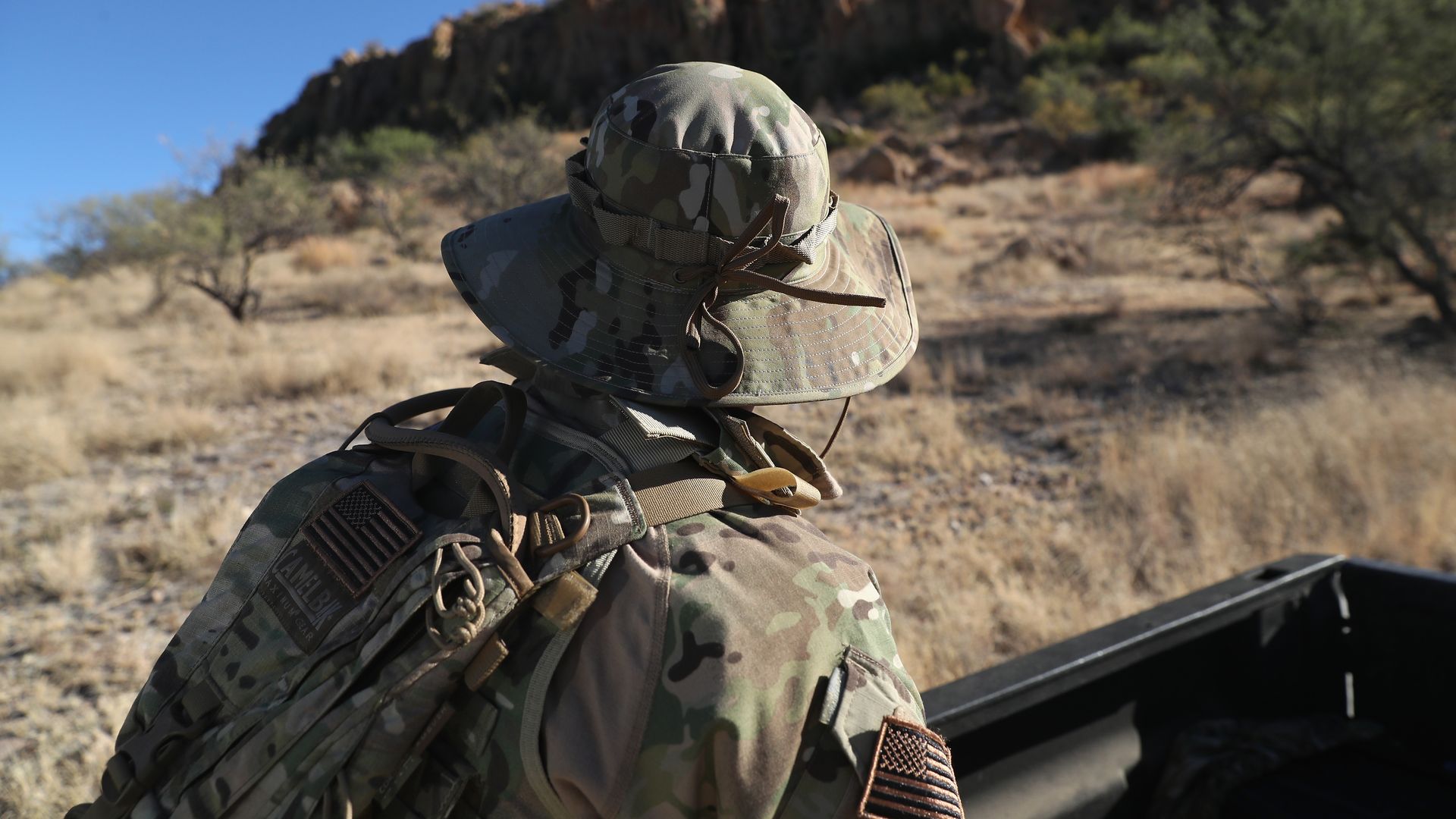
More than 100 volunteers from U.S. civilian militia groups are en route to the southern border in an effort to enforce the country’s immigration laws, as thousands of Central American migrants make their way through Mexico to seek asylum in the U.S., reports the Washington Post.
The big picture: The volunteers and so-called “border vigilantes” were motivated by President Trump’s constant warnings that the migrant caravan posed a threat to the country’s national security. Trump has also claimed that "criminals and unknown Middle Easterners" are among those traveling. “My phone’s been ringing nonstop for the last seven days. You got other militias, and husbands and wives, people coming from Oregon, Indiana. We’ve even got two from Canada,” Shannon McGauley, president of the Texas Minutemen, tells the Post.
Corporations in the Trump era have not faced the same level of policing by the Securities and Exchange Commission and the Justice Department that they did under the Obama administration, an investigation by the New York Times has revealed.
The big picture: Government data shows that across the board, there has been a sharp decline in financial penalties against banks and corporations accused of misconduct. According to the Times, this mirrors the Trump administration's approach to rolling back regulations and belief that corporate penalties "unfairly punish a company’s shareholders for the misconduct of employees."
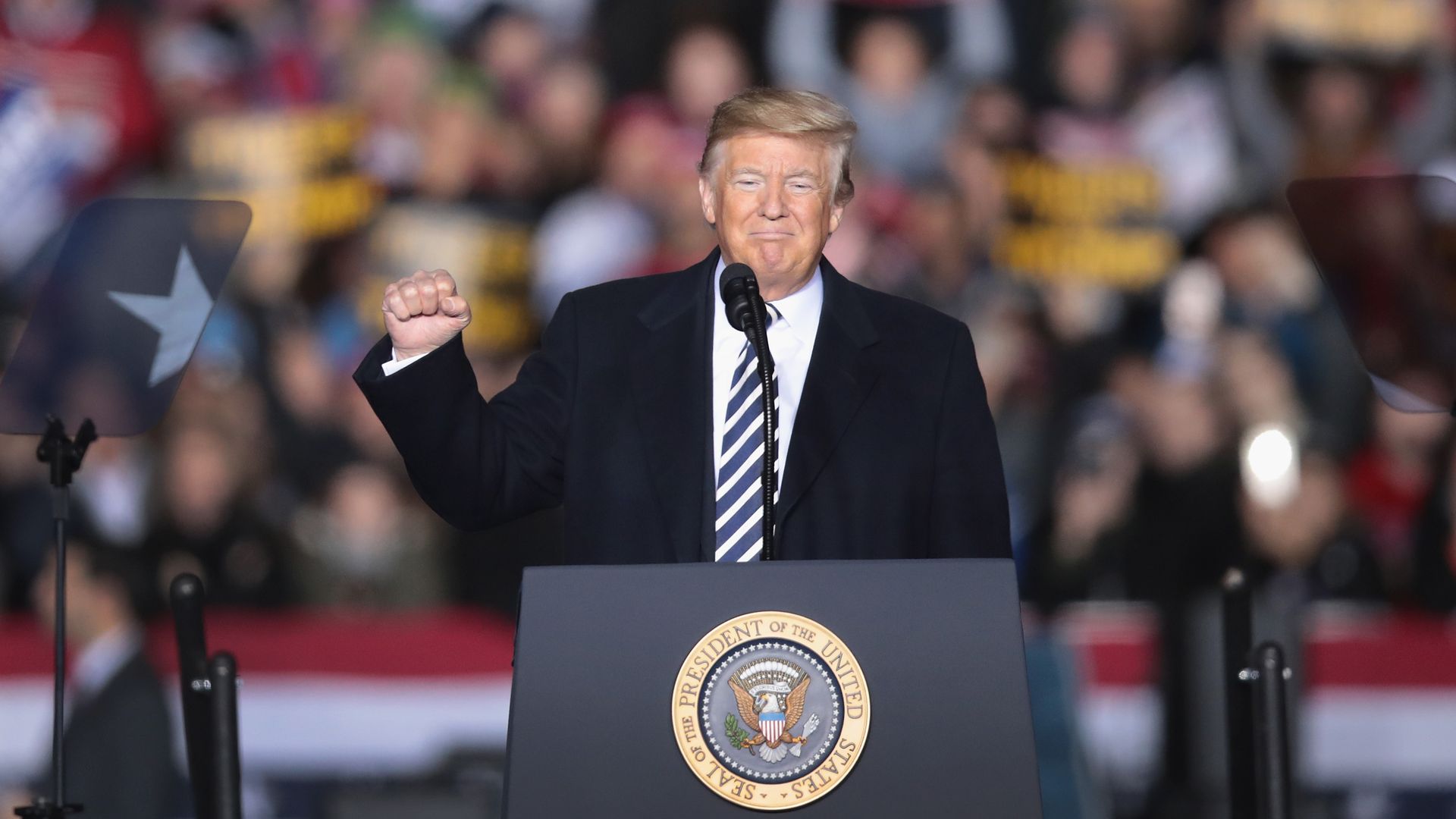
Talk show host Rush Limbaugh, a staunch supporter and "friend" of President Trump, will join the president Monday night at a rally for Republican Senate candidate Josh Hawley in Missouri.
Why it matters: This is Trump's final campaign rally for the midterm season. A new poll on Saturday showed Claire McCaskill, one of the most vulnerable Democratic incumbent senators, statistically tied with Hawley.
Update [Nov. 5]: An earlier version of this story said that Fox News host Sean Hannity would also be joining Trump at the rally, as noted in the Trump campaign's announcement. However, Hannity has since tweeted that he is not campaigning with the president, but "will be doing a live show from Cape Girardeau and interviewing President Trump before the rally."
Yes, but: Those surveyed in both polls said they are satisfied with the country's booming economy under President Trump. And as the Post notes, midterm elections are typically viewed as a referendum on the sitting president and "tend to reflect views of the economy."
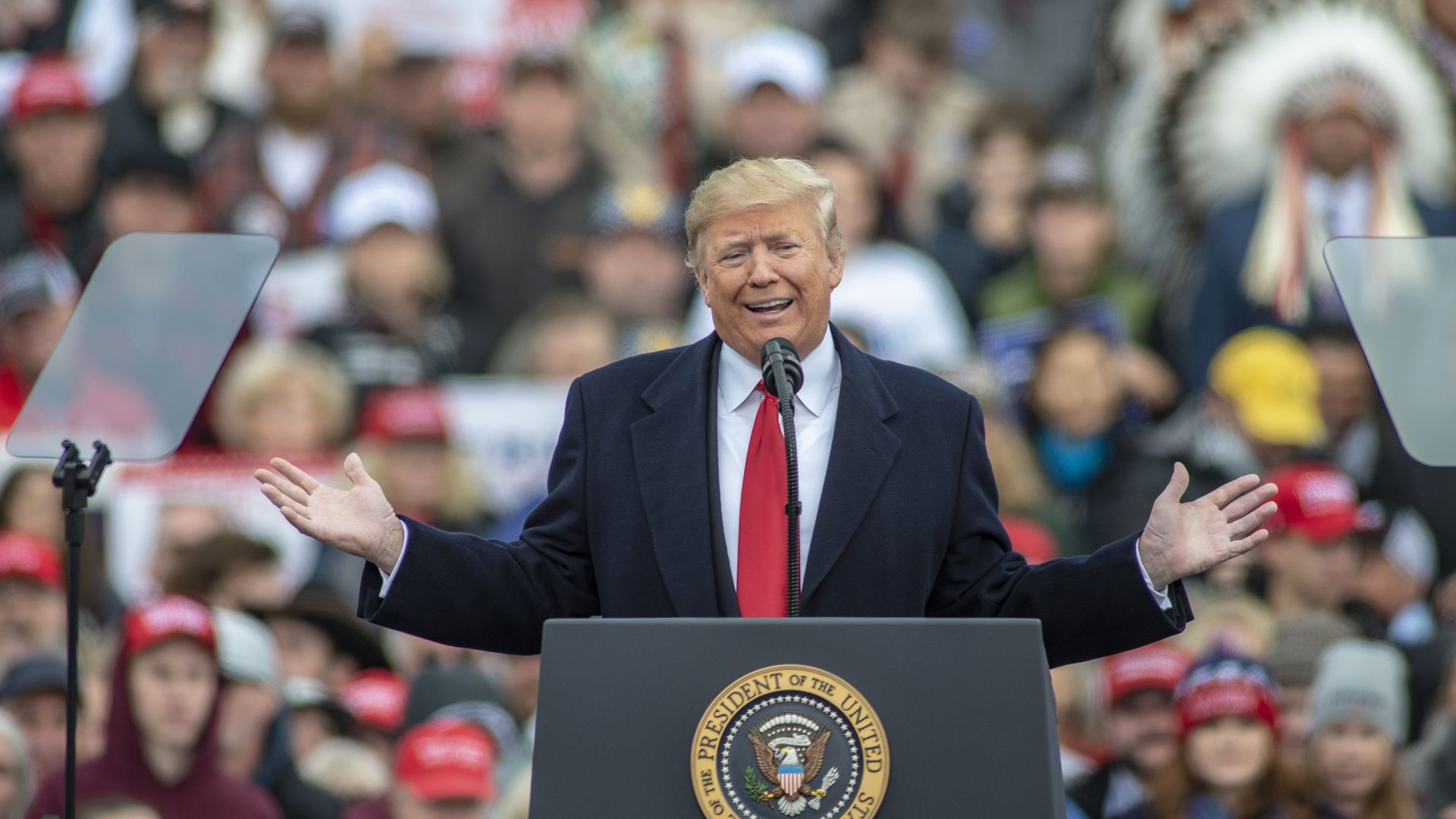
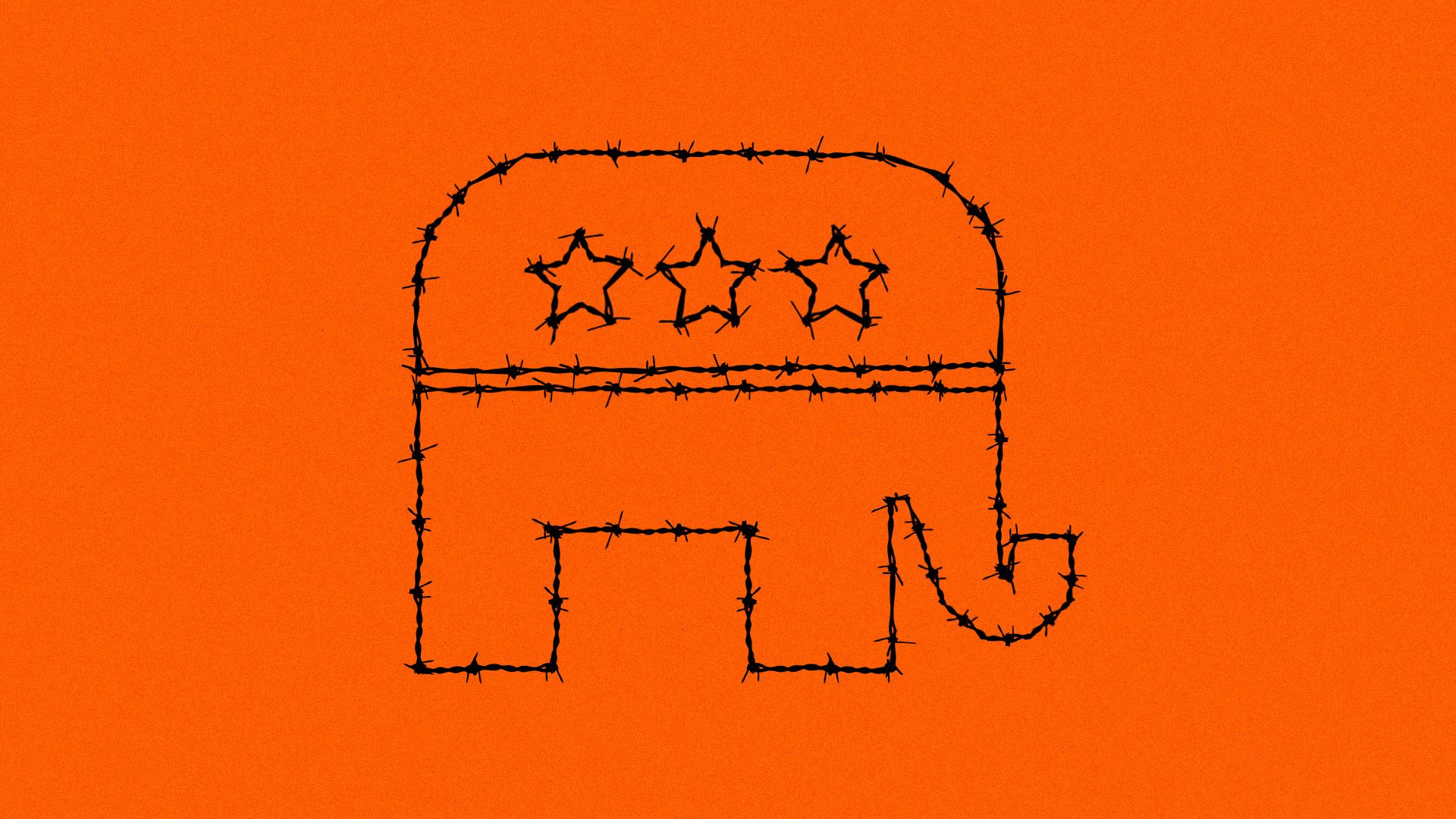
At a rally in Montana yesterday, President Trump said when he turned to the fear-the-caravans part of his speech: "We have our military, now, on the border. [Cheers.] And I noticed all that beautiful barbed wire going up today. ... Barbed wire, used properly, can be a beautiful sight." Trump repeated his ode to barbed wire during a rally in the Florida Panhandle last night.
Why it matters: This is a fitting coda to a barbed strategy of choice, not circumstance. Imagine if Trump had done the unthinkable — chucked the fear and loathing bit and crusaded across the country thundering about promises made, promises kept and an American economy on fire.
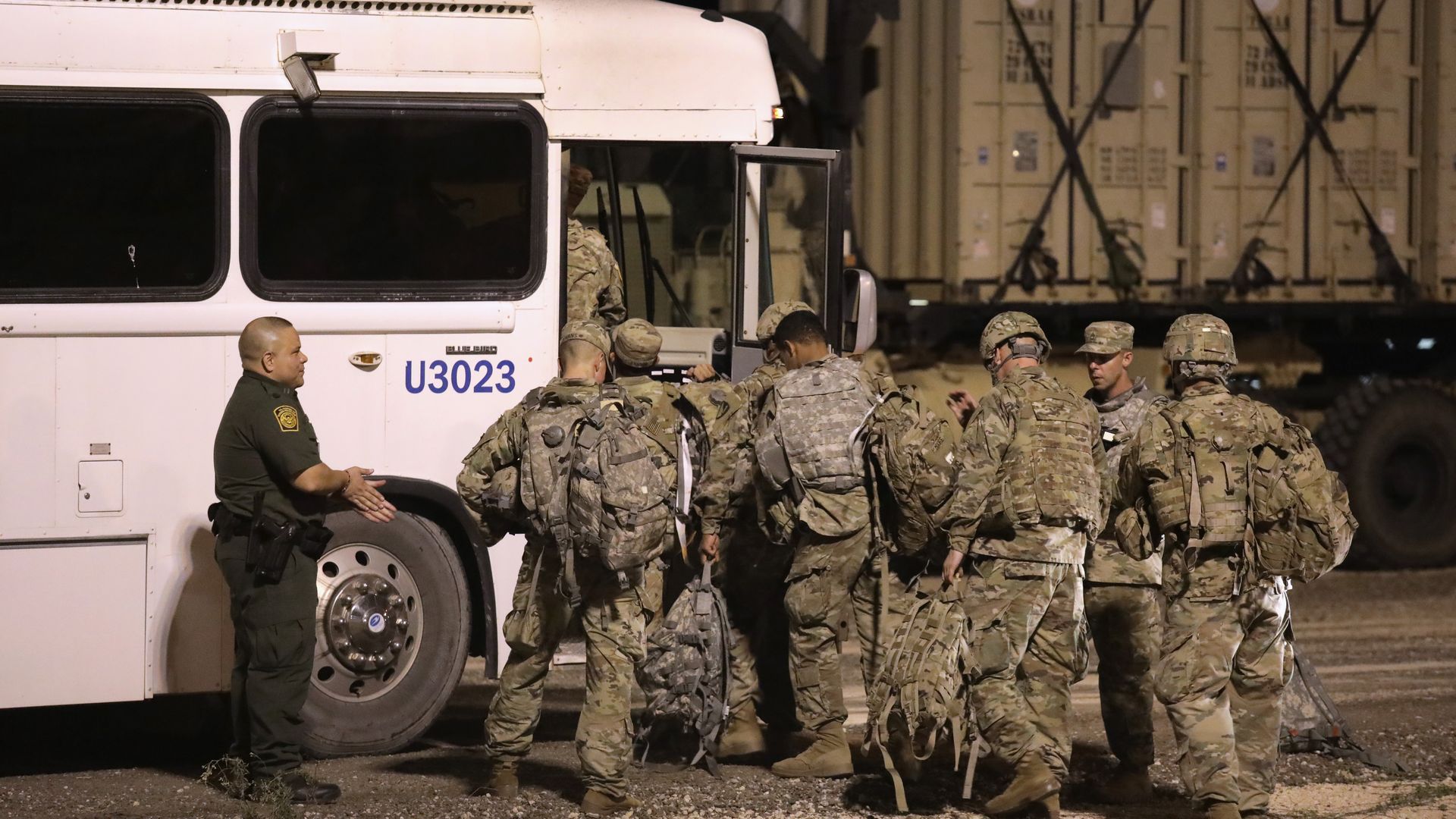
President Trump's plans to send as many as 15,000 troops to the southern border could cost more than $200 million by year-end, according to analyst and Pentagon estimates reported by the Washington Post.
The big picture: The added expenditure, which is just a fraction of the $716 billion the U.S. spends on defense each year, comes at a time when the government is operating under a 17% spike in the federal deficit — the largest increase in six years. Per the Post, Trump has ordered the Pentagon to cut $33 billion from its 2020 budget.