Three immigrant minors in government custody who had crossed into the U.S. without their parents are confirmed to have the novel coronavirus, according to a statement by Health and Human Service's (HHS) Office of Refuge Resettlement (ORR).
Between the lines: Of the roughly 3,500 children in ORR’s care, these are the first with confirmed cases of coronavirus. HHS had earlier stopped sending immigrant minors to shelters in California and Washington state, and now has stopped placing migrant children in New York as well.
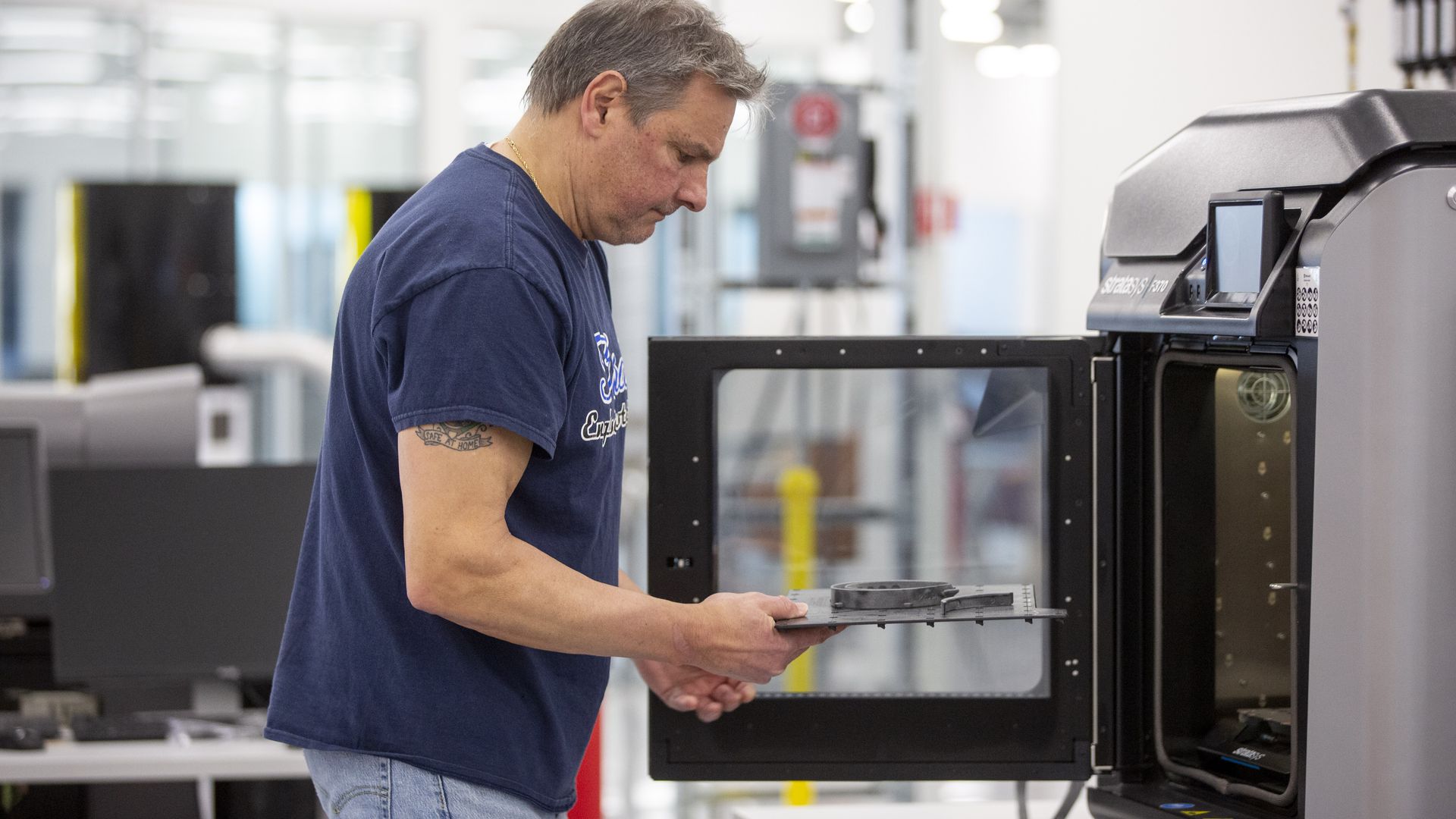
The nationwide shortage of medical equipment to fight the coronavirus pandemic seems like a breakthrough opportunity for 3D printing technology. But in this urgent crisis, its uses are limited.
Why it matters: America needs to manufacture tens of thousands of ventilators and billions of face masks and other protective gear in the next few weeks, and then distribute them in a hurry to hospitals around the country to ward off the worst-case public health scenarios.
The United States on Thursday reported the most coronavirus cases in the world for the first time, over China and Italy with at least 82,404 infections and more than 1,000 deaths, according to data from Johns Hopkins.
Why it matters: From the beginning, the U.S. — with a population of more than 325 million — has repeatedly underestimated and reacted slowly to the coronavirus, prolonging its economic pain and multiplying its toll on Americans’ health.
For weeks, hospitals have been requesting federal aid to help cover soaring costs associated with coronavirus testing and treatment. Dan and Axios' Bob Herman discuss what the hospitals got and why it matters.
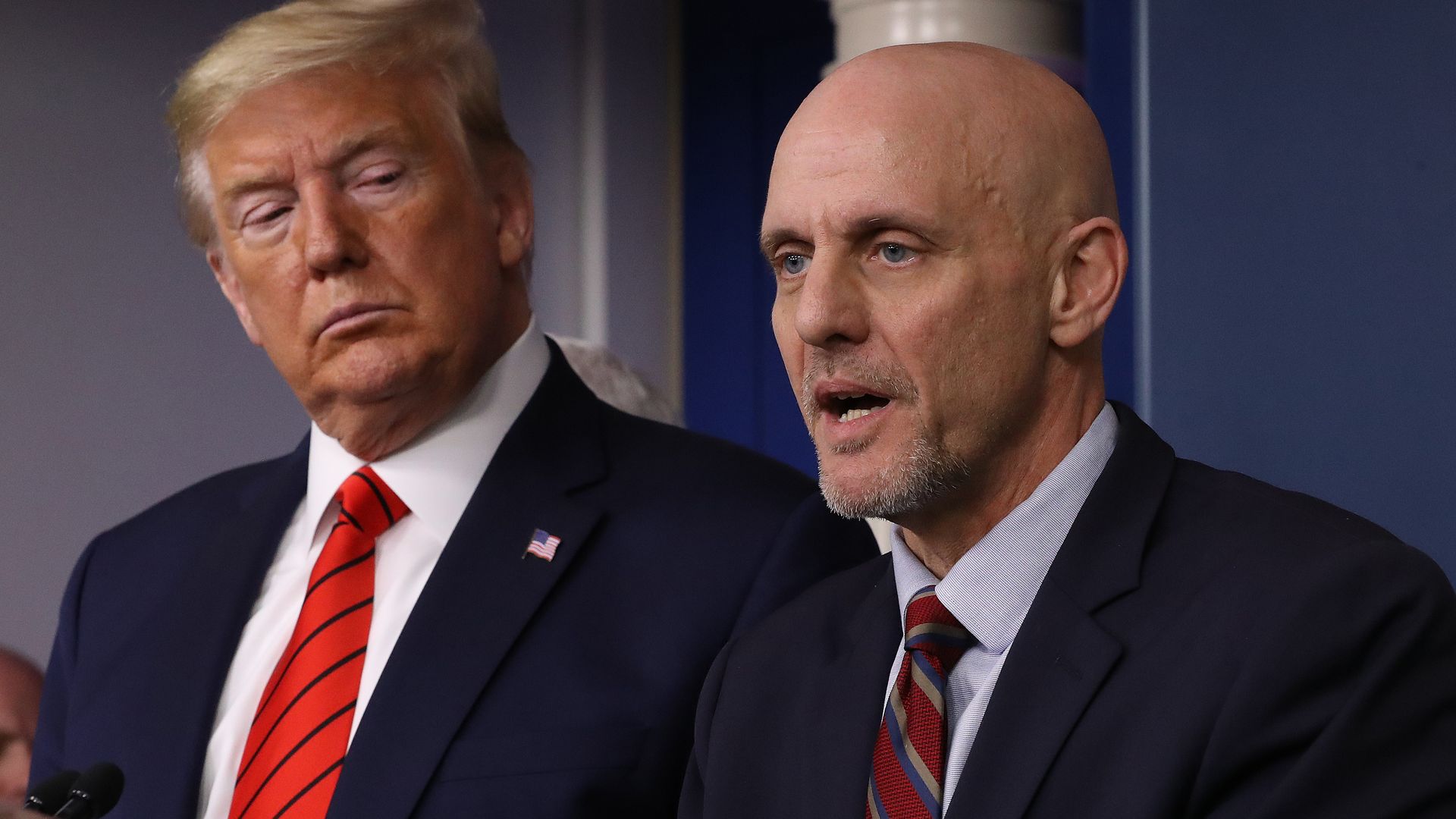
When an experimental coronavirus treatment received a special designation from the Food and Drug Administration on Monday, it came as a surprise to the government's top health care officials — including the FDA commissioner.
Why it matters: Top officials aren't normally involved in everyday regulatory decisions. But this particular designation was particularly controversial, as critics quickly questioned whether it was giving an unfair financial advantage to one drugmaker in the midst of a pandemic.
Nearly every segment of the media and entertainment industry, including movies, television, radio, news outlets and more, says it feels at least somewhat relieved by Congress' $2 trillion coronavirus stimulus package that the House is expected to vote on Friday.
Why it matters: The media and entertainment sector is heavily reliant on out-of-home venues, freelancers and in-person staffing. As a result, the industry has been completely upended by the COVID-19 pandemic.
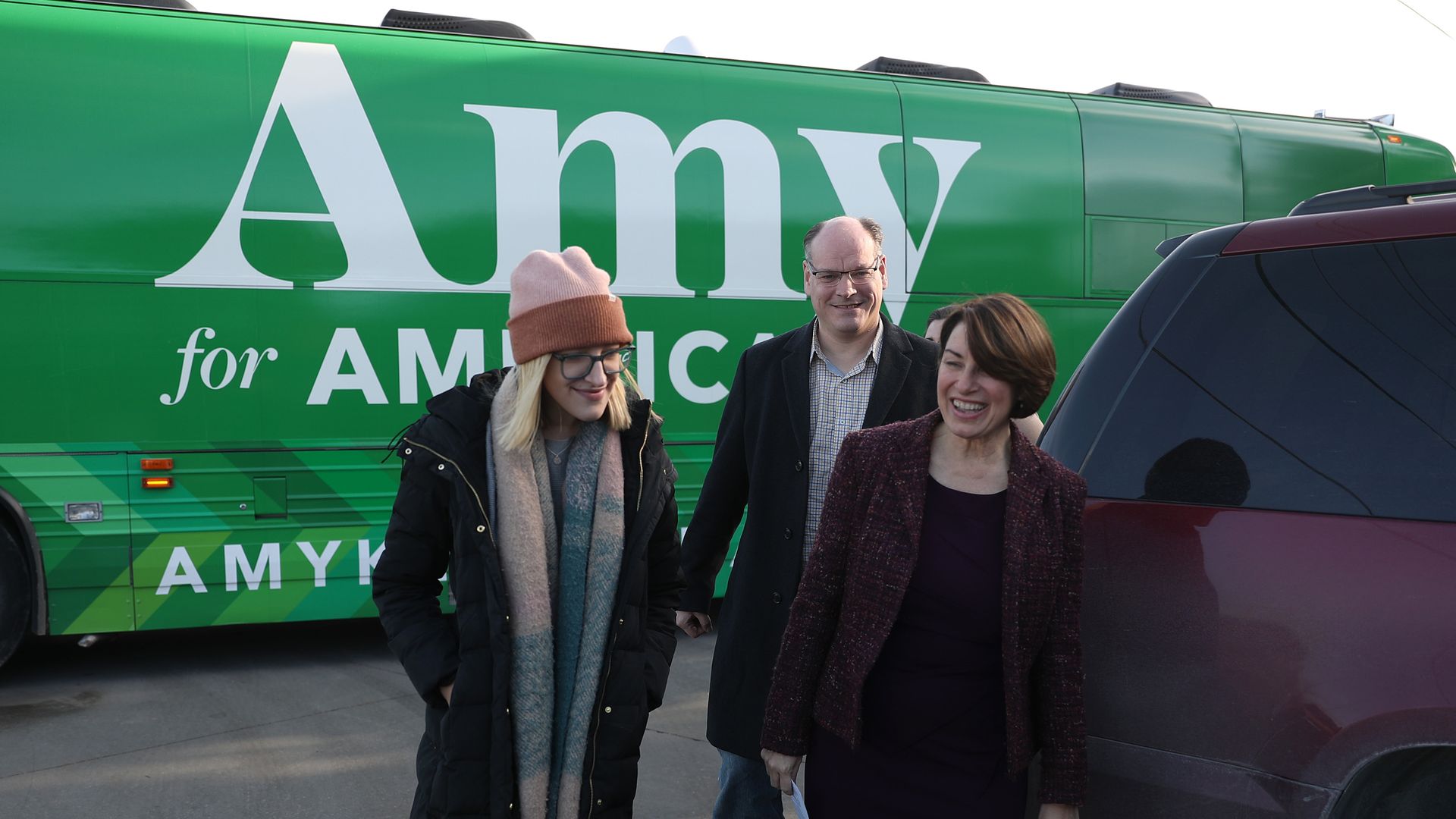
Sen. Amy Klobuchar (D-Minn.) announced Monday that her husband, John Bessler, has been released from the hospital after testing positive for coronavirus.
The latest: "Thanks to all who sent kind words and prayers for my husband John," Klobuchar said in a statement. "He has coronavirus and has been in the hospital for pneumonia and low oxygen. He took a good turn, was just released and is now recovering at home. Thanks to those who cared for him and for all front line health care workers."
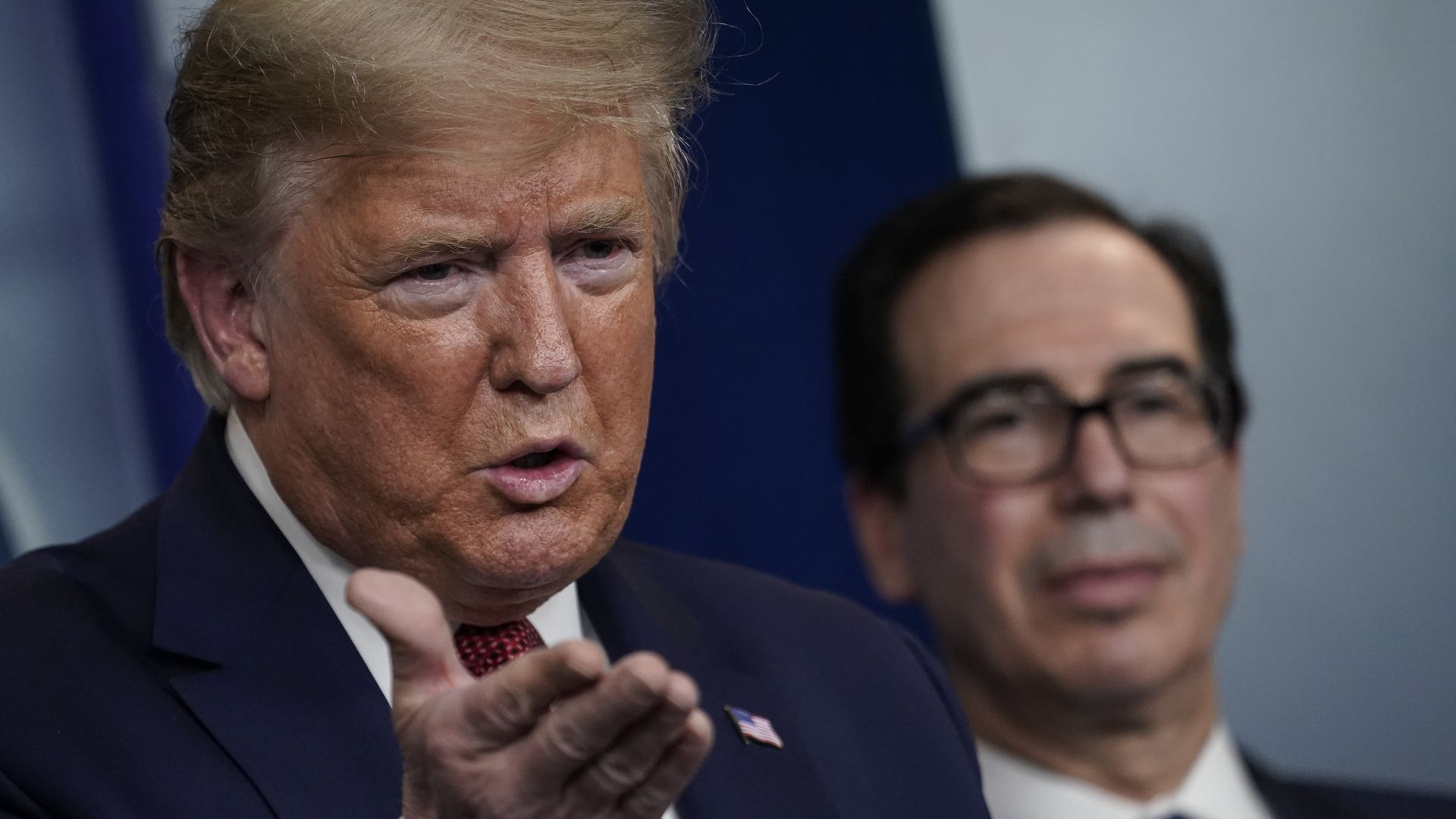
The Trump administration is developing a plan to label counties across the country as "high-risk, medium-risk, or low-risk" areas for the spread of the coronavirus, President Trump said in a letter to the nation's governors on Thursday.
Why it matters: Against the warnings of health experts, Trump is pushing for parts of the country to lift social distancing restrictions over the next few weeks and months, believing that the economic toll of an extended quarantine will be more damaging than the virus itself.
One of the biggest silver linings of the current crisis is the fact that the U.S. has the deepest capital markets in the world.
Why it matters: The stock and bond markets are places for people to store their wealth in case they need it in the future. We're currently experiencing a major global crisis in which millions of individuals and businesses need liquidity. By selling investments, those fortunate enough to have stored wealth can access much-needed cash almost immediately.
We've gone on holiday by mistake. And we're going to have to stay here for a while.
The big picture: During normal, scheduled holidays — the period between Christmas and New Year's, for instance, or all of August in France — GDP plunges to well below normal levels, no one much minds, and then economic activity bounces happily back again.
After a New York Times tweet on Wednesday suggested that those working from home leave their kids and pets out of work video conferences, Twitter erupted with rebukes.
Why it matters: Most of corporate America is adjusting to working from home right now, with many workers also managing kids who are home from school.
The world is hurting right now, and the sports industry is no exception. But the feeling that "we're all in this together" is very real at the moment and worth recognizing. Amid the darkness, there is light.
What they're saying: Joe McLean, a wealth manager for some of the NBA's biggest stars, tells Axios by email that "literally 100%" of his clients have inquired about how much they can afford to donate and the best places to direct the funds.
The Trump administration did not follow a National Security Council "playbook" detailing how the federal government should respond to global pandemics, Politico's Dan Diamond and Nahal Toosi report.
Why it matters: Based on recommendations from the document, the government should have started gathering personal protective equipment like masks and gloves at least two months ago in preparation for coronavirus.
Online grocery shopping has had a renaissance over the past month as the coronavirus outbreak has sequestered more people indoors.
The state of play: The number of people who say they are doing more grocery shopping online has risen from 11% on March 1 to 41% on March 22, fresh data from CivicScience shows.
Congress' big stimulus package will provide more than $100 billion and several favorable payment policies to hospitals, doctors and others in the health care system as they grapple with the coronavirus outbreak.
The big picture: Hospitals, including those that treat a lot of rural and low-income patients, are getting the bailout they asked for — and then some.
Even if you’re able to get tested for the coronavirus, it’ll still take about a week to get the results back — which means the U.S. still doesn’t have a real-time handle on the number of infected people.
Why it matters: We need to know where the virus is spreading in order to get a lid on those outbreaks before they become catastrophic.
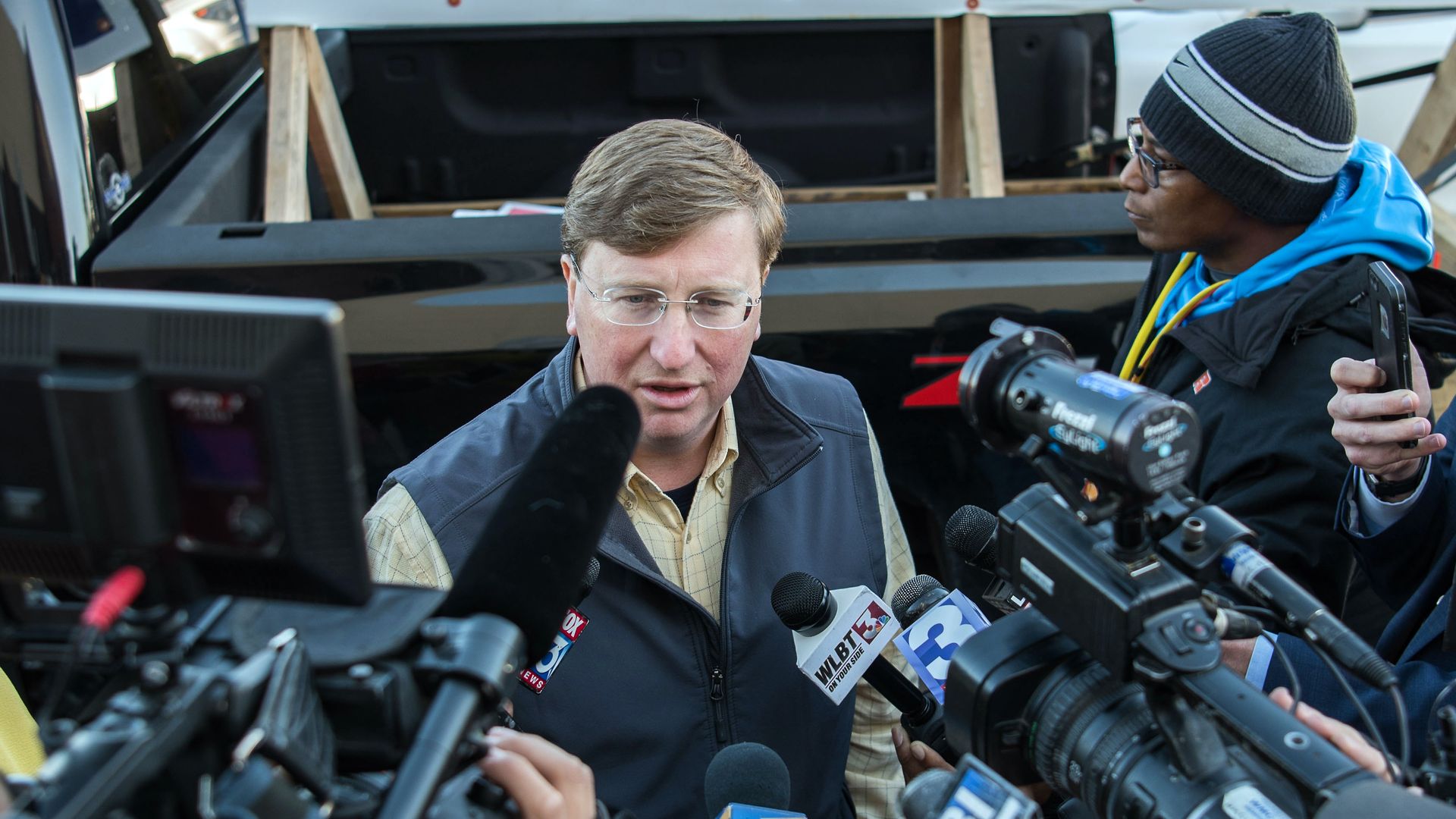
Mississippi Gov. Tate Reeves (R) said in a Twitter post Wednesday that he rejects "dictatorship models like China," a day after he signed an executive order in response to the novel coronavirus.
Details: Reeves' order Tuesday aims to limit people's physical interactions, but the Jackson Free Press notes it "seems to declare that most types of businesses in Mississippi are 'essential' and thus exempt from social-distancing requirements," including public and private industries and institutions. The move caused confusion as to whether it overrides stay-at-home orders issued by local authorities, Mississippi Today reports.
Prisma Health, the largest nonprofit health group in South Carolina, announced Wednesday that it's developed a device that will enable one ventilator to support up to four patients being treated for the novel coronavirus.
Why it matters: Ventilators are critical in helping patients in the most severe cases of COVID-19 to breathe. But they're in short supply as demand grows, with the number of coronavirus cases increasing as U.S. testing capacity expands. The virus had killed more than 1,000 people and infected 69,000 others in the U.S. by late Wednesday.
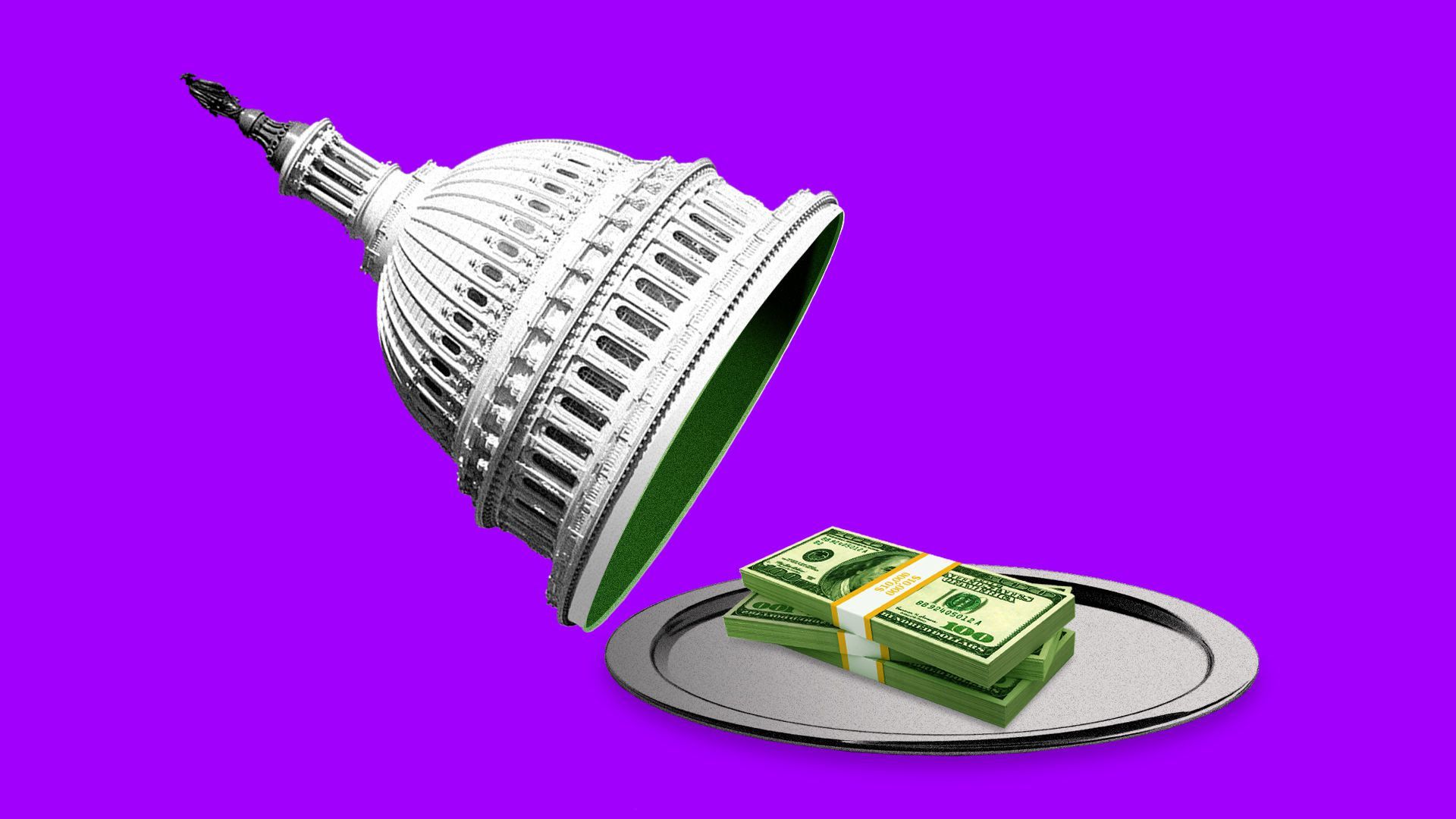
Why it matters: The roughly $2 trillion COVID-19 relief package includes thousands of dollars in direct payments to most Americans — millions of whom face unemployment related to the spread of COVID-19 — as well as a $500 billion loan fund for large corporations and a $367 billion loan program for small businesses.
Congress' $2 trillion coronavirus stimulus package is the rare legislative agreement that will have an immediate — and lasting — impact on ordinary citizens across the country.
Why it matters: The 883-page bill, titled the "CARES Act," includes thousands of dollars in direct payments to most Americans, and huge loan packages designed to help keep small businesses and corporations afloat.
If President Trump follows through on his statements that he wants to "open" the U.S. up again, an already patchwork shield of state "stay at home" orders could look like even more of a patchwork.
The big picture: As of Wednesday night, just 21 states have ordered people to stay at home, and most of those are states with Democratic governors. Only six — Ohio, Indiana, Idaho, West Virginia, Massachusetts and Vermont — have Republican governors.
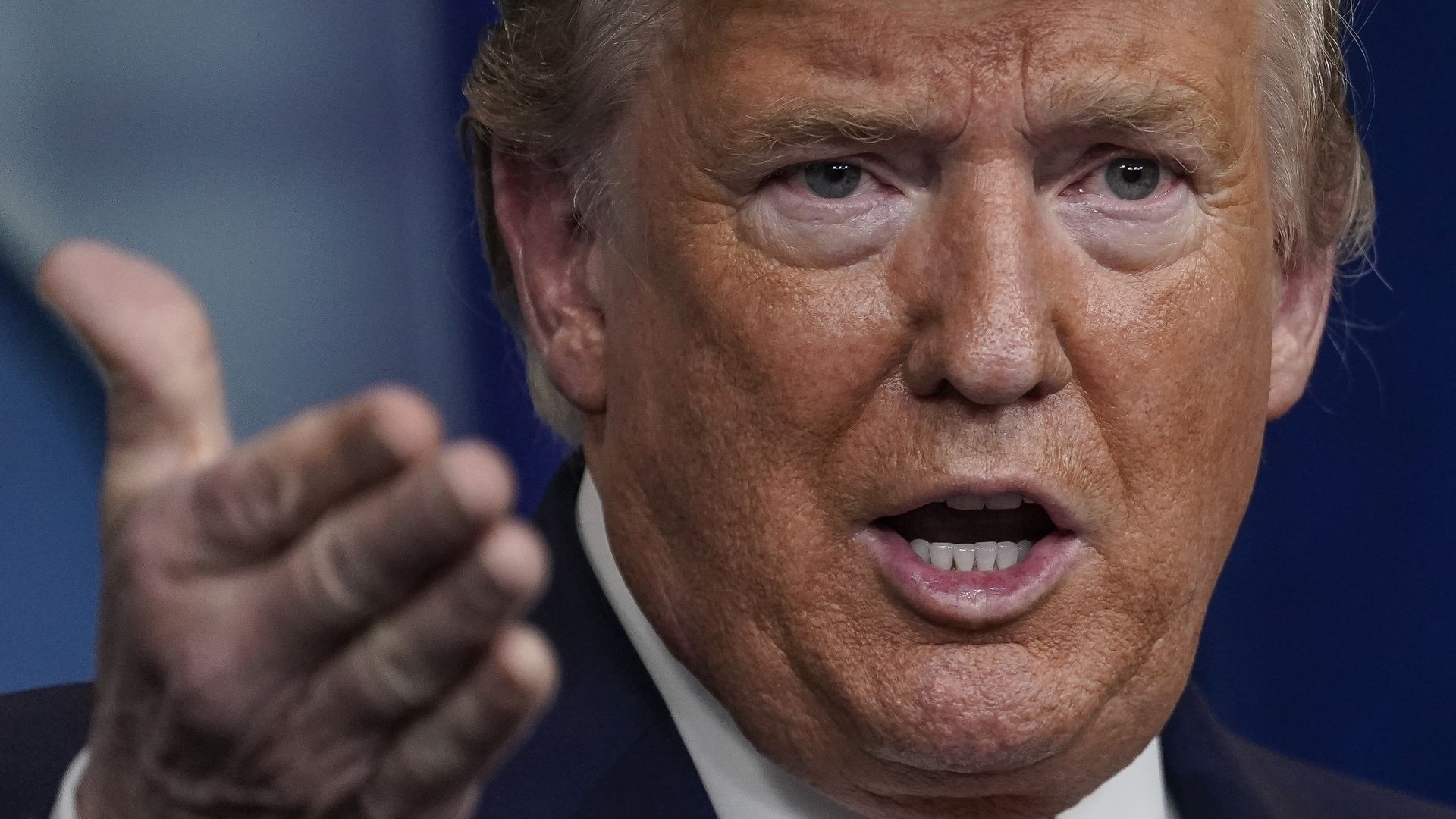
President Trump's daily White House novel coronavirus task force briefings are attracting record viewership, but some critics say TV news networks shouldn't air them because he and administration officials have dispensed misinformation about COVID-19.
Why it matters: Live briefings can be difficult for networks to fact-check in real time. Critics argue that airing the press events unfiltered on a daily basis will mislead the public about the pandemic, putting Americans' health and safety at risk.
After several days of intense negotiations and an 11th-hour standoff over a key provision, the Senate has released the final legislative text for its $2 trillion bill to combat the novel coronavirus.
Why it matters: The bill is the largest rescue package in modern history, and it offers thousands of dollars in direct aid to American families, billions in emergency loans to small businesses and industries hardest hit by COVID-19, and desperately needed resources to hospitals.
Anthony Fauci, director of the National Institute of Allergy and Infectious Diseases, said on Wednesday that the U.S. and other countries "need to be prepared for another cycle" of the novel coronavirus next winter.
The big picture: Research on how COVID-19 behaves in response to different temperatures and humidity levels has only just begun, the Washington Post notes.