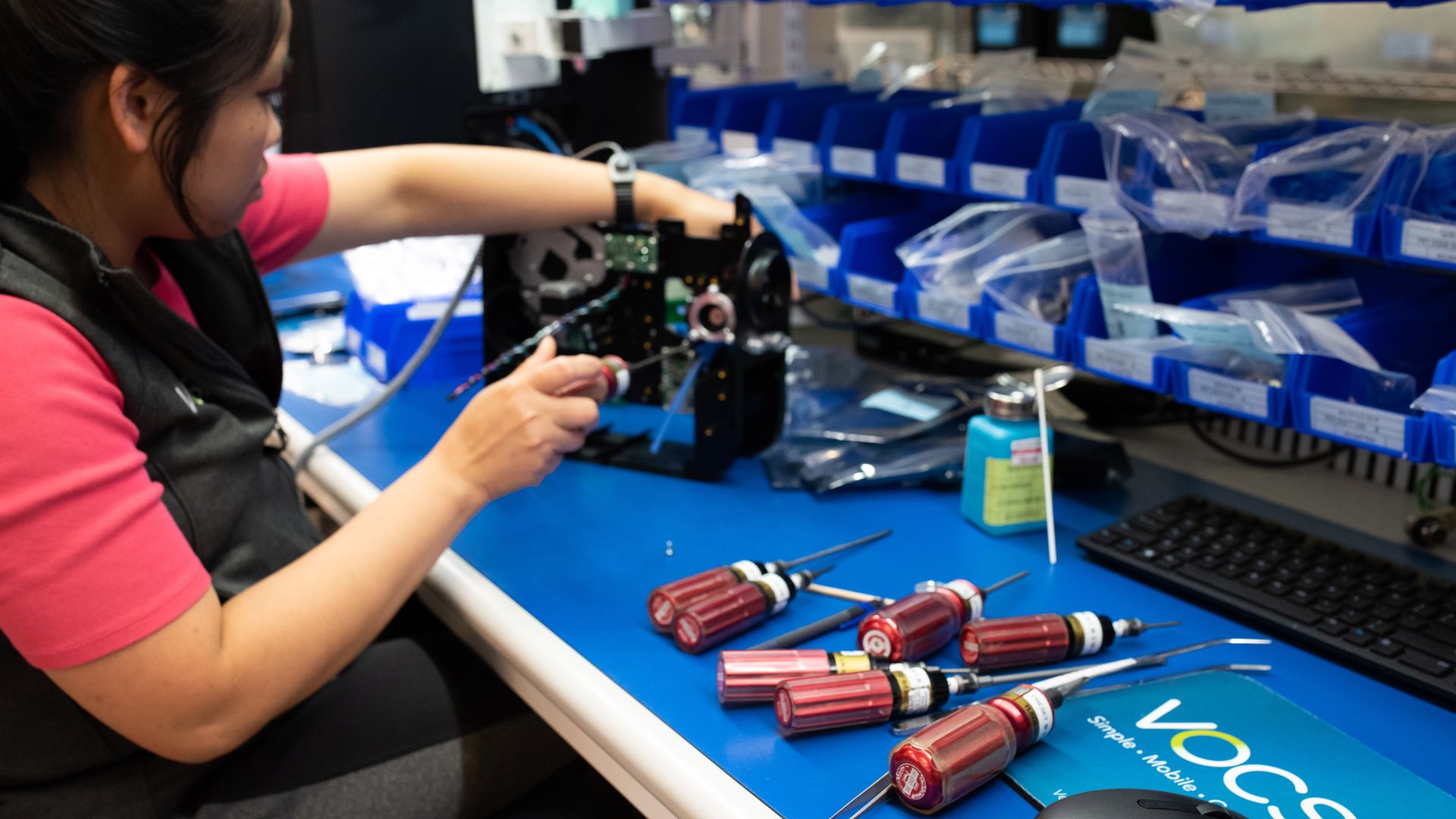
Abbott Laboratories says it has received emergency authorization from the FDA to produce portable novel coronavirus tests, which the company indicates can detect the virus within five minutes and will be available starting next week.
Why it matters, via Axios' Sam Baker: The U.S. doesn't have the capacity to do enough COVID-19 testing right now, and the tests that are available can take a week to produce results. Closing both of those gaps will be key to getting the virus under control.
Why it matters: Recorded deaths in the U.S. surpassed 1,000 two days ago. The U.S. has the most COVID-19 cases in the world, exceeding China and Italy.
An infant less than one year old died in Chicago, Illinois after testing positive for the novel coronavirus, the state health department said on Saturday.
Details: The death would mark the first reported infant mortality from COVID-19 in the U.S. The fatality rate for the novel coronavirus in the U.S. is highest among those over 85 years old, per the CDC.
Actor Tom Hanks and his wife, actress and producer Rita Wilson, have returned to the U.S. after confirming they both had the novel coronavirus while in Australia on March 11.
What they're saying: "We're home now and, like the rest of America, we carry on with sheltering in place and social distancing," Hanks said in a statement posted to Twitter on Saturday.
The U.S. is scouring the globe and leaning on non-medical manufacturers to help overcome shortages of ventilators, masks, gloves and gowns.
Why it matters: Nearly 90% of U.S. mayors who responded to a national survey on coronavirus preparedness said they lack sufficient tests kits, face masks and other protective equipment for their emergency responders and medical workers, the Washington Post reports.
With businesses closed, the streets quiet and neighborhood walks becoming a national pastime, it's a great time to get into birding.
Why it matters: "You can get the joy of being outside and appreciating the most prolific wildlife on the planet," National Audubon Society President and CEO David Yarnold told Axios. "The sense, at this moment, that there’s life out there feels a little bit like hope."
As the coronavirus continues to spread throughout the U.S., Axios is answering readers' questions about the pandemic — how it spreads, who's at risk, and what you can do to stay safe.
What's new: This week, we answer five questions on smokers' vulnerability, food safety, visiting older parents, hair cut needs, and rural vs. urban impact.
Researchers are racing to develop tests that detect whether someone may have developed immunity to the coronavirus, which could help society return to normal faster.
Why it matters: These tests could help people know if they are able to go back to work, as well as aid researchers in tracking the scale and death rate of the disease — key data for current and future pandemic policies.
The countries that have most successfully fended off the novel coronavirus have mainly done it with a combination of new technology and old-school principles.
Why it matters: There's a lot the U.S. can learn from the way other countries have handled this global pandemic — although we may not be able to apply those lessons as quickly as we'd like.
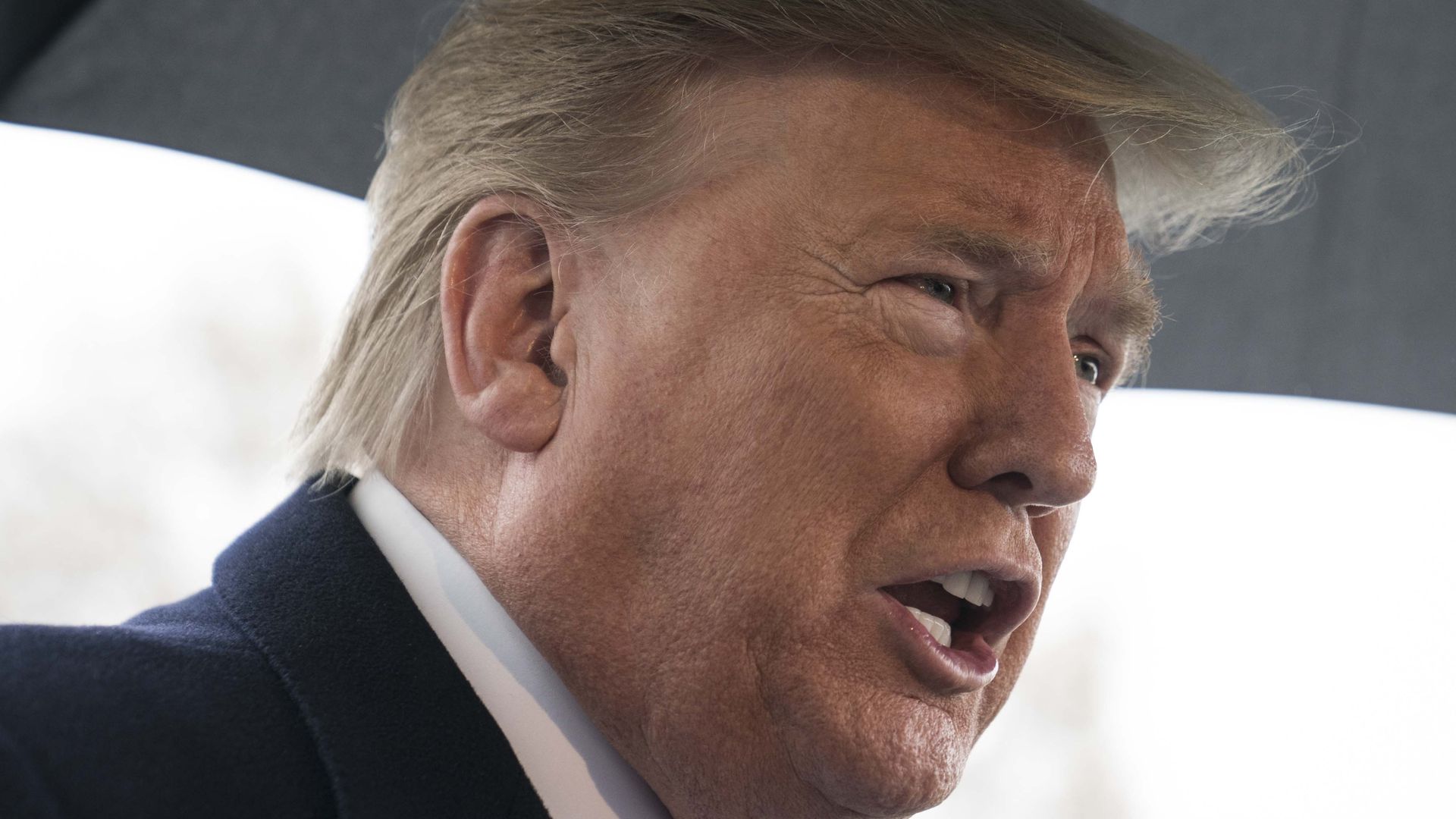
President Trump said on Saturday he is considering a "short term" quarantine of New York, New Jersey and parts of Connecticut — areas congruent with the New York metro area, the epicenter of the novel coronavirus in the U.S.
Reality check: These states have already taken steps to quarantine residents and promote social distancing to combat COVID-19. The governors of New York and New Jersey issued statewide stay-at-home orders last week, and non-essential businesses in Connecticut were ordered to close as of this Monday.
A new review concludes that the claims that artificial intelligence is better than human experts at interpreting medical scans and images are likely overblown.
Why it matters: There's legitimate hope that AI could improve patient care and cut costs. But there's also a real risk that people could be hurt if biased or mistake-prone algorithms are rushed into medicine.
The biggest pandemic in decades serves as a reminder of just how big a role infectious disease has played in human history — and will continue to play in the future.
The big picture: Without victory over infection, humanity wouldn't have developed the globalized and populous civilization of today. Yet that civilization is vulnerable to COVID-19, which can only be fought by decoupling the connections that underpin the modern world.
One-third of Americans say they or someone in their household has either lost a job or taken a pay cut since the novel coronavirus outbreak began, according to a study from Pew Research.
The big picture: During the 2008 financial crisis, people were able to leave their homes in search of jobs, but that's currently difficult with local and statewide stay-at-home orders and quarantine mandates, The New York Times writes.
The United States missed a number of chances to mimic how Singapore and South Korea contained their coronavirus outbreaks. Dan digs in with Axios' Sam Baker.
President Trump on Friday ordered General Motors to make ventilators to help coronavirus patients — something the automaker was already on track to do.
Why it matters: The United States was caught flat-footed by the surge in demand for medical supplies. If the federal government had enlisted manufacturers earlier, when the virus was beginning to spread throughout the world, GM and other manufacturers could already be producing thousands of ventilators per month.
Former Vice President Joe Biden said that President Trump should "stop personalizing everything" in his approach to dealing the novel coronavirus pandemic, at a CNN town hall on Friday.
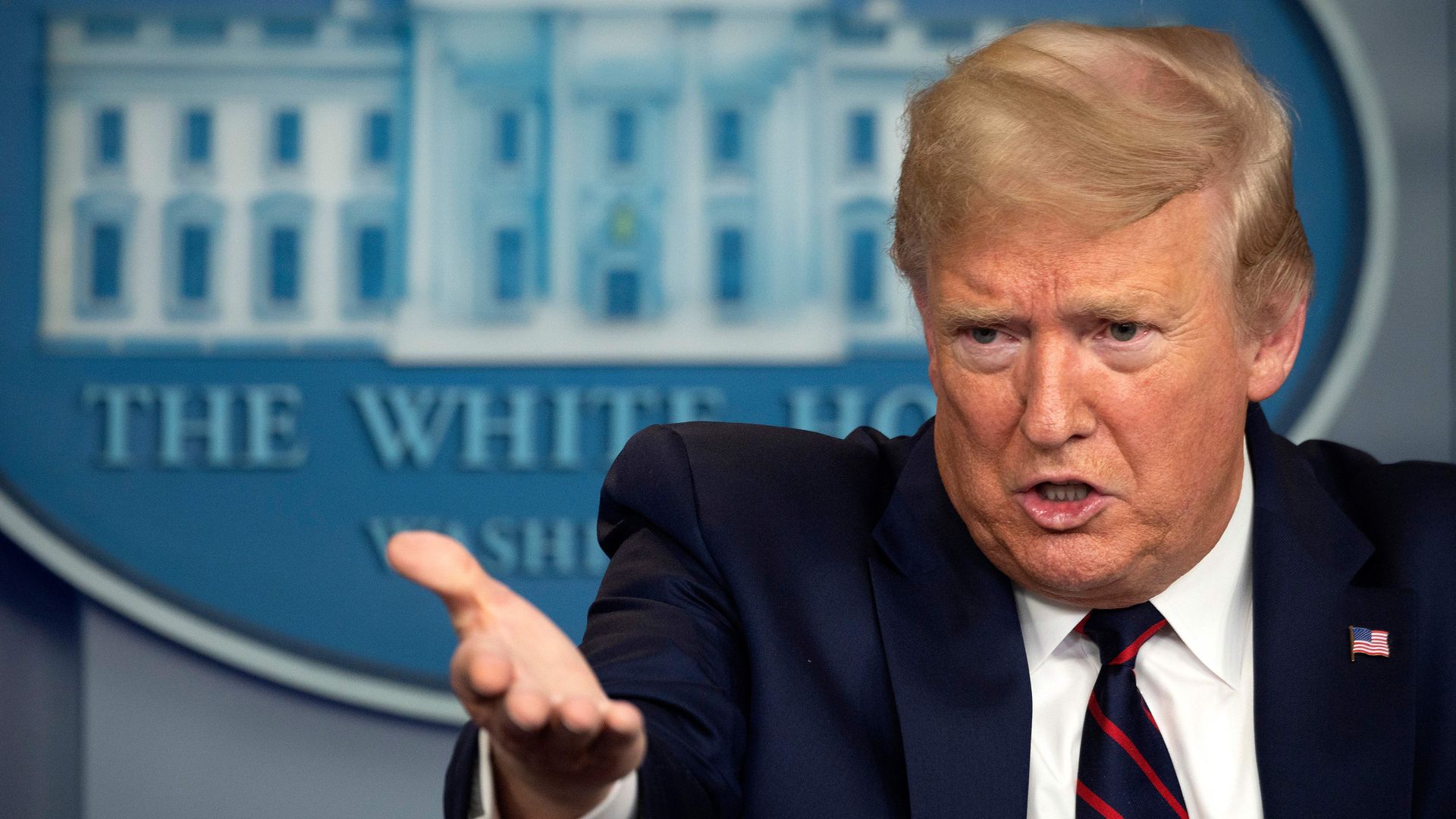
Driving the news: "If they don't treat you right, I don't call," Trump told reporters at the White House coronavirus task force briefing on Friday, referring to managing COVID-19. Trump said Vice President Mike Pence "calls all the governors," but he advises Pence against contacting those he views as unappreciative.
"If they don't treat you right, I don't call," President Trump told reporters at the White House coronavirus task force briefing on Friday, referring to U.S. governors battling the spread of COVID-19.
What he's saying: Trump said that while "generally speaking," the nation's governors have been appreciative of his administration's efforts to combat the spread of COVID-19, there are some — including Washington Gov. Jay Inslee and Michigan Gov. Gretchen Whitmer — who the task force should not bother contacting.











/2020/03/28/1585411842790.gif?w=3840)