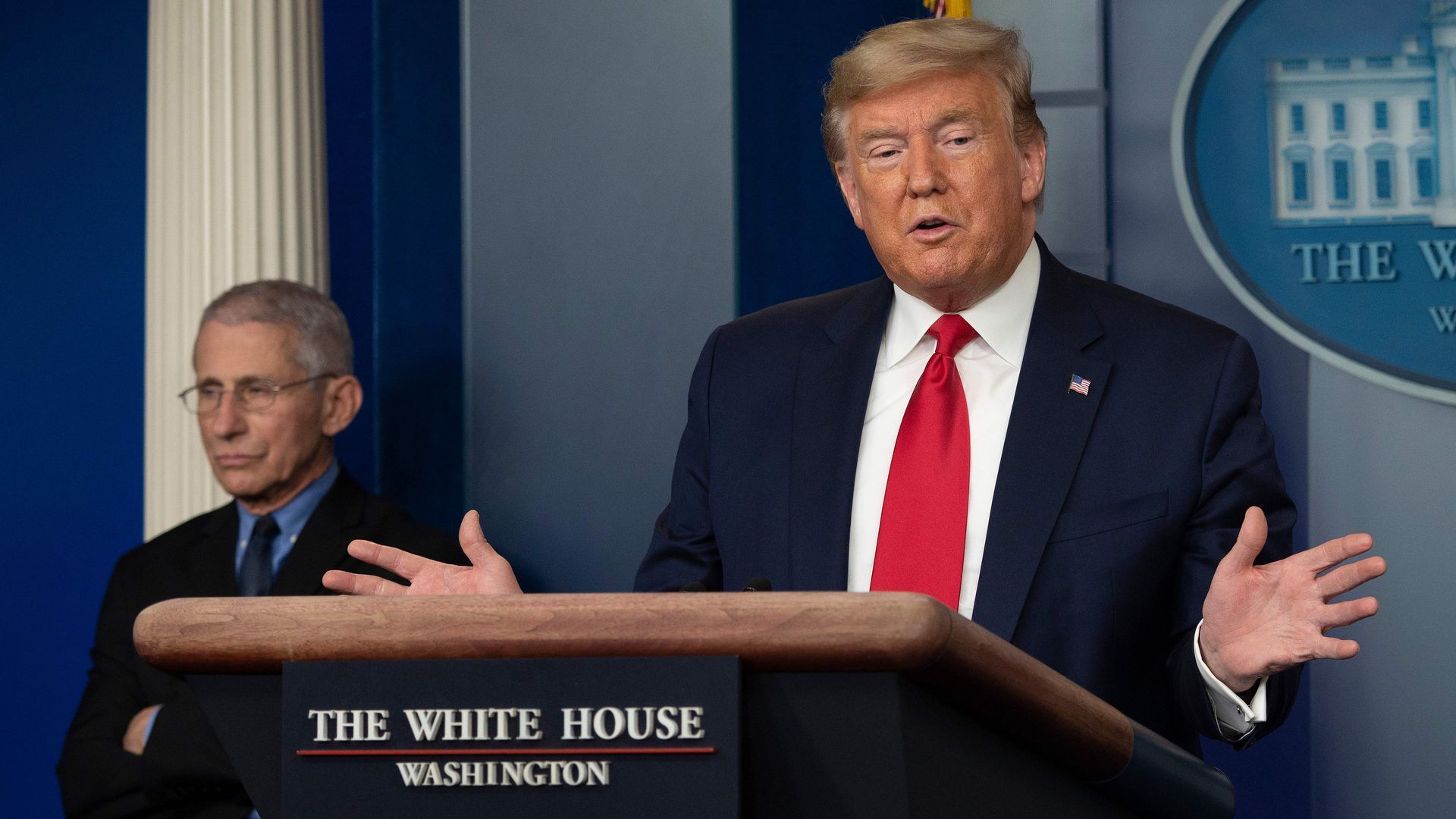
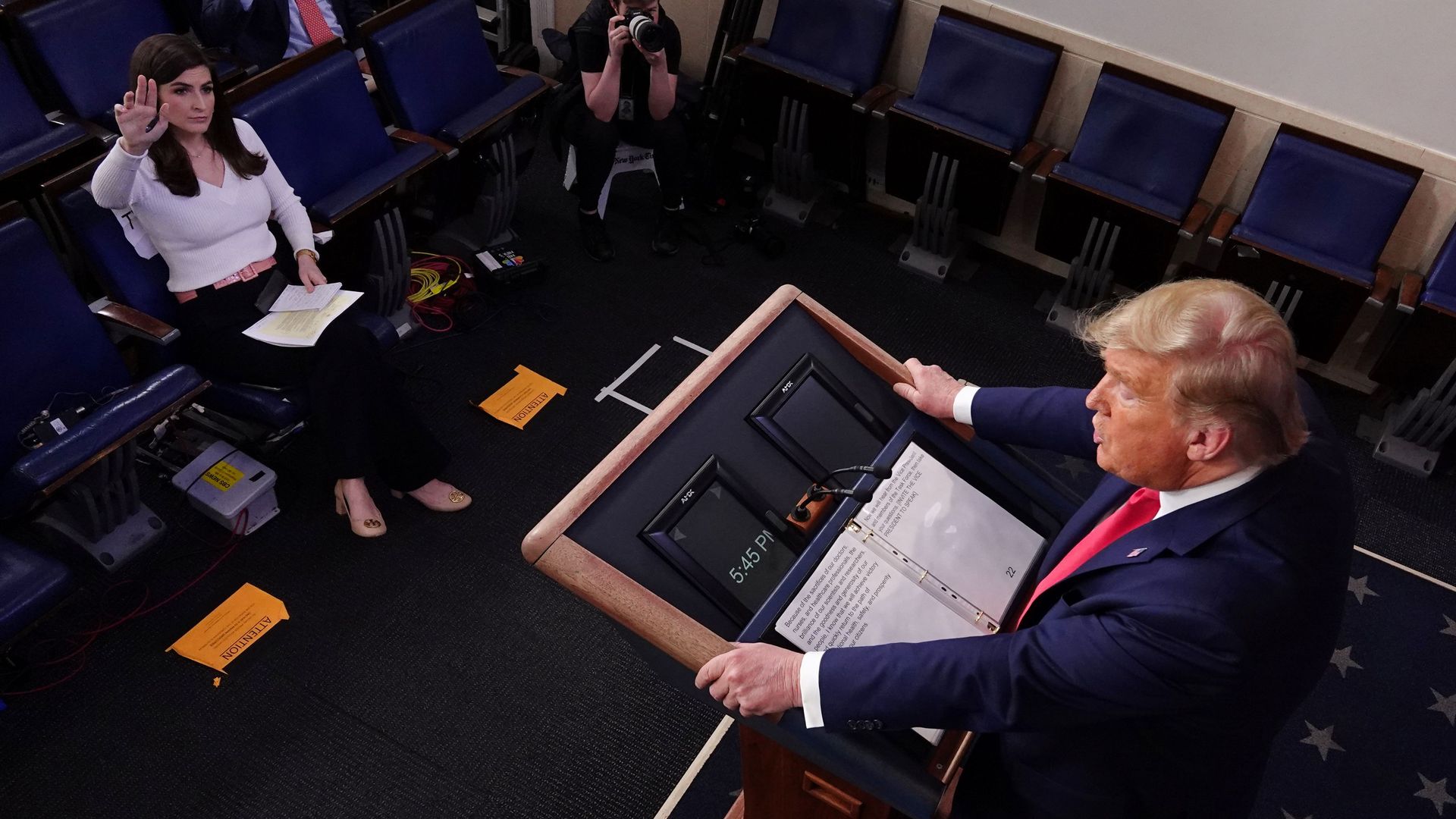
White House trade adviser Peter Navarro was appointed as the Trump administration's point man to enforce the Defense Production Act on Friday, after President Trump authorized the use of the DPA to direct General Motors to build ventilators for patients affected by the novel coronavirus.
Why it matters: America's hospitals, doctors and nurses have urged Trump since last week to use the DPA to ramp up the country's domestic production of medical supplies crucial for health care workers, saying "there will not be enough medical supplies" without it.
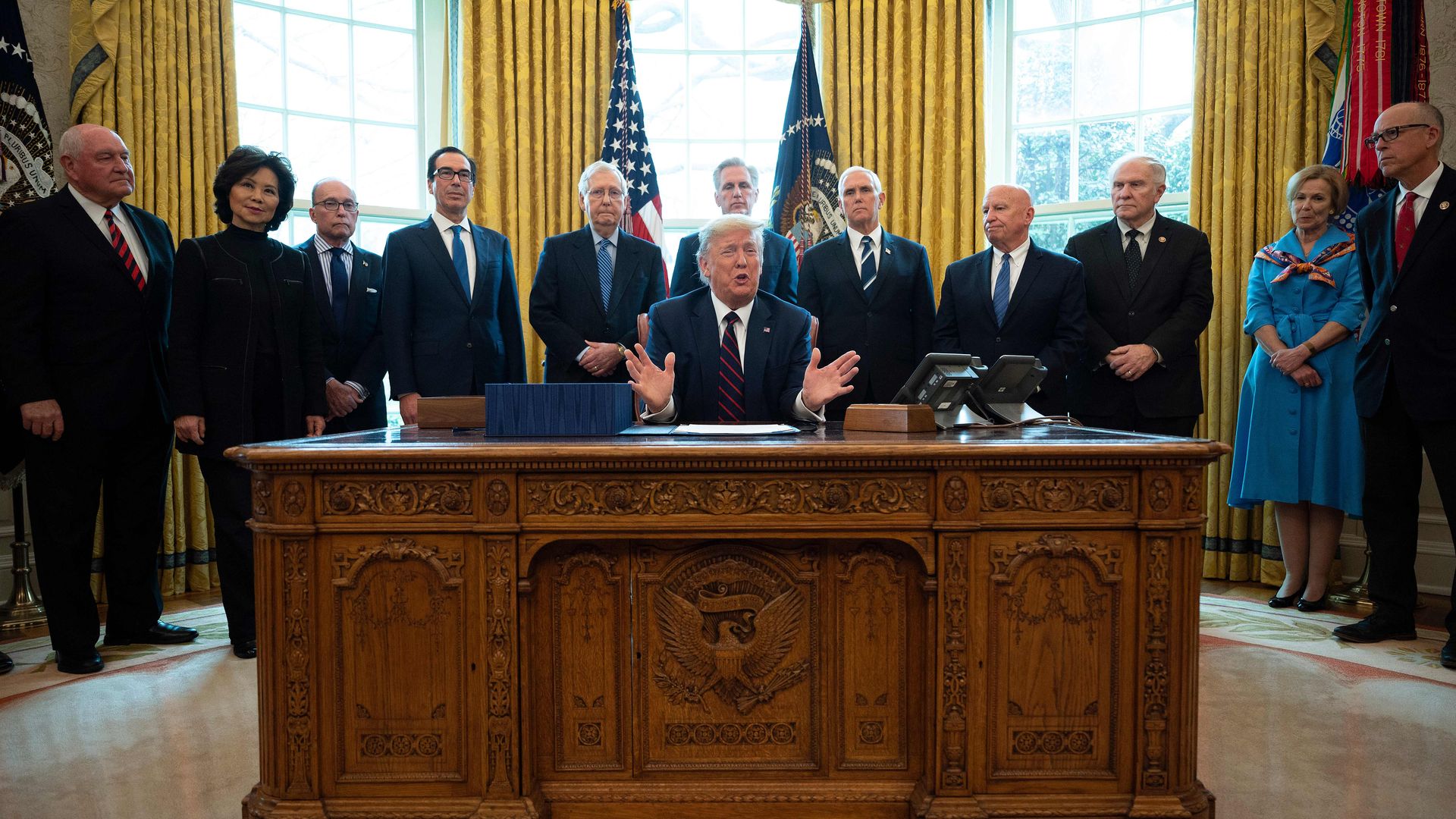
President Trump signed the $2.2 trillion coronavirus stimulus package into law on Friday shortly after the House passed the bill.
Why it matters: What happens in Washington is often lost on the rest of the country. But this rescue package is the largest in American history, has the attention of leaders on both sides of Pennsylvania Avenue and matters to Americans back home.
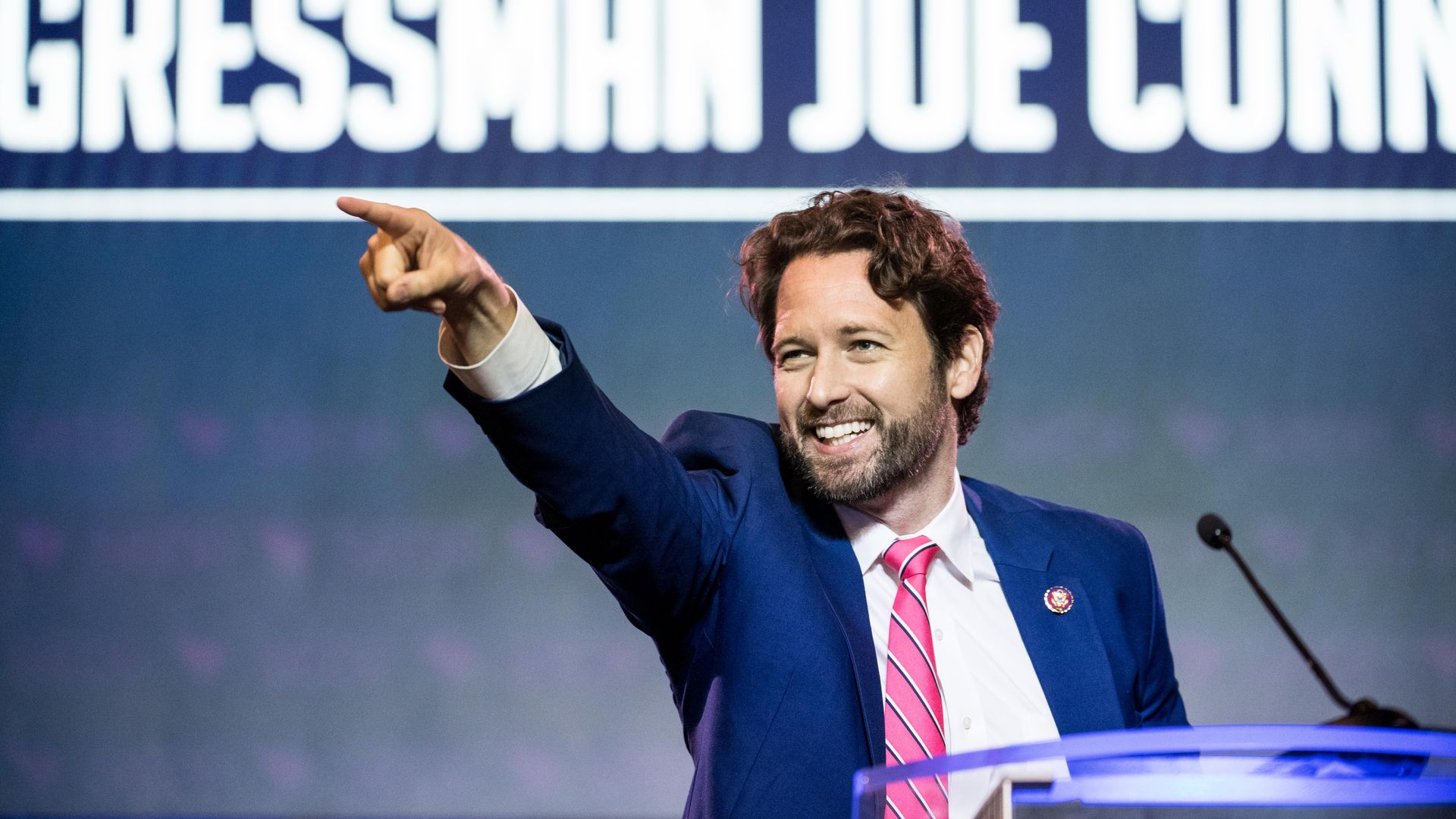
Rep. Joe Cunningham (D-S.C.) has tested positive for COVID-19, the freshman congressman revealed publicly on Friday.
Where it stands: The 37-year-old is the third known member of the House to contract the virus, after Rep. Mario Diaz-Balart (R-Fla.) and Rep. Ben McAdams (D-Utah) announced they tested positive last week. Sen. Rand Paul (R-Ky.) is the only known senator to have tested positive.
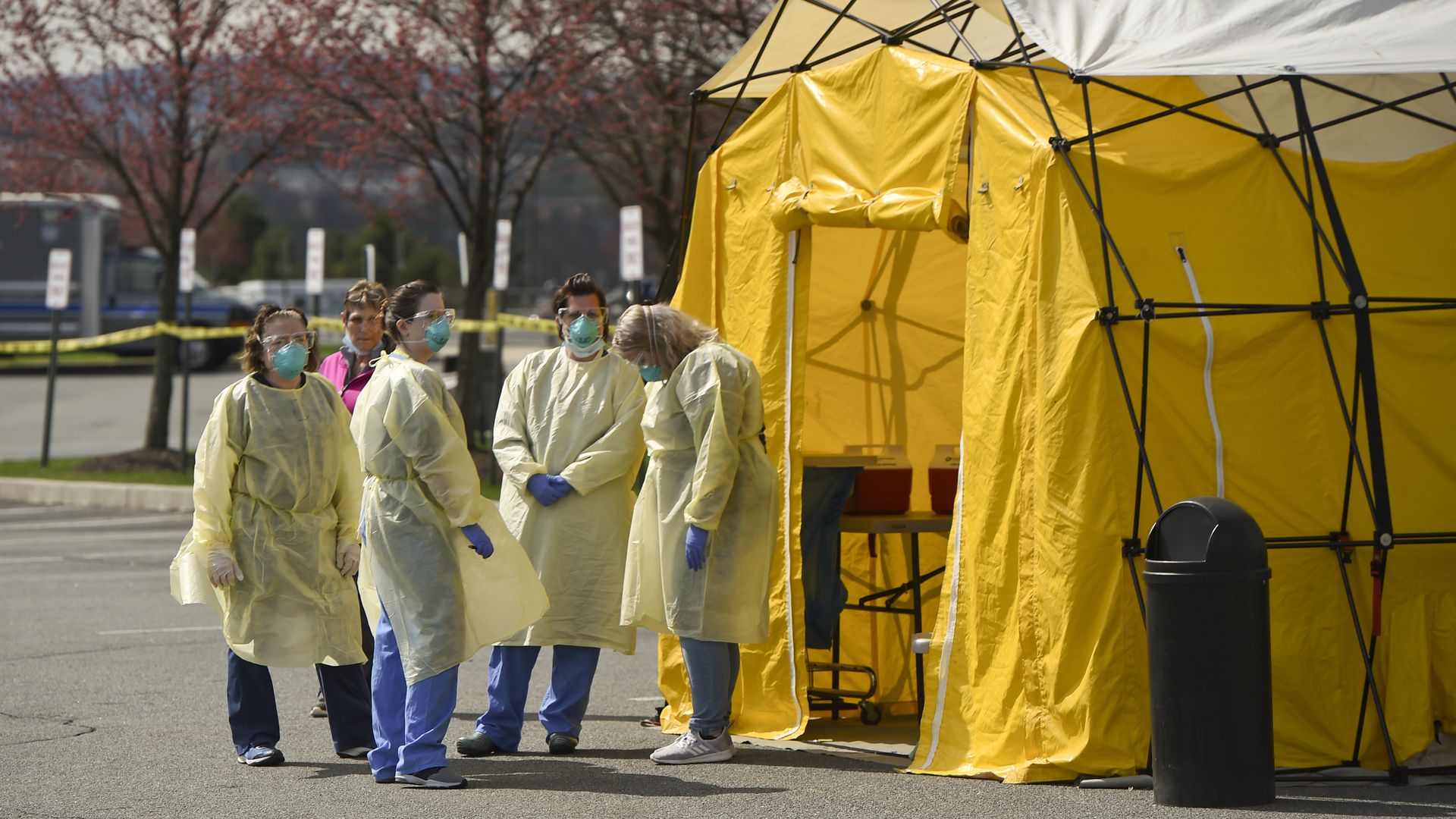
First responders and health care workers are dealing with massive shortages of critical supplies such as face masks, personal protective equipment, ventilators and test kits, according to a survey of 213 cities from 41 states and Puerto Rico.
Why it matters: The shortages of critical supplies have reached "crisis proportions" and are putting at risk the lives of residents and front-line medical workers across the country, per the survey conducted by the U.S. Conference of Mayors.
Italy on Friday reported 969 deaths linked to the novel coronavirus over a 24-hour period, marking the deadliest single-day tally in the country since the global outbreak began, according to data from the Health Ministry.
Why it matters: Italy had hoped the worst of the outbreak was over after reporting a decline in the number of new confirmed cases throughout this week. That trend continued into Friday, but was overshadowed by the death count.
At President Trump's urging, automakers have mobilized with astonishing speed to help medical equipment makers produce much-needed ventilators and masks to fight the coronavirus.
But, but, but: With pressure mounting as the pandemic spreads and mixed signals coming from the White House's emergency response team, an agitated president lashed out at GM and Ford Friday morning on Twitter.
Google CEO Sundar Pichai announced Friday that his company is donating more than $800 million in cash and advertising to help stem the spread of the novel coronavirus and ease the impact on small businesses.
Why it matters: It would appear to be the largest donation yet from a tech giant. The ad credits also could help keep business flowing through Google's ad system amid what is expected to be a sharp downturn in advertising.
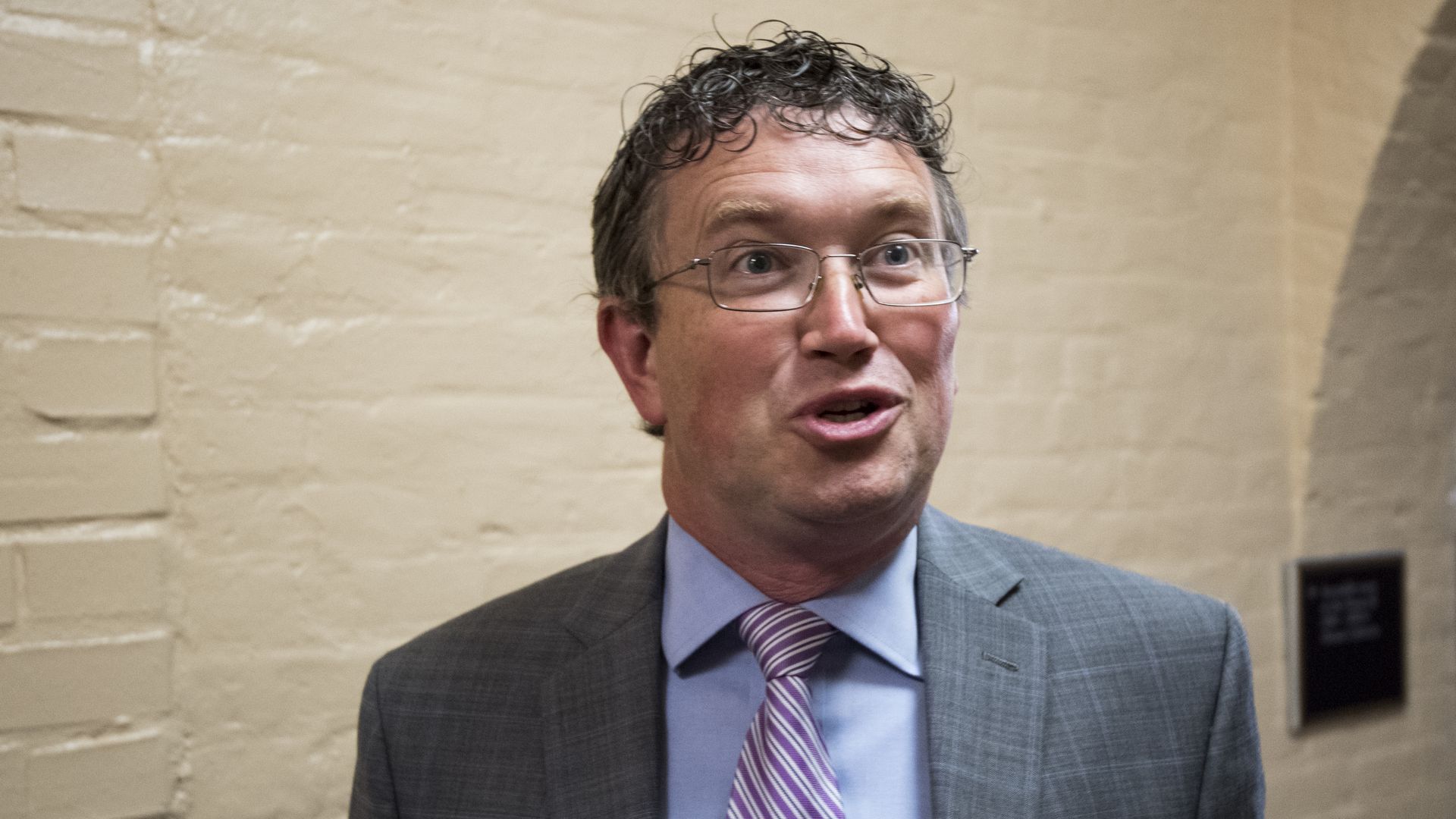
Politicians on both sides of the aisle lined up to condemn Rep. Thomas Massie (R-Ky.) Friday for his reported attempt to delay the passage of the $2 trillion coronavirus stimulus package, which he opposes.
What's happening: Congress had wanted to approve the measure by voice vote on Friday to reduce the risk of exposure to the coronavirus for members who had to travel back to D.C. But those plans changed late Thursday over concerns that Massie could force a roll-call vote, requiring at least 216 members present on the House floor, per NBC New York.
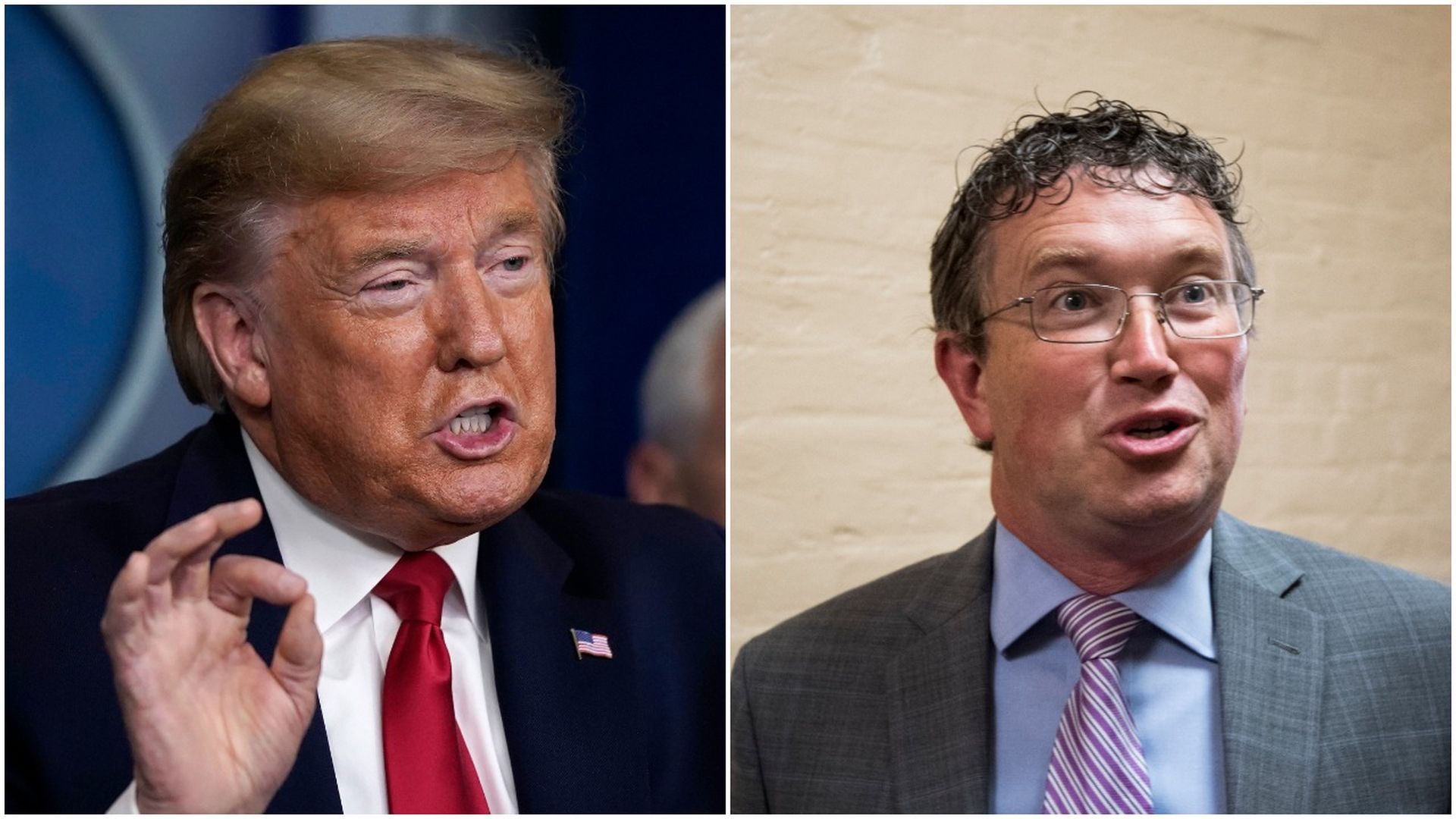
President Trump has denounced Rep. Thomas Massie (R-Ky.) after a report that the congressman could delay passage of Congress' $2 trillion stimulus package by calling for a vote that requires members to be present on the House floor.
What's happening: Massie opposes the package. Congress had wanted to approve the measure by voice vote on Friday to reduce the risk of exposure to the coronavirus for members who had to travel back to D.C.
One thing to watch once this tragic crisis passes is what forms of enforced behavior stick around by choice after lockdowns end — and what it means for energy use.
Where it stands: Global oil demand has collapsed as lots of air and vehicle travel has stopped, and billions of people worldwide are cutting back or halting their movements.
SutroVax, a Foster City, Calif.-based developer of a pneumonia vaccine, raised $110 million in Series D funding co-led by RA Capital Management and Janus Henderson Investors.
Why it matters: Its lead candidate is a more-encompassing alternative to Pfizer's Prevnar 13, a $6 billion per-year vaccine that reportedly is seeing a prescription bump from those worried about the coronavirus. Prevnar won't prevent someone from being infected, but some believe that it could help ward off subsequent pneumonia.
Catholic bishops around the U.S. are telling worshipers it's alright to eat meat on Fridays during Lent as the coronavirus has forced Americans to give up so much already.
The big picture: The global coronavirus pandemic has forced the hands of many religions and their institutions. Many religious leaders ordered the cancellations of mass prayers across the world.
The growing throng of critics who have assailed the Senate's $2.2 trillion spending bill as avarice, insufficient and disappointing have an alternative.
Enter Rep. Rashida Tlaib (D-Mich.) and the Automatic BOOST to Communities Act, a bill so massive, audacious and unparalleled in scope that one of its primary authors asserts "There is no number that would be meaningful to estimate" its cost.
UK Prime Minister Boris Johnson announced Friday that he has tested positive for coronavirus and will be self-isolating while leading the nation's response to the outbreak.
Why it matters: Johnson is the first major elected world leader to test positive. Prince Charles, the heir to the UK throne, has also tested positive.
When an experimental coronavirus treatment received a special designation from the Food and Drug Administration on Monday, it came as a surprise to the government's top health care officials — including the FDA commissioner.
Why it matters: Top officials aren't normally involved in everyday regulatory decisions. But this particular designation was particularly controversial, as critics quickly questioned whether it was giving an unfair financial advantage to one drugmaker in the midst of a pandemic.
Americans are looking for an exit ramp away from the extreme social distancing brought on by the coronavirus, but that will require steps we're not yet prepared for.
The big picture: Responsibly easing off of social distancing will only be possible as the number of new cases levels off, and will depend on extensive testing to avoid another surge in infections.
Believing the worst is yet to come, some top advisers to President Trump are struggling to steer him away from Easter as an arbitrary deadline for much of the nation to reopen.
State of play: The operating assumption among administration officials involved in the coronavirus planning is that the April 12 mark — 16 days away — will not, in fact, turn out to be the starting gun for businesses across America to reopen.
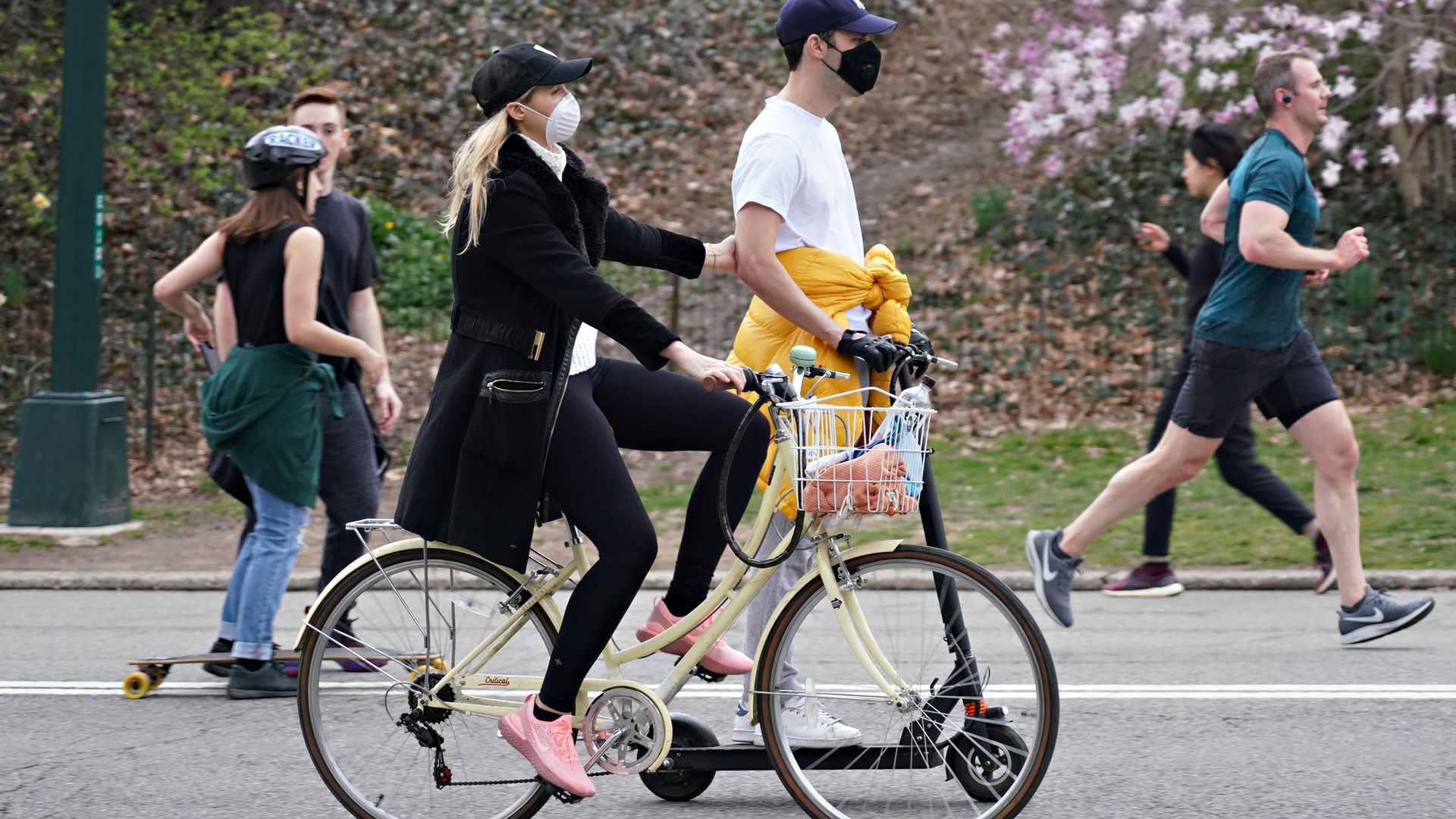
Closed businesses, home offices and schools amid the coronavirus pandemic has translated into an influx of outdoor recreation in parks, despite states' advice for people to stay home.
Why it matters: So many people are visiting city parks to escape the stuck-at-home monotony that the public spaces have become crowded. Some people are exercising in groups or playing contact sports, undermining social distancing recommendations.
Congress is about to provide $100 billion for hospitals and other health care providers to cope with the fallout from the coronavirus, but small hospitals have no idea how to access those funds — and many need the money immediately.
What they're saying: "A lot of rural hospitals out there need a cash infusion today," Alan Morgan, CEO of the National Rural Health Association, told Axios. "How is it going to happen? What is the process? There are way more questions than answers."
A second wave of cities, including Boston, Detroit, New Orleans and Philadelphia, are seeing increases in confirmed coronavirus cases, and could become epicenters for the outbreak if they're not able to bring those cases under control soon.
Why it matters: Whether these cities can prevent their outbreaks from spiraling out of control will be a major test for the U.S.' ability to contain the virus.
The Department of Justice has sued Anthem, alleging that the health insurance company knowingly submitted inaccurate medical codes to the federal government from 2014 to 2018 as a way to get higher payments for its Medicare Advantage plans and turned "a blind eye" to coding problems.
Why it matters: This is one of the largest Medicare Advantage fraud lawsuits to date, and federal prosecutors believe they have more than enough to evidence to claim that Anthem bilked millions of dollars from taxpayers.
The Environmental Protection Agency will not take action against power plants and other facilities that violate rules on air and water pollution or handling hazardous waste if those breaches are the result of the novel coronavirus pandemic, the agency announced Thursday.
What's happening: The EPA is reacting to potential worker shortages and laboratories made inoperable by COVID-19, as more states issue stay-at-home orders and businesses close to promote social distancing — an effort to fight the spread of the virus.
The White House canceled an announcement planned for Wednesday on a proposed venture between General Motors and Ventec Life Systems to build necessary ventilators amid the coronavirus outbreak, the New York Times first reported and Axios confirmed.
What we know: The announcement was called off to buy more time for the Federal Emergency Management Agency to assess whether the estimated cost of more than $1 billion was too expensive, and how many ventilators would be produced. Per the Times, the deal could still happen, but government officials are currently looking at other proposals.