Global leaders want Elon Musk to build Tesla factories in their home countries even as upstarts and legacy carmakers chip away at the company's EV dominance.
Why it matters: The company has a goal to sell 20 million cars a year by 2030, up from about 1.3 million as of last year. In order to hit that goal, Musk has said that Tesla will need about a dozen factories.
The resumption of student loan payments may not have the economic impact that some are fearing.
Why it matters: Retailers have been worried about a pullback in spending as due dates draw near. But the broader picture still points to a strong American consumer.
Grocery delivery company Instacart on Monday raised $660 million in its IPO, after pricing at the high end of its offering range.
Why it matters: The IPO market is finally heating up after two years on ice, and that could help refresh U.S. stock markets that have experienced a net loss of listed companies.
New York has quietly but dramatically shortened its list of pre-approved cryptocurrencies that regulated entities can readily exchange or custody on behalf of clients.
Driving the news: New York Department of Financial Services on Monday announced new standards for crypto exchanges, detailing new processes for listing and delisting coins — with it came an updated list of coins pre-approved by the state.
Facing mounting criticism, Bill Maher, Drew Barrymore and Jennifer Hudson have all reversed their recent decisions to resume their live TV talk shows amid the ongoing writers strike.
Why it matters: While the writers and studio executives are expected to resume talks this week, it's unclear whether the strike — which is heading into its fifth month — has a clear end in sight.
Optimistic experts predicted the housing market would be better for buyers in 2023, but a lack of supply and record-high mortgage rates have forced would-be buyers to the sidelines.
What's happening: More Americans than ever think it's a bad time to buy, according to a recent Gallup survey. The percentage hasn't been this high since Gallup started asking the question in 1978.
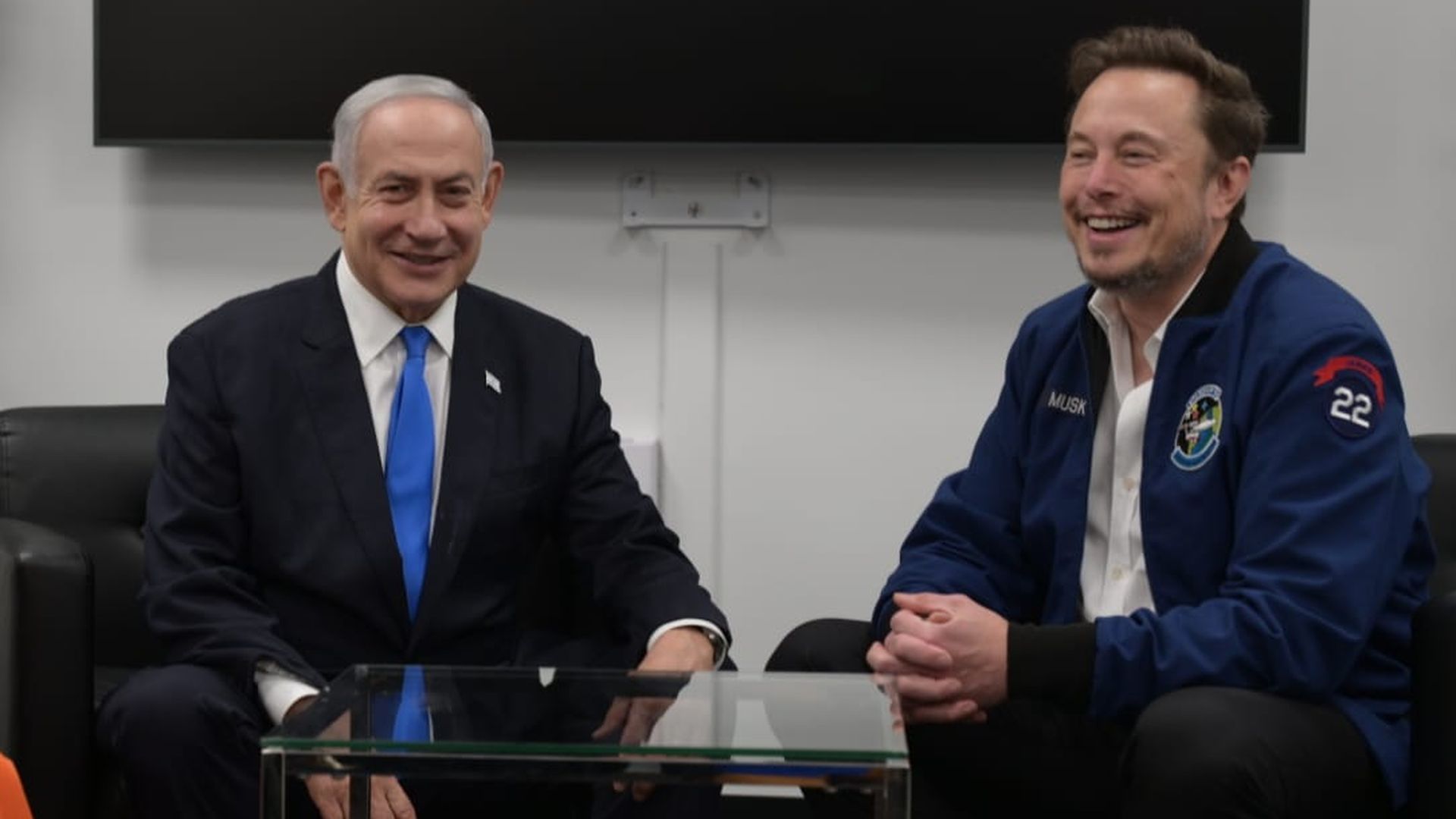
Israeli Prime Minister Benjamin Netanyahu on Monday asked Elon Musk, the owner of X, formerly known as Twitter, to take steps to curb antisemitism on the platform.
Why it matters: Musk earlier this month threatened to sue the Anti-Defamation League (ADL), accusing the nonprofit, without evidence, of "trying to kill" X after the group reported a spike in hate speech on the platform following the reinstatement of banned accounts.
A new book from a leading economist argues that two-parent households are essential for creating the hard-working, educated labor force that fuels long-term economic growth.
Driving the news: Melissa S. Kearney, a University of Maryland economist, argues in "The Two-Parent Privilege," released on Monday, that the structure of families is an underrated factor in economic outcomes.
At the Federal Reserve's policy meeting this week, the big question will be less about what to do now (which is likely "nothing") but what, if anything, to do next.
Why it matters: Inflation looks to be on a glide path downward, even as economic growth shows surprising resilience. Against that backdrop, Fed officials must decide whether they need to push interest rates even higher to truly vanquish inflation.
NFT owners should start thinking seriously if the art connected to their non-fungible token can survive the death of the company that made it.
Why it matters: The SEC has imposed hefty consent decrees on two different NFT companies already, effectively forcing them to shut down their crypto business.
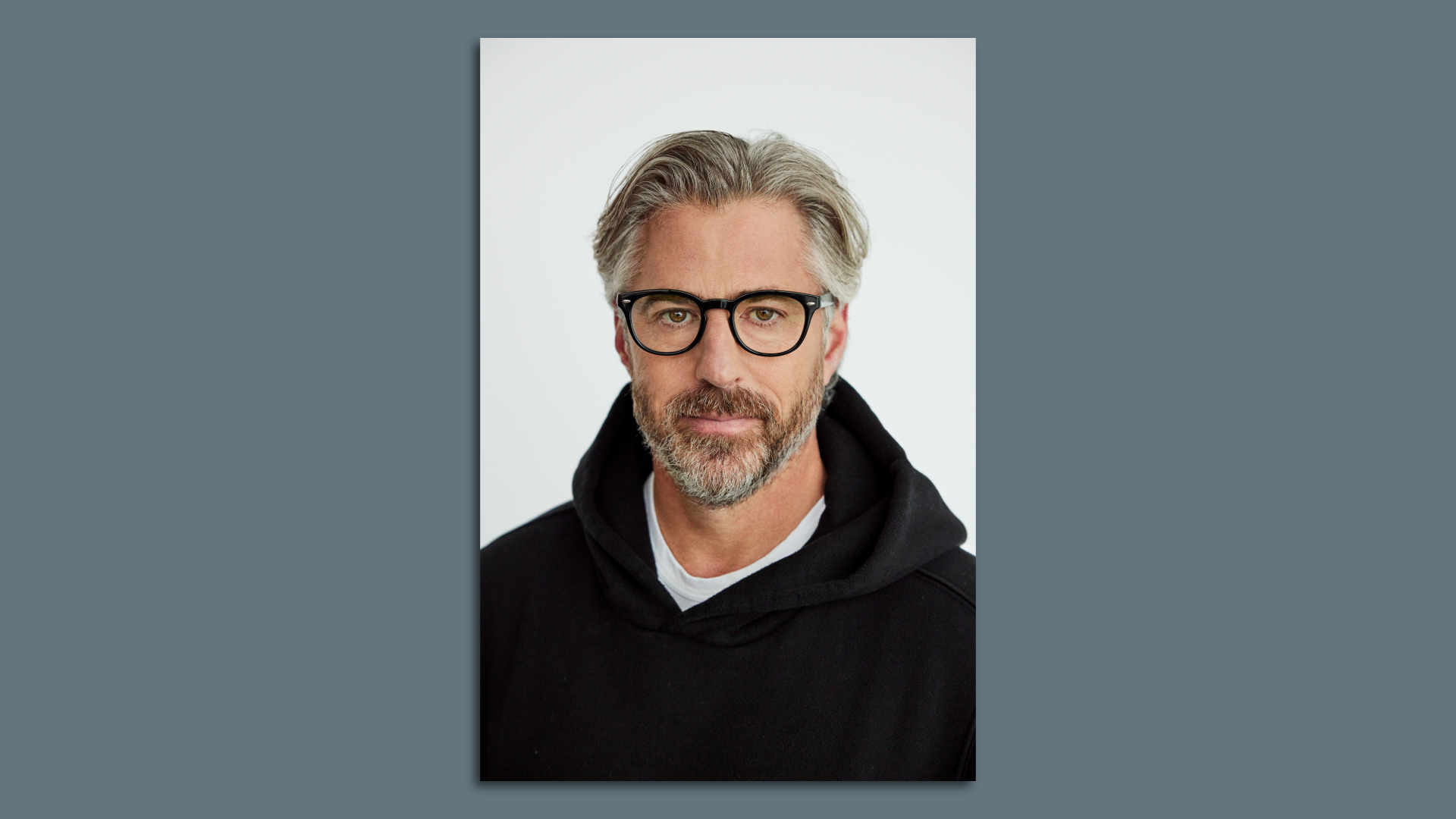
Lowercarbon Capital has raised over $550 million for a pair of new venture funds focused on climate tech startups, per a letter to limited partners that appeared this morning on the firm's website.
Why it matters: In that letter, firm founder Chris Sacca, called out fellow climate tech investors for accepting capital from unsavory sources.
Wasserman, a talent agency best known for its representation of athletes, has finalized a deal to acquire Brillstein Entertainment Partners, a prominent Hollywood management and production firm, its CEO tells Axios.
Why it matters: The deal gives Wasserman a much deeper foothold into Hollywood and will allow it to better service its clients as they pursue deals related to content creation.
The New York Department of Financial Services is raising the bar for exchanges listing and delisting tokens, adding to the spectre of more stringent crypto regulation coming at the state level.
Why it matters: New York's crypto licensing regime has a reputation for being amongst the most stringent — critics have said it's thwarted crypto business growth there, advocates say it could've prevented major catastrophes like FTX.
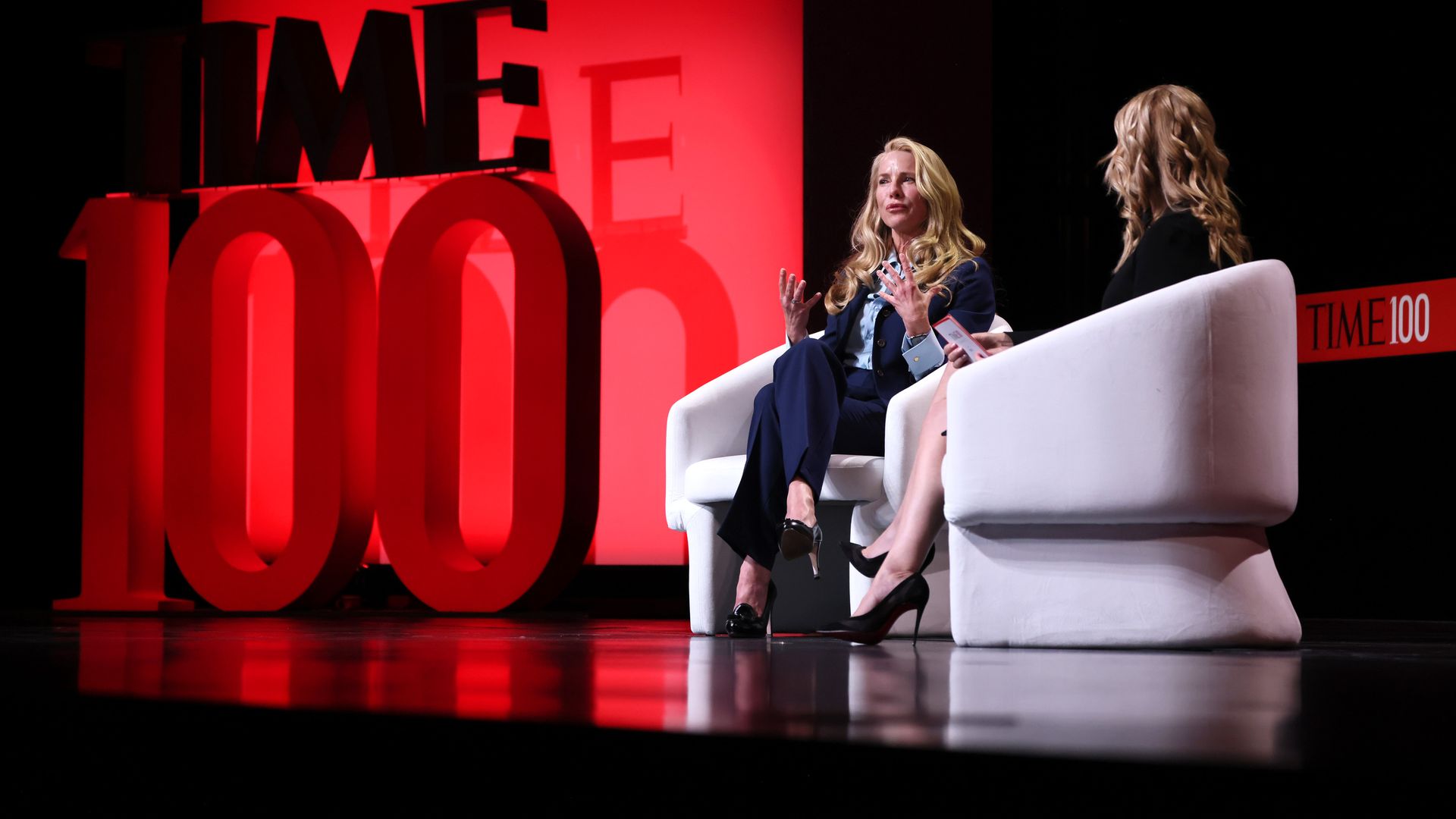
Time on Monday announced a new editorial platform called Time100 Voices that is dedicated to elevating perspectives from global thought leaders.
Why it matters: The new vertical marries two of Time’s most successful franchises: Time Ideas, its opinion section, and Time100, its popular events and editorial platform.
DirecTV and Nexstar have finalized a multiyear distribution agreement, ending a more than two-month blackout of Nexstar stations for DirecTV satellite, DirecTV Stream and U-verse customers.
Why it matters: The deal restores more than 170 Nexstar-owned stations across 120 metro areas. Nexstar is the largest owner of local TV stations in the country,
In the aftermath of the pandemic, the earnings power of the auto industry climbed to new heights.
Why it matters: It's part of what's driving the United Auto Workers' unprecedented simultaneous strike against the big three U.S. carmakers — workers want to get a larger share of those profits.
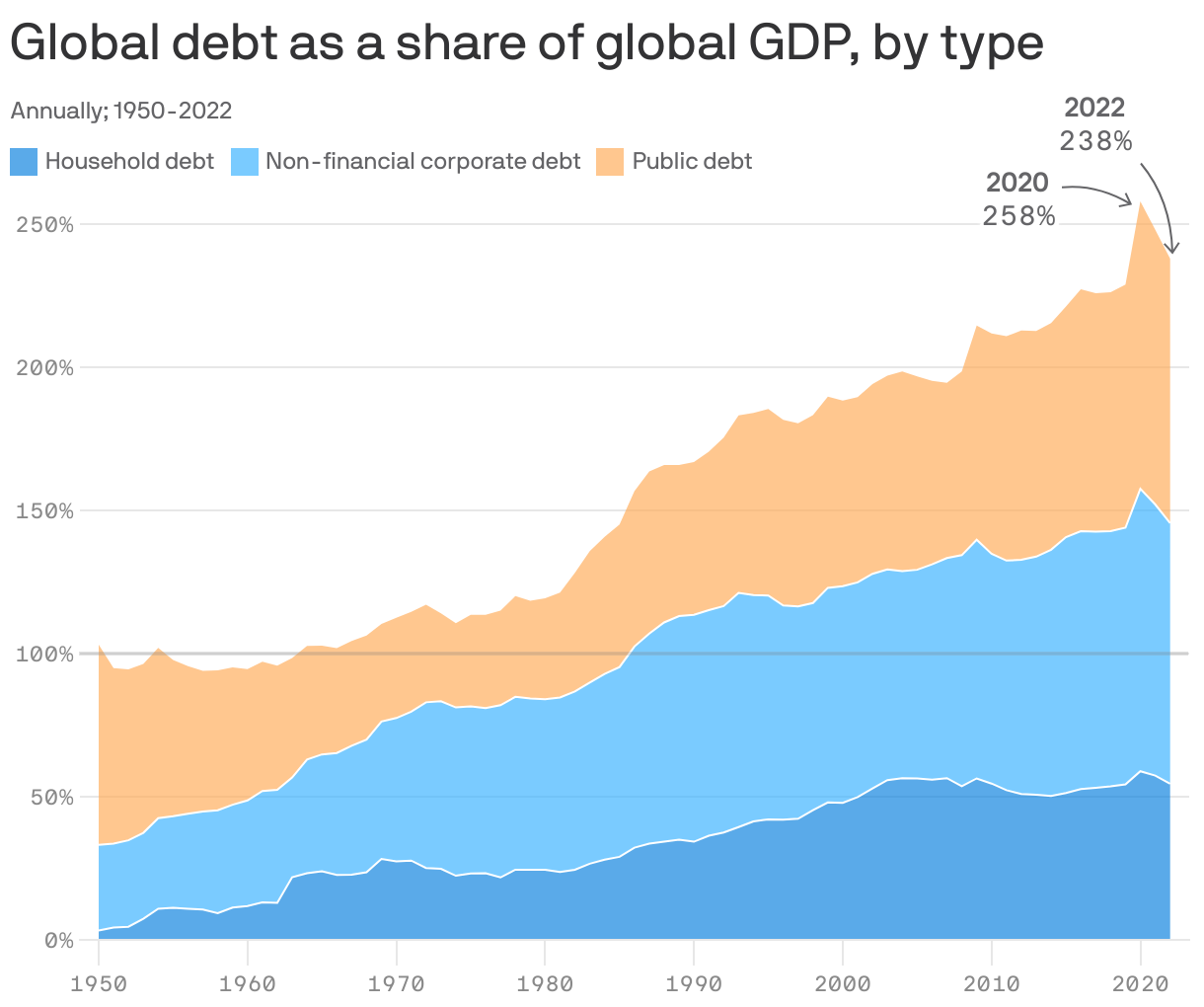
The world's debt-to-GDP ratio ticked down in 2022 — largely thanks to the impact of inflation, which reduced the real value of debt as economic activity remained strong, according to the International Monetary Fund's 2023 Global Debt Monitor, unveiled last week.
The big picture: However, the IMF's economists see debt levels returning to the pre-pandemic growth trend — and some are starting to contemplate the political and market limitations of ever-expanding deficits.
For at least a decade, labor organizers have tried to make inroads at the nation's banks, but Wells Fargo is the only big one where workers are actually trying to unionize.
Why it matters: Worker efforts trace back to the bank's recent scandals and demonstrate how a business's failures can ripple out to its employees and culture in the long term.
Islamic scholars consulted by a leading producer of cultivated meat say that the newfangled protein — which is grown from animal cells and doesn't require animals to be slaughtered — can be halal, or permissible under Muslim law.
And the Jewish Orthodox Union this month certified a strain of lab-grown chicken as kosher for the first time, "marking a significant step forward for the food technology's acceptance under Jewish dietary law," as the Times of Israel put it.
Flavored popcorn, which first burst onto the scene in the early 1980s following the invention of microwave popcorn, is suddenly popping up everywhere again.
Why it matters: Snacks are big business, and Americans are snacking more — so companies that tap into the nation's gustatory enthusiasms can earn a pile.
Ukrainian President Volodymyr Zelensky denied in a CBS "60 Minutes" interview broadcast Sunday ahead of his trip to the U.S. this week ordering recent drone strikes on Russian cities.
Driving the news: Zelensky said Kyiv used weapons supplied by allies "on the territory of Ukraine only," but added: "Russia needs to know that wherever it is, whichever place they use for launching missiles to strike Ukraine, Ukraine has every moral right to send a response to those places.