Median pre-money Series C, D and E valuations for U.S. startups showed signs of bouncing back — or at least not falling anymore — in Q2, according to new data from Carta.
Why it matters: Since the downturn started about 18 months ago, late-stage startups have borne the brunt of ripples from the private market, given their proximity to public-market valuations.
In Wisconsin,the governor can veto the tiniest parts of a bill, even unto deleting the first two digits of a year and the hyphen following them.
Why it matters: Thus does "2024–25" become "2425," and thus does a spending increase designed (by the legislature) to last for two years become one designed (by the governor) to last for over 400 years.
Last week I went to a Steve Reich concert in the Sonic Sphere, a $2 million 250-capacity music venue suspended from the roof of The Shed, in Manhattan.
Details: A scaled-up version of legendary composer Karlheinz Stockhausen's 1970 Kugelauditorium, it's designed to be a whole new way of listening to music, with 100 speakers surrounding every audience member from every direction.
Not all Chinese imports get registered as imports. Specifically, if a shipment falls beneath a certain "de minimis" value, it neither gets inspected nor taxed by U.S. Customs.
State of play: That de minimis value is $800 — high enough to cover effectively all of the shipments from Chinese fast-fashion giants Shein and Temu.
Remember when a brief spike in UK government bond yields caused the downfall of Prime Minister Liz Truss after just 45 days in office? It turns out those bond yields were just a sign of things to come.
Why it matters: UK interest rates have a direct effect on discretionary income, since most UK mortgages reprice every two years.
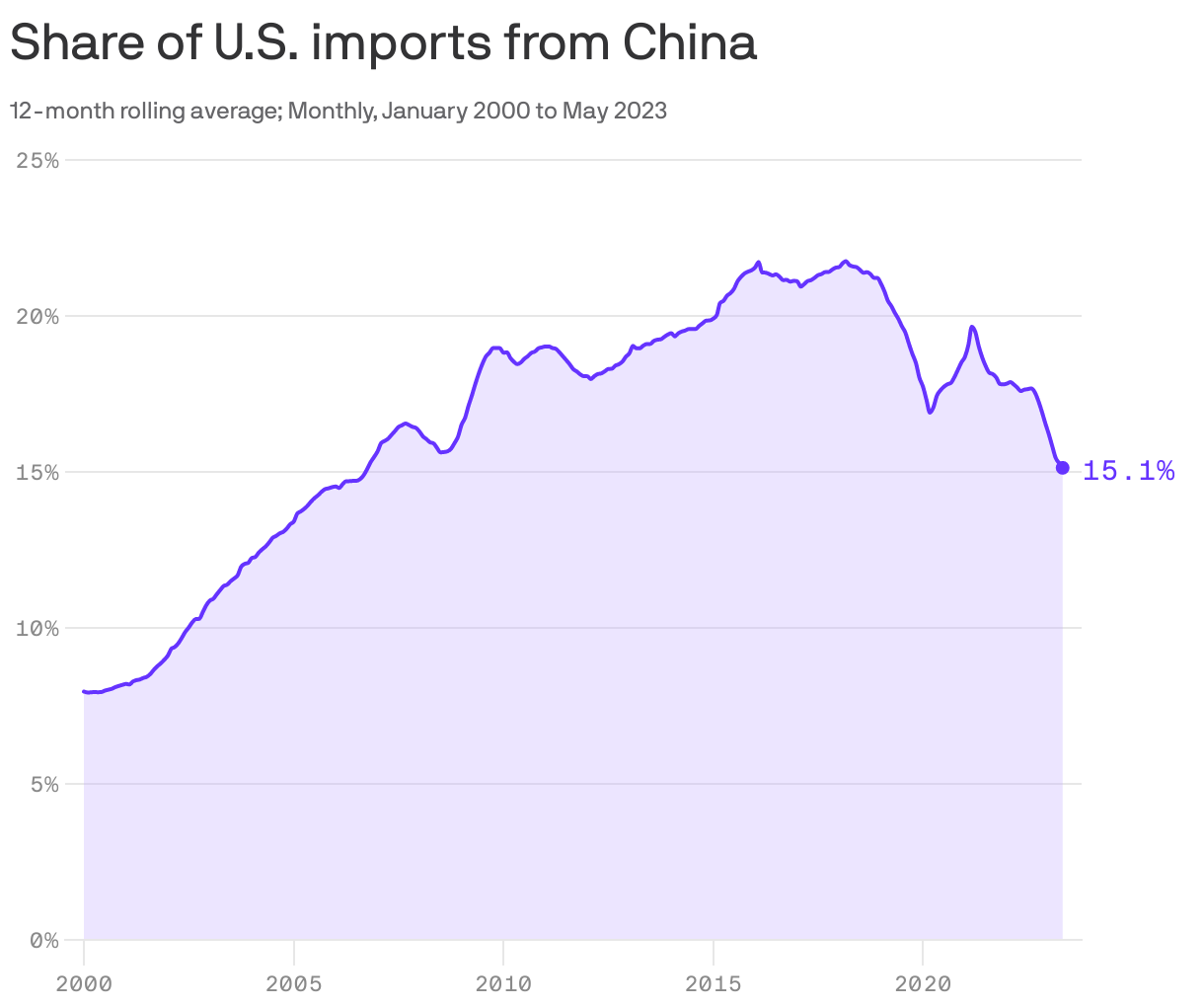
Data: Census Bureau; Note: Data refers to unadjusted estimates of trade in goods; Chart: Simran Parwani/Axios
Treasury secretary Janet Yellen's trip to China this week is taking place as trade between the two countries is plunging.
Why it matters: For all that fireworks sales rose again this year — nearly all of them sourced from China — imports from China to the U.S. totaled $130 billion over the four months from February through May. That's down 25% from $175 billion a year ago.
The historic employment gains notched by Black Americans during the pandemic-era recovery may be beginning to reverse — one of the disappointing details of the June jobs report out Friday.
Why it matters: The hot labor market sharply narrowed employment gaps, helping lower-income and other marginalized workers reap benefits other groups felt much sooner. But those workers are also historically the first casualty of softer job conditions.
The sudden popularity of effective weight-loss drugs is scrambling the industry devoted to helping people shed pounds on their own, sending companies searching for ways to reinvent themselves.
Why it matters: Drugs like Wegovy and Mounjaro are transforming the weight-loss experience, introducing a dependable medical solution for people who need or want to be slimmer.
Sometimes the jobs reportshifts the narrative about what's next for the economy and the Federal Reserve. There was no such shift to be found in the June numbers that were released Friday.
Why it matters: Job growth is moderating, with the 209,000 positions added in June -- the lowest thus far in the post-pandemic expansion. But overall conditions for American workers remain strong, with low joblessness and rising wages.
The next time your car breaks down, expect to fork over more money — and wait longer — for repairs.
Why it matters: Americans already face record-high debt after a long battle with inflation, and pricey repairs for vehicles they rely on to get around will likely only worsen the situation.
A stablecoin project amassed a who's who of crypto investors with a humanitarian pitch pointed at serving the underbanked — and now it's suffering its own set of banking issues.
Driving the news: Reserve Protocol's RPay — the app through which users make transfers and payments — announced that on Aug. 3 it would suspend local currency withdrawals in six countries, including key markets in Latin America that the app built out since its start.
One of the best pieces of news in the June jobs report was a new multi-decade high in the share of people employed in their prime working years.
Driving the news: The employment-to-population ratio among Americans ages 25 to 54 inched up to 80.9% in June. The last time it was that high? April 2001.
When a chemical plant in Port Neches, Texas, exploded on Thanksgiving eve in 2019, multiple people were injured, tens of thousands were evacuated from their homes and off-site property damage costs topped $150 million.
What's new: The plant's ultimate owners, private equity firms First Reserve and SK Capital Partners, will not be held liable, per a recent ruling by the Texas Supreme Court.
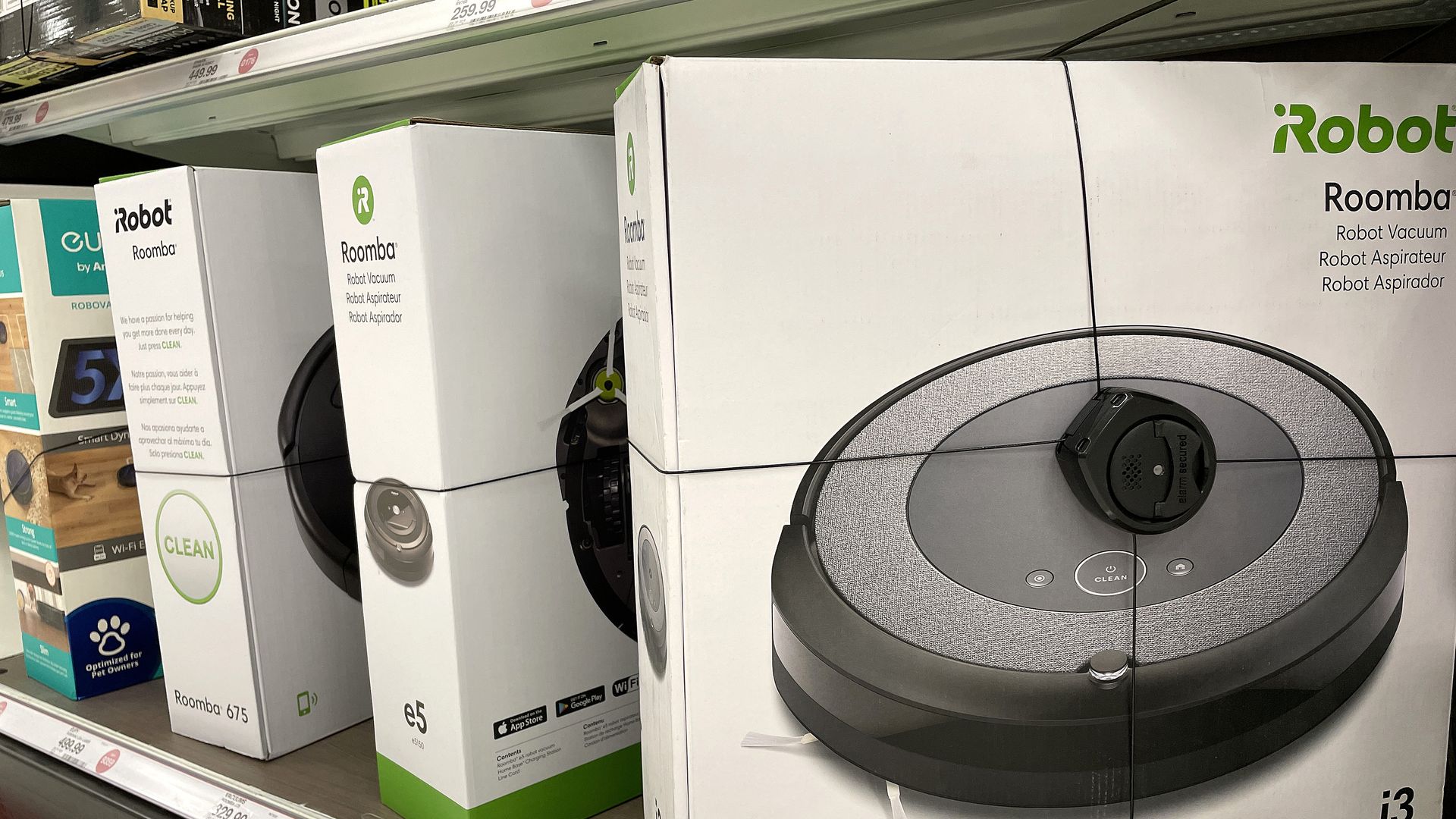
The European Commissionhas opened a full investigation into Amazon's proposed $1.7 billion acquisition of iRobot, the Massachusetts-based maker of Roomba vacuum cleaners.
Why it matters: Amazon is among the world's most acquisitive tech giants, making multibillion-dollar purchases in everything from connected home to grocery to movie studios to health care clinics. This could be the first time it's stopped by antitrust regulators.
In this economy, everything's coming up wages: A rising share of employed adults say that if they ask for a raise at work, they're very likely to get one, per a new Morning Consult survey.
Why it matters: The survey is another sign of worker empowerment in what remains a tight labor market — and it's also an indicator of how important wages have become to the overall economic picture.
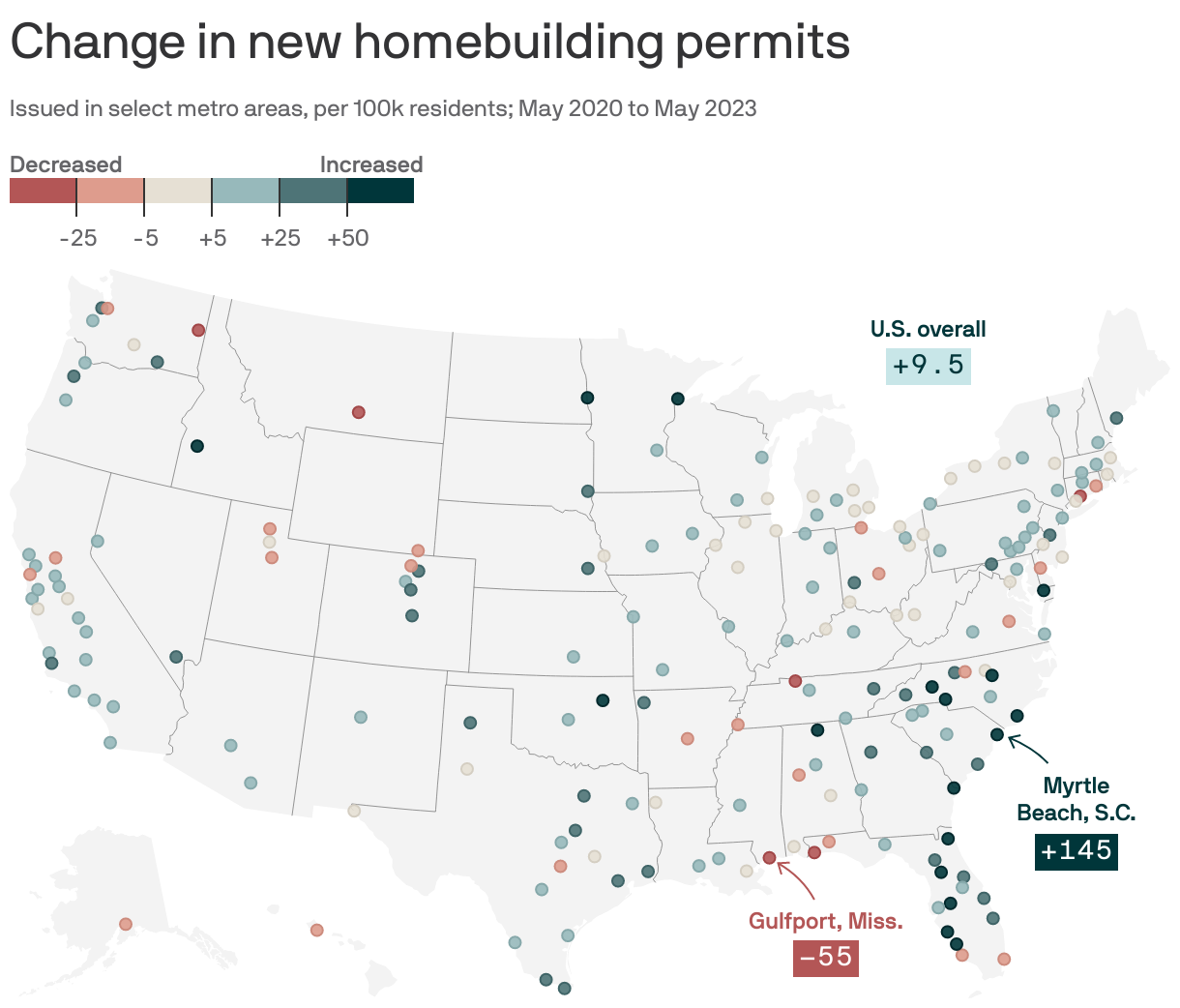
Data: U.S. Census; Note: Unadjusted estimate of privately owned units of any size; Map: Kavya Beheraj/Axios
There were 42.3 new homebuilding permits per 100,000 residents issued nationwide in May 2023, up from 32.9 in May 2020 — the early months of the COVID-19 pandemic.
That's per a new Axios analysis of U.S. Census Bureau data.
At least 45% of U.S. tap water is estimated to be contaminated with "forever chemicals," according to new U.S. Geological Survey research.
Why it matters: Exposure to certain levels of these synthetic compounds, referred to collectively as PFAS, has been linked to adverse health effects in humans and animals, including an increased risk of cancer.
The latest: Department of Justice attorneys in a court filing Thursday evening called Tuesday's preliminary injunction by a Trump-appointed federal judge "both sweeping in scope and vague in its terms" as it asked for the order to be stayed.






/2023/07/07/1688742302154.gif?w=3840)

/2023/07/07/1688755220210.gif?w=3840)