Investment management giant BlackRock filed an application for a spot bitcoin ETF on Thursday.
Why it matters: The SEC has historically rejected attempts to launch a spot bitcoin ETF in the U.S. Now, the world's largest asset manager is entering the battle.
John Ray III, now at the helm of the collapsed crypto exchange FTX, says "pack mentality," "intellectual laziness" and poor corporate governance can lead to a company's downfall.
The big picture: "There's the fear of being left behind. It causes a panic. It's like a fever," Ray said in a fireside chat, explaining how so many investors might have missed what was going on at FTX.
Ever try to buy a concert ticket for an arena show and end the transaction deeper in the financial hole than you were expecting? Thank junk fees.
Why it matters: Junk fees — or additional charges that often accompany hotel or lodging reservations, bank services and ticket purchases — have attracted mounting criticism from consumers and public officials alike.
The federal team investigating the collapse of Champlain Towers South in Surfside, Fla. has found the structural design of the building did not meet codes in effect when it was built in 1981.
Driving the news: The investigators found that errors in construction and in later renovations compounded those deficiencies. The team will finish their work next year and issue a report in 2025.
The Instant Pot — a must-have hot gift of recent years — is in danger of losing steam after its parent company filed for Chapter 11 bankruptcy protection this week.
Why it matters: The kitchen gadget developed a deeply devoted cult following. Amazon called the product a "Prime Day favorite," and it has repeatedly been a holiday bestseller.
Why it matters: The review adds another potential obstacle to the agreement, and likely extends the time with which the two sides were hoping to close it.
Of note: Indeed, the Washington D.C. pushback against the deal is gaining steam.
In addition to the DOJ, the volume of noise coming from Democratic lawmakers over the deal's antitrust concerns and ties to the Saudi kingdom is growing.
Of note: When the deal was announced, Saudi Arabia's Public Investment Fund governor Yasir Al-Rumayyan said it would take a few weeks to complete. The WSJ reported that closing the deal could take at least a year, citing an anonymous PGA Tour executive.
The DOJ and LIV declined to comment. The PGA did not immediately return a call seeking comment.
MakerDAO is breaking up with Gemini by cutting its position in the exchange's GUSD stablecoin, Brady and Crystal write.
Zoom in: The decision is largely informed by a desire for MakerDAO, a decentralized autonomous organization with $8 billion in assets, to take advantage of generous interest rates on U.S. Treasuries.
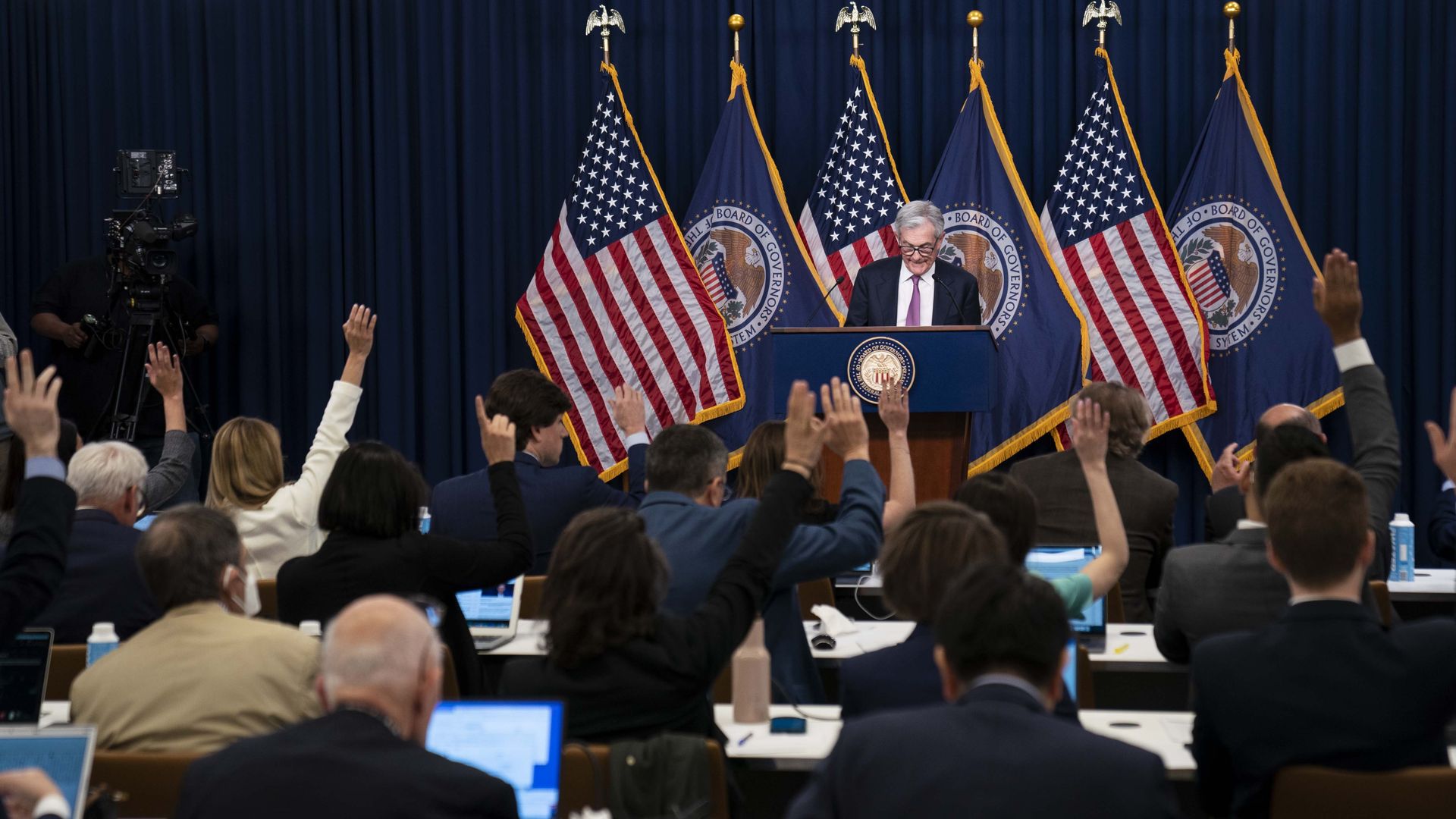
Why it matters: For the last year, the Fed was playing catch-up, trying to use its words and actions to regain lost credibility as an inflation-fighter. Now, it is in a better position to wait and see how things evolve.
Flashback: This time a year ago, inflation was soaring and it was clear that the Fed had misjudged how high and long-lasting inflation would be.
As a result, the central bank not only started raising interest rates aggressively, but Powell also offered fairly explicit guidance about what would happen in future meetings.
The idea was to tighten financial conditions and try to prevent inflationary psychology from setting in — essentially using both words and actions to keep inflation from spiraling out of control.
"[I]n the current highly unusual circumstances with inflation well above our goal, we think it's helpful to provide even more clarity than usual" about future policy, Powell said at his news conference one year ago.
State of play: But it's not 2022 anymore, inflation isn't 9% anymore, and it's not at all obvious whether the Fed is still playing catch-up in its rates policy or if rates are high enough already to bring the economy in for a landing.
That helps explain why Powell took great pains not to send signals Wednesday about the near future.
"I want to stress one more thing, and that is that the committee decision made today was only about this meeting," he said. "We didn't make any decision about going forward, including what would happen at the next meeting."
This ambiguity is also evident in the dot plot — the visual in which each policymaker's expectation for where rates are heading is published.
Two officials saw no further rate hikes this year being justified, while at the other extreme one saw another full percentage point worth of hikes. (The consensus view was that another half-percentage point worth of hikes will be justified.)
Between the lines: Despite these widely varied opinions, there were no dissents from Wednesday's policy decision, suggesting that the decision was a carefully calibrated compromise in which everyone got something they wanted.
Monetary doves got a breather from rate hikes, while hawks got communications suggesting two more hikes are on the way.
That comes through in Powell's comments as well, which preserve the option of more rate hikes without committing to them.
The bottom line: The Fed's actions over the last year have helped it regain credibility that it will do what it takes to fight inflation, even if that causes economic and market pain. That gives it more flexibility in the months ahead to adapt course.
Ticket giants Live Nation and SeatGeek have committed to reveal the entire cost of certain tickets up front when consumers are shopping for options, eliminating what critics have called "junk fees," the White House announced Thursday.
Why it matters: "Junk fees" jack up ticket costs so they are higher than the sticker price on many ticketing sites — undercutting accessibility to some of the hottest shows as demand for concerts is soaring.
Consumers continued to open their wallets at retail shops in May.
Why it matters: While shoppers are spending at a more moderate pace than in 2022, they are not pulling back in a way that would raise worrying signs about the U.S. economy.
Amy Wu, who most recently led FTX Ventures until the crypto exchange's collapse last November, has joined Menlo Ventures as an NYC-based partner focused on consumer startups.
Why it matters: "Historically, [consumer startups are] over a third to a half of exit value [in VC]," partner Shawn Carolan told Axios.
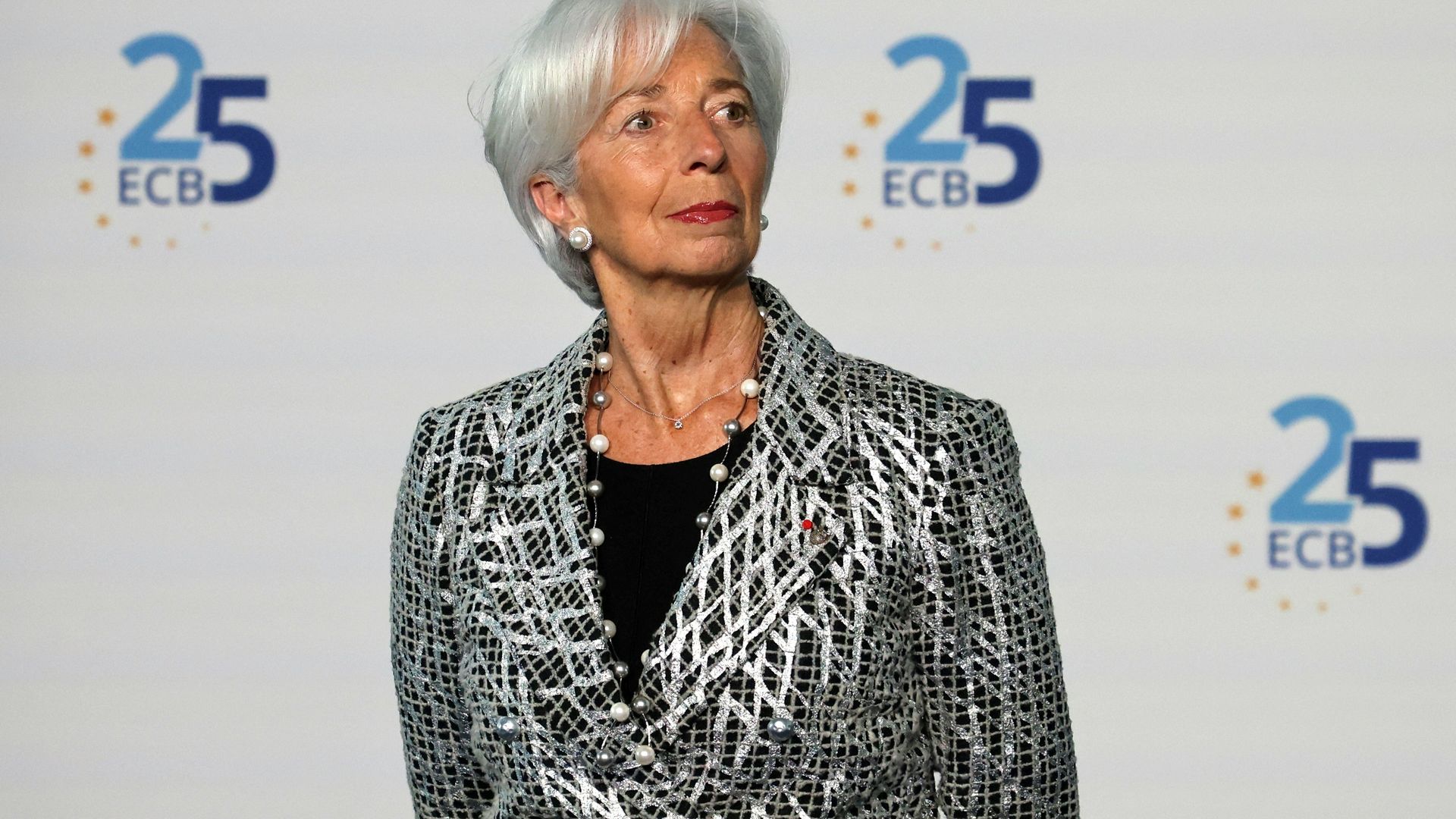
The European Central Bank raised interest rates by a quarter percentage point Thursday, the latest central bank to continue its historically aggressive rate hiking campaign as global inflation proves difficult to tackle.
Why it matters: Borrowing costs across the eurozone are now at the highest level in more than two decades, with hints that rates could go even higher still.
Executives' optimism about the future took a step down in the second quarter, according to a survey of chief financial officers out Thursday morning from Deloitte.
Why it matters: The survey shows a wariness among execs, after having lived through the many gyrations of the past few years and asthe future for financial conditions still looks fairly uncertain.
Polygon launched a database cataloguing the different ways folks are using blockchain-related services across verticals from social impact to education.
Why it matters: The initiative was inspired to answer the question of "what is crypto's value proposition," Rebecca Rettig, chief policy officer at Polygon, tells Axios, and in part, to push back on Washington criticism enshrined in the President's economic report that its innovation has been mostly about creating "artificial scarcity."
Commercial real estate could well be the next big shoe to drop. But even if it is, the systemic repercussions are likely to be small. That's the message being sent not only by Fed chair Jay Powell on Wednesday but also by New York City Comptroller Brad Lander.
Why it matters: Billions of dollars are tied up in commercial real estate, and much of that wealth could end up getting vaporized.
It finally happened: The Fed declined to raise interest rates at its policy meeting for the first time since March 2022.
Why it matters: The last 15 months saw the sharpest series of rate hikes in 40 years — radically reshaping markets and the economy. Now, it might be the beginning of the end of that era.
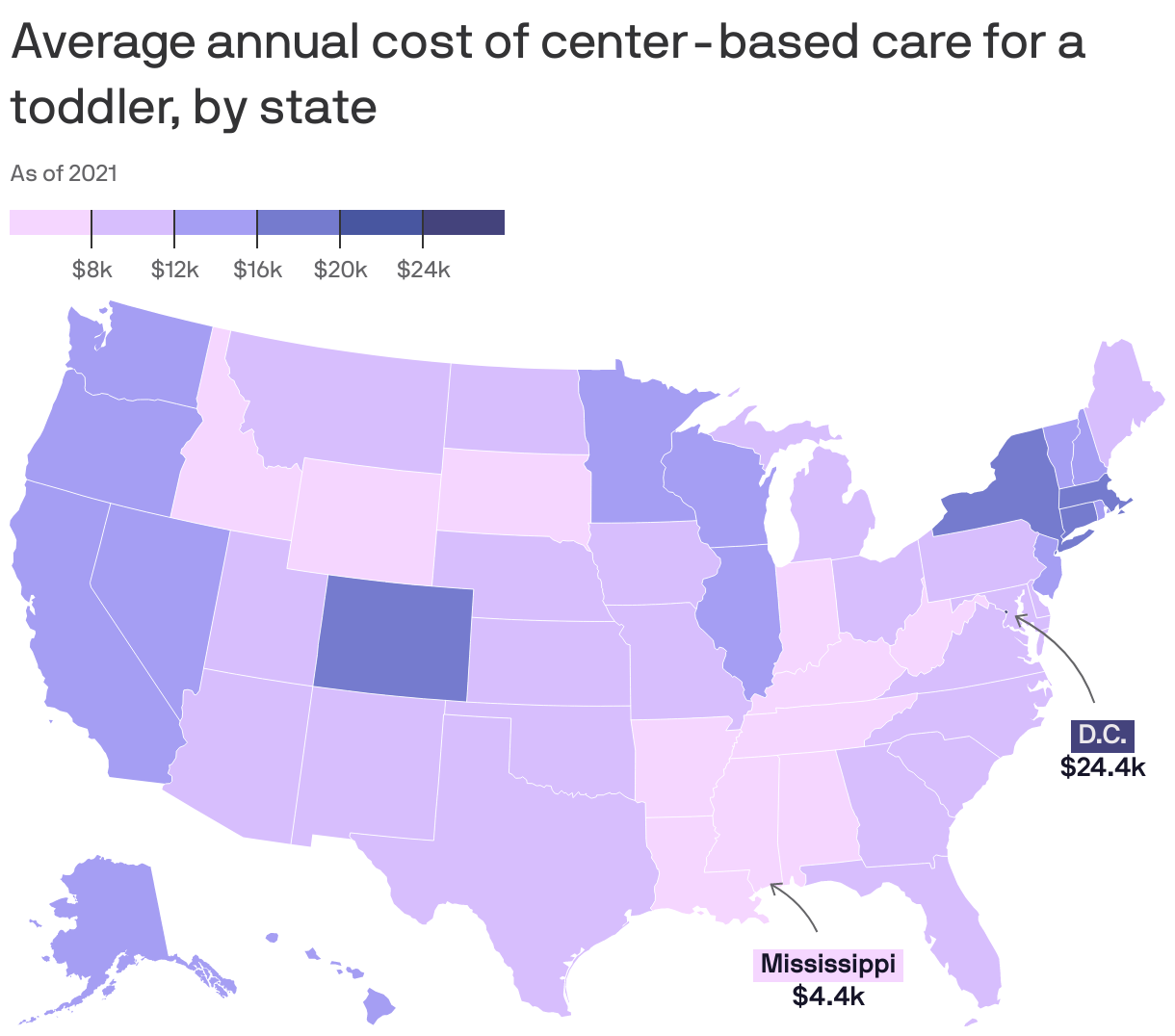
Data: Annie E. Casey Foundation; Map: Tory Lysik/Axios Visuals
New data shows how deeply families have struggled to stay afloat while working and paying for child care, and how in many cases they've been forced to quit jobs to stay home with a kid — especially if they are Latino, Black or live in poverty.
By the numbers: About 17% of Black children and 16% of Latino kids ages 5 and under lived with a family member who had to quit, change or refuse a job because of child care issues in 2021, according to a report by the Annie E. Casey Foundation, released Wednesday.
The economy just might be able to avoid the painful slump that Federal Reserve officials warned could be the unfortunate result of their rate-hiking campaign.
Driving the news: That, at least, is the message that comes through via new forecasts from the central bank that projects a smaller rise in joblessness and faster economic growth than it predicted three months ago.
The National Music Publishers' Association accused Twitter in a lawsuit Wednesday of repeatedly violating copyright law by allowing users to post music to Elon Musk's platform without permission.
Driving the news: "Twitter fuels its business with countless infringing copies of musical compositions, violating Publishers' and others' exclusive rights under copyright law," alleges the NMPA's lawsuit, brought on behalf of 17 music publishers that represent some of the world's biggest artists.








/2023/06/15/1686847642499.gif?w=3840)













/2023/06/14/1686777032427.gif?w=3840)