How the Fed's interest rate hike campaign reshaped the economy

Add Axios as your preferred source to
see more of our stories on Google.
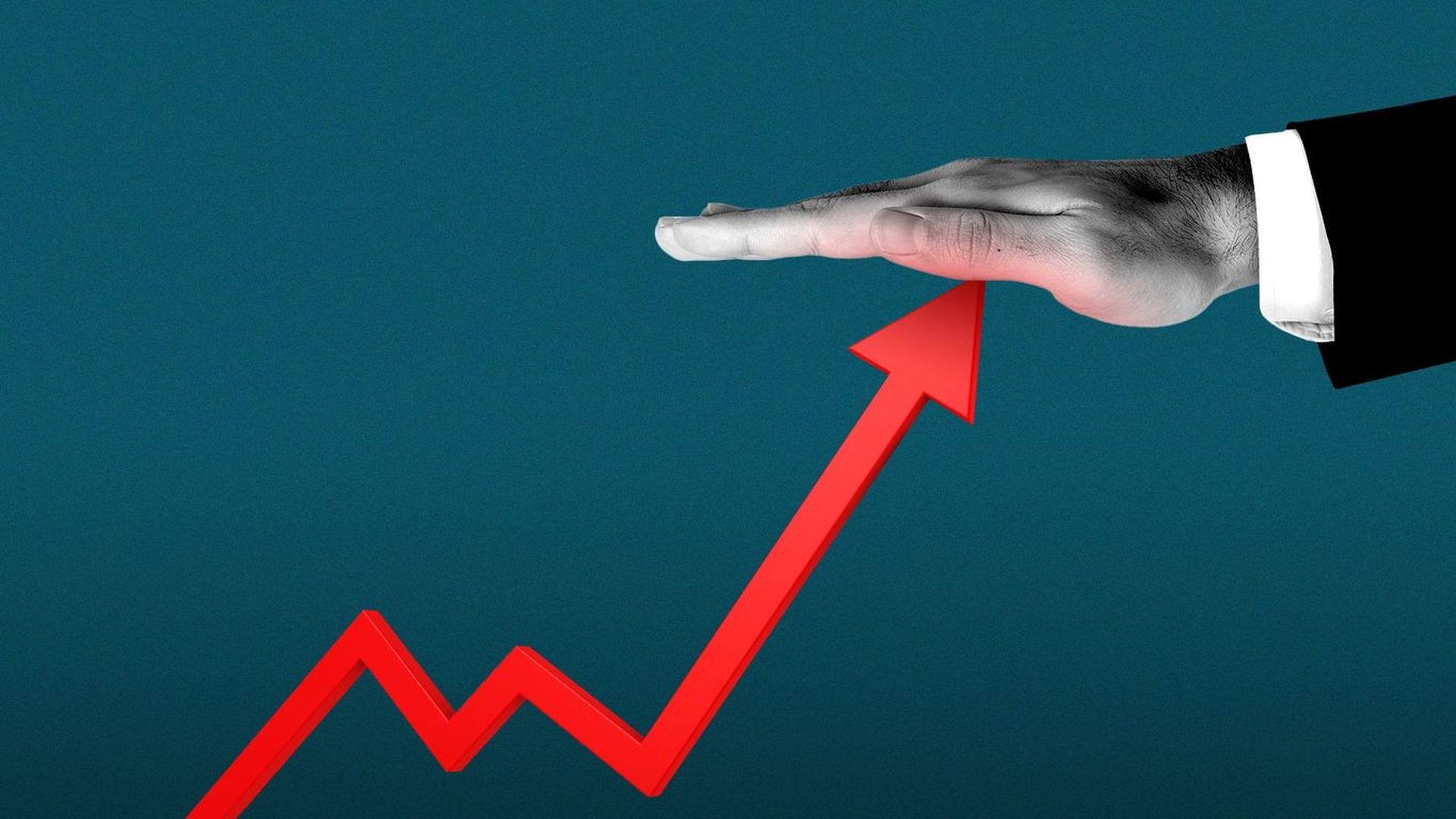
Illustration: Annelise Capossela/Axios
It finally happened: The Fed declined to raise interest rates at its policy meeting for the first time since March 2022.
Why it matters: The last 15 months saw the sharpest series of rate hikes in 40 years — radically reshaping markets and the economy. Now, it might be the beginning of the end of that era.
A few ways the tighter money has rippled out into the system:
- It hammered the stock market in 2022, sending the S&P 500 down 19.4%, its worst year since 2008.
- Highly speculative, tech-centric growth companies — especially sensitive to interest rates — were clobbered, with the Nasdaq composite tumbling 33%.
- Mortgage rates soared from roughly 3% at the beginning of 2022, to more than 7% at times, drastically reducing affordability and slamming the brakes on home sales activity.
- Corporate borrowing costs skyrocketed, cutting off access to capital riskier companies.
- The rate hikes triggered the failure of crypto hedge funds and supposedly safe "stablecoins," dominoes that ultimately toppled Sam Bankman-Fried's FTX into bankruptcy and criminal proceedings.
- Deposit rates rose sharply for savers.
- And some banks, Silicon Valley Bank, found that their deposit base was far flightier than they thought, just as rising rates crushed the value of their bond investments. The result? A run on regional banks in March turned into the worst financial panic since the 2008 crisis.
What's next: It's unclear if all that interest-rate-related tumult is over.
- In announcing its decision not to lift rates for the 11th consecutive meeting, the Fed's rate-setting committee hastened to say it could return to rate hikes if inflation doesn't continue to drop.
What they're saying: More rate hikes still could be in the pipeline, but they may just come at a more leisurely cadence and modest size than those we've seen at each meeting since early 2022.
- "It may make sense for rates to move higher, but at a more moderate pace," Fed chair Jerome Powell told reporters at the post-decision news conference.
Worth noting: Despite such warnings, the stock market seems to be running with the idea that its long nightmare of rate hikes is over, as the S&P 500 inched up on Wednesday, closing at a new high for the year.
