Interest in revitalizing or redeveloping closed hotel properties has been on the rise for the last decade — but it's surged to new heights since the pandemic began.
Why it matters: Vacant sites are a scourge to local property values and pose challenges, such as safety issues, to law enforcement, lawmakers and residents.
Privately owned vehicles will make up a smaller and smaller share of global transportation as autonomous vehicles become more feasible and cities fight overcrowding, according to new research by the McKinsey Center for Future Mobility.
By the numbers: Private cars will account for 29% of transportation in 2035, down from 45% in 2022, according to new estimates by McKinsey provided to Axios.
Social issues are creating a market downdraft for America's mainstay brands — just ask Target, Anheuser Busch, Kohl's and their collective $28.7 billion loss in market value since the beginning of April.
Why it matters: Fiercely contested cultural issues have always aroused political passions, and held sway over electoral politics.
What they're saying: "I do not support altering the stance of monetary policy over worries of ineffectual management at a few banks," Fed governor Christopher Waller said Friday at a conference in Norway hosted by the country's central bank and the International Monetary Fund.
It's easy to get so caught up in month-to-month economic data that you miss a longer-term trend emerging before your eyes.
Here's one: There is massive new investment taking place in U.S. heavy industry that's set to shape the economic landscape for years to come.
Why it matters: The 2010s were a period of chronic underinvestment. By contrast, now there are billions flooding into large, expensive megaprojects to manufacture batteries, solar cells, semiconductors and much more.
It is fueled by hundreds of billions of dollars allocated by the Biden administration's signature legislation — the Inflation Reduction Act, Bipartisan Infrastucture Law, and CHIPS and Science Act — as well as pent-up demand.
It implies sustained upward pressure on demand for workers and raw materials for years to come, and makes a recession less likely by creating a floor of activity under normally volatile industries.
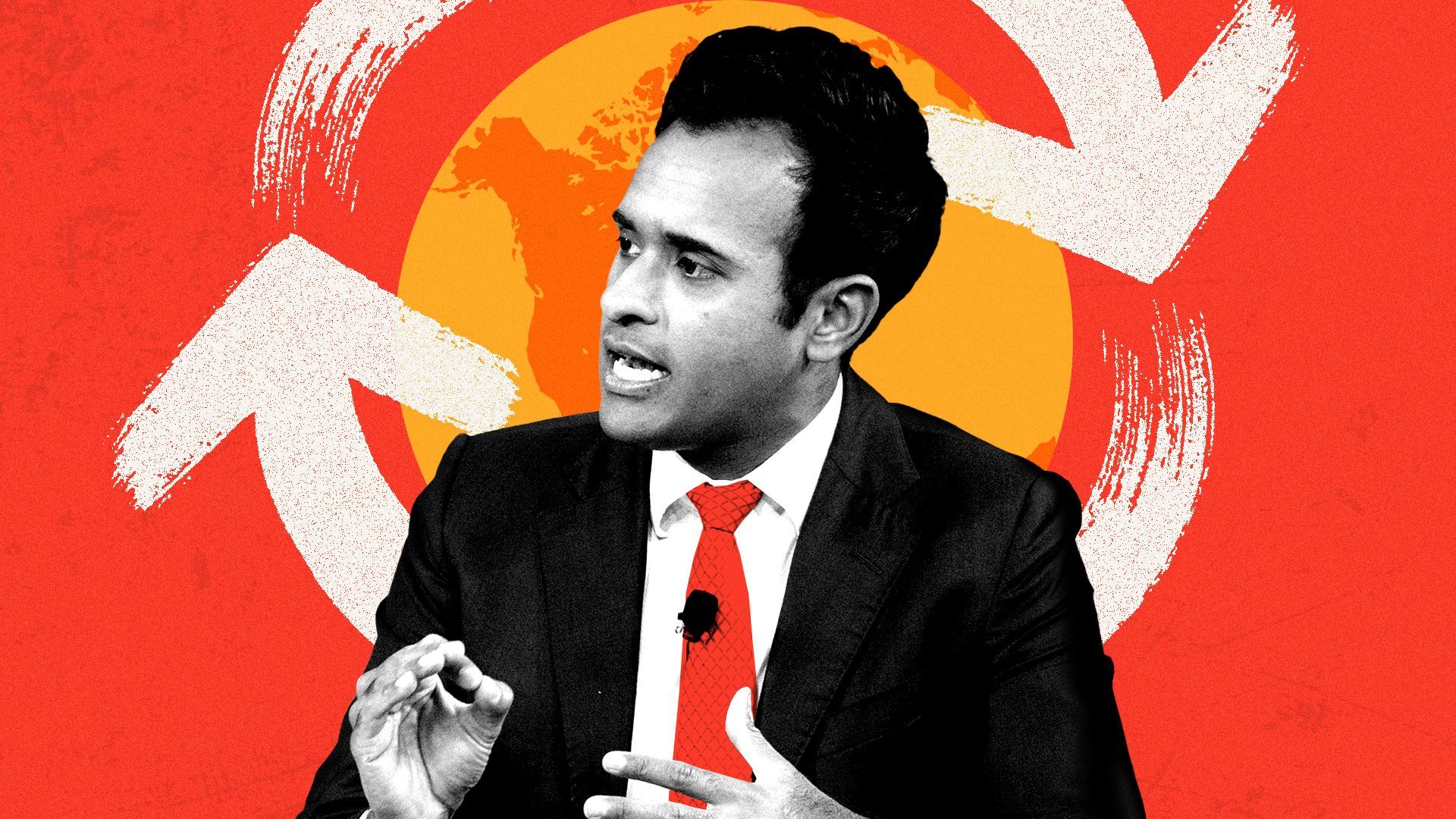
The drug company founded by and formerly led by anti-ESG and DEI crusader Vivek Ramaswamy has a nonprofit arm whose official mission now includes increasing the racial and gender diversity of pharma industry leadership.
Why it matters: Ramaswamy, a longshot 2024 GOP presidential candidate, is best known for arguing that ESG and DEI run counter to fiduciary duty and can have undue influence on cultural change.
The surge in rent prices over the past two years is keeping inflation high — and making life increasingly unaffordable for many Americans.
The big picture: While the rate of rent growth is slowing nationwide, and even falling in some regions, that's not helping most middle-class or low-income renters.
In a new bid to steady his rattled company, Anheuser-Busch U.S. CEO Brendan Whitworth vowed to protect the jobs of employees and those of independent wholesalers.
Why it matters: With conservatives in revolt over Bud Light's courting of a transgender influencer, Whitworth's statement is an effort to fight back and regain market share.
OK, trying a new thing here: Answering a very specific question from an avid Finish Line reader. (Listen, I'm going to run out of ideas eventually, so I need all the help I can get, folks.)
Lisa Calicchio, chief human capital management officer at WCG, writes from New Jersey:
"Expand on your comment 'I'm ruthless with my time.' Working remotely quite a bit, my husband can't help but overhear some conversations. His consistent feedback to me: 'You are too generous with your time.' I agree — and I pay dearly for it with respect to work-life balance."
Lisa was responding to my comment that I wouldn't mentor someone if I felt the mentee wasn't benefiting meaningfully.
Why it matters: I'm both blessed to mostly control my time and a little nutty in how I carry this out.
A few things I've noticed by studying others who seem to get a lot done and live well:
1. Sleep. The data is unambiguous: Most of us require seven or more hours of quality sleep to think clearly and perform optimally. This might mean ducking out early from work dinners, quitting movies before they're done, or telling the kids it's bedtime earlier than they like.
I'm routinely made fun of at home for ghosting around 9:30 p.m. (or earlier).
2. Working out. Here's another good place to be selfish. I know I'm grumpier and foggier if I don't exercise at least one hour each day. So I put this ahead of casual lunches or non-urgent meetings or small talk (more on this in a second).
Sorry, I refuse to believe most people couldn't carve out 30 to 60 minutes per day if they prioritized it.
3. Meetings. Most meetings could or should be half their scheduled time.
Every few months, I review mine to make sure I thin the number and duration. Can this one be an email or quick call? Can this be eliminated altogether? Most one-offs can be done in 10 minutes if you plunge right in.
Just because TV shows are 30 or 60 minutes doesn't mean meetings should be. This means cutting down on small talk at the top. Save it for parties and downtime.
4. "Me" time. I suck at work-life balance. Most of my waking hours are spent working or thinking about work. But I'm ruthless about carving out time for things that light me up: family, fly fishing, shanking golf balls, wandering Maine — often in spurts.
5. Good people. Few things pump more energy and joy than time with smart, optimistic, good people. The opposite is true too: Few things sap energy and joy than dullards, pessimists or jerks.
Regularly review the time you spend with life-enhancing vs. life-sucking people.
6. Just say no. Lisa's problem is the most common one: She's too generous!
Not sure advocating selfishness is popular — but a little selfishness goes a long way.
This is where ruthlessness can help: Can I truly make a difference with this person or problem? Is this something that seems to recur regularly but never resolve? Is this filling my life with too much negative energy or emotion? It's OK to say "no."
The way to rightfully justify it: You'll be worse at helping others if you're constantly drained or deflated.
💭 Jim will consider your question if it's very specific, and if you include your name, job title and city. Just hit "reply" to this email, or drop him a line: [email protected].
This article appeared in Axios Finish Line, our nightly newsletter on life, leadership and wellness. Sign up here.