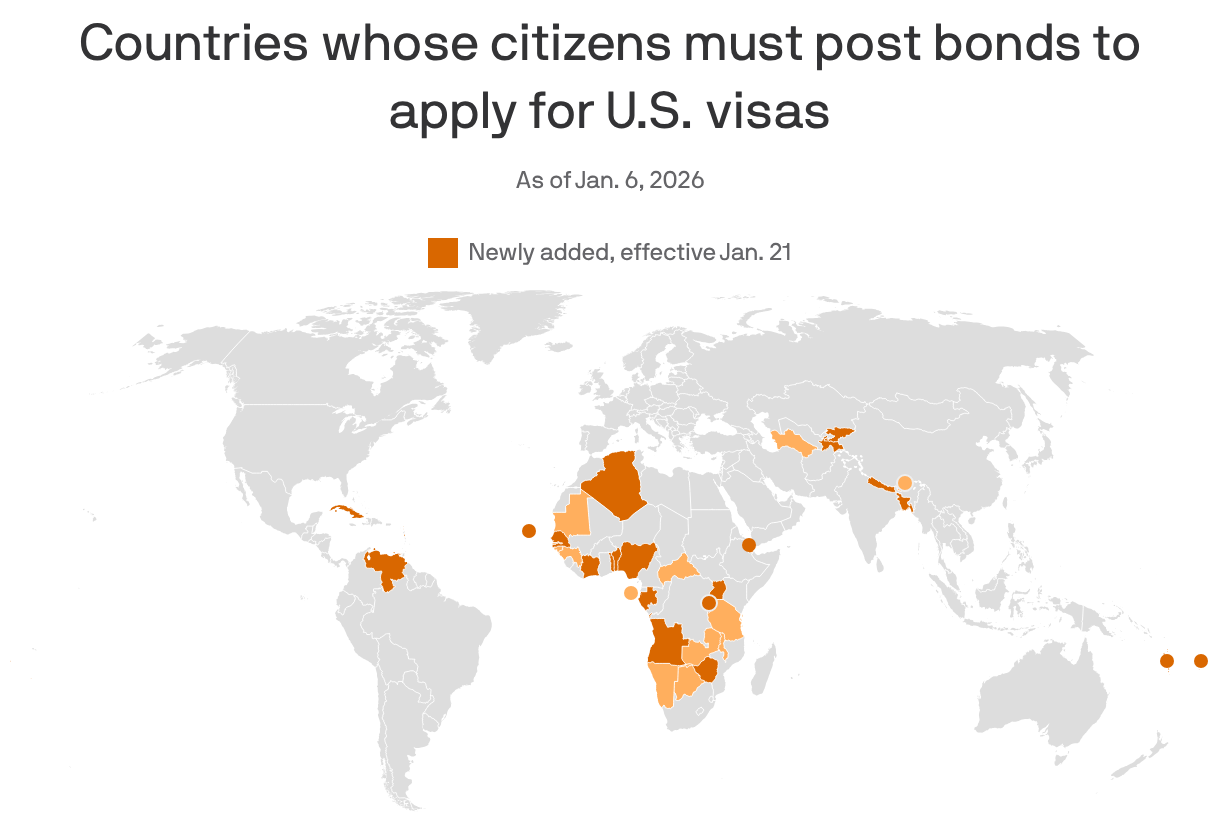
Data: U.S. State Department; Map: Erin Davis/Axios Visuals
The Trump administration on Tuesday added 25 countries to the State Department's list of nation's whose citizens may be required to post bonds of up to $15,000 to apply for U.S. entry.
The big picture: The additions bring the total to 38 countries, mostly in Africa, with in South America and Asia, whose travelers could face sharply higher costs to obtain U.S. visas, as part of the administration's broader strategy to curtail both legal and illegal immigration.
Travelers who don't have the required Real ID will have to pay up to board their flights starting next month.
The big picture: New penalties for those who still don't have Real IDs kick in beginning Feb. 1. Flying without one will set you back an extra $45 — more than double what the Transportation Security Administration (TSA) originally estimated.
That $45 will clear travelers for a 10-day period, after which they would have to pay the fee again.
Democratic leaders and officials are calling out the Trump administration for threatening to freeze billions of dollars in funding for child care and assistance for the poor.
Why it matters: The livelihoods of millions of families and the health of an already fragile child care system are at stake, officials and advocates say, while the Trump administration says it is merely shoring up the integrity of the system.
The administration is moving to create new rules and restrictions around federal child care funding, claiming that there's widespread fraud.
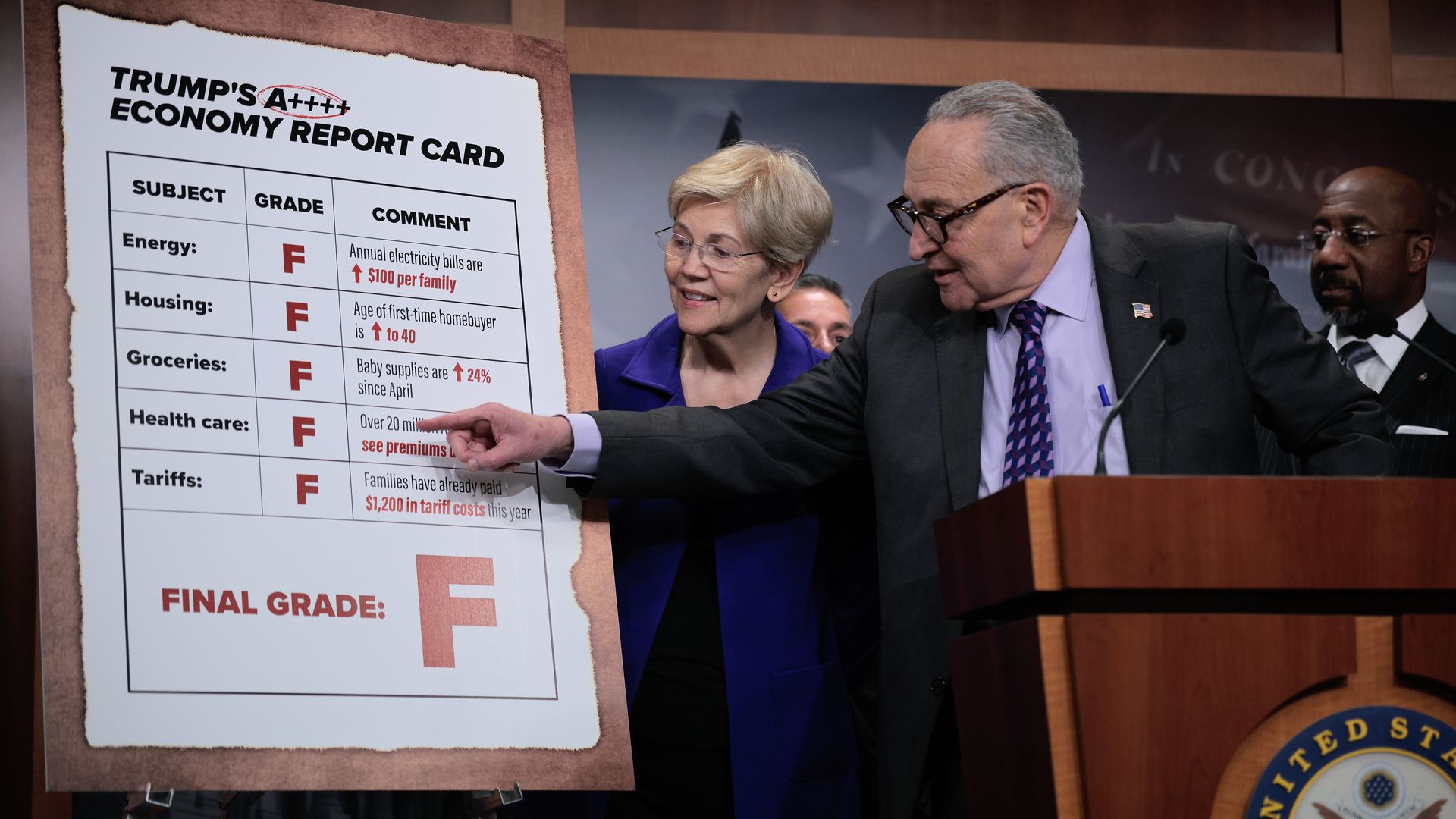
Top Senate Democrats on Wednesday will kick off an election-year blitz centered on bringing down housing costs, as the average age of first-time homebuyers reaches a historic high.
Why it matters: Democrats are zeroing in on housing affordability as a major liability for Republicans in this year's midterm elections. President Trump scrambled to address the issue after Democratic candidates who focused on it found success in November's off-year elections.
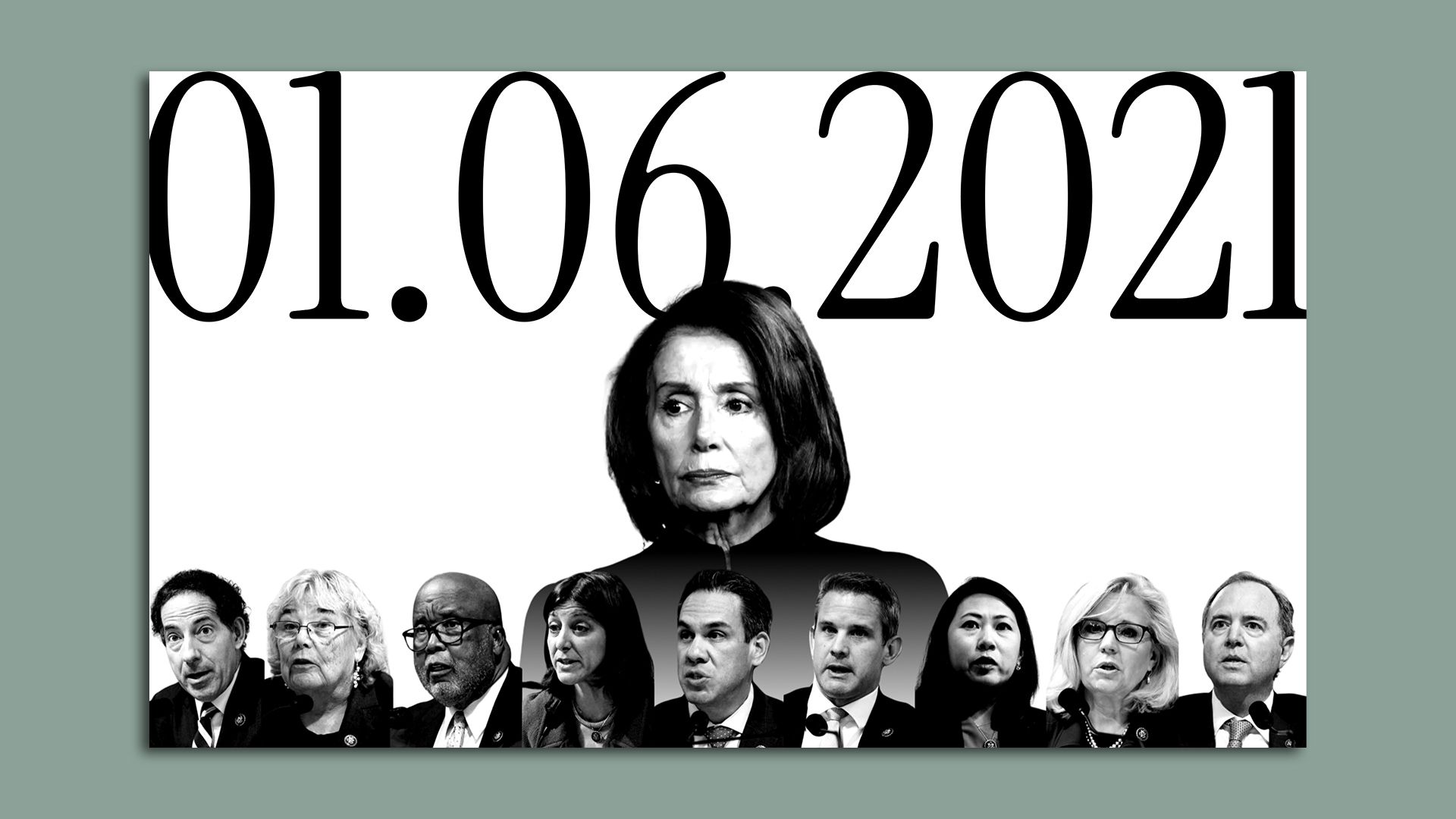
The White House marked the fifth anniversary of the Jan. 6 riot by releasing an official webpage that accuses former Vice President Mike Pence of "cowardice and sabotage," claims the 2020 election was stolen and insists the president's supporters were peaceful.
The big picture: Five years after a crowd of President Trump supporters stormed the U.S. Capitol, the day of infamy is being remembered through starkly divided partisan lenses.
Hundreds of thousands of Venezuelans are being encouraged to go home or face deportation following the U.S. operation to capture Venezuelan President Nicolás Maduro.
Why it matters: Venezuelan immigrants had temporary U.S. legal protections until last year, in part due to poor economic conditions and human rights abuses under the Maduro government.
President Trump on Tuesday urged House Republicans to be "flexible" on the Hyde Amendment — the 50-year-old policy barring federal funding for most abortions — as GOP leaders search for a deal to lower health insurance costs before the midterms.
The big picture: Trump's comments signal a notable softening on a long-held Republican policy as party leaders worry about voter backlash over rising Affordable Care Act premiums during an election year.
The Trump administration dramatically narrowed the childhood vaccine schedule this week and aligned immunizations more closely with Denmark's recommendations — a move months in the making.
Why it matters: Though the U.S. is looking to adapt Denmark's playbook against childhood infectious diseases, it might not translate to a nation with almost 60 times more people and vastly different public health policies.
The big picture: Almost overnight, pressure from the Trump administration turned a state scandal that has periodically dominated Minnesota headlines for at least six years into national news.
President Trump and Secretary of State Marco Rubio have whipped up a sense of fear and intimidation in foreign capitals since the capture of Venezuela's Nicolás Maduro, together threatening at least six countries.
Why it matters: In the wake of one of the most brazen displays of American power in decades, foreign leaders are taking the warnings very, very seriously.
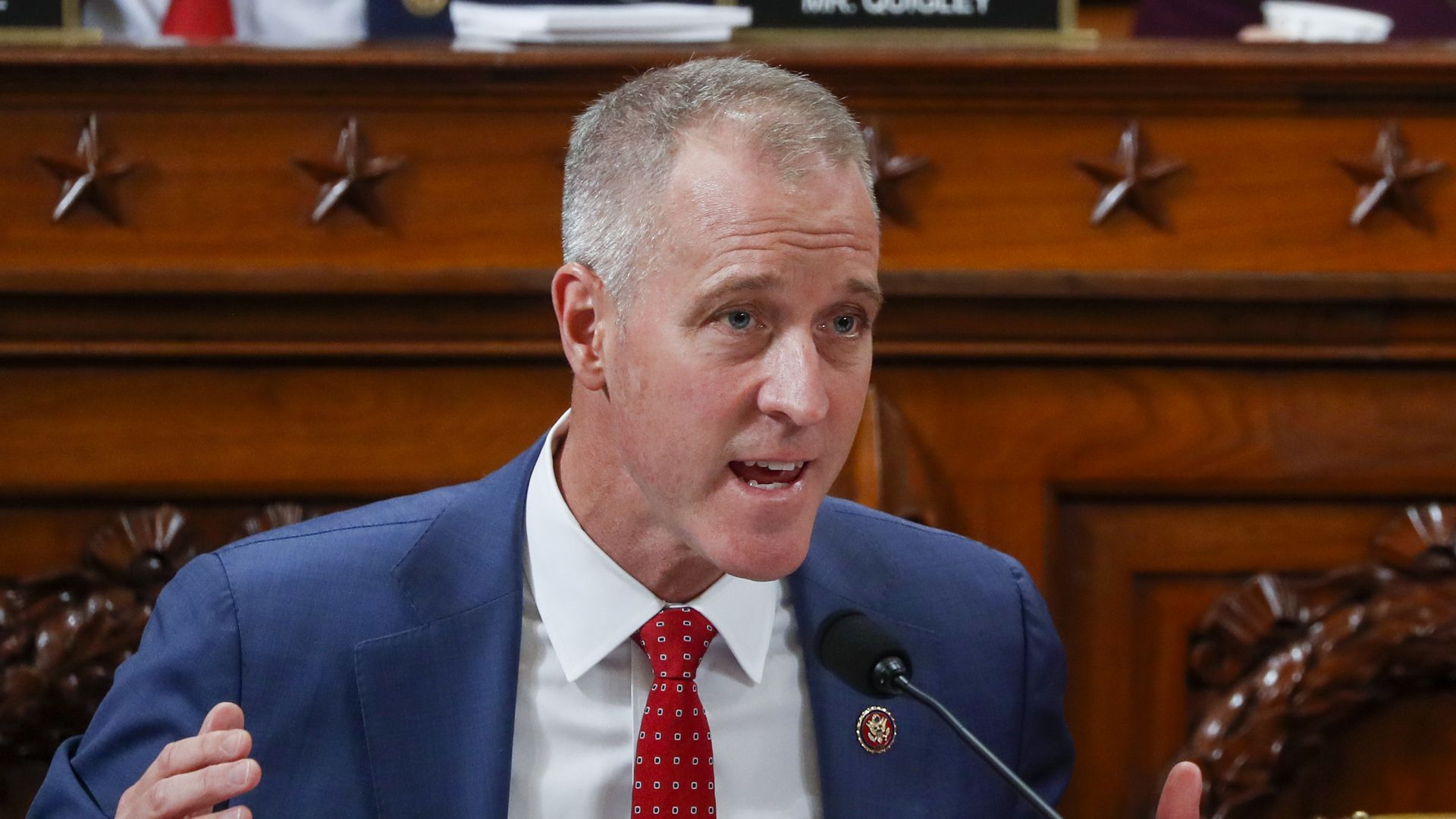
Former Rep. Sean Patrick Maloney won't seek a rematch against Rep. Mike Lawler (R-N.Y.) in 2026, he told Axios.
Why it matters: Nearly a dozen former House members are trying to return to Congress this cycle. But Maloney, who explored a comeback over the summer, won't be one of them and has closed his 2026 campaign account.
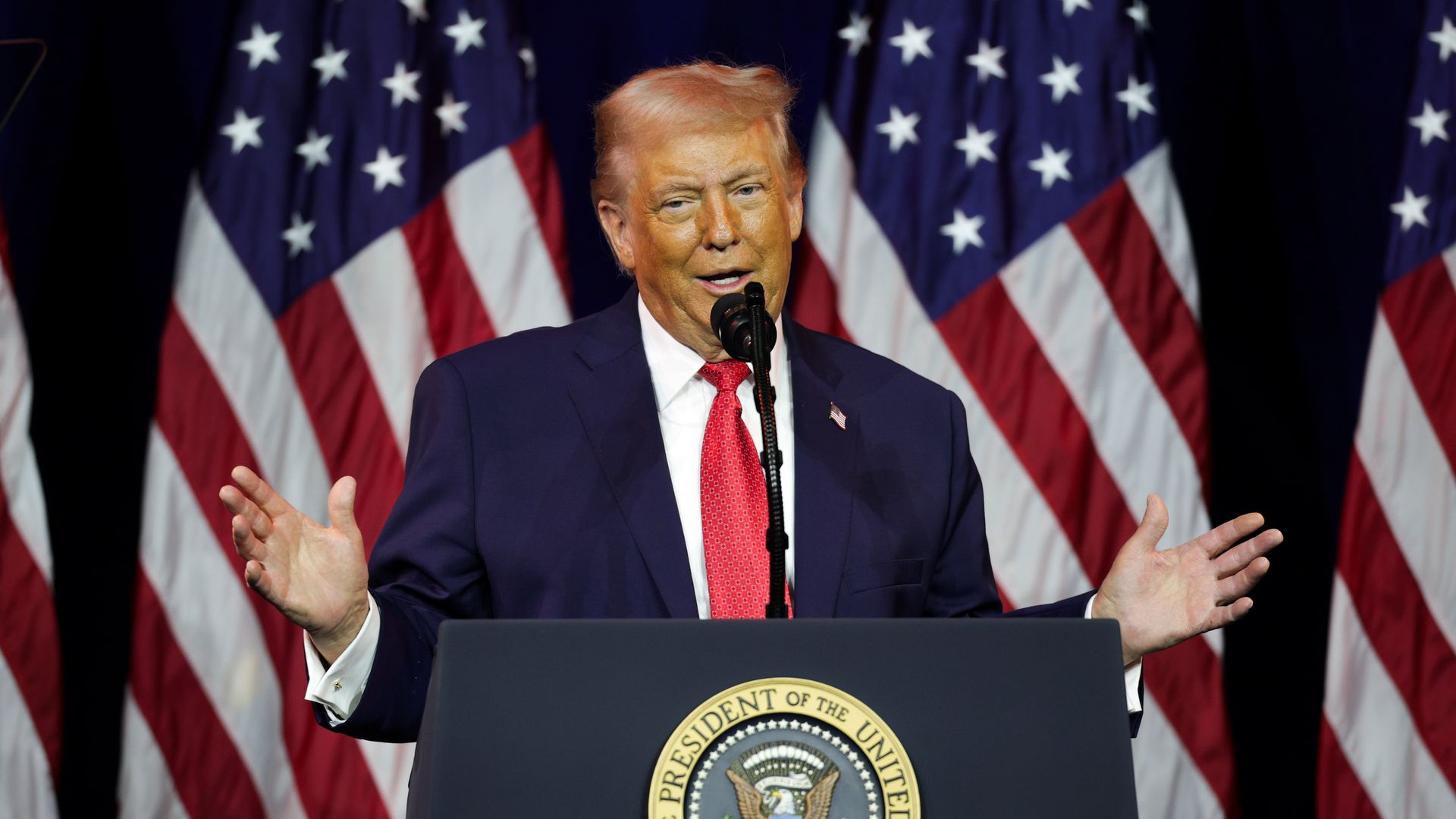
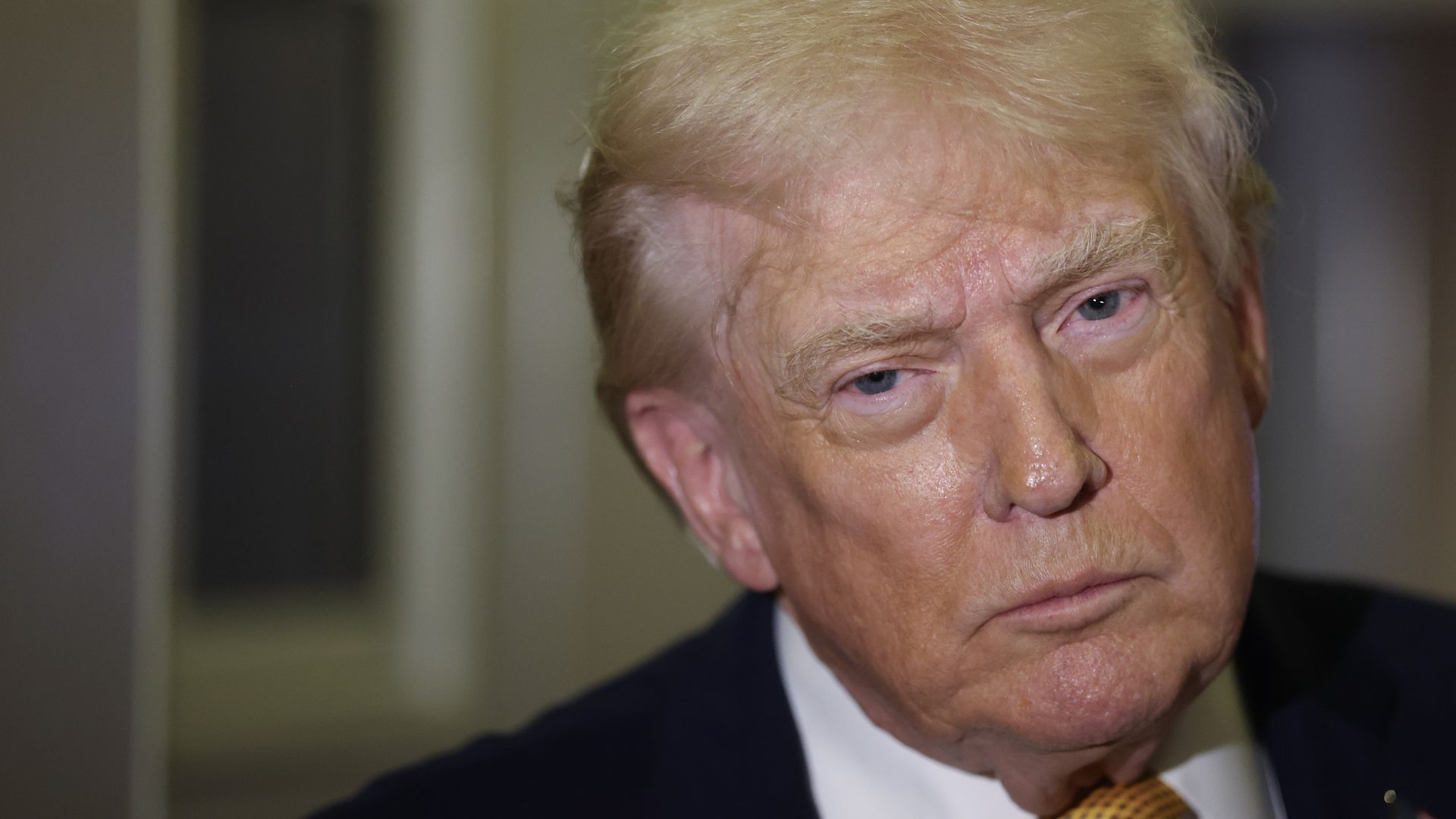
President Trump told House Republicans on Tuesday that he fears impeachment if the GOP doesn't retain its majority in this year's midterm elections.
Why it matters: Trump is the only president in U.S. history to be impeached twice, and the president's party almost always loses seats in midterm elections.
Hilton Hotels started the year on defense after one of its franchisees was called out for cancelling the reservations of Department of Homeland Security agents.
Why it matters: This fallout highlights the reputational risk of operating a franchise model and brings in to question how much behavioral control a global brand actually has over its franchisees.
The U.S. presented Israel and Syria with a new proposal for a security pact between them that includes establishing a joint economic zone on both sides of the border, a U.S. official told Axios.
Why it matters: The Trump administration is pushing for an agreement to stabilize the security situation along the Israel-Syria border, which officials see as the first step toward future diplomatic normalization.
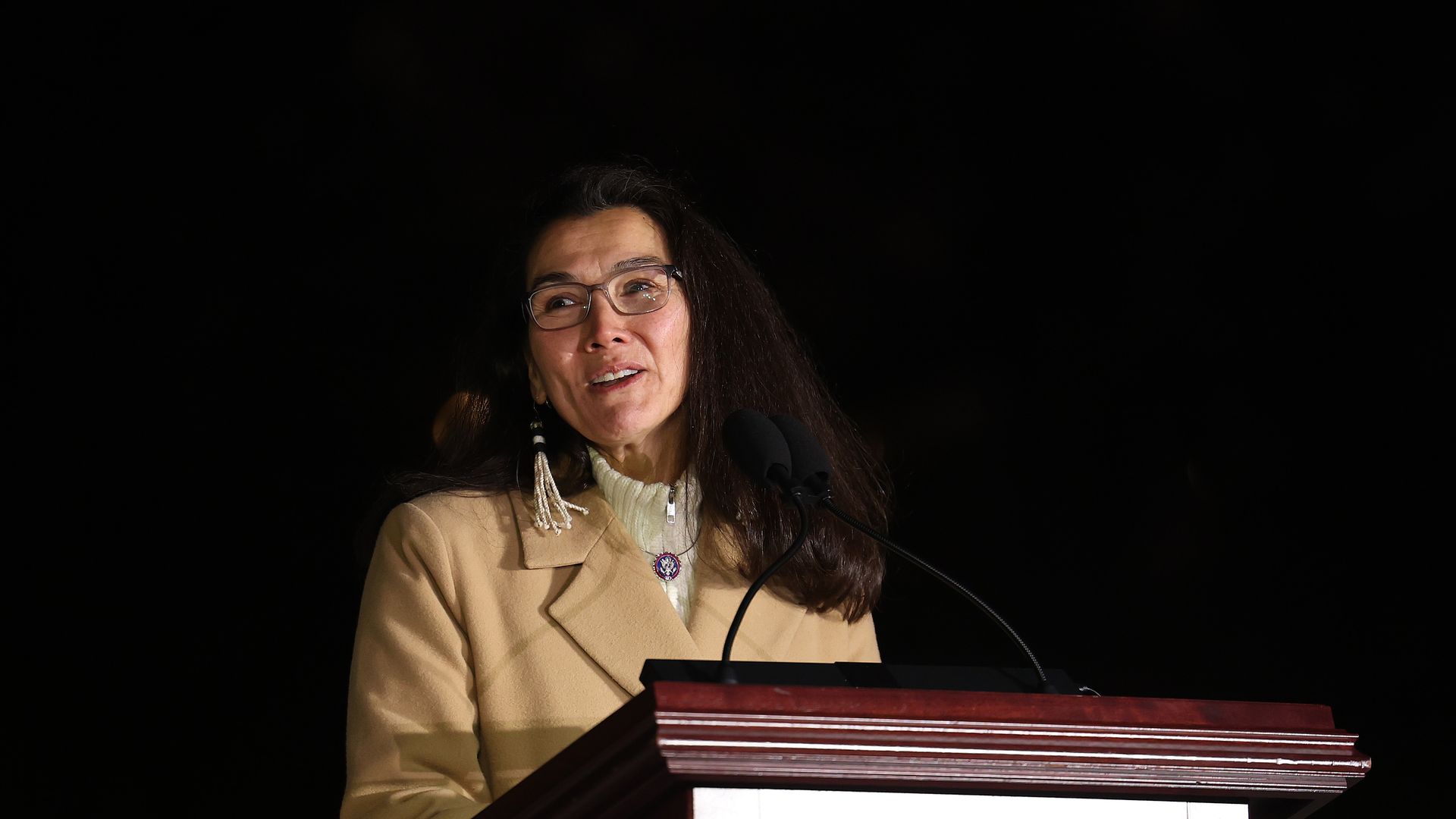
Former Rep. Mary Peltola (D-Alaska) is taking concrete steps toward a Senate run, including interviewing potential campaign managers, Axios has learned.
Why it matters: Peltola is expected to make a formal announcement challenging Sen. Dan Sullivan (R-Alaska) this month, according to two people familiar with the matter.
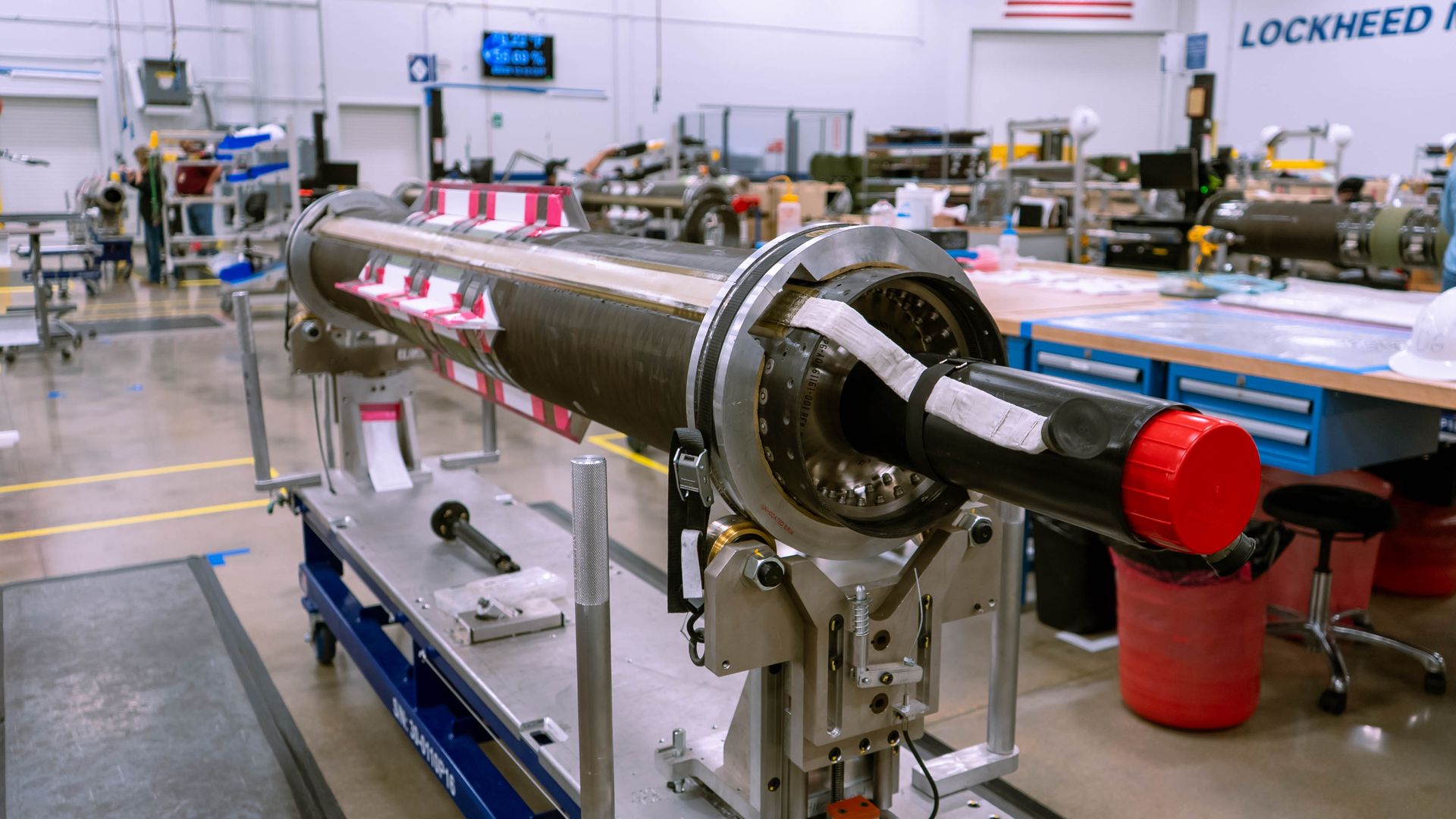
Lockheed Martin plans to more than triple its annual production of advanced Patriot missile interceptors under an agreement struck with the Pentagon.
Why it matters: Air defense demand across the world — in Ukraine, Europe, the Middle East — often outstrips output.
The pinch is especially felt at the higher end of the spectrum, where interceptors cost millions of dollars a pop and stockpiles take months or years to replenish.
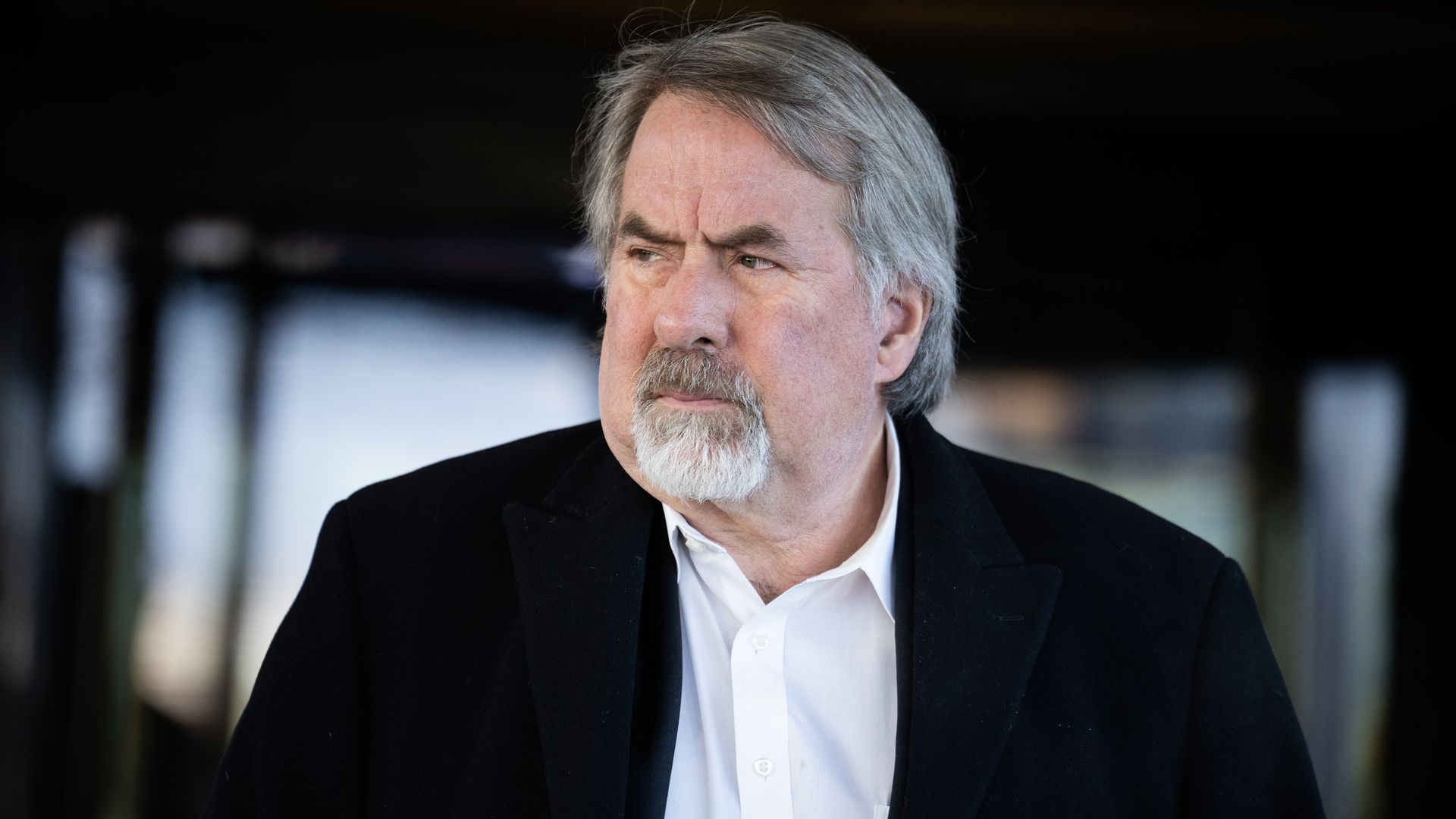
Rep. Doug LaMalfa (R-Calif.) — a 13-year veteran of the U.S. House — has died suddenly, according to statements Tuesday from GOP leaders.
The big picture: LaMalfa, 65, a fourth-generation rice farmer, represented California's 1st Congressional District since 2013, previously serving in the state Assembly and Senate.
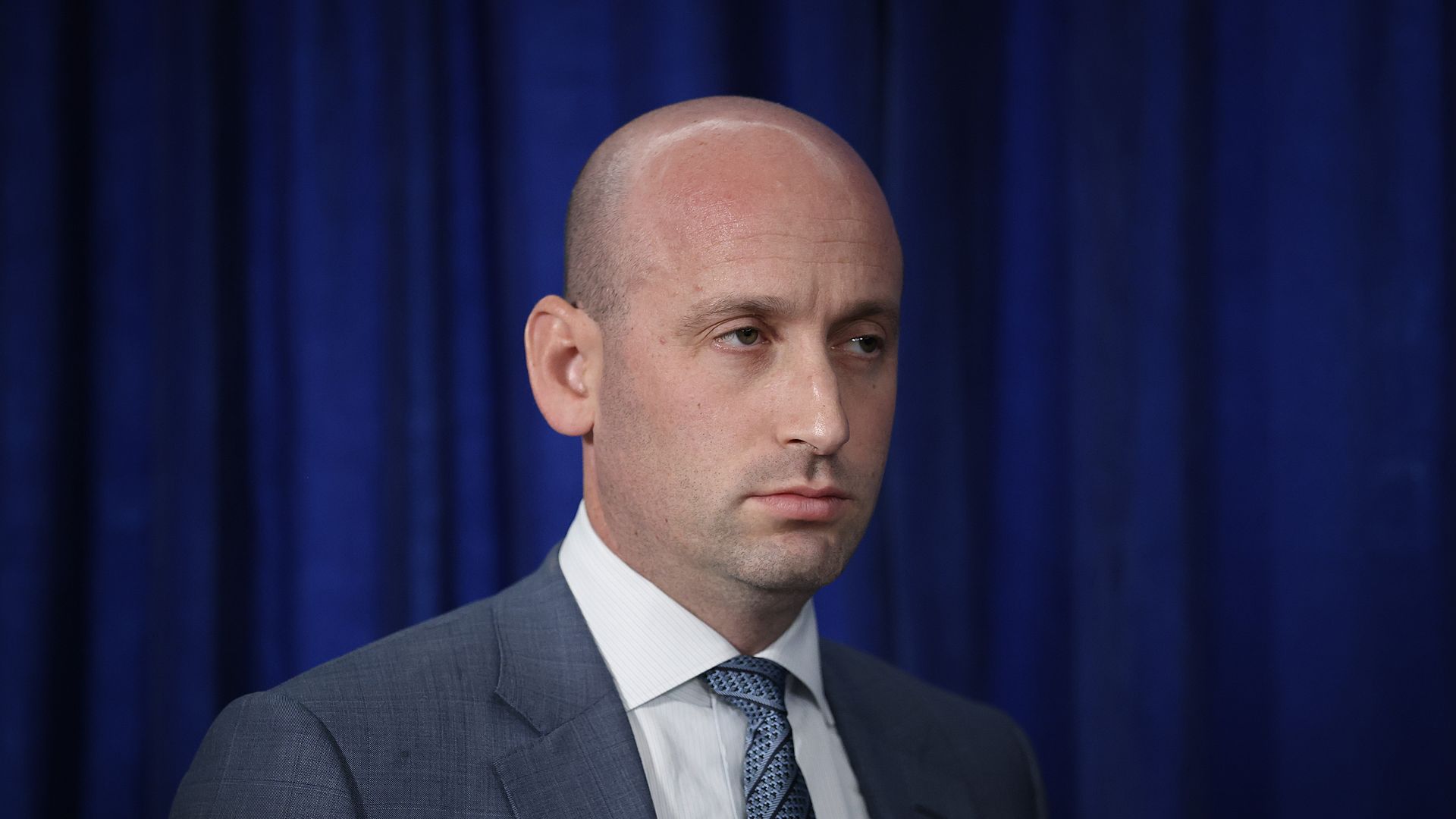
White House Deputy Chief of Staff Stephen Miller insistedMonday that Greenland should belong to the United States and said no one would oppose the U.S. militarily should it stake a claim to the self-ruling island.
Why it matters: Miller's remarks ramp up President Trump's ambitions of territorial expansion against a NATO ally, promptingNordic and European leaders to issue a defense of its territorial integrity.
The Trump administration made good on its vows to upend childhood vaccinations just days into the new year, ensuring that public health will be a prominent midterm campaign issue.
Why it matters: The slimmed-down vaccine schedule resembling Denmark's suggests that the administration is undaunted by public support for childhood vaccines — or by warnings about the return of preventable diseases.
President Trump has offered a variety of reasons for his intense, pugilistic ambitions in Venezuela, Greenland and other hemispheric players.
But one tie binds them all: They hold many of the critical minerals essential to AI and defense technology — and therefore future global dominance.
Why it matters: Within two days of snatching Venezuela's leader, Trump administration officials and financial analysts began discussing that nation's vast array of mineral riches.
President Trump's audacious capture of Nicolás Maduro has landed favorably with much of his MAGA base, challenging the notion that an "America First" foreign policy demands pure isolationism.
Why it matters: MAGA's rejection of "forever wars" — reinforced by Trump's campaign promise of "no new wars" — is often mistaken for blanket opposition to U.S. power abroad.
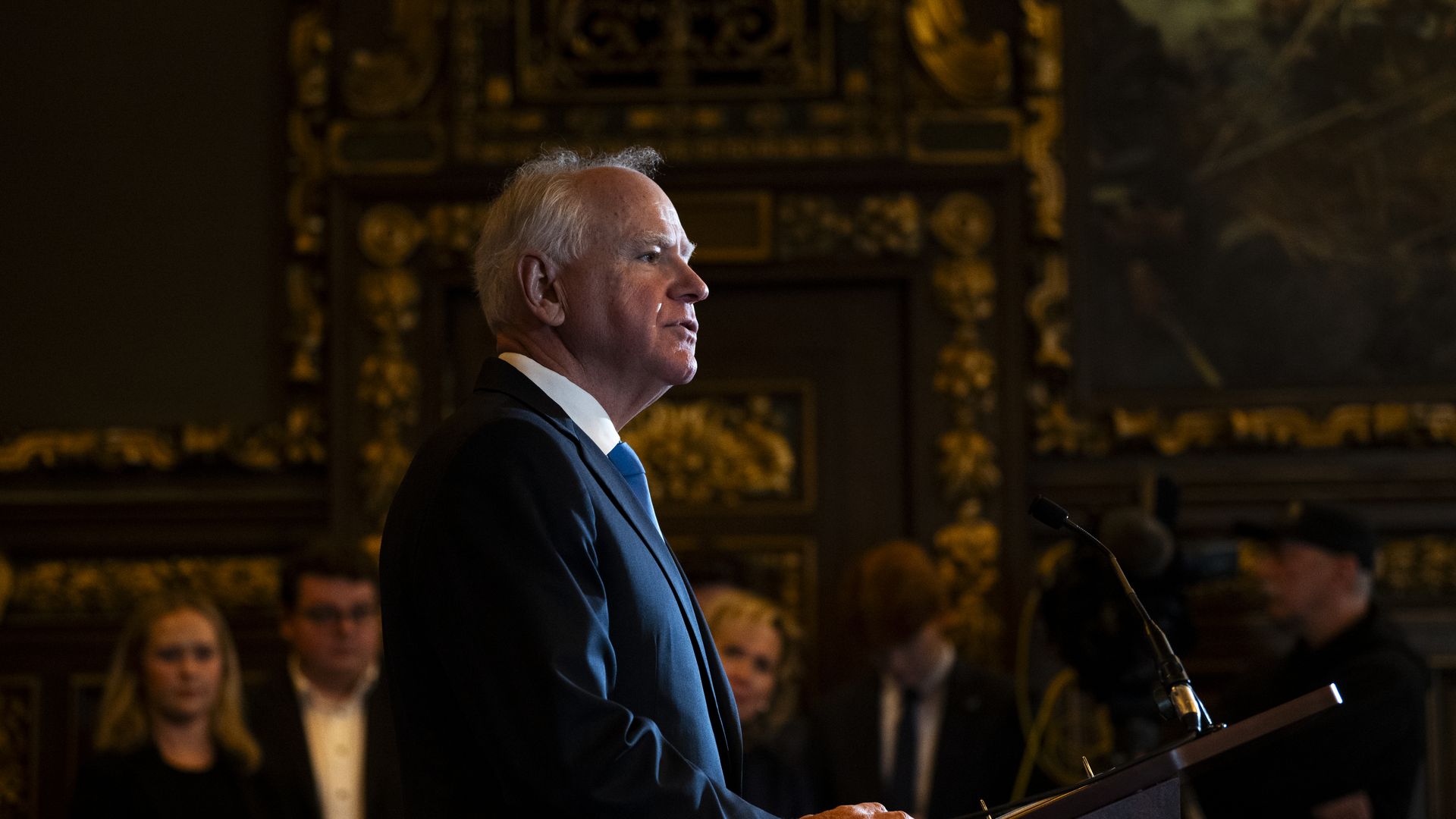
Tim Walz was nearly elected vice president in 2024. Just 14 months later, the Minnesota governor is ending his political career amid scandal, personal burnout and feuds with former allies — including Kamala Harris.
Why it matters: It's a stunning downfall for a man who vaulted onto the national stage less than two years ago and had been flirting with a 2028 run for president.
Immigrants are turning to traditional Catholic and unofficial folk saints for protection and courage in a political climate of mass deportations where they often feel hopeless.
Why it matters: The spiritual panic blended with cultural revival comes as the immigration crackdown continues with no end in sight — despite consistent legal challenges and declining public support for the harsh tactics.
President Trump said Monday the U.S. may subsidize oil companies' efforts to rebuild Venezuela's energy infrastructure in a project he estimated could take less than 18 months.
Why it matters:Trump's comments in an interview with NBC signal a longer-term U.S. presence in the oil-rich South American country just days after the capture of Venezuelan leader Nicolás Maduro — and he's framing the effort as broadly supported.
Over 2 million potential Epstein documents remain under review, the Department of Justice said in a Monday night filing.
Why it matters: The congressionally mandated deadline that President Trump signed into law for the DOJ to release all files related to the case of convicted sex offender Jeffrey Epstein passed over two weeks ago.
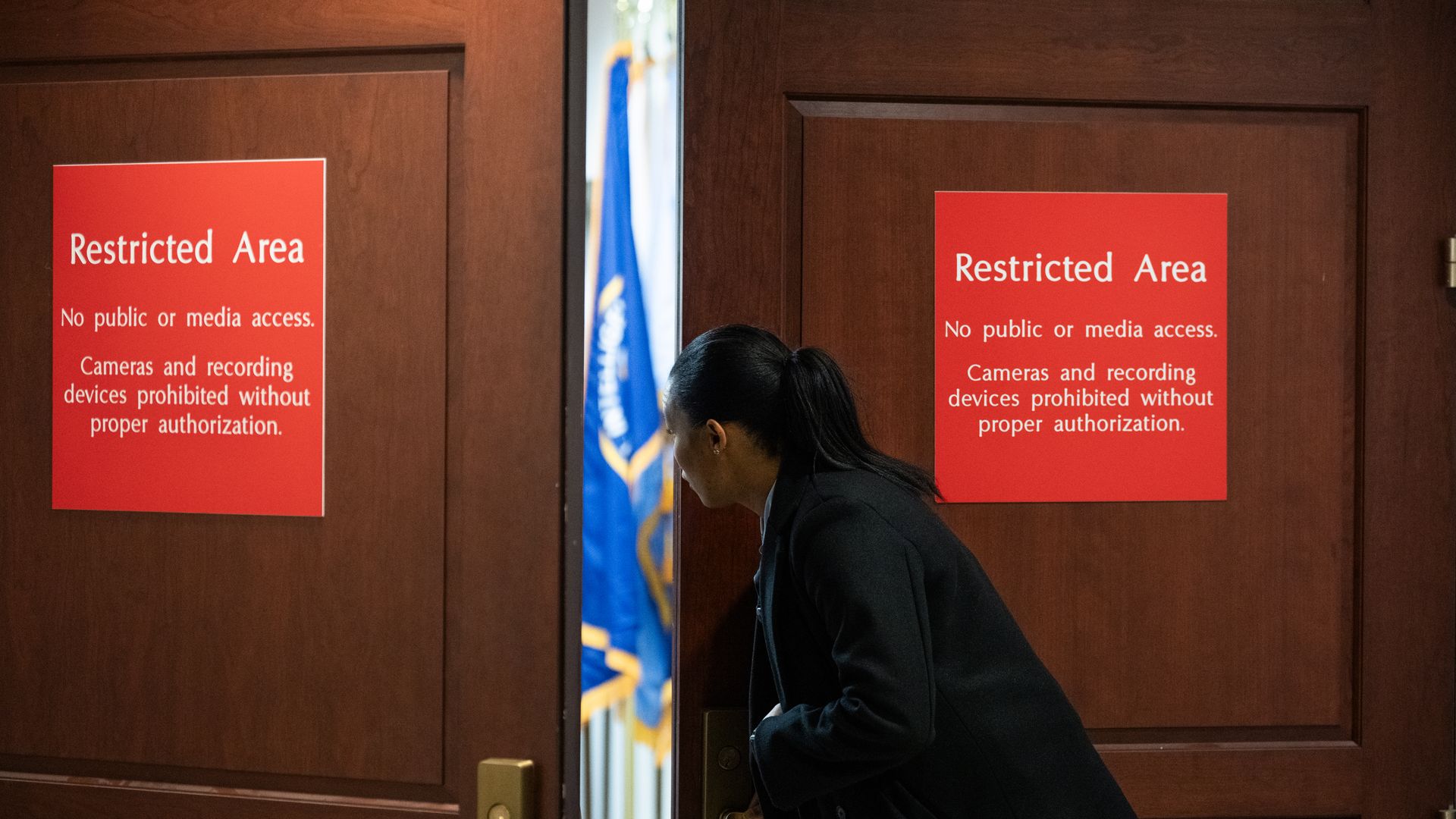
Top congressional leaders emerged from Monday's 2+ hours classified briefing with radically different interpretations of the Trump administration's short- and long-term goals for Venezuela.
Why it matters: The two parties are deeply split on legal and constitutional justifications for the action.
Top congressional leaders emerged from tonight's 2+ hours classified briefing with radically different interpretations of the Trump administration's short- and long-term goals for Venezuela.
Why it matters: The two parties are deeply split on legal and constitutional justifications for the action.
Republicans insisted the operation did not constitute an act of war. "We do not have US armed forces in Venezuela, and we are not occupying that country," said House Speaker Mike Johnson.
Democrats say Trump started a war that will have dire — and perhaps widespread — outcomes. Senate Minority Leader Chuck Schumer said they did "not receive any assurances that we would not try to do the same thing in other countries."
House GOP leaders are teeing up a vote Thursday to override the first two vetoes of President Trump's second term.
Why it matters: It's unusual for the Republican-led Congress to openly defy Trump.
The measures are expected to pass the House with bipartisan support, two sources told us. Given Trump's vetoes, some Republicans could peel off after initially backing the bills.
Overriding the vetoes would require a two-thirds vote in both the House and Senate — a rarely met threshold.
Driving the news: Trump rejected a measure to ease payments for a long-planned water pipeline supporting southeastern Colorado and another that would have expanded the Miccosukee Tribe's reserved area in theFlorida Everglades, the White House announced last week.
Here's a pair of eye-popping fundraising numbers from the Maine Senate race, which is shaping up to be the Montana of the 2026 cycle:
Democratic Senate candidate Graham Platner raised $4.7 million in the final quarter of 2025, his campaign exclusively told us.
Pine Tree Results, a super PAC supporting Sen. Susan Collins (R-Maine), raised another $5 million in the second half of last year, we have learned.
Why it matters: The fundraising haul suggests Platner — a Bernie Sanders-endorsed populist who came under fire for a Nazi-linked tattoo and controversial social media posts — may have weathered the storm (at least for now.)
Maine Senate candidate Graham Platner raised $4.7 million in the final quarter of the year, his campaign exclusively told Axios.
Why it matters: The fundraising haul suggests that Platner — a Bernie Sanders-endorsed populist who came under fire for a Nazi-linked tattoo and controversial social media posts — may have weathered the storm for the time being.
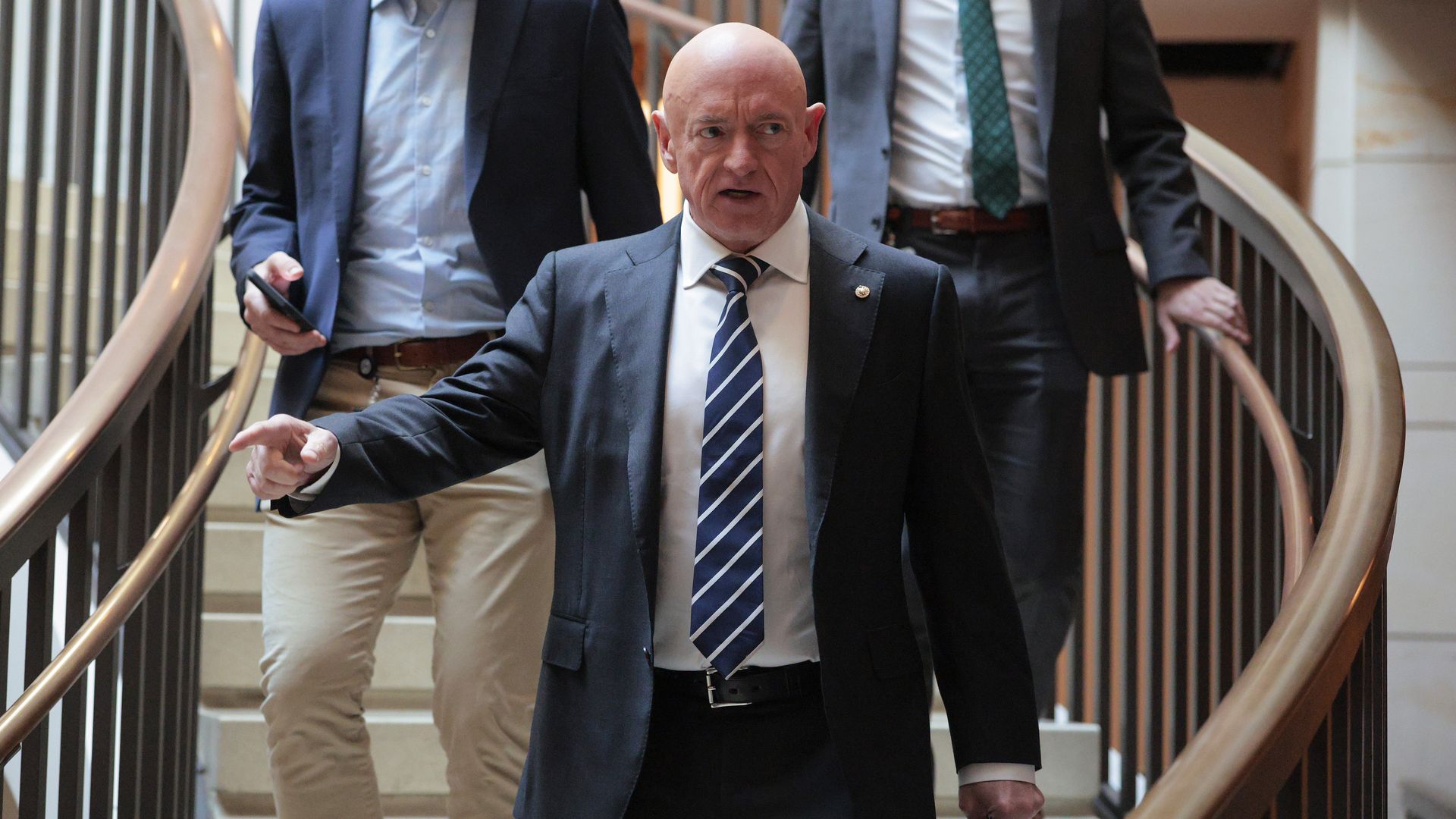
Military legal experts are questioning Defense Secretary Pete Hegseth's plans to demote U.S. Sen. Mark Kelly's military rank — with one calling it "dead on arrival."
Why it matters: The administrative action is a lesser punishment than the Trump administration's previous threat to court-martial Kelly, but it could drastically reduce Kelly's pension.