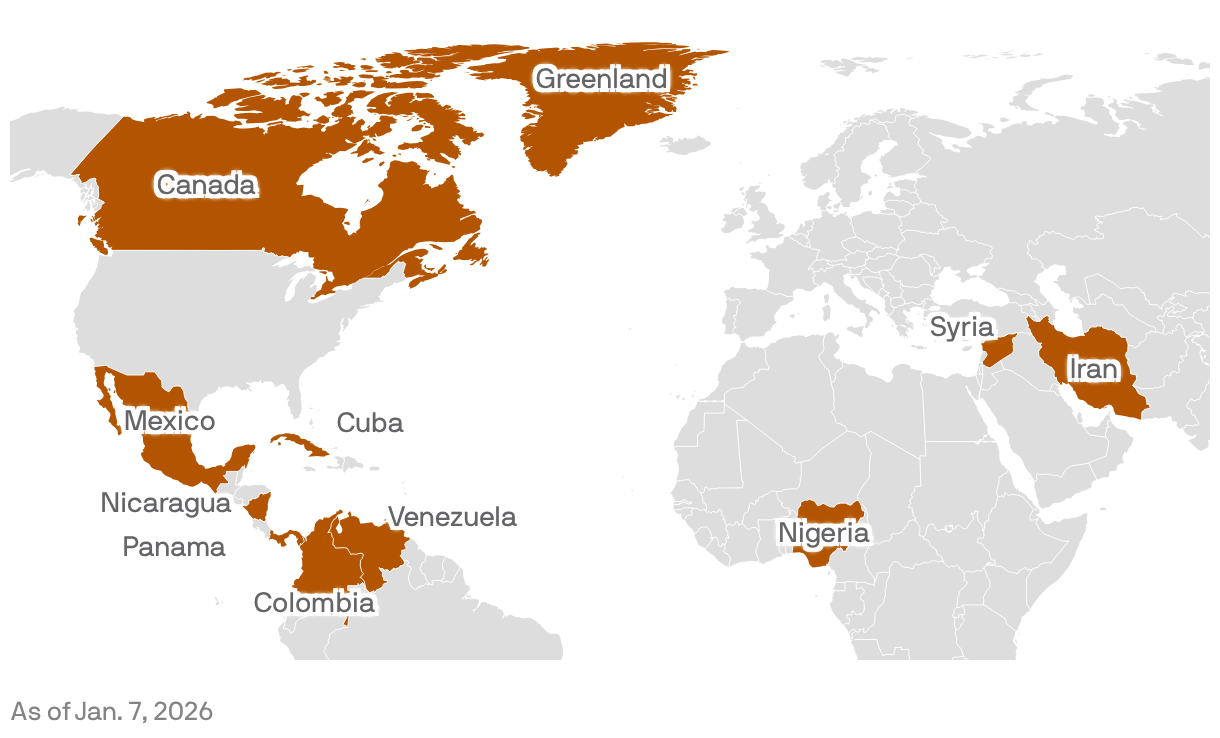
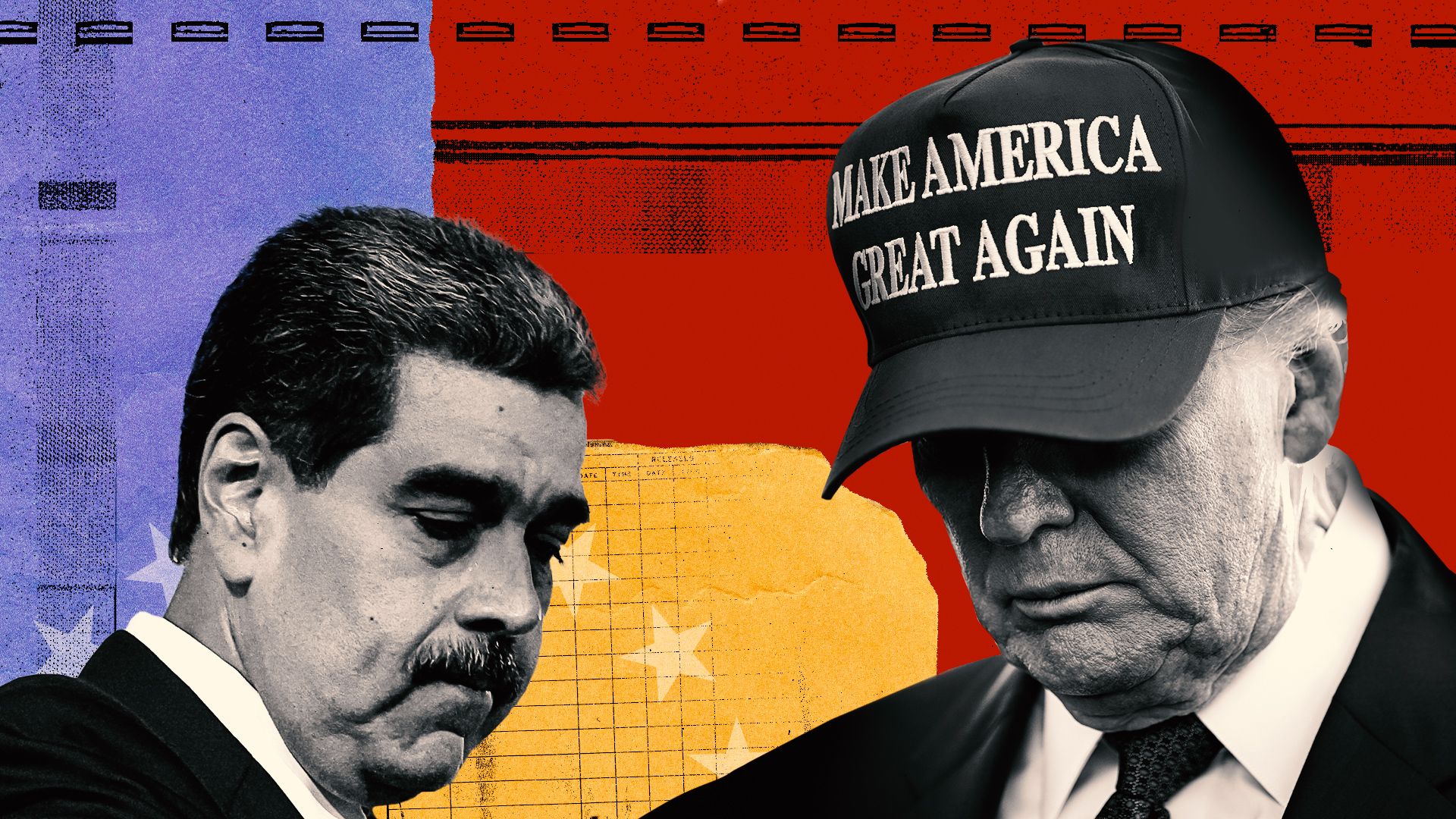
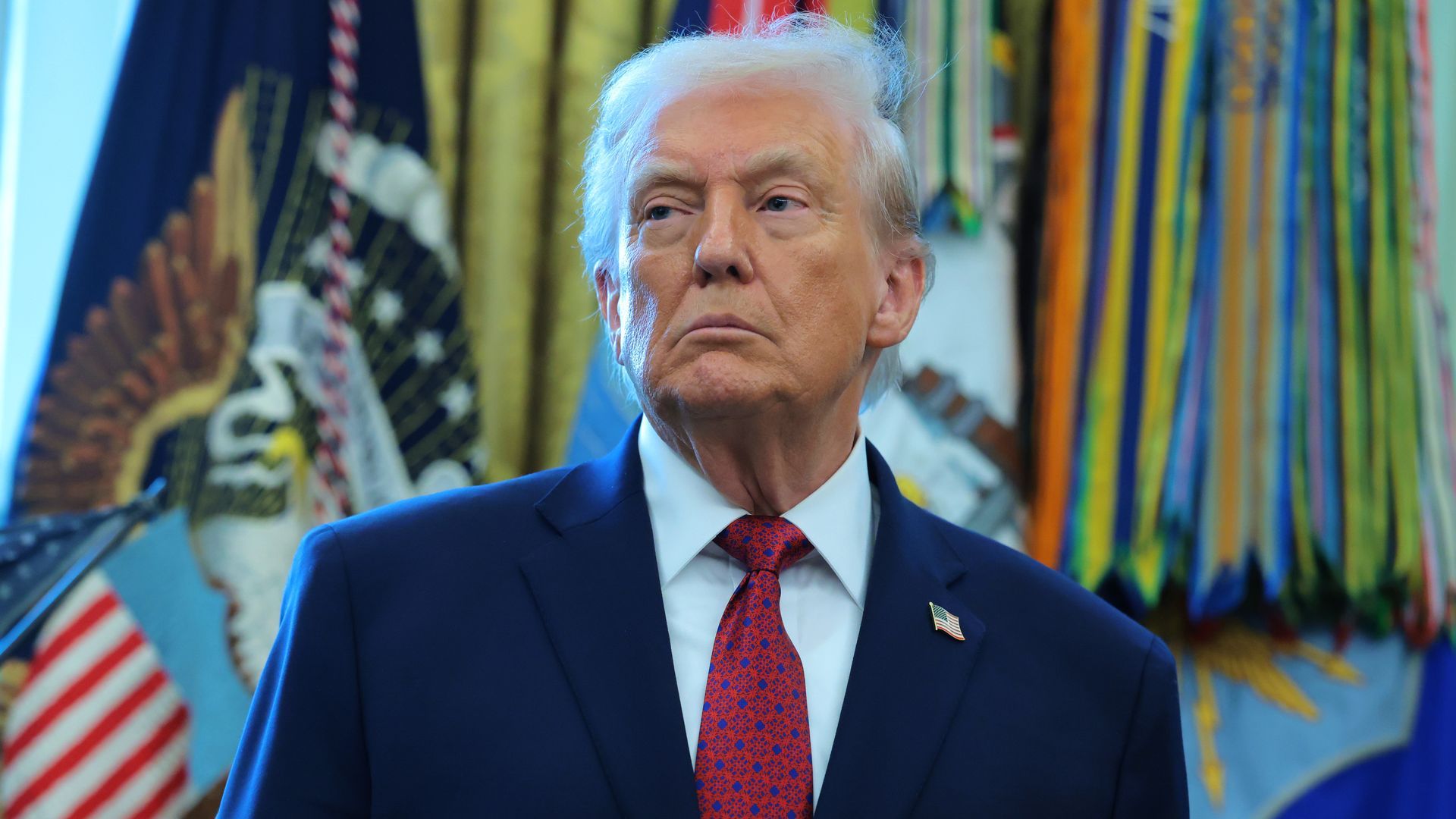
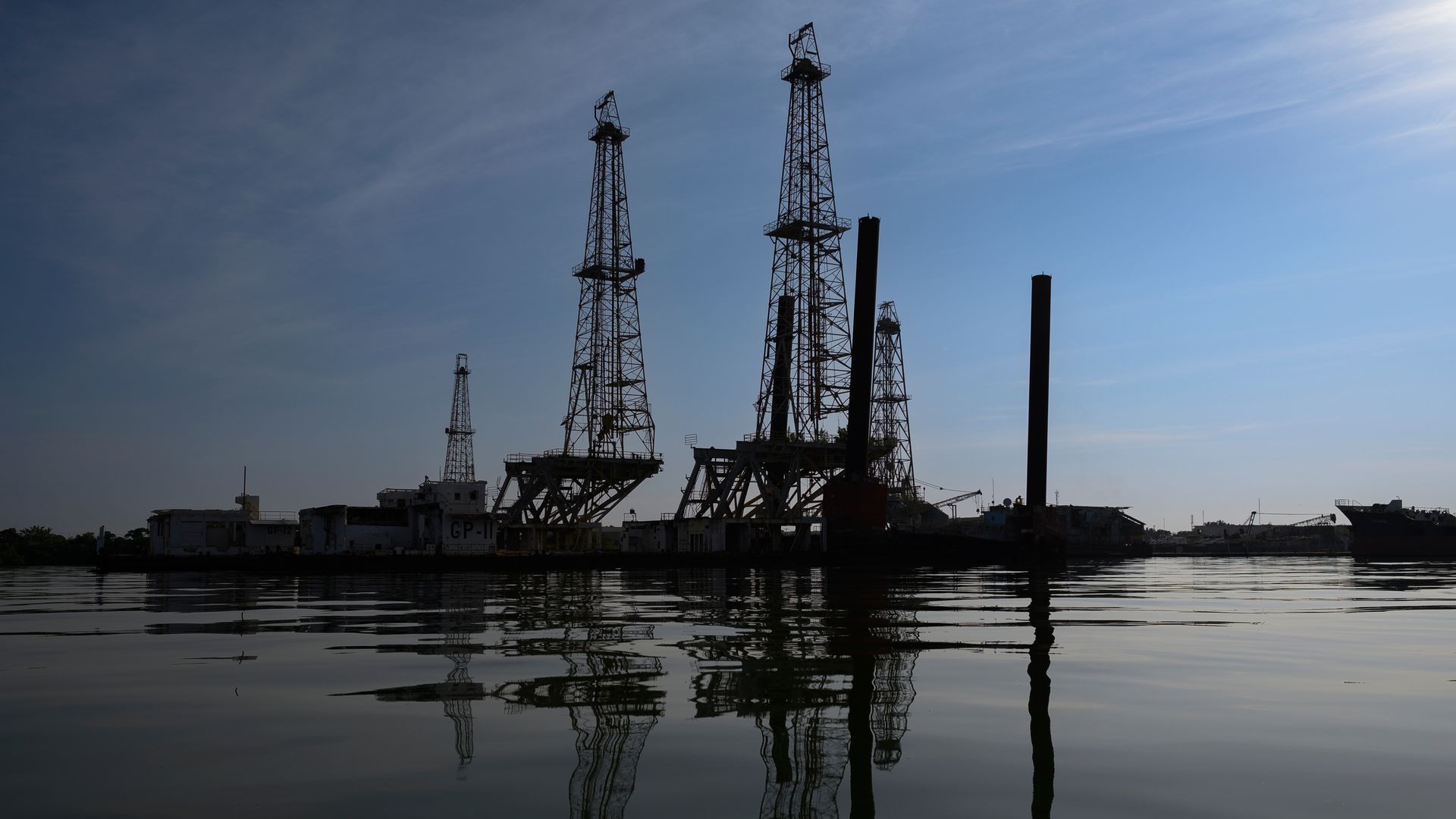
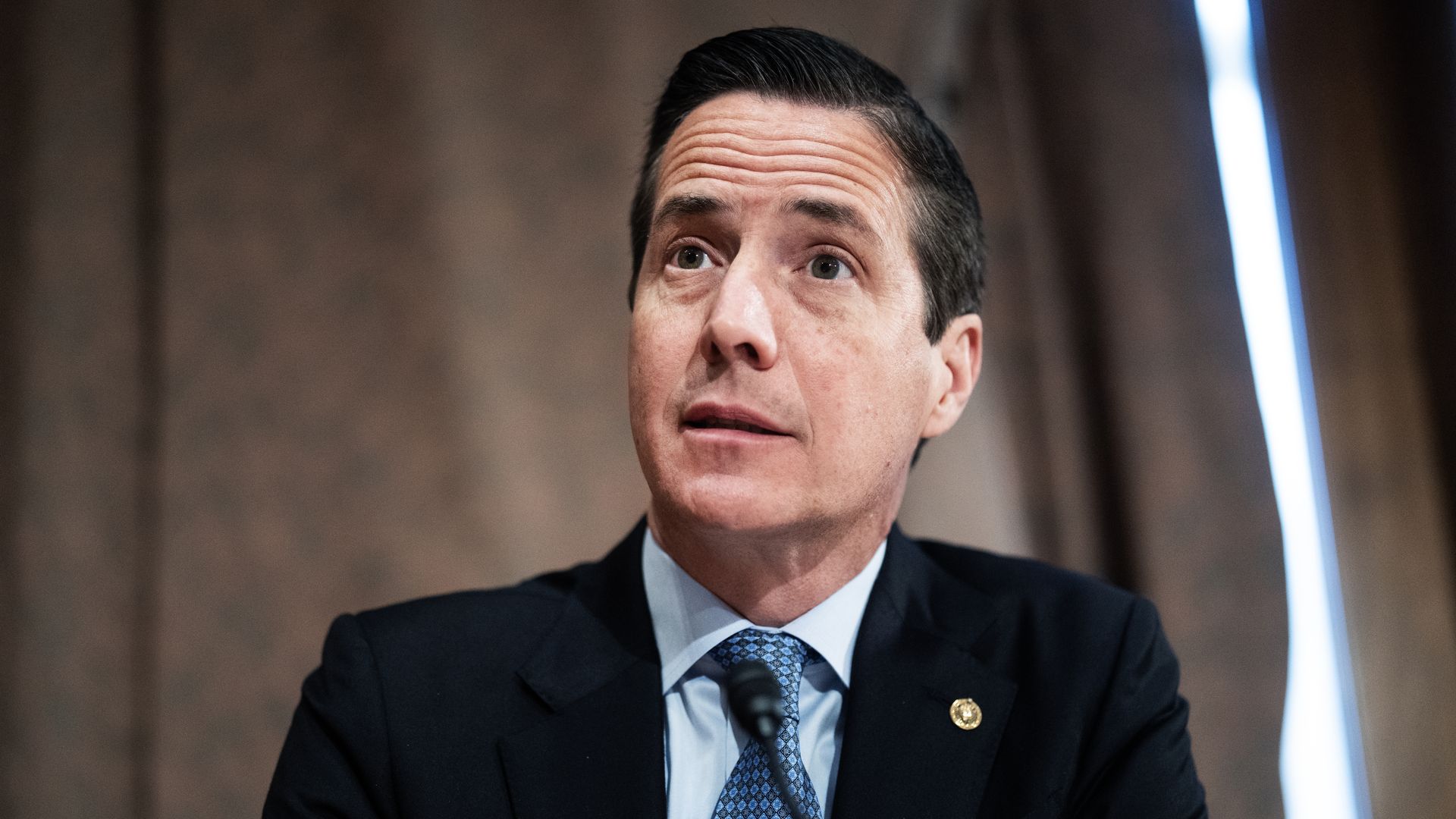
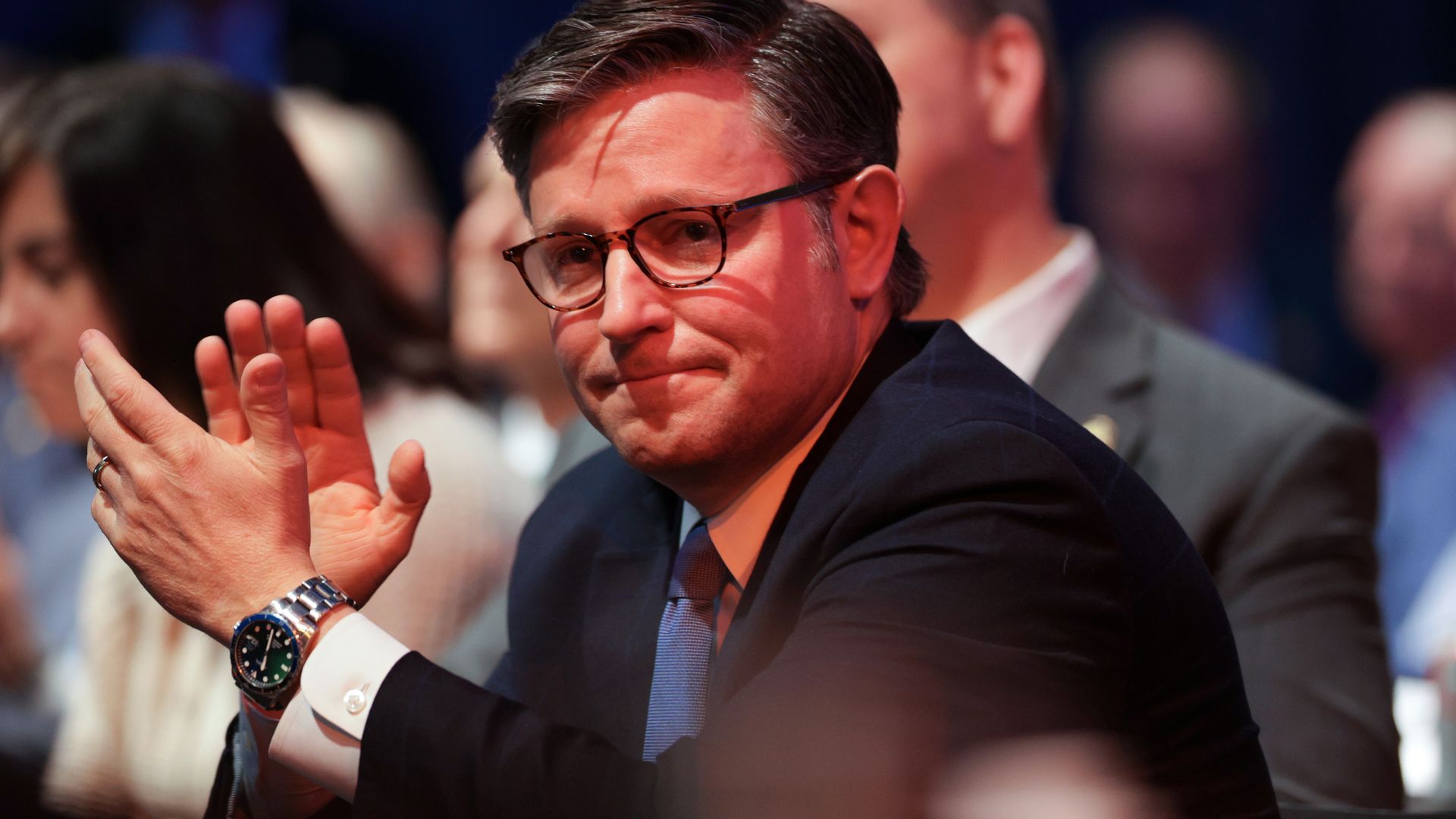
The big picture: While his predecessors sought to distance themselves from the Monroe Doctrine that the U.S. established to combat European interference in the Americas, Trump's eagerness for a 21st century version of the policy underscores his wider goal to "restore American pre-eminence in the Western Hemisphere."
The woman shot and killed by an Immigration and Customs Enforcement agent in Minneapolis on Wednesday was identified by news outlets and local officials as 37-year-old Renee Nicole Good.
The big picture: The killing occurred during a confrontation between federal agents and drivers in between ICE vehicles near 34th Street & Portland Avenue. The clash resulted in an agent firing shots into an SUV, video obtained by Axios shows.
President Trump threatened to kneecap a division of RTX, the world's second-largest defense contractor, if it did not step up and invest in "plants and equipment."
Why it matters: This was the most specific in a series of warnings Trump sent out to American defense firms on Wednesday, ordering them to cap executive pay, halt all dividends and stock buybacks, and speed up production. Such interventions from the commander-in-chief are highly unusual.
Republicans on Capitol Hill rushed to the defense of Immigration and Customs Enforcement officers Wednesday following the fatal shooting of a woman in Minneapolis that left Democrats outraged.
Why it matters: Republicans are largely leaning on the Department of Homeland Security's account of the incident, while Democrats are pointing to a video they say disproves ICE's claims of self-defense.
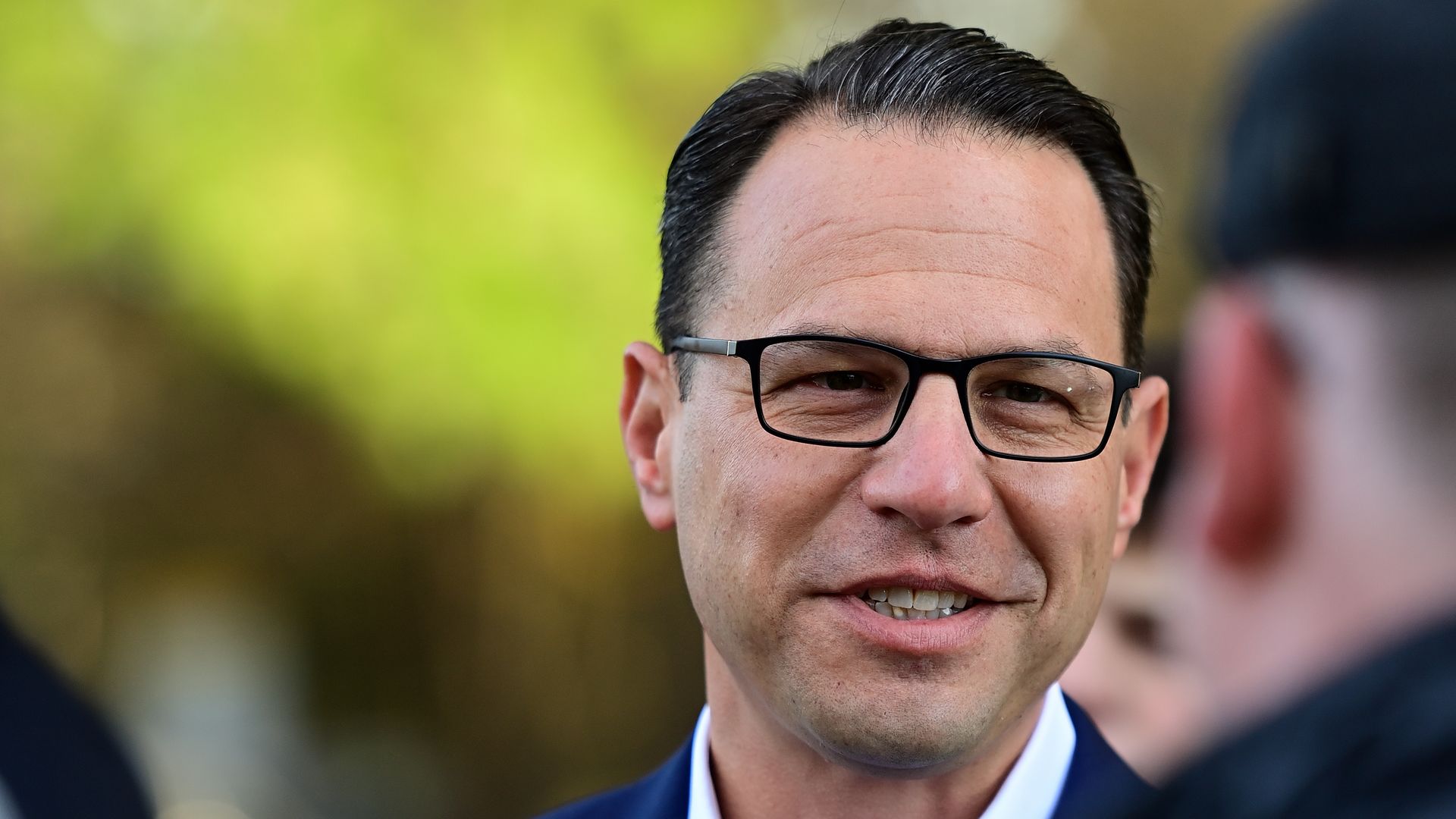
Gov. Josh Shapiro plans to kick off his re-election bid on Thursday.
Why it matters: Pennsylvania's gubernatorial race could shape the outcome of crucial down-ballot races and boost the national profile of Shapiro ahead of the 2028 presidential cycle.
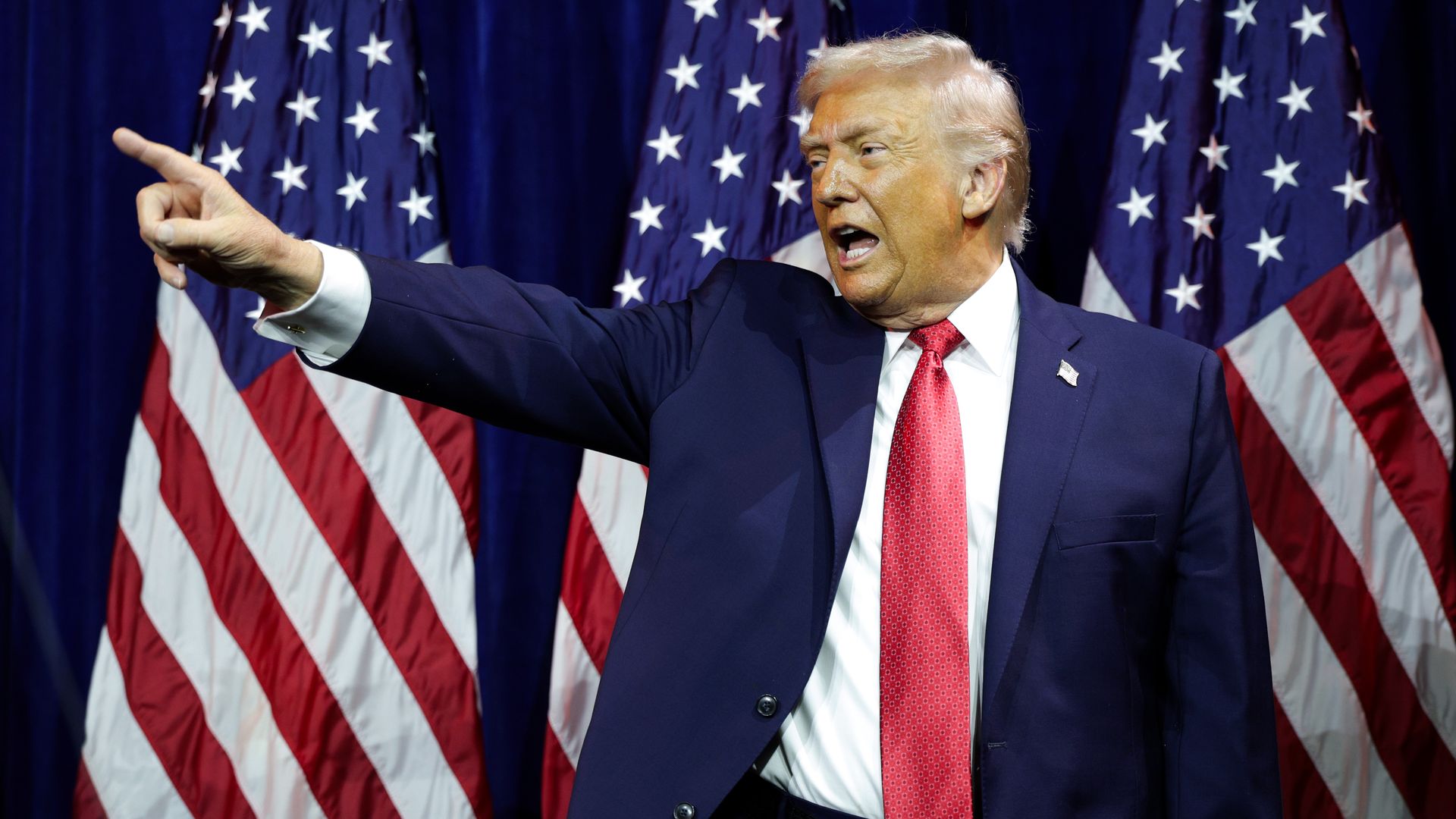
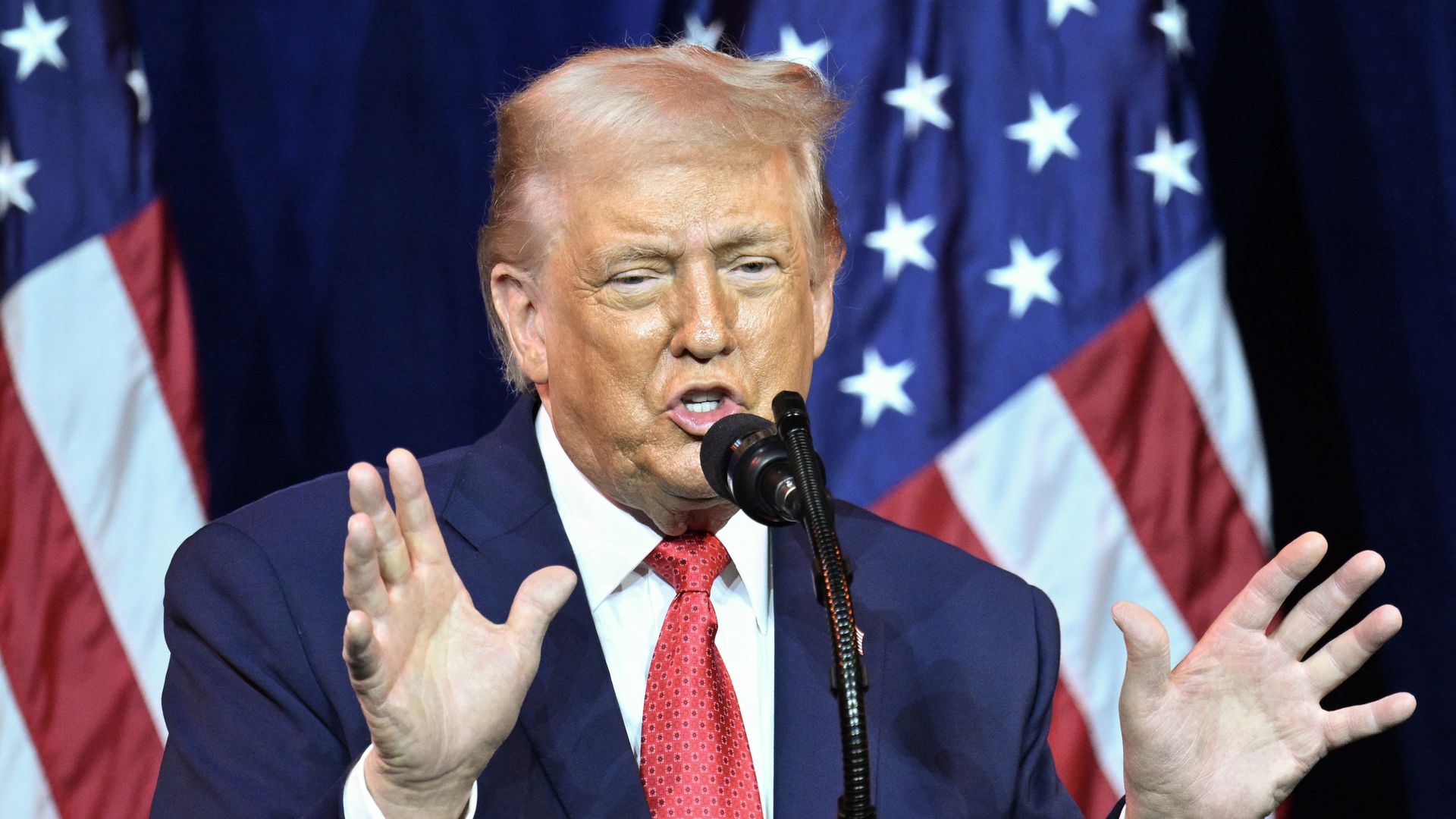
President Trump has put the world on alert as he's threatened countries across the globe with possible U.S. military action.
The big picture: Following the U.S. capture of Venezuelan leader Nicolás Maduro last weekend, President Trump has suggested multiple Latin American countries might be next, citing the so-called Donroe Doctrine, a play on the Monroe Doctrine.
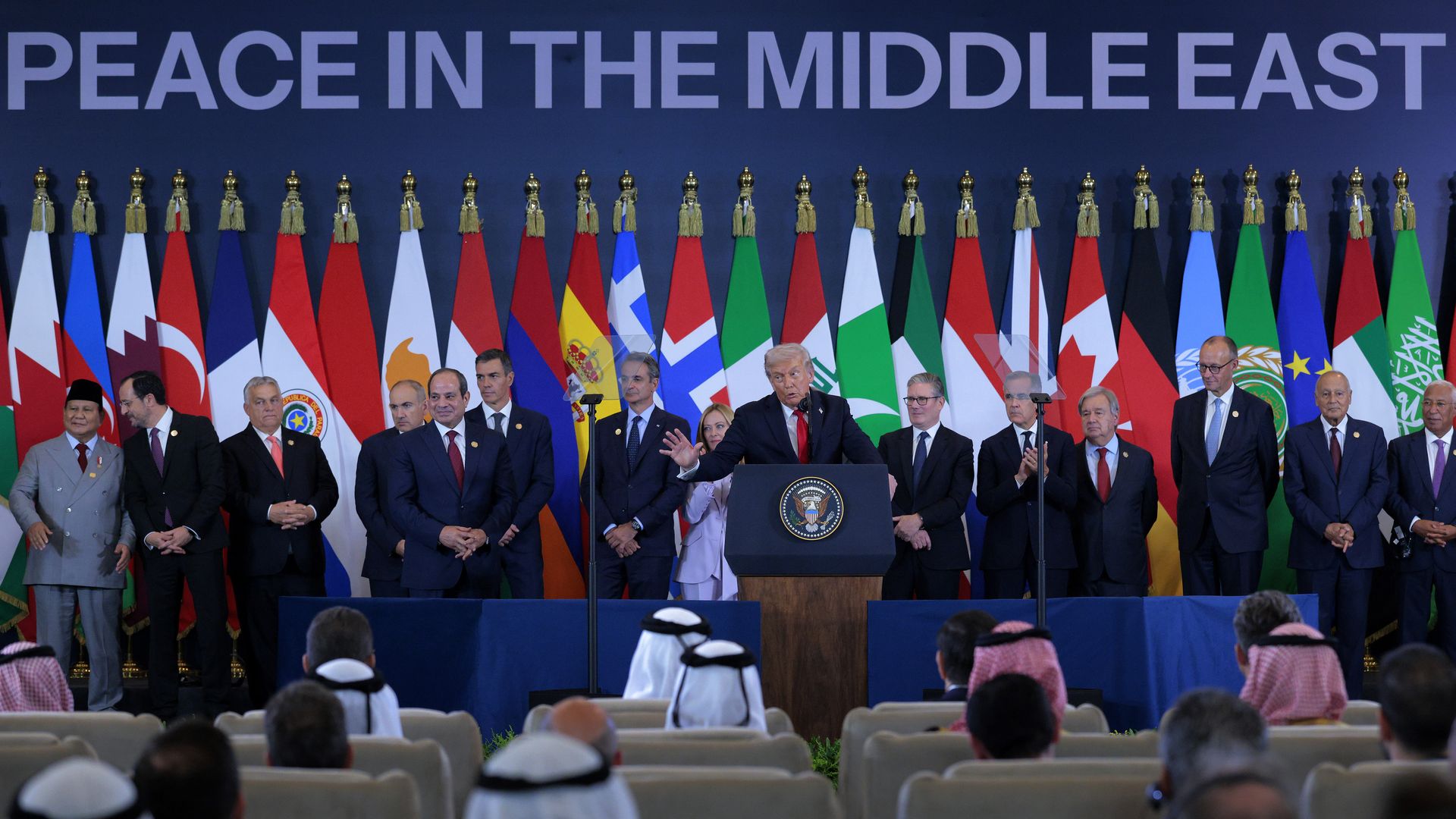
President Trump is expected to announce the Gaza Board of Peace next week as part of the second phase of the ceasefire agreement, two U.S. officials and two sources with knowledge told me.
Why it matters: The board, which will be chaired by Trump and include around 15 world leaders, will supervise a still-to-be-formed Palestinian technocratic government and oversee the reconstruction process.
President Trump on Wednesday said he's "taking steps to ban large institutional investors from buying more single-family homes," linking the move to housing affordability.
Why it matters: Real estate investors — including both large and small-scale operations — bought about 1 in 3 single-family homes sold in the second quarter of 2025, according to a report by market intelligence firm C.J. Patrick using BatchData figures.
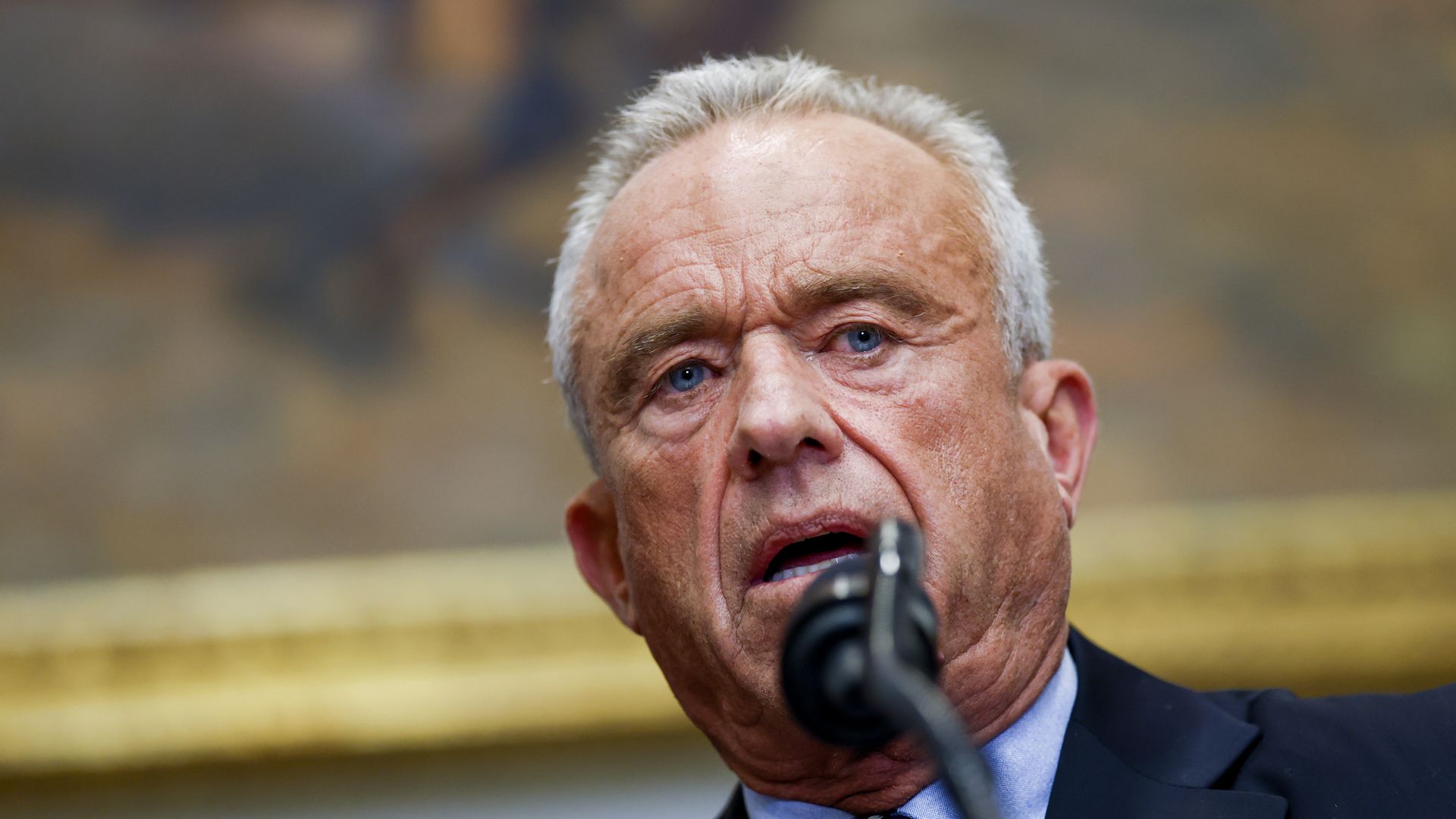
Americans should eat less packaged and highly processed foods and more protein and full-fat dairy, according to updated nutrition guidelines the Trump administration released Wednesday.
Why it matters: The new guidelines, closely watched by the food and beverage industries, are the strongest leverage Health Secretary Robert F. Kennedy Jr. has over what Americans eat, as they
They blend elements of Kennedy's MAHA agenda with well-established nutritional guidance and maintain existing recommendations on saturated fat intake.
There also is no specific mention of cutting back on seed oil consumption, which Kennedy has repeatedly railed against.
Driving the news: The Health and Human Services and Agriculture departments jointly released the 10-page document, which emphasizes prioritizing protein at every meal, limiting added sugars and eating vegetables.
It says balanced diets should include a variety of protein, including red meat, eggs, and plant-based items like beans and soy.
The document urges Americans to consume less alcohol — without specifying limits — and says to restrict artificial flavorings, dyes and preservatives.
"Alcohol is a social lubricant that brings people together," Medicare and Medicaid administrator Mehmet Oz said at a Wednesday press briefing.
"In the best-case scenario, I don't think you should drink alcohol, but it does allow people an excuse to bond and socialize," he said.
The administration also released a new food pyramid, with vegetables, proteins and healthy fats at the top. Whole grains are on the bottom.
Kennedy has repeatedly slammed the previous guidelines, which were updated in 2020 during President Trump's first term.
What they're saying: The new guidelines are "a dream come true," Vani Hari, a top MAHA influencer who blogs as the "Food Babe," told Axios.
"We put our full support in for Secretary Kennedy because he told the truth for the first time about the American food system ... and he is following through with his promise," she said.
The American Academy of Pediatrics, which has fought Kennedy on vaccine policy and other public health issues, said the new guidelines are "an opportunity to clearly explain to parents what a healthy diet for their children should look like."
Food and beverage interests offered mixed assessments of the recommendations.
The Consumer Brands Association, whose members include food giants like Coca-Cola and Kraft Heinz, said it looks forward to working with the administration and Congress while noting that consumers still "seek a diverse selection of foods."
But the American Beverage Association criticized recommendations to limit both added sugar and other sweeteners.
"Americans deserve pragmatic advice they can use in daily life. Guidance that discourages sugar but dismisses safe, effective no sugar options is impractical and inherently contradictory," spokesperson William Dermody said in a statement.
Between the lines: The new guidelines mark the first time the government has formally recommended cutting down on ultra-processed foods.
They continue to recommend that saturated fats should not exceed 10% of total daily calories, consistent with the previous standards.
Still, Kennedy said during a the briefing that the administration is "ending the war on saturated fats."
FDA Commissioner Marty Makary added that the guidelines "are telling young people, kids, schools [that] you don't need to tiptoe around fat and dairy."
A long-standing body of scientific evidence shows that reducing saturated fat intake causes a reduction in cardiovascular issues. And many nutritionists have called concerns over seed oils, which are mostly unsaturated fats, overblown.
The guidelines urge prioritizing oils with essential fatty acids like olive oil, as well as butter and beef tallow.
"More high-quality research is needed to determine which types of dietary fats best support long-term health," the document states.
Context: The dietary guidelines are updated every five years. They impact federal nutrition policy, including what goes into free school lunches and what soldiers eat.
A panel of nutrition experts issued a report in late 2024 with science-based recommendations on guideline updates for HHS and USDA to consider.
The 2024 report recommended thatAmericans eat less saturated fat and meat. Reducing saturated fat has been one of nutrition experts' most consistent recommendations since the first guidelines were issued in 1980, it said.
It stopped short of recommending eating fewer ultra-processed foods.
Kalshi's CEO on Wednesday endorsed a prediction markets ban on insider trading by government officials, saying his company already disallows it.
Why it matters: Prediction markets have come under scrutiny after multiple recent examples of traders apparently making a fortune by betting on markets with inside information.
An ICE officer shot and killed a 37-year-old woman who was in a vehicle that drove close to federal agents in South Minneapolis on Wednesday morning, according to the Department of Homeland Security and video of the incident viewed by Axios.
The big picture: The killing occurred during "targeted operations" in the city and comes amid an unprecedented surge of immigration enforcement in Minnesota, which had already seen hundreds of agents come to the state over the last month, with another 2,100 arriving this week.
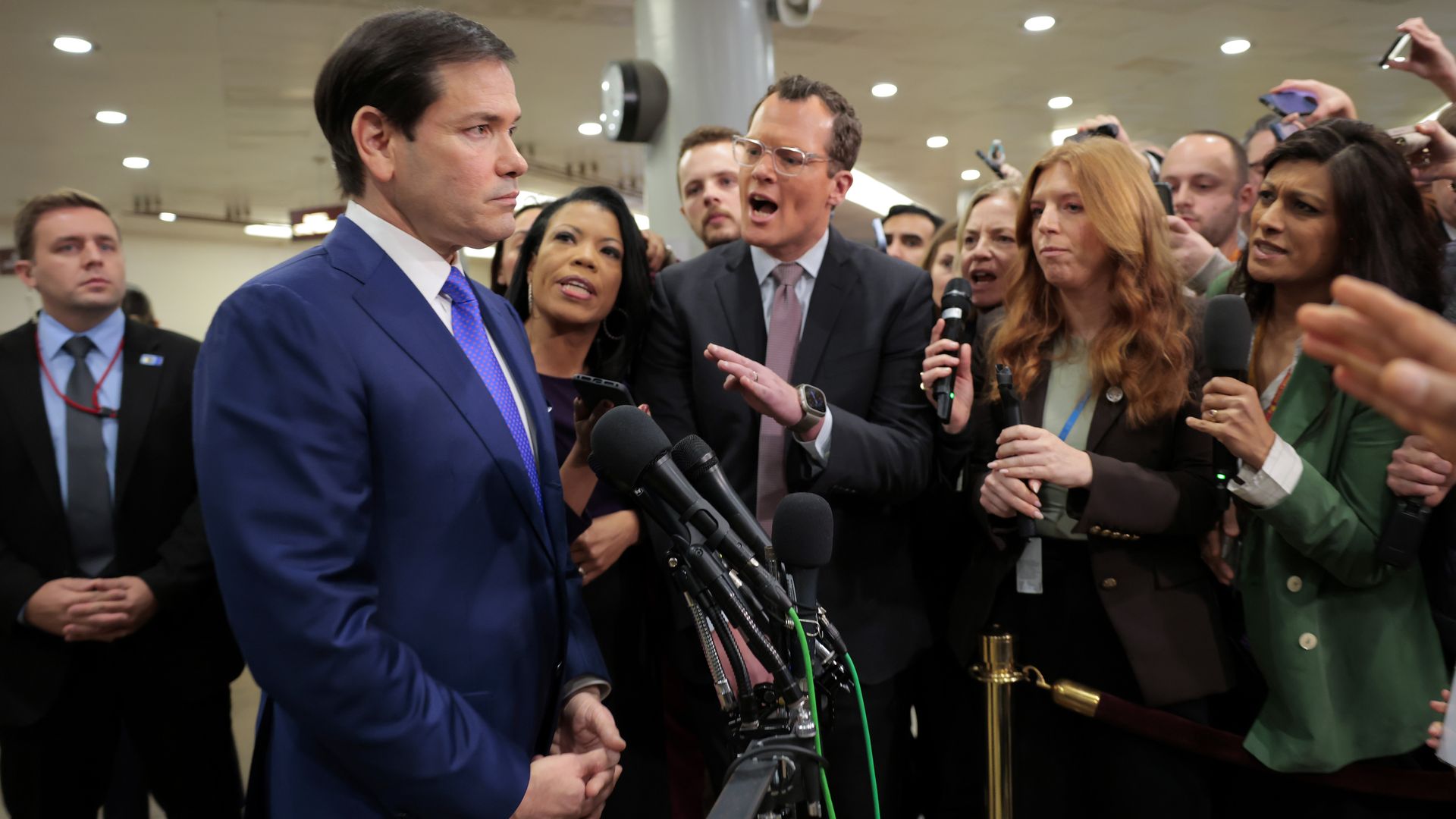
Secretary of State Marco Rubio said Wednesday that he will meet with his Danish counterpart next week in Washington to discuss the crisis over Greenland.
Why it matters: The White House's insistence that the U.S. could use military force to take Greenland has created extreme alarm in Denmark and among other NATO allies.
House Democrats are scrambling for levers to block the Trump administration from reprising its Venezuelan incursion across Latin America and beyond.
Why it matters: Trump's threats to intervene militarily in Greenland, Colombia, Mexico and elsewhere have attracted some bipartisan opposition, which Dems see as a rare opening to get something passed.
The big picture: With new fuel behind his hemispheric vision and the possibility of military involvement, world leaders are taking the president's renewed fixation on the self-ruling island seriously and warning him to respect its independence.
Pundits and politicians are getting ahead of themselves in crowing about how U.S. companies, particularly in the energy sector, could profit from this past weekend's events in Venezuela.
The big picture: No one knows how this will play out, nor even if the Trump administration has a solid strategy beyond the grab-and-go on Nicolás Maduro.
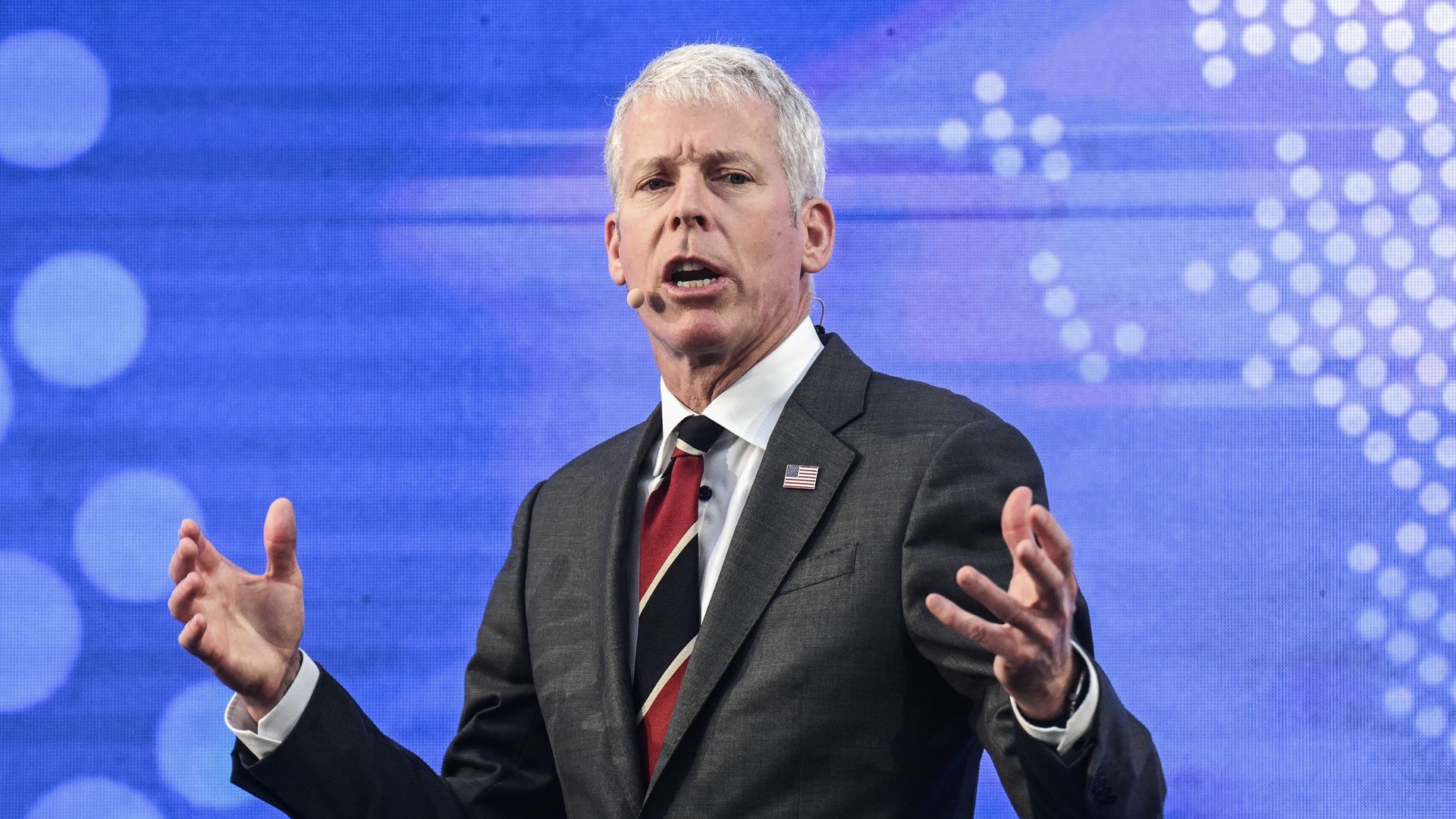
The U.S. plans to directly control Venezuelan oil sales and revenue via U.S.-controlled accounts, but those moves will benefit the country's people as well, Energy Secretary Chris Wright said Wednesday.
Why it matters: His comments are among the Trump administration's most expansive descriptions of its approach to Venezuela's oil sector since the toppling of President Nicolás Maduro.
What do you get when you craminto the same room years of experience from inside the Pentagon, Defense Innovation Unit, Marine Corps, Air Force, SpaceX, Unity and Virgin Hyperloop? Gambit.
The big picture: The dual-use software company wants to make coordination across machines — aerial drones, ground robotics and more — smart and seamless, no matter the brand or builder.
"As a kid growing up in the '90s, very influenced by the Trinity scene in 'The Matrix' where she's like, 'Tank, I need a helicopter program,' how do you create the helicopter program?" CEO Josh Giegel told Axios.
Julia Terruso, the Philadelphia Inquirer's national politics reporter, is leaving the paper after 13 years to become Time magazine's senior national political correspondent, Axios has learned.
Why it matters: Terruso's departure leaves a gap on the Inquirer's politics team and complicates leadership at the newspaper's union, the NewsGuild, where she was recently elected president ahead of upcoming contract talks.
The geopolitical face-off between President Trump and Venezuelan strongman Nicolás Maduro concluded this weekend with black-bag precision and a Nike Tech tracksuit.
The big picture: The most complex raid since Abbottabad gave the world a glimpse of what the U.S. military is capable of when time is short, all the other resources are virtually endless and the stakes are scarily high.
It was both almost too bombastic for a movie script and surprisingly sneaky for an era of ubiquitous sensors, cellphones among them.
The drug price hikes that are helping drive the health affordability crisis will continue for the rest of President Trump's term, key industry stakeholders are now predicting—despite his deals with drugmakers and Medicare negotiating lower prices.
The big picture: Insurers, drug supply middlemen and hospitals who represent 13% of all pharmaceutical purchases predict single-digit price increases for branded drugs over the next three years, according to a new survey by TD Cowen.
Forget talk about elections and democracy in Venezuela. The Trump administration has a simple goal there: Back a pro-U.S. government — and prop it up with millions of barrels of Venezuelan oil.
Why it matters: The plan hinges on the U.S. taking de facto control of oil production in Venezuela, which has the largest crude reserves in the world but has been crippled by the twin forces of kleptocracy and U.S. sanctions.
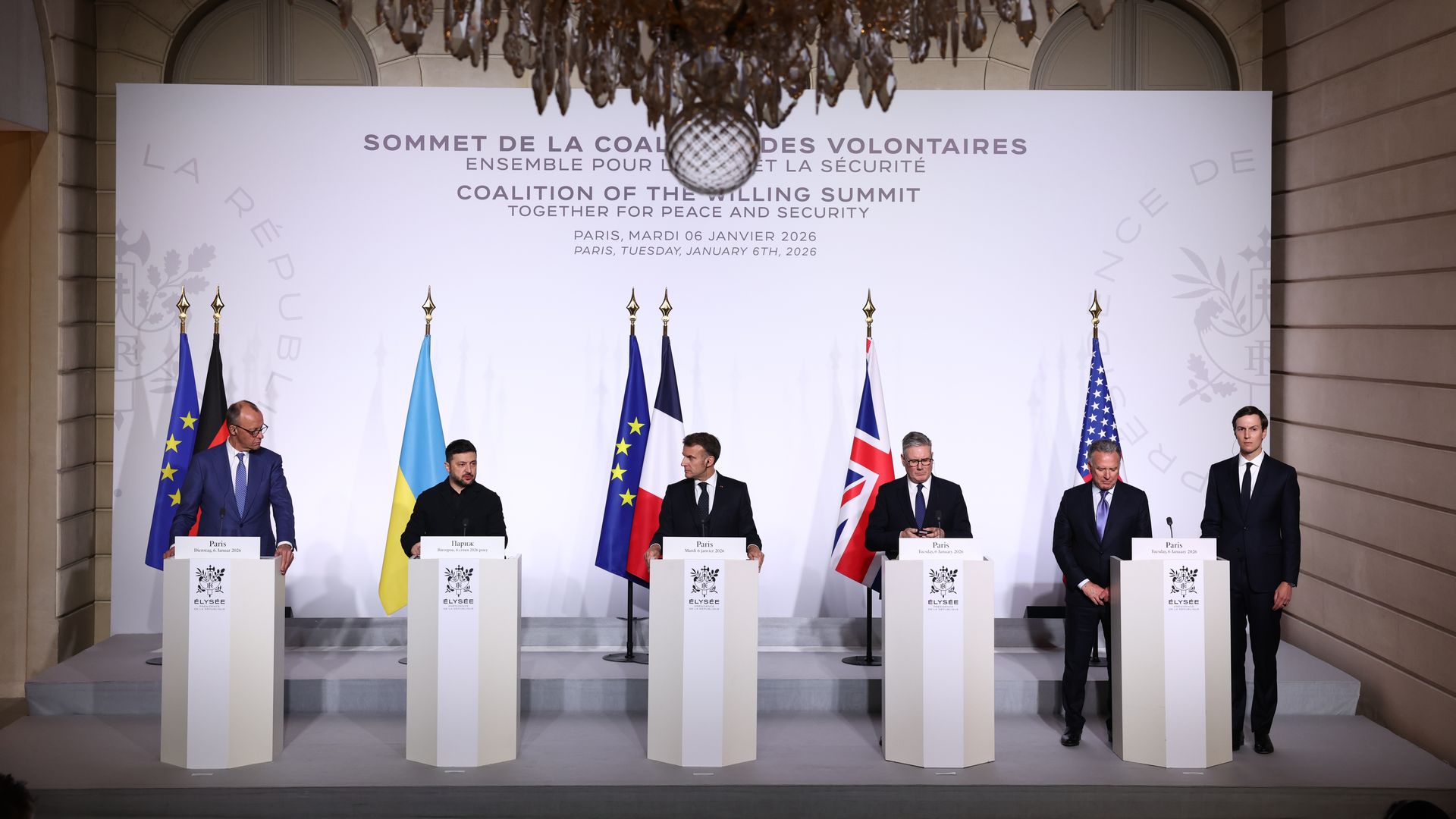
Several hours after issuing an unprecedented statement against President Trump's threats to take over Greenland, the leaders of France, Germany and the U.K. stood side by side with Trump's top advisers in Paris and announced joint security guarantees for Ukraine.
Why it matters: The events of the last few days — in particular, Trump's renewed threats on Greenland in the aftermath of the Venezuela raid — left real doubts in Europe about whether the transatlantic alliance still exists.
A federal judge ordered Trump ally Lindsey Halligan to explain why she's identifying herself as the U.S. attorney for the Eastern District of Virginia despite a court ruling that she was unlawfully appointed to the role.
Why it matters: U.S. District Judge David Novak in his order giving Halligan seven days to respond asked her to explain why her actions do not constitute "a false or misleading statement," which the Trump-appointed Richmond judge suggested could potentially result in disciplinary proceedings.
President Trump on Tuesday said that Venezuelan interim authorities will "be turning over" between "30 and 50 MILLION" barrels of oil to the U.S.
The big picture: Trump said on Truth Social the sanctioned oil will be sold at market price, and the resulting revenue will be controlled "by me, as President of the United States" to "ensure it is used to benefit the people of Venezuela and the United States!" — without elaborating further.
The Trump administration is pressing Venezuela's interim government to dismiss all suspected spies and other intelligence agents from China, Russia, Cuba and Iran from the South American country, a U.S. official told Axios.
The big picture: The move, which does not apply to regular diplomatic personnel, marks the administration's latest effortto force the oil-rich nation to meet U.S. demands following last week's raid that captured Venezuelan leader Nicolás Maduro.
The Trump administration sent out letters Tuesday night to five blue states, freezing about $10 billion in funding for child care and social services programs pending a "thorough review," citing concerns over "systemic fraud."
Why it matters: The suspension of the funds could hurt low-income families in those states, depending on how longthe freeze lasts, advocates say.
President Trump will meet Friday with U.S. oil executives at the White House as he presses the industry to invest in reviving Venezuela's production, multiple sources tell Axios.
Why it matters: Boosting output from the nation's dilapidated oil infrastructure will require massive outlays.
Sen. Bernie Moreno (R-Ohio) isn't giving up on a health care plan that can win 35 Senate Republicans and a majority of Democrats — but he and a small bipartisan group have about three weeks left to find it.
Why it matters: Enhanced ACA subsidies have expired, which will raise health care costs for millions of Americans. But key negotiators see a final chance to revive them.
House Speaker Mike Johnson is starting the new year in a familiar, uncomfortable predicament:
He's got a shrinking majority, a loss of control over the legislative agenda, and pressure from President Trump to embrace an issue many in the GOP want to avoid.
Why it matters: Trump is urging Republicans to make health care their issue and to be "flexible" on long-standing red lines.
💊 But many Republicans see health care as a losing issue for the party, especially in the 2026 midterms.
Driving the news: Trump urged House Republicans at their policy retreat today to soften demands for expanded Hyde Amendment protections.
Former Rep. Mary Peltola (D-Alaska) is expected to make a formal announcement challenging Sen. Dan Sullivan (R-Alaska) this month.
Peltola is taking concrete stepstoward a Senate run, including interviewing potential campaign managers, we scooped earlier today.
Why it matters: Landing Peltola in Alaska would give Senate Minority Leader Chuck Schumer another opportunity to go on offense in 2026, as he looks to recruit his way out of a difficult map.
Schumer has been trying to convince Peltola to plunge into the race since the summer and sees a plausible path to victory.
Between the lines: Alaska's ranked-choice voting system can allow a Democrat to win statewide even in a red-leaning state.
House Speaker Mike Johnson is starting off the new year in a familiar, uncomfortable predicament:
The Louisiana Republican faces a shrinking majority, a loss of control over the legislative agenda, and pressure from President Trump to embrace an issue many in the GOP want to avoid.
Why it matters: Trump is urging Republicans to make health care their issue and to be "flexible" on long-standing red lines. But many Republicans see health care as a losing issue for the party, especially in the 2026 midterms.