What the "Donroe Doctrine" is and where Trump could use it next


Add Axios as your preferred source to
see more of our stories on Google.
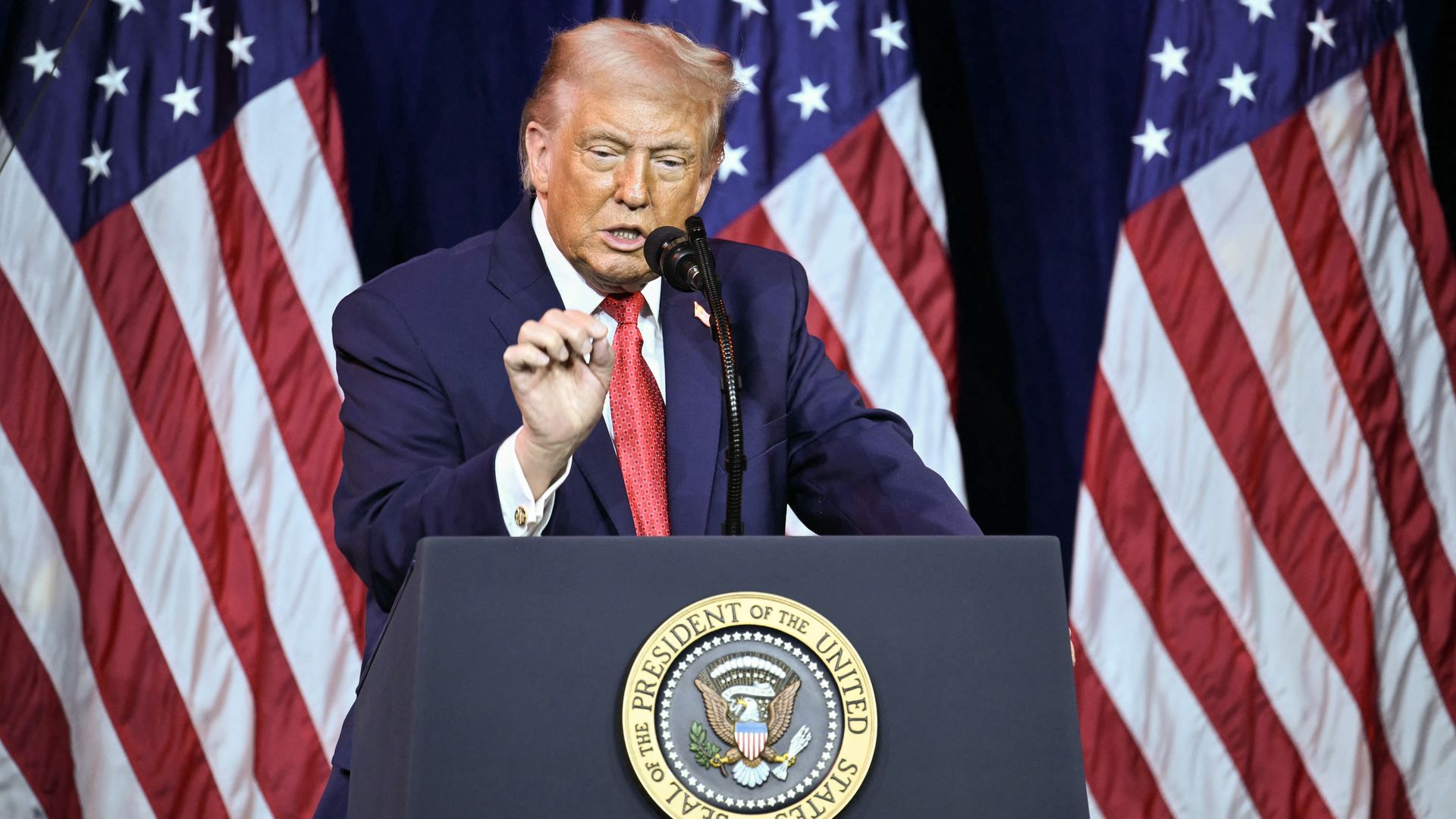
President Trump in Washington, D.C., on Jan. 6. Photo: Mandel Ngan/AFP via Getty Images
President Trump is leaning into a 19th century policy in announcing plans for the U.S. to "run" Venezuela until it's "brought back to health" following the U.S. military operation that captured Venezuelan leader Nicolás Maduro.
The big picture: While his predecessors sought to distance themselves from the Monroe Doctrine that the U.S. established to combat European interference in the Americas, Trump's eagerness for a 21st century version of the policy underscores his wider goal to "restore American pre-eminence in the Western Hemisphere."
- Trump dubbed his version of the 1823 policy the "Donroe Doctrine," suggesting the U.S. raid in Venezuela that captured Maduro went far beyond what the Monroe Doctrine was capable of.
What is the Monroe Doctrine?
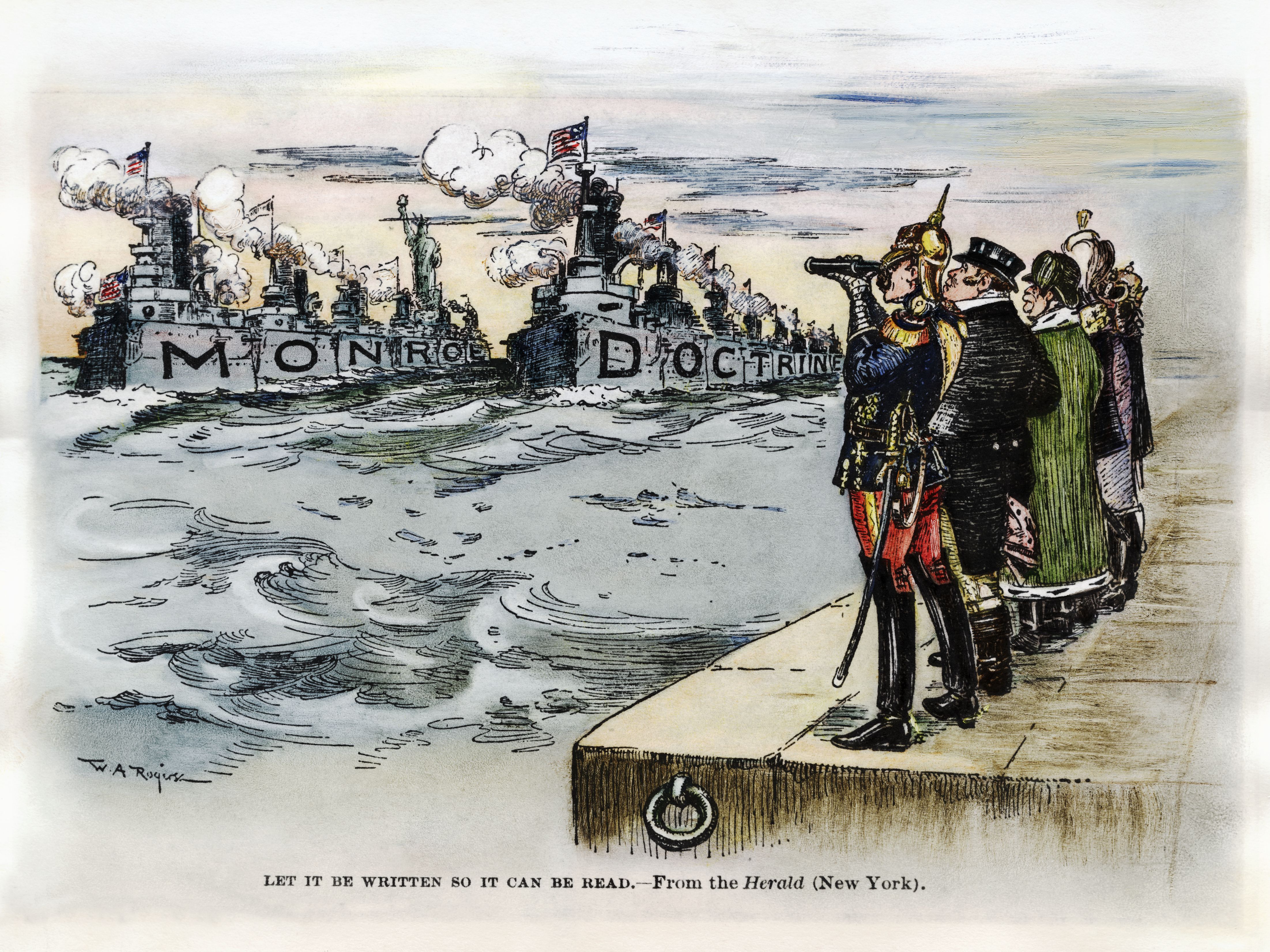
President Monroe formulated the doctrine in 1823, which "warned European powers not to interfere in the affairs of the Western Hemisphere," per a National Archives post.
- "The European powers, according to Monroe, were obligated to respect the Western Hemisphere as the United States' sphere of interest."
- President Teddy Roosevelt expanded this doctrine in the early 20th century after European creditors of several Latin American countries, including Venezuela, threatened armed intervention to collect debts.
- Roosevelt bolstered the doctrine's meaning in the Roosevelt Corollary of 1904 to extend to sending the U.S. into Western Hemisphere countries.
- Consequently, the National Archives notes, Marines were deployed to the Dominican Republic that year, Nicaragua in 1911 and Haiti in 1915 — "ostensibly to keep the Europeans out."
State of play: The U.S. National Security Strategy that was published in November asserts a "'Trump Corollary' to the Monroe Doctrine" that declares the U.S. will assert its political, economic and military will across the Western Hemisphere.
- Defense Secretary Pete Hegseth declared last month that this doctrine "is in effect and is stronger than ever under the Trump corollary."
Between the lines: Trump can show in the wake of the Venezuela raid that, like Roosevelt, he's prepared to use force in the internal affairs of Latin American countries if he sees them as "committing wrongs" against the U.S., per David Smith, associate professor of American politics and foreign policy at the University of Sydney's United States Studies Center.
- While many in MAGA world dislike using the U.S. military for overseas interventions, this Trump administration can say "it's not really an overseas intervention if it happens in the Western Hemisphere," Smith said in a Wednesday email.
- "Because these countries are so close, they can pose a direct threat to the continental United States (hence the claims about Venezuela flooding the United States with drugs and inmates from prisons and mental asylums)."
What we're watching
While the Monroe Doctrine was also about keeping other world powers out of the Western Hemisphere, Smith said Trump is potentially "preparing to use this justification to annex Greenland," claiming Denmark "has allowed it be surrounded by Russian and Chinese navies."
- Cuba is another potential target. Trump has made Cuba a foreign policy centerpiece during both his presidential terms and said Sunday the Caribbean island nation "looks like it's ready to fall."
- "Trump would see regime change in Cuba, something the US has wanted for more than 60 years, as a major prize," Smith added. "It's possible the action in Venezuela was aimed at destabilizing Cuba."
- While Trump has threatened military action in Colombia, citing drug-trafficking into the U.S., Smith notes it "would be far more difficult to act against Colombia, which is a much larger and richer country."
- The Panamanian government has so far defused Trump's push for a U.S. takeover of the Panama Canal. But his claims of a U.S. right to oil in Venezuela due to Americans building the Venezuelan oil industry before it was nationalized are similar to those he's made about the Panama Canal, Smith notes.
The bottom line: This is all part of the rhetoric that the U.S. used to be a great power back in the days of the Monroe Doctrine and the Roosevelt Corollary before weaker leaders gave it all away, per Smith.
- "Trump presents himself as the one who will take them back and restore America's unchallenged power," he said. "The sovereignty of other states doesn't matter."
Go deeper... Mapped: The countries Trump is threatening — and why
