Scoop: Israel presented Syria with proposal for new security agreement

Add Axios as your preferred source to
see more of our stories on Google.
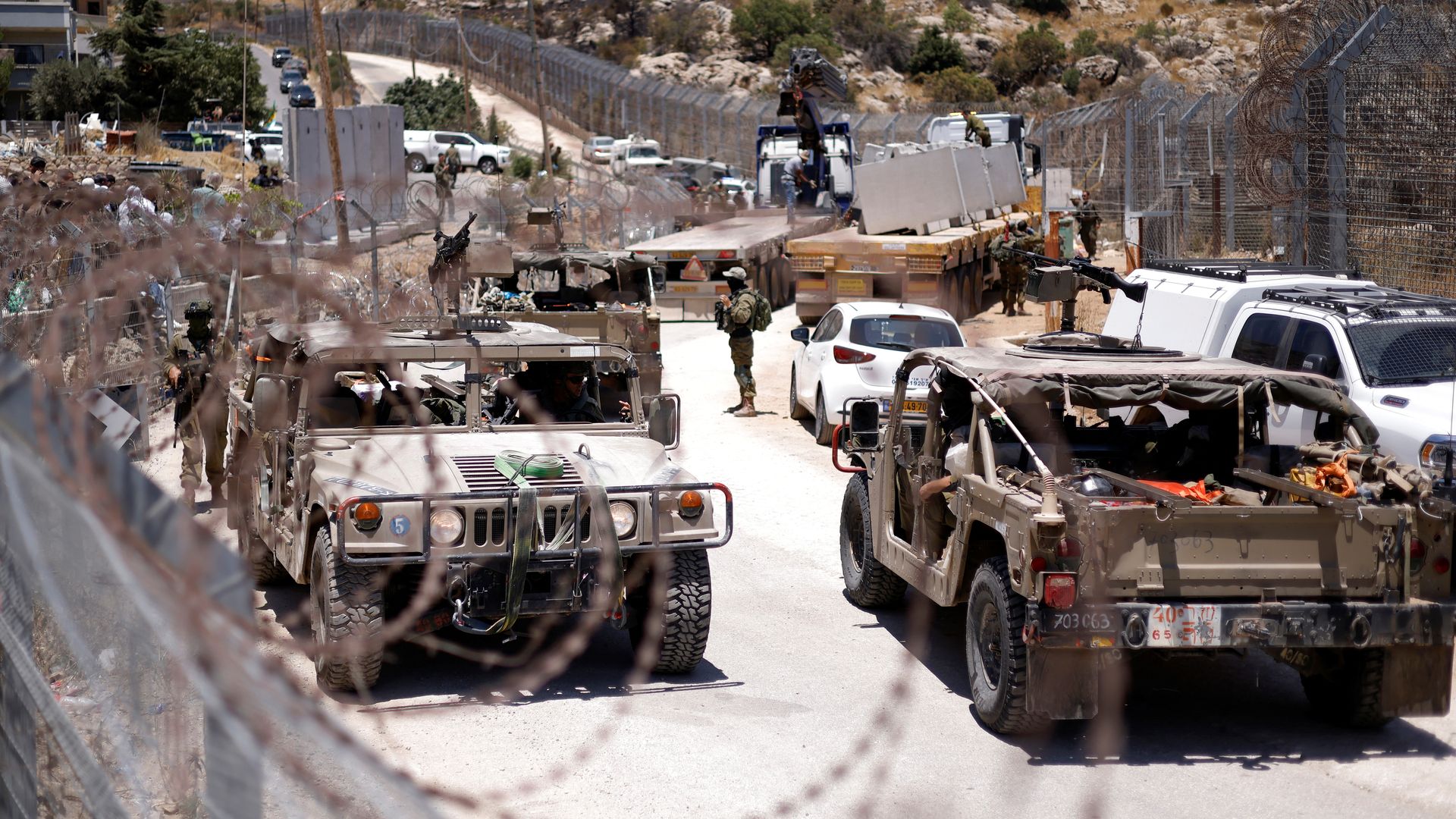
Israeli military vehicles near the border with Syria. Photo: Jalaa Marey/AFP via Getty
Israel presented Syria with a detailed proposal for a new security agreement, including a map of proposed demilitarized zones from Damascus southwest up to the border with Israel, according to two sources familiar with the details.
Why it matters: Israel has had tense relations with the new Syrian government, even bombing Damascus in July. The Trump administration has taken a much friendlier line with Syrian President Ahmed al-Sharaa, who toppled and then replaced Bashar al-Assad, and has quietly facilitated Israel-Syria diplomacy.
State of play: Syria has not responded yet to the Israeli proposal, made several weeks ago, and has been working on a counterproposal in recent weeks.
- Israeli Strategic Affairs Minister Ron Dermer and Syrian Foreign Minister Asaad al-Shaibani plan to discuss the proposal on Wednesday in London, along with U.S. envoy Tom Barrack, who has been mediating between the countries.
- That would be the third such trilateral meeting. Sources familiar with the talks said they are showing progress, but no agreement appears imminent.
Flashback: The security agreement being negotiated is intended to replace the 1974 disengagement agreement between the countries.
- That pact became irrelevant after the Assad regime collapsed and Israel occupied the buffer zone on the Syrian side of the border.
Zoom in: The Israeli proposal is based on Israel's 1979 peace agreement with Egypt, according to two sources familiar with the details.
- That agreement divided the Sinai Peninsula into three zones — A, B and C — and defined different security arrangements and with different levels of demilitarization based on their distance from the Israeli border.
Between the lines: These are maximalist demands from the Israelis, with Syria asked to agree to a broad demilitarized area and no-fly zone on its territory, and nothing changing on the Israeli side of the border.
According to the proposal, the area southwest of Damascus would be divided into three zones, with the Syrians able to maintain different levels of forces and types of weaponry depending on the area.
- The proposal calls for the buffer zone to be extended by 2km on the Syrian side.
- In the strip adjacent to the buffer zone and closest to the border with Israel on the Syrian side, military forces and heavy weapons would not be allowed. But Syria would be permitted to maintain the presence of police and internal security forces.
- A source familiar with the details said that under the proposal, the entire area from southwest of Damascus to the Israeli border would be designated a no-fly zone for Syrian aircraft.
- In exchange for these limitations on the Syrian side, Israel has proposed a gradual withdrawal from all of the territories it has occupied in Syria over the last few months — except for an outpost on the summit of the strategic Mt. Hermon.
- A senior Israeli official said that Israel insists on maintaining a presence there in any future agreement.
The intrigue: The source noted that a central principle of the Israeli proposal is maintaining an aerial corridor to Iran via Syria, which would allow for potential future Israeli strikes in Iran.
What to watch: Israeli Prime Minister Benjamin Netanyahu is interested in arranging a meeting with al-Sharaa on the sidelines of the UN General Assembly at the end of September, but at this stage, the likelihood of that happening is low, an Israeli official said.
- Netanyahu said at a press conference on Tuesday that President Trump had invited him to the White House on Sept. 29.
