Disney canceled a new, nearly $1 billion employee campus in Orlando on Thursday, the New York Times first reported.
Why it matters: The cancellation comes amid a yearslong feud between Disney and Florida Gov. Ron DeSantis (R), which ignited after the company publicly opposed a law championed by the governor.
Walmart is increasingly attractinghigher-income shoppers as consumers look for relief from inflation, Nathan writes.
Why it matters: Price increases throughout the economy have reshaped the shopping landscape, sending some shoppers to places they've rarely frequented in the past.
Netflix has attracted nearly 5 million monthly active users to its new ad-tier service after launching fewer than 200 days ago.
Why it matters: The company revealed the metric for the first time during its first-ever upfronts presentation this week — marking two new milestones in its firm shift toward building a traditional ad-supported media business.
The global economy loses trillions in the persisting downturn following an El Niño event, according to a new study.
Why it matters: A rapidly developing El Niño could result in a worldwide economic loss of upwards of $3 trillion through the end of the decade — costing some nations more than others.
Deutsche Bank agreed to pay $75 million as part of a "groundbreaking" settlement to a proposed class-action lawsuit against it, which alleged that the bank enabled Jeffrey Epstein's sex trafficking operation, lawyers representing the plaintiffs in the case confirmed to Axios.
Why it matters: The lawsuit alleged that Deutsche Bank continued to do business with Epstein while knowing he was using his bank accounts with the financial institution to facilitate his sex trafficking activities, the Wall Street Journal first reported.
Real estate billionaire Sam Zell, who became known as the "grave dancer" for his ability to turn around languishing properties, died Thursday at age 81.
Driving the news: Equity Residential, which he founded in 1968, announced the death of Zell, who was still serving as its chairman.
The Federal Trade Commission has charged the developer of period tracking app Premom with deceiving users by sharing their health data with third parties, including Google and two China-based firms.
Why it matters: Legal protections for sensitive personal health data that can include information such as medications, mental health and pregnancy status have not kept up with the digital health sector's explosive growth.
Driving the news: The ruling is part of a concentrated recent effort by the FTC under activist chair Lina Khan to target a growing class of companies that are not subject to HIPAA yet nonetheless share and sell health data.
Details: According to the FTC, Premom shared users' reproductive health information and precise geolocation data with companies including Google and Alibaba subsidiary Umeng via tracking tools known as software development kits (SDKs).
That data sharing "led to the unauthorized disclosure of facts about an individual user’s sexual and reproductive health, parental and pregnancy status," per the agency, as well as users' social media account data, precise geolocation data, and information about users' mobile devices and Wi-Fi network identifiers, the FTC says.
What's happening: The FTC is fining Premom $100,000 in civil penalties.
If approved by the federal court, the order would bar Premom's parent company, Easy Healthcare Corporation, from sharing users' personal health data with third parties for advertising.
It would also require Premom to get user consent before sharing such data.
What they're saying: "Premom broke its promises and compromised consumers’ privacy," Samuel Levine, director of the FTC’s Bureau of Consumer Protection, said in a statement.
Catch up quick: Wednesday's ruling follows similar actions against companies including period tracking app Flo, prescription discount startup GoodRx, and Teladoc mental health subsidiary BetterHelp.
Yes, and:Health privacy in the post-Roe digital age is fraught as prosecutors seeking to enforce anti-abortion laws are free to go after reproductive health data in mobile apps, where it is unprotected by federal law.
As many as one-third of women use digital tools to track their periods, which can be for monitoring their cycles, planning to avoid a pregnancy or trying to conceive.
The bottom line: The FTC's moves directly challenge the way digital health companies operate and could significantly alter the future health tech landscape.
Millions of Americans still enjoy one huge benefit of the low borrowing cost era: rock-bottom mortgage rates. One reason is the pandemic refinancing boom, highlighted by our Axios Markets colleagues earlier this week, where homeowners who refinanced could enjoy ultra-low rates for decades to come.
Why it matters: The Fed has hiked interest rates — but fixed-rate mortgages are fixed, meaning millions of Americans haven't seen their mortgage payments go up at all.
There is an odd reason that helps explain why jobless claims swung higher in recent weeks. It comes down to Massachusetts, which appeared to have a surge in layoffs that sent applications for unemployment benefits higher.
Yes, but: State officials say it was actually "an increase in fraudulent claim activities."
Franz Paasche serves as chief corporate affairs officer at PayPal, where he oversees communications, employee engagement, reputation management, strategic research, public affairs, social impact, sustainability and strategic partnerships teams.
Why it matters: Paasche is one of the first to hold the chief corporate affairs officer position and believes "in many ways, [corporate affairs] is an engine for the mission, vision and values of the company."
Public affairs consultancy SKDK has acquired the c-suite advisory firm Jasper Advisors, founded by Julie Andreeff Jensen and David Sutphen.
Why it matters: The acquisition highlights the growing demand for strategic communication support at the highest levels of business, as evidenced by the flurry of roll-ups within the PR and public affairs industry.
As newsrooms shrink and faith in media plummets, journalists are looking for more ways to tell compelling and trustworthy stories, according to a new report from media monitoring platform Cision.
Driving the news: Cision surveyed 3,132 journalists from across the globe in February and March to gauge the industry's top priorities and challenges.
FTX and sister trading unit Alameda Research are suing ex-CEO Sam Bankman-Fried and two other former execs over the acquisition of stock clearing company Embed last year.
Why it matters: This could be the first of many suits relating to acquisitions and investments that Bankman-Fried made.
There are some fates worse than bankruptcy. Even when it comes to private equity's financially fraughthistory with mattress companies.
What happened: The judge overseeing the Serta Simmons bankruptcy lost his patience during a Monday hearing, claiming that either a witness from Serta Simmons owner Advent International was lying or that lender Apollo Global Management was wasting the court's time.
Silver Lake on Wednesday launched a €32-per-share tender offer for German enterprise software provider Software AG, despite a rival approach from Bain Capital.
Why it matters: It's rare to see private equity firms fight over a deal in which management has already made its preference known.
Once dismissed as a fringe theory, the idea that corporate thirst for profits drives up inflation, aka "greedflation," is now being taken more seriously by economists, policymakers and the business press.
Why it matters: Though inflation is starting to come down, it still remains well above the Fed's target level of 2%, andunderstanding what's causing inflation is key to combatting it — now and the next time.
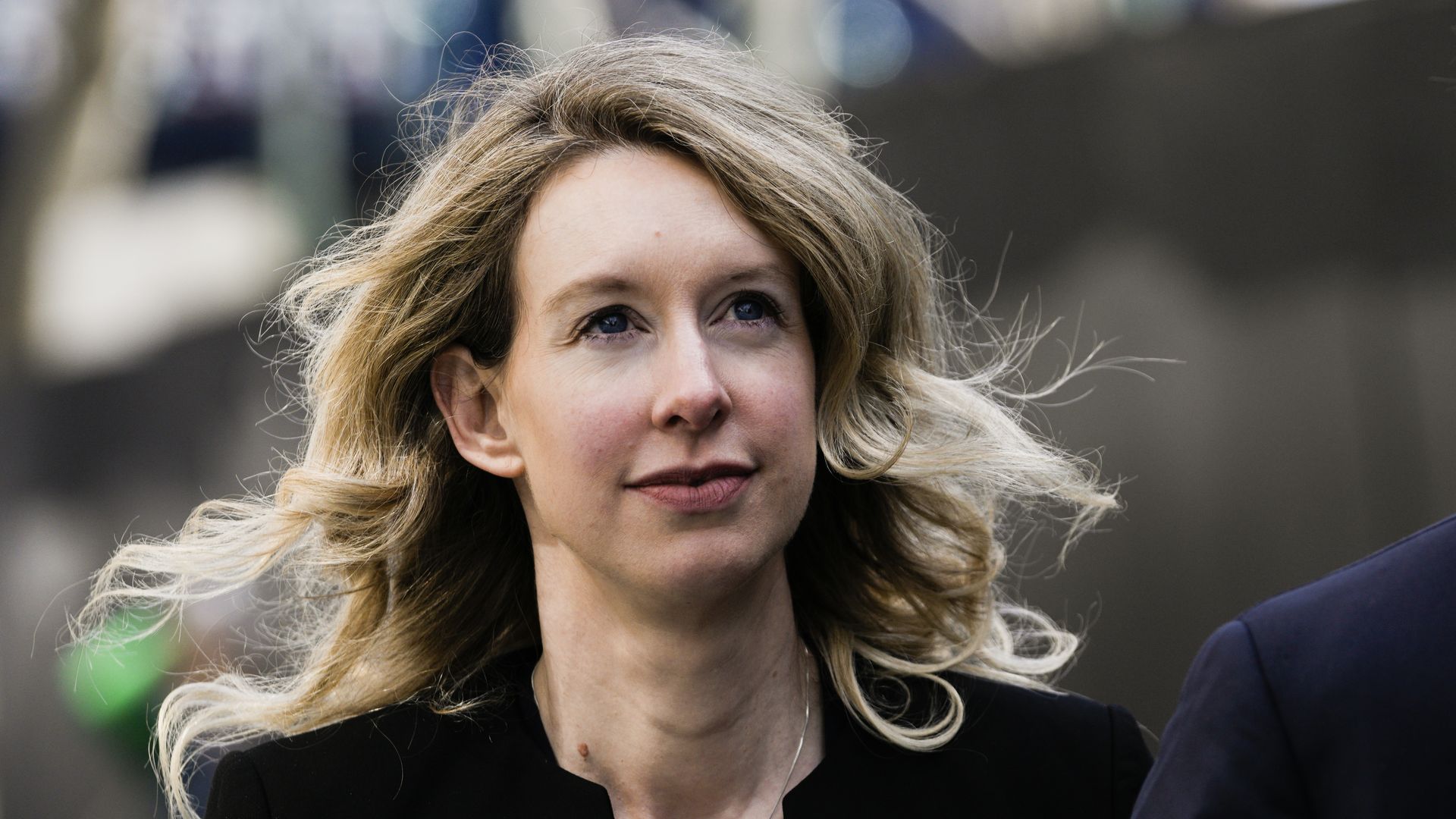
Theranos founder Elizabeth Holmes must begin serving her prison sentence by May 30 while she appeals her conviction on charges of defrauding investors in her failed blood-testing startup, a federal judge ruled Wednesday.
Driving the news: U.S. District Court Judge Edward Davila issued the order after the United States Court of Appeals for the Ninth Circuit on Tuesday rejected Holmes' request to remain on bail as she appeals the case.























/2023/05/18/1684422463090.gif?w=3840)