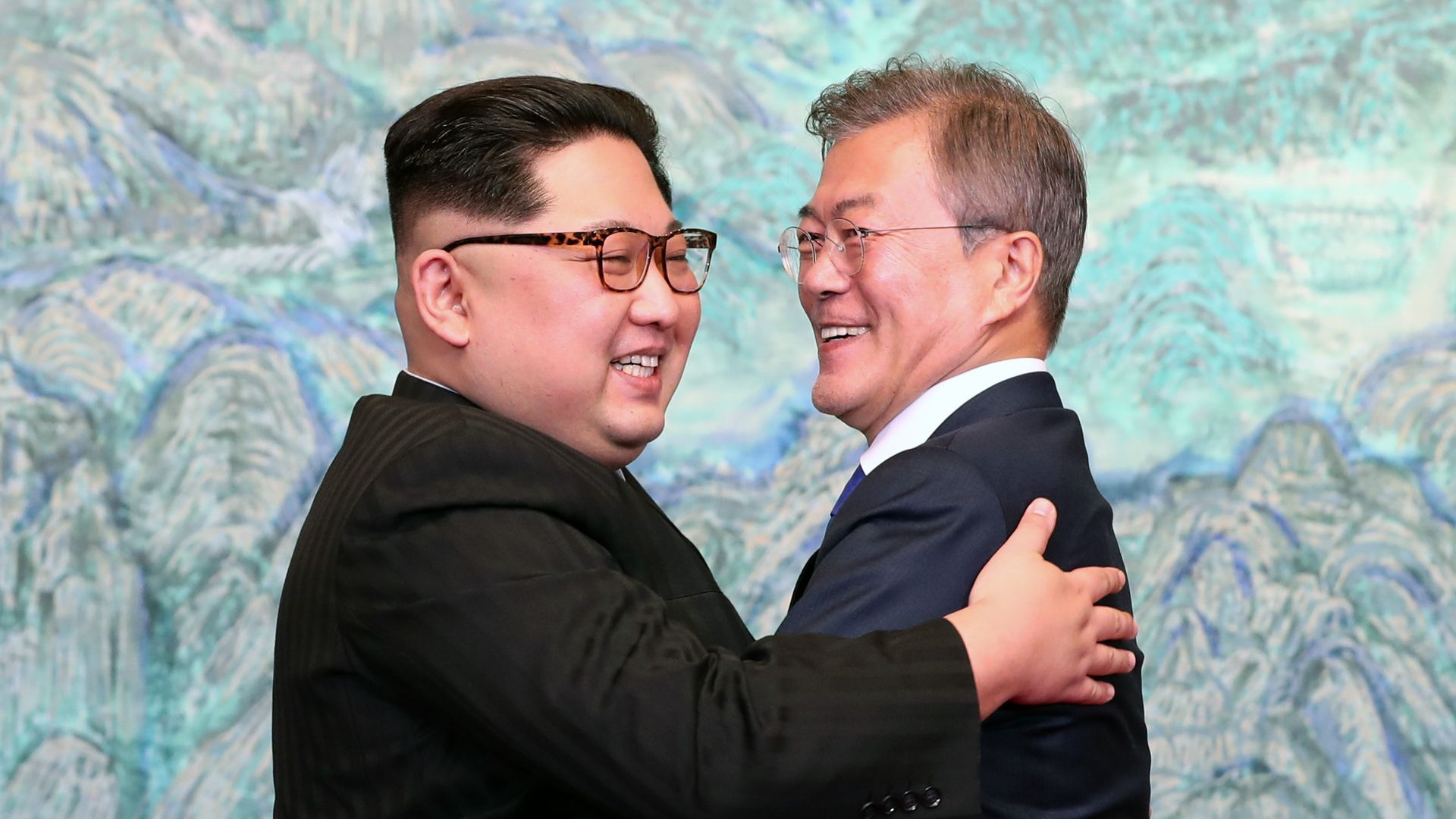
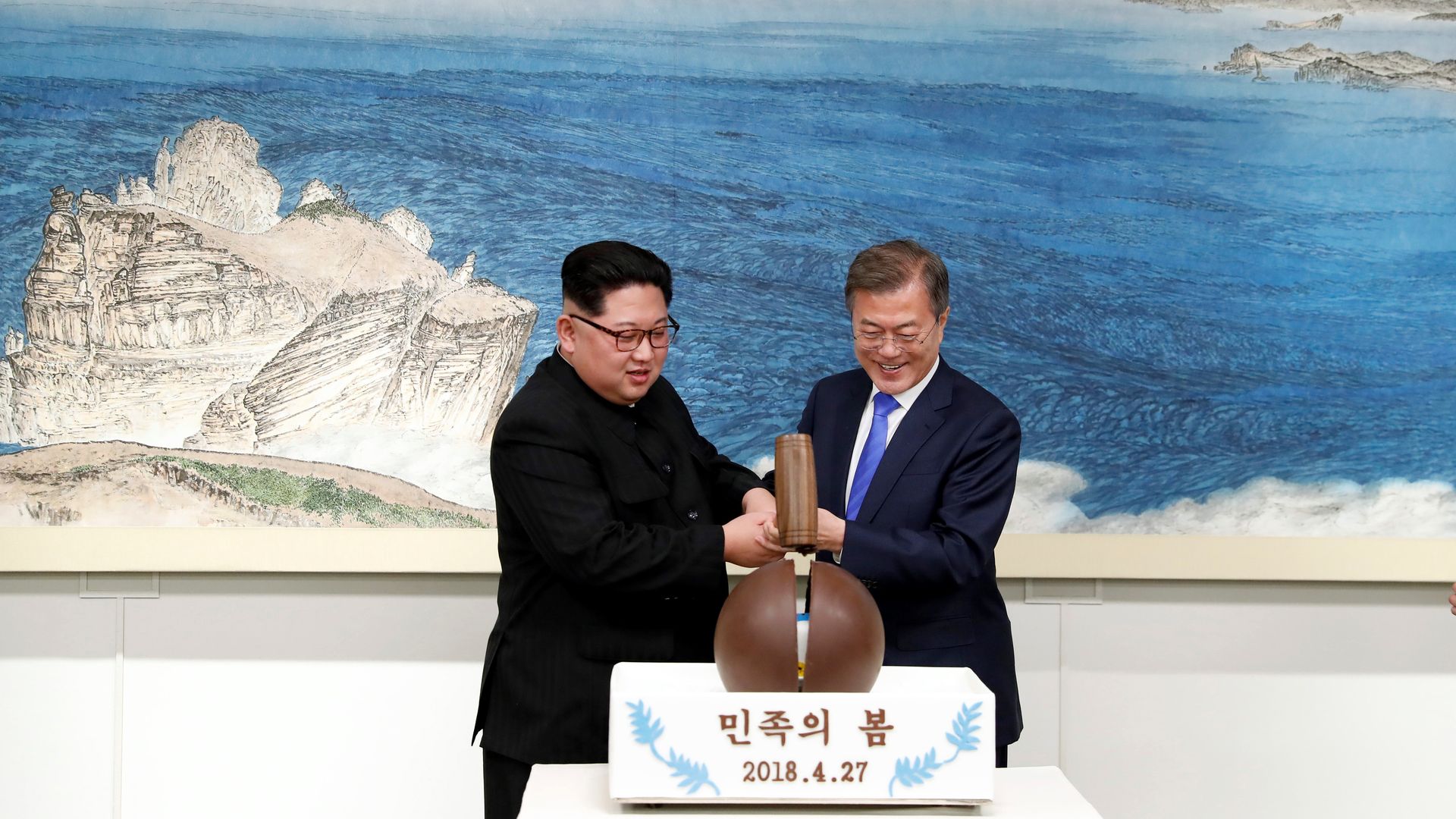
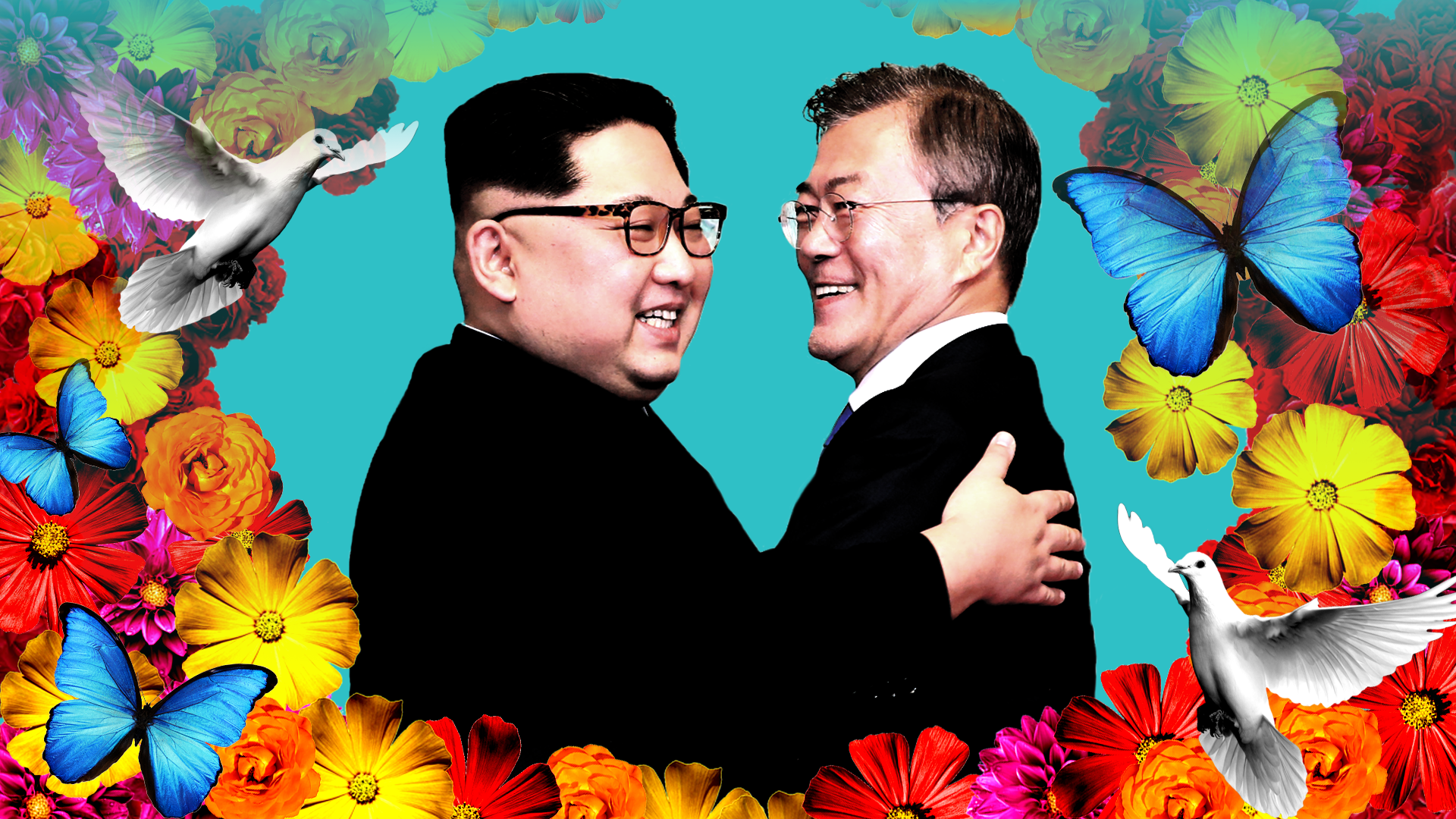
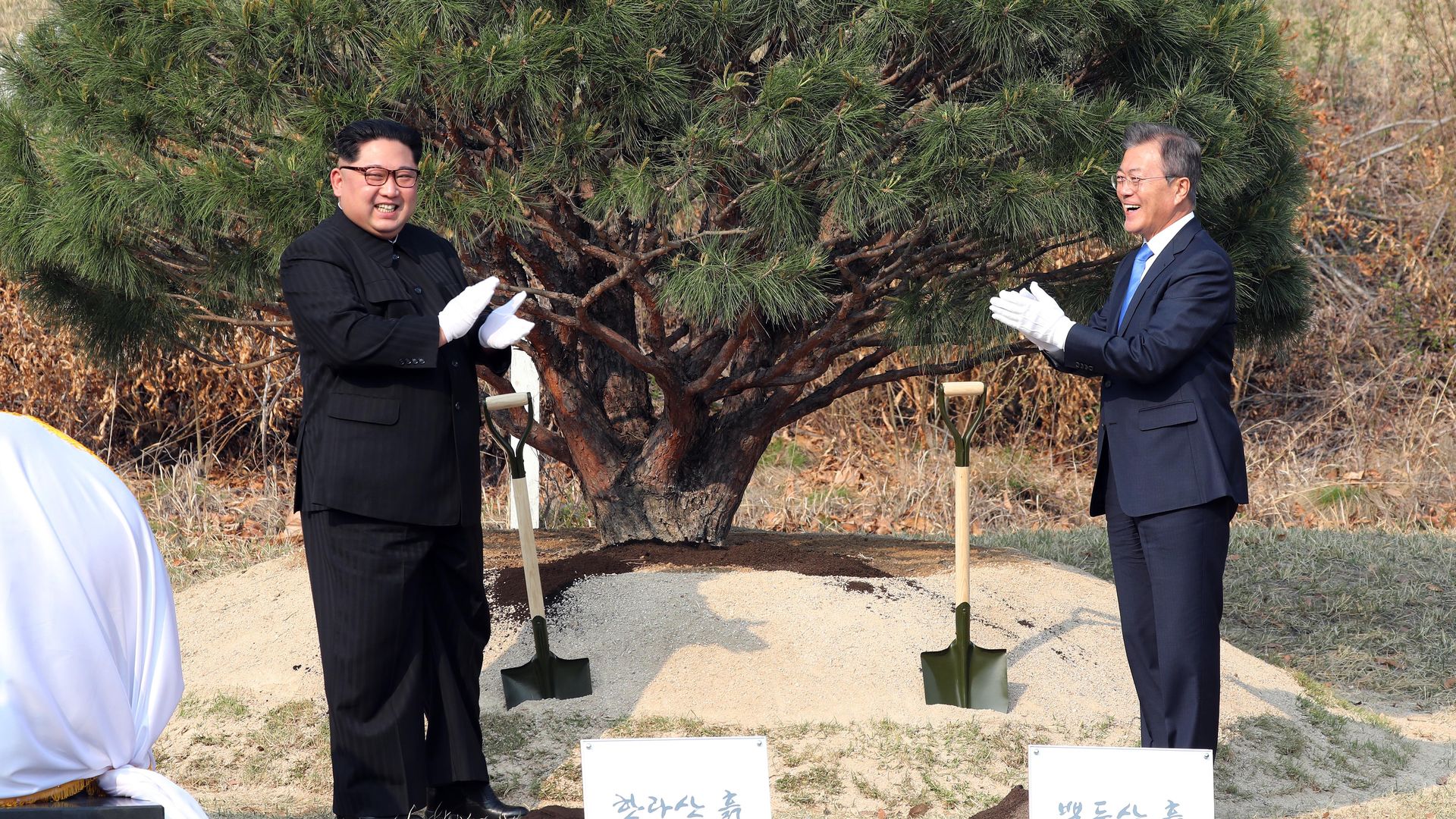
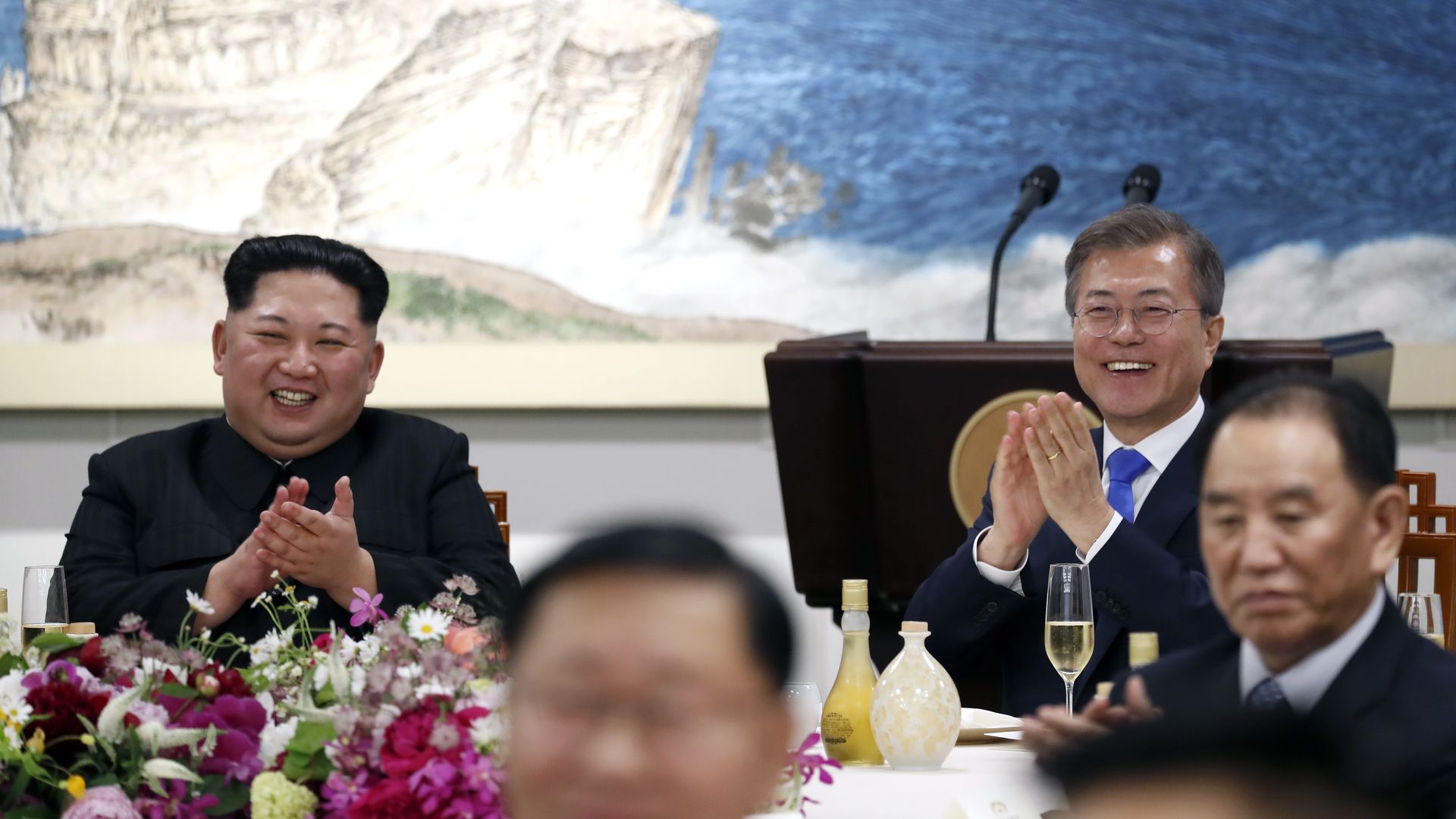
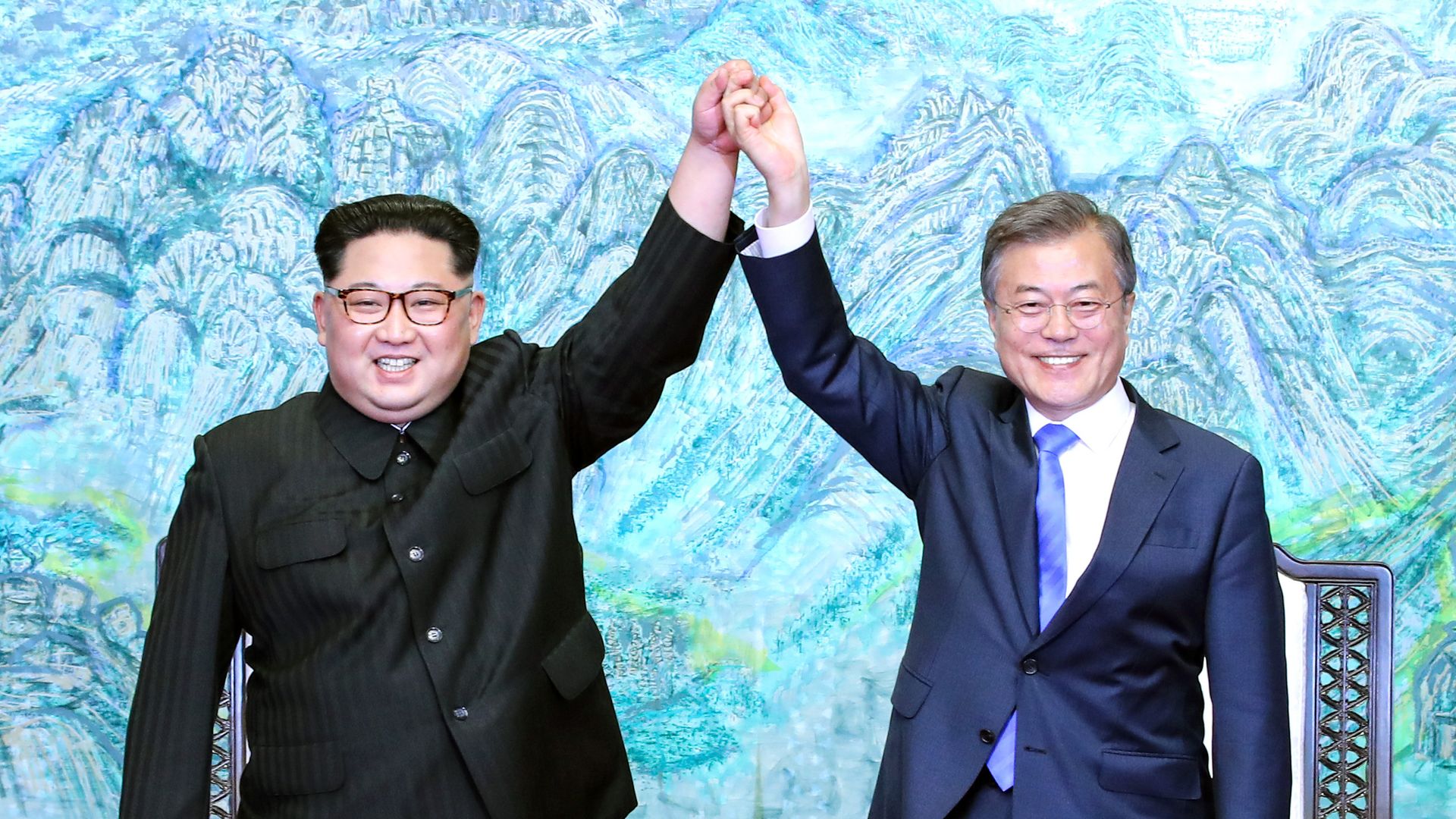
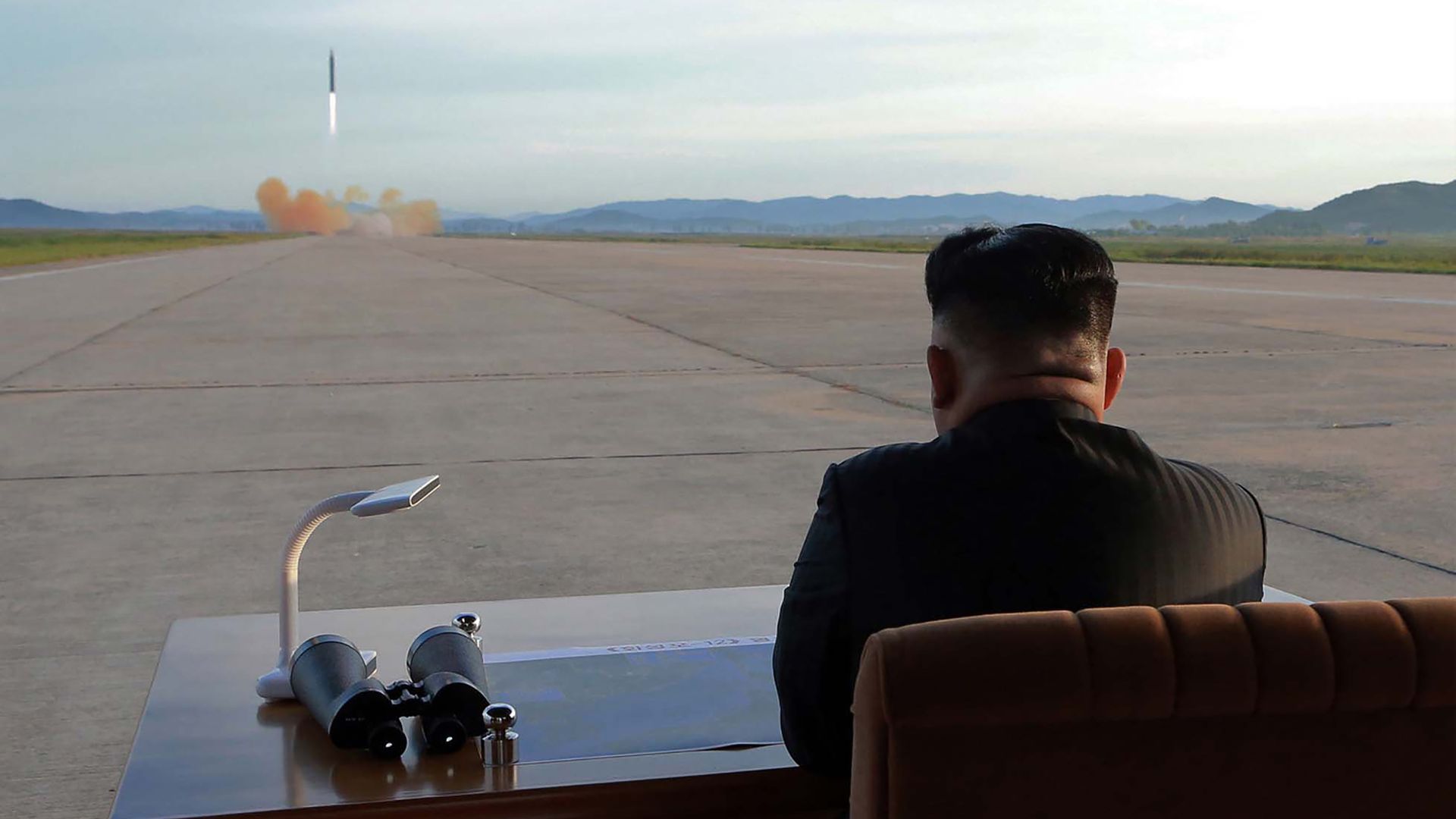
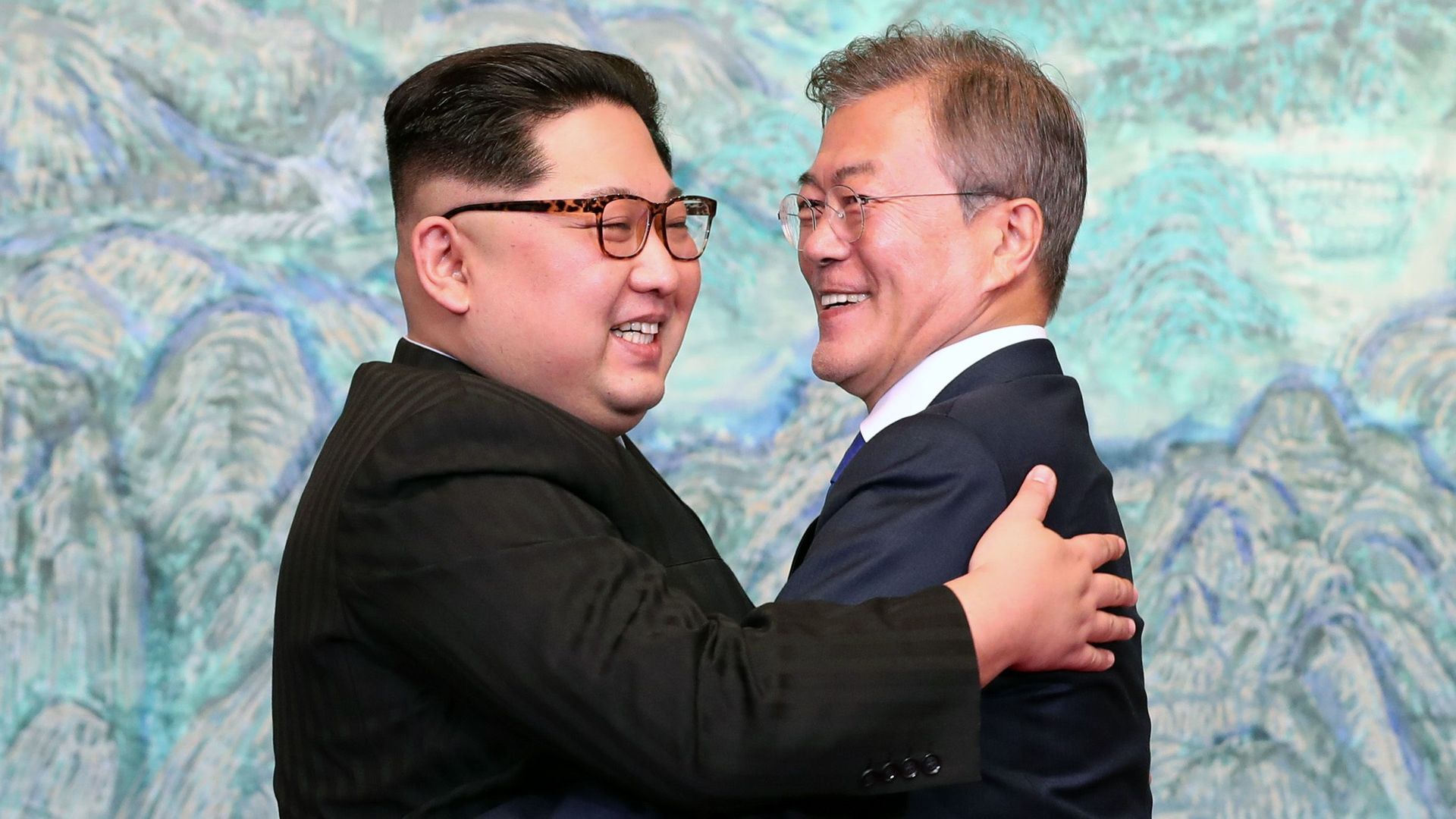
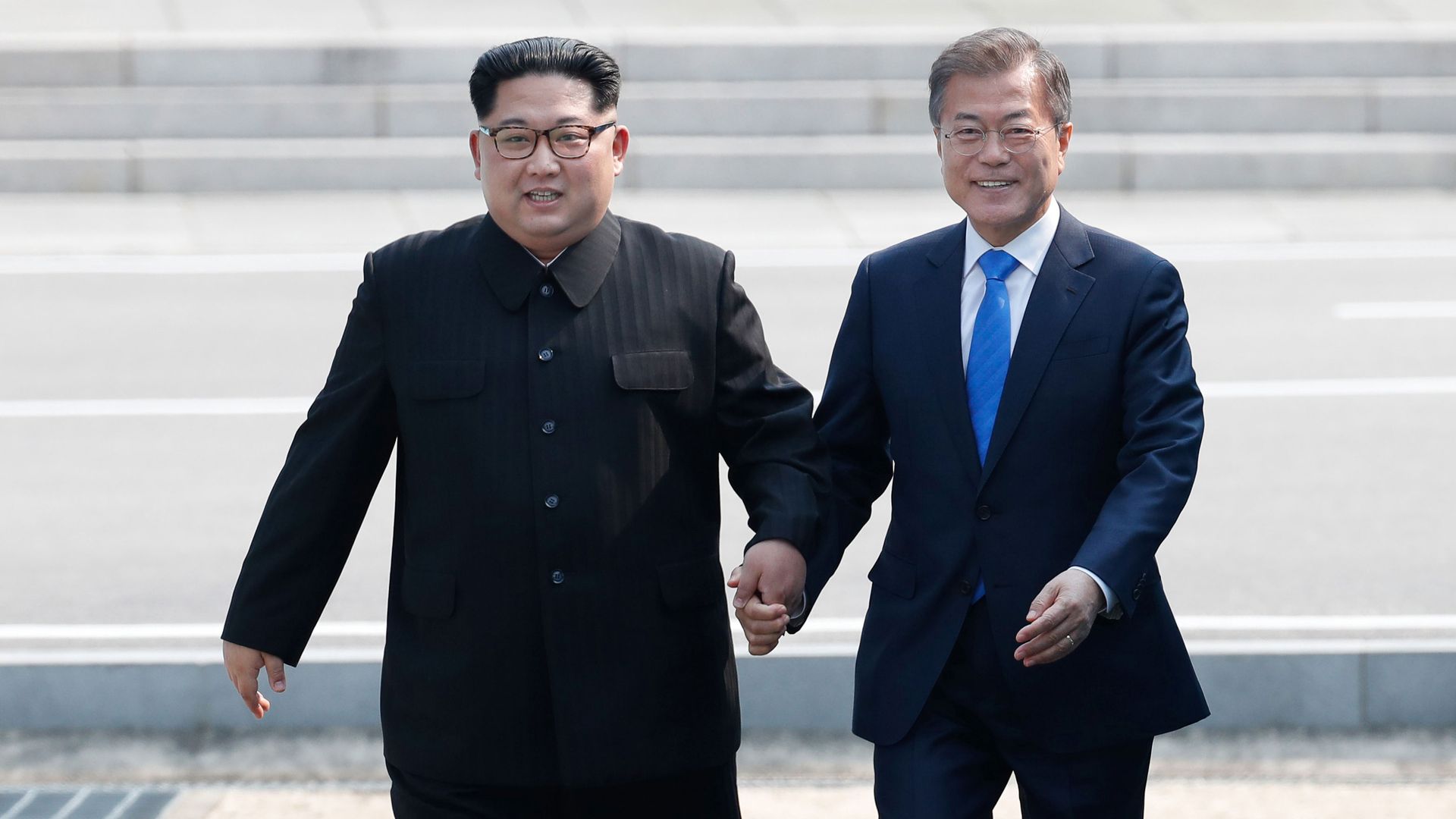
The summit between North Korea's Kim Jong-un and the South's Moon Jae-in was rich in symbolism and breathtaking in its dramatics. The two leaders — who just months ago were preparing for possible war — held hands, crossed into each other's territory, posed for photos and joked together. They also made commitments that, if fulfilled, would represent a huge step toward peace on the peninsula.
Yes, but: Much turns, however, on whether those commitments are indeed fulfilled. Seoul and Pyongyang agreed to “complete denuclearization” of the peninsula and to pursue a peace treaty that would officially end the Korean War. Yet the pledges included no timeline for the North's denuclearization, no process for verifying steps toward it nor a plan for how Kim would detail his nuclear and missile arsenals.
Now that the initial shock has worn off from today's Korean news, here's a brief survey of the reasons for skepticism and optimism about peace and denuclearization.
Why it matters: Today is only the beginning of a lengthy process, and we've been burned by early optimism in the past.
President Trump said this afternoon that he "may go" to the opening ceremony of the new U.S. embassy in Jerusalem on May 14.
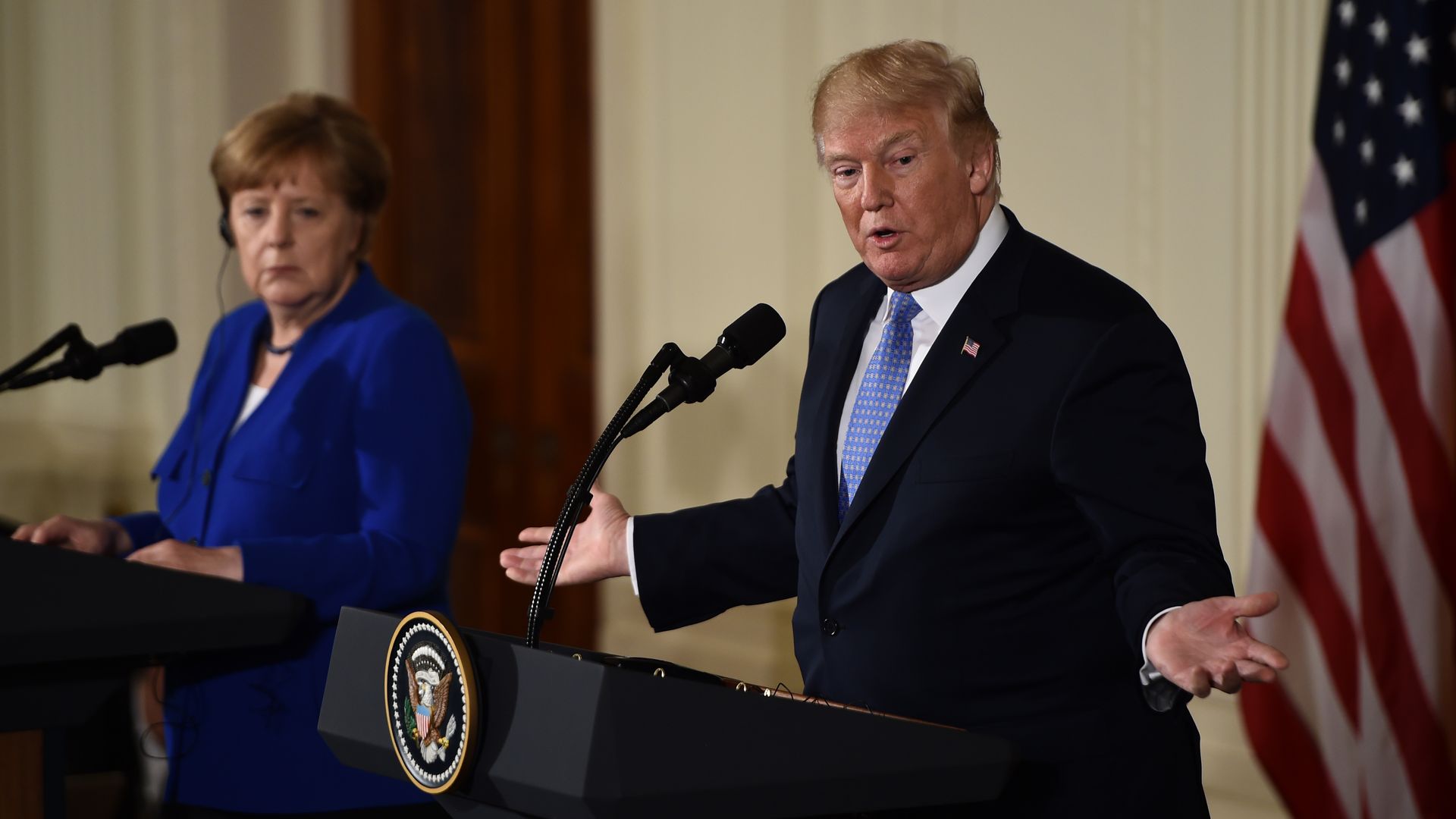
Why it matters: Trump's statement during a joint press conference with German chancellor Angela Merkel was somewhat surprising, because in the last few weeks, both the White House and Israeli Prime Minister Benjamin Netanyahu's office said it was highly unlikely that Trump would be able to attend.
North Korean leader Kim Jong-un and South Korean President Moon Jae-in convened at the long-anticipated inter-Korean Summit in South Korea on Friday. The two leaders released a joint declaration, promising that they will work toward a peace treaty and the complete denuclearization of the peninsula.
Yes, but: These are not unprecedented scenes of amity. They belong to the same movie we saw in 2000 and 2007, when the previous inter-Korean summits occurred, and in 1992, when the two countries declared their shared goal for denuclearization. Still, while skepticism is warranted, we can be cautiously optimistic that the new actors (Kim, Moon and Trump) and new setting (a de facto nuclear North Korea under different leadership) might lead to a different ending this time.
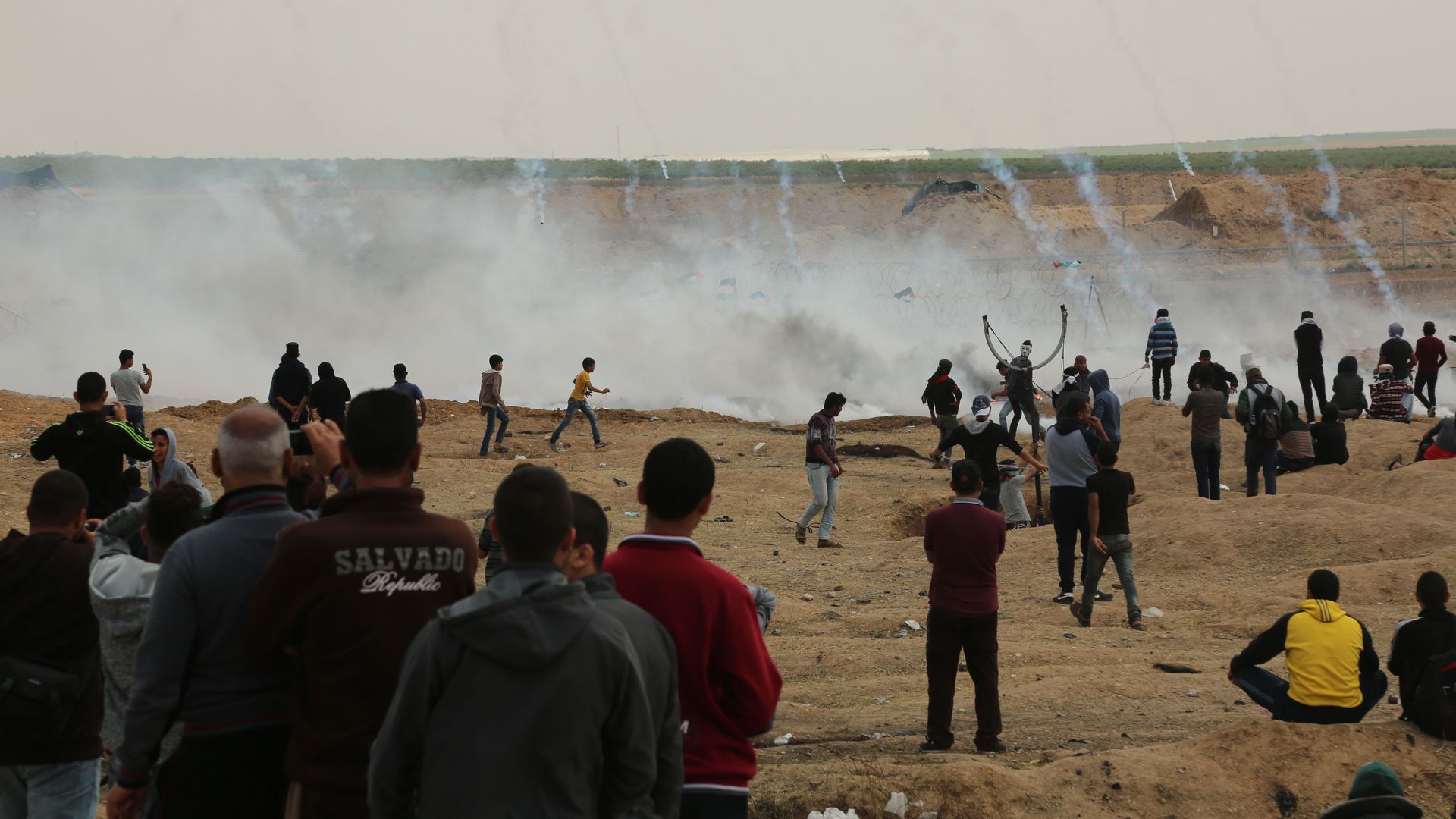
Israeli troops killed three Palestinian demonstrators Friday in clashes along the Gaza-Israel border, according to multiple reports. There were varying accounts of wounded demonstrators, with Reuters reporting 400 and Al Jazeera reporting more than 600.
The big picture: This is the fifth Friday that has seen protests, as part of the grassroots movement around the Great March of Return. Per Al Jazeera, the casualties came after Israeli forces opened fire on the crowd, and the Israeli army "targeted medical service points twice with an unidentified gas." BBC reported that the Israeli army said it acted within rules of engagement, as a result of "more than 10,000 Palestinians...rioting."
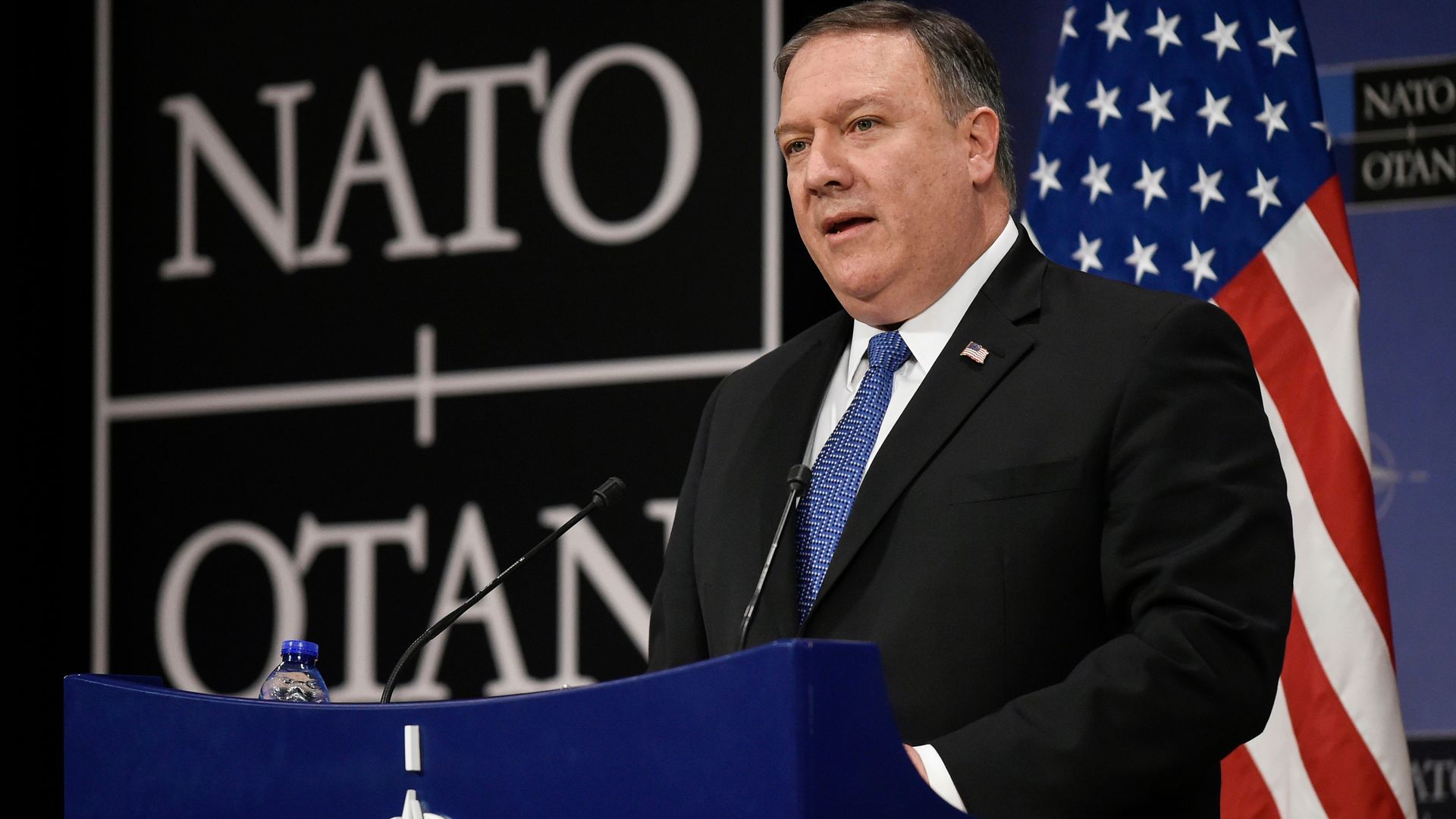
Speaking from Brussels, where he is attending a NATO summit just one day after being confirmed as secretary of state, Mike Pompeo said President Trump is "unlikely to stay" in the Iran nuclear deal "past this May."
Why it matters: This is the administration's long-standing position, and Pompeo said "the team is working" to deliver the fixes Trump is looking for ahead of the May 12 deadline. However, those fixes are unlikely to materialize in the next two weeks, and Trump doesn't seem to have been convinced by French president Emmanuel Macron's pitch that he keep the U.S. in the deal while a larger, "new deal" is negotiated.
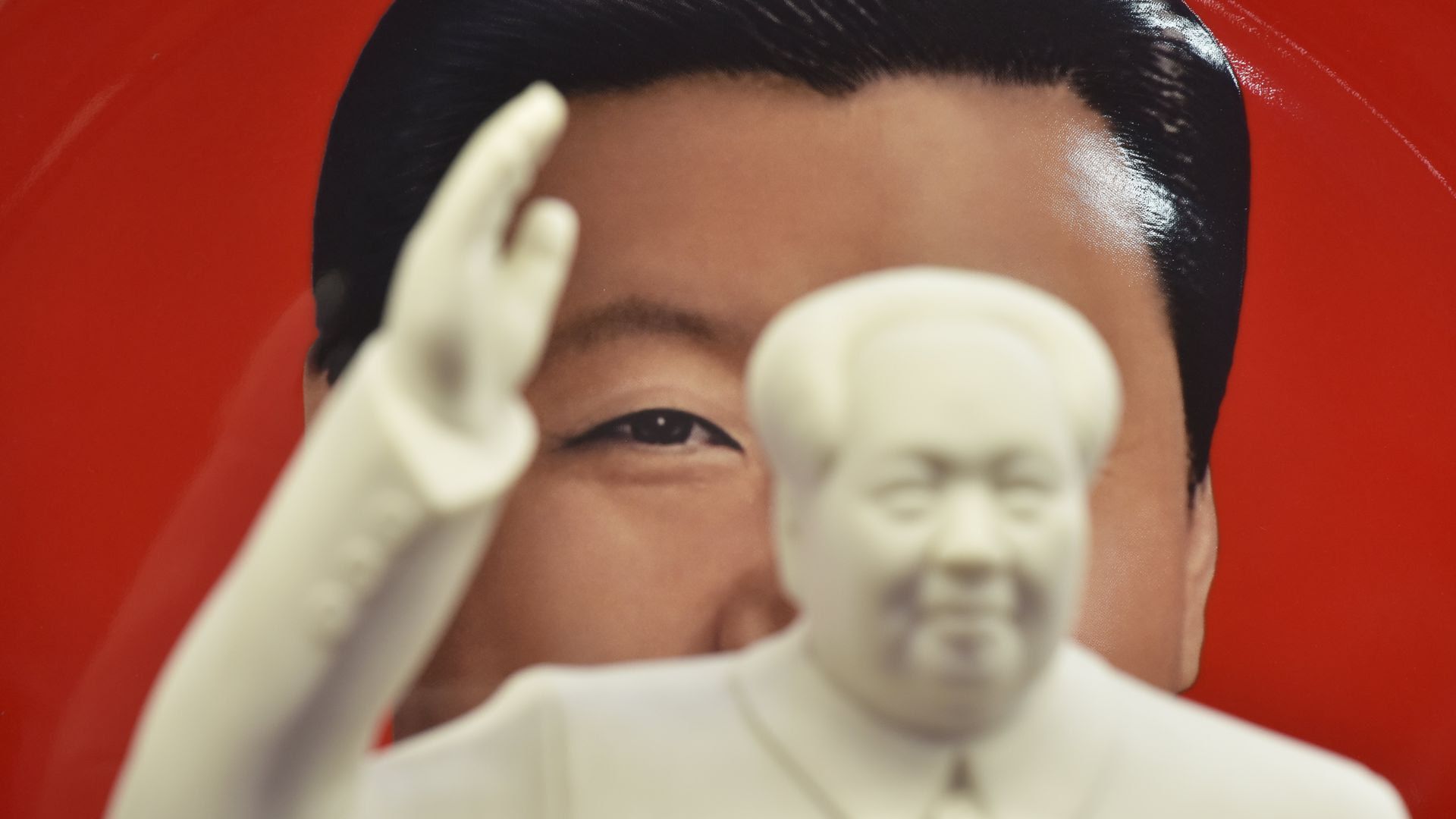
Chinese President Xi Jinping continues to emphasize the need for China to cut reliance on foreign technology.
Why it matters: China has had programs for decades to develop indigenous technologies, but the focus is rapidly intensifying as the U.S. puts more pressure on China.
Over the course of the inter-Korean summit, the world witnessed the latest moves in North Korean Leader Kim Jong-un's charm offensive.
Yes, but: It remains to be seen how the North is prepared to reduce the conventional military threat it poses to the South. The U.S. must hope the South hangs tough and refuses to offer economic incentives that reward the North for empty promises or to ignore American concerns about the North's nuclear and ballistic missile programs.
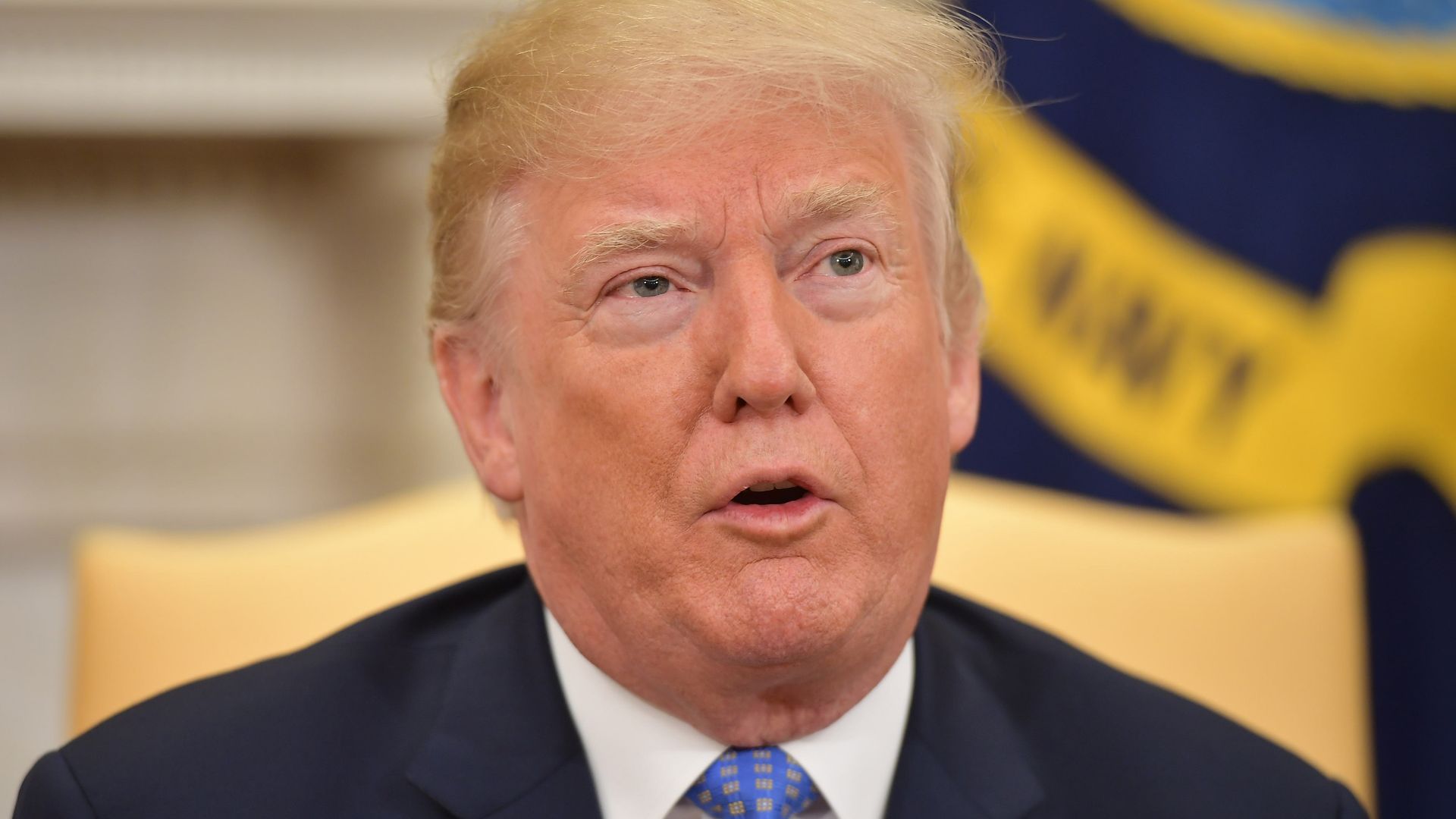
President Trump insisted Friday that he is "not going to be played" ahead of his planned peace talks with North Korea's Kim Jong-un, adding that past presidents have been "played like a fiddle" by the regime.
Context: Trump's comments, made during a meeting with German Chancellor Angela Merkel at the White House, come hours after Kim and South Korean President Moon Jae-in issued a joint statement calling for an end to the Korean war and denuclearization of the region.
After President Trump snapped the ball, North Korean Leader Kim Jong-un and South Korean President Moon Jae-in have run with it, pledging at their joint summit this morning to seek a formal end to the Korean War and pursue with a shared goal of denuclearizing the peninsula.
Why it matters: This is the first major positive geopolitical development of the year. It’s hard to see the U.S. credibly threatening military pre-emption when peace is breaking out across the peninsula — which is precisely the point.
After a historic face-to-face meeting, North Korea's Kim Jong-un and South Korea's Moon Jae-in announced their intention to move towards a peace deal between their two countries, which have technically been at war since the 1950s.
But there’s reason for skepticism: The diplomatic history shows that apparent breakthroughs and shows of good will have proved fleeting. Peace would have to be accompanied by denuclearization, something Pyongyang has repeatedly declined to follow through on.
Michael Zeisser confirms to Axios that he has stepped down as Alibaba Group's chairman of U.S. investments. In an emailed statement he said:
"My work was done, the portfolio is in great shape, and the incessant travel to China was killing me. Very smooth and amicable transition. Go Alibaba!"
CFR President Richard Haass,who just months ago had seen a 50/50 chance of U.S. war with North Korea, says Friday's historic summit between North and South Korean leaders means that chance has "clearly come way down."
Be smart: Only months ago, West Wing aides told us that war with North Korea was even more likely than it looked publicly.
Presdient Trump sent a congratulatory tweet Friday morning applauding the latest news from today's historic meeting between North Korean leader Kim Jong-un and South Korean President Moon Jae-in.
Between the lines: Trump's celebratory tone is in line with the positive approach we've seen him take in the past few weeks ahead of his expected summit with Kim. On Tuesday, Trump event went so far as to say Kim has been “very honorable” and “very open" during the process of planning these high-level talks.
Chinese President Xi Jinping and Indian Prime Minister Narendra Modi will have one big goal for their summit today: dial down the tensions in a relationship that's full of them.
The big picture: As China ramps up its investments in South Asia through its trillion-dollar Belt and Road Initiative, India feels increasingly encircled — and threatened. India sees itself as China's equal, but Beijing doesn't see it that way at all. That makes cooperation difficult.
In the Demilitarized Zone between North and South Korea Friday morning local time, Kim Jong-un became the first North Korean leader in modern history to set foot on South Korean soil. This marks the beginning of a historic summit between the two leaders to discuss denuclearization.
Kim Jong-un became the first North Korean leader in modern history to cross into South Korean territory, when he met with South Korea's Moon Jae-in on Thursday in a historic summit at the Korean Demilitarized Zone.