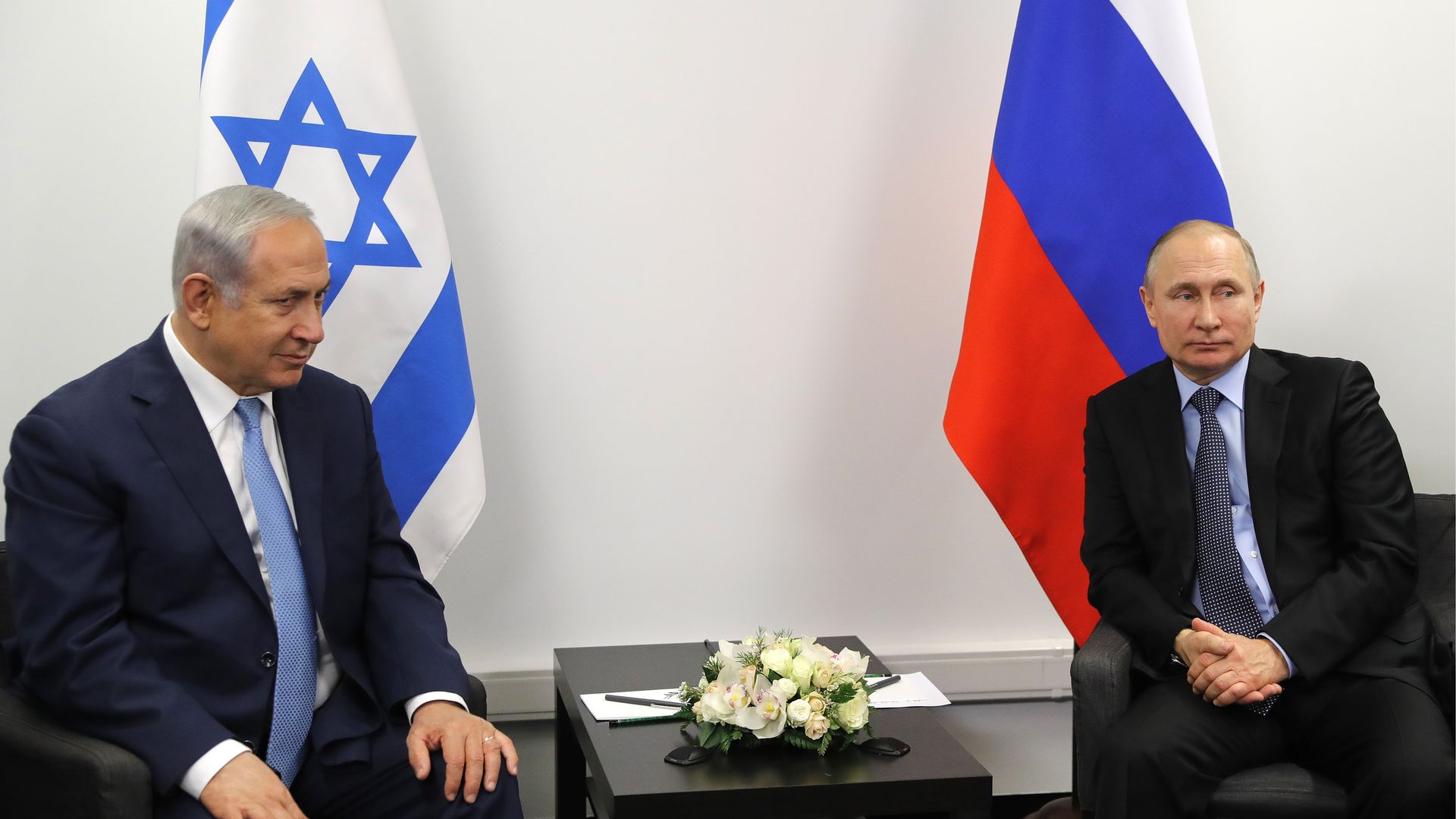
Israel has approached Russia several times in the last few weeks to demand that they meet their obligations under a cease fire deal signed with the U.S. last November by preventing pro-Iranian militias from entering a buffer zone on the Syrian-Israeli border.
Why it matters: The protests show Israel's growing nervousness over the Iranian buildup in Syria. Recent flashpoints between Israel and Russia in Syria are also making it harder for the countries to maintain close coordination.
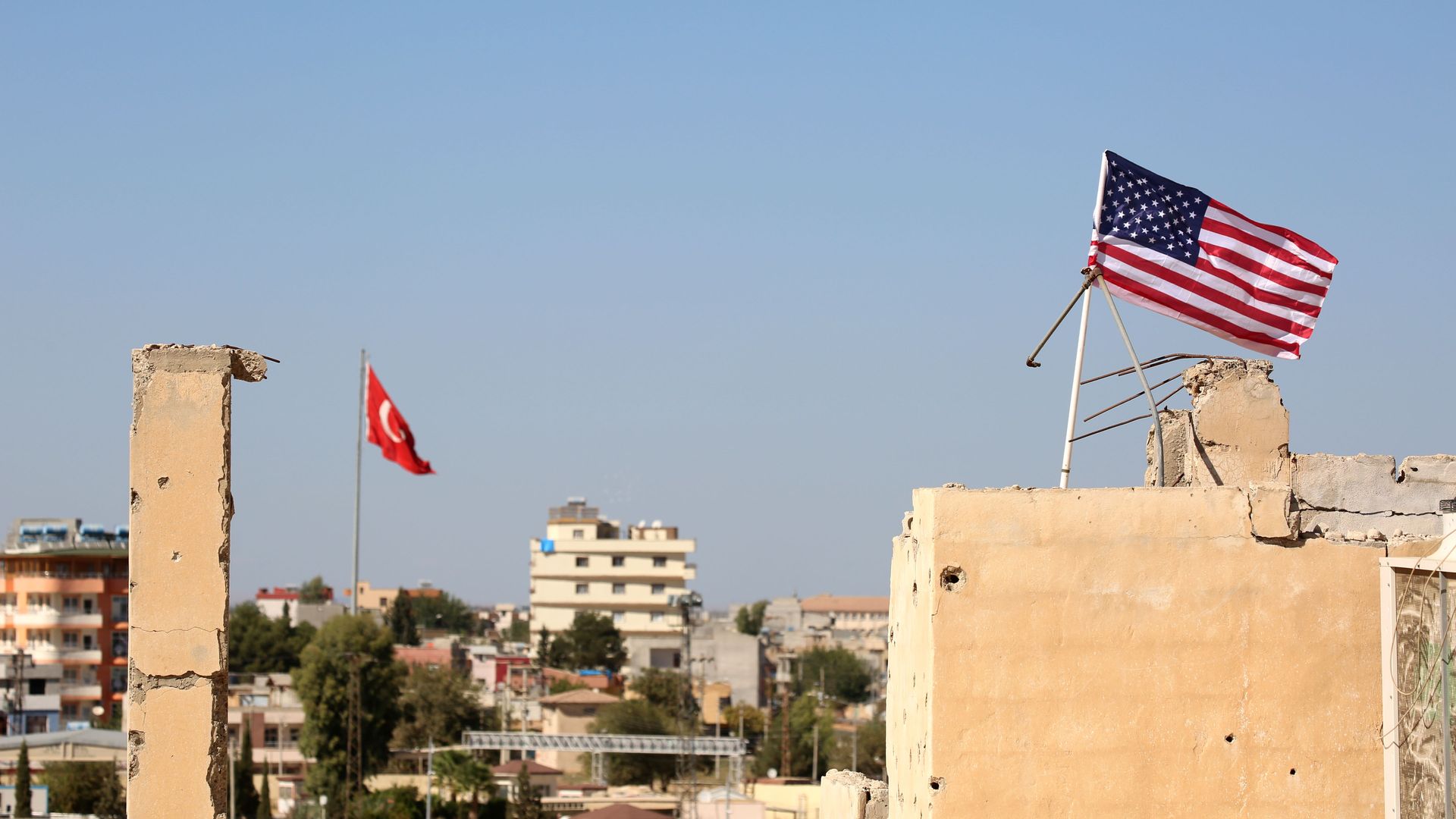
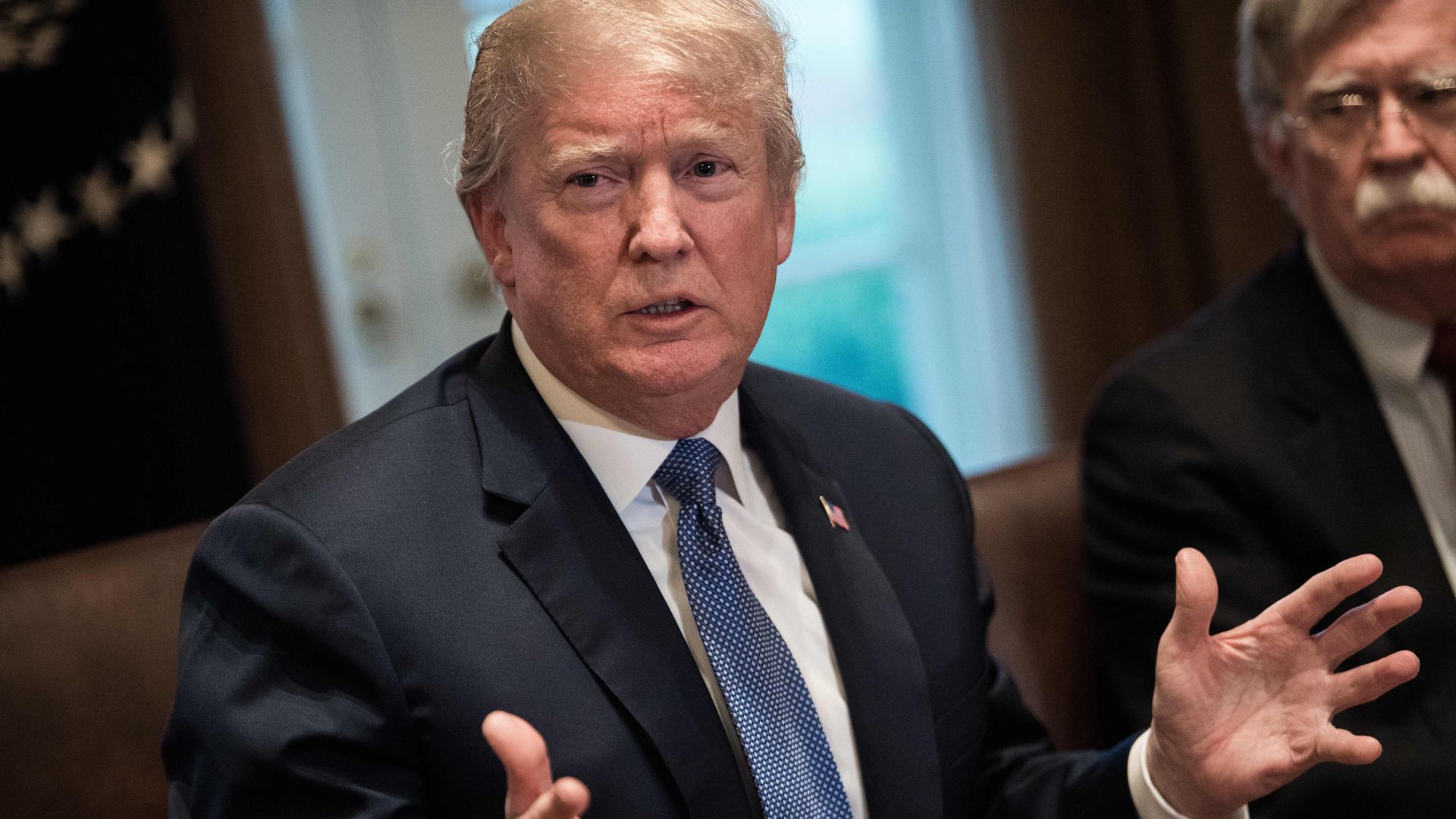
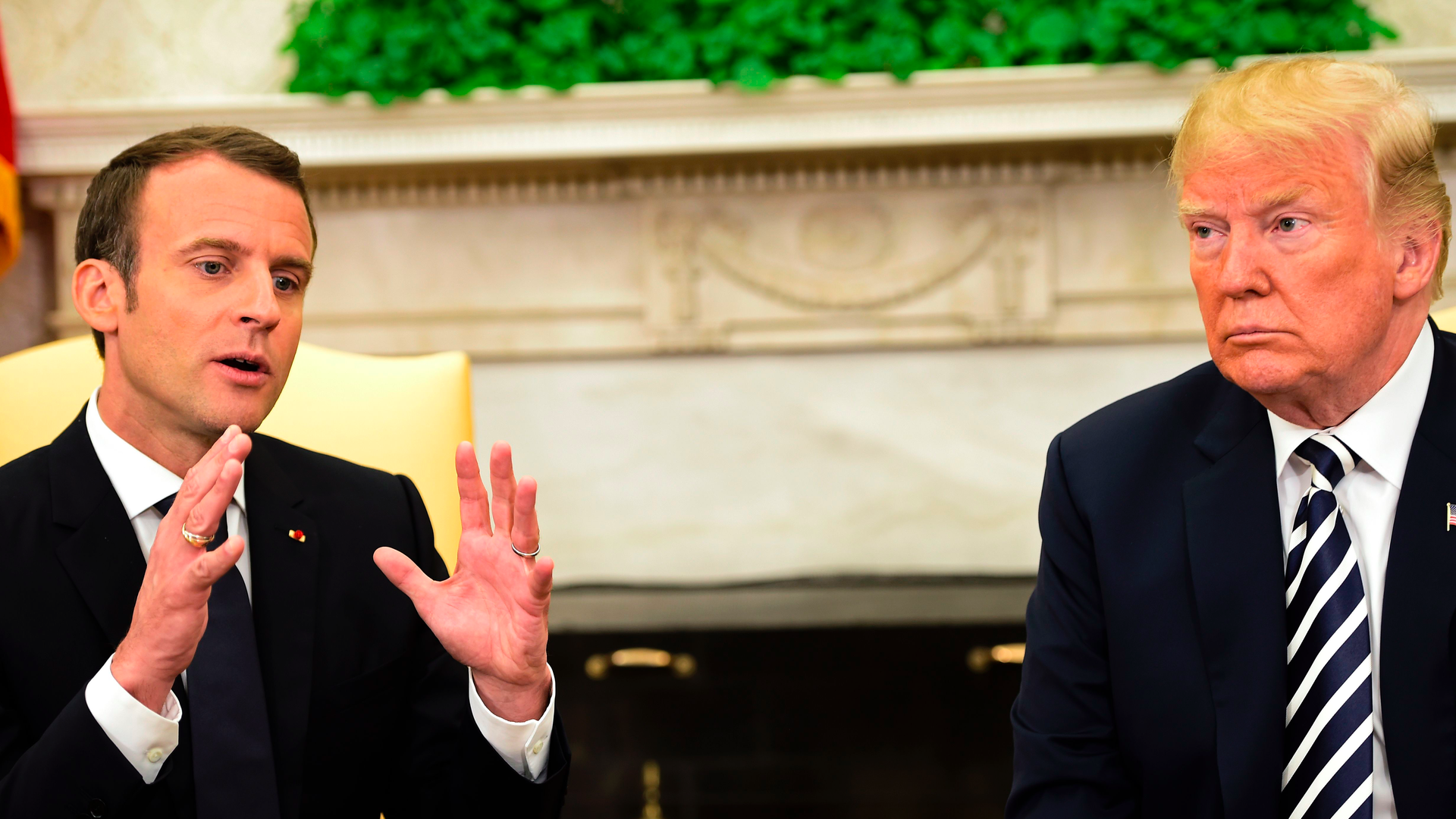
At yesterday's Oval Office press conference with French President Emmanuel Macron, President Trump said of Syria, "We'll be coming home, but we want to leave a strong and lasting footprint."
Yet it's doubtful the U.S. could maintain a strong or lasting footprint without committing to stabilization, which would involve a larger U.S. troop presence or support for a Turkish security zone in northern Syria.
The big picture: Little has changed since the coalition airstrikes on April 13, a response to President Bashar al-Assad's latest chemical weapons attack, and the White House continues to send mixed messages about the U.S. presence in Syria.
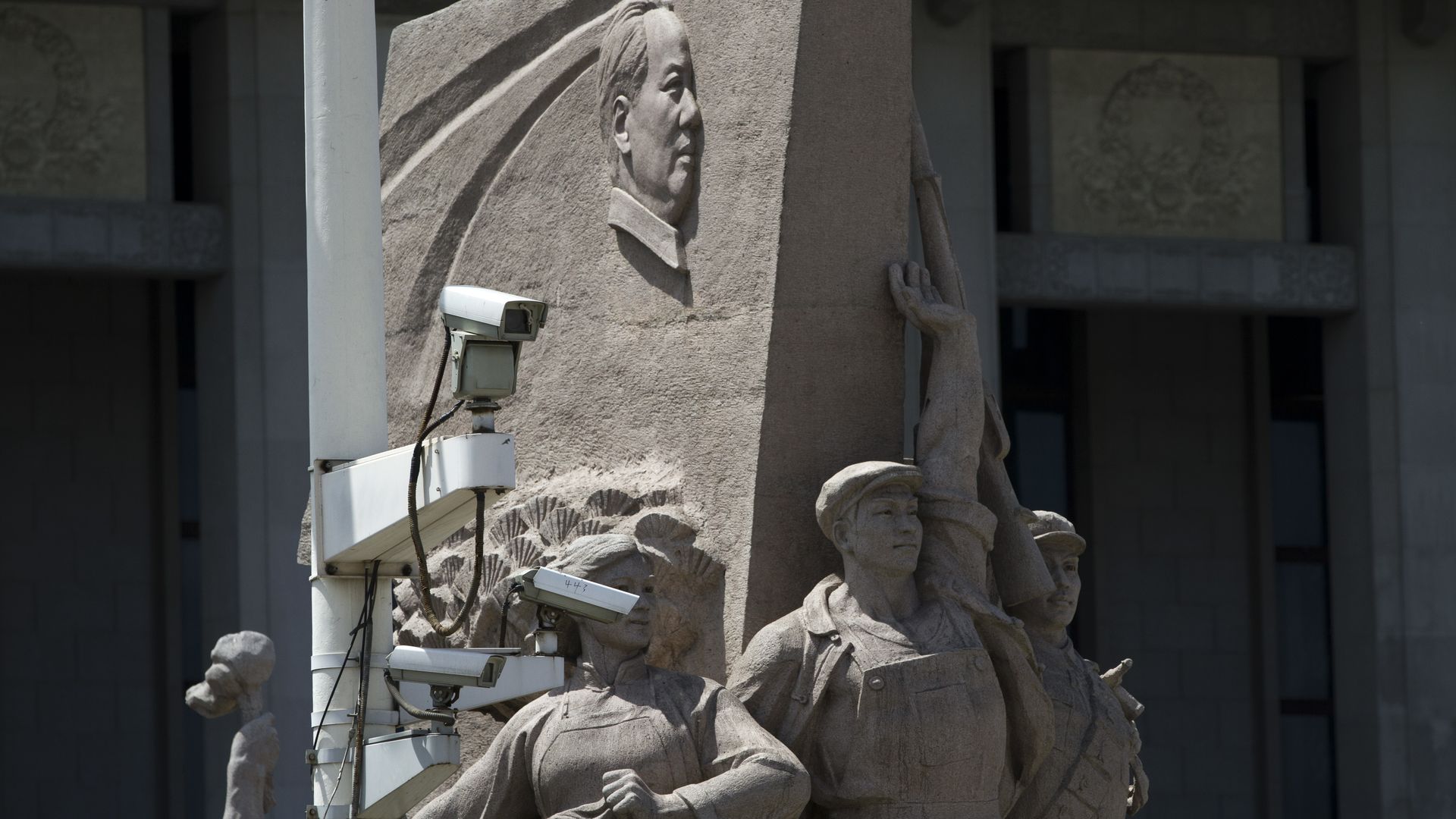
For all China's vaunted reams of data and outsized R&D spending, its development of artificial intelligence is only half as good as the United States', according to a side-by-side assessment by an Oxford University researcher.
Quick take: "I think some of the rhetoric about China's AI advances has been overblown," says Jeffrey Ding at Oxford's Future of Humanity Institute. He tells Axios, "The U.S. still has significant advantages in talent and hardware, and it should continue to ensure that talented researchers and scientists want to work and stay in the U.S."
“Operation GhostSecret,” a global data theft and reconnaissance campaign with suspected links to North Korean hackers, is targeting critical infrastructure, finance, healthcare firms and entertainment industries in 17 countries, McAfee Advanced Threat Research reports.
The takeaway: The new report suggests North Korea is moving beyond its typical focus on trying to steal cash or military secrets, and is now targeting a much broader swath of society.
A new report details how North Korean elites use the internet — through a combination of internet cloaking devices and a strategic move from Western social media sites to permissible Chinese ones (avoiding a growing crackdown,) primarily in order to watch videos.
Why it matters: The elite class' internet usage is behind two veils — it is hard to get any detail from North Korea in the first place, let alone about illicit activity. The Recorded Future report fills in some detail about how the "0.1%" live in the hermit nation.
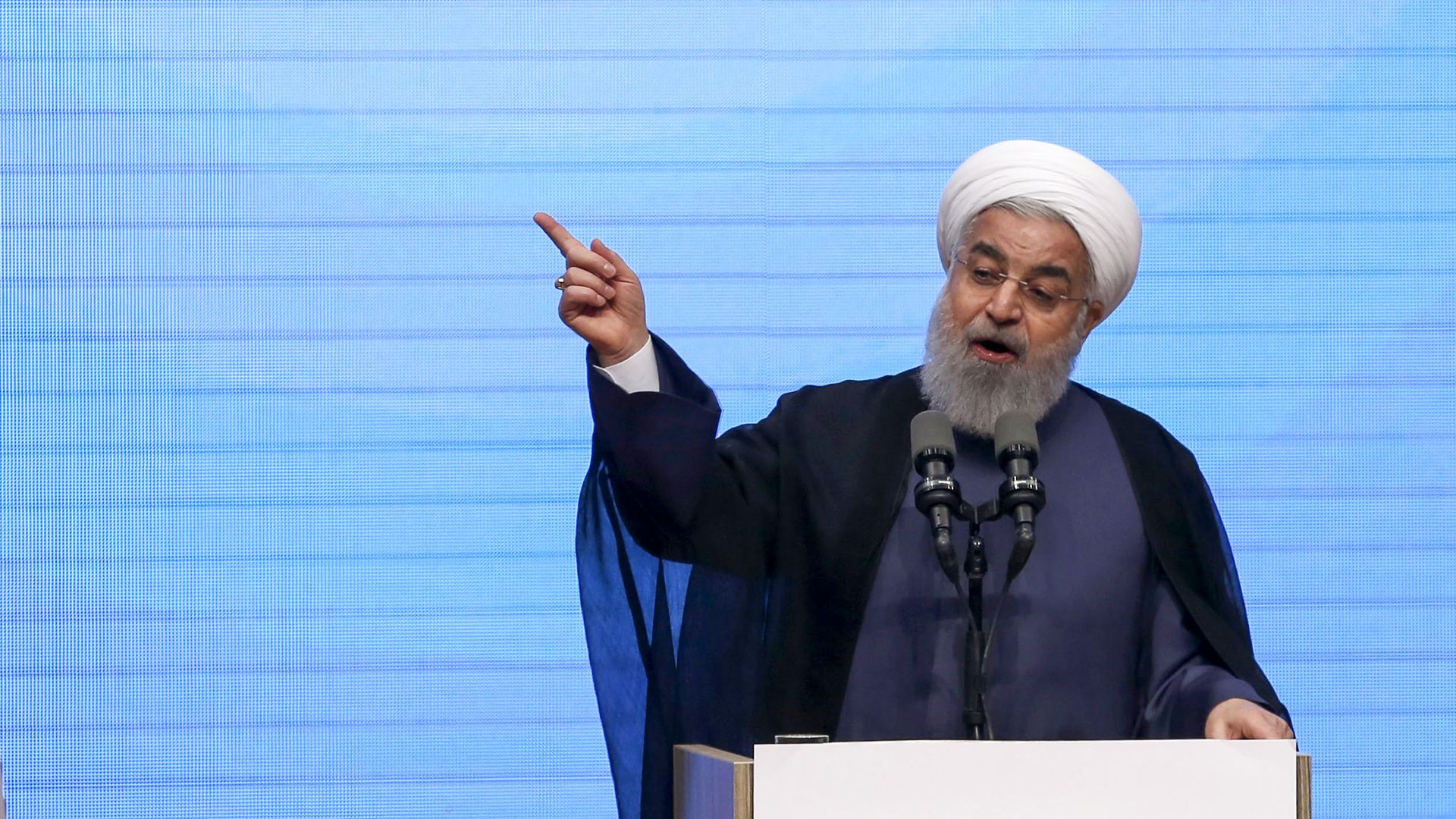
Iran's President Hassan Rouhani is questioning the West's "right" to renegotiate the terms of the Iran nuclear deal after President Emmanuel Macron laid out the framework for a "new deal" in a press conference with President Trump, per the BBC.
The big picture: Macron said the new deal would extend the duration of the 2015 agreement, restrict missile tests and contain Iran's regional influence. He and other European leaders are trying to reach a solution that would keep Trump from pulling the U.S. out of the nuclear deal. Rouhani hit back by saying the U.S. and France can't change a seven-party agreement alone, and that Trump doesn't have "any background" in politics, law or international treaties.
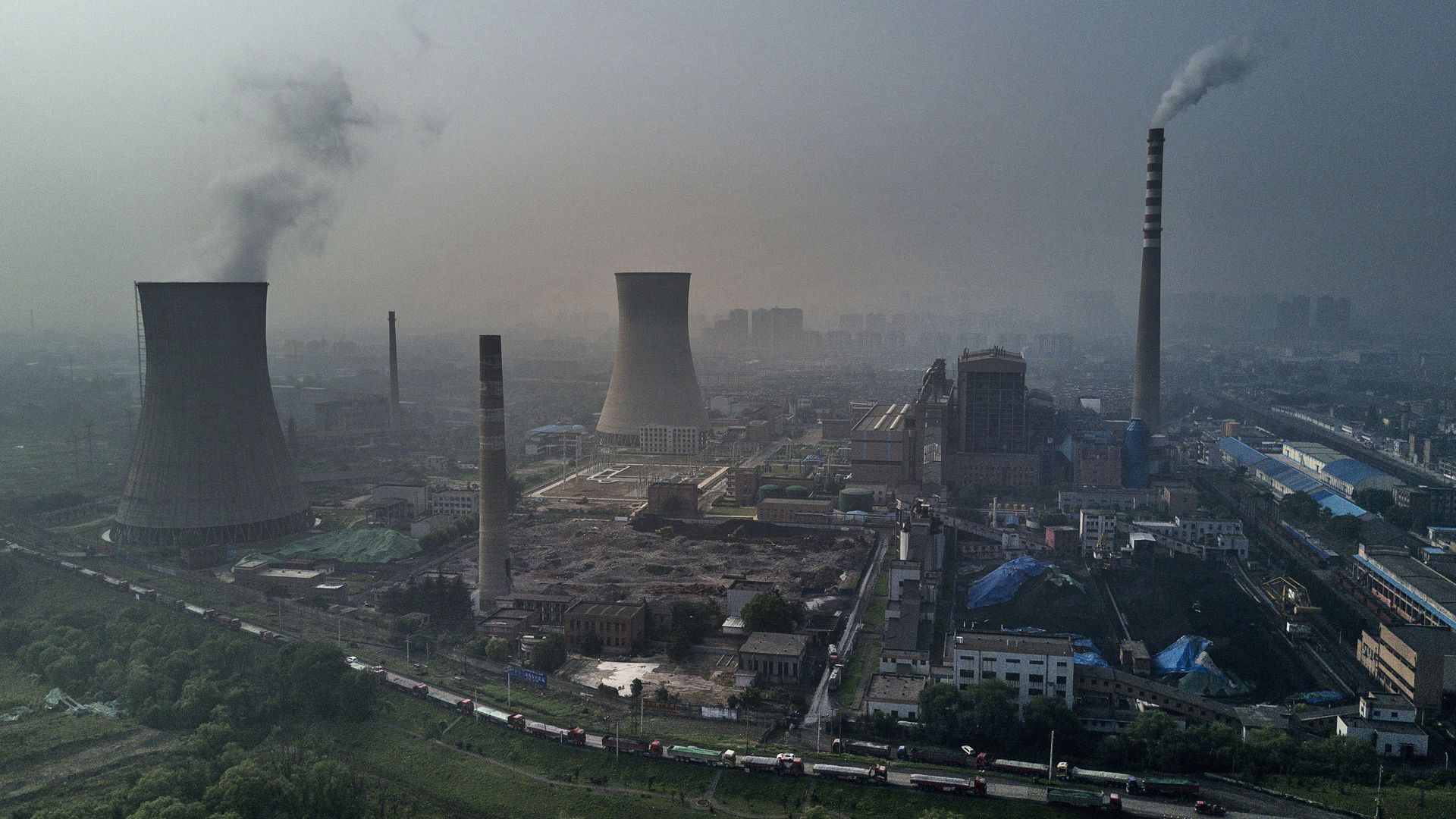
The health and air-quality benefits of Chinese efforts to slash carbon emissions will largely or even fully offset the costs of the climate initiatives, a new paper in Nature Climate Change by MIT scholars shows.
Why it matters: China, the world's largest greenhouse gas emitter, has pledged to have its carbon emissions peak by 2030 and ideally sooner.
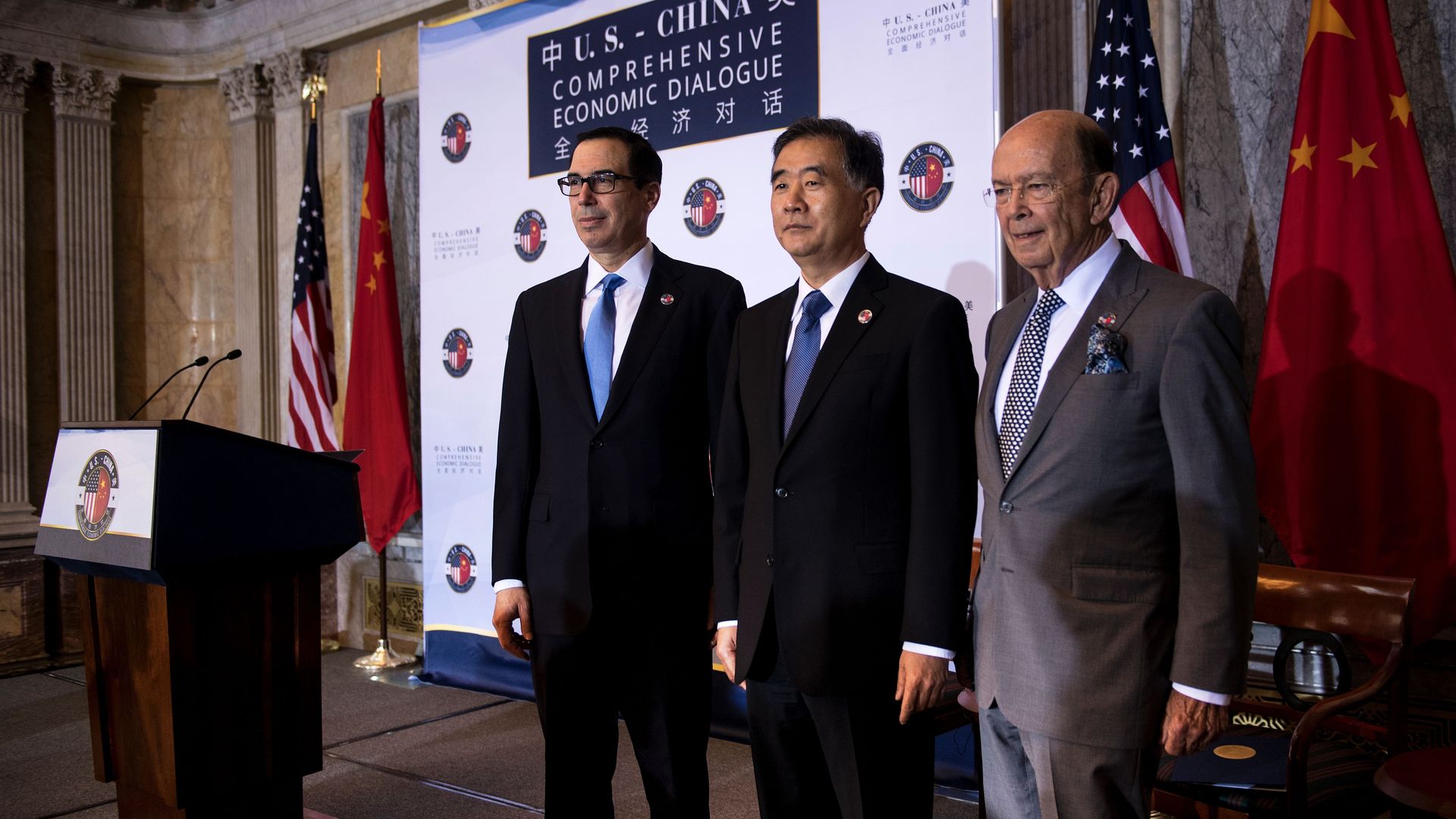
Trade disputes rarely escalate as quickly and intensely as the current U.S.–China spat, which has resulted in tariff volleys and vehement rhetoric from each side. But recent statements from both countries suggest that tensions may now be falling.
What's next: Trump indicated on Tuesday that he would send Treasury Secretary Mnuchin to China next week. As both sides have softened their stances, the stage is set for the two sides to consider returning to the negotiating table.
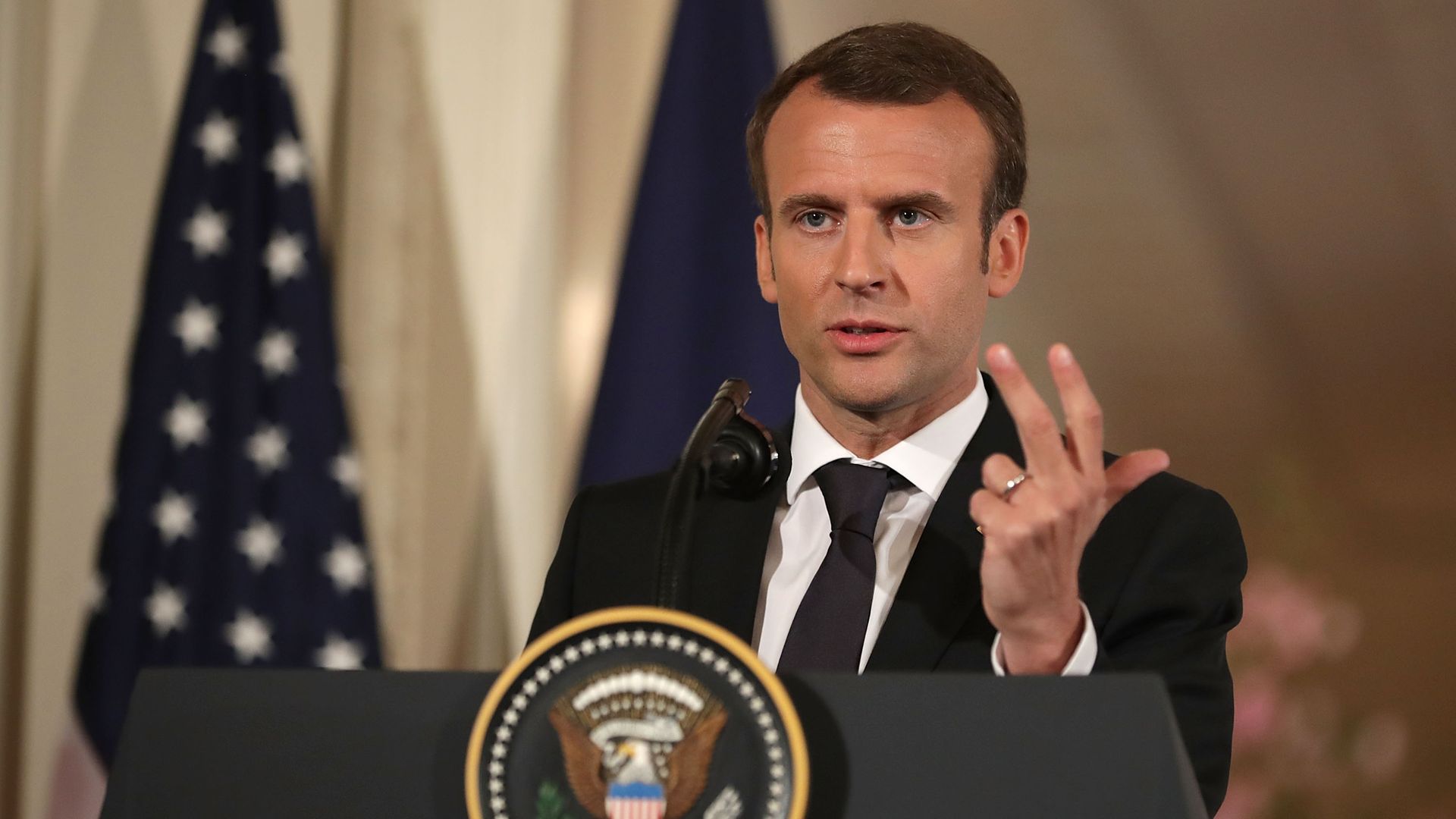
At a joint news conference today, French President Emmanuel Macron said he and President Trump had agreed to work on a “new deal” that includes the 2015 nuclear agreement with Iran but incorporates additional measures.
What to watch: The enlarged deal would contain three more “pillars”: assurances that Iran cannot reconstitute a large nuclear program after certain JCPOA restrictions expire in 2025; limits on Iran’s ballistic missile development and transfers of weapons to regional proxies; and diplomacy to resolve the conflicts in Syria and Yemen.
President Trump said that North Korean leader Kim Jong-un was “very honorable” and “very open," adding that North Korea wants to hold a meeting "as soon as possible." His comments came during an expanded bilateral meeting during French President Emmanuel Macron's state visit.
Flashbackto January: "Will someone from his depleted and food starved regime please inform him that I too have a Nuclear Button, but it is a much bigger & more powerful one than his, and my Button works!"
Trump said if Iran attempts to restart its nuclear program if the U.S. pulls out of the nuclear deal, "they will have bigger problems than they have ever had before.”
The backdrop: The comments came ahead of an Oval Office meeting with French President Emmanuel Macron, in which Macron is expected to attempt to convince Trump to remain in the nuclear deal. Iran's foreign minister has said Iran will restart its nuclear program if Trump decides to stop waiving sanctions next month.