Google is taking the first step in its master plan to pop up more student-run cybersecurity consultancies across the U.S.
Driving the news:Google is awarding a $2.2 million, three-year grant to the University of California, Berkeley to help build out and bring on new members to the Consortium of Cybersecurity Clinics —of which the university is co-chair.
Google announced Thursday a suite of upgraded and simplified tools for users to remove personal data and images from search results, and to blur out explicit content while searching.
Google will now offer the option of notifying you of new search results that contain your personal phone number, home address or email, and make it easier to request removal of that data.
Explicit imagery will now automatically be blurred for all users of Google's SafeSearch tool, starting later this month.
Why it matters: The policies continue a slow but years-long policy shift among platforms to give their users more control of their data.
It's another sign of the influence of the EU's landmark privacy legislation. Google is essentially offering a version of the EU's "right to be forgotten," with a focus on personal and explicit information.
Yes, but: There's no word from yet from Google on whether users will be able to request removal of their information from AI training data.
The search result removal tools will initially be available only to U.S. users and in English.
What they're saying: "We know it's important to stay in control of your online experience," Danielle Romain, Google's vice president of trust, said in a blog post.
Generative AI may be the talk of tech, but it has yet to significantly reshape the industry's economics, as the most recent earnings reports show.
Why it matters: After a grueling year and a half of layoffs and retrenching, Big Tech has yet to present Wall Street with a return to blockbuster numbers — but AI has given the industry a big fuzzy growth story, and sometimes the market finds that even more thrilling.
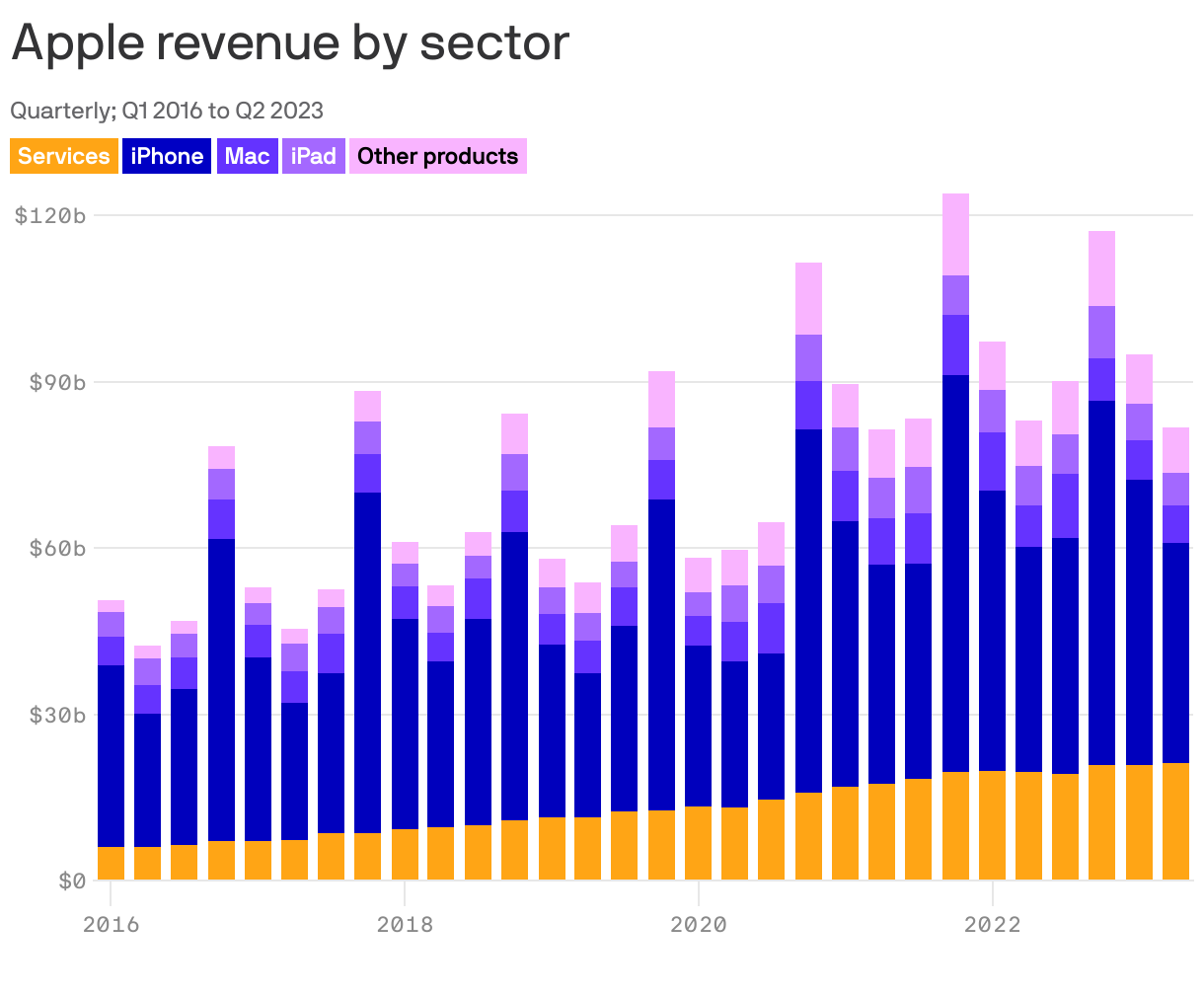
Data: Company reports from earnings; Chart:Tory Lysik and Alice Feng/Axios Visuals
Apple on Thursday said it now has more than 1 billion paid subscriptions across all of its services, including Apple Music, iCloud, Apple News, Apple TV+ and more.
Apple on Thursday reported quarterly sales fell narrowly from a year ago, though a strong services business helped the iPhone maker top earnings expectations.
Why it matters: Apple's results come as the company is gearing up to introduce new iPhones in the coming weeks and its mixed-reality Vision Pro headset early next year.
The Legend of Zelda: Tears of the Kingdom has shipped more than 18.5 million copies since its May 12 launch, selling 15.7 million to consumers in its first eight weeks of release, Nintendo announced this week.
Why it matters: It was one of several data points released Tuesday showing a surge for the games industry this spring.
Elon Musk is singing "Bye Bye Birdie" with the chaotic rebrand of Twitter.
Why it matters: At the heart of every rebrand is a shift in corporate strategy — and Twitter has seen drastic change since Musk took over in October 2022.
Venture capitalists valued virtual events company Hopin at around $7.6 billion in mid-2021, believing that the pandemic had permanently changed the nature of live gatherings.
Fast forward: Those investors are now getting some of their money back, as Hopin moves to a new model at a much lower valuation, Axios has learned from multiple sources.
Driving the news: RingCentral, a publicly traded rival to Zoom, on Wednesday said it's agreed to buy Hopin's events management platform and interactive engagement tools.
No financial terms were disclosed. [Update: A subsequent regulatory filing from RingCentral puts the price at upwards of $50 million]
Behind the scenes: Hopin plans to use some of the proceeds, plus existing cash, to provide partial liquidity for its venture capital backers, who invested more than $1 billion. Specifically, those participating in the Series B round and beyond can expect to recoup around half of their outlays.
They'd also remain shareholders in the remaining company, which is pivoting to focus on a video streaming product called StreamYard (based on a 2021 acquisition). There might even be a rebrand in the future.
Among the changes will be the departure of Hopin CEO Johnny Boufarhat, who netted nearly $200 million via a secondary tied to the 2021 venture round.
Not all investors, however, seem interested in sticking around for what's effectively a new company, revalued closer to $400 million, and are expected to effectively exit. Likely parties here are crossover firms like Altimeter Capital Management.
The new valuation should help Hopin attract new employees, as the prior price made hiring difficult.
Neither Hopin nor Altimeter returned requests for comment.
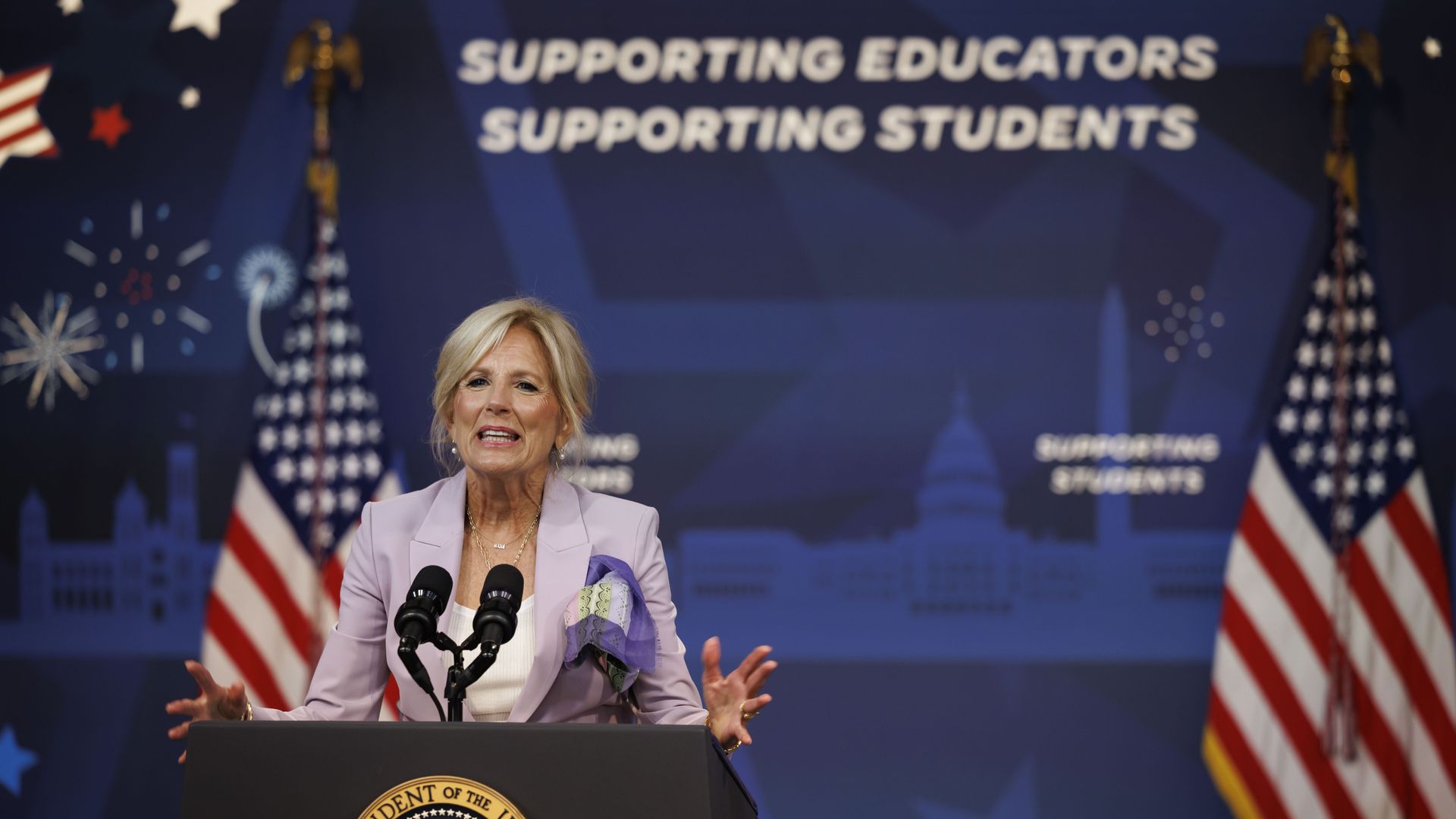
A group of school superintendents, educators and education technology vendors will meet at the White House Monday to discuss the growing number of cyberattacks targeting schools, a White House official told Axios.
Why it matters: Ransomware continues to pummel school districts across the United States, from major cities to small towns.
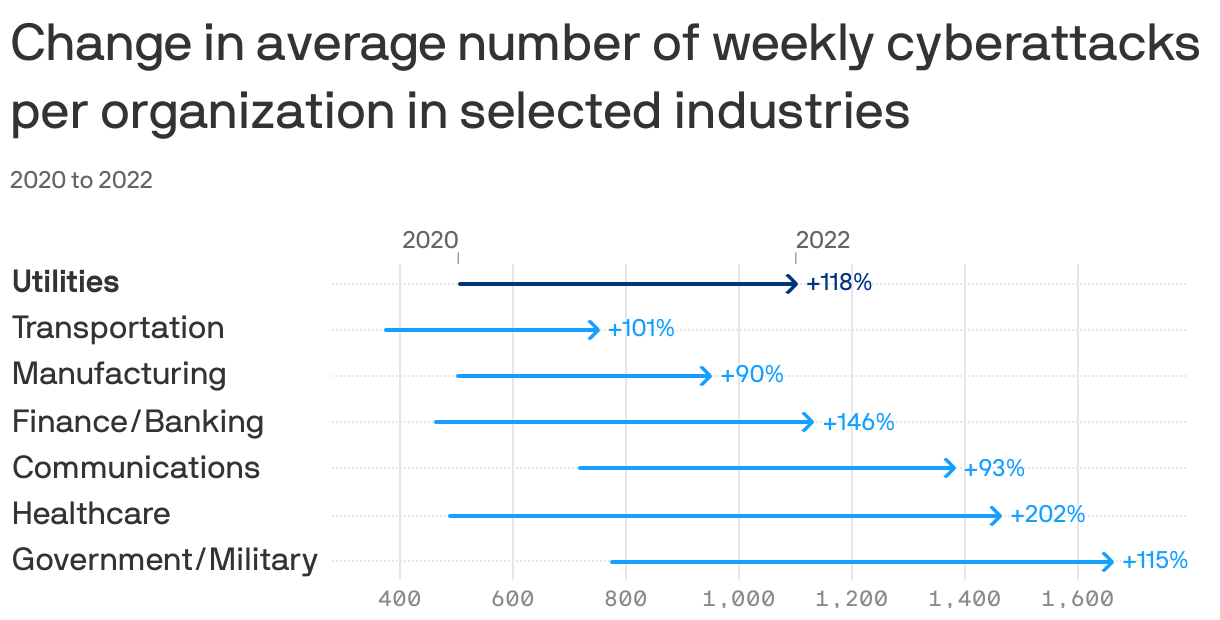
Note: Utilities includes gas and electricity infrastructure; Data: IEA; Chart: Jared Whalen/Axios
The power sector isn't immune from rising levels of cyberattacks, and utilities face "serious difficulties" finding and retaining workers to defend against them, a new analysis finds, Ben writes.
The big picture: A newInternational Energy Agency commentary notes that power companies have become increasingly digital.
As AI makes computers better at talking and behaving like human beings, humans are choosing — or being forced — to behave more like machines.
Why it matters: AI optimists believe the technology will relieve people from drudgery, allowing them to be more human than ever before. But marketplace pressures and cultural forces are both capable of pushing in the opposite direction, slotting humanity in as one more gear in a giant mechanism.











/2023/08/02/1690992562544.gif?w=3840)