Amazon's leadership last week green-lit a plan to create an ad-supported tier for its Prime Video service, a source confirmed to Axios.
Why it matters: An ad-supported tier will help the company bolster its ad business at a time when more dollars are shifting from linear television to streaming. It could also help lure more subscribers to its video service.
Why it matters: This comes on the heels of Apple's own mixed reality headset reveal, which felt a bit like the metaverse trying to wrest back tech attention from AI.
Why it matters: TheU.S. securities regulator's pair of suits this week against crypto exchanges Binance and Coinbase punctuates the steady drumbeat of enforcement action levied at the industry with the bang of a gong.
Twilio, a customer experience platform, is integrating Google Cloud's generative AI into Twilio Flex, the company's contact center, sales, and in-app concierge service.
Why it matters: Twilio aims to offer a cookie-less personalized service — a holy grail for those who want the benefits of digital services without compromising privacy.
A new nonprofit group called the Carbon to Sea Initiative has raised over $50 million to back research and development into potentially accelerating carbon dioxide absorption into the world's oceans.
Driving the news: The philanthropy-backed group, spun out of Additional Ventures, is focused on better understanding the scaleability and safety of "ocean alkalinity enhancement" (OAE).
It aims to speed natural "weathering," in which alkaline minerals increase oceans' already mammoth CO2 uptake, while fighting ocean acidification.
What's next: The initiative will evaluate various OAE pathways, and "catalyze locally-owned and operated field research sites." The group also plans to "help develop responsible regulatory frameworks."
Zoom in: It has already committed $23 million in grants for four research projects, with recipients like the Woods Hole Oceanographic Institution and UC Santa Barbara.
It's also backing plans to build five "prototype solutions" and monitor them.
Funders include Additional Ventures, Astera, Builders Initiative, Catalyst for Impact, and the Chan Zuckerberg Initiative.
Reality check: OAE's emergence as a meaningful and safe climate tool is an "if," not a "when."
Why it matters: Carbon removal methods can compliment — but not replace —emissions-cutting tech like renewables to keep Paris Agreement temperature-limiting goals within reach, or help cool the world if they're overshot.
The bottom line: "If we find that OAE can be applied at scale, we can unlock one of the most efficient, cost-effective approaches to [carbon dioxide removal] for humanity," Mike Schroepfer, co-founder of Additional Ventures and the initiative's board chair, said in a statement.
A defense contractor aiming to protect military weapon systems and other critical infrastructure has closed an $83 million Series B funding round, the company first shared with Axios.
What's happening: Shift5, a defense tech startup based in the D.C. metro area, raised an additional $33 million in the last few months as part of its previously announced financing round.
Why it matters: The issue represents a rare opportunity for Congress to try to tackle a major issue in a bipartisan way as lawmakers display growing interest in legislation to govern AI.
From the first moment I pinched my two fingers together to "click" on the Safari icon that floated in front of a mock-living room wall, I realized that Apple's Vision Pro isn't just the latest in headsets: It's the first headset that I can imagine capturing the public's heart.
Why it matters: The world of virtual and augmented reality is littered with devices that never delivered on their promise. Apple's entry could be the first where the main objection is "it costs too much" rather than "why would I want it?"
While one regulator continues its attempt to bring the crypto industry to heel by penalizing it, another regulator is emerging to take a different tack, and seize authority over digital assets.
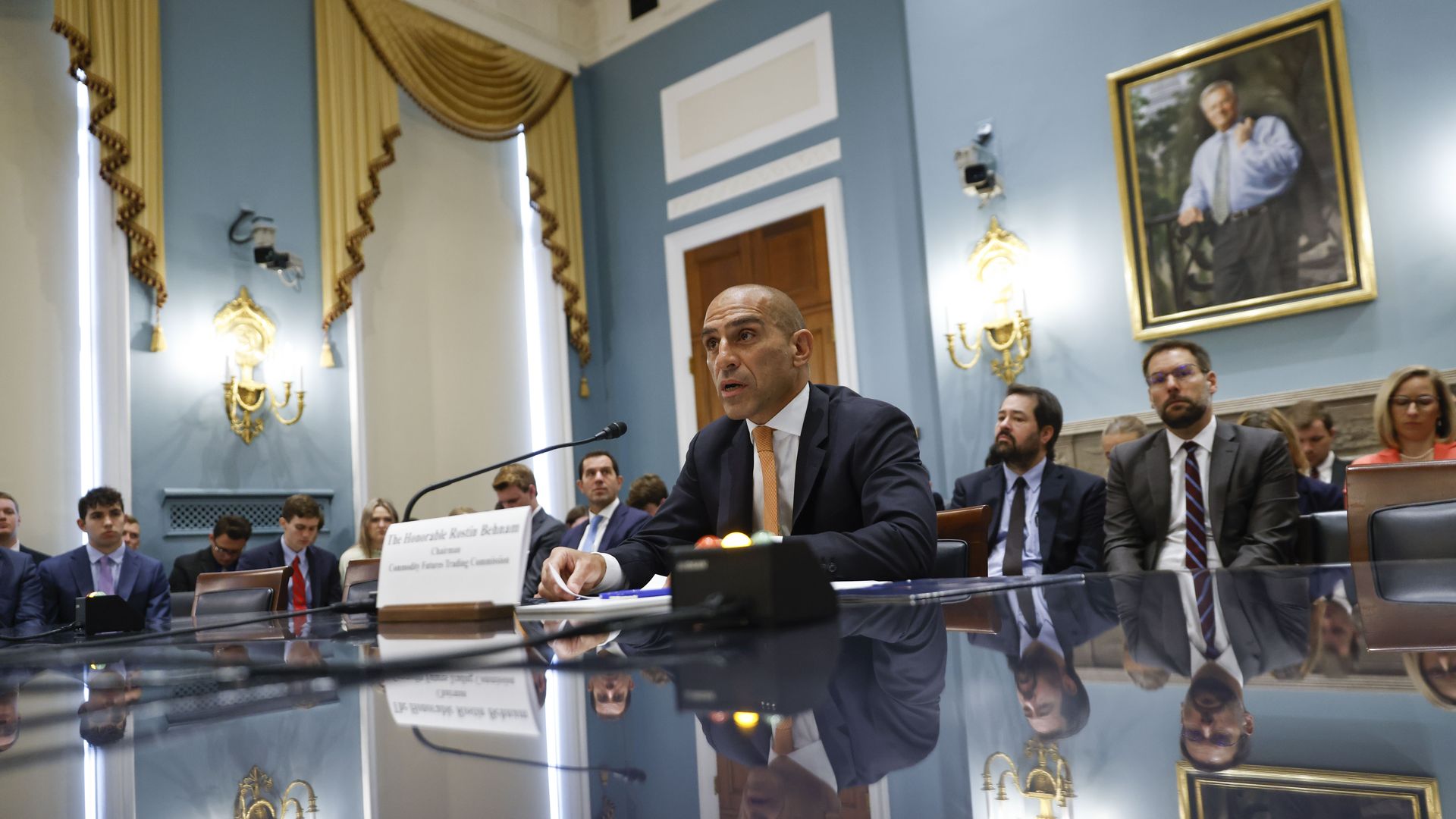
Driving the news: Hours after Coinbase was sued by the Securities and Exchange Commission for breaking market rules, a House committee hearing on a discussion draft legislation for the regulation of digital assets kicked off.
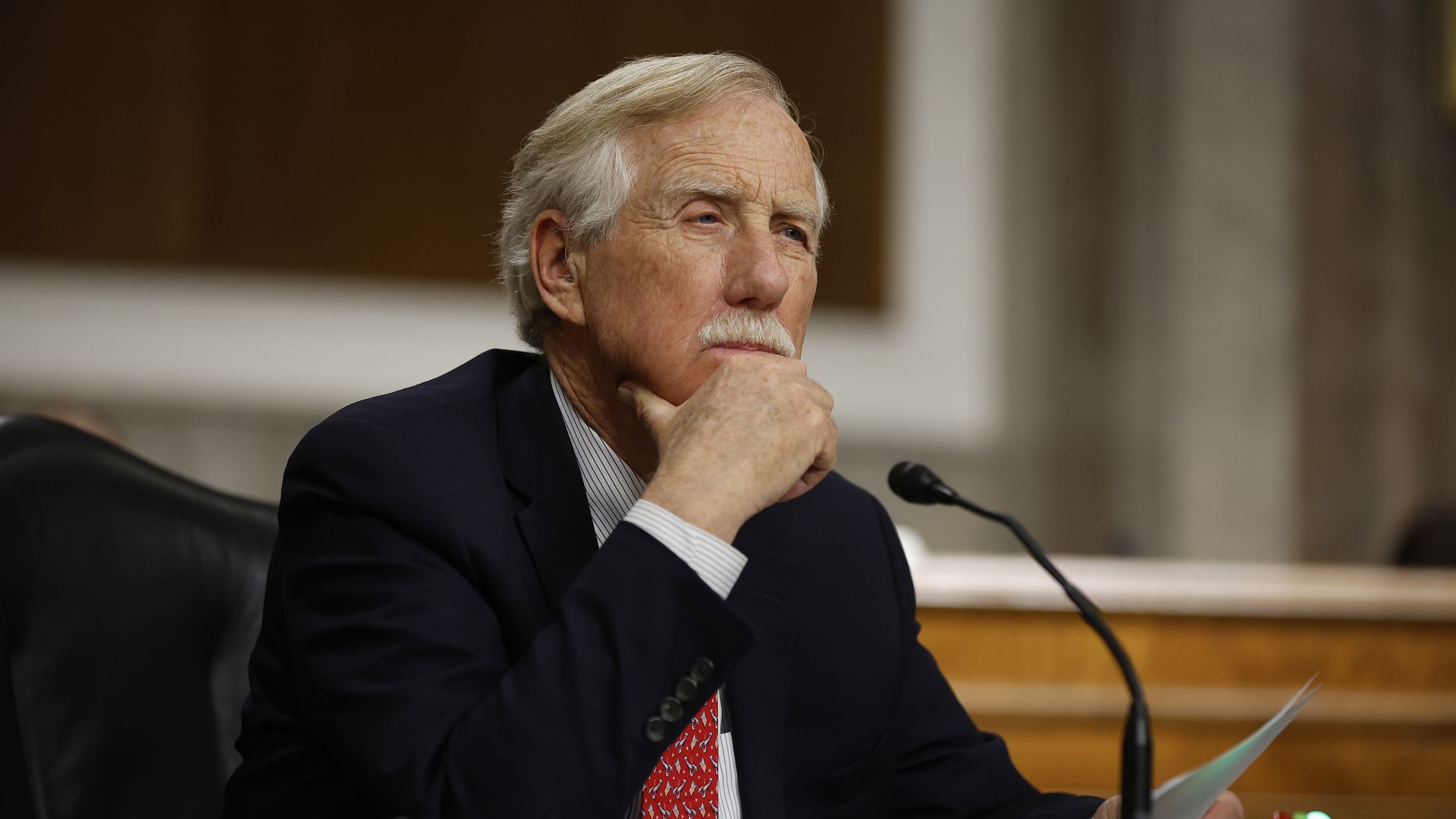
The White House has not shared much of anything with lawmakers about who the administration thinks should be the next national cyber director, a top cyber-minded senator told Axios.
Why it matters: It's been nearly four months since Chris Inglis stepped down as the first national cyber director inside the White House, and lawmakers and policy experts have been putting pressure on President Joe Biden in recent weeks to name a replacement.
Apple showed enough of its Vision Pro headset on Monday to spark excitement — but it will probably take another year or so to know if we have truly entered a new era of "spatial computing," as the company calls it.
The big picture:: The vision Apple painted is tantalizing and expansive — but also incomplete and expensive.
Why it matters: Social media platforms are arguing that the risk of harm no longer outweighs the benefits of political dialogue, drawing concerns from lawmakers and consumer advocacy leaders.