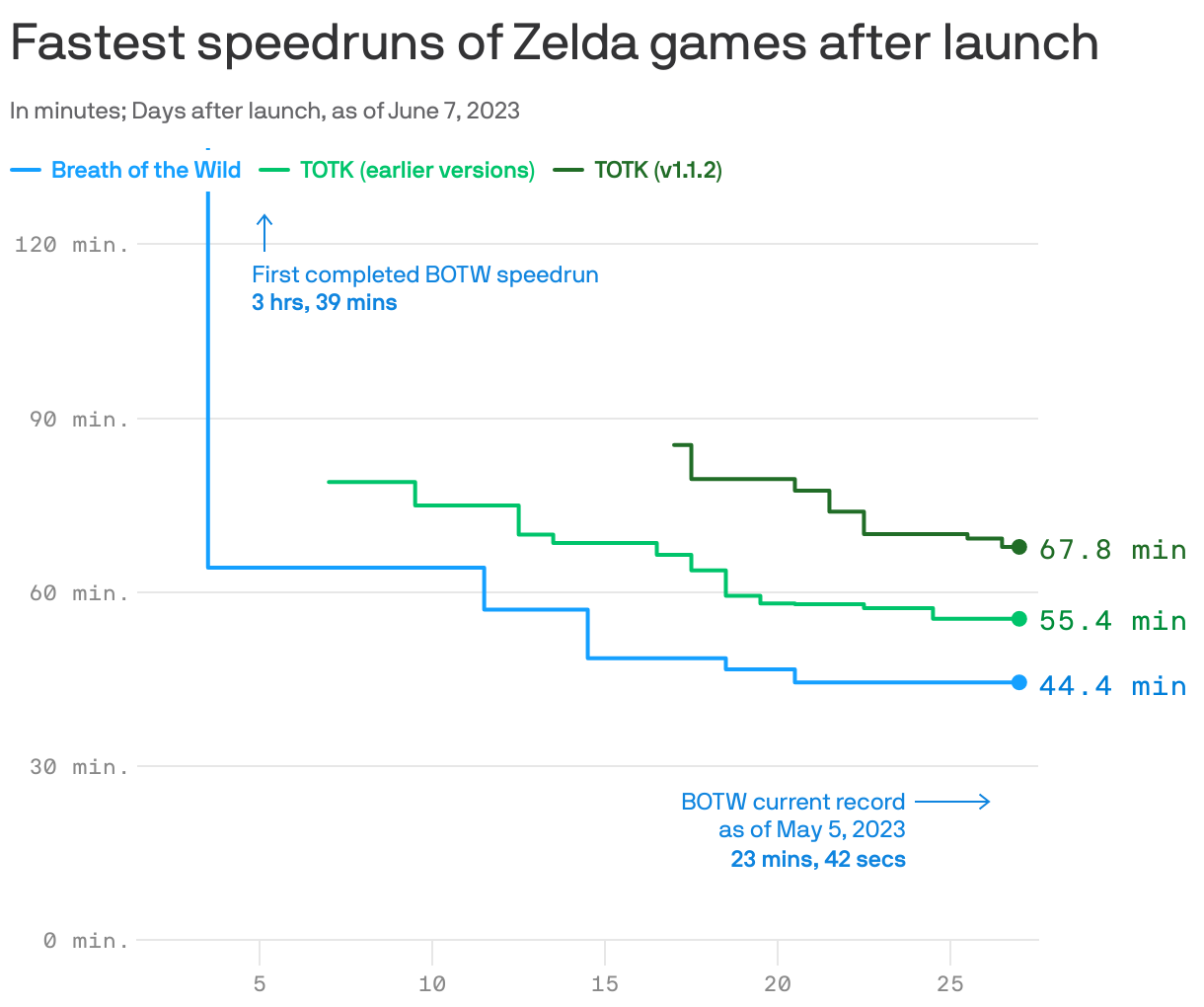
The world record for fastest completion of The Legend of Zelda: Tears of the Kingdom keeps falling, though post-release changes to the game have slowed players’ progress.
Why it matters: Speedruns of Nintendo’s Zelda games are among the medium’s most compelling spectator sports and a test of the ingenuity of its hastiest players.
Netflix's tightening of password-sharing among users has led to a surge in new sign-ups, with viewers opting to pay lest they miss out on the next big streaming thing.
Why it matters: Until just recently, Netflix password sharing was de rigueur among users. But the streaming giant raised eyebrows this year by enforcing — then expanding — a policy designed to dramatically limit the ability of family, friends and even former paramours to use a single login.
Driving the news: On Friday, analytics firm Antenna released data that showed a massive jump in U.S. user acquisition in the immediate aftermath of Netflix alerting U.S. subscribers last month that it would begin curbing shared passwords.
Netflix saw close to 100,000 daily sign-ups on May 26 and May 27, Antenna shared in a blog post.
"Average daily Sign-ups to Netflix reached 73k during that period, a +102% increase from the prior 60-day average. These exceed the spikes in Sign-ups Antenna observed during the initial U.S. Covid-19 lockdowns in March and April 2020."
Some Netflix subscribers opted to cancel, but those numbers were swamped by new sign-ups, Antenna noted.
What they're saying: In its first-quarter earnings report, Netflix itself predicted that the crackdown would create a halo effect on sign-ups and revenue.
"Paid sharing is another important initiative as widespread account sharing (100M+ households) undermines our ability to invest in and improve Netflix for our paying members, as well as build our business," it said in a shareholder letter.
"But as borrowers start to activate their own accounts and existing members add 'extra member' accounts, we see increased acquisition and revenue."
Activision has pulled a depiction of popular gamer Nick “Nickmercs” Kolcheff from its leading Call of Duty games, following a Tweet from the player that was widely viewed to be anti-LGBTQ+.
The big picture: Increased anti-LGBTQ+ sentiment in the U.S. recently prompted the Human Rights Campaign to declare for the first time a state of emergency for people who identify as LGBTQ+ in America.
The number of cyber incidents involving a fake story or other pretext to lure in victims has more than doubled in the last year, according to a report from Verizon this week.
Why it matters: Pretexting typically involves scammers sending emails, texts or social media messages that purport to be from a family member, boss or client — making it much easier for victims to fall for and harder for company IT teams to detect.
The impact of a recently patched security flaw in a widely used file-transfer tool will likely linger across North America for months to come.
Why it matters: Since Progress Software Corp. first uncovered a flaw in the popular file-transfer program MOVEit Transfer, a handful of high-profile organizations — including the BBC, British Airways and the government of Nova Scotia — have publicly warned that hackers have used the flaw to target their systems.
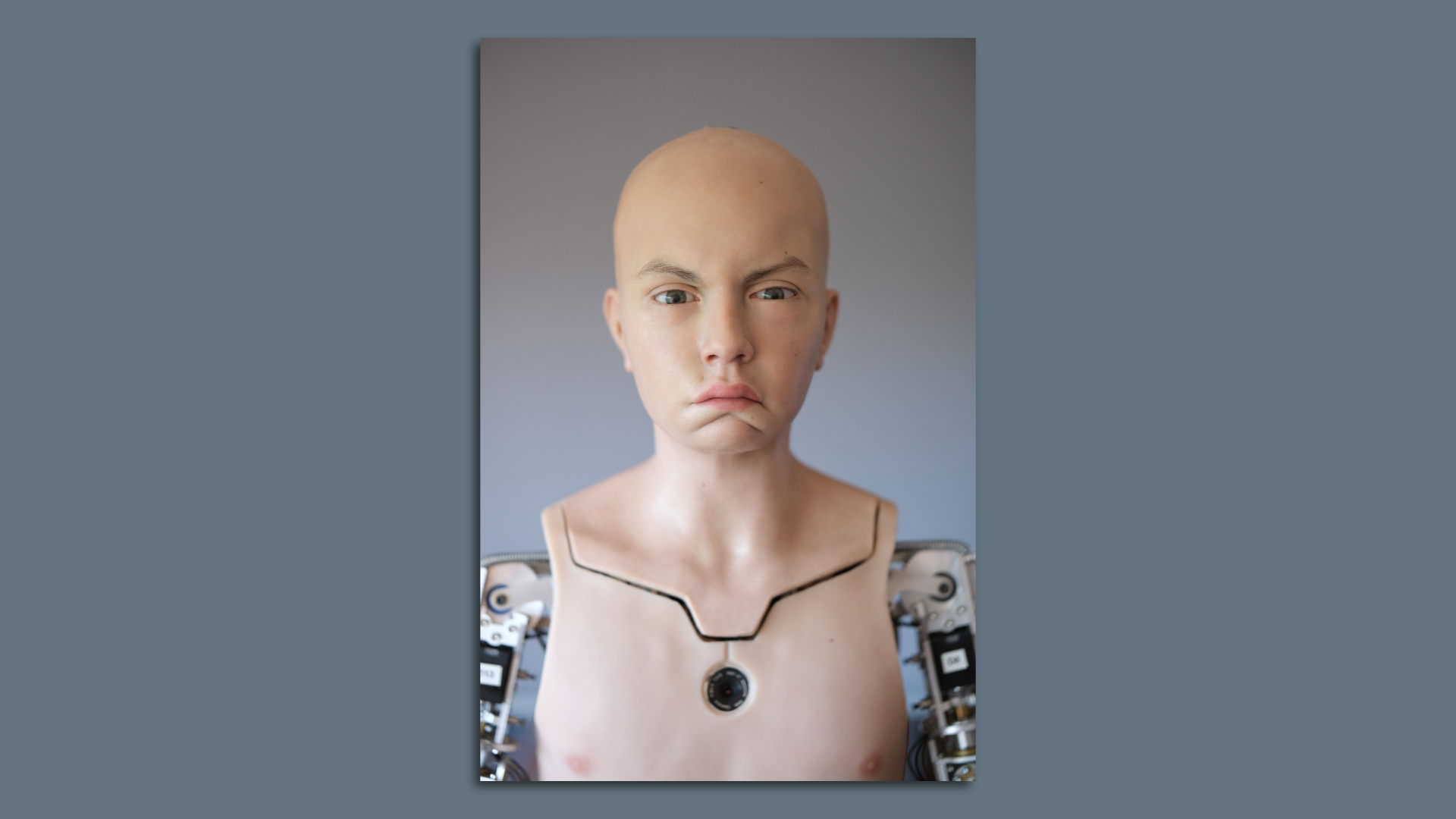
Abel, a hyperrealistic humanoid robot, is designed to read human emotions and — eventually — serve as a companion for people with autism or Alzheimer's.
He's meant to look like a 12-year-old boy, according to the University of Pisa, where he was developed (in collaboration with the London-based Biomimic Studio, an animatronics lab).
How it works: The 21 motors inside Abel's head "are dedicated to the movement of the facial expression, to perform gaze and simulate speaking," per the University of Pisa.
"Four move the brow, eight move the eyes, one moves the jaw and eight are for the movement of mouth, lips and cheeks. Five motors are dedicated to neck and head movement."
The mechatronics give Abel the ability to express a spectrum of emotions through facial expressions and body gestures.
What they're saying: Abel will help researchers "test theories coming from neuroscience, psychology and sociology," potentially helping with "therapy and diagnosis of mental illness, learning disabilities, autism spectrum and dementia," the University of Pisa says.
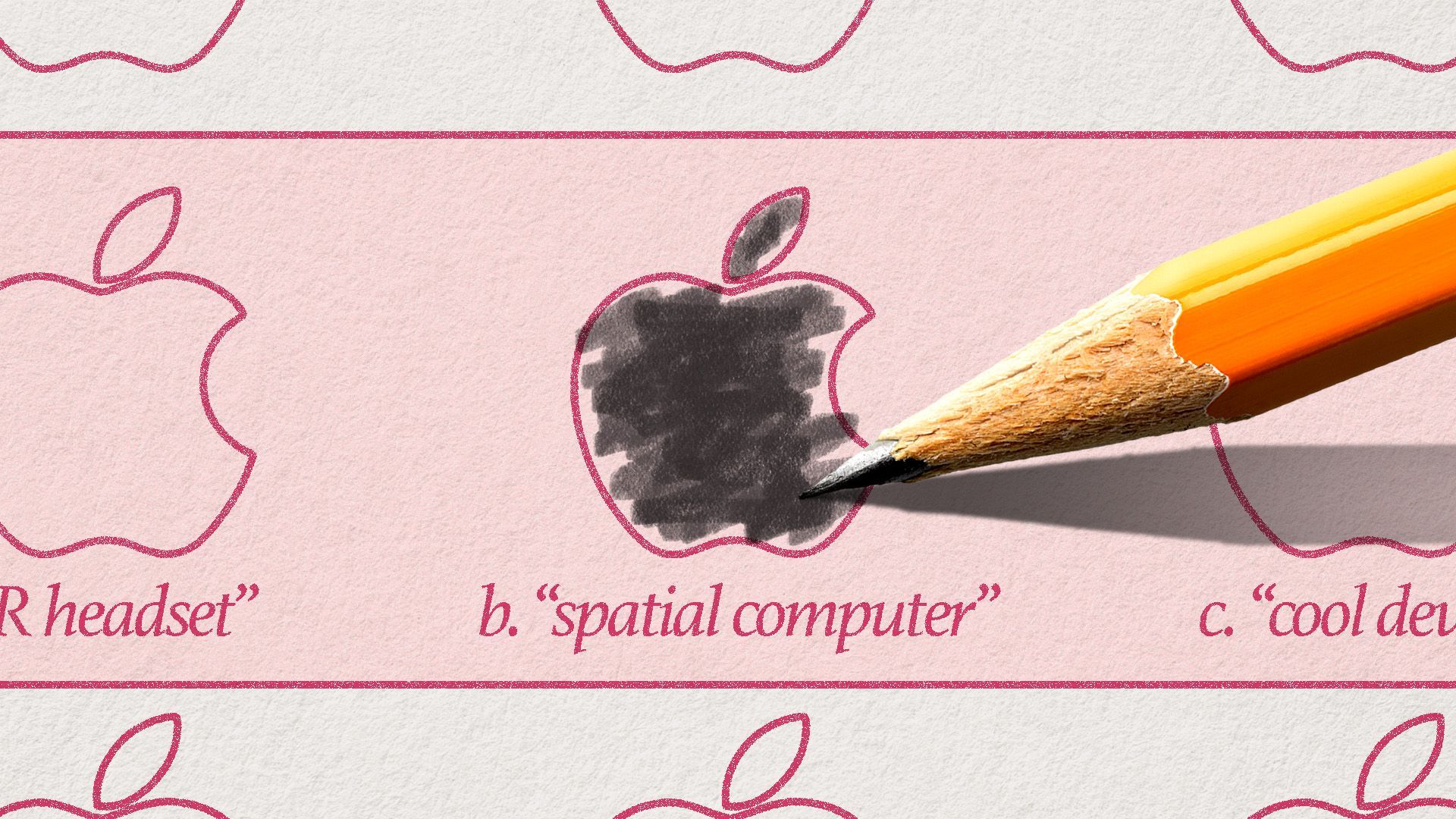
Apple is choosing its words with extreme care around its new Vision Pro headset, revealing its hopes and dreams for the groundbreaking but expensive new product.
It bills the $3.500 device not as a better VR headset, but as Apple's first "spatial computer." Similarly, its photorealistic video chat representations are dubbed personas, never avatars.
A summer of game industry hype season kicked off in Los Angeles today with a two-hour demonstration of new games that culminated with the first full trailer for Final Fantasy VII: Rebirth.
Why it matters: In lieu of the once-annual E3 show at the Los Angeles Convention Center, game publishers are participating in or hosting a batch of smaller events to reveal and promote many of the biggest games slated for the next year.
Meta CEO Mark Zuckerberg announced a plan to employees on Thursday that will see it put generative AI text, image and video generators into its flagship products, such as Facebook and Instagram.
Why it matters: Facebook's parent company has been at the forefront of generative AI research, but has been somewhat slow to put those technologies into its products.
Google on Thursday said it will finally debut its News Showcase product in the U.S. this summer, years after initially launching it in other countries.
Federal Courts have essentially punted on a case against a small crypto application called PoolTogether.
Why it matters: A ruling was supposed to provide some sense of how courts viewed the decentralization claims of projects like this one, but — since the case was simply dismissed on grounds of standing — the world is no clearer on this point either.
Google has a new plan to help organizations apply basic security controls to their artificial intelligence systems and protect them from a new wave of cyber threats.
Why it matters: The new conceptual framework, first shared with Axios, could help companies quickly secure the AI systems against hackers trying to manipulate AI models or steal the data the models were trained on.
New AI-generated algorithms can find novel ways to perform fundamental computing tasks — like sorting data up to 70% faster than existing human-written code.
Why it matters: As computer chips approach their physical limits, computer scientists are searching for ways to optimize computer code to speed up computing.
Several of Silicon Valley's noisiest tech moguls have begun to support the candidacy of Robert F. Kennedy Jr., the vocal anti-vax activist who's challenging President Biden for the Democratic Party nomination.
Why it matters: This could increase pressure on Biden to debate Kennedy, something he's thus far declined to entertain.






















/2023/06/07/1686169385379.gif?w=3840)