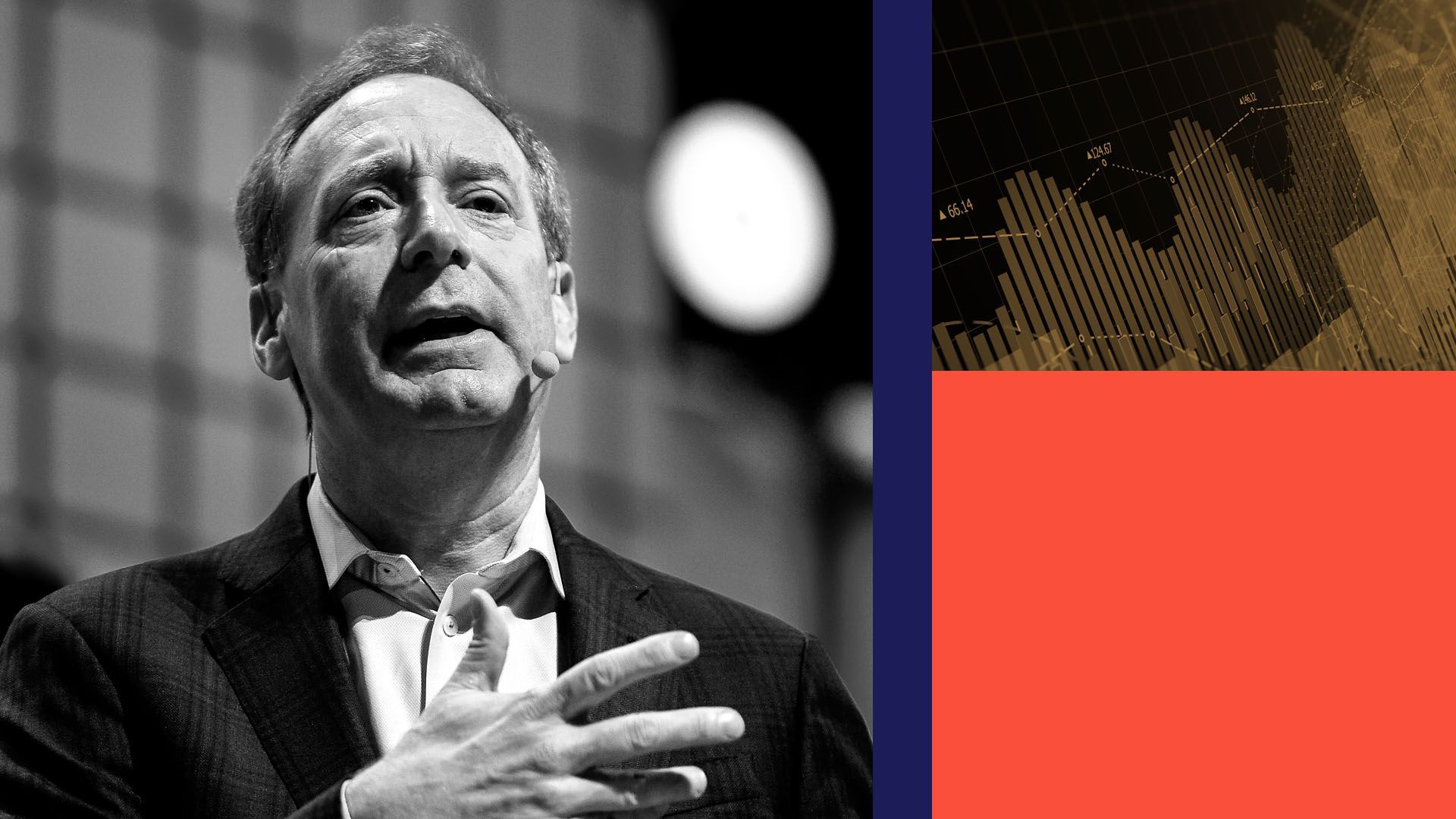
Microsoft president Brad Smith will sharply criticize Google for what he describes as a chokehold over the news business Friday, according to a copy of his opening remarks for a House Judiciary antitrust subcommittee hearing obtained by Axios.
What's happening: Smith's testimony throws Microsoft's support behind Congressional efforts to limit the power and reach of big tech companies, including a bill that would let news organizations collectively negotiate with online content distributors.
If you feel that you're being bombarded with fire takes about Clubhouse, NFTs, and SPACs, then that might be a sign you're Extremely Online.
By the numbers: A SurveyMonkey poll for Axios shows that only 4% of 4,284 respondents said that they're heard or read "a lot" about Clubhouse. The equivalent figure for TikTok was 40%.
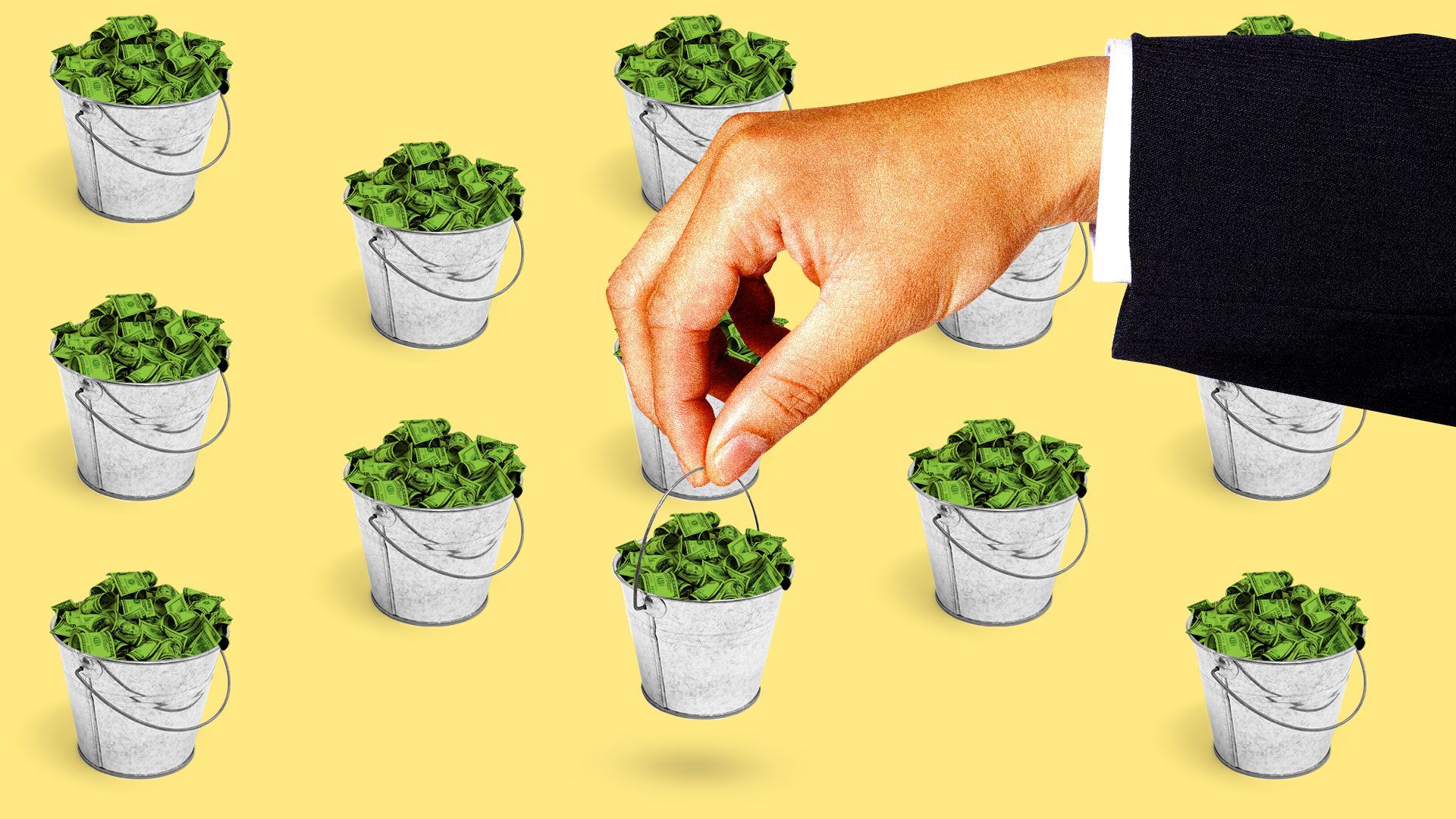
TinySeed, which runs an accelerator program for very early-stage business software startups that are largely bootstrapped, has raised $25 million for its second fund, the company tells Axios exclusively.
Why it matters: The news comes at the heels of the recent shuttering of Indie.vc, an experiment from O'Reilly AlphaTech Ventures in backing revenue-generating startups not seeing heaps of venture funding.
Facebook said Thursday it‘s significantly expanding the number of options for creators to get paid directly by fans.
Why it matters: These investments will "help strengthen the relationship between creators and their fans," said Yoav Arnstein, director for Facebook app monetization. The company hopes that this will ultimately increase engagement across Facebook and its family of apps, like Instagram, Messenger and WhatsApp.
YouTube has taken down more than 30,000 videos that made misleading or false claims about COVID-19 vaccines over the last six months, YouTube spokesperson Elena Hernandez said, offering the company's first release of numbers for such content.
Why it matters: Multiplepolls show that roughly 30% of Americans remain hesitant or suspicious of the vaccines, and many of those doubts have been stoked by online falsehoods and conspiracy theories.
Sen. Amy Klobuchar is seizing the reins of a powerful Senate panel and gearing up to be a formidable figure in pressing Congress' case against Big Tech.
Driving the news: Klobuchar makes her debut Thursday as the chairwoman of the Senate Judiciary Committee's antitrust subcommittee, which oversees the agencies charged with policing monopoly power.
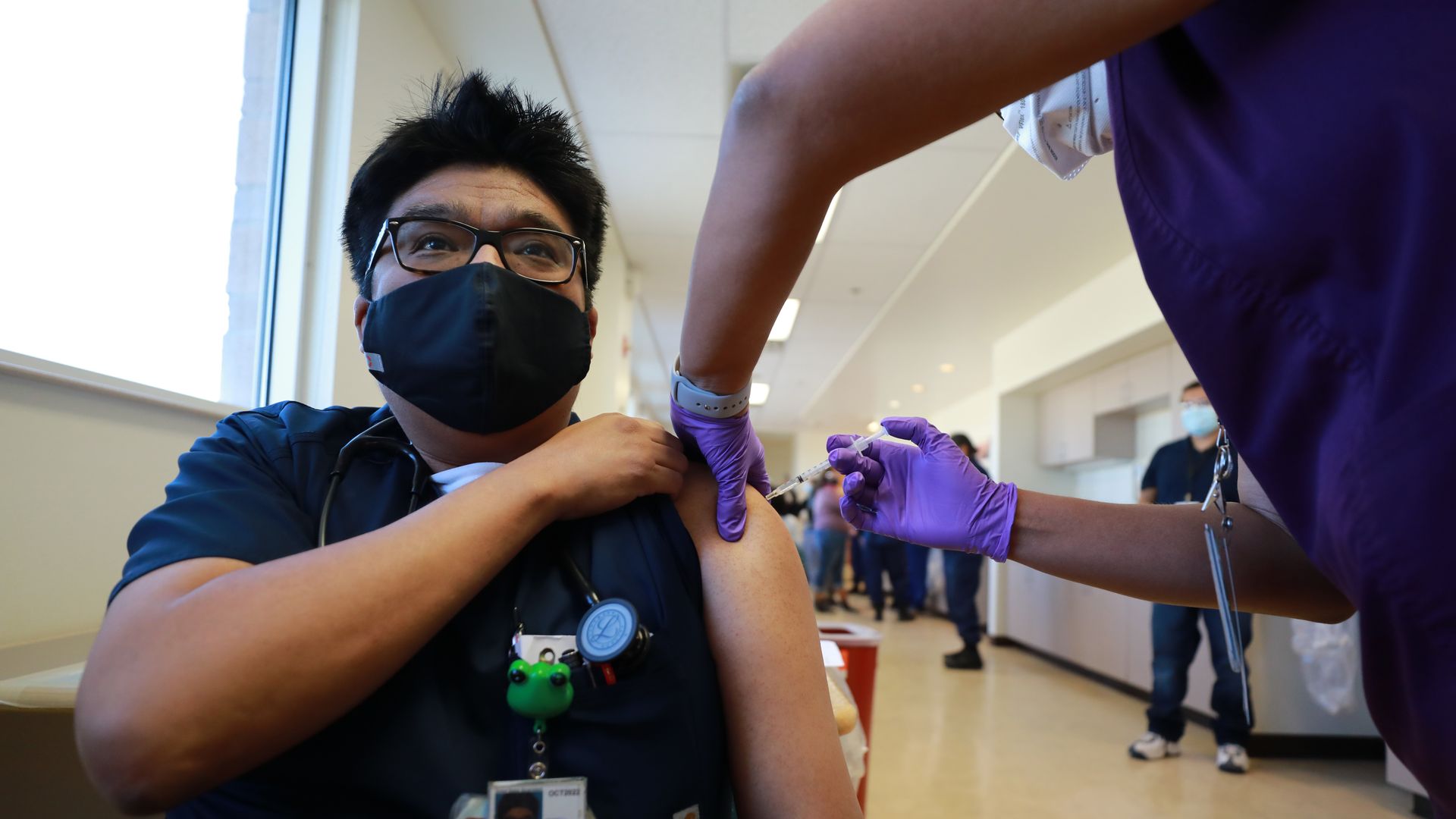
Native American tribes are pulling off many of the most successful coronavirus vaccination campaigns in the U.S., bucking stereotypes about tribal governments.
The big picture: Despite severe technological barriers, some tribes are vaccinating their members so efficiently, and at such high rates, that they've been able to branch out and offer coronavirus vaccines to people outside of their tribes.
Russia's government said Wednesday it will slow access to Twitter, claiming the social media giant has failed to remove illegal content from its platform.
Why it matters: Twitter and other U.S. internet companies have long been spaces for freedom of expression in Russia, though the government in recent years has limited its internet connection to the rest of the world to wrest more control over the country's domestic internet.
Marc Stein, the New York Times' star NBA reporter, has partnered with Locker Room to create live audio content, Axios has learned.
Why it matters: Locker Room, Clubhouse, Twitter Spaces and other social audio apps have surged in popularity during the pandemic, leading some to believe the future of social networks might be audio.
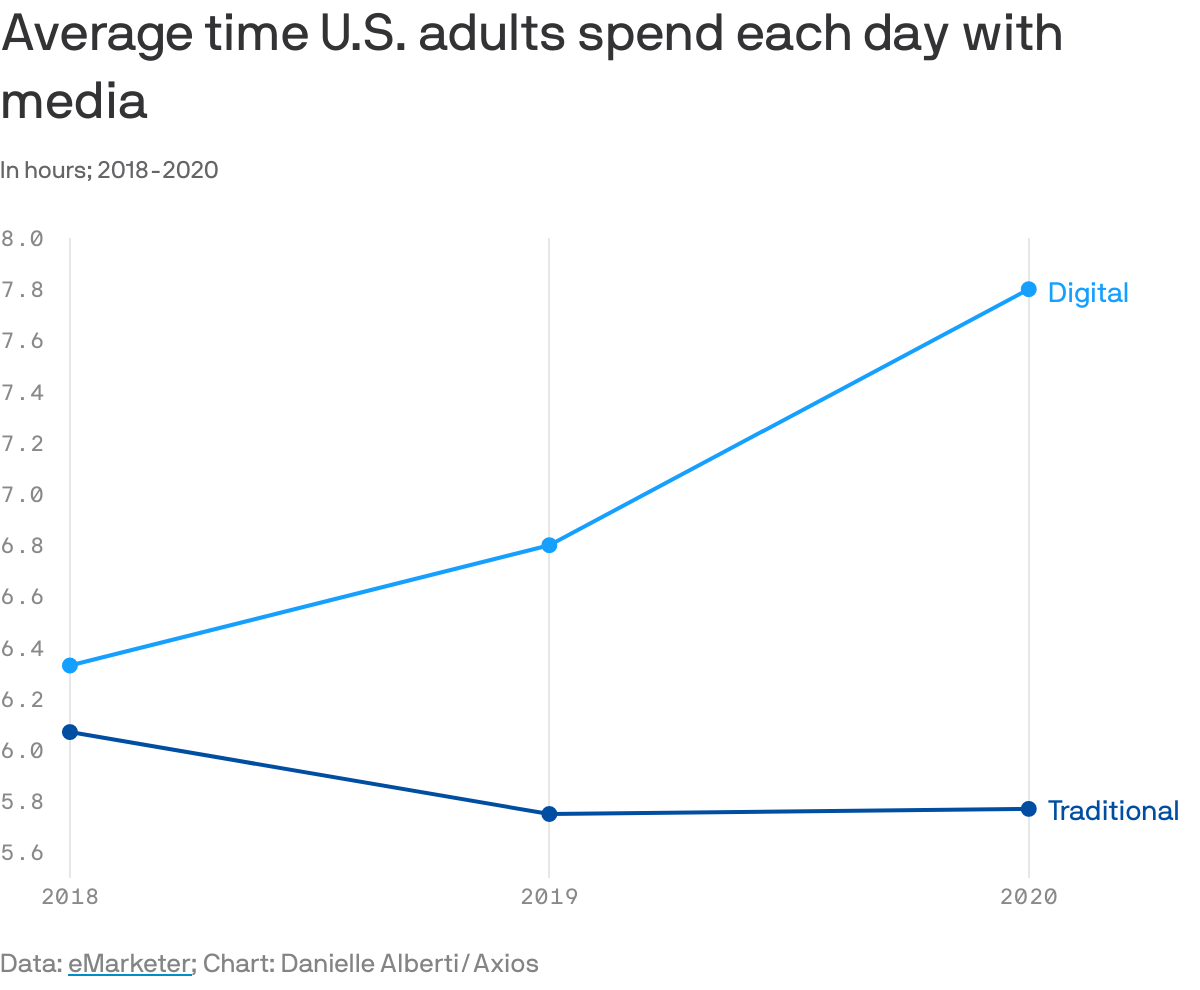
The COVID-19 crisis drove digital media consumption to new heights, while traditional media stagnated, according to data from eMarketer.
What's happening: Even before the pandemic, but especially after, time American adults spent on smartphones and smart TVs skyrocketed while time spent on devices like radio and linear television continued to decline.
As the global pandemic thrust technology to the center of our lives, it also gave Big Tech an unexpected respite from federal regulatory threats, pushing COVID-19 response ahead of other Washington priorities.
What we're hearing: With the Biden administration fixated on vaccine distribution and cabinet confirmations, fleshing out a tech-industry regulatory agenda will continue to take a back seat for at least a few more months.
The coronavirus pandemic gave Silicon Valley's profound self-confidence a good hard shake, presenting technologists with a host of problems that resisted quick fixes in code.
The big picture: Tech's AI-driven, network-powered services stepped adroitly into problem spots around the edges of pandemic life, as offices regrouped into virtual Zoom hives, homebound families ordered grocery and restaurant delivery by app, and e-commerce, led by Amazon, picked up where retail had gone dark.
A year ago this week, tech companies led the U.S. in sending workers home from offices, helping alert the nation to the seriousness of the looming pandemic. Then they pivoted to providing a suddenly homebound population with the tools to continue working, learning and connecting.
The arrival of COVID-19, as we wrote last March, gave the tech industry — bruised by years of criticism over privacy, misinformation, hate speech and other concerns — a chance to shine.
Lawmakers in both chambers are kicking off a new effort to change how news companies band together to negotiate with Big Tech in the U.S., as governments around the world re-think how tech platforms should treat news publishers.
What's happening: A bipartisan group of lawmakers have re-introduced a bill —the Journalism Competition and Preservation Act — that would let news publishers collectively negotiate with digital platforms over how they can use their work.
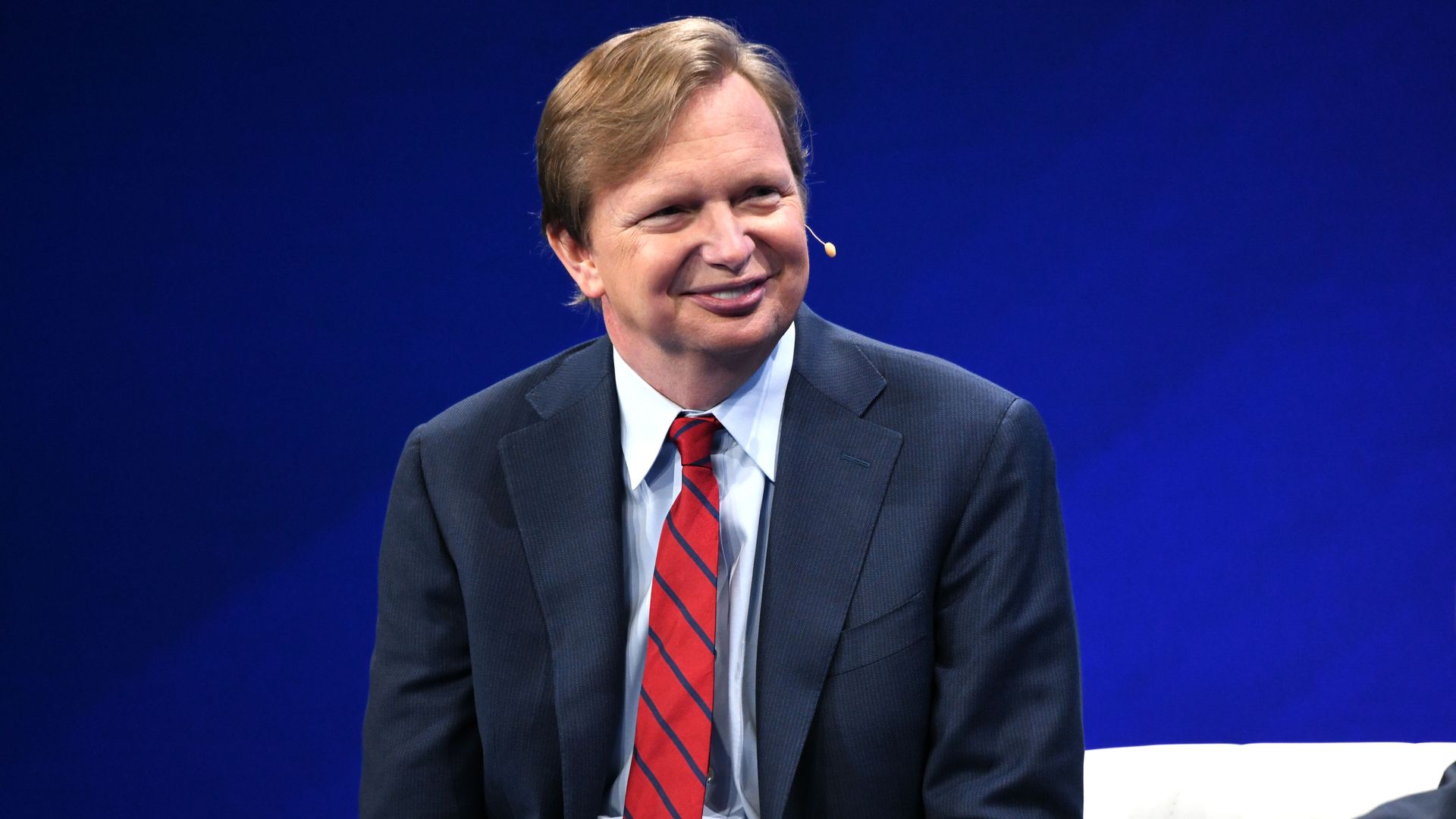
Former Obama aide Jim Messina is joining the board of Blockchain.com in anticipation of enhanced regulation from the Biden administration and other governments for its business trading and processing digital coins.
Why it matters: Cryptocurrency companies are currently operating in a regulatory no man’s land. Some firms are looking for more government guidelines while others prefer to have as few rules as possible — and operate offshore, if need be.












/2021/03/10/1615392650505.gif?w=3840)