Marc Stein, the New York Times' star NBA reporter, has partnered with Locker Room to create live audio content, Axios has learned.
Why it matters: Locker Room, Clubhouse, Twitter Spaces and other social audio apps have surged in popularity during the pandemic, leading some to believe the future of social networks might be audio.
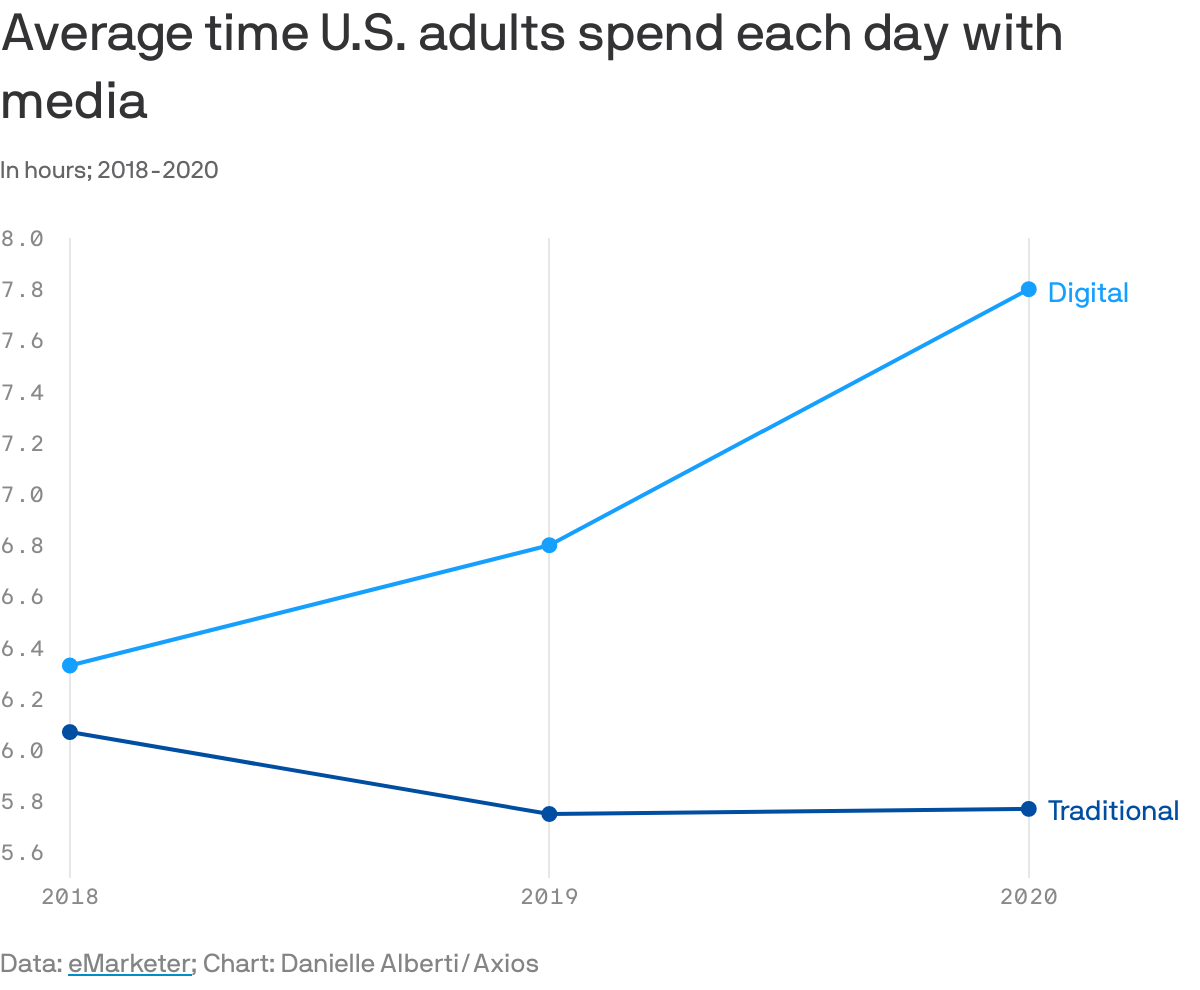
The COVID-19 crisis drove digital media consumption to new heights, while traditional media stagnated, according to data from eMarketer.
What's happening: Even before the pandemic, but especially after, time American adults spent on smartphones and smart TVs skyrocketed while time spent on devices like radio and linear television continued to decline.
As the global pandemic thrust technology to the center of our lives, it also gave Big Tech an unexpected respite from federal regulatory threats, pushing COVID-19 response ahead of other Washington priorities.
What we're hearing: With the Biden administration fixated on vaccine distribution and cabinet confirmations, fleshing out a tech-industry regulatory agenda will continue to take a back seat for at least a few more months.
The coronavirus pandemic gave Silicon Valley's profound self-confidence a good hard shake, presenting technologists with a host of problems that resisted quick fixes in code.
The big picture: Tech's AI-driven, network-powered services stepped adroitly into problem spots around the edges of pandemic life, as offices regrouped into virtual Zoom hives, homebound families ordered grocery and restaurant delivery by app, and e-commerce, led by Amazon, picked up where retail had gone dark.
A year ago this week, tech companies led the U.S. in sending workers home from offices, helping alert the nation to the seriousness of the looming pandemic. Then they pivoted to providing a suddenly homebound population with the tools to continue working, learning and connecting.
The arrival of COVID-19, as we wrote last March, gave the tech industry — bruised by years of criticism over privacy, misinformation, hate speech and other concerns — a chance to shine.
Lawmakers in both chambers are kicking off a new effort to change how news companies band together to negotiate with Big Tech in the U.S., as governments around the world re-think how tech platforms should treat news publishers.
What's happening: A bipartisan group of lawmakers have re-introduced a bill —the Journalism Competition and Preservation Act — that would let news publishers collectively negotiate with digital platforms over how they can use their work.
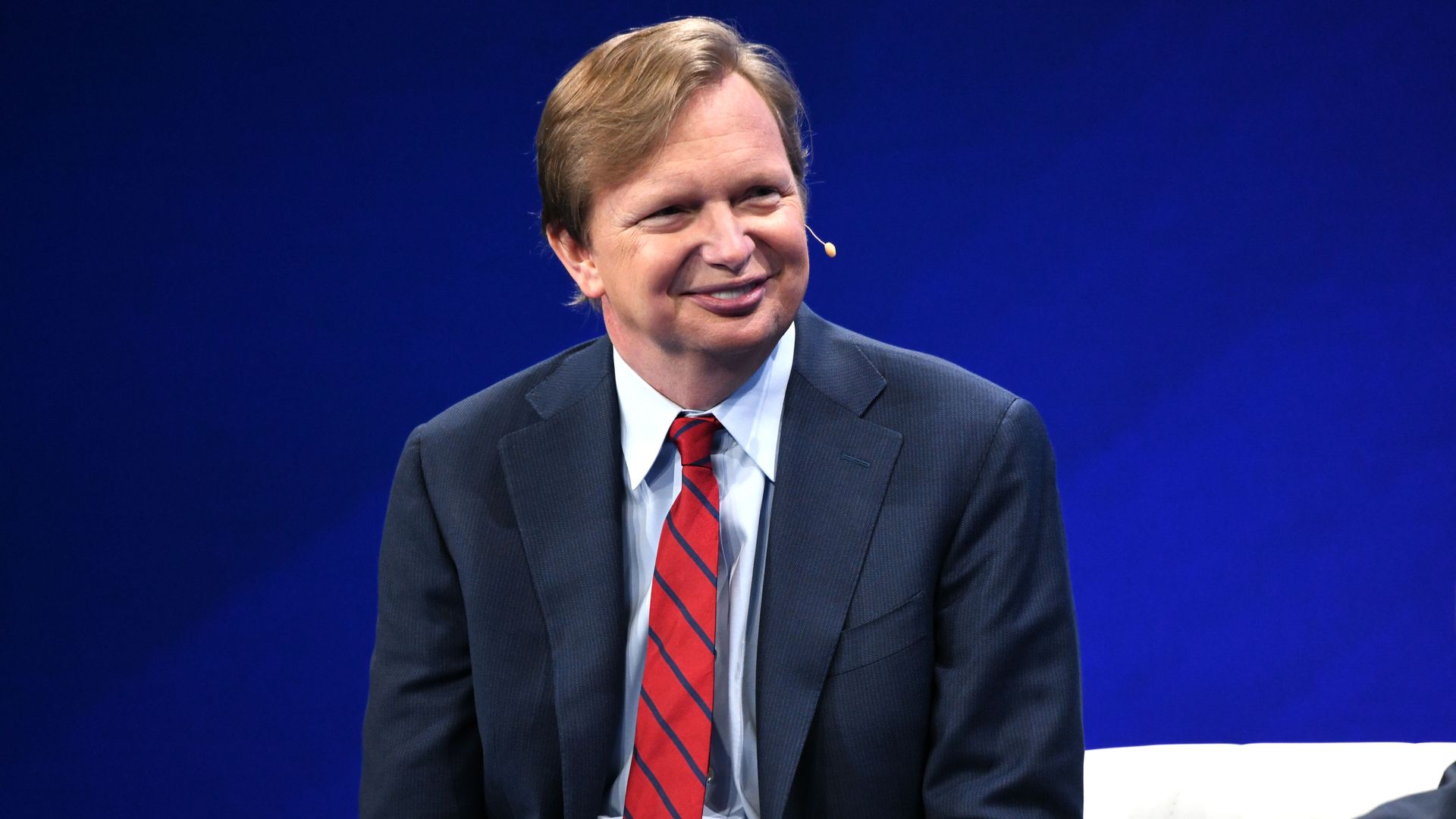
Former Obama aide Jim Messina is joining the board of Blockchain.com in anticipation of enhanced regulation from the Biden administration and other governments for its business trading and processing digital coins.
Why it matters: Cryptocurrency companies are currently operating in a regulatory no man’s land. Some firms are looking for more government guidelines while others prefer to have as few rules as possible — and operate offshore, if need be.
An international hacking group gained access to around 150,000 live-feed security cameras developed by startup Verkada used inside hospitals, companies, police departments, prisons and schools around the world, Bloomberg News reported Tuesday.
Why it matters: The hackers were able to view and copy video from inside multiple health centers, schools, prisons and companies, including carmaker Tesla and software provider Cloudflare.
Major companies are using Clubhouse to hold court with ordinary investors.
Why it matters: Executives are using the invite-only audio app to allow the type of access that was historically only offered up to Wall Street on stodgy, suited-up quarterly earnings calls.
GSMA, the trade group that puts on Mobile World Congress, said Monday the event will take place in person in Barcelona in June, while also announcing a series of new procedures it hopes will assuage health concerns. However, key player Ericsson said Tuesday that it won't be taking part.
Why it matters: The event is the biggest wireless industry trade show and a key source of funds for the GSMA. However, many are skeptical of holding an event with tens of thousands of people, many of whom won't have yet been vaccinated.
Korean automaker Kia is conducting a safety recall of nearly 380,000 vehicles in the U.S. due to concerns of potential engine fires, according to a letter published by the National Highway Traffic Safety Administration.
Why it matters: The recall comes after the NHTSA opened an investigation in 2019 into Kia and Hyundai engine fires. In November 2020, the agency announced that it was fining the automakers $137 million for not recalling cars with potentially faulty engines quickly enough, according to the AP.
An influx of tech antitrust hardliners in the Biden administration signals a new toughness on tech from the Democrats.
Why it matters: Tech companies that grew unfettered by regulation during the Obama administration will now be under scrutiny from advocates that have made a name for themselves by targeting the behemoths' size and power.
Neeva, a search engine startup led by former Google Ads boss Sridhar Ramaswamy, raised $40 million in Series B funding co-led bySequoia Capital and Greylock.
Why it matters: Venture capitalists often ask founders, "Why wouldn't Google just build that and crush you?" In this case, the founder is driving straight into Google's core business.
Spot, a new startup born after nearly a year of incessant Zoom video calls, has raised $1.9 million in new funding led by Chapter One for a voice conference call alternative with some bells and whistles.
Why it matters: When the pandemic sent everyone to work from home, many workers seemed to forget that phone calls exist, opting instead to turn every work conversation into a videoconference.
Last week's revelation of a new cyberattack on thousands of small businesses and organizations, on top of last year's SolarWinds hack, shows we've entered a new era of mass-scale cyber war.
Why it matters: In a world that's dependent on interlocking digital systems, there's no escaping today's cyber conflicts. We're all potential victims even if we're not participants.
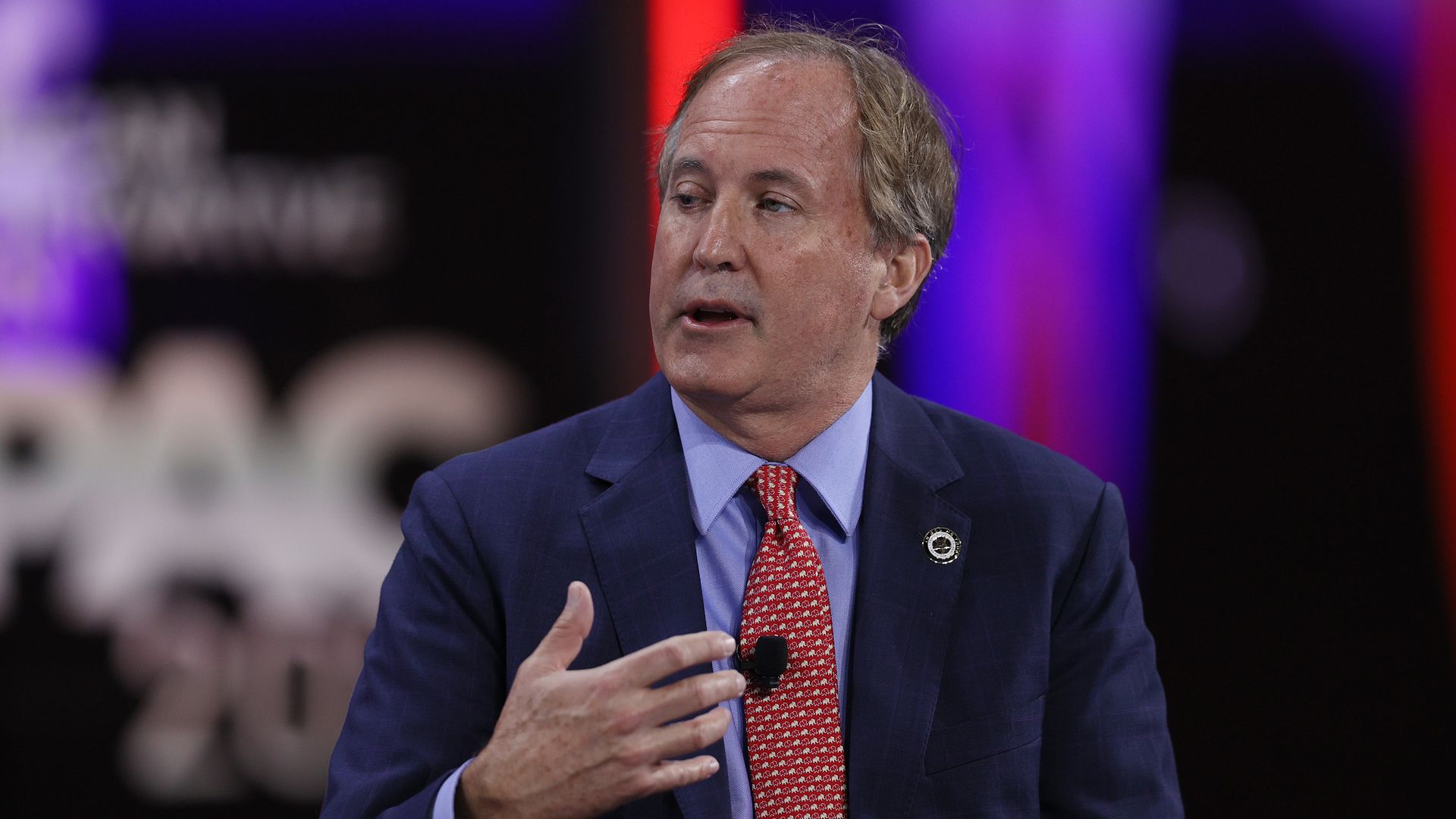
Twitter on Monday filed a lawsuit against Texas Attorney General Ken Paxton (R), saying that his office launched an investigation into the social media giant because it banned former President Trump from its platform.
Driving the news: Twitter is seeking to halt an investigation launched by Paxton into moderation practices by Big Tech firms including Twitter for what he called "the seemingly coordinated de-platforming of the President," days after they banned him following the Jan. 6 Capitol insurrection.

/2021/03/10/1615392650505.gif?w=3840)