"Fake news" was rampant throughout the 2016 election — and it's still around. But it's hardly new: people have believed in conspiracy theories for ages, and scientists are no stranger to combating them.
The bottom line: From anti-vaccine conspiracies to climate change denial to those who believe in modern "fake news," many conspiracy theories are united by one idea: “Nothing is an accident. They never accept randomness,” says Stephan Lewandowsky, a cognitive scientist at the University of Bristol who studies climate change denial.
Facebook is introducing new labels on some of its advertising metrics and removing some outdated ones. The company is also launching a program to help educate marketers more broadly about measurement.
Why it matters: Facebook has been making efforts to increase transparency around metrics, including agreeing to an industry audit, in light multiple instances of inflating metrics over the past few years. The industry has generally been putting pressure on "walled gardens," or tech firms, to be more transparent about their data and metrics.
Almost half of American parents believe their children are addicted to mobile devices, according to a new survey from Common Sense Media and SurveyMonkey featured in USA TODAY. The results show that nearly three-quarters of American children have access to an Internet-connected mobile device and 47% of their parents believe that their child is addicted.
Why it matters: Concerns about the addictive nature of social media are becoming a deeper concern among tech giants. As early Facebook investor Sean Parker told Axios' Mike Allen last year about the platform, “God only knows what it's doing to our children's brains.”
After firing off five tweets this morning outlining where he stands on gun reform, President Trump defended the NRA's EVP Wayne LaPierre, Executive Director Chris Cox, and other members.
Why it matters:Trump has recently said that he'll bring about changes to gun control in the aftermath of the Parkland shooting, but he also understands that the NRA and its supporters help put him in the White House. This is him protecting them and the Second Amendment.
"In a wave of demonstrations reaching from Arizona to Maine, students at dozens of U.S. high schools walked out of class [yesterday] to protest gun violence and honor the victims of last week's deadly shooting in Florida," AP reports.
Why it matters: "The protests spread from school to school as students shared plans for their demonstrations over social media."
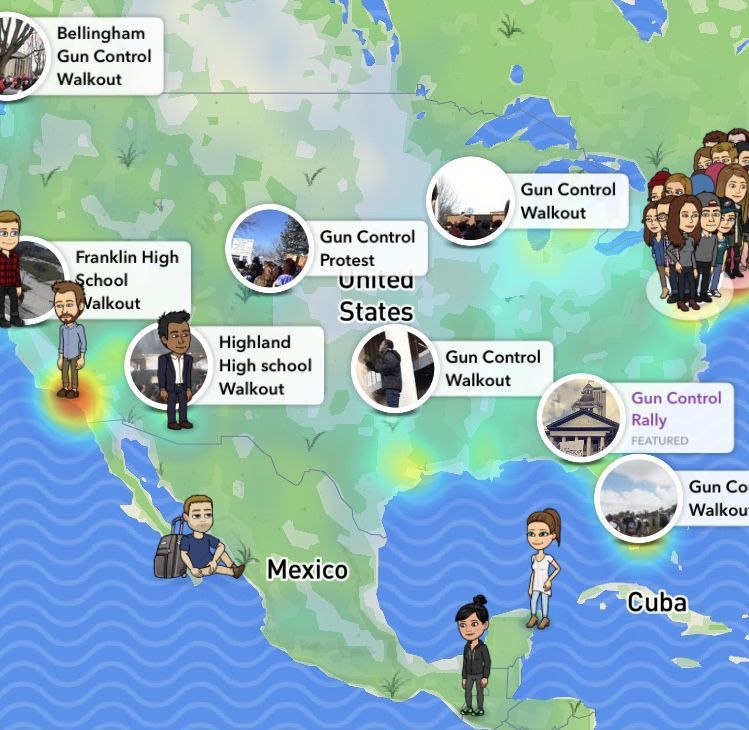
Here's how yesterday looked on Snapchat's "Snap Maps," which shows Snaps (videos) from around the world. Photo: Sara Fischer's Snapchat
YouTube, Facebook and Twitter were caught flat-footed when conspiracy theories about survivors of the Parkland, Fla., school shooting were unintentionally elevated on their sites through algorithms that promote trending topics and popular content.
Why it matters: Pressure is building on social media companies to better manage the spread of misinformation during breaking news. But they're struggling to contain the problem without compromising openness, which can also help get facts out quickly.
As part of its effort to rein in spam and propaganda, Twitter said it will now limit how users and apps automate tweets and is also banning systems that simultaneously post, like or retweet similar tweets from multiple accounts.
Why it matters: This is a major step for Twitter as it combats political propaganda on its platform and tries to get rid of bot accounts that help to "artificially inflate" the reach of a hashtag or topic through "inorganic" means. The move comes days after the Justice Department alleged that Russian operatives had heavily relied on social media platforms such as Twitter to manipulate the spread of fake, politically charged content.
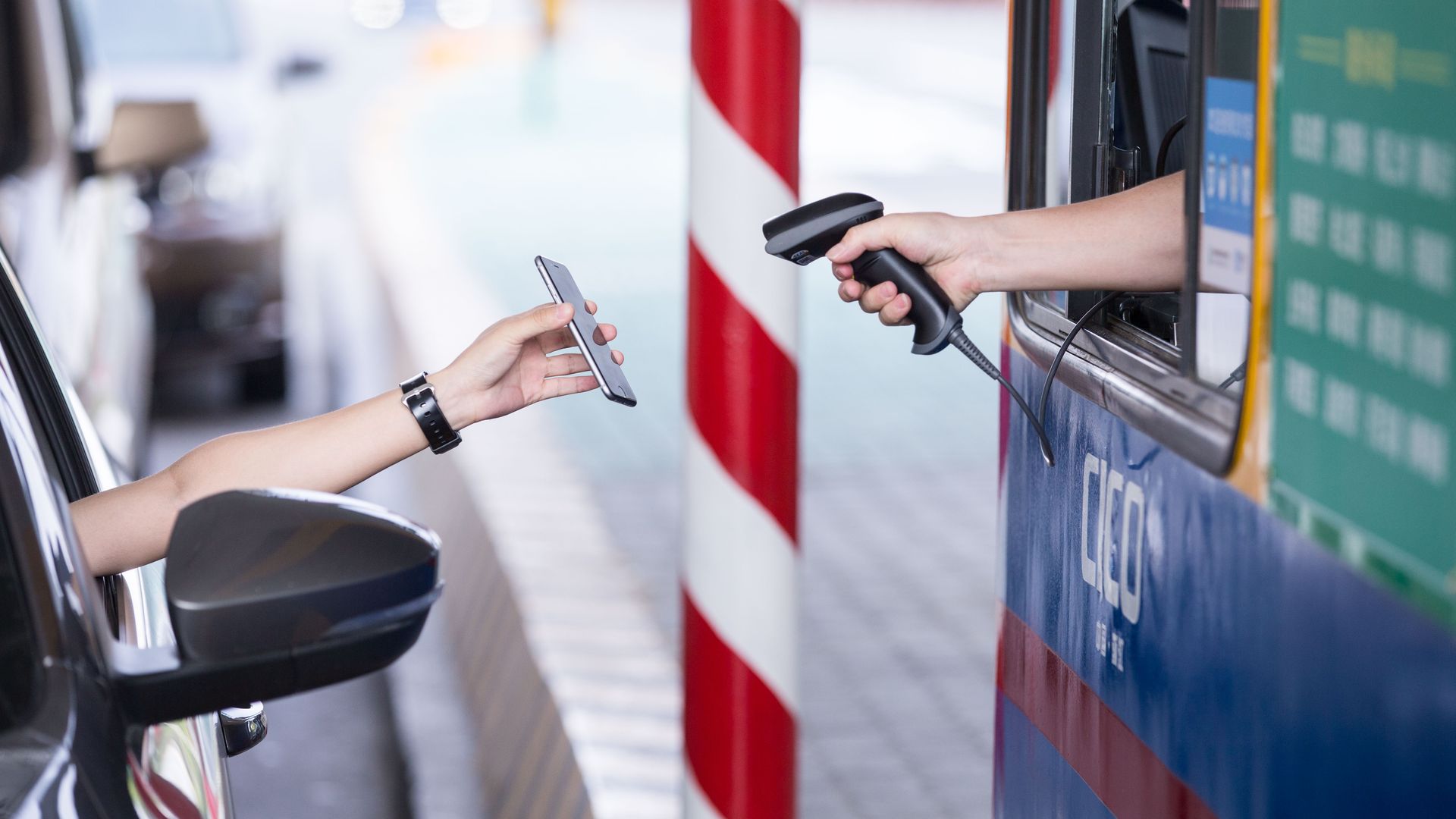
Alibaba, the Chinese e-commerce rival to Amazon, is making its first big push into the American market with a substantial play by its affiliate, Alipay. It's built around China's two-week lunar new year celebration, which has brought thousands of Chinese tourists to the United States, most of whom prefer to spend at retailers that accept a mobile wallet.
Quick take: At home, some 520 million Chinese retail shoppers use Alipay. But last year they also took 135 million journeys abroad, including to Europe and the U.S. Given their payment preferences, shopping has been a stumbling block. But now, Alipay has payment agreements with some 170,000 North America retail locations, reports Fung Global Retail Tech's Deborah Weinswig.
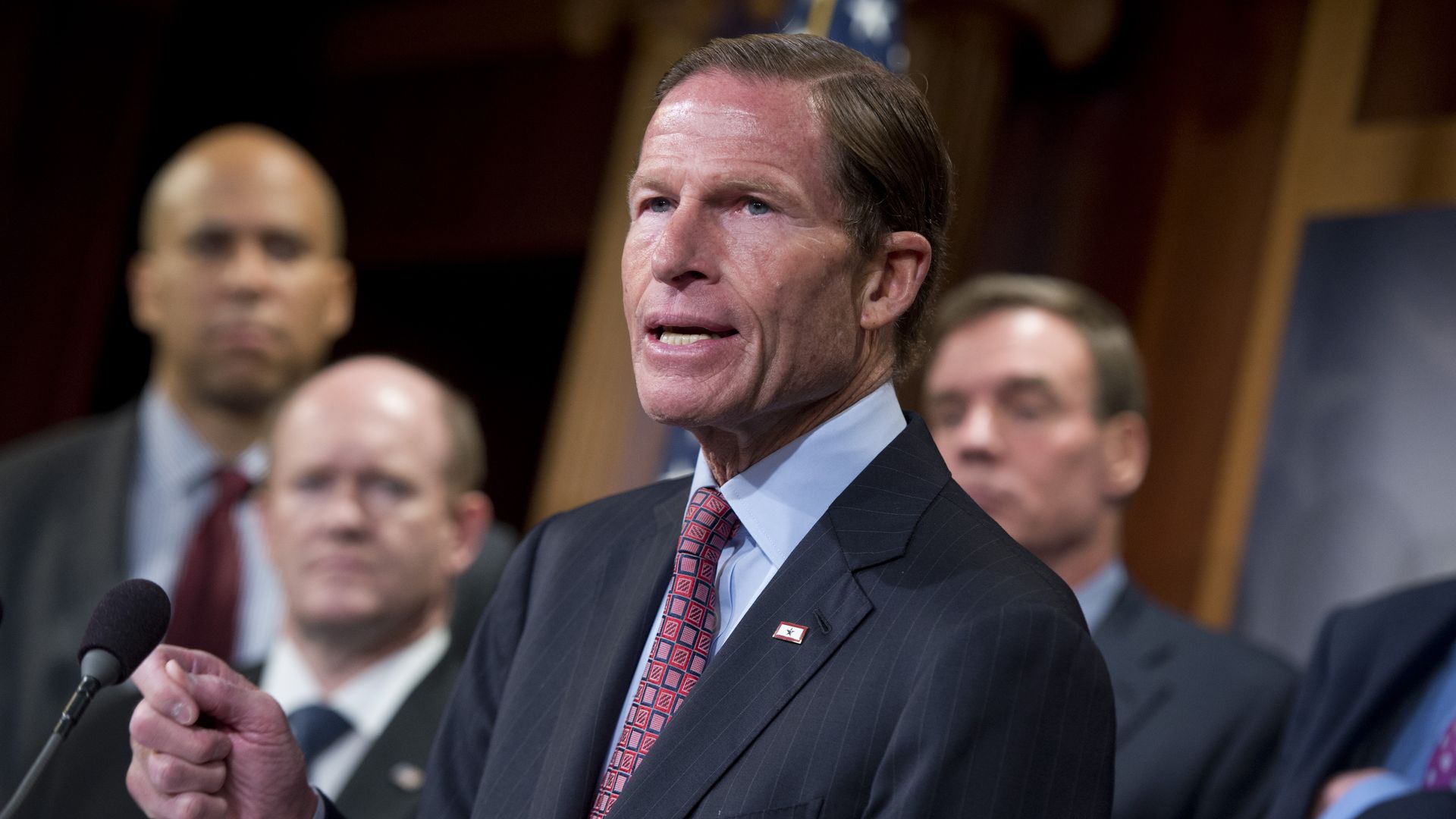
The House is expected to vote next week on anti-trafficking legislation that has represented a major fight for tech companies over the last year, according to multiple sources familiar with the matter.
Sources said the final measure may be a combination of language from the Senate, which would allow victims of online trafficking to sue the platforms that facilitated the crime, and a measure from the House that takes an approach that’s more palatable to tech. The news was first reported by Politico.
The bigger picture: The Senate bill would weaken legal immunity that enabled the growth of the modern web platform, since Facebook or Google could never afford to be liable for every piece of content their users post. But supporters of the anti-trafficking legislation say those concerns are overblown.
After recent testing in San Francisco and Boston, Uber is expanding the roll out of UberPool Express, its cheaper carpooling option that requires riders walk a block or two to a convenient pick-up location.
The big picture: Part of Uber and Lyft's appeal is the door-to-door service (unlike public transit,) but bothcompanies have long experimented with carpooling as a way to drive down cost. Despite the jokes that these companies are reinventing busses, it's already been proven that in some cities there is a demand for private alternatives to public transit.
A group linked to the Koch brothers is trying to convince young Americans to just say "No" to giving Jeff Bezos a tax break or other incentives.
What they're doing: Generation Opportunity — a right-leaning group for young people linked to the Koch-backed Americans for Prosperity — is running a digital ad campaign that calls big incentive packages for Amazon's second headquarters "sweetheart deals" that are "unfair to taxpayers."
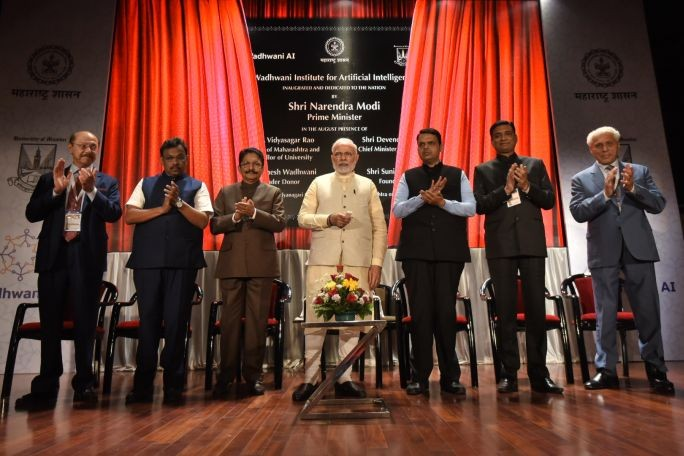
Indian Prime Minister Modi attended the recent opening of the Wadhwani Institute in Mumbai. Photo: Wadhwani Institute
A new research center in Mumbai aims to use artificial intelligence to help the hundreds of millions of people that live on less than $2 a day.
Why it matters:
"The benefits of AI are going to the top whatever — 5,10 20 percent. ... So far it's made relatively little difference to the bottom 20-30 percent of the world's population."
More than half of U.S. adults are uncomfortable with self-driving vehicle technology and would be unlikely to use it on a daily basis (though younger Americans are more positive).
Why it matters: Many automakers — ranging from the largest car companies to newer entrants like Waymo and Tesla — are making big bets on autonomous driving technology, which is also expected to help drive the expansion of electric vehicles. Public hesitation could hamper widespread commercial deployment of both technologies in the years and decades ahead.