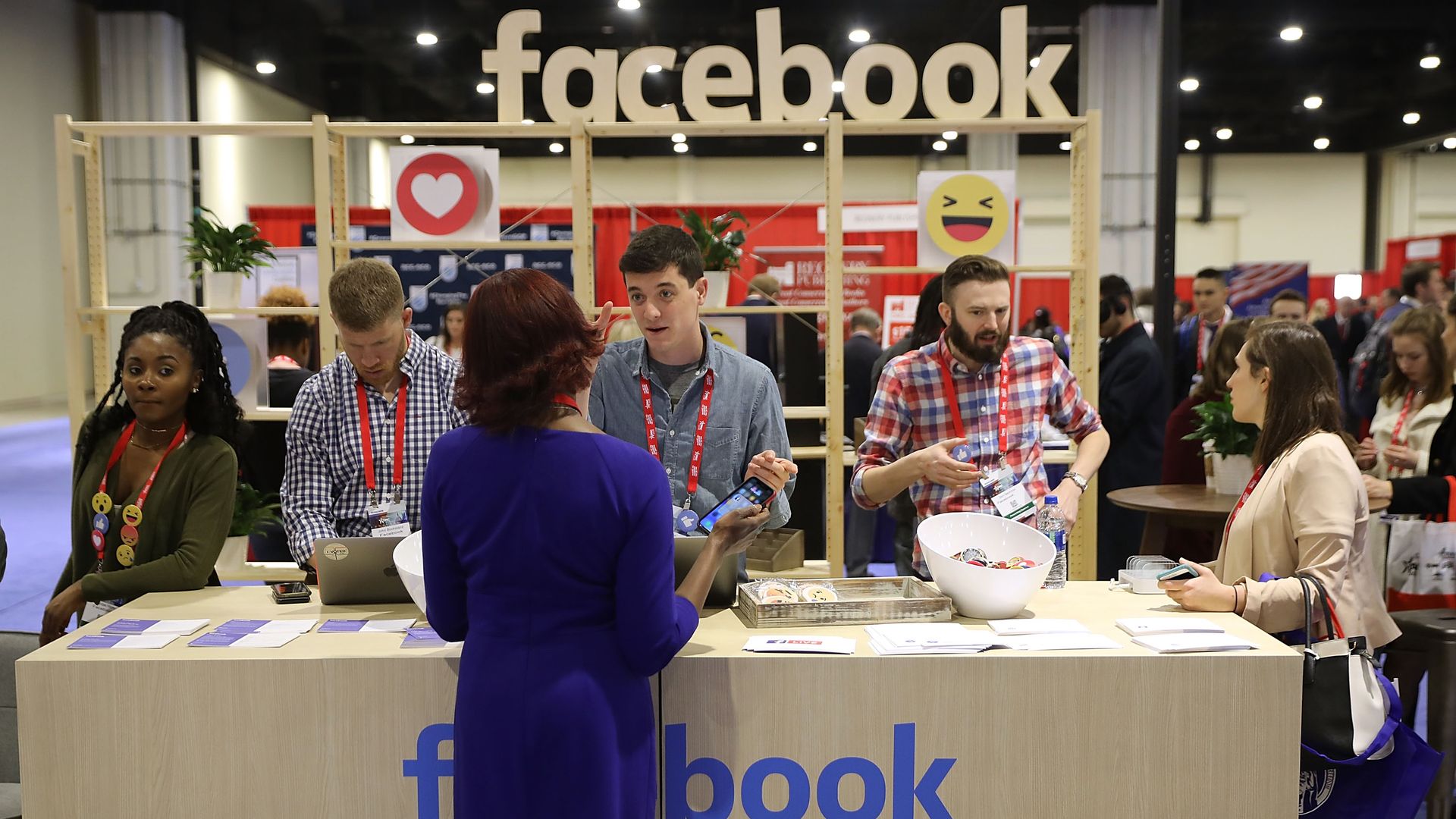
Facebook has shut down a demo of a virtual reality shooting game in its booth at the Conservative Political Action Conference out of "respect for the victims" of the Florida school shooting, BBC's Dave Lee reports.
Why it matters: Per Mashable, Facebook has been criticized "for its role in spreading conspiracy theories about the Parkland shooting." The demo was of the game Bullet Train, which "lets players use an imaginary gun to pretend shoot people in a train station," per Mashable.
Turo, a peer-to-peer car rental service, has filed a counter-suit in response to a lawsuit filed last month by the city of San Francisco over airport fees. The company says the lawsuit is the result of car rental company Enterprise's lobbying, and ignores local permit and tax laws.
Why you'll about this again: Transportation habits are fast changing and the legacy players aren't all taking it well. At the same time, the new generation of marketplaces and services that see themselves as "tech companies," haven't been shy about pushing for changes in regulations (or ignoring them altogether).
Ahead of Mobile World Congress, Google announced Friday it is bringing its augmented reality and Google Lens smart camera tools to more devices — and giving both new tricks.
Why it matters: Convincing developers to build for AR is, in part, a numbers game. Apple's ARKit is already supported on lots and lots of iPhones so getting Google's rival ARCore on more devices is important. Google Lens, meanwhile, is the evolution of the search box, using what the camera sees as the query.
The House is moving toward a floor vote on an anti-sex-trafficking package that has been a major headache for internet companies.
Our thought bubble: If it passes, the package will be the first concrete legislation to come out of a renewed "techlash" in Washington. This is the end result of a year when Facebook and Google were putting out so many fires — on Russia and tech addiction and extremist content — that they weren't able to keep this one at bay.
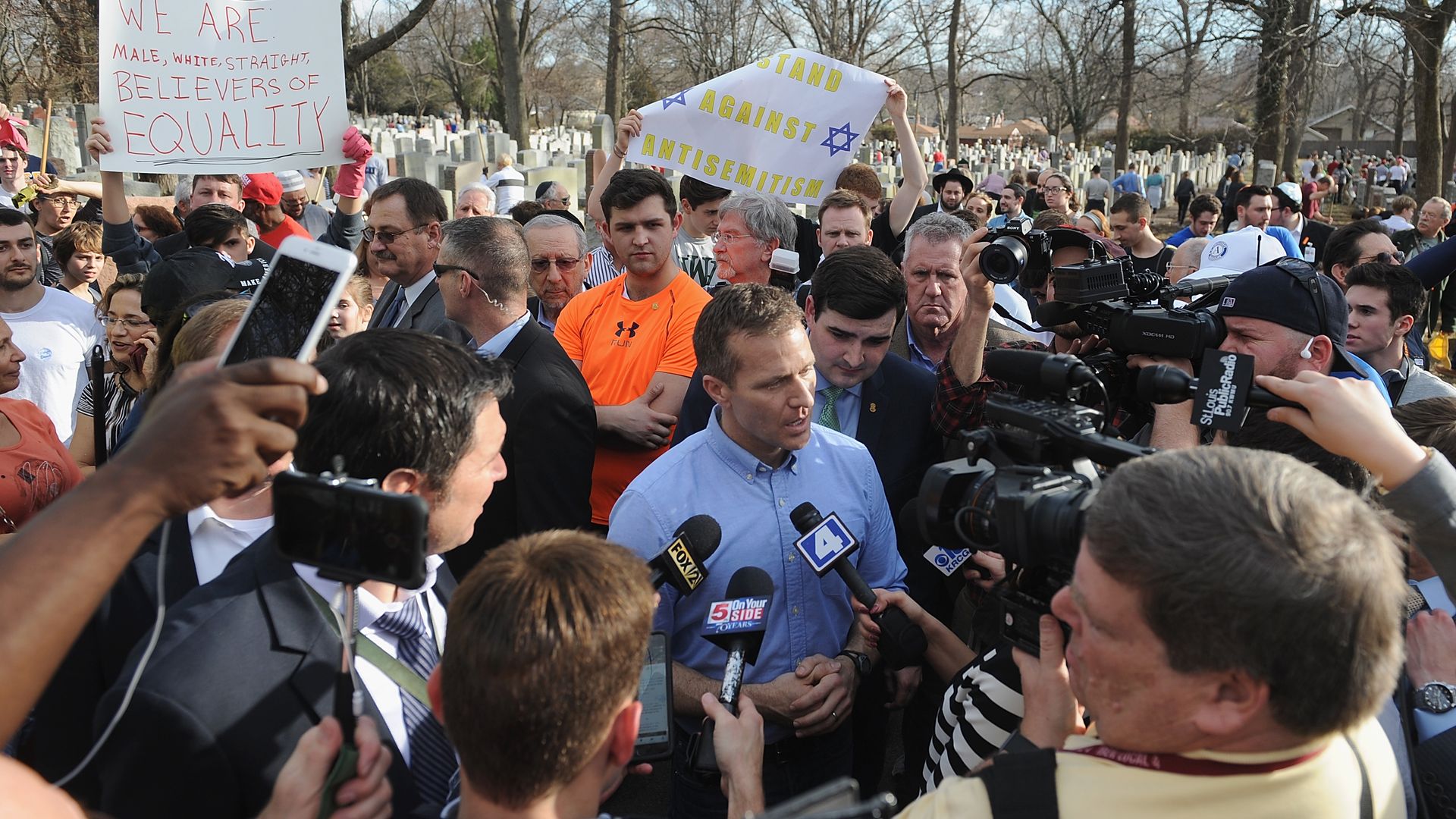
The Missouri GOP released a statement Friday responding to Governor Eric Greitens' indictment for "felony invasion of privacy," claiming that the prosecutor, Kim Gardner, was paid by George Soros, and that the allegation is "a political hit job."
Editor's Note: This article has been updated to clarify Kim Gardner is the prosecutor in this case.
President Trump blasted El Salvador and Mexico in a morning tweet by claiming that they allow deported MS-13 gang members to "come back in [to the United States]...like water." He also stated those gang members are being removed "by the thousands" — an assertion, per The Washington Post, that isn't backed up by hard numbers.
"Fake news" was rampant throughout the 2016 election — and it's still around. But it's hardly new: people have believed in conspiracy theories for ages, and scientists are no stranger to combating them.
The bottom line: From anti-vaccine conspiracies to climate change denial to those who believe in modern "fake news," many conspiracy theories are united by one idea: “Nothing is an accident. They never accept randomness,” says Stephan Lewandowsky, a cognitive scientist at the University of Bristol who studies climate change denial.
Facebook is introducing new labels on some of its advertising metrics and removing some outdated ones. The company is also launching a program to help educate marketers more broadly about measurement.
Why it matters: Facebook has been making efforts to increase transparency around metrics, including agreeing to an industry audit, in light multiple instances of inflating metrics over the past few years. The industry has generally been putting pressure on "walled gardens," or tech firms, to be more transparent about their data and metrics.
Almost half of American parents believe their children are addicted to mobile devices, according to a new survey from Common Sense Media and SurveyMonkey featured in USA TODAY. The results show that nearly three-quarters of American children have access to an Internet-connected mobile device and 47% of their parents believe that their child is addicted.
Why it matters: Concerns about the addictive nature of social media are becoming a deeper concern among tech giants. As early Facebook investor Sean Parker told Axios' Mike Allen last year about the platform, “God only knows what it's doing to our children's brains.”
After firing off five tweets this morning outlining where he stands on gun reform, President Trump defended the NRA's EVP Wayne LaPierre, Executive Director Chris Cox, and other members.
Why it matters:Trump has recently said that he'll bring about changes to gun control in the aftermath of the Parkland shooting, but he also understands that the NRA and its supporters help put him in the White House. This is him protecting them and the Second Amendment.
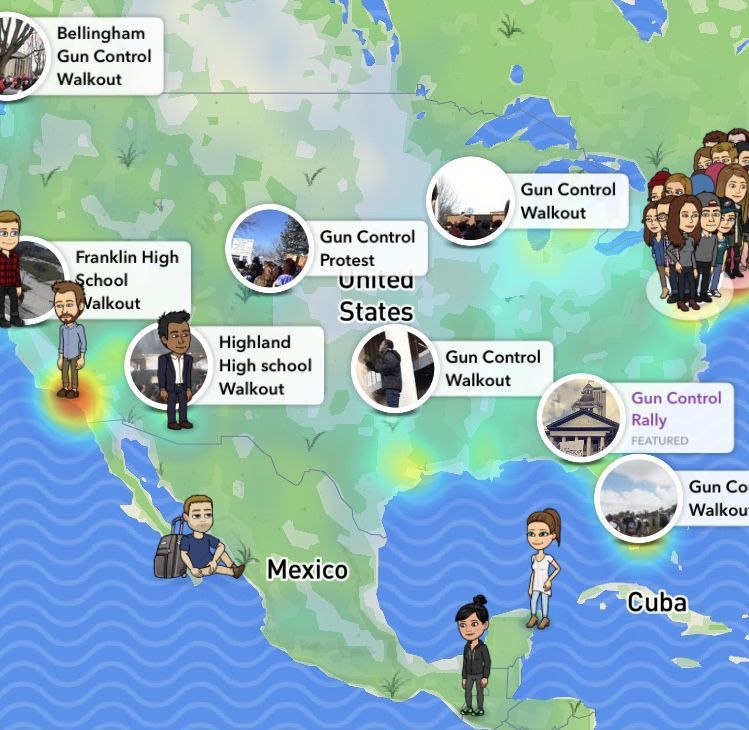
"In a wave of demonstrations reaching from Arizona to Maine, students at dozens of U.S. high schools walked out of class [yesterday] to protest gun violence and honor the victims of last week's deadly shooting in Florida," AP reports.
Why it matters: "The protests spread from school to school as students shared plans for their demonstrations over social media."
Here's how yesterday looked on Snapchat's "Snap Maps," which shows Snaps (videos) from around the world. Photo: Sara Fischer's Snapchat
YouTube, Facebook and Twitter were caught flat-footed when conspiracy theories about survivors of the Parkland, Fla., school shooting were unintentionally elevated on their sites through algorithms that promote trending topics and popular content.
Why it matters: Pressure is building on social media companies to better manage the spread of misinformation during breaking news. But they're struggling to contain the problem without compromising openness, which can also help get facts out quickly.














/2018/02/22/1519266565171.gif?w=3840)