Presidential and public curiosity about the possible existence of aliens and UFOs has been part of the national conversation for over half a century.
The big picture: The debate was reignited last week after former President Barack Obama said aliens are "real," though he added that he saw no evidence of extraterrestrial species during his time in office.
House Democrats said billionaire Les Wexner downplayed his relationship with Jeffrey Epstein and provided few new details during a closed-door Oversight Committee deposition Wednesday.
Why it matters: Wexner, an 88-year-old former owner of Victoria's Secret, is named in the Epstein files released by the Justice Department as a "co-conspirator," though he has not been charged with a crime and has denied any wrongdoing.
Four Democratic U.S. senators made an unannounced trip to Odesa, Ukraine, marking the first congressional visit to the Black Sea port since the war began nearly four years ago.
Why it matters: Led by Sen. Jeanne Shaheen (D-N.H.), the lawmakers used the trip to get on-the-ground briefings on the war and to call for Congress to pass new sanctions on Russia.
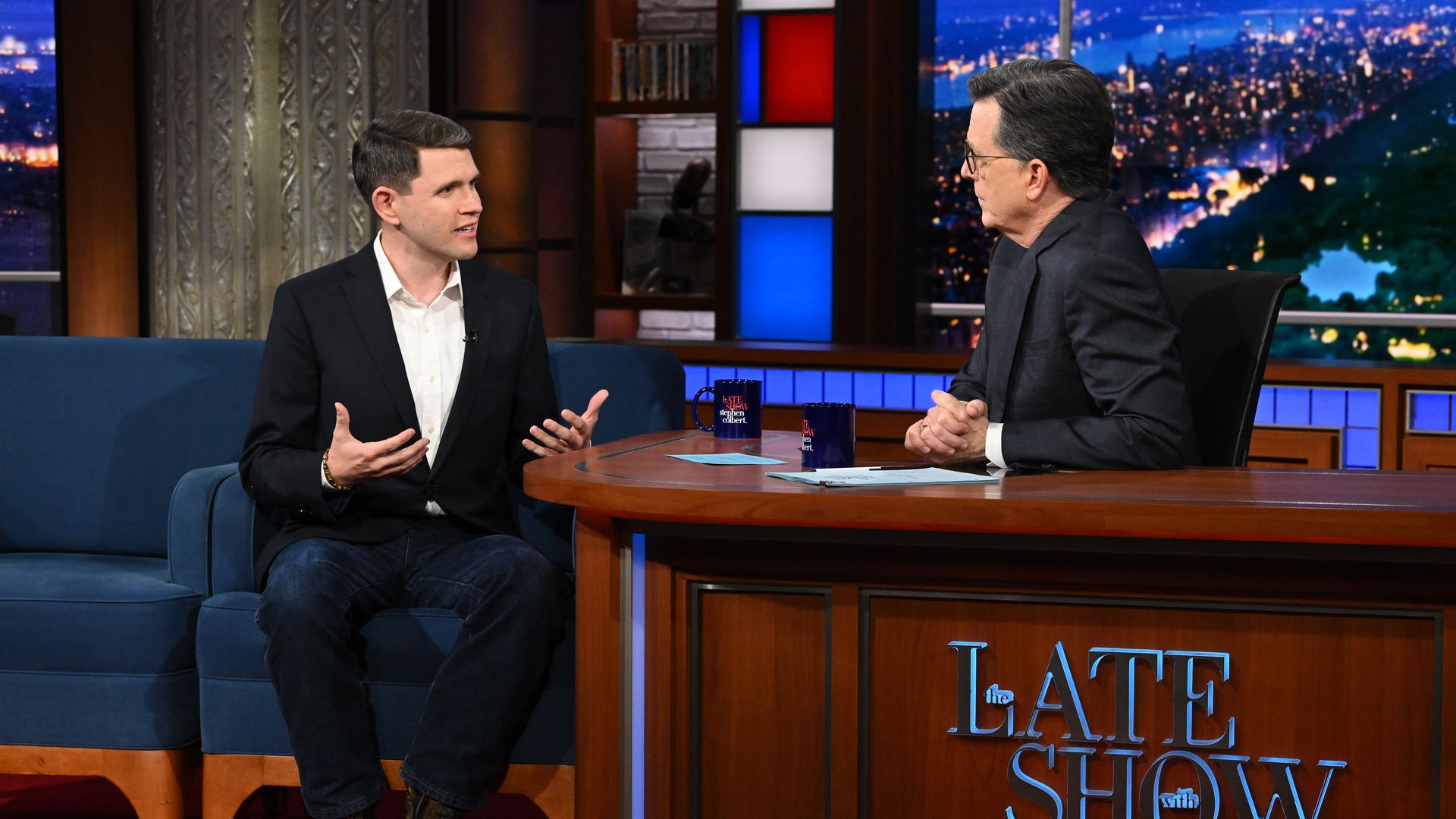
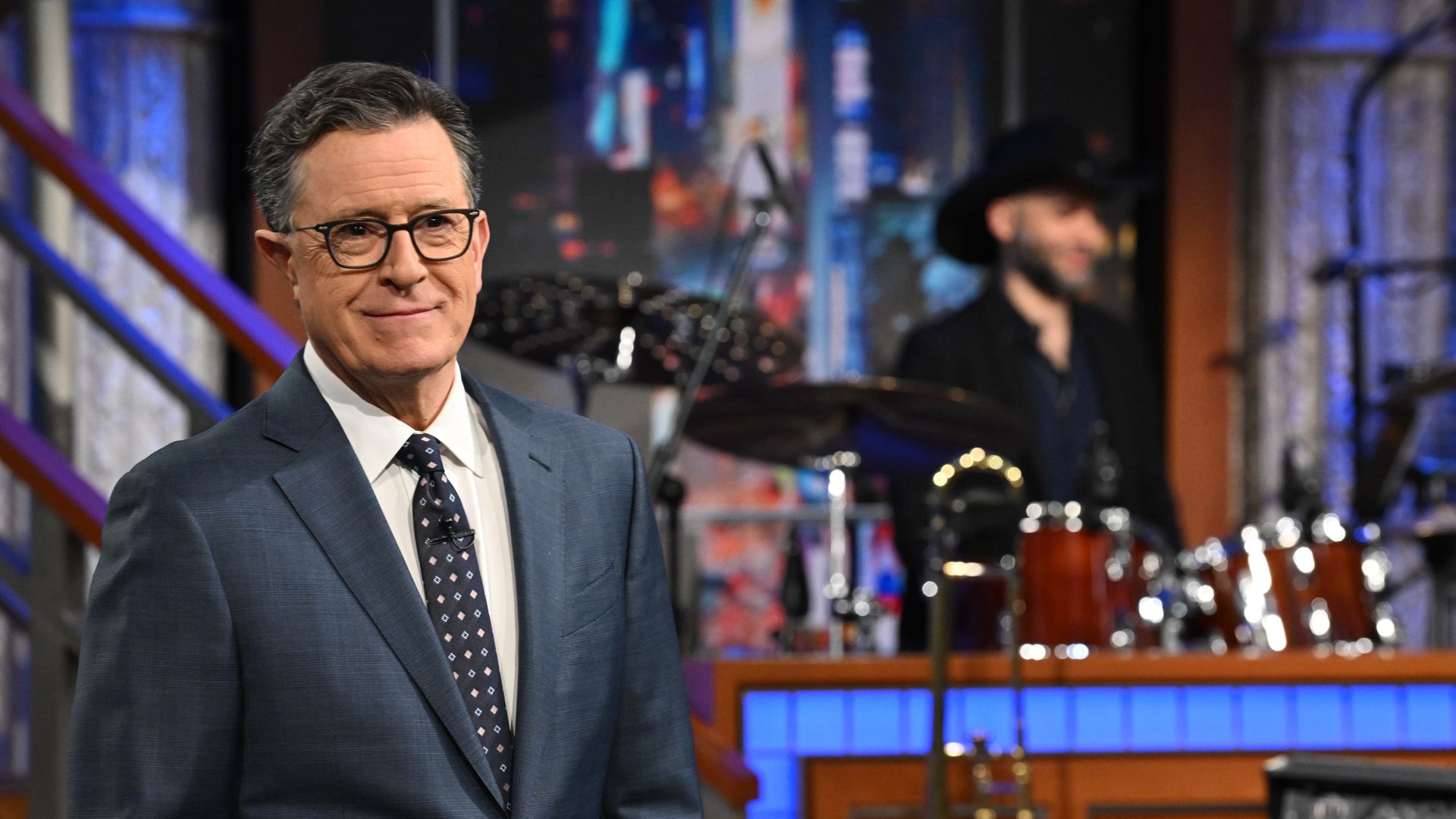
Stephen Colbert alleged that President Trump's talk show directive kept his interview with a Texas Democratic Senate candidate off CBS airwaves, but it didn't stop him from reaching millions online.
Why it matters: Colbert bypassed the late-night TV restrictions by posting his interview with Texas Rep. James Talarico on YouTube — exposing how FCC rules built for broadcast don't apply to today's digital platforms.
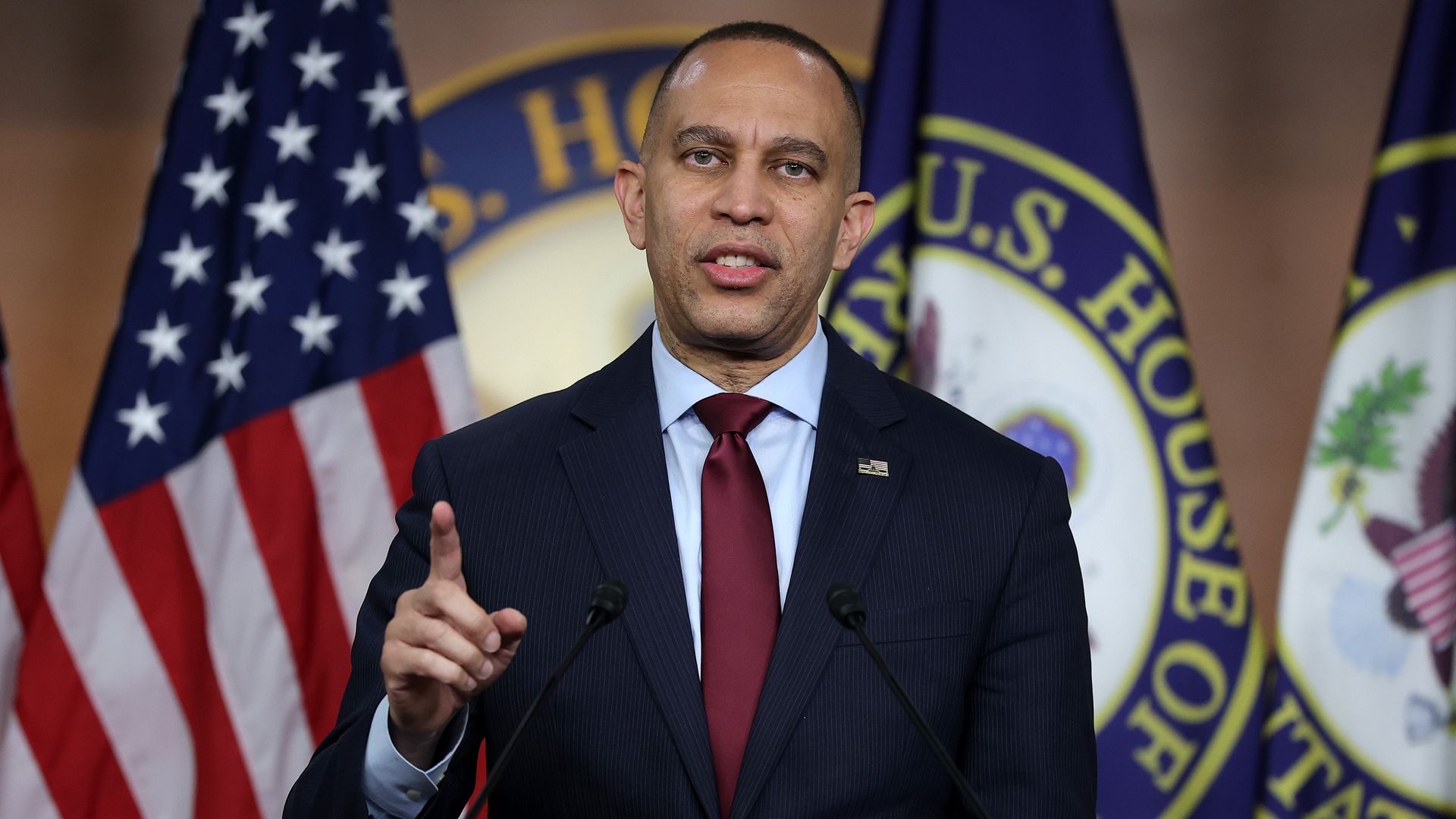
House Minority Leader Hakeem Jeffries (D-N.Y.) went public Wednesday with his pressure campaign urging Democratic state legislators to vote on a new congressional map.
Why it matters: Jeffries doesn't usually put himself in such public conflict with fellow Democrats, but he'll need every advantage he can get in his quest to become speaker in 2027.
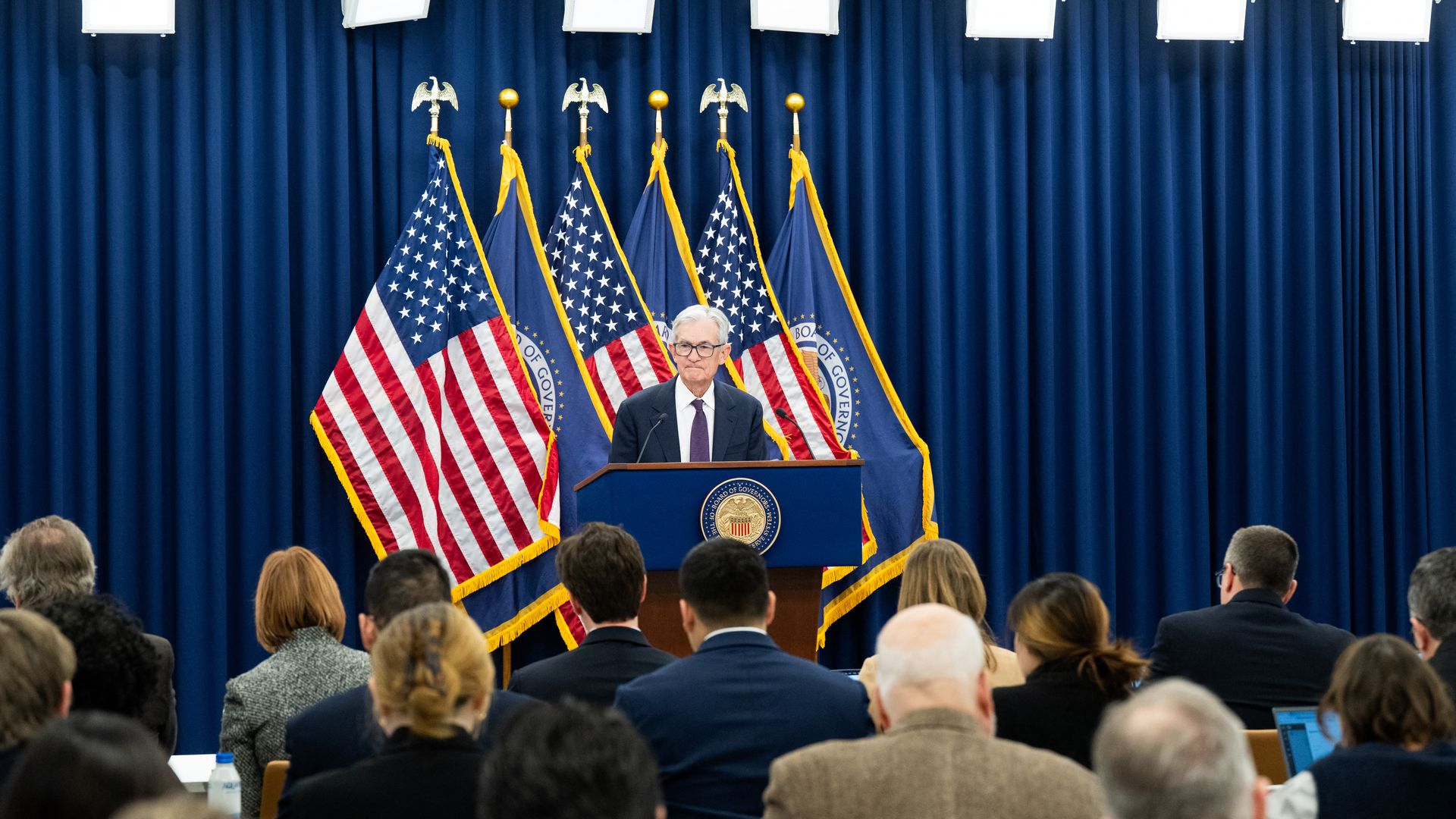
Federal Reserve officials appear deeply divided over interest rates, with several suggesting the possibility of higher borrowing costs if inflation remains stubborn, according to policy meeting minutes released on Wednesday.
Why it matters: Officials are split over how weak the labor market is and whether businesses will continue to pass along tariff-related costs to consumers.
Federal agents are usually immune from lawsuits in ways local and state officials aren't, but the Trump administration's immigration policies are prompting states to test the gap with novel strategies to hold them accountable.
Why it matters: The Trump administration has suggested federal agents possess "absolute immunity" from state-led prosecutions,whichsparked outrage following the deaths of two Minneapolis residents.
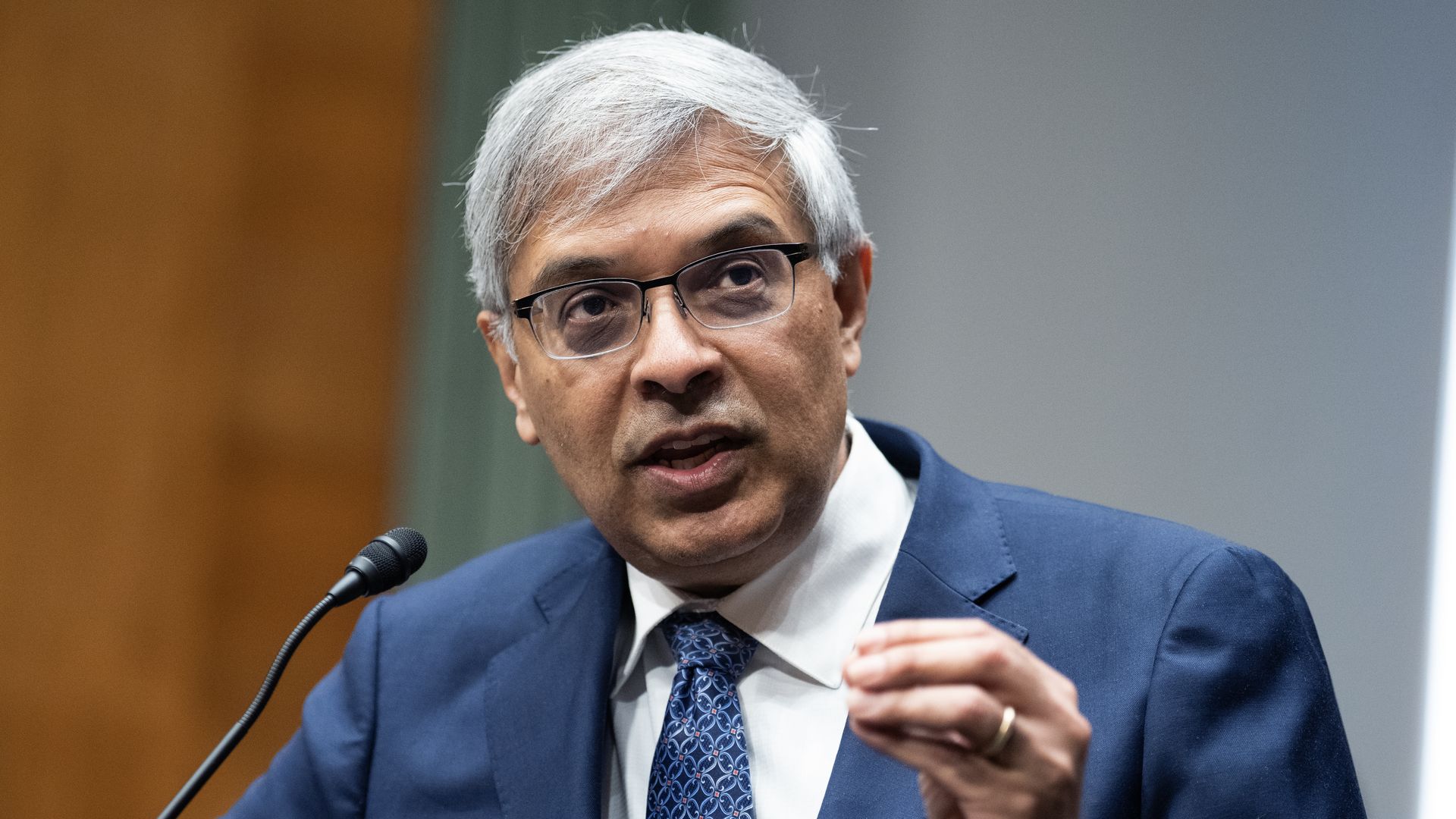
National Institutes of Health director Jay Bhattacharya will also become acting director of the Centers for Disease Control and Prevention as the Trump administration continues a shakeup of its senior health leadership, two sources told Axios.
Why it matters: The CDC has lacked a permanent political leader since August, when Health Secretary Robert F. Kennedy Jr. fired career scientist Susan Monarez.
Deputy Health Secretary Jim O'Neill, who is leaving his post, has been acting CDC director since then, presiding over the agency during a period of heavy turnover from staff reductions and DOGE-directed layoffs.
Bhattacharya's appointment was first reported by the New York Times.
Driving the news: Bhattacharya is a former Stanford professor who has tried to deflect controversy over the administration's health agenda while others on the Trump health team have leaned into their roles as disruptors.
He's presided over NIH during a period of unprecedented budget cuts and grant freezes, taking credit for fighting what he called "politicized science" while telling Congress he didn't accept the job to terminate grants.
Bhattacharya rose to prominence in the Trump world as a vocal opponent of COVID-era lockdowns.
He cowrote the Great Barrington Declaration, a petition from a group of scientists that argued for allowing COVID to spread among young, healthy people to reach herd immunity faster.
The permanent CDC director has to be confirmed by the Senate, which could be a big political lift heading into the midterm elections.
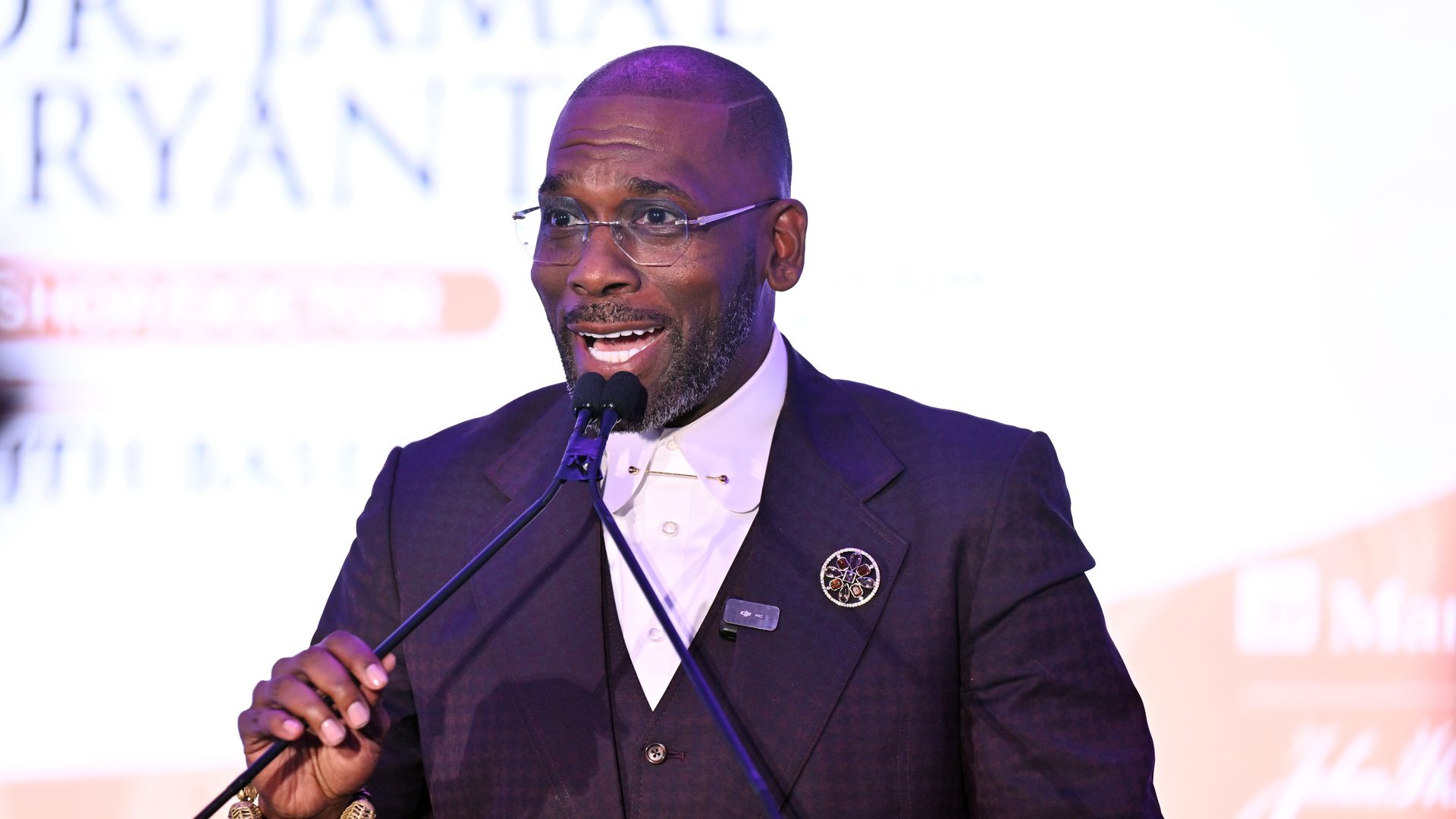
Rev. Jamal Bryant says Black churches must reclaim their historic mantle of leadership — and guide the nation through what he calls a moral and civic crossroads.
Why it matters: Bryant, who called Rev. Jesse Jackson his "superhero" and "blueprint," is stepping into a prophetic tradition shaped by Jackson and other civil rights giants — many of whom are now gone.
White House economic adviser Kevin Hassett said the authors of a New York Fed study that found that Americans pay for tariffs should be disciplined, in an interview with CNBC Wednesday morning.
Why it matters: The findings of the paper run counter to what President Trump has claimed about his tariffs, and the attention the research has received has created a political problem for the White House.
UN Secretary-General António Guterres is calling for new talks on moving away from fossil fuels that would bring energy producers to the table.
Why it matters: It's fresh evidence officials hope to adapt the UN climate process to move far beyond pledges and find new avenues to spur on-the-ground steps.
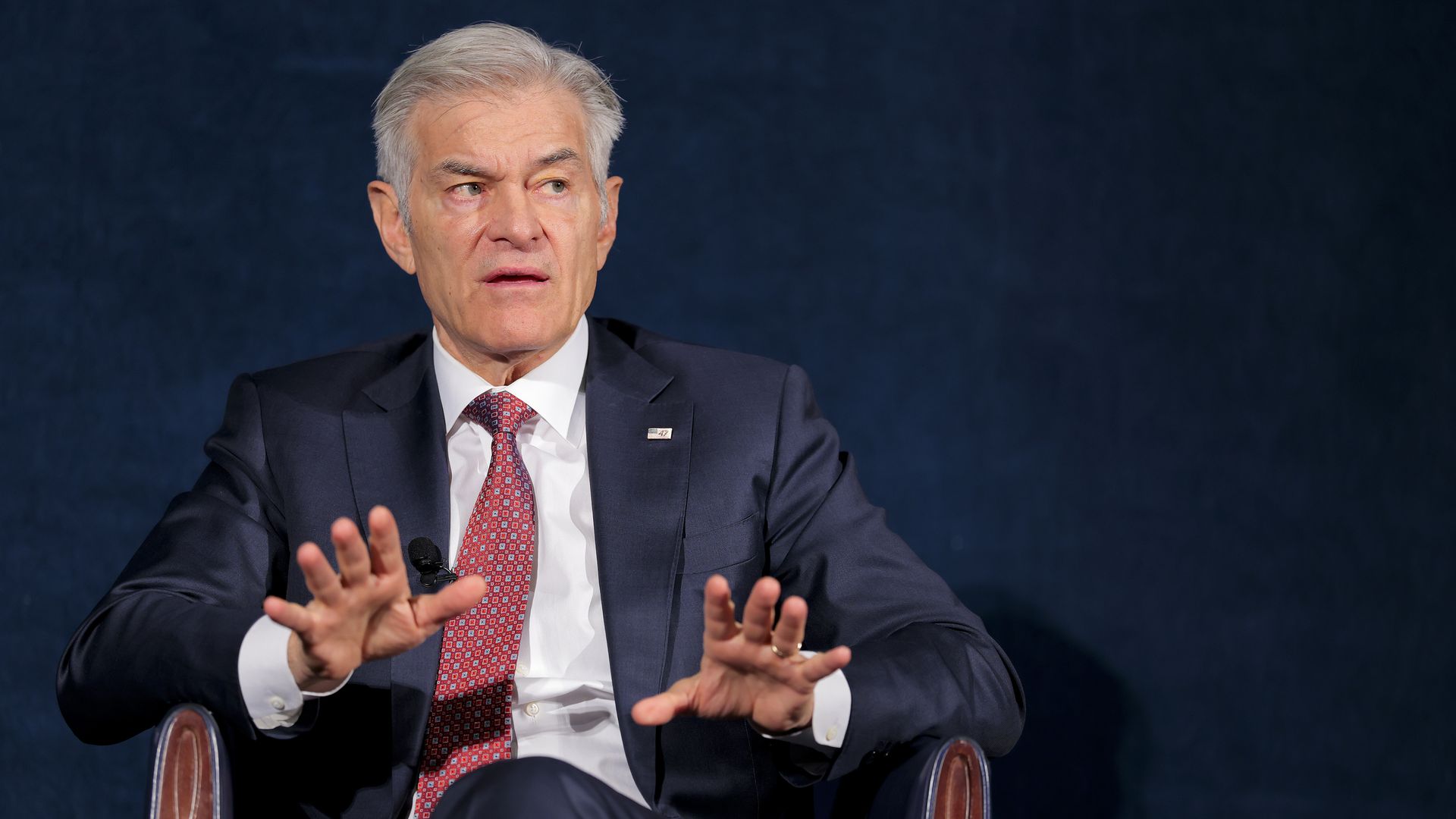
CFTC chairman Mike Selig came out swinging in the fight against state regulations of prediction markets, declaring they aren't gambling, and that his agency has "exclusive jurisdiction" to regulate the space.
The big question: Is the CFTC prepared or equipped to take on the full scope of prediction markets in the age of retail trading?
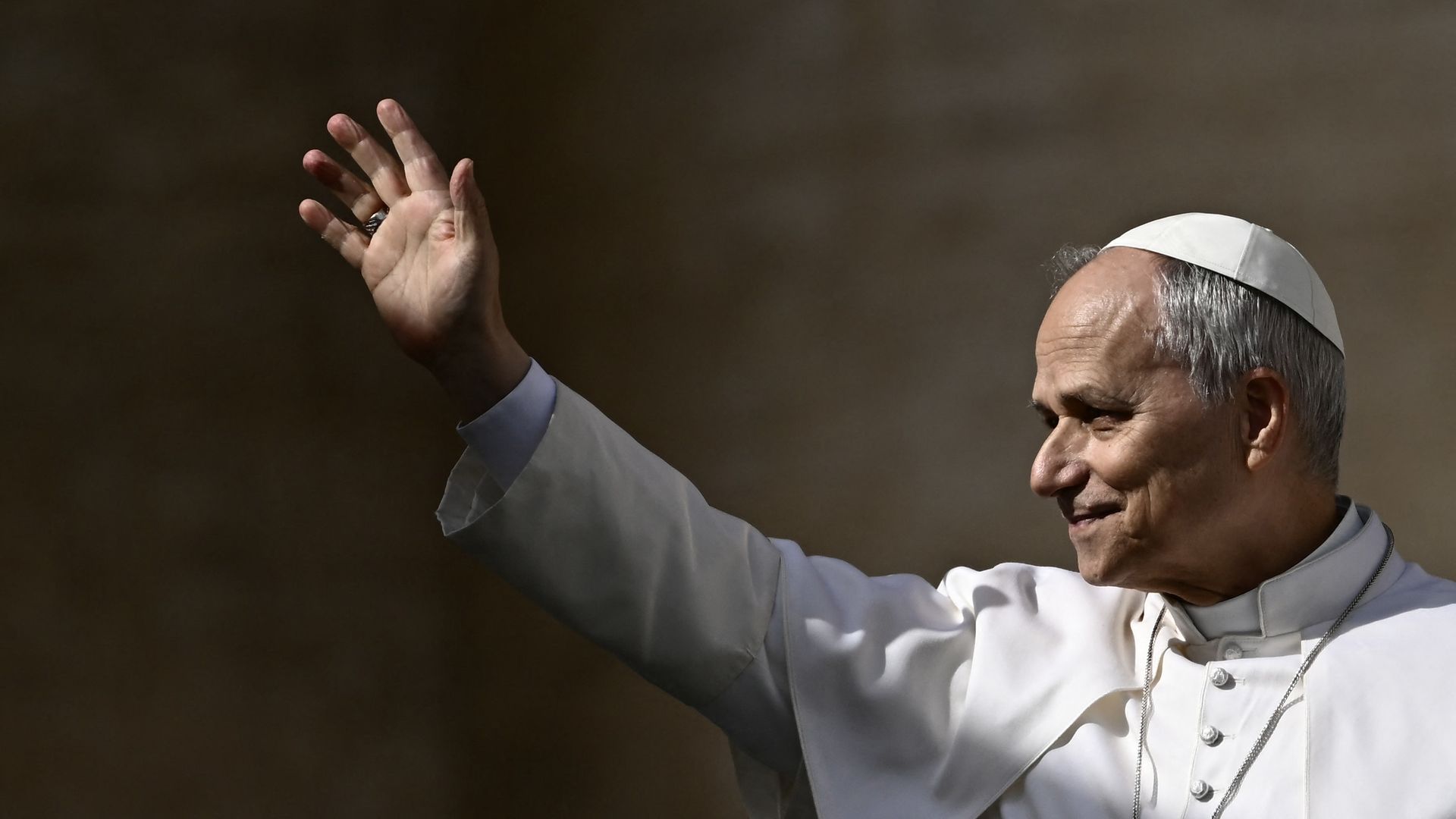
Why it matters: The Catholic Church, which has emerged as an increasingly vocal bulwark of resistance to Washington, is echoing skepticism shared by other European countries about Trump's new international body.
Environmental and health groups filed suit Tuesday against EPA over the "endangerment finding" repeal and withdrawal of any CO2 standards for vehicles.
Why it matters: The litigation — which analysts expect to reach the Supreme Court — will help decide how much future presidents can crack down on emissions.
Senior Trump administration health officials sought to smooth over simmering tensions with the drug industry at an industry forum on Tuesday — but with limited success.
Why it matters: Drug companies have been frustrated navigating President Trump's pricing initiatives and a turbulent Food and Drug Administration that's drawn criticism for inconsistent standards and anti-vaccine rhetoric.
Even in the deepest of woods or bogs, ICEYE US CEO Eric Jensen stays caffeinated.
"I love to hike, hunt, explore the wilderness, camp. I would prefer always to do it with my single serve manual espresso maker," he told Axios in a recent interview.
"What's something I believe that no one else does? You can make a barista-quality shot of espresso on your own — off grid — without any steam or anything like that."
Why he matters: ICEYE is part of the remote-sensing boom, as it designs, builds and operates a fleet of satellites that collects information about the Earth.
CenCore Group will build up to eight modular, relocatable SCIFs at Naval Information Warfare Center Atlantic sites under a contract with the U.S. Navy.
Why it matters: The deal gets the service "mission ready literally five to seven years faster than they would have if they had done a traditional stick build and gone through the" military construction process, CEO Adam Fife told Axios.
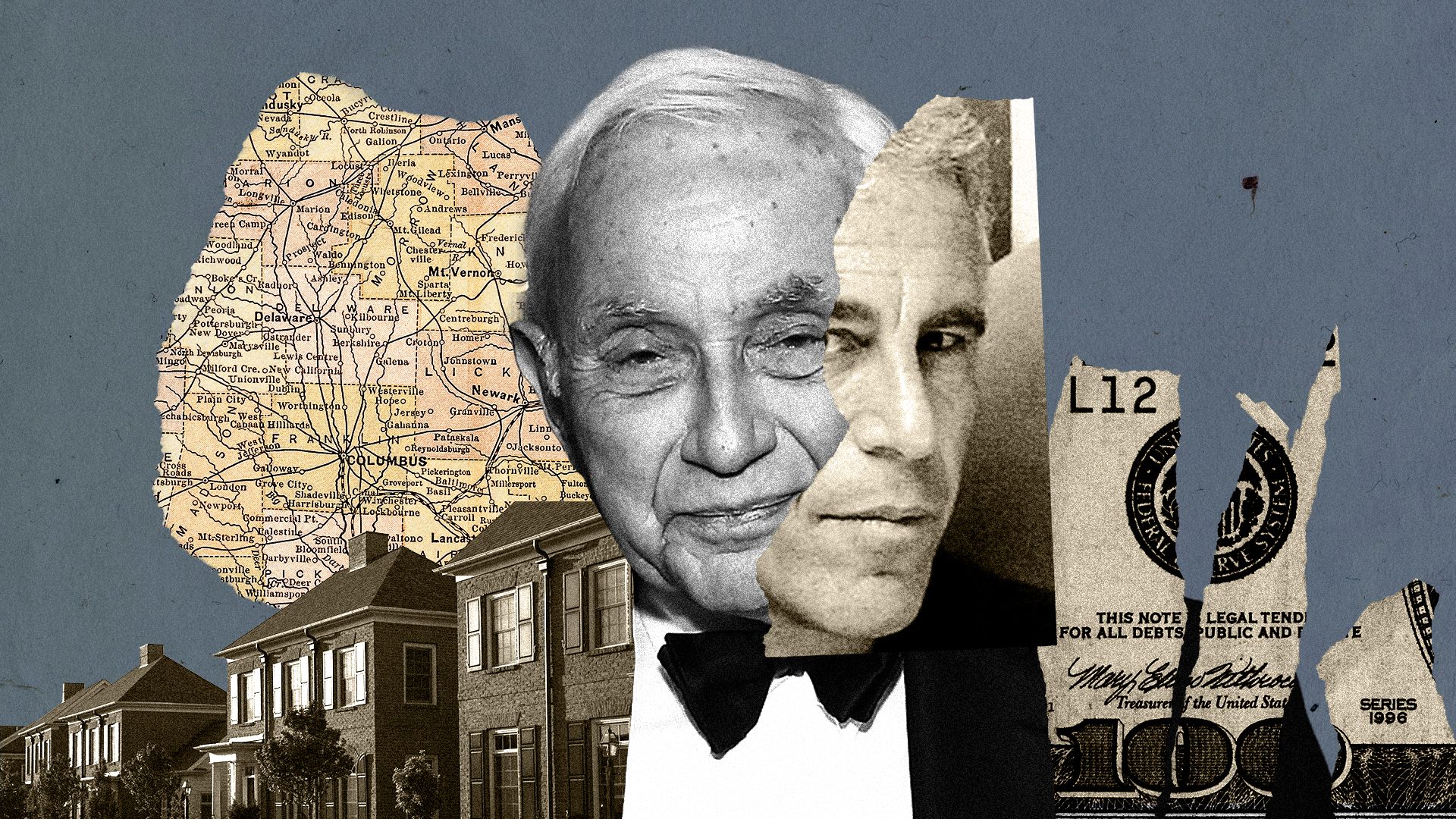
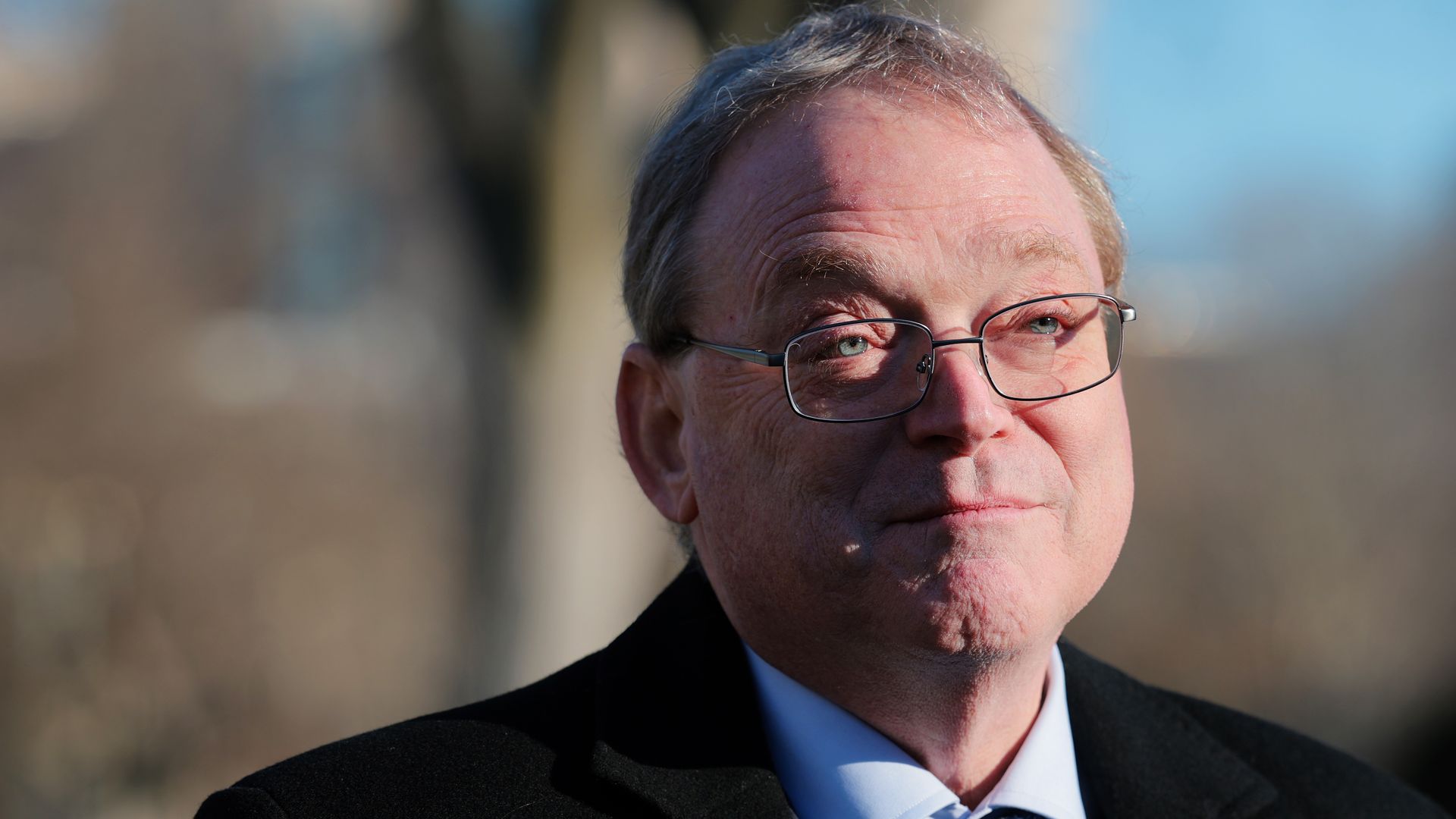
Embattled billionaire Les Wexner is scheduled to testify Wednesday about his association with Jeffrey Epstein as public pressure mounts on the L Brands founder and his many Columbus connections.
Why it matters: Wexner permanently shaped Central Ohio. He's Ohio's richest person and an international business titan whose influence extends well beyond our state.
The American Center for Manufacturing and Innovation will break ground Thursday on a 1,100-acre defense-tech development and manufacturing hub in Indiana.
Why it matters: The venture is backed by a $75 million Defense Department munitions campus investment. It also neighbors Naval Surface Warfare Center-Crane Division, one of the largest naval installations in the world.
The Gauntlet kicks off at Fort Benning, Georgia, this week.
The trials run through early March, putting small, inexpensive drones and their makers through the wringer as the U.S. attempts to learn the lessons of war in Ukraine.
The big picture: The tests, announced earlier this month, are part of the Defense Department's Drone Dominance push, which seeks to arm American troops with hundreds of thousands of expendable drones in a few short years.
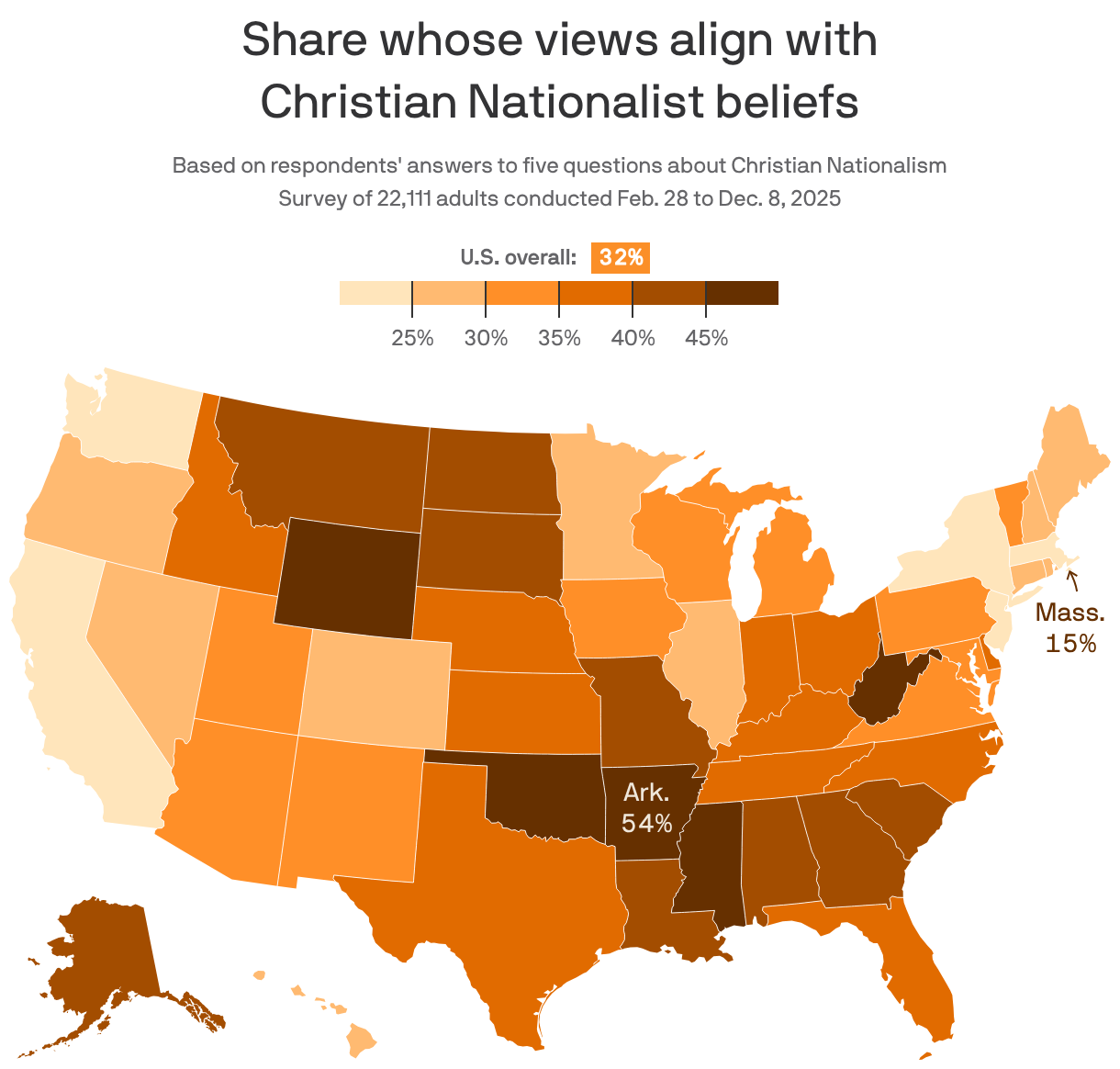
Data: PRRI; Note: Map shows the share who were classified as "adherents" or "sympathizers" based on their responses to five questions; Map: Erin Davis/Axios Visuals
Christian nationalism is now deeply entrenched inside today's Republican Party, according to a sweeping 50-state survey.
Why it matters: The once-fringe ideology holds that the U.S. was founded as a Christian nation and should be governed according to strict Christian values, even as the country becomes less religious and more racially diverse.
Most Americans say race doesn't drive their daily decisions, even as the country feels more divided than ever, a new national survey finds.
Why it matters: Politics and social media amplify racial division. But in daily life — at work, in friendships and in families — Americans report far more interracial contact, and far less race-based decision-making, than the national mood suggests.
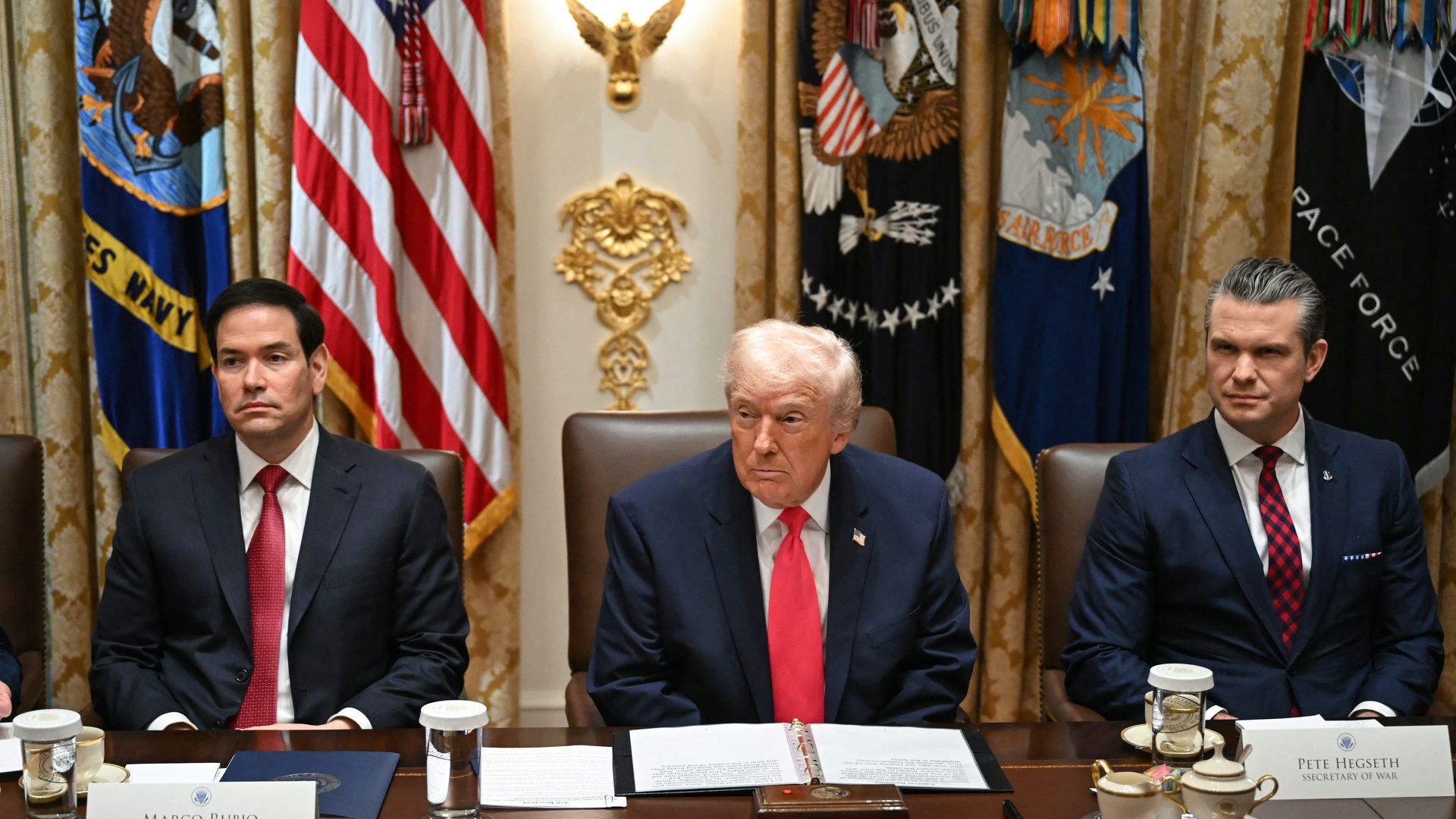
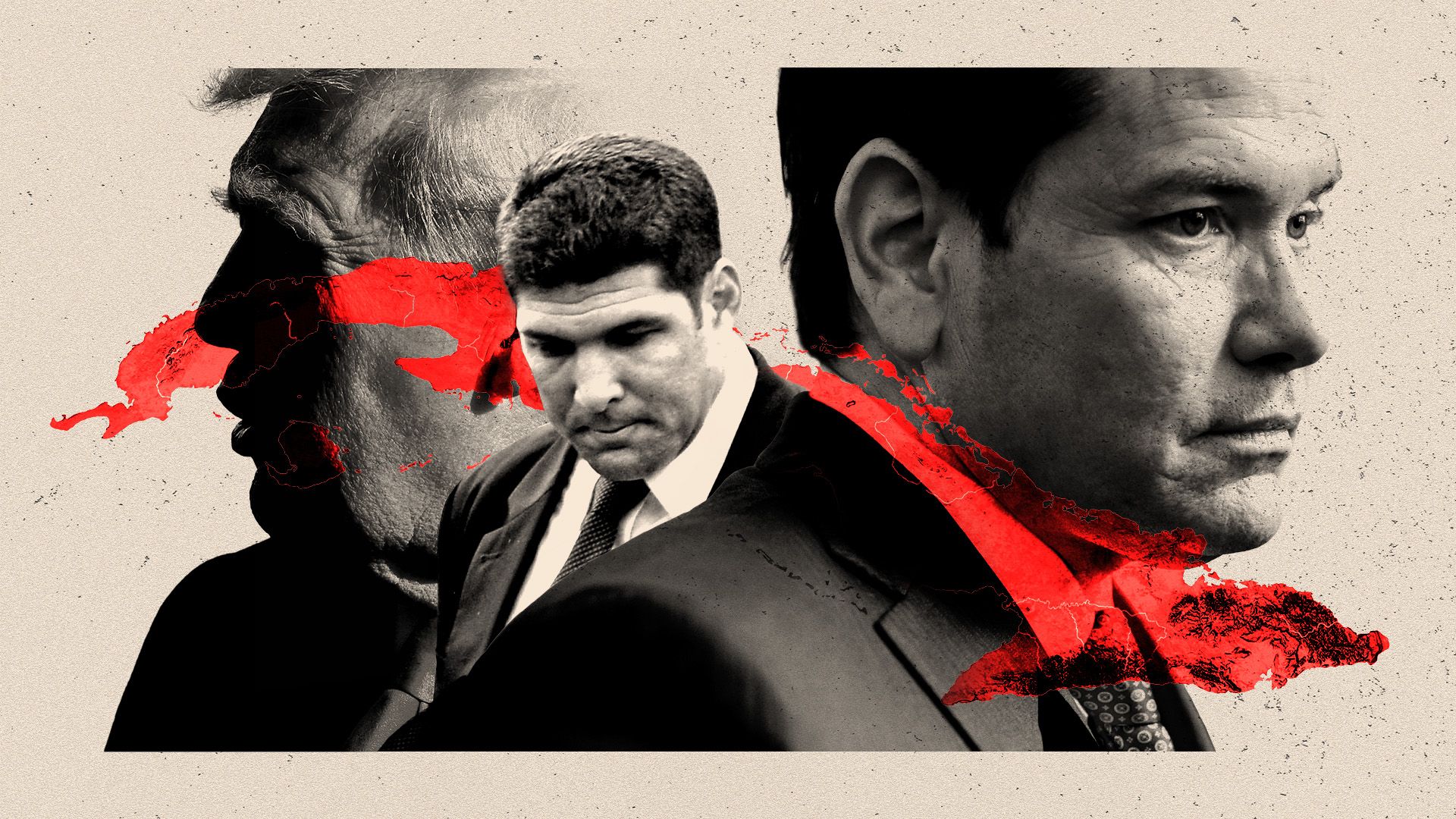
Secretary of State Marco Rubio has been holding secret talks with the grandson and caretaker of Cuba's aging de facto dictator, Raul Castro, as the U.S. puts unprecedented pressure on Havana's regime, three sources tell Axios.
Why it matters: The talks between Rubio and Raul Guillermo Rodriguez Castro are bypassing official Cuban government channels. They show that the Trump administration sees the 94-year-old revolutionary as the communist island's true decision-maker.
Stephen Colbert criticized CBS and parent company Paramount onTuesday night over the posting on YouTube only of his interview with Texas Democrat James Talarico, who's running for a U.S. Senate seat.
The big picture: "The Late Show With Stephen Colbert" interview segment didn't air on CBS because the comedian said the network barred him from broadcasting it due to concerns about a recent Trump administration directive to give equal time to candidates in an election.