Trump officials try to make peace with pharma

Add Axios as your preferred source to
see more of our stories on Google.
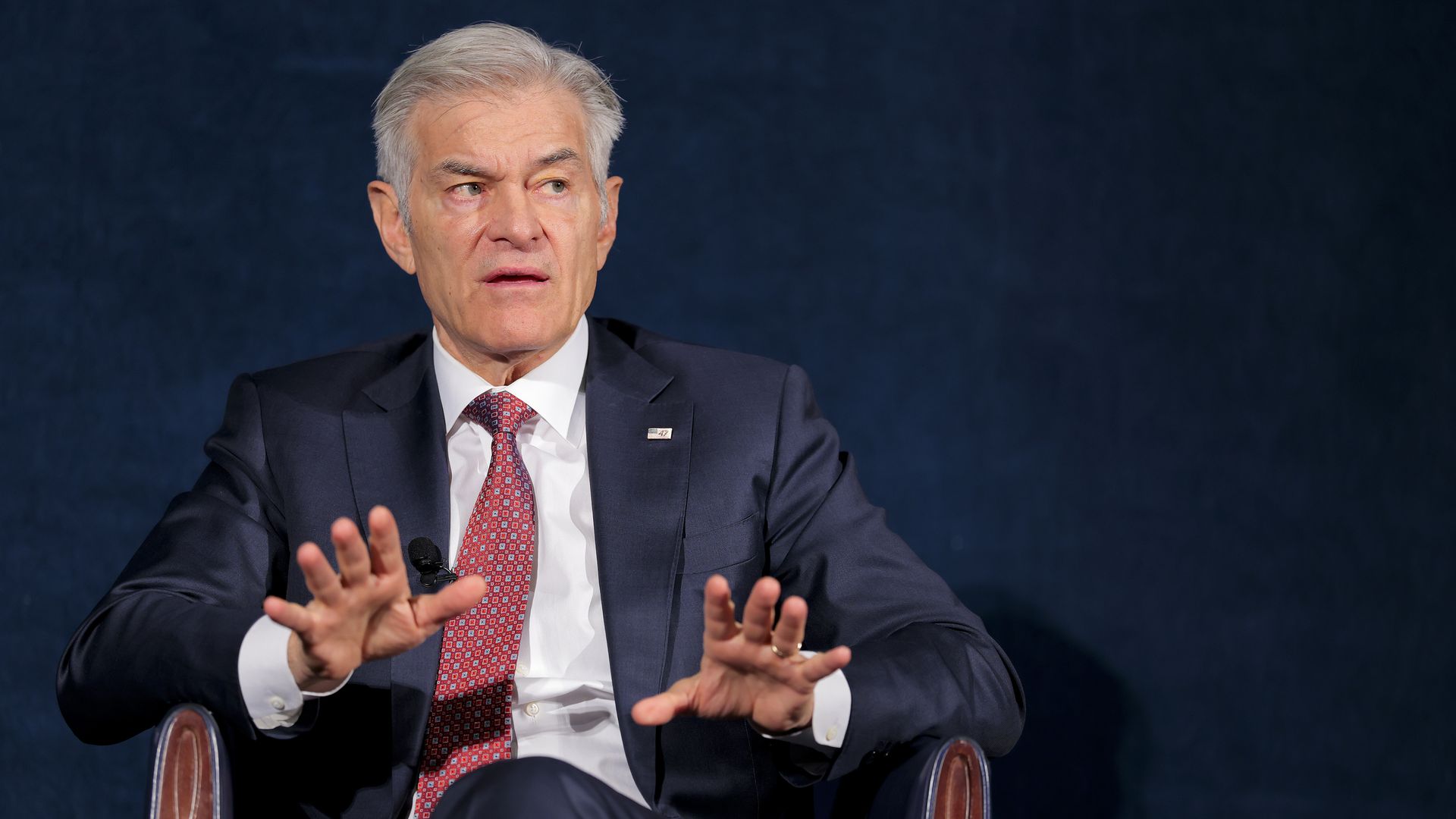
CMS administrator Mehmet Oz at a behavioral health event on Feb. 2. Photo: Heather Diehl/Getty Images
Senior Trump administration health officials sought to smooth over simmering tensions with the drug industry at an industry forum on Tuesday — but with limited success.
Why it matters: Drug companies have been frustrated navigating President Trump's pricing initiatives and a turbulent Food and Drug Administration that's drawn criticism for inconsistent standards and anti-vaccine rhetoric.
Driving the news: Centers for Medicare and Medicaid Services administrator Mehmet Oz and FDA commissioner Marty Makary both appeared at the PhRMA Forum, a slickly produced annual event at a Washington concert venue where the industry touts its role in finding new cures.
- Oz sought to present Trump's "most-favored-nation" effort — which would tie U.S. drug prices to what's paid in other developed countries — as accommodating to manufacturers.
- "I don't want to hurt innovation," he said. He noted that much of the initiative applies to Medicaid, where "prices are lower anyway, so it's less hurtful; the sector did OK, we believe."
- He said the administration is seeking to get Congress to write most-favored-nation agreements into law because once contracts expire, "if it's not done right, a future administration will take more drastic, draconian steps in ways that would hurt this industry."
On Wednesday morning, Moderna said the FDA would review a new mRNA seasonal flu vaccine it developed that the agency refused to evaluate last week, in a move that sent shock waves through the industry.
Reality check: Tuesday's more conciliatory tone didn't entirely win over the big industry trade group PhRMA.
- The group's CEO, Steve Ubl, told reporters afterward that it unequivocally opposes Congress codifying most-favored-nation pricing, seeing it as "price controls" that will harm innovation.
- He also offered some more measured concern about turmoil at the FDA, noting the importance of a "stable, predictable" agency.
- "Nothing chills investment like uncertainty," he added.
What they're saying: Makary sought to soften some of the edges on the agency's actions on vaccines, including the high-profile refusal to review Moderna's flu shot.
- Makary defended the move by top regulator Vinay Prasad, but presented it as "part of a conversation" with the company, which he said would continue.
- "I want to see more kids vaccinated," Makary said. He defended the administration's narrowing of the recommended childhood vaccine schedule as a step to reinforcing the importance of certain "core" vaccines.
Yes, but: The FDA's move on the Moderna vaccine has still drawn concern from experts who say it will have a chilling effect on future research and development and stoke fears the FDA will move the goalposts as new products are being reviewed.
Between the lines: The industry itself has been divided on the most-favored-nation pricing front, with large companies like AstraZeneca, Pfizer and Eli Lilly agreeing to voluntary deals with the administration, while PhRMA remains adamantly opposed to the idea.
- Asked about this split-screen, Ubl said that "there's a big difference between voluntary agreements with individual companies" and "codifying on a broad-basis price controls in legislation."
The big picture: Ubl is drawing the line at writing most-favored-nation pricing into law.
- The voluntary deals have drawn questions from outside experts about how much they will actually lower prices for patients.
The bottom line: Congress doesn't appear likely to take action this year, with many Republicans in Congress concerned with the policy and the way it could interfere with the free market.
- The turmoil at the FDA may be harder to remedy in the short term, though the administration already is taking pains not to rock the boat further on vaccines heading into the midterm elections.
Editor's note: The story has been updated to reflect FDA's decision to evaluate the Moderna seasonal flu vaccine.
