Colbert's YouTube post exposes flaw in TV rules

Add Axios as your preferred source to
see more of our stories on Google.
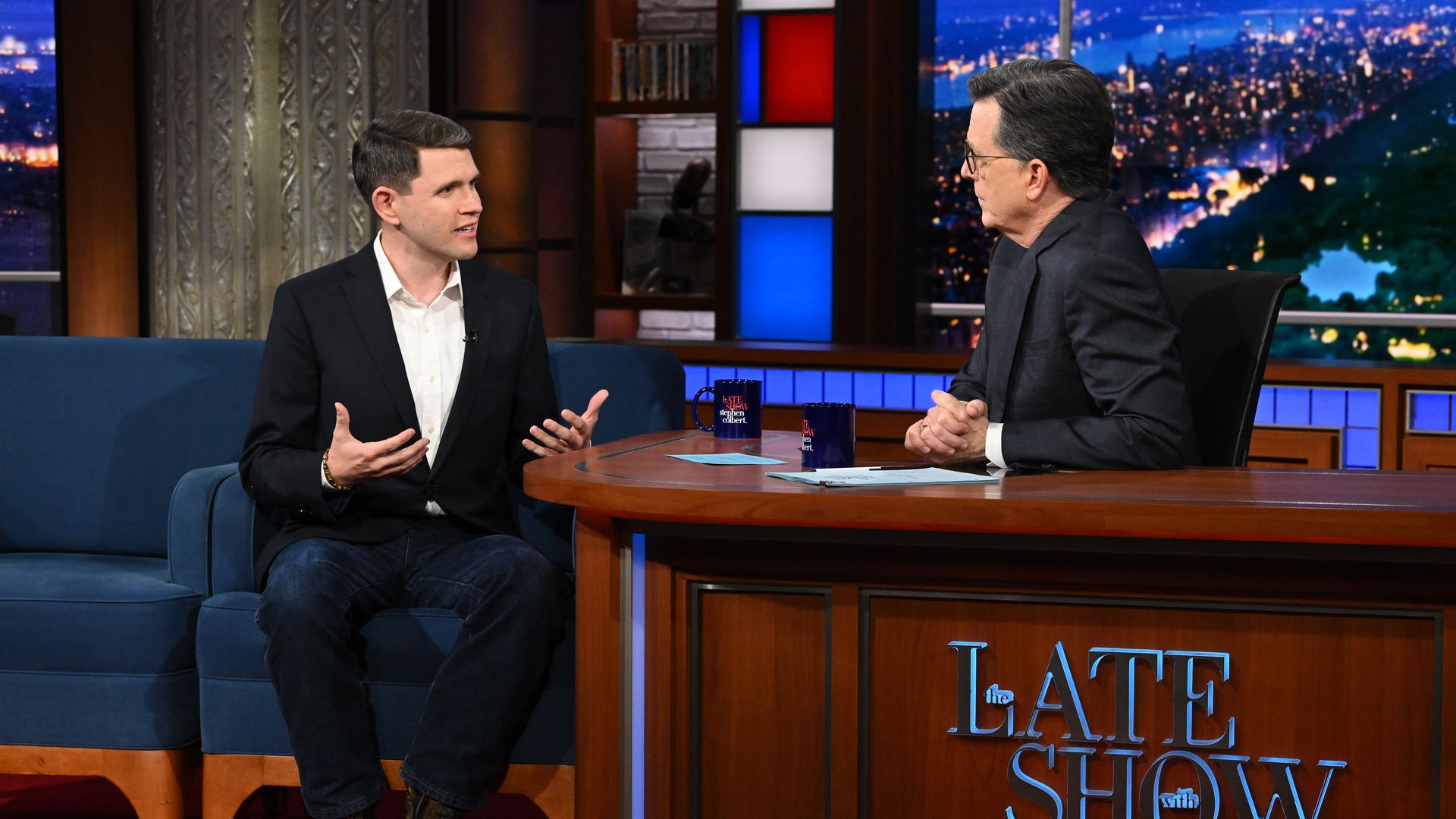
Rep. James Talarico and Stephen Colbert on "The Late Show" on Feb. 16. Photo: Scott Kowalchyk/CBS/Getty Images
Stephen Colbert alleged that President Trump's talk show directive kept his interview with a Texas Democratic Senate candidate off CBS airwaves, but it didn't stop him from reaching millions online.
Why it matters: Colbert bypassed the late-night TV restrictions by posting his interview with Texas Rep. James Talarico on YouTube — exposing how FCC rules built for broadcast don't apply to today's digital platforms.
- Critics are now debating the future of Trump's updated "equal time" order — which requires broadcast networks and radio stations to provide equal time to candidates in an election — and whether it could become obsolete as shows increasingly distribute content digitally.
State of play: Trump's directive to the Federal Communications Commission, updated in late January to include late-night and daytime talk shows, specifies that cable channels and other digital distribution platforms are not impacted — leaving hosts free to post interviews online.
- Colbert said that CBS barred him from interviewing Talarico, and instructed him not to mention the decision. He instead posted the interview to Youtube, which had over six million views as of Wednesday afternoon.
- "It's just a testament to the idea that the FCC rules that relate to broadcasting really only apply to broadcasting, both because of the way they're written and by written by Congress to begin with, but also because of constitutional limitations," Robert Corn-Revere, chief counsel at the Foundation for Individual Rights and Expression tells Axios.
- CBS said in a statement Tuesday that it received "legal guidance" that airing the interview with Talarico could obligate it to offer Rep. Jasmine Crockett equal time.
Worth noting: While most TV hosts already straddle network shows and digital platforms, Corn-Revere says Colbert's example will "certainly provide an incentive for those who are in the business of interviewing candidates to make sure that they don't even have to worry about the broadcast rules."
- He adds that the FCC trying to extend such limits to social media platforms would be "totally out of the question," though he notes that efforts by the agency to push the boundaries of its authority are not "unheard of."
Zoom in: Trump has made late-night hosts frequent targets during his second presidency, praising CBS for pulling Colbert's show.
- Though CBS said the show was dropped for "financial" reasons, media watchers and Democrats expressed skepticism after reports that Trump brokered a side deal with Paramount's future owners involving millions of dollars' worth of public service announcements supporting conservative causes.
- Corn-Revere says that the FCC has looked for various ways to apply pressure on networks and talk shows hosts to prevent "late night comics making fun of" the president.
Go deeper: What to know about the "equal time" rule at heart of Colbert, CBS fight
