Russia-Ukraine war has forever changed combat, says U.K. armed forces minister

Add Axios as your preferred source to
see more of our stories on Google.
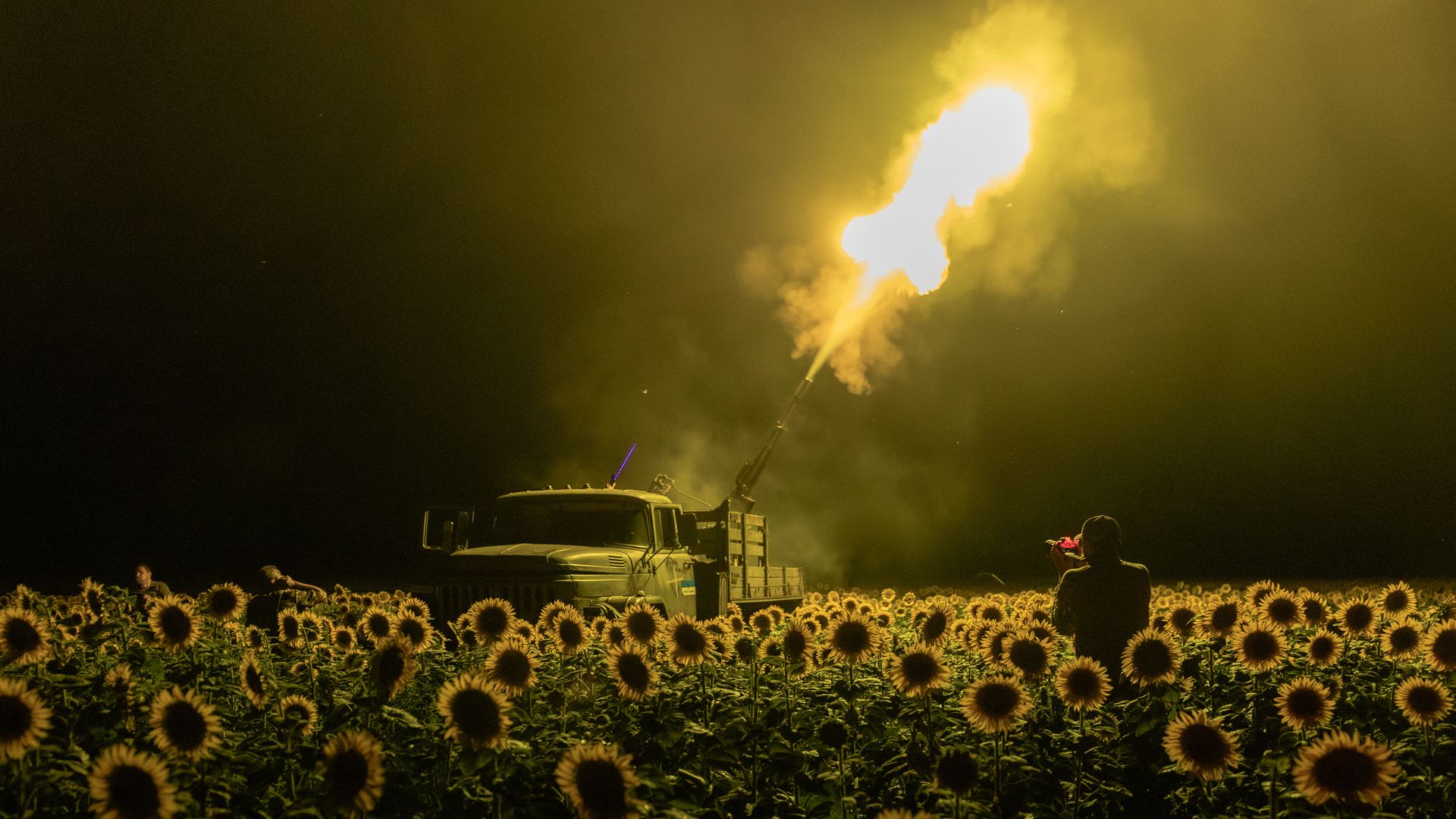
A Ukrainian mobile air defense unit fires at a Russian drone in July. Photo: Roman Pilipey/AFP via Getty Images
The war in Ukraine has changed the way every modern military will fight its next conflict.
Why it matters: Everyone is watching Eastern Europe for an edge.
- Alistair Carns, the U.K. minister for the armed forces, described it to Axios as an "Air Force moment," akin to the period in World War I when belligerents saw the effectiveness of air power and scrambled to catch up.
The big picture: In 2022, then-Ukraine Defense Minister Oleksii Reznikov noted that the war had become a "testing ground" for new weapons.
- Dan Driscoll, the U.S. Army secretary, more recently described Ukraine as the "Silicon Valley of warfare."
- Ukrainian President Volodymyr Zelensky, who will visit the White House this week in hopes of securing Tomahawk missiles, has noted that Ukraine has been forced through brutal necessity to learn how to wage a 21st century war.
Zoom in: Here are some of the insights Carns is finding on the front lines, plucked from our recent discussion at the British embassy:
On electronic warfare. "The EW in Ukraine is the most effective [anti-access, area-denial] screen in the world. And it's layers upon layers upon layers, from tactical to strategic. ... We need to develop our own EW capability. I do think we've lost muscle memory from the Cold War, when we were really good at it."
- U.S. military leaders, including former Joint Chiefs Chair Gen. Charles "CQ" Brown Jr., have made similar assessments.
On drones and robo-wingmen. "An F-35 is the Spitfire of the future, but you ain't going to see it in a dogfight. You'll see it 200 miles behind the front line, coordinating swarms and swarms of drones that have [multiple purposes and multiple targets.]"
- The Royal Air Force earlier this year launched StormShroud, a combination of Tekever AR3 unmanned aerial vehicles and Leonardo U.K. BriteStorm electronic warfare payloads meant to draw fire and blind radars.
- Meantime, the U.S. Air Force is working through its Collaborative Combat Aircraft competition with General Atomics and Anduril Industries. The Navy is contracted with the same two, plus Boeing and Northrop Grumman.
On tanks. "There will always be a requirement for armor. But if the armor isn't integrated with a very sophisticated uncrewed system, or system of systems, then it's not going to last long."
- Losses of older, Western-supplied tanks in Ukraine have raised questions about their future effectiveness. (The U.S. sent Abrams; the U.K., Challengers.)
What we're watching: How different the war will look in 2026 compared with 2022.
More from Axios:
Ukraine's "Spiderweb" drone assault is a wake-up call for all
