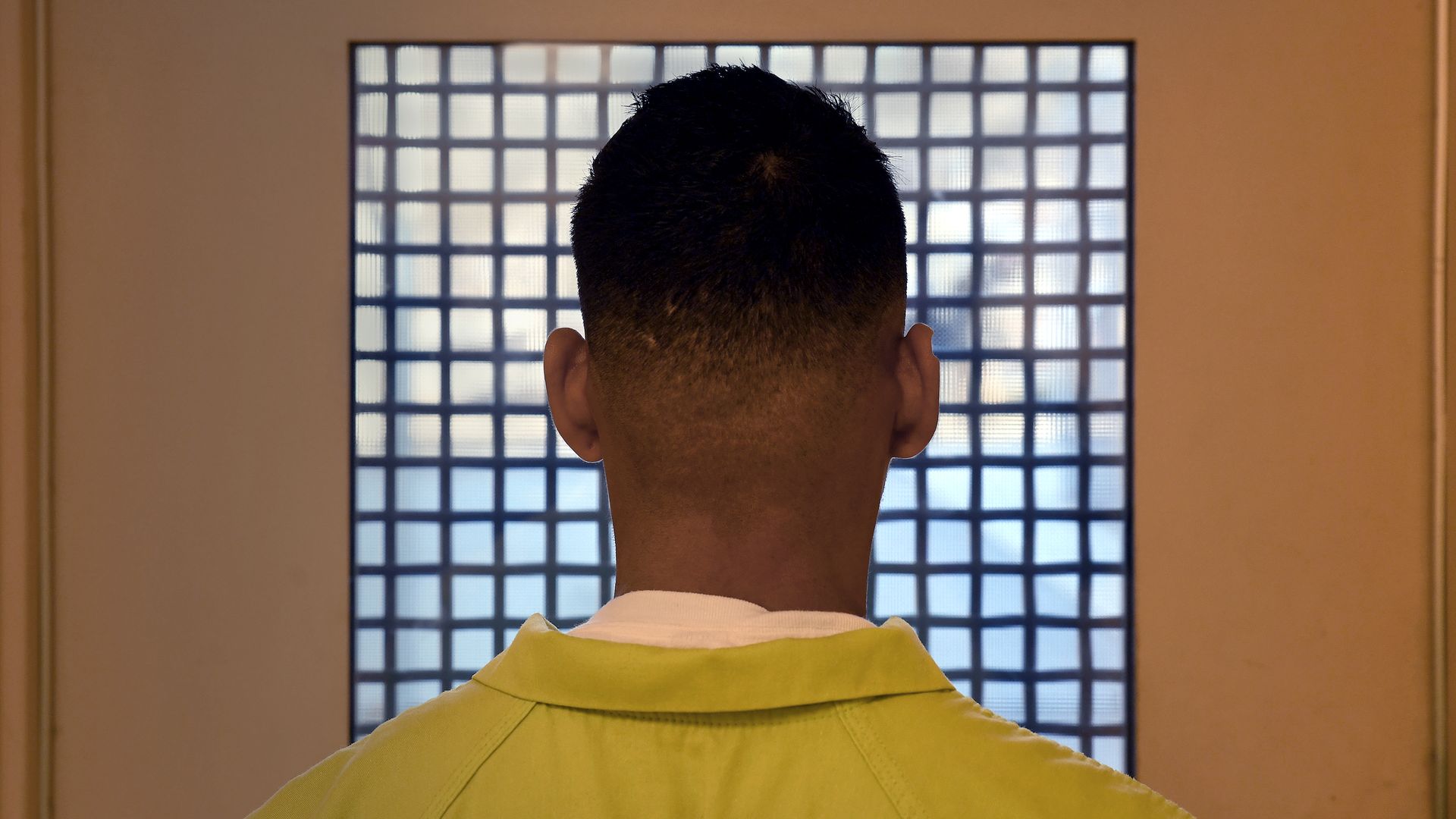
As of the end of March, Immigration and Customs Enforcement (ICE) had identified 600 undocumented immigrants in its custody who are vulnerable to the coronavirus and released more than 160 of them, the agency confirmed to Axios.
Between the lines: Federal judges had forced ICE to release at-risk immigrants. Now, decisions "to release individuals in ICE custody occur every day,” ICE told Axios in a statement.
Twitter CEO Jack Dorsey tweeted Tuesday that he is reallocating $1 billion of his equity from Square, a payment processor for smaller merchants, to fund relief for the coronavirus pandemic.
Details: Dorsey's "Start Small" fund donated $100,000 on April 2 to a GoFundMe working with Feeding America and World Central Kitchen to address food insecurity caused by COVID-19.
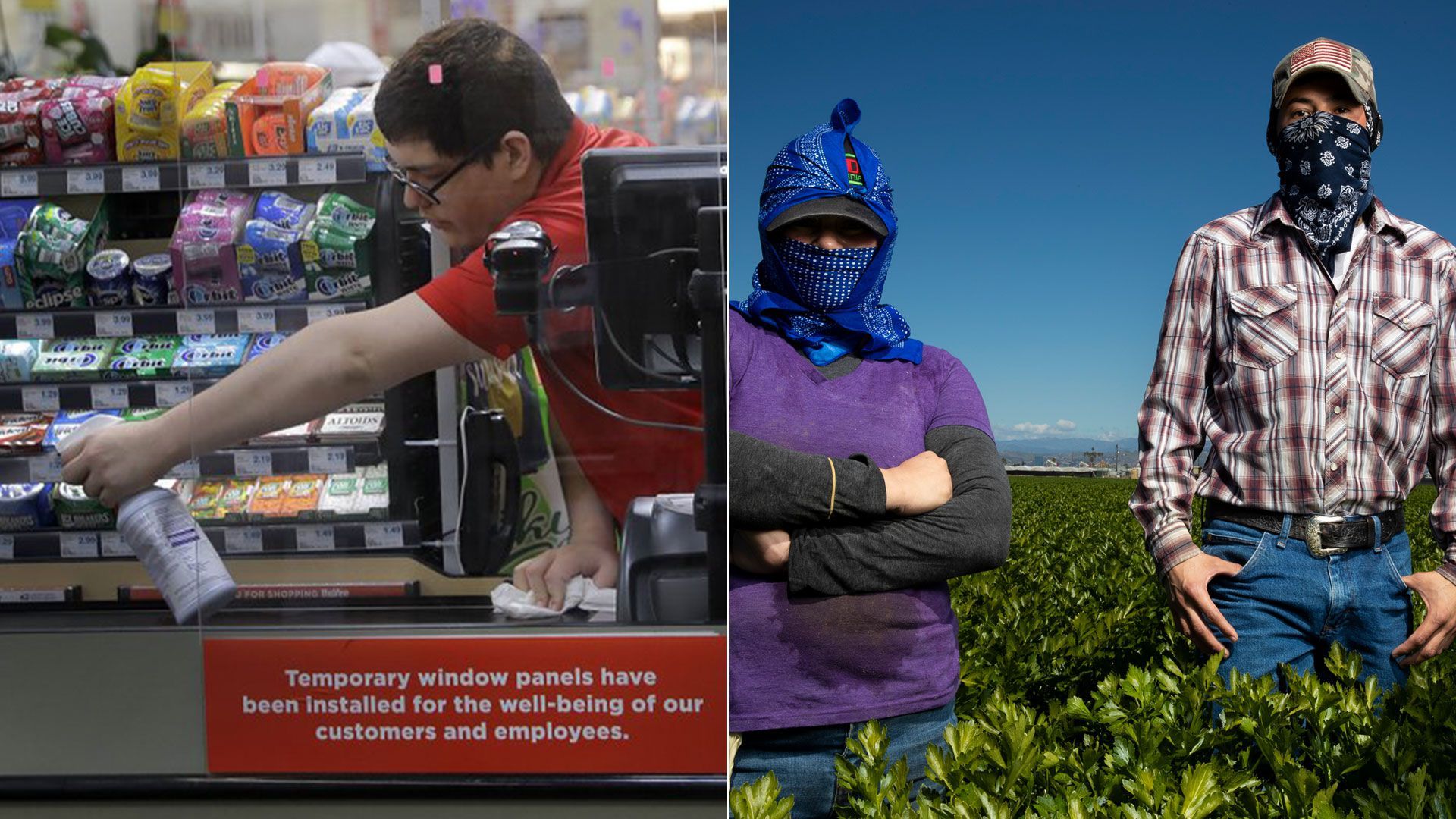
The people who grow, process and keep food stocked on shelves are doing heroic work in these conditions, often for bottom-barrel pay.
Why it matters: Millions of Americans don't have the luxury of working from home, and it's essential that food workers keep working so we can keep eating.
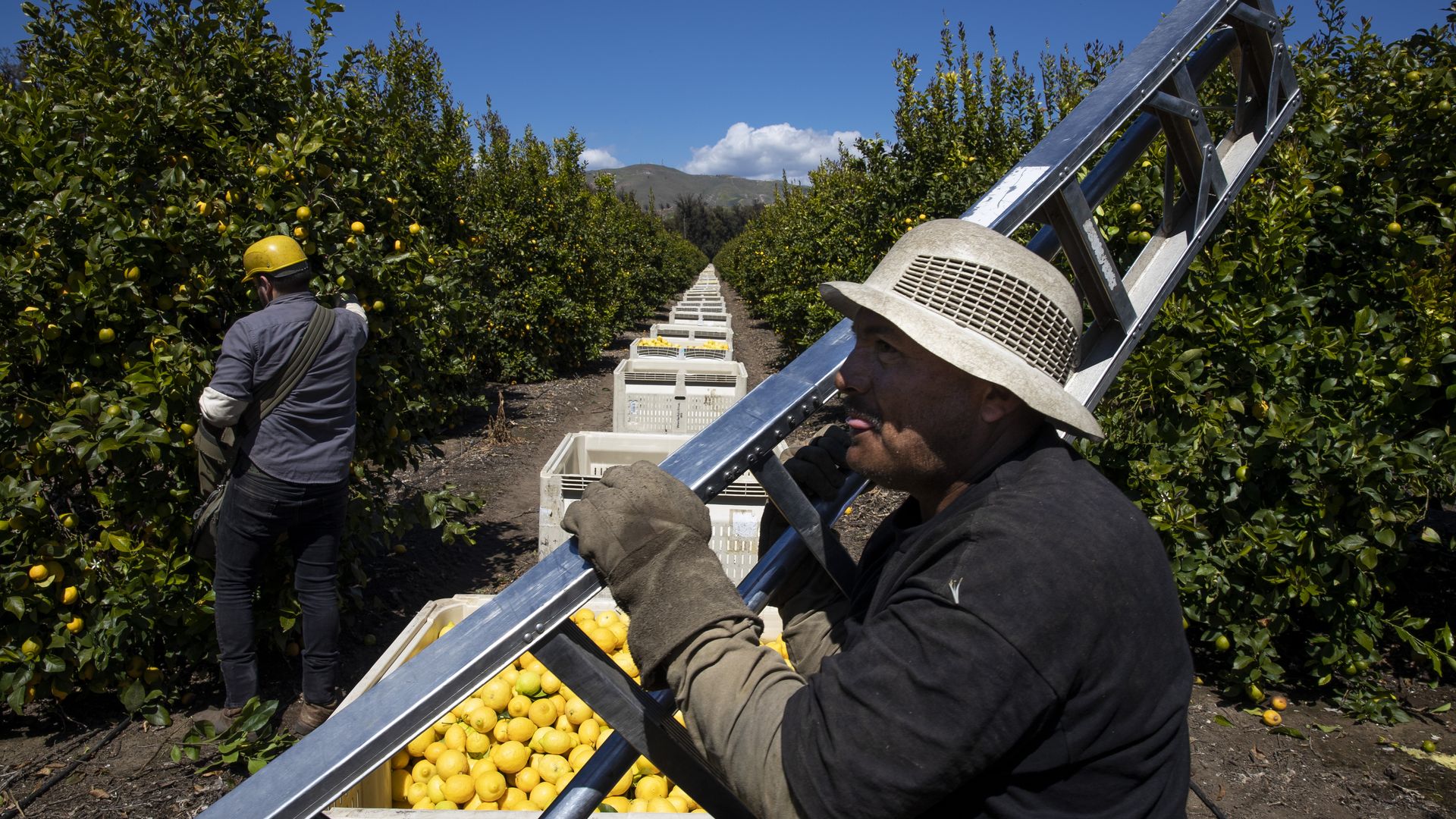
The U.S. food system depends on up to 2.7 million farmworkers, most of whom are undocumented, to pick fresh fruits and vegetables, Michael Haedicke, an agricultural sociologist at Drake University, writes.
Driving the news: Their living and working conditions do not lend themselves to social distancing.
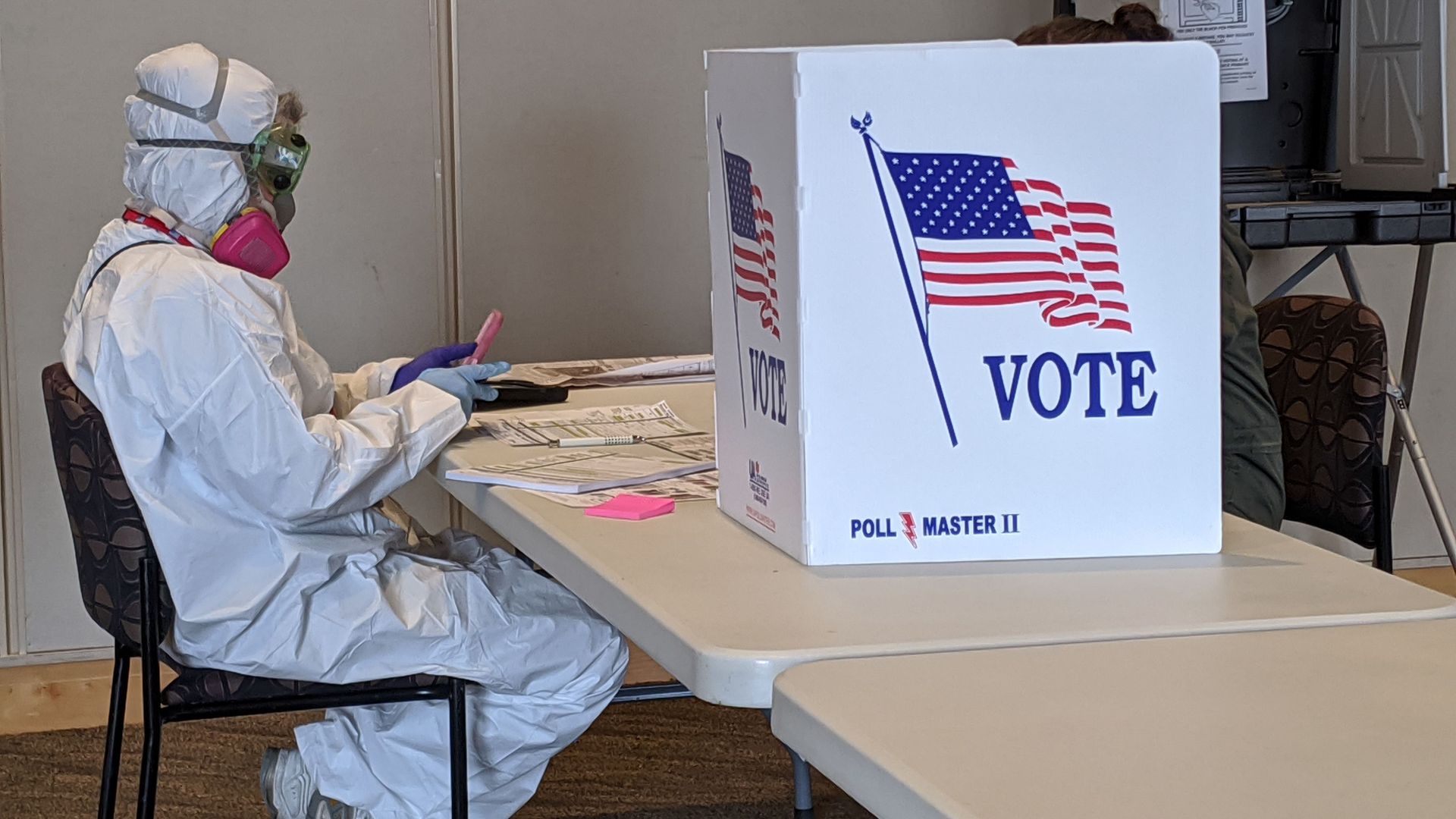
Thousands of Wisconsin residents gathered to cast ballots in person on Tuesday in the state's primary election during the height of the coronavirus crisis in the U.S.
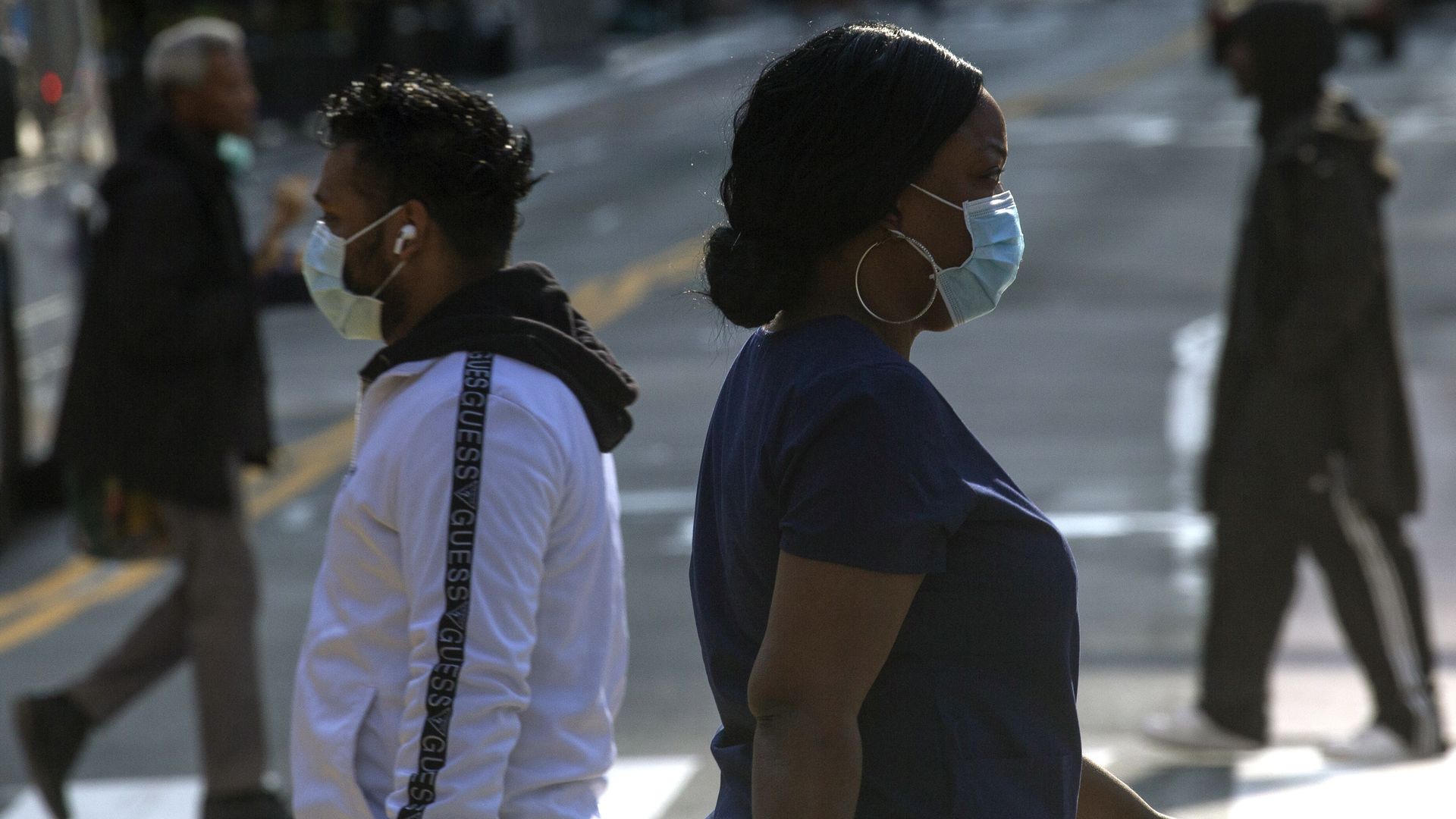
Why it matters: More than 300 million Americans in nearly all states are being asked to stay home as the U.S. faces surging death tolls from COVID-19. Without a vaccine, stay-at-home orders and lockdowns to enforce social distancing are among the few ways to slow the spread of the virus.
Coronavirus patients in more polluted parts of the United States are more likely to die from the illness than those in cleaner areas, according to a new Harvard University analysis of 3,080 counties across the country.
Why it matters: The study indicates a correlation between long-term exposure to air pollution and heightened death rates associated with the virus. Its findings could impact how medical resources necessary to respond to the virus are being distributed throughout the U.S., per the New York Times.
China has lifted its lockdown of Wuhan, the city in Hubei province where the coronavirus outbreak was first reported in December, according to the New York Times.
Why it matters: As cases surged in January, China took the draconian step of sealing off the city of 11 million and shutting down its economy — a response that was viewed at the time as only possible in an authoritarian system, but which has since been adopted by governments around the world.
Senate Majority Leader Mitch McConnell announced Tuesday he will be working with Minority Leader Chuck Schumer and Treasury Secretary Steven Mnuchin to increase funding for the Payroll Protection Program, the federal backstop to help small businesses maintain operations and keep workers employed amid the coronavirus outbreak.
Why it matters: The $350 billion lending program — which opened for business last Friday — has had a highly problematic rollout, with banks and small businesses alike expressing frustration about system crashes and a lack of direction from the federal government. As the program proceeds, it's become clear that the initial funding wouldn't be nearly enough.
Quorum Health, the chain of small community hospitals spun out by Community Health Systems, has filed for Chapter 11 bankruptcy and secured $300 million to keep operations going throughout the process.
The bottom line: Quorum said none of its 23 hospitals will close, and employees will be paid and available to provide care during the coronavirus pandemic. But the company, which has been crushed by debt and was nearly bought out by one of its private equity owners, will remain in a precarious financial position even once it emerges from bankruptcy.
As the New York death toll surged to its highest one-day total on Tuesday, Gov. Andrew Cuomo projected that the state is reaching a plateau in coronavirus hospitalizations due to strict social distancing measures.
The big picture: Daily ICU admissions, intubations and the three-day hospitalization rate have all decreased, Cuomo said Tuesday. The daily death toll jumped to 731, totaling 5,489 — the "largest single-day increase" — but Cuomo cautioned that number of deaths is a "lagging indicator" due to the length that most critical patients are in the hospital for.
YouTube's product chief tells Axios that the Google-owned video site has removed thousands of COVID-19 videos — including some from the Brazilian president's channel — for violating policies related to the spread of medical misinformation.
Why it matters: Though criticized in the past for allowing misinformation to flourish, Facebook, Google and Twitter have all been taking a tougher stand when it comes to the coronavirus.
International Energy Agency executive director Fatih Birol has a tough job these days — responding to an unprecedented crisis now without losing sight of an existential one that must be tackled over decades.
Driving the news: He spoke to Axios yesterday about his work to help stabilize oil markets and ensure coronavirus doesn't sap governments' and companies' work on global warming.
Intel announced Tuesday a $50 million coronavirus relief program designed to support more research, technology for patient care, and help for lower income students' distance-learning needs.
Why it matters: Intel's donation comes on top of an earlier $10 million pledge and amid other large donations from Apple, Microsoft, Cisco, Google, Facebook and others.
Patch, the hyperlocal (and profitable) digital news platform, had its strongest month ever in March for both revenue and traffic, according to president Warren St. John.
Why it matters: The digital-only local news platform is an anomaly compared other local news publishers which are struggling amid steep advertising losses.
Snapchat launched its first donation tool today to help users donate to coronavirus relief efforts, a spokesperson tells Axios.
Why it matters: It uses augmented reality. Snap users can scan 23 international currency notes across 33 countries using the Snapchat app, triggering an AR visualization of how a potential donation could support the World Health Organization’s response efforts.
Facebook will release today a list of the 400 local newsrooms receiving grants from its Facebook Journalism Project's "Community Network" program to support coronavirus news coverage.
Why it matters: Local newsrooms desperately need the money. Facebook said it received over 200 applications within the first 48 hours of the program being announced.
New data from Parse.ly shows that demand for shopping-related content online is up far more than any other type of web traffic.
Why it matters: The coronavirus pandemic has created a new reality for media publishers: the need to convert an influx of traffic into consumer dollars instead of ad dollars.
It's been 26 days since the sports world effectively shuttered, and fans are eager to start watching games again, but not quite as eager to attend them.
The state of play: According to a new Morning Consult poll, 51% of fans think live sports will return between June and September, while only 8% think the void will bleed into 2021.
Gold futures rose to their highest since late 2012 on Monday, surging above $1,700 an ounce and pushing out the spread over spot prices, even as U.S. stock indexes rose by more than 7%.
The big picture: Investors continue to buy gold even on days that equity prices soar, in part because of worries about the coronavirus outbreak but also because of the prospect of untold trillions in spending from global governments and central banks, decreasing the value of the dollar and fiat currencies.
Americans are more worried than ever about losing their jobs, their household income and the equity in their homes, but one thing they are not worried about is the stock market.
The state of play: The Fed's latest survey of consumer expectations shows "a significant deterioration in households’ expectations regarding their labor market and financial situation, a decline seen across all age, education, and income groups," but respondents also reported an unprecedented spike in expectations for the stock market to rise.
Both the U.S. and global economies are set to be permanently altered by the coronavirus outbreak and the measures that have been taken in response to it, experts say.
The state of play: "Fundamentally there are going to be huge changes in household consumption patterns, business patterns and global supply chains," Kevin Warsh, a former Fed governor and current economics lecturer at Stanford, said during a Reuters teleconference.
Morgues, funeral homes and cemeteries in hot spots across America cannot keep up with the staggering death toll of the coronavirus pandemic.
Why it matters: The U.S. has seen more than 10,000 deaths from the virus, and at least tens of thousands more lives are projected to be lost. The numbers are creating unprecedented bottlenecks in the funeral industry — and social distancing is changing the way the families say goodbye to their loved ones.
Federal payments to Medicare Advantage companies will increase by 1.66% in 2021, and several of the insurance program's policies are being waived or changed due to the coronavirus outbreak, the Centers for Medicare & Medicaid Services said Monday.
The bottom line: Medicare Advantage continues to grow at a lofty rate, and the Trump administration is protecting those health insurers through the pandemic and into next year.
President Trump has repeatedly said that he sees the federal government’s role as “backup” to the states on the response to coronavirus. But Americans want the federal government — not states — to take the lead, according to our latest KFF tracking poll.
Why it matters: States have so far been the ones issuing specific directives about social distancing, and are also trying to source health care supplies.
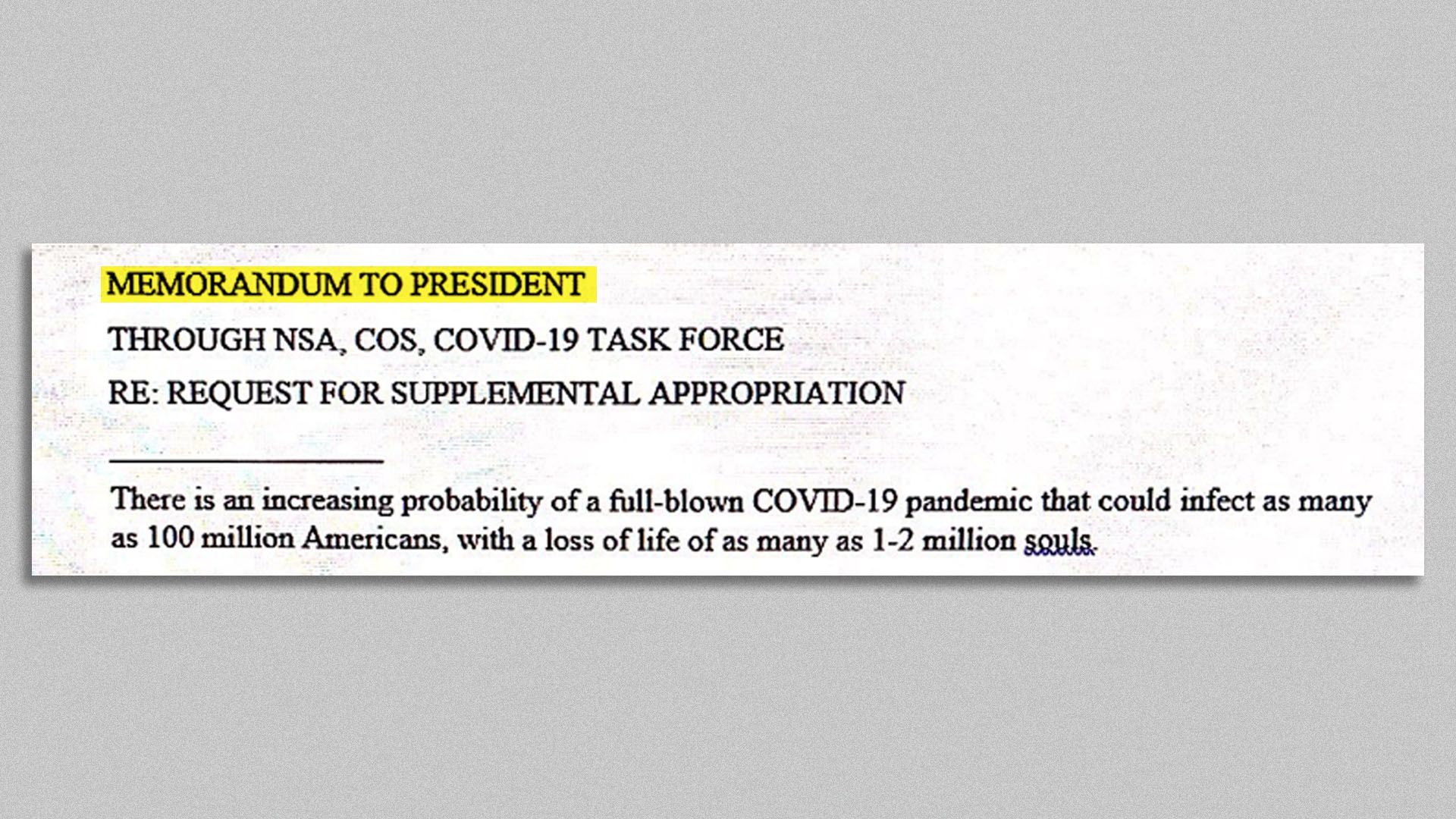
In late January, President Trump's economic adviser Peter Navarro warned his White House colleagues the novel coronavirus could take more than half a million American lives and cost close to $6 trillion, according to memos obtained by Axios.
The state of play: By late February, Navarro was even more alarmed, and he warned his colleagues, in another memo, that up to 2 million Americans could die of the virus.
Coronavirus testing capacity is still lagging far enough behind demand that the U.S. continues to only test the sickest patients — a bad omen for future efforts to return to normal life.
Why it matters: Diagnostic testing is the cornerstone of any containment strategy. To even begin talking about resuming social and economic activity, we would have to get testing right first.
The share of Americans who know someone who's tested positive has more than tripled in just a few weeks, to 14%, according to the latest installment of our Axios-Ipsos Coronavirus Index.
It's still highest in the Northeast, but last week alone it doubled in the South — and it's becoming most pronounced among people who still must leave home to work.
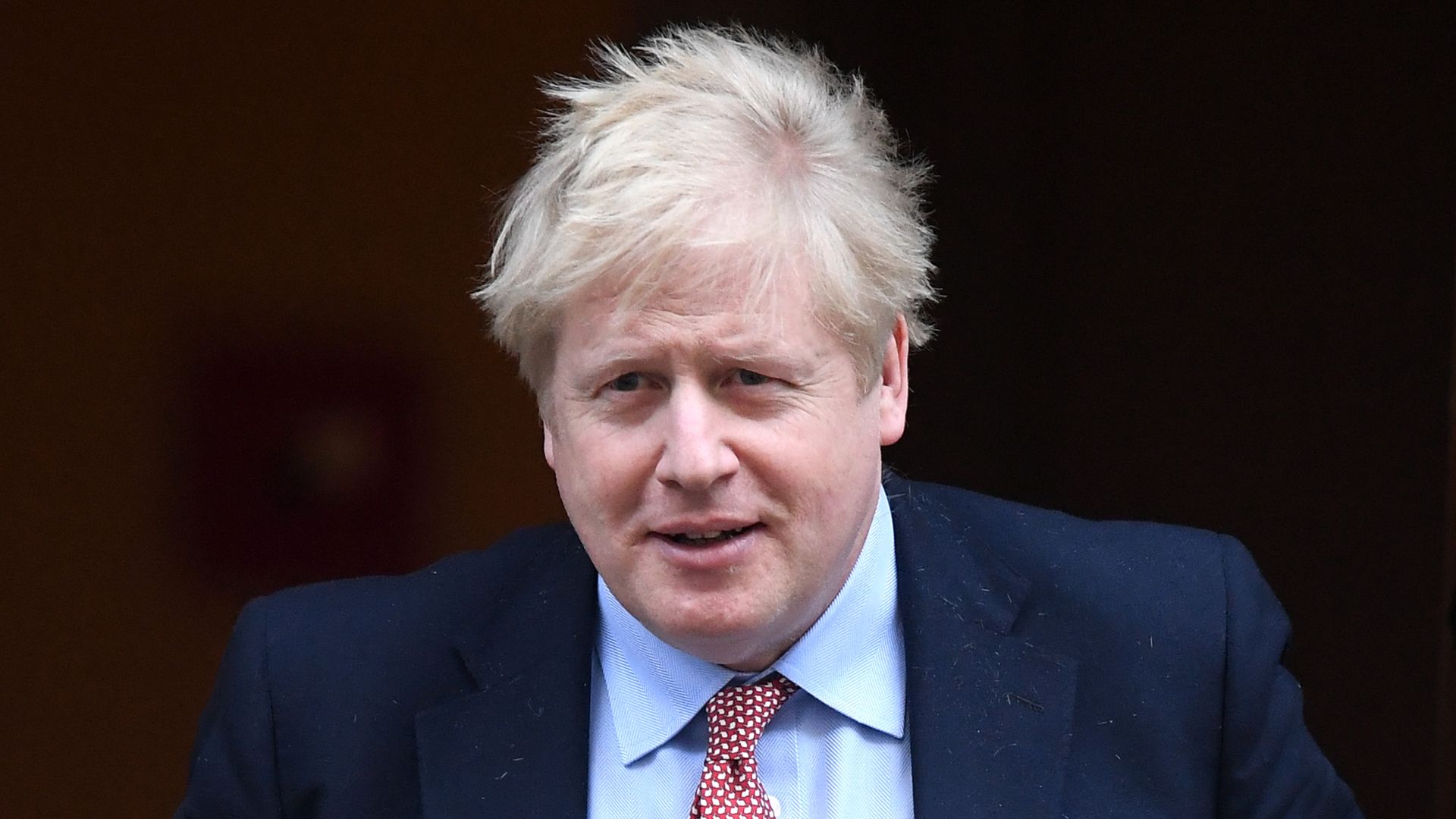
U.K. Prime Minister Boris Johnson is being treated in the intensive care unit of St. Thomas' Hospital in London due to increasingly severe coronavirus symptoms.
What they're saying: Cabinet minister Michael Gove told LBC radio on Tuesday morning Johnson was not on a ventilator. "The prime minister has received some oxygen support and he is kept under, of course, close supervision," he said.
Auto insurers Allstate and American Family Insurance announced Monday they're giving back some $800 million in premiums to customers in recognition that many are not driving much during the novel coronavirus outbreak.
Why it matters: The payments their customers will receive are not vast amounts, but the "nature of the action is exemplary — and rare — given the context of a pandemic," notes the New York Times, which surveyed nine other auto insurance firms to see if they would follow their rivals' lead.
Wisconsin's Supreme Court on Monday blocked an executive order by Gov. Tony Evers (D) that attempted to delay in-person voting for the state's primary election — currently scheduled for Tuesday — until June 9.
Driving the news: Judges ruled 4-2 along ideological lines that Evers does not have the power as governor to unilaterally postpone the election, despite the fact that the state has a stay-at-home order in place due to the coronavirus pandemic.