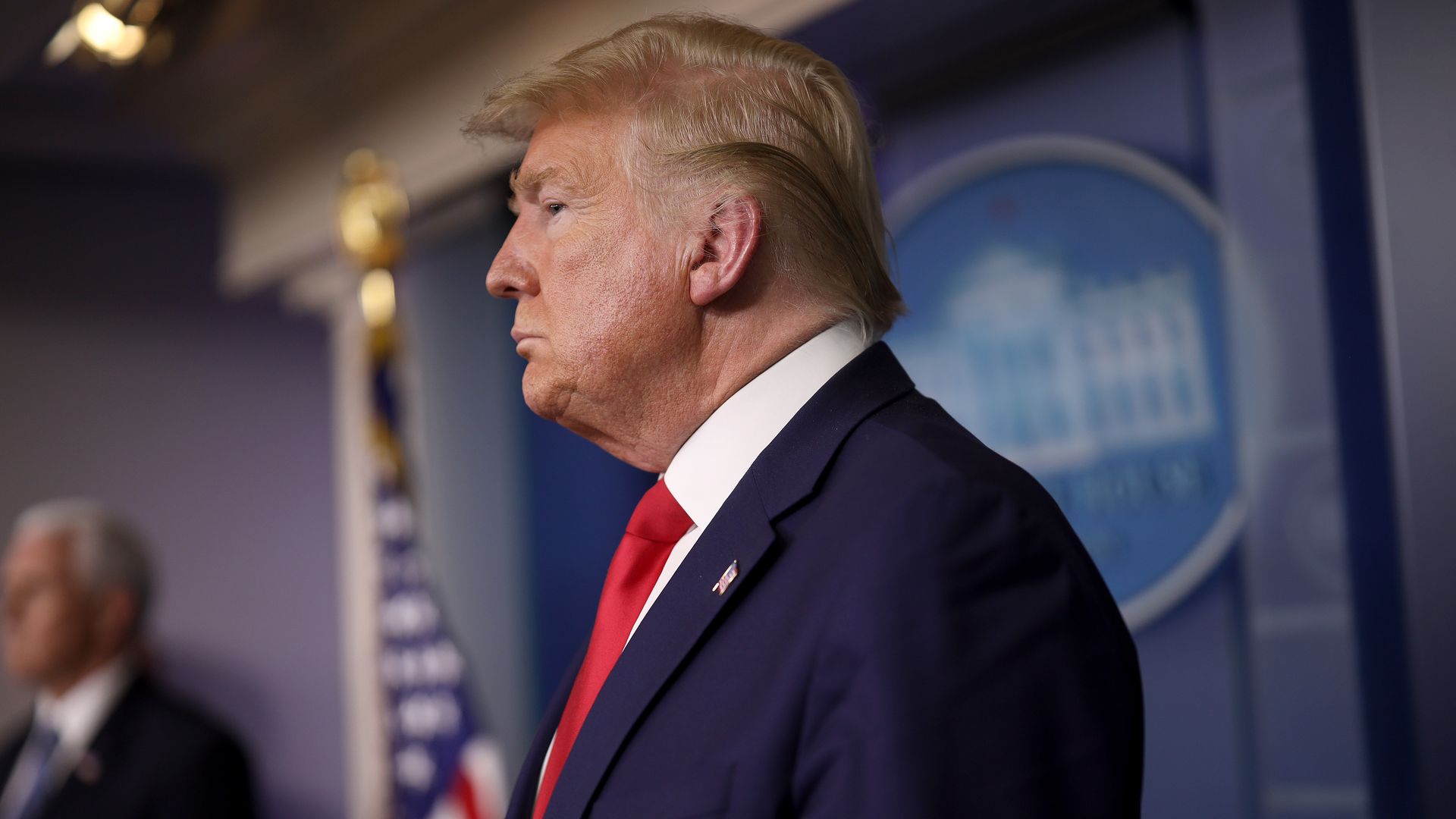
President Trump said at a press conference Monday that an agreement has been reached with 3M to produce 166.5 million masks to be distributed over the "next couple of months."
Why it matters: Trump said last week that he was "not happy" with 3M's exporting of masks overseas, blaming the manufacturing company for exacerbating a shortage in the United States. 3M CEO Mike Roman has maintained that the company is doing everything it can to produce medical gear and support American cases.
Compared to adults, children with the coronavirus are less likely to be hospitalized or show symptoms like a fever, cough or shortness of breath, new U.S. data from the Centers for Disease Control and Prevention show.
Why it matters: Those with less serious illness or who are asymptomatic likely play a large role in transmitting the disease. Social distancing is thus important for all age groups, the CDC stressed.
The total number of new hospitalizations, ICU admissions and daily intubations in New York have decreased each of the past three days — an indication that social distancing may be working, New York Gov. Andrew Cuomo said Monday.
The big picture: The governor's office has been tracking different models that predicted a peak of between 55,000 and 110,000 hospital beds needed for coronavirus patients in New York by the end of April. Data over the past few weeks suggests that hospitalizations may potentially be plateauing earlier than those models projected.
Washington, Oregon and California are all sending ventilators to New York and other states experiencing a more immediate need for the potentially life-saving machines amid the coronavirus outbreak.
Why it matters: New York is facing severe shortages of medical equipment. It remains the epicenter of the pandemic in the U.S. with 122,911 cases reported and 4,161 deaths as of noon Monday, per Johns Hopkins University.
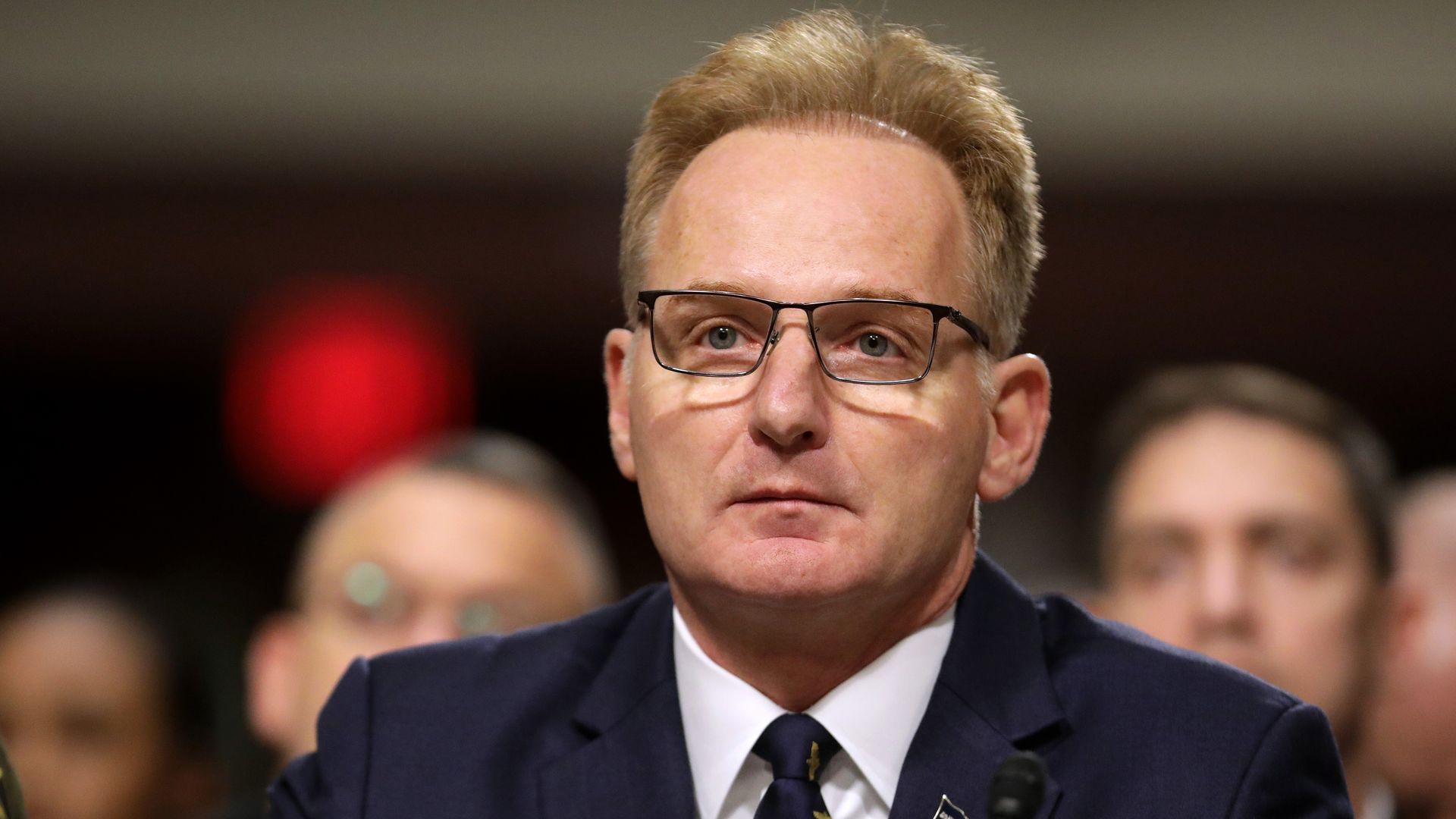
Acting Navy Secretary Thomas Modly told the crew of the USS Theodore Roosevelt Monday that its ousted commander, Capt. Brett Crozier, was "too naive or too stupid" to not realize that his letter pleading for help in battling a coronavirus outbreak onboard would be leaked to the press, according to a copy of his remarks obtained by CNN.
The big picture: Modly also floated the possibility that Crozier, who has since been diagnosed with coronavirus himself, leaked the letter deliberately. He called the act a "betrayal of trust, with me, with his chain of command."
The Masters has been rescheduled for Nov. 9-15, which will include all professionals and amateurs who qualified for the original April date and all existing ticket holders.
The big picture: If not for the coronavirus pandemic, the tournament at Augusta National Golf Club would have teed off this week. Chairman Fred Ridley said Monday the new dates are "incumbent upon favorable counsel and direction from health officials."
Former Federal Reserve Chair Janet Yellen said Monday on CNBC that U.S. unemployment, driven by the coronavirus pandemic, could already be as high as 13% "and moving higher."
Why it matters: Yellen said the country should expect a GDP drop of "at least 30%" in the second quarter, based on indicators she's reviewed — though she said she has seen even higher projections.
America's economy won't reopen anytime soon, despite frantic CEO whispers, but a glimmer of hope may be emerging in the form of serological testing.
Why it matters: Serologic tests aren't to determine whether or not you're infected with coronavirus. They are to determine if you have potential immunity that could allow you to safely return to work.
The new few days are slated to bring new efforts to achieved a coordinated cut in global oil production, but success is hardly a sure thing.
Why it matters: The coronavirus outbreak is fueling an unprecedented collapse in demand and has cratered prices, so new cutbacks could at least temper — though hardly alleviate — the market's tailspin.
Concerns continue to mount over video chat provider Zoom, with New York City's school district, the largest in the country with more than a million students, advising teachers not to use its software. Zoom was also forced to issue yet another apology, this time for routing some calls through China.
Tech challenges are hampering federal and state government efforts to get funds from the $2 trillion coronavirus relief law into the hands of newly unemployed workers and struggling small businesses who need it.
Why it matters: Many businesses and individuals need the money now for essentials, including meeting payroll and paying rent.
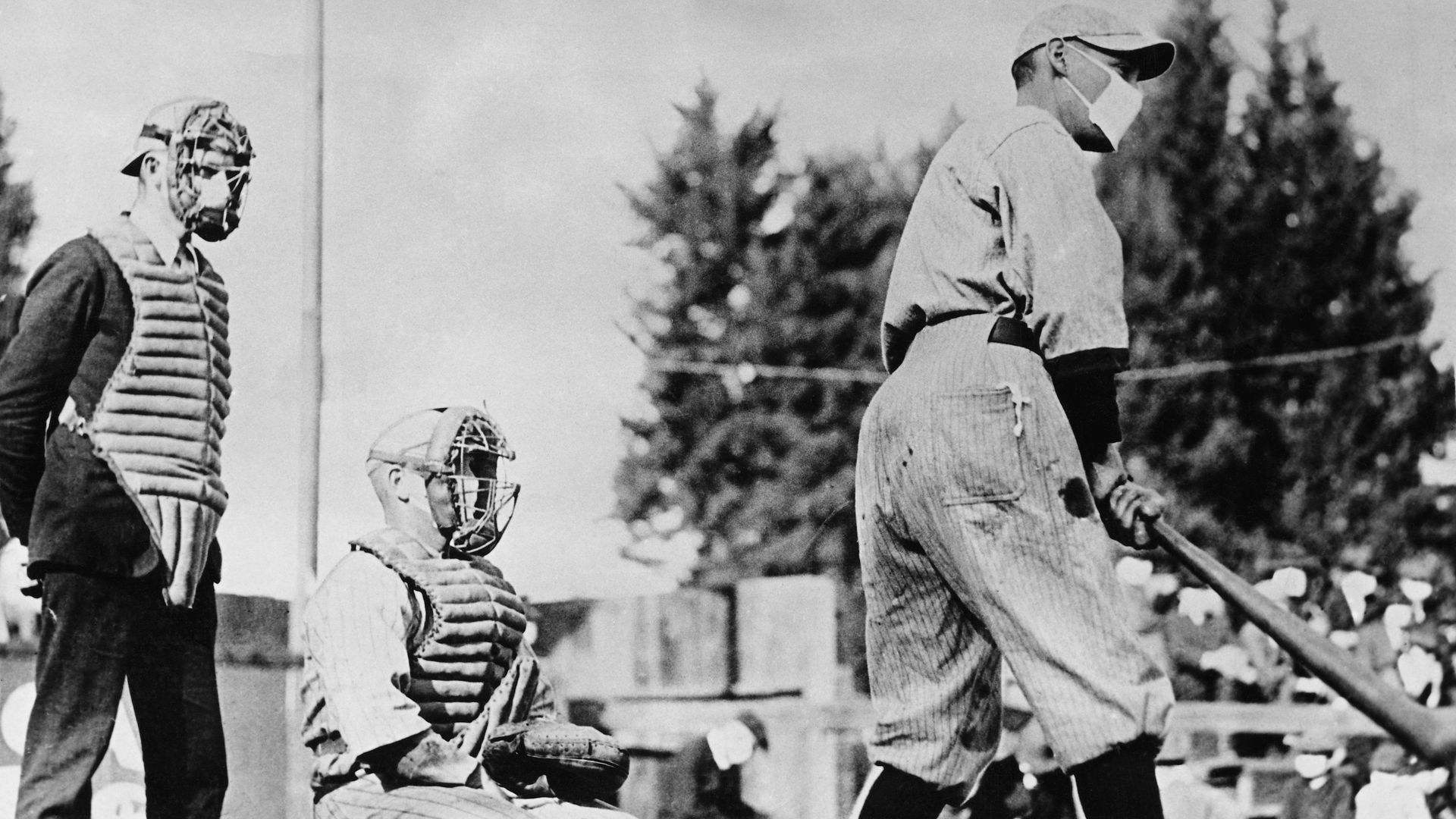
In January 1918, the horrors of World War I were in their final year, and Major League Baseball was preparing for its 16th season. But beneath the surface, another deadly battle was brewing. They called it the "Spanish flu."
By the numbers: Over the next 15 months, the global pandemic infected an estimated 500 million people — about a quarter of the world's population at the time — and killed as many as 100 million.
White House economic adviser Peter Navarro defended the use of anti-malarial drug hydroxychloroquine to treat coronavirus during a CNN interview Monday, highlighting "the possibility" that it has therapeutic efficacy.
Why it matters: Navarro did not deny reporting from Axios' Jonathan Swan that he got into a heated exchange in the White House Situation Room over the weekend with infectious disease expert Dr. Anthony Fauci about the drug's prospects against the illness.
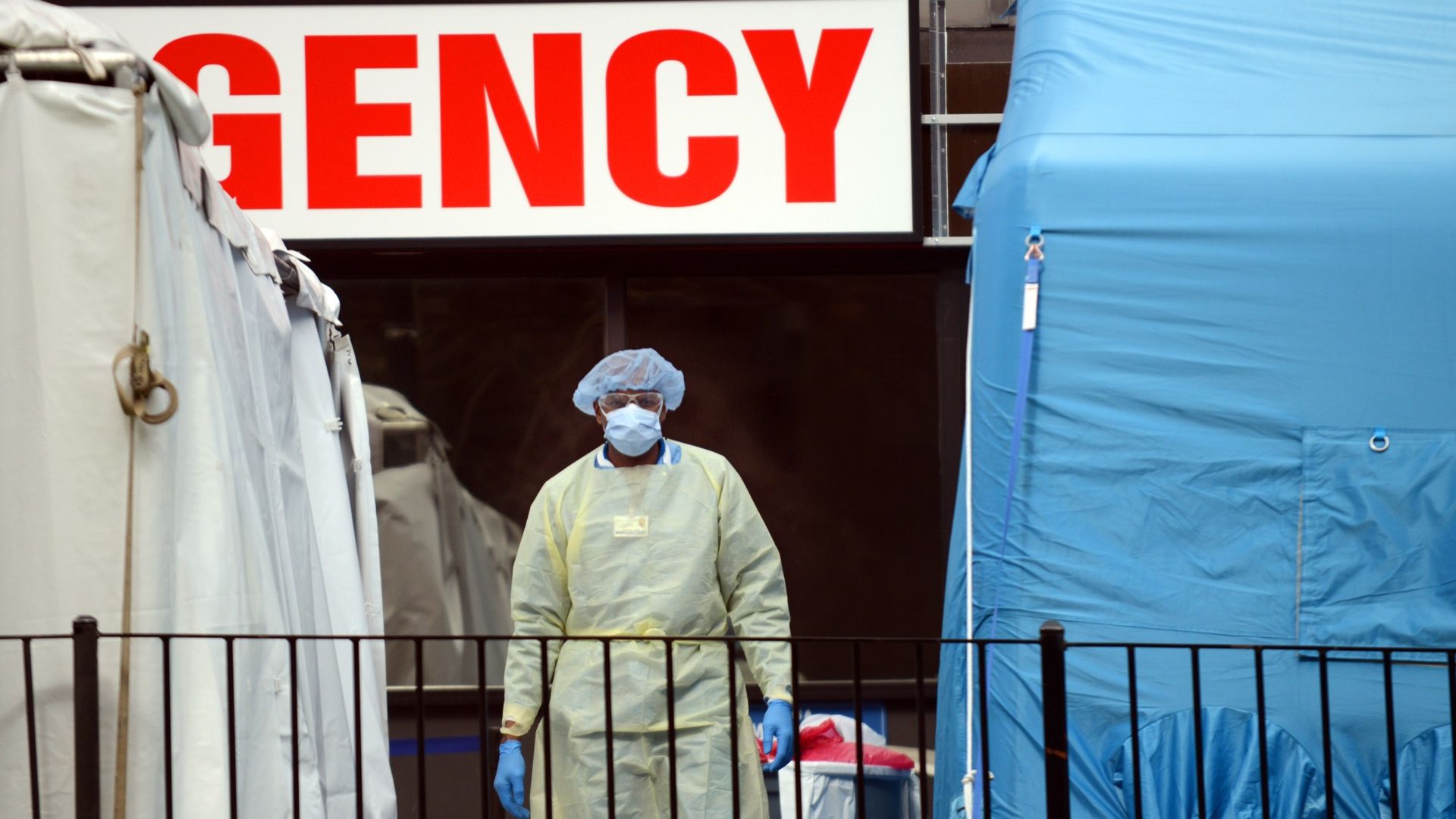
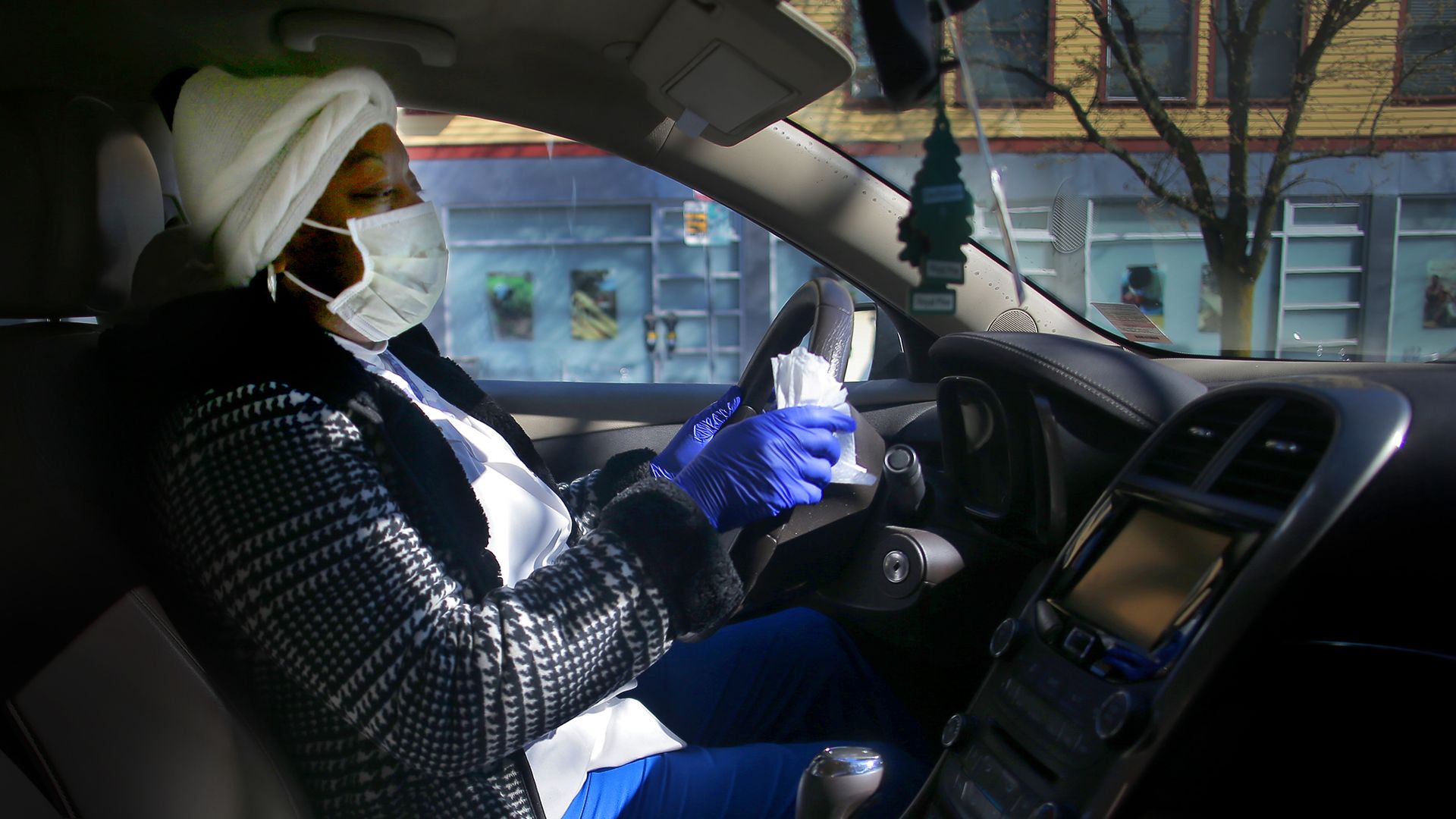
Health care workers are at an especially high risk of catching the coronavirus, because of their prolonged exposure to patients who have it. Making matters worse, the U.S. doesn't have enough of the protective equipment, like masks and gloves, that keeps them safe.
And yet these workers, with loved ones of their own, keep showing up at hospitals across the country, knowing that more Americans than they can possibly care for are depending on them.
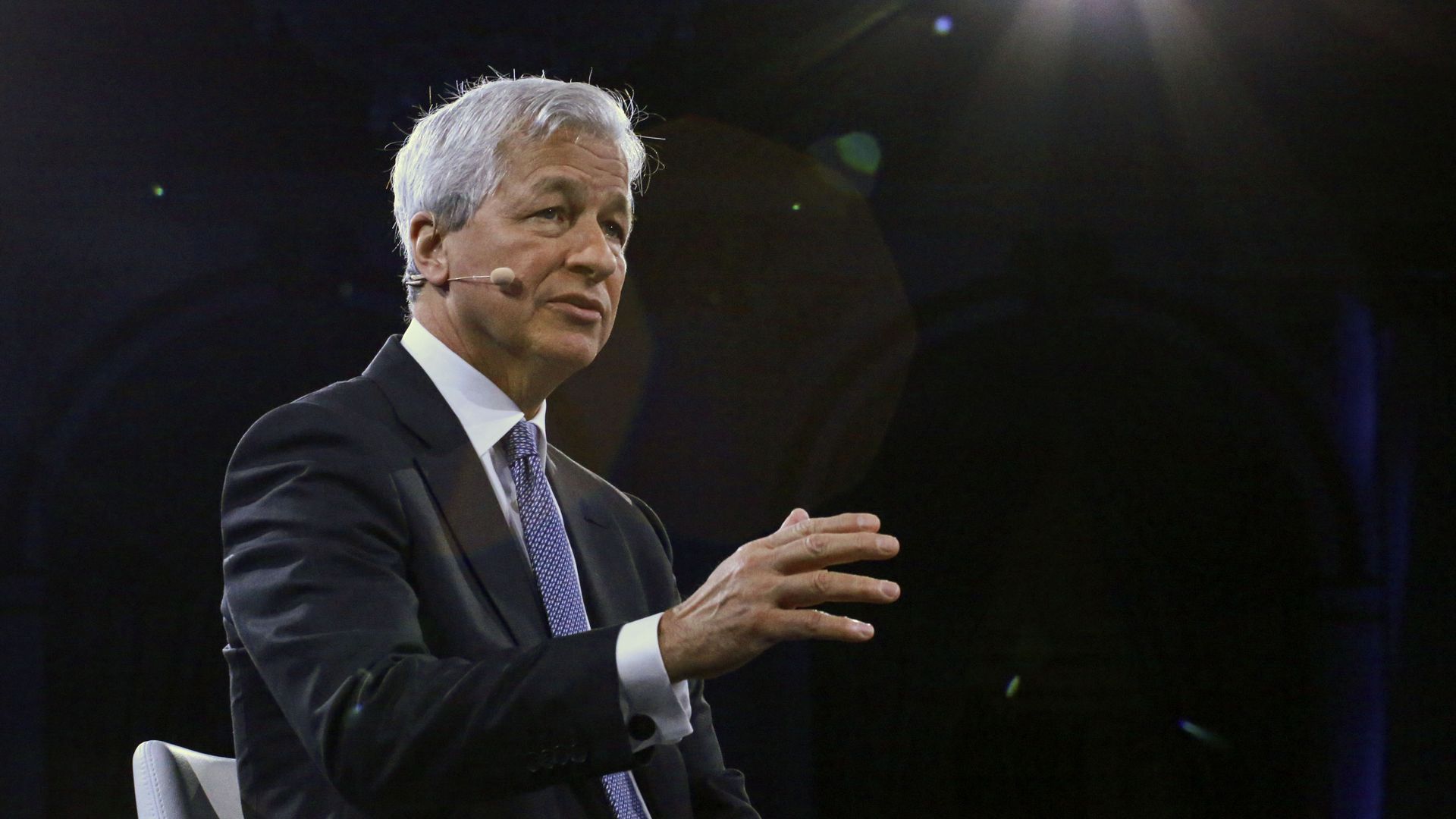
JP Morgan Chase Chairman and CEO Jamie Dimon said Monday in his annual letter to shareholders that the U.S. has "the resources to emerge from [the coronavirus] crisis as a stronger country."
The big picture: He added that while the New York bank will participate in government programs to address economic challenges set off by the effects of the virus, it will not ask for any regulatory relief in return.
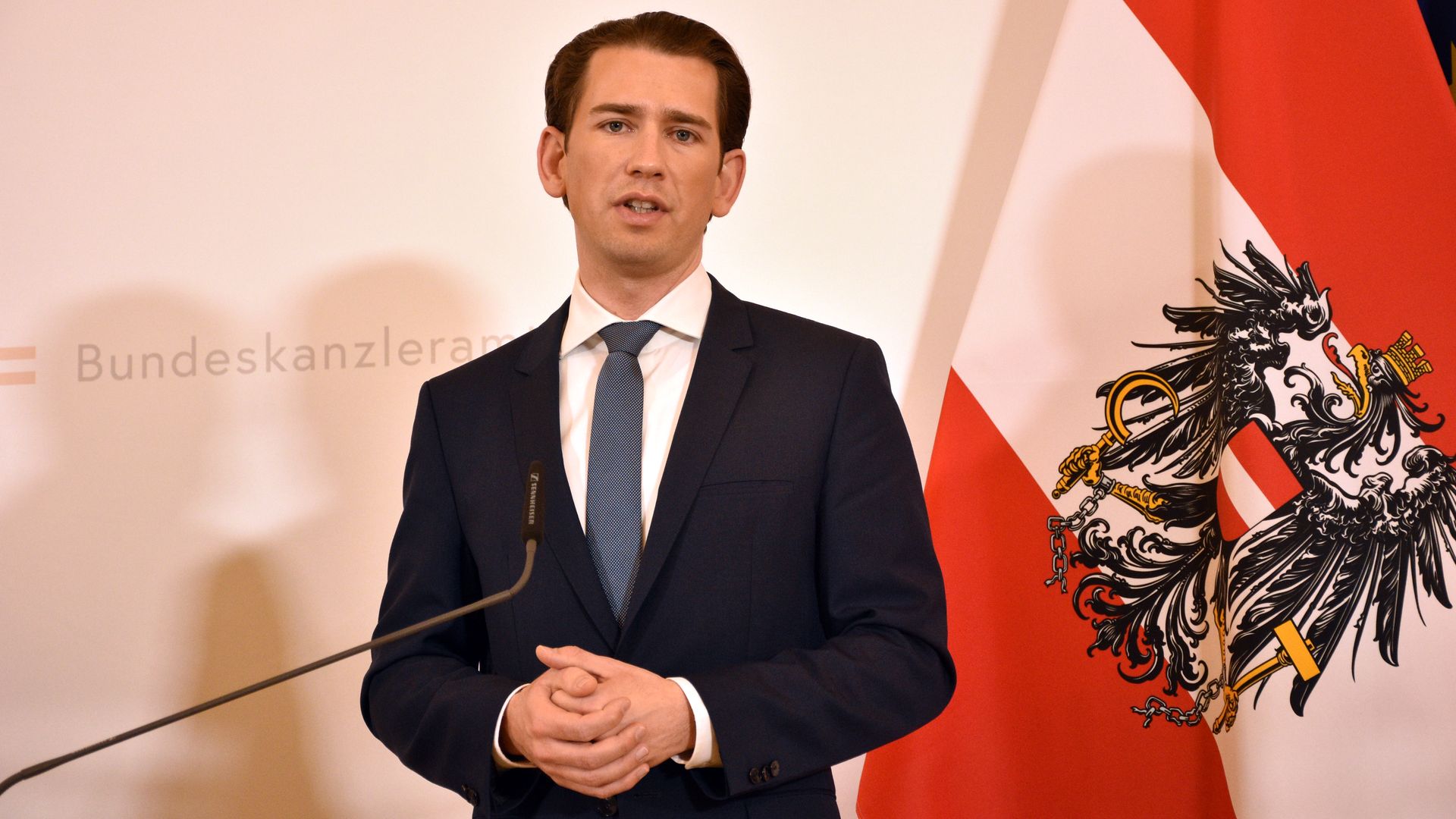
Austrian Chancellor Sebastian Kurz said Monday that his country plans to take steps to begin lifting its coronavirus lockdown next week, Reuters reports.
The state of play: Kurz said the country would begin reopening non-essential shops of less than 400 square meters on April 14, followed by all shops and malls on May 1.
In response to the overwhelming demand for coronavirus care, the medical workforce has rapidly swelled and morphed to expand its critical care capacity as much as possible.
The state of play:Retired providers have jumped back into the workforce, medical students are preparing to help, and providers whose specialties are on pause are shifting into roles that are drastically different from those they're used to.
The looming shortage of ventilators doesn't just impact the coronavirus patients who will need one to breathe. It also creates harrowing decisions for the health care workers who may have to decide which patients get them and which ones don't.
Between the lines: Today's doctors generally have no comparable experience to draw on for making these kinds of decisions, although accredited hospitals are supposed to have some mechanism for doing so, per NPR.
The state of play: Federal spending as a share of GDP this year is already closer to World War II levels than it is to the financial crisis, and that is only going to increase.
Top CEOs, in private conversations and pleas to President Trump, are warning of economic catastrophe if America doesn't begin planning for a phased return to work as soon as May, corporate leaders tell Axios.
Why it matters: The CEOs say massive numbers of companies, big and small, could go under if business and government don't start urgent talks about ways groups of workers can return.
Health care workers are at an especially high risk of catching the coronavirus because of their prolonged exposure to patients who have it. Making matters worse, the U.S. doesn't have enough of the protective equipment, like masks and gloves, that keeps them safe.
And yet these workers, with loved ones of their own, keep showing up at hospitals across the country, knowing that more Americans than they can possibly care for are depending on them.
The health care system cut 42,500 jobs in March as the coronavirus epidemic forced providers to delay an array of nonurgent procedures and doctor visits, according to new data from the Bureau of Labor Statistics.
The big picture: Almost all of the lost jobs came in medical offices and other outpatient settings, but many people who are fighting the coronavirus in hospitals are seeing cutbacks, too.
The coronavirus has made life even more difficult for the 5 million aides and workers who care for the frail populations living at home and in nursing homes.
Why it matters: These low-paid workers face the conundrum of seeing patients and increasing risk of exposure and spread, or staying away at the expense of their income and patients who rely on that care.
State and local governments are working to help medical workers and emergency responders fighting against the coronavirus outbreak who no longer have child care and day care centers for their children, AP reports.
By the numbers: 4.6 million health care workers are parents of children under the age of 14, according to the Center for American Progress.
Vice President Mike Pence told a news briefing Sunday that hydroxychloroquine will be used in a 3,000-person study at Henry Ford Hospital in Detroit to test the effectiveness of the anti-malarial drug in treating novel coronavirus patients.
Why it matters: President Trump has touted the drug as a potential game-changer, but there's no conclusive proof that it works in COVID-19 cases, per National Institute of Allergy and Infectious Diseases director Anthony Fauci.
The coronavirus-hit Ruby Princess berthed in New South Wales, Australia, on Monday — hours after police in the southeast Australian state launched a criminal investigation into the cruise ship.
Why it matters: Per the Australian Broadcasting Corporation, the novel coronavirus has infected more than 600 people who were aboard the Ruby Princess and killed 11 others — accounting for 30% of all deaths from the virus in Australia.
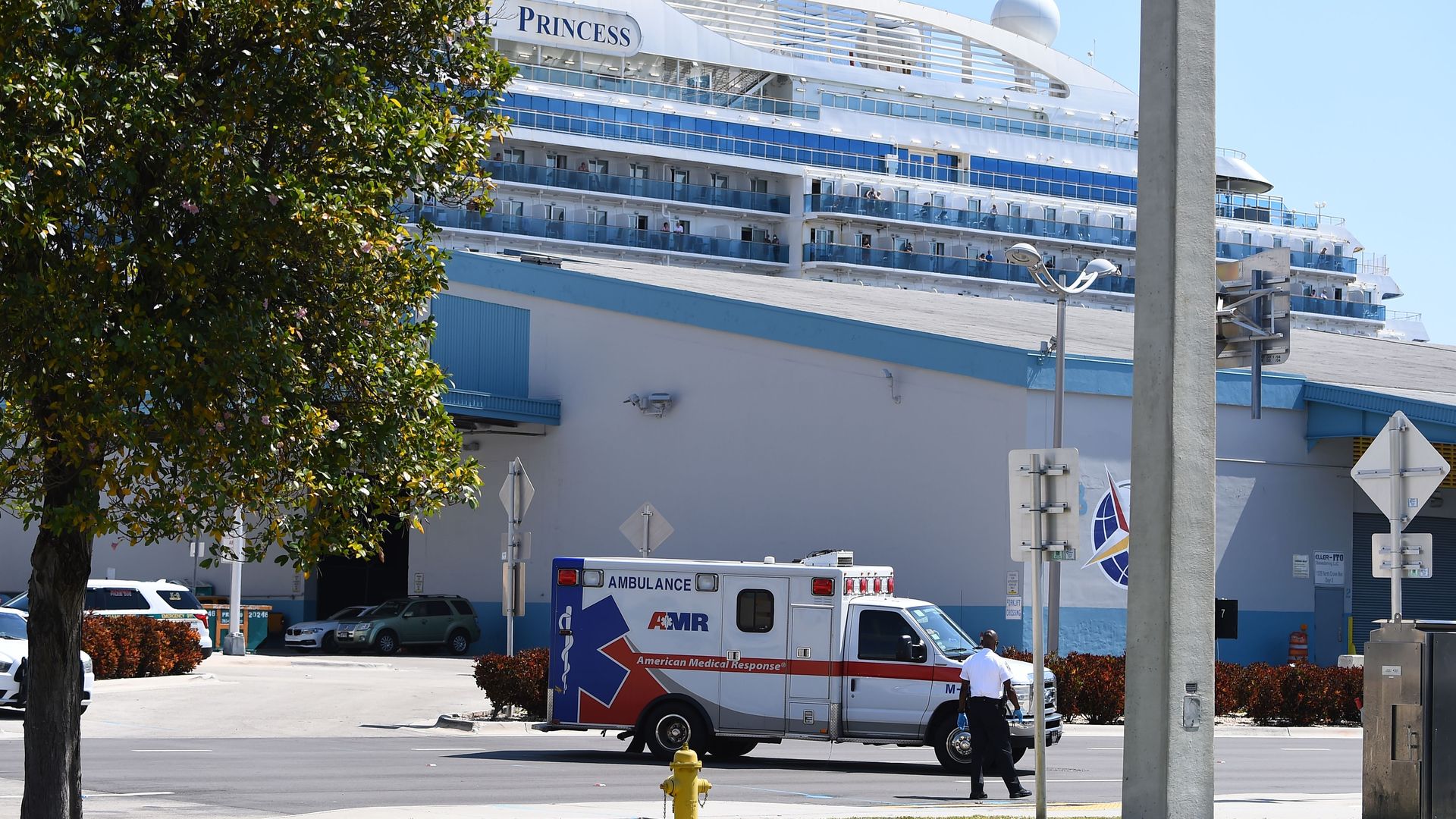
A third passenger from the coronavirus-stricken Coral Princess cruise ship has died after being taken to hospital, Miami-Dade Mayor Carlos Gimenez said in a statement Sunday.
Details: The ship was carrying 1,020 guests and 878 crew members when it docked at the Port of Miami on Saturday, per operator Princess Cruises. Two passengers had already died before it arrived at the port, Gimenez said. The cause of their deaths was not immediately disclosed.