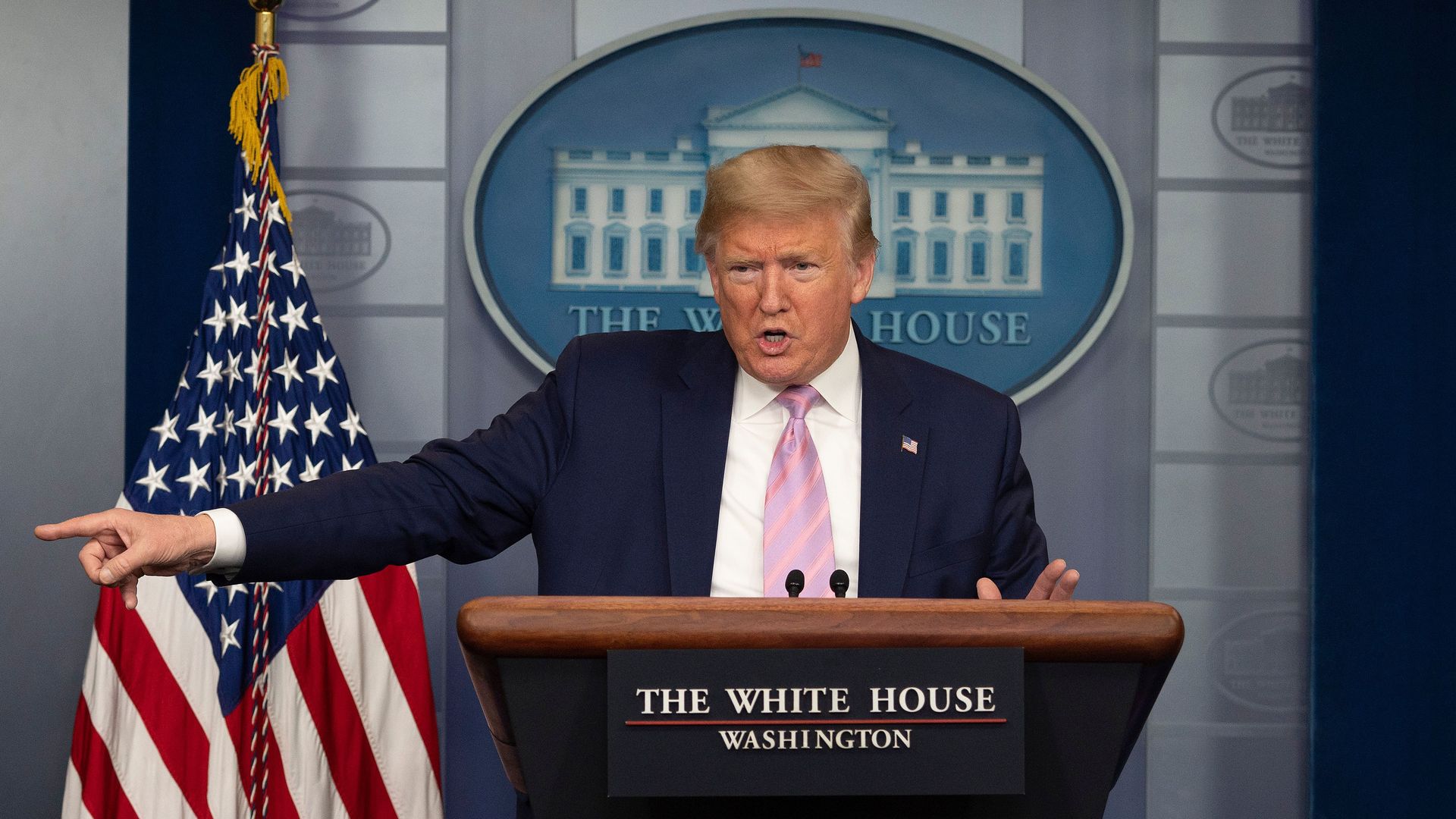
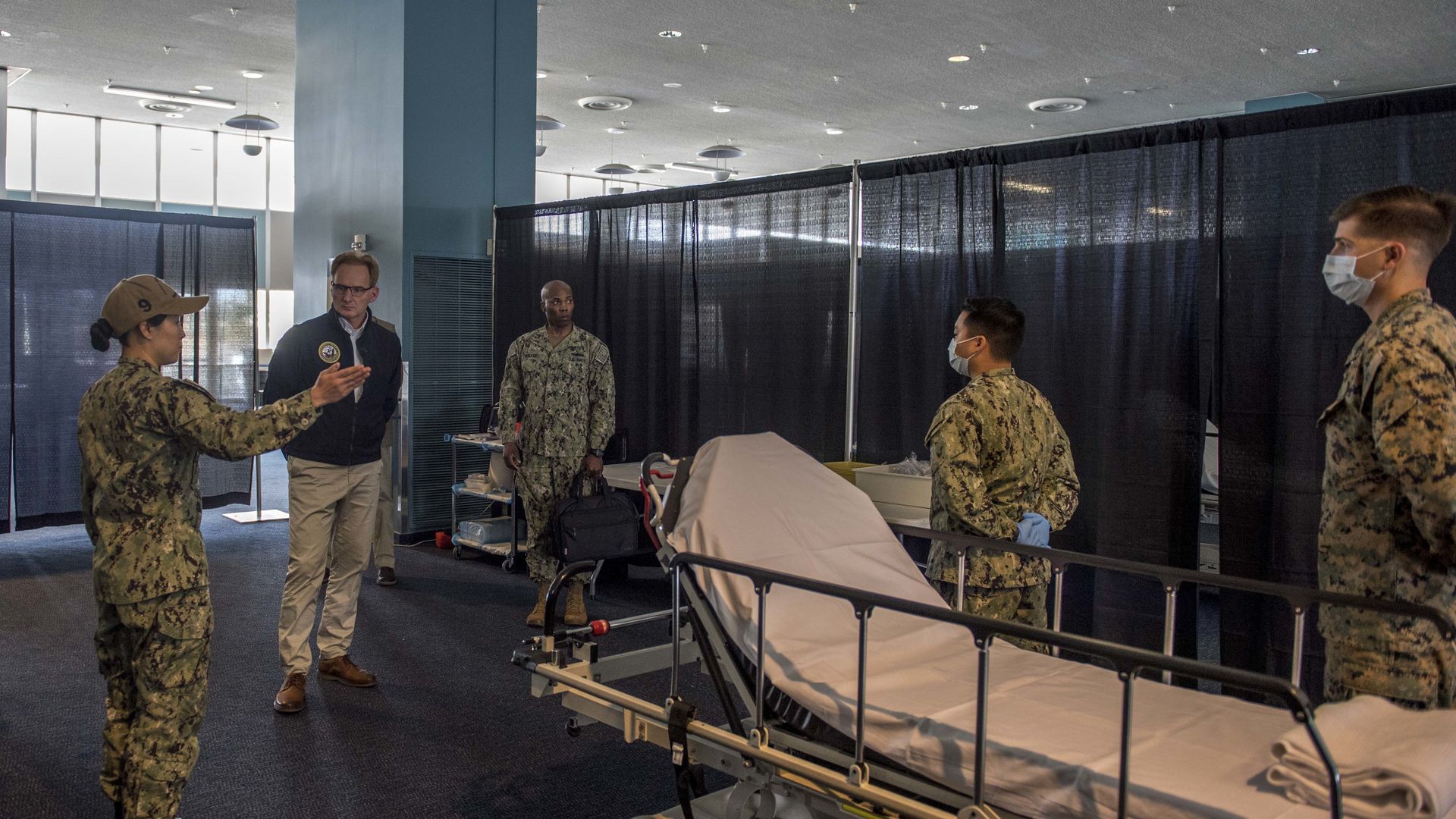
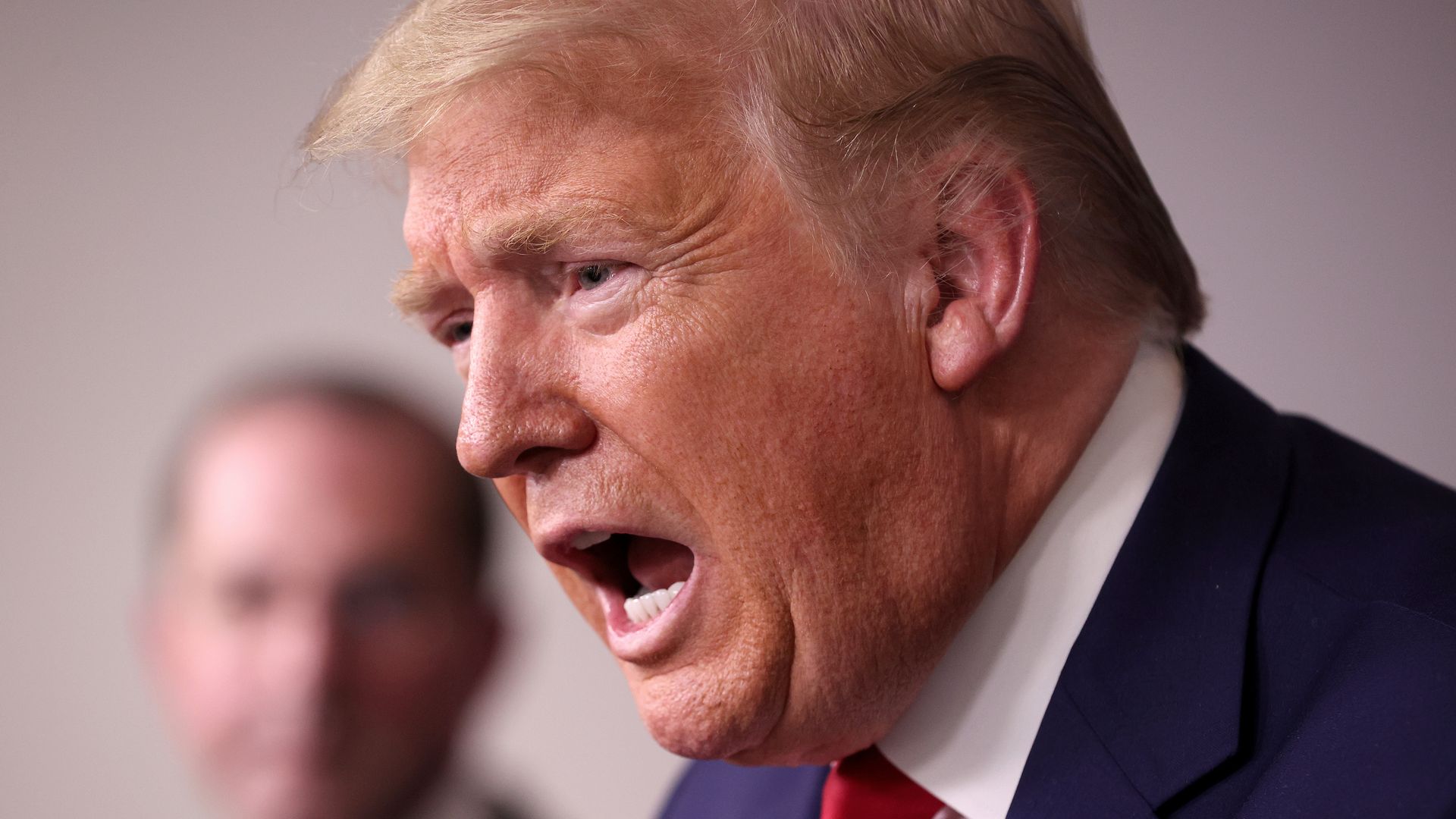
President Trump on Saturday said he agreed with the Pentagon's decision to relieve Capt. Brett Crozier of the U.S.S. Theodore Roosevelt after the captain sent a letter to officials pleading for help as members of his crew contracted the coronavirus.
What he's saying: "The letter was a five-page letter from a captain, and the letter was all over the place," Trump said at a White House briefing on Saturday. "That's not appropriate. I don't think that's appropriate. And these are tough people. These are tough, strong people. I thought it looked terrible, to be honest with you."
The Centers for Disease Control and Prevention launched two new national tracking tools for the novel coronavirus in the U.S. on Saturday — one to monitor fatalities and another for hospitalizations.
Why it matters: The coronavirus testing kit shortage has challenged public health experts' ability to understand the scope of the outbreak in the U.S., NPR reports. States have scrambled to produce their own systems and monitor the data.
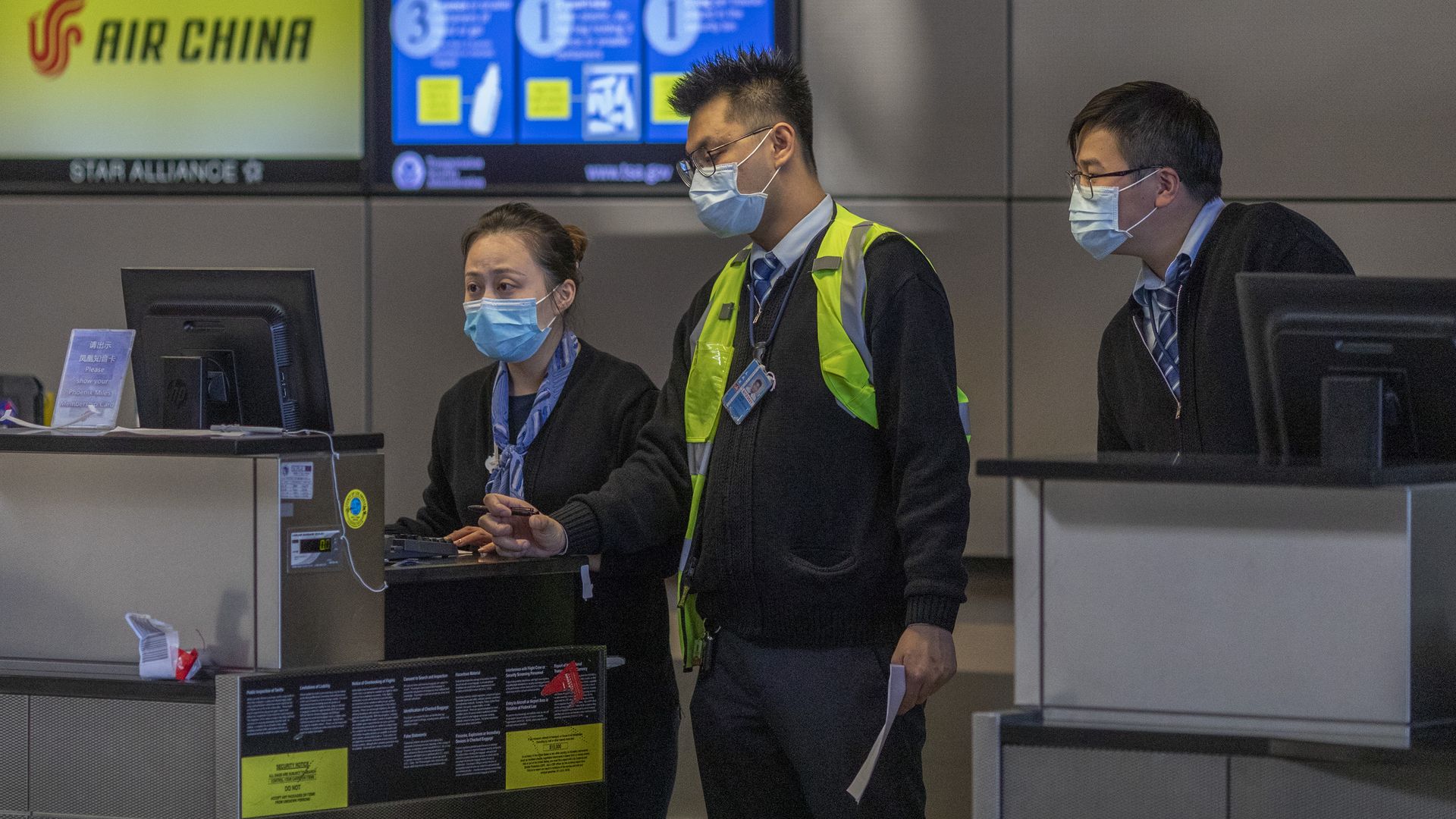
Companies are scrambling to reorganize operations and add protections for employees after a surge of public protests by workers who are fearful of contracting the coronavirus on the job.
Why it matters:America is relying on grocery clerks, warehouse personnel and factory workers for food and other necessities. If they get sick, supply chains could break down, further threatening the teetering U.S. economy.
Expectant mothers are facing some daunting new realities amid the coronavirus outbreak.
What's happening: Some doctors, especially in areas that haven't seen large numbers of cases yet, are encouraging women to induce their labor. That can help keep mothers and babies out of the hospital later, when the risk of a coronavirus infection will be higher, and also helps free up beds that may be needed for COVID-19 patients.
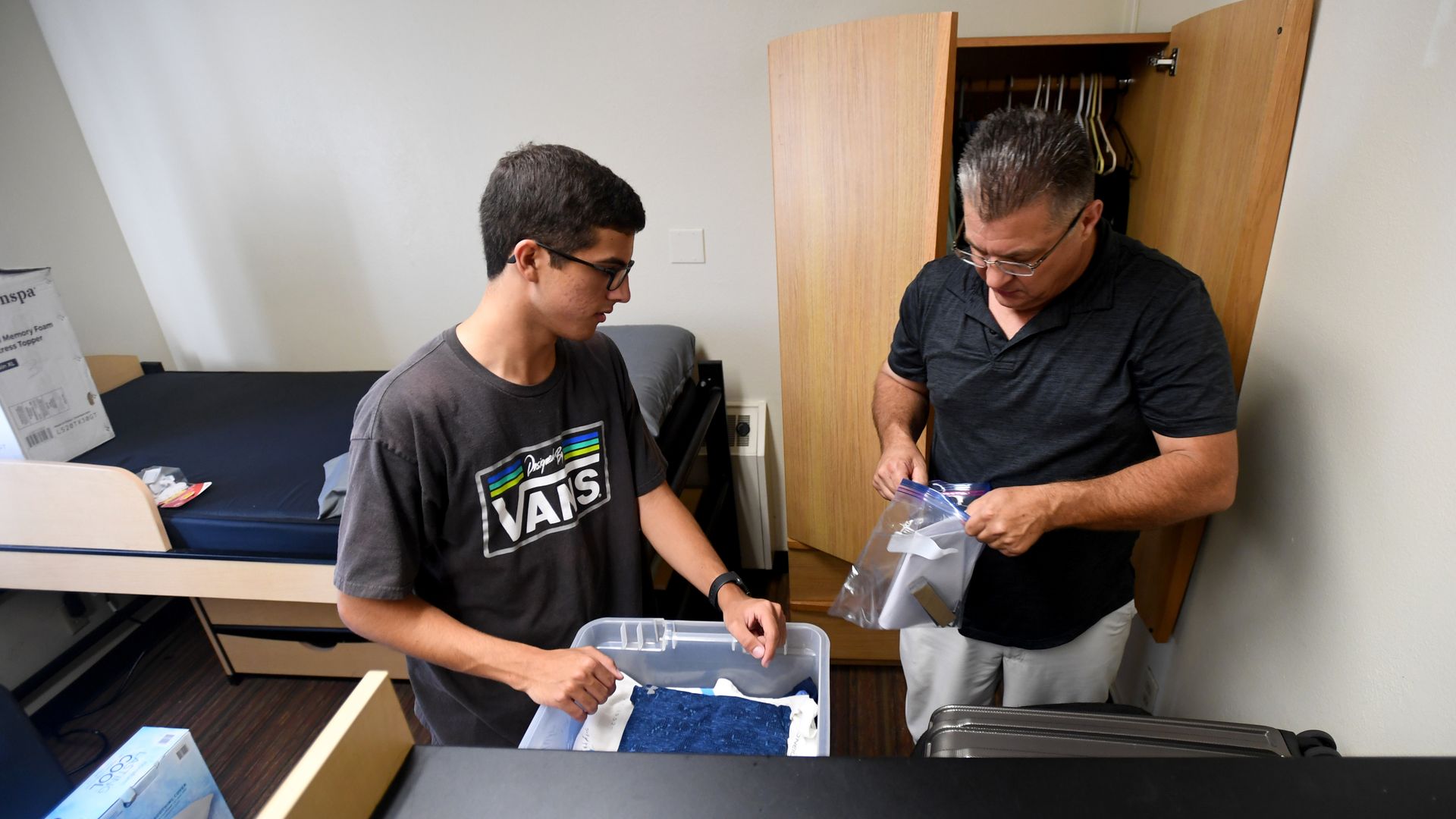
As the coronavirus continues to spread throughout the U.S., Axios is answering readers' questions about the pandemic — how it spreads, who's at risk, and what you can do to stay safe.
What's new: This week, we answer four questions looking at pets' vulnerability, moving during a pandemic, when to speak with medical professionals, and immunity.
The coronavirus doesn't discriminate, but minorities and low-income families are bearing the brunt.
Why it matters: The impact of the coronavirus is reflecting the racial and socioeconomic disparities of the cities where it’s spreading and the health care system that’s struggling to contain it.
Chefs that can't serve their usual customers are finding ways to use their kitchens to feed health care workers.
Why it matters: Health care workers on the front lines of fighting the coronavirus need support. As chefs step up to offer meals, fundraising for their efforts enables them to hire back some of their laid off staff.
Nearly 40,000 Americans and authorized travelers have come into the U.S. from China since President Trump imposed travel restrictions more than two months ago, the New York Times reports.
Why it matters: Trump has suggested that his action to ban foreigners from entering the U.S. if they were in China before early February has contributed to lower COVID-19 cases and fatalities in the U.S.
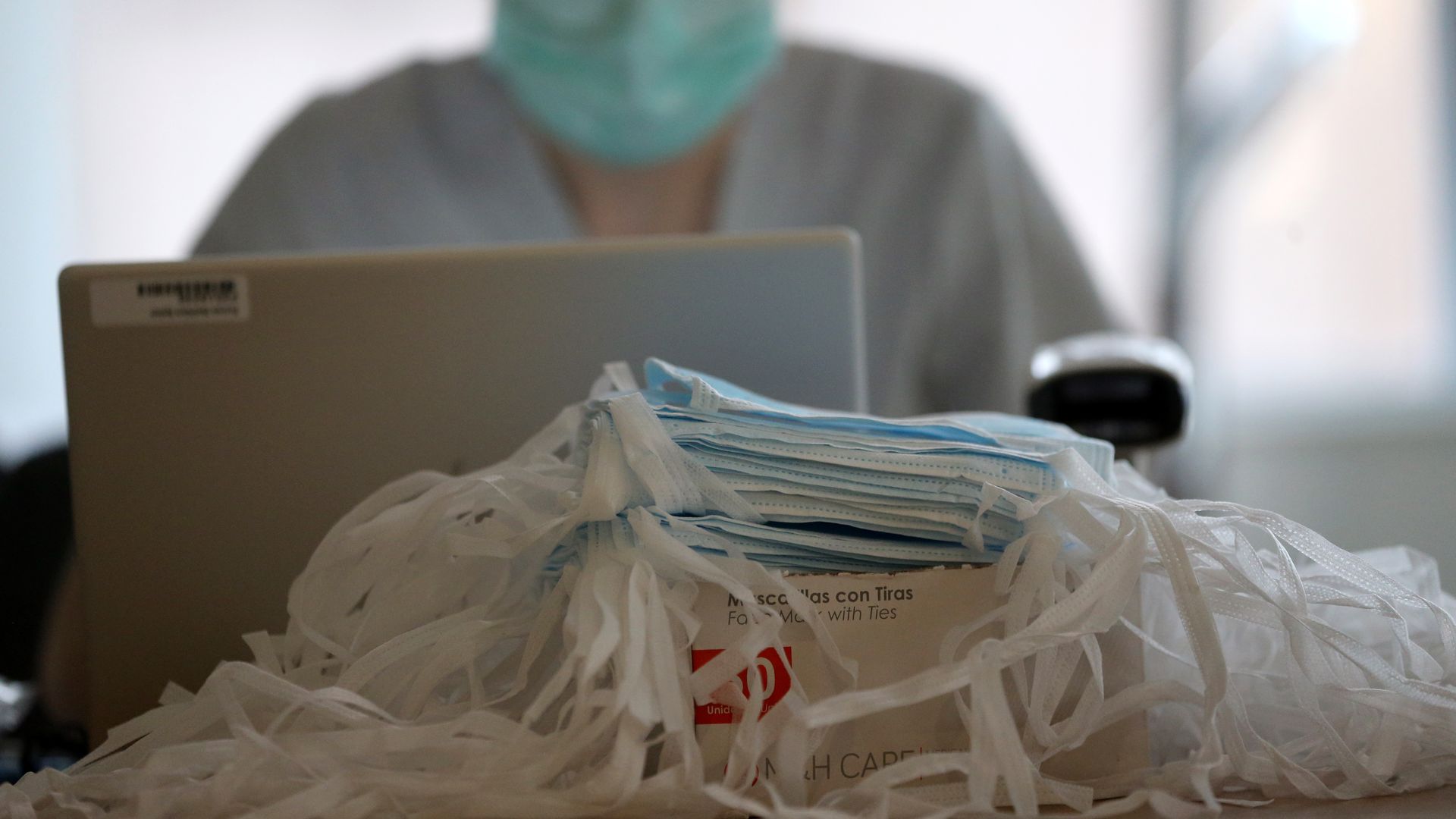
Counterfeiters and scammers have emerged as the global supply of protective personal equipment continues to dwindle and the search ramps up to find material for healthcare workers treating coronavirus, AP reports.
The big picture: The desperate hunt for protective medical supplies and equipment to fight the pandemic is pitting nation against nation and forcing governors to compete against each other and the federal government — all while the coronavirus death toll continues to rise. America's relations with its trade partners are being tested as it blocks and outbids other nations seeking masks, per The Washington Post.
Congress’ CARES Act will send one-time relief checks to most Americans. But many adults who are tax dependents won’t get a cut of the more than $300 billion set to be distributed in direct payments.
Yes, but: Adults who can be claimed as dependents on another person's tax return don't qualify either for the $1,200 checks or for the $500 add-on for each child.
We're going to see more medical care delivered remotely — both during the pandemic and after.
The big picture: Health care has always been one of our most regulated industries, which slows the pace of innovation. But the emergency nature of COVID-19 is taking the shackles off telemedicine.
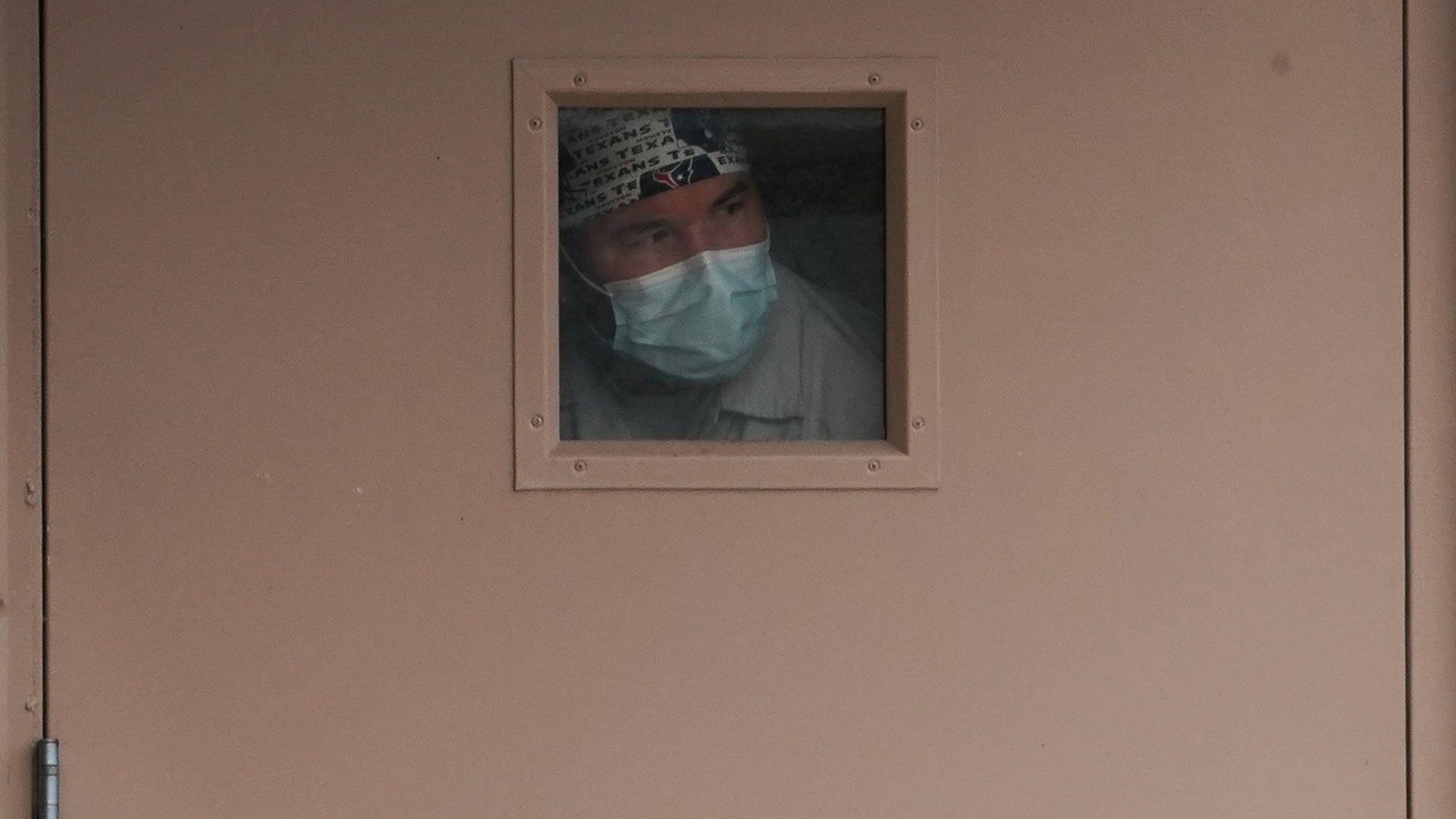
As the confirmed number of COVID-19cases passed 1 million on Friday, two words sum up theU.S.response to the coronavirus: not enough. Not enough hospital beds, not enough ventilators, not enough protective equipment. Not enough preparation.
Why it matters: COVID-19 has demonstrated our normal defenses aren't enough in the face of a low-probability, but high-consequence catastrophe.
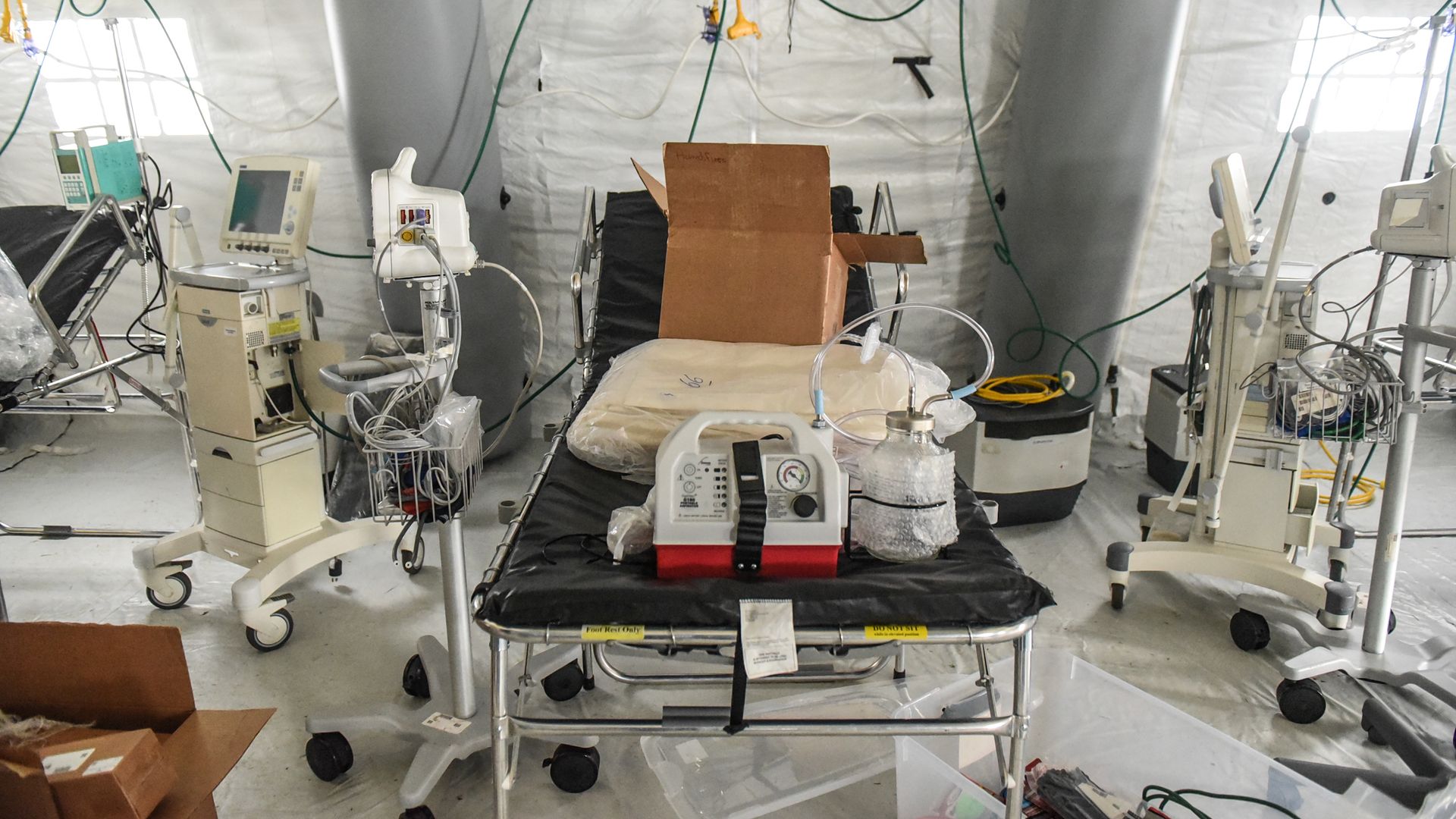
A donation of 1,000 ventilators from China will arrive in New York state on Saturday, Gov. Andrew Cuomo said at a press conference.
The big picture: Health care workers and the federal government are scrambling to stretch limited inventories of medical equipment to fight the coronavirus crisis, as the U.S. won't be able to manufacture enough medical masks and ventilators in time for a surge in demand expected to hit in mid-April.
Attorney General Bill Barr instructed the Bureau of Prisons on Friday to expand the use of home confinement and accelerate the release of eligible, high-risk inmates at three federal correctional facilities struck by the coronavirus, AP reports.
The state of play: As of Friday evening, 91 inmates and 50 staff had tested positive for COVID-19 at federal prisons across the U.S., per the agency.
The U.S. military is struggling to find new recruits as the novel coronavirus has shut down most enlistment stations and forced scouts to get online instead, AP reports.
Why it matters: If stay-at-home orders and mandated social distancing across the country persist, the armed forces may fail to meet annual recruitment goals. That could result in pressure for existing troops to reenlist to maintain military readiness, AP writes.
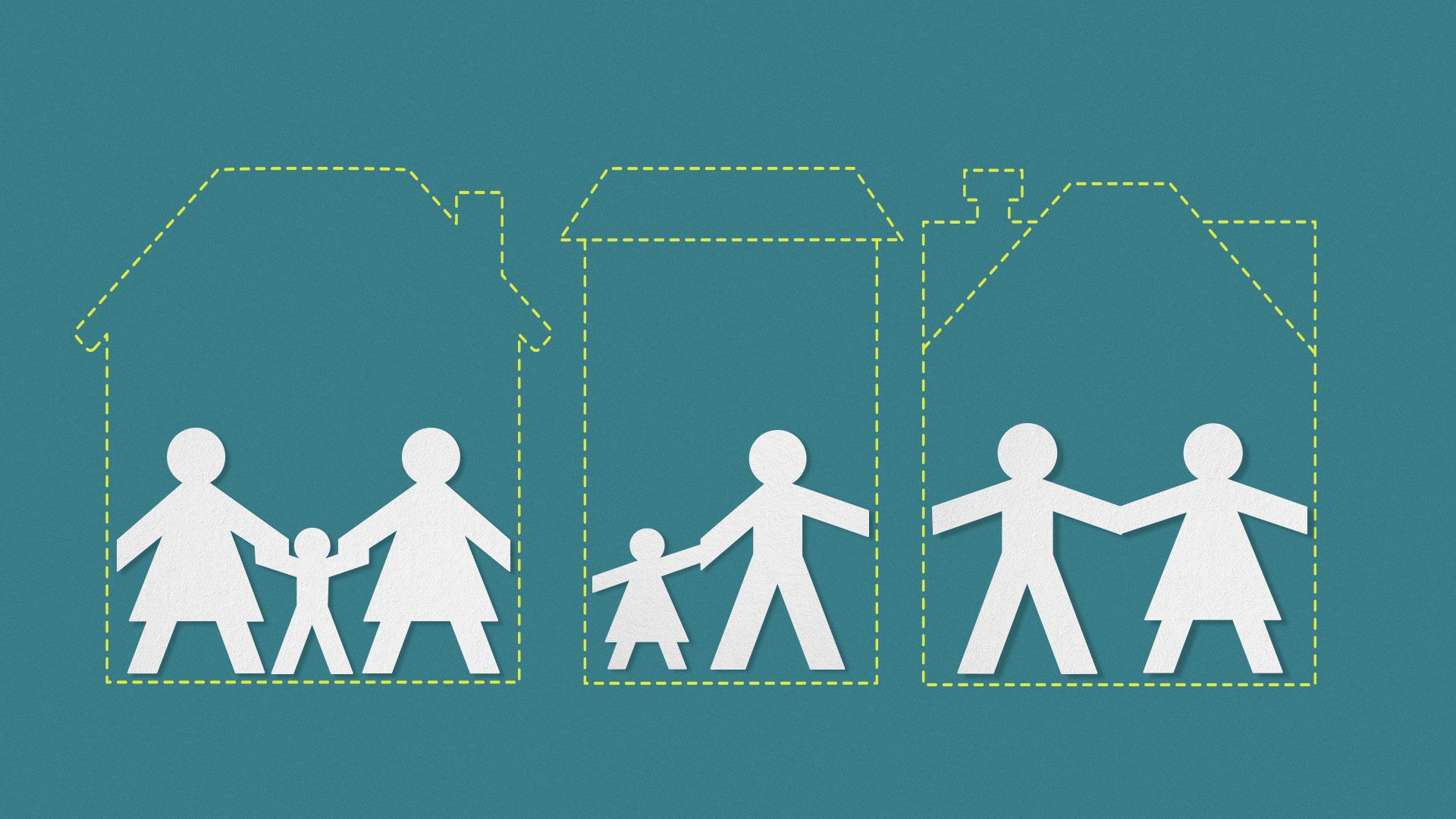
It used to be scarce and hard-earned, but suddenly family time is abundant in the era of shelter-in-place.
Why it matters: For the first time since the early 19th century, many parents and kids — and even grandchildren — are all under the same roofround-the-clock. And if past periods of emergency are any guide, this enforced togetherness could deepen our relationships for years to come.
The big picture: Health care workers and the federal government are scrambling to stretch limited inventories of medical equipment to fight the coronavirus crisis, as the U.S. is unlikely to be able to manufacture enough medical masks and ventilators in time for a surge in demand expected to hit in mid-April.